
Florida
Florida Recording Laws (2026): All-Party Consent Rules
Independently fact-checked against primary sources (last audited August 22, 2026). · Reviewed by the RecordingLaw editorial team. · Law checked current as of August 22, 2026. · 12 primary sources cited on this page. How we verify our legal content
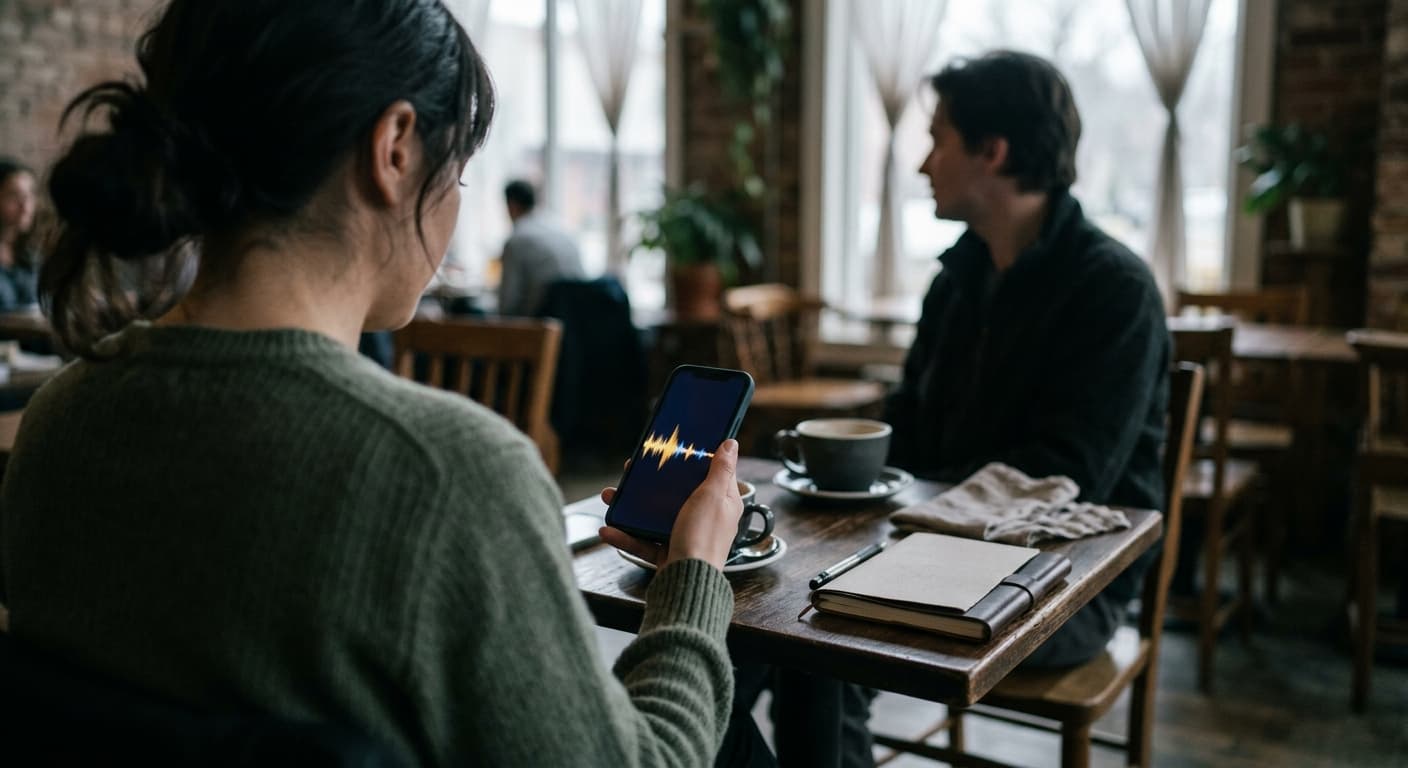
Florida requires the consent of every party before recording any wire, oral, or electronic communication under Fla. Stat. § 934.03. Recording a private conversation without all-party consent is a third-degree felony, punishable by up to five years in prison and a $5,000 fine, and the victim can sue for civil damages on top of that.
Florida recording law at a glance
| Question | Answer |
|---|---|
| Consent rule | All-party (every participant must consent) |
| Main statute | Fla. Stat. § 934.03 |
| When recording is illegal | Any wire, oral, or electronic communication intercepted without consent of all parties |
| Narrow citizen exceptions | Parent or guardian of a child under 18 (§ 934.03(2)(l)); person protected by an active injunction (§ 934.03(2)(m)) |
| Criminal penalty | Third-degree felony: up to 5 years prison, $5,000 fine |
| Civil penalty | Min. $1,000 or $100/day (whichever higher) + punitive damages + attorney fees |
| Hidden cameras | Digital voyeurism (§ 810.145): third-degree felony for age 19+ |
| Recording police | Generally lawful in public: no reasonable expectation of privacy for on-duty officers |
For full detail on each of these rules, see the in-depth guides below.
Recording in-person conversations in Florida

Florida Statute § 934.03(1) makes it a crime to intentionally intercept, or attempt to intercept, any wire, oral, or electronic communication without authorization. The general path to lawful recording is § 934.03(2)(d): all parties to the communication must give prior consent. Two narrow exceptions, covered in the next section, let a private citizen record without the other party's consent. Outside those, there is no general citizen one-party exception.
An "oral communication" under § 934.02(2) means any utterance made by a person who exhibits an expectation that it is not subject to interception, under circumstances that justify that expectation. This is the same reasonable-expectation-of-privacy standard courts use in Fourth Amendment analysis. Casual conversation at a loud public bar likely does not qualify; a hushed exchange in a private office almost certainly does.
A 2004 Florida Attorney General informal opinion analyzed § 934.03 in the context of audio recording in municipal offices. The AG concluded that citizens in city offices may retain a reasonable expectation of privacy for oral communications and that recording without consent would not generally be permissible, recommending video-only surveillance with posted signage as the compliant alternative.
The practical rule is straightforward: before you press record on any in-person conversation in Florida, you must inform every person present and obtain their consent.
Two narrow exceptions for private citizens
Florida's all-party rule is not absolute. Section 934.03(2) contains two exceptions a private citizen can rely on. Both are narrow, and both limit what you may do with the recording afterward.
Parents and legal guardians (§ 934.03(2)(l)). A parent or legal guardian of a child under 18 may intercept and record an oral communication the child is a party to, if the parent or guardian has reasonable grounds to believe the recording will capture a statement by the other party that the other party intends to commit, is committing, or has committed an unlawful sexual act or an unlawful act of physical force or violence against the child. A recording made under this exception must be provided to a law enforcement agency and may be used to evidence that crime. It may not be otherwise disseminated or shared.
People protected by an injunction (§ 934.03(2)(m)). A person protected by an active temporary or final injunction for repeat violence, sexual violence, or dating violence under § 784.046, stalking under § 784.0485, or domestic violence under § 741.30, or by any other court-imposed prohibition of conduct toward that person, may intercept and record a wire, oral, or electronic communication received in violation of that injunction or order. The recording may be provided to a law enforcement agency, an attorney, or a court to evidence the violation, if the subject of the order has been served or is on notice that the conduct is prohibited. It may not be otherwise disseminated or shared.
Neither paragraph is a general right to record. If your situation does not fit one of them, the all-party consent rule applies. The sharing limits are part of the authorization itself: passing a recording made under either paragraph to anyone beyond the permitted recipients falls outside what the statute allows.
Recording phone calls in Florida
Florida's all-party consent rule applies equally to phone calls, whether landline, cell, or VoIP. You cannot secretly record a call even as a participant. To record legally, announce at the start of the call that it is being recorded and get affirmative consent from everyone on the line. If anyone objects, stop recording.
When a Florida resident calls someone in a one-party consent state, courts apply the stricter standard. Getting all-party consent is the only safe practice for any call touching Florida. For interstate and VoIP calls, the federal one-party baseline under 18 U.S.C. § 2511(2)(d) is superseded by Florida's stricter rule for intrastate recordings.
Businesses that record customer service calls must provide clear notice before recording begins. Continued participation after that notice is generally treated as implied consent, but all-party consent principles still apply. See the Florida Phone Call Recording Laws page for VoIP, business, and interstate-call details.
Hidden cameras, doorbells, and nanny cams
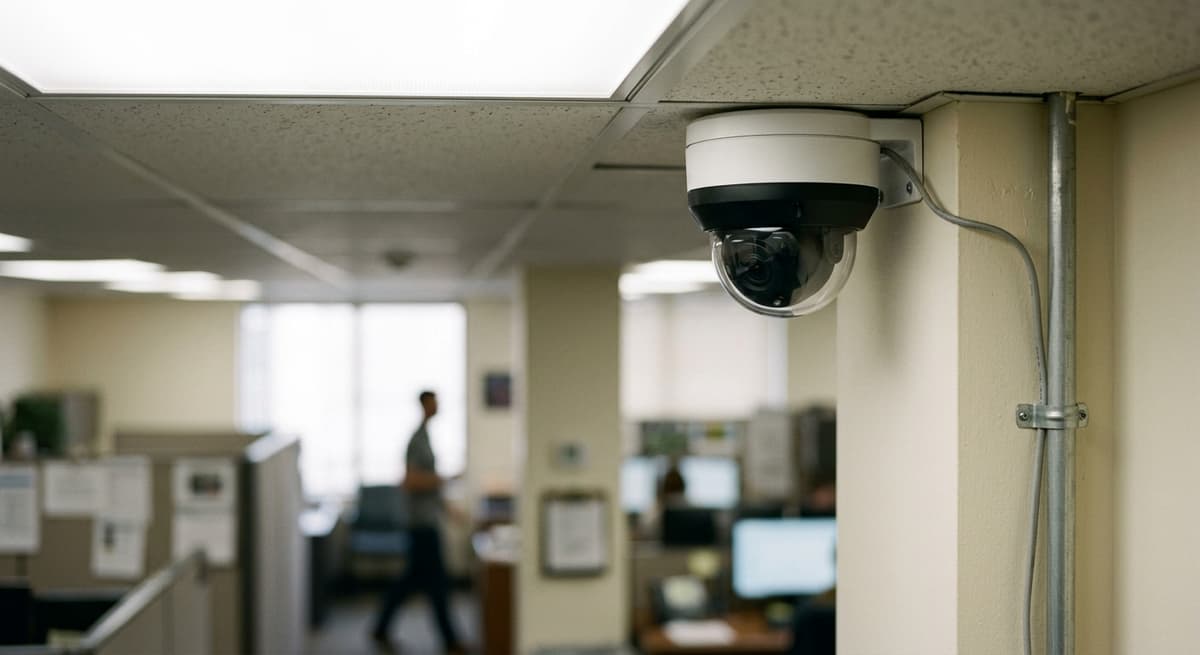
Silent video recording on your own property (a front-door camera, a dashcam, or a nanny cam aimed at a common area) is generally lawful as long as no audio is captured without consent. The moment a camera records conversations, § 934.03's all-party consent requirement applies to the audio track.
Secretly recording a person who is dressing, undressing, or privately exposing the body, at a place and time where that person has a reasonable expectation of privacy, is separately criminal under Fla. Stat. § 810.145 regardless of any consent analysis. The statute's examples of such a place include the interior of a residential dwelling, a bathroom, changing room, fitting room, dressing room, or tanning booth. The offense also carries a purpose element: under § 810.145(2)(a)1 the recording must be made for the offender's own amusement, entertainment, sexual arousal, gratification, or profit, or to degrade, exploit, or abuse the person recorded. Section 810.145(2)(a)3 separately reaches recording under or through the clothing another person is wearing. Digital voyeurism therefore does not reach every covert recording made in a private place: secretly recording a fully clothed conversation in a restroom is not a § 810.145 offense, though capturing that conversation's audio can still violate § 934.03. Effective October 1, 2024, Chapter 2024-132 renamed this offense from "video voyeurism" to "digital voyeurism" to reflect the statute's coverage of all modern imaging devices, from smartphones to hidden pinhole cameras.
Penalties under § 810.145 turn on the offender's age. A person 19 or older who commits digital voyeurism commits a third-degree felony (up to 5 years, $5,000 fine). A person under 19 commits a first-degree misdemeanor (up to 1 year, $1,000 fine). Distributing or selling such recordings is a separate third-degree felony each time. Three circumstances elevate the offense: (1) the offender is a family member of the victim or holds a position of authority or trust over the victim (reclassified one degree higher); (2) the offender has a prior conviction for any violation of § 810.145 (elevated to a second-degree felony); or (3) the victim is under 16 years of age and the offender is either 18 or older and responsible for the child's welfare or employed at the child's school, or 24 or older with no such relationship to the child (elevated to a second-degree felony).
See the Florida Voyeurism and Hidden Camera Laws and Florida Security Camera Laws pages for detailed rules on residential cameras, HOA settings, and landlord obligations.
Penalties for illegal recording in Florida

Criminal penalties
A standard § 934.03 violation is a third-degree felony. A narrow exception covers first offenses involving unencrypted radio communications not obtained for commercial gain, which may be reduced to a misdemeanor.
| Offense | Classification | Max penalty |
|---|---|---|
| Illegal interception (§ 934.03) | Third-degree felony | 5 years, $5,000 |
| Disclosing intercepted communications | Third-degree felony | 5 years, $5,000 |
| Using illegally obtained information | Third-degree felony | 5 years, $5,000 |
| Digital voyeurism, age 19+ (§ 810.145) | Third-degree felony | 5 years, $5,000 |
| Digital voyeurism, under 19 (§ 810.145) | First-degree misdemeanor | 1 year, $1,000 |
| Digital voyeurism, prior conviction or victim under 16 (§ 810.145) | Second-degree felony | 15 years, $10,000 |
| Violating Halo Law 25-foot zone (§ 843.31) | Second-degree misdemeanor | 60 days, $500 |
Civil remedies under § 934.10
A person whose communication was unlawfully intercepted, disclosed, or used may sue for actual damages (minimum: $1,000 or $100 per day of violation, whichever is higher), punitive damages, attorney fees, and preliminary or equitable relief. The lawsuit must be filed within two years from the date the claimant reasonably discovers the violation.
Recording the police in Florida
You have the right to record police officers performing their public duties. The Eleventh Circuit has confirmed that the First Amendment protects photographing and videotaping police conduct, subject to reasonable time, place, and manner restrictions.
The consent analysis also supports this right. An officer performing official duties in public generally has no reasonable expectation of privacy in those interactions under § 934.02(2)'s oral communication standard. Because the privacy element is absent, § 934.03 is not triggered. Note: the law-enforcement one-party consent carve-out in § 934.03(2)(c) applies only to investigative or law enforcement officers and does not give private citizens a one-party right.
The 2025 Halo Law (Fla. Stat. § 843.31, codified by 2024 Fla. Laws ch. 2024-85, effective January 1, 2025) restricts physical proximity, not recording. After a first responder verbally warns you to step back, approaching or remaining within 25 feet with intent to impede, threaten, or harass is a second-degree misdemeanor (up to 60 days, $500 fine). The law does not ban recording, does not authorize device seizure, and does not amend § 934.03. Recording from beyond 25 feet is fully lawful.
See the Florida Laws on Recording Police page for Eleventh Circuit case details and a discussion of the Halo Law's constitutionality.
Special topics in Florida
Federal overlay: ECPA and the 11th Circuit TCPA vacatur
The federal Electronic Communications Privacy Act (18 U.S.C. § 2511(2)(d)) sets a one-party consent floor. Florida's § 934.03 is stricter and prevails for intrastate recordings. Separately, the Eleventh Circuit vacated the FCC's One-to-One TCPA Consent Rule in Insurance Marketing Coalition v. FCC, No. 24-10277 (11th Cir. Jan. 24, 2025), mandate issued April 30, 2025. The rule's one-to-one and logically-and-topically-related requirements are not in force in Florida. The underlying TCPA baseline consent requirements remain.
Healthcare: HIPAA and § 934.03
Florida healthcare providers must satisfy both HIPAA's authorization requirements under 45 CFR § 164.508 and § 934.03's all-party consent rule before recording any patient call or telehealth session. Violation of either layer is independent of the other. See the Florida Medical Recording Laws page.
Schools: FERPA layered on § 934.03
Audio or video recordings that are directly related to a student and maintained by an educational institution are FERPA education records under 34 CFR § 99.3. Schools must satisfy both FERPA's written consent requirement and § 934.03 before recording any disciplinary or faculty meeting involving student information. See the Florida School Recording Laws page.
Debt collectors: CFPB Regulation F retention
CFPB Regulation F (12 CFR § 1006.100(b)) requires debt collectors who record calls to retain each recording for three years. This retention obligation layers on top of § 934.03's consent requirement: recording without all-party consent violates Florida law regardless of the federal retention rule.
Workplace and NLRB GC Memo 25-07
Florida's all-party consent rule applies fully in the workplace. NLRB Acting General Counsel Memo 25-07 (June 25, 2025) also directs regional offices to treat surreptitious recording of collective bargaining sessions as a per se unfair labor practice under NLRA §§ 8(a)(5) and 8(b)(3). That federal prosecutorial guidance stacks on top of § 934.03 for Florida employers and unions. See the Florida Workplace Recording Laws page.
Wearable recording devices
AI voice recorders, smartwatches with microphones, and smart glasses are subject to § 934.03 the same as any other audio device. Outside the two narrow exceptions in § 934.03(2)(l) and (2)(m) described above, Florida has no general crime-evidence exception for private citizens. Before wearing any audio-capable device into a private setting, every person present must consent.
Emerging FSCA litigation: website tracking pixels
A developing line of cases tests whether website tracking technologies (session-replay scripts, Meta and Google pixels) constitute unlawful interceptions under the Florida Security of Communications Act. In W.W. v. Orlando Health, Inc., No. 6:24-cv-1068-JSS-RMN, 2025 WL 722892 (M.D. Fla. Mar. 6, 2025), a federal district court denied dismissal of an FSCA claim based on health-data pixels. This is a pleading-stage ruling at the district court level only, not a merits decision and not binding appellate precedent. Following that decision, similar FSCA small-claims filings surged. Website operators and healthcare providers should consult privacy counsel about pixel-related exposure under § 934.03.
Court proceedings and public meetings
Florida state courts generally allow cameras and audio recording of trial and appellate proceedings under Fla. R. Jud. Admin. 2.450, subject to the presiding judge's authority to control decorum and ensure the fair administration of justice. Federal courts sitting in Florida take the opposite approach: broadcasting, recording, and photographing a proceeding is generally prohibited (see, e.g., M.D. Fla. Local Rule 5.01). Separately, Florida's Government in the Sunshine Law (Fla. Stat. § 286.011) guarantees public access to meetings of governmental boards and commissions, and a public board may not prohibit a citizen from making a silent, nondisruptive audio or video recording of an open meeting.
Recent legal developments
- October 1, 2024: Fla. Stat. § 810.145 renamed from "video voyeurism" to "digital voyeurism" by 2024 Fla. Laws ch. 2024-132, reflecting expanded coverage of modern digital imaging devices.
- January 1, 2025: Halo Law (Fla. Stat. § 843.31) took effect, creating a 25-foot buffer zone around first responders after a verbal warning; does not amend § 934.03.
- January 24, 2025: Eleventh Circuit vacated the FCC's One-to-One TCPA Consent Rule in Insurance Marketing Coalition v. FCC (mandate issued April 30, 2025), binding in Florida.
- March 6, 2025: W.W. v. Orlando Health, Inc. (M.D. Fla.) denied dismissal of FSCA pixel-tracking claim, sparking a wave of similar small-claims filings.
- June 25, 2025: NLRB GC Memo 25-07 treats surreptitious recording of collective bargaining as a per se unfair labor practice, stacking on Florida's all-party consent rule.
Florida recording laws in depth
Want to know more? Each page below covers a specific recording context in detail.
By type of recording
- Florida Audio Recording Laws: All-Party Consent Rules and Penalties (2026)
- Florida Phone Call Recording Laws: Consent Rules for Calls (2026)
- Florida Video Recording Laws: What You Can and Cannot Record (2026)
- Florida Dashcam Laws: Rules for Dashboard Cameras (2026)
By place or relationship
- Florida Voyeurism and Hidden Camera Laws: Digital Voyeurism Penalties (2026)
- Florida Security Camera Laws: Home, Business, and HOA Rules (2026)
- Florida Workplace Recording Laws: Employee and Employer Rules (2026)
- Florida Laws on Recording Police: Halo Law and Your Rights (2026)
- Florida Laws on Recording in Public: Your Rights and Limits (2026)
- Florida Landlord-Tenant Recording Laws: Cameras and Privacy Rules (2026)
- Florida Medical Recording Laws: Patient Rights and HIPAA Rules (2026)
- Florida School Recording Laws: Classroom, Campus, and Student Privacy (2026)
More Florida laws
- Florida Data Privacy Laws
- Florida At-Will Employment Laws
- Florida Landlord-Tenant Laws
- Florida Divorce Laws
- Florida Expungement Laws
This article is general legal information, not legal advice. Recording laws change and apply differently to each situation. For advice about your situation, consult a licensed Florida attorney.
More Florida Laws
Frequently Asked Questions
Is Florida a two-party consent state?
Yes. Florida requires consent from every party before recording any wire, oral, or electronic communication under Fla. Stat. § 934.03. This makes it one of the stricter recording-law states in the country.
Can I record a conversation without the other person knowing in Florida?
Generally no. Secretly recording a private conversation is a third-degree felony in Florida, punishable by up to 5 years in prison and a $5,000 fine, so you must get consent from every participant before recording. Two narrow statutory exceptions apply: a parent or legal guardian recording their child's conversation on reasonable grounds that it will capture evidence of a sexual or violent act against the child (§ 934.03(2)(l)), and a person protected by an active injunction recording a communication received in violation of it (§ 934.03(2)(m)). A recording made under either exception may only be given to law enforcement, and under (2)(m) also to an attorney or a court.
Can I record a phone call in Florida?
Only with consent from everyone on the call. Announce at the start that the call will be recorded and get affirmative agreement. If the other party is in a one-party consent state, Florida's stricter rule still governs. See the Florida Phone Call Recording Laws page for interstate and business-call rules.
Is illegal recording a felony in Florida?
Yes. A standard violation of § 934.03 is a third-degree felony carrying up to 5 years in prison and a $5,000 fine. A narrow misdemeanor exception applies only to first offenses involving unencrypted radio communications not obtained for commercial gain.
What can I sue for if someone illegally recorded me in Florida?
Under § 934.10, you can recover actual damages (minimum $1,000 or $100 per day of violation, whichever is higher), punitive damages, and attorney fees. You have two years from the date you reasonably discover the violation to file suit.
Are Ring doorbells and nanny cams legal in Florida?
Silent video recording on your own property is generally legal. The problem is audio: if the camera captures conversations without consent from everyone in them, § 934.03 applies and the recording is a felony. Secretly recording someone who is dressing, undressing, or privately exposing the body in a bathroom, dressing room, or other place where they reasonably expect privacy also violates the digital voyeurism statute (§ 810.145), which additionally requires that the recording be made for amusement, entertainment, sexual arousal, gratification, or profit, or to degrade, exploit, or abuse that person.
Can I record my boss or an HR meeting in Florida?
Not without all-party consent. Florida's all-party rule applies fully in the workplace. Even if you are documenting harassment or a hostile work environment, secretly recording a conversation is a third-degree felony. Every person in the conversation must consent before you start recording.
Can I record the police in Florida?
Yes. Officers performing public duties generally have no reasonable expectation of privacy under § 934.02(2), so recording them does not trigger § 934.03. The 2025 Halo Law (§ 843.31) requires you to stay at least 25 feet back after a verbal warning from a first responder, but it does not ban recording and does not change the all-party consent rule.
Updates
Added the two narrow exceptions to Florida's all-party consent rule that the page previously omitted, for parents or guardians gathering evidence of a sexual or violent act against their child (Fla. Stat. § 934.03(2)(l)) and for people protected by an active violence, stalking, or domestic violence injunction (§ 934.03(2)(m)), including the limits on sharing such recordings, and narrowed the description of the § 810.145 digital voyeurism offense to match the statute's actual undressing and purpose elements.
Independently fact-checked against the cited primary sources; governing law re-checked for recent changes
Governing law re-checked for recent changes
Corrected the age threshold for Florida's digital voyeurism child-victim enhancement: the 18-or-older threshold applies only to offenders responsible for the child's welfare or employed at the child's school; a general offender must be 24 or older, not 18.
Governing law re-checked for recent changes
Reviewed and approved by an editor
Full restructure per 2026 template spec: rewrote to clean section hierarchy (AEO lede, at-a-glance table, in-person/phone/hidden-cameras/penalties/police/special-topics/recent-developments/in-depth-index), condensed special-topic subsections to tight paragraphs, added in-depth subpage index grouped by type and relationship, refreshed FAQ to 8 plain-language questions. All load-bearing facts re-verified against Fla. Stat. §§ 934.03, 934.10, 810.145, 843.31, and 934.02 primary sources. Zero em-dashes, zero banlist links. No factual corrections required: all prior verified facts confirmed accurate.
Corrected two factual errors: (1) Removed incorrect claim that citizens satisfy § 934.03(2)(c)'s one-party consent exception (that subsection is law-enforcement-only); replaced with accurate explanation that recording police in public does not violate § 934.03 because there is no reasonable expectation of privacy in that setting (a Fourth Amendment/First Amendment protection, not a statutory consent exception). Removed reliance on 2014 AG informal opinion for that proposition. (2) Corrected 47 CFR § 64.501 description: that rule was removed/reserved effective Nov 20, 2017 and is not operative law; section updated accordingly.
Title and meta updated for 2026 with primary-keyword year hook. § 810.145 renamed from 'video voyeurism' to 'digital voyeurism' throughout, reflecting Ch. 2024-132 effective October 1, 2024. Halo Law (§ 843.31) reframed as 25-foot proximity restriction only (no bill number cited, no device-seizure language, scope-limited note that it does NOT amend § 934.03 all-party consent rule). New sections added: Federal Law Overlay (11th Circuit vacatur of FCC One-to-One Rule), Special Contexts (HIPAA, FERPA, CFPB Reg F, NLRB GC 25-07), and Emerging FSCA Litigation (W.W. v. Orlando Health, M.D. Fla. Mar. 6, 2025, motion-to-dismiss denial with full recency caveat). Florida recording subtopic index added. Citation count expanded from 8 to 27+.
Added wearable recording devices section and 2 FAQs covering AI voice recorders and smart glasses
The Law Behind This Article
This article rests on the statutory provisions below, held in our own legal record and retrieved from the official source. Tap a section to read the operative text.
Florida Statutes
§ 934.03Interception and disclosure of wire, oral, or electronic communications prohibited.In forcecited in 51 of our articles
(1) Except as otherwise specifically provided in this chapter, any person who:(a) Intentionally intercepts, endeavors to intercept, or procures any other person to intercept or endeavor to intercept any wire, oral, or electronic communication; (b) Intentionally uses, endeavors to use, or procures any other person to use or endeavor to use any electronic, mechanical, or other device to intercept any oral communication when:1. Such device is affixed to, or otherwise transmits a signal through, a wire, cable, or other like connection used in wire communication; or 2.
Official text (excerpt) · last checked 2026-08-31 · Read the full text in our law library · Verify at leg.state.fl.us
Cited in 74 court opinions in our collectionLatest citing opinion in our collection: 2026
In the courts (editorial summary, independently checked):State v. Walls (1978) held that recording an in-home oral communication without the consent of all parties violated section 934.03 and required suppression, and State v. Inciarrano (1985) held the statute protects only communications uttered with a reasonable expectation of privacy.
Opinions citing this section in our collection:
- State v. Walls (Supreme Court of Florida 1978, 356 So. 2d 294)✓An extortion victim secretly recorded threats made to him in his own home; the court held that was a protected oral communication, that recording it without every party's consent violated Section 934.03, and that Section 934.06 barred using the tape as evidence.
- SHARRON TASHA FORD v. CITY OF BOYNTON BEACH (District Court of Appeal of Florida 2021)“…ng oral communications in violation of the wiretap statute, section 934.03, Florida Statutes (2009), and for obstructing without vio…”
- State v. Calhoun (Circuit Court for the Judicial Circuits of Florida 1984, 7 Fla. Supp. 2d 3)“…hall not be violated” . . . (emphasis mine) Furthermore, section 934.03, Florida Statutes, makes it unlawful for *6 any person (…”
Identified automatically from the court opinions citing this section — not a ranking of which case controls.
Also relied on in: Florida Dashcam Laws: Rules for Dashboard Cameras (2026), Can an Employer Record Conversations Without Consent? (2026), Federal Wiretap Act and ECPA: The Complete Guide (2026)
§ 934.10Civil remedies.In forcecited in 12 of our articles
(1) Any person whose wire, oral, or electronic communication is intercepted, disclosed, or used in violation of ss. 934.03-934.09 shall have a civil cause of action against any person or entity who intercepts, discloses, or uses, or procures any other person or entity to intercept, disclose, or use, such communications and shall be entitled to recover from any such person or entity which engaged in that violation such relief as may be appropriate, including:(a) Preliminary or equitable or declaratory relief as may be appropriate; (b) Actual damages, but not less than liquidated damages computed at the rate of $100 a day for each day of violation or $1,000, whichever is higher; (c) Punitive damages; and (d) A reasonable attorney’s fee and other litigation costs reasonably incurred. (2) A good faith reliance on:(a) A court order, subpoena, or legislative authorization as provided in ss. 934.03-934.09, (b) A request of an investigative or law enforcement officer under s. 934.09(7), or (c) A good faith determination that Florida or federal law, other than 18 U.S.C. s.
Official text (excerpt) · last checked 2026-07-28 · Read the full text in our law library · Verify at leg.state.fl.us
Cited in 33 court opinions in our collectionLatest citing opinion in our collection: 2026
In the courts (editorial summary, independently checked):Minotty v. Baudo (2010) held the civil action reaches only actual interception, not attempts, and does not cover silent video surveillance. Jatar v. Lamaletto (2000) affirmed summary judgment where the plaintiff had no reasonable expectation of privacy. Burgess v. Burgess (1984) held interspousal immunity does not bar the action.
Opinions citing this section in our collection:
- Burgess v. Burgess (Supreme Court of Florida 1984, 447 So. 2d 220)“…mages brought by one spouse against the other spouse, under Section 934.10, Florida Statutes (1979)? Burgess v. Burgess, 417 S…”
- Minotty v. Baudo (District Court of Appeal of Florida 2010, 42 So. 3d 824)✓A doctor hid cameras in colleagues' offices, but the microphones never worked, so only silent video was captured. The court held section 934.10 gives a civil claim only for actual interception of oral communications, not attempts or silent video, and reversed those judgments.
- Roberts v. Jardine (District Court of Appeal of Florida 1978, 358 So. 2d 588)✓Sued under section 934.10 for secretly taping a phone call, the defendant refused to answer interrogatories. The court held she could invoke the Fifth Amendment, since interception is also a crime, and could not be defaulted for it, but had to produce the tape already played.
Identified automatically from the court opinions citing this section — not a ranking of which case controls.
Also relied on in: Florida Audio Recording Laws: All-Party Consent Rules and Penalties (2026), Florida Landlord-Tenant Recording Laws: Cameras and Privacy Rules (2026), Florida Medical Recording Laws: Patient Rights and HIPAA Rules (2026)
§ 810.145Digital voyeurism.In forcecited in 17 of our articles
(1) As used in this section, the term:(a) “Broadcast” means electronically transmitting a visual image or visual recording with the intent that it be viewed by another person. (b) “Family or household member” has the same meaning as in s. 741.28. (c) “Imaging device” means any mechanical, digital, or electronic viewing device; still camera; camcorder; motion picture camera; or any other instrument, equipment, or format capable of recording, storing, or transmitting visual images of another person. (d) “Position of authority or trust” means a position occupied by a person 18 years of age or older who is a relative, caregiver, coach, employer, or other person who, by reason of his or her relationship with the victim, is able to exercise undue influence over him or her or exploit his or her trust. (e) “Privately exposing the body” means exposing a sexual organ.
Official text (excerpt) · last checked 2026-08-31 · Read the full text in our law library · Verify at leg.state.fl.us
Cited in 3 court opinions in our collectionLatest citing opinion in our collection: 2024
In the courts (editorial summary, independently checked):Kenneth Isaac Parkerson v. State of Florida (2015) rejected a facial overbreadth challenge to section 810.145, holding the video voyeurism statute regulates conduct, not pure speech. Clemen v. Surterra Holdings, Inc. (2024) drew on its privacy definition and exemption for clearly visible cameras when dismissing an intrusion claim.
Opinions citing this section in our collection:
- Kenneth Isaac Parkerson v. State of Florida (District Court of Appeal of Florida 2015, 163 So. 3d 683)✓A man caught watching people inside their homes, once carrying a camera, argued Florida's video voyeurism statute was facially overbroad because it could reach journalists and investigators; the court held section 810.145 is not overbroad and affirmed his convictions.
- Clemen v. Surterra Holdings, Inc. (District Court, M.D. Florida 2024)✓A worker sued over cameras aimed at a workplace changing area; dismissing her intrusion on seclusion claim, the court drew on section 810.145's privacy definition and its exclusion for obvious cameras, and found no authority making an alleged violation outrageous per se.
- Keith Taig v. City of Vero Beach (Court of Appeals for the Eleventh Circuit 2023)✓A spa customer recorded by covert police cameras installed under a court order argued Florida statutes including section 810.145 gave officers clear notice of customers' privacy rights; the court held those state statutes do not clearly establish a federal constitutional right.
Identified automatically from the court opinions citing this section — not a ranking of which case controls.
Also relied on in: Is It Illegal to Video Record Someone Without Their Consent? (2026), Florida School Recording Laws: Classroom, Campus, and Student Privacy (2026), Florida Security Camera Laws: Home, Business, and HOA Rules (2026)
§ 843.31Approaching a first responder with specified intent after a warning.In forcecited in 3 of our articles
(1) As used in this section, the term:(a) “First responder” includes a law enforcement officer as defined in s. 943.10(1), a correctional probation officer as defined in s. 943.10(3), a firefighter as defined in s. 784.07(1), and an emergency medical care provider as defined in s. 784.07(1). (b) “Harass” means to willfully engage in a course of conduct directed at a first responder which intentionally causes substantial emotional distress in that first responder and serves no legitimate purpose. (2)(a) It is unlawful for a person, after receiving a verbal warning not to approach from a person he or she knows or reasonably should know is a first responder, who is engaged in the lawful performance of a legal duty, to knowingly and willfully violate such warning and approach or remain within 25 feet of the first responder with the intent to:1. Impede or interfere with the first responder’s ability to perform such duty; 2. Threaten the first responder with physical harm; or 3. Harass the first responder. (b) A person who violates this subsection commits a misdemeanor of the second degree, punishable as provided in s. 775.082 or s. 775.083.
Official text (excerpt) · last checked 2026-07-28 · Read the full text in our law library · Verify at leg.state.fl.us
Also relied on in: Florida Laws on Recording Police: Halo Law and Your Rights (2026), Florida Laws on Recording in Public: Your Rights and Limits (2026)
§ 286.011Public meetings and records; public inspection; criminal and civil penalties.In forcecited in 6 of our articles
(1) All meetings of any board or commission of any state agency or authority or of any agency or authority of any county, municipal corporation, or political subdivision, except as otherwise provided in the Constitution, including meetings with or attended by any person elected to such board or commission, but who has not yet taken office, at which official acts are to be taken are declared to be public meetings open to the public at all times, and no resolution, rule, or formal action shall be considered binding except as taken or made at such meeting. The board or commission must provide reasonable notice of all such meetings. (2) The minutes of a meeting of any such board or commission of any such state agency or authority shall be promptly recorded, and such records shall be open to public inspection. The circuit courts of this state shall have jurisdiction to issue injunctions to enforce the purposes of this section upon application by any citizen of this state. (3)(a) Any public officer who violates any provision of this section is guilty of a noncriminal infraction, punishable by fine not exceeding $500.
Official text (excerpt) · last checked 2026-07-28 · Read the full text in our law library · Verify at leg.state.fl.us
Cited in 115 court opinions in our collectionLatest citing opinion in our collection: 2023
Opinions citing this section in our collection:
- Town of Palm Beach v. Gradison (Supreme Court of Florida 1974, 296 So. 2d 473)“…nsidered binding except as taken or made at such meeting." Fla. Stat. § 286.011 , F.S.A. The only question to be dete…”
- City of Miami Beach v. Berns (Supreme Court of Florida 1971, 245 So. 2d 38)“…ment." We must first determine whether the provisions of Fla. Stat. § 286.011 , F.S.A., supersedes or repeals Fla. S…”
- Wood v. Marston (Supreme Court of Florida 1983, 442 So. 2d 934)“…At issue is the applicability of Florida's Sunshine Law, section 286.011, Florida Statutes (1979), to a faculty committee which se…”
Identified automatically from the court opinions citing this section — not a ranking of which case controls.
Also relied on in: Florida Public Records Laws: The Public Records Act (Chapter 119) Explained
United States Code Title 18
§ 2511Interception and disclosure of wire, oral, or electronic communications prohibitedIn forcecited in 422 of our articles
Except as otherwise specifically provided in this chapter any person who— intentionally intercepts, endeavors to intercept, or procures any other person to intercept or endeavor to intercept, any wire, oral, or electronic communication; intentionally uses, endeavors to use, or procures any other person to use or endeavor to use any electronic, mechanical, or other device to intercept any oral communication when— such device is affixed to, or otherwise transmits a signal through, a wire, cable, or other like connection used in wire communication; or such device transmits communications by radio, or interferes with the transmission of such communication; or such person knows, or has reason to know, that such device or any component thereof has been sent through the mail or transported in interstate or foreign commerce; or such use or endeavor to use (A) takes place on the premises of any business or other commercial establishment the operations of which affect interstate or foreign commerce; or (B) obtains or is for the purpose of obtaining information relating to the operations of any business or other commercial establishment the operations of which affect interstate or foreign…
Official text (excerpt) · last checked 2026-08-28 · Read the full text in our law library · Verify at uscode.house.gov
Cited in 2,045 court opinions in our collectionLatest citing opinion in our collection: 2026
In the courts (editorial summary, independently checked):Griggs-Ryan v. Smith (1990) applied the Section 2511(2)(d) prior-consent exception, treating a tenant repeatedly told that all incoming calls were taped as having impliedly consented. United States v. United States District Court (1972) read the then-current Section 2511(3) as conferring no presidential surveillance power.
Opinions citing this section in our collection:
- Mitchell v. Forsyth (Supreme Court of the United States 1985, 472 U.S. 511)✓The Attorney General authorized a warrantless 1970 national security wiretap that caught the plaintiff's calls; the Court held the since-repealed Section 2511(3) disclaimer left the tap lawful under Title III, and that Mitchell had qualified immunity.
- United States v. United States District Court for the Eastern District of Michigan (Supreme Court of the United States 1972, 407 U.S. 297)✓The Attorney General approved warrantless wiretaps on members of a domestic group accused of bombing a CIA office; the Court read Section 2511(3) as a congressional disclaimer conferring no surveillance power, then held the Fourth Amendment required prior judicial approval.
- Forsyth v. Barr (Court of Appeals for the Fifth Circuit 1994, 19 F.3d 1527)✓Dallas police used, in an internal affairs probe of an officer, calls private parties allegedly intercepted illegally; assuming that was unlawful, the Fifth Circuit held Section 2517(1) and (2) allowed the disclosure and use, defeating the Section 2511(1)(c) and (d) claims.
Identified automatically from the court opinions citing this section — not a ranking of which case controls.
Also relied on in: Connecticut Recording Laws (2026): Hybrid Consent Rules Explained, Oregon Recording Laws (2026): Hybrid One-Party and All-Party Rules, US Recording Laws by State (2026): All 50 States Explained
Code of Federal Regulations Title 45
§ 164.508Uses and disclosures for which an authorization is required.In forcecited in 9 of our articles
(a) Standard: Authorizations for uses and disclosures —(1) Authorization required: General rule. Except as otherwise permitted or required by this subchapter, a covered entity may not use or disclose protected health information without an authorization that is valid under this section. When a covered entity obtains or receives a valid authorization for its use or disclosure of protected health information, such use or disclosure must be consistent with such authorization. (2) Authorization required: Psychotherapy notes.
Official text (excerpt) · last checked 2026-07-28 · Read the full text in our law library · Verify at ecfr.gov
Cited in 199 court opinions in our collectionLatest citing opinion in our collection: 2026
Opinions citing this section in our collection:
- Glen Murphy v. Aldolfo C. Dulay (Court of Appeals for the Eleventh Circuit 2014, 768 F.3d 1360)“…ility Act (“HIPAA”), and its accompanying regulations, see 45 C.F.R. §§ 164.508, 164.512. That authorization form—requ…”
- Kenneth Wilson v. UnitedHealthcare Insurance Co (Court of Appeals for the Fourth Circuit 2022, 27 F.4th 228)“…to identify his authority to do so as required by 45 C.F.R. § 164.508(c)(vi). Either way, United argues…”
- United States v. Deleon (District Court, D. New Mexico 2018, 323 F. Supp. 3d 1273)“…re information without the patient's authorization. See 45 C.F.R. § 164.508 (a)(1) ("Except as otherwise permitted…”
Identified automatically from the court opinions citing this section — not a ranking of which case controls.
Also relied on in: Alaska Medical Recording Laws: Patient Rights, HIPAA, and One-Party Consent (2026), Arkansas Medical Recording Laws: Patient Rights, HIPAA, and One-Party Consent (2026), Delaware Medical Recording Laws: Patient Rights, HIPAA, and Consent Rules (2026)
Code of Federal Regulations Title 34
§ 99.3What definitions apply to these regulations?In forcecited in 2 of our articles
The following definitions apply to this part: Act means the Family Educational Rights and Privacy Act of 1974, as amended, enacted as section 444 of the General Education Provisions Act. (Authority: 20 U.S.C. 1232g) Attendance includes, but is not limited to— (a) Attendance in person or by paper correspondence, videoconference, satellite, Internet, or other electronic information and telecommunications technologies for students who are not physically present in the classroom; and (b) The period during which a person is working under a work-study program. (Authority: 20 U.S.C. 1232g) Authorized representative means any entity or individual designated by a State or local educational authority or an agency headed by an official listed in § 99.31(a)(3) to conduct—with respect to Federal- or State-supported education programs—any audit or evaluation, or any compliance or enforcement activity in connection with Federal legal requirements that relate to these programs. (Authority: 20 U.S.C.
Official text (excerpt) · last checked 2026-07-28 · Read the full text in our law library · Verify at ecfr.gov
Cited in 144 court opinions in our collectionLatest citing opinion in our collection: 2026
Opinions citing this section in our collection:
- Klein Independent School District, Rebecca J. Holt v. Jim Mattox, in His Official Capacity as Attorney General for the State of Texas (Court of Appeals for the Fifth Circuit 1987, 830 F.2d 576)“…or institution.” 20 U.S.C. § 1232g(a)(6); see 34 C.F.R. § 99.3 . Further, FERPA’s definition of an “ed…”
- Electronic Privacy Information Center v. U.S. Department of Education (District Court, District of Columbia 2014, 48 F. Supp. 3d 1)“…ry list of directory information to be non-exhaustive. See 34 C.F.R. § 99.3 (2013); see also 34 C.F.R. § 99.3 (198…”
- T. v. District of Columbia (District Court, District of Columbia 2018)“…l of a student’s ‘education records,’ within the meaning of 34 C.F.R § 99.3; (2) whether the defendant has failed t…”
Identified automatically from the court opinions citing this section — not a ranking of which case controls.
Code of Federal Regulations Title 12
§ 1006.100Record retention.In forcecited in 7 of our articles
(a) In general. Except as provided in paragraph (b) of this section, a debt collector must retain records that are evidence of compliance or noncompliance with the FDCPA and this part starting on the date that the debt collector begins collection activity on a debt until three years after the debt collector's last collection activity on the debt. (b) Special rule for telephone call recordings. If a debt collector records telephone calls made in connection with the collection of a debt, the debt collector must retain the recording of each such telephone call for three years after the date of the call.
Official text (excerpt) · last checked 2026-07-28 · Read the full text in our law library · Verify at ecfr.gov
Also relied on in: Delaware Recording Laws (2026): Two-Statute Consent Conflict, Maryland Recording Laws (2026): All-Party Consent Rules, Montana Recording Laws (2026): Announcement Exception and Penalties
Search our full record of US law — 2.1 million sections, every state + federal →
Sources and References
- Florida Statute § 934.03(1) makes it a crime to 'intentionally intercept, endeavor to intercept, or procure any other person to intercept' any wire, oral, or electronic communication without authorization from all parties.
- Under § 934.03(2)(d), any person may lawfully intercept a wire, oral, or electronic communication when all parties to the communication have given prior consent to such interception. Florida is therefore an all-party consent (two-party consent) state.
- A standard violation of § 934.03 constitutes a third-degree felony punishable by up to five years in prison and a $5,000 fine. Lesser penalties (first-degree misdemeanor) apply to first offenses involving unencrypted radio communications not obtained for commercial gain.
- Statutory exceptions under § 934.03(2) permit interception by: (a) communication service providers during normal operations; (c) law enforcement officers when a party to the communication has consented and the purpose is obtaining evidence of a crime; (l) parents recording communications of minors when there is reasonable belief the recording will produce evidence of unlawful sexual acts or violence against the child; (m) persons subject to active injunctions for violence, stalking, or domestic
- Florida Statute § 934.03 was most recently amended by Chapter 2024-131, Laws of Florida. The amendment history spans chapters from 1969 through 2024.
- Under § 934.10(1), a person whose communications are unlawfully intercepted, disclosed, or used may bring a civil action to recover: (a) actual damages, but no less than liquidated damages computed at the rate of $100 a day for each day of violation or $1,000, whichever is higher; (b) punitive damages; (c) attorney's fees and reasonable litigation costs; and (d) preliminary, equitable, or declaratory relief as appropriate.
- Under § 934.10(2), it is a complete defense to any civil or criminal action under Chapter 934 that the defendant acted in good faith reliance on a court order, legislative authorization, law enforcement request, or good-faith interpretation of Florida or federal law.
- Civil actions under § 934.10 must be filed within two years from the date the claimant reasonably discovers the violation.
- Effective October 1, 2024, Chapter 2024-132 renamed Florida's voyeurism offense from 'video voyeurism' to 'digital voyeurism' throughout § 810.145, reflecting the statute's expanded coverage of modern digital imaging devices.
- Under § 810.145(2), a person commits digital voyeurism by intentionally using an imaging device to secretly observe, photograph, or record another person dressing or undressing, or with their body privately exposed, without that person's consent and in a location where there is a reasonable expectation of privacy, when done for personal gratification, amusement, profit, or degradation.
- Penalties under § 810.145(2): a person under 19 years of age who commits digital voyeurism commits a first-degree misdemeanor; a person 19 or older commits a third-degree felony. If the offender is a family or household member of the victim, or holds a position of authority or trust over the victim, the felony is reclassified to the next higher degree.
- Under § 810.145(3)-(4), digital voyeurism dissemination (knowingly distributing illegally-captured images) and commercial digital voyeurism dissemination (selling such materials) each constitute separate third-degree felonies. Each instance of viewing, recording, or disseminating is a separate offense.
- The term 'imaging device' under § 810.145 means 'any mechanical, digital, or electronic viewing device; still camera; camcorder; motion picture camera; or any other instrument, equipment, or format capable of recording, storing, or transmitting visual images.'
- The '2025 Halo Law,' codified at Fla. Stat. § 843.31 (enacted by Chapter 2024-85, effective January 1, 2025), prohibits a person from knowingly and willfully approaching or remaining within 25 feet of a first responder engaged in the lawful performance of duties, after receiving a verbal warning from that first responder, when the approach is made with intent to impede duties, threaten physical harm, or harass the responder.
- Under § 843.31, 'first responder' includes law enforcement officers, correctional probation officers, firefighters, and emergency medical care providers. 'Harass' is defined as willfully engaging in conduct directed at a first responder that intentionally causes substantial emotional distress and serves no legitimate purpose.
- Violating § 843.31 after receiving a verbal warning is a misdemeanor of the second degree, punishable by up to 60 days imprisonment and a $500 fine under §§ 775.082-775.083.
- The Halo Law (§ 843.31) is relevant to recording in a narrow practical sense: a person recording police or first responders at the scene of an incident may be ordered to step back to 25 feet. The law does NOT amend § 934.03 or the all-party consent requirement; audio/video recording in compliance with the 25-foot rule remains lawful under § 934.03.
- The Eleventh Circuit Court of Appeals vacated the FCC's One-to-One TCPA Consent Rule in Insurance Marketing Coalition v. FCC, No. 24-10277 (11th Cir. Jan. 24, 2025). The court held the rule exceeded the FCC's statutory authority under the TCPA because it 'impermissibly conflict[ed] with the ordinary statutory meaning of prior express consent.' The mandate issued April 30, 2025. Because Florida is within the Eleventh Circuit, this vacatur is direct binding precedent in Florida. The one-to-one and
- 47 CFR § 64.501 implements the federal prohibition on telephone monitoring without consent. Federal baseline under 18 U.S.C. § 2511 and FCC rules requires at minimum one-party consent for telephone recording; Florida's § 934.03 imposes the stricter all-party consent standard and prevails for intrastate recordings.
- HHS OCR guidance requires covered health care providers and health plans to apply the HIPAA Privacy Rule's reasonable safeguards when using remote communication technologies for audio-only telehealth. Any audio recording of a patient communication that captures protected health information (PHI) is subject to 45 CFR § 164.508 authorization requirements and the security safeguards of 45 CFR Part 164, Subpart C. Florida healthcare providers must comply with both HIPAA's federal consent requirement
- Under FERPA (20 U.S.C. § 1232g; 34 CFR Part 99), audio or video recordings that are directly related to a student and maintained by an educational institution are education records. The U.S. Department of Education's Student Privacy Policy Office guidance confirms that audio recordings of faculty meetings discussing student grades, or recordings used for disciplinary purposes, qualify as education records. Disclosing such recordings without written parental or eligible-student consent violates F
- CFPB Regulation F (12 CFR Part 1006) requires that if a debt collector records telephone calls made in connection with debt collection, the recording must be retained for three years after the date of the call (12 CFR § 1006.100(b)). Debt collectors are not required to record calls, but if they do, the recording is evidence of compliance or noncompliance with the FDCPA. Florida debt collectors operating under § 934.03 must still obtain all-party consent before recording; Regulation F imposes add
- NLRB Acting General Counsel William B. Cowen issued GC Memo 25-07 (June 25, 2025) directing regional offices to treat the surreptitious recording of collective bargaining sessions as a per se violation of the duty to bargain in good faith under NLRA §§ 8(a)(5) and 8(b)(3). The memo states that 'the use of surreptitious recordings during the collective-bargaining process is inconsistent with the openness and mutual trust necessary for the process to function as contemplated by the Act.' In Florid
- In W.W. v. Orlando Health, Inc., No. 6:24-cv-1068-JSS-RMN, 2025 WL 722892 (M.D. Fla. Mar. 6, 2025), a federal court denied dismissal of a claim under the Florida Security of Communications Act (Fla. Stat. § 934.03). The plaintiff alleged that the defendant hospital's website used Meta and Google tracking pixels that intercepted private health information and transmitted it to advertisers without patient consent.
- The court in Orlando Health found that the plaintiff's allegations raised 'highly technical questions' about whether the intercepted information constituted 'contents' of an electronic communication under the FSCA that could not be resolved at the pleading stage. The decision marked a departure from earlier Florida federal rulings that had uniformly rejected FSCA claims based on session-replay and similar website technologies.
- Following the Orlando Health decision, hundreds of similar FSCA wiretap claims were filed in Florida small claims courts regarding website tracking technology. The FSCA provides liquidated damages up to $1,000 per violation under § 934.10. The case demonstrates that § 934.03's scope is actively being litigated beyond its traditional recording-consent context.
- Florida Attorney General informal opinion (April 7, 2004; AG Joslyn Wilson to Ocala City Attorney Patrick W. Gilligan) analyzed Fla. Stat. § 934.03 in the context of audio recording in municipal offices. The opinion concluded that 'this office cannot conclude that the audio recording of conversations occurring in municipal offices would generally be permissible' under § 934.03, because citizens in city offices may retain a reasonable expectation of privacy for oral communications. The AG advised
- leg.state.fl.us.gov
- flsenate.gov.gov
- flsenate.gov.gov
- leg.state.fl.us.gov
- ca11.uscourts.gov.gov
- courtlistener.com
- hhs.gov.gov
- studentprivacy.ed.gov.gov
- consumerfinance.gov.gov
- nlrb.gov.gov
- law.cornell.edu
- flsenate.gov.gov
- leg.state.fl.us.gov
- flsenate.gov.gov
- Fla. Stat. § 934.03(2)(l)1 makes it lawful for a parent or legal guardian of a child under 18 to intercept and record an oral communication the child is a party to, where the parent or guardian has reasonable grounds to believe the recording will capture a statement by another party that the other party intends to commit, is committing, or has committed an unlawful sexual act or an unlawful act of physical force or violence against the child; § 934.03(2)(l)2 requires that such a recording be provided to a law enforcement agency and provides it 'may not be otherwise disseminated or shared.'(leg.state.fl.us)
- Fla. Stat. § 934.03(2)(m) makes it lawful for a person protected under an active temporary or final injunction for repeat violence, sexual violence, or dating violence under s. 784.046, stalking under s. 784.0485, or domestic violence under s. 741.30, or any other court-imposed prohibition of conduct toward the person, to intercept and record a wire, oral, or electronic communication received in violation of that injunction or order. The recording may be provided to a law enforcement agency, an attorney, or a court to evidence the violation where the subject has been served or is on notice, and 'may not be otherwise disseminated or shared.'(flsenate.gov)