
Florida
Florida GPS Tracking Laws: Is It Legal to Put a Tracker on a Car? (2026)
Independently fact-checked against primary sources (last audited June 17, 2026). · Law checked current as of August 9, 2026. How we verify our legal content

Florida GPS Tracking Laws: Is It Legal to Put a Tracker on a Car? (2026)
Putting a GPS tracker on someone else's car without their consent is a felony in Florida. That is a recent and dramatic change. Until October 2024, it was a minor misdemeanor that rarely led to real consequences. Today the same act can bring up to 5 years in prison, and up to 15 years if the tracking is tied to stalking or domestic violence.
Florida lawmakers rewrote this law twice in two years, largely in response to AirTag stalking cases. This guide explains Florida Statute 934.425, who is actually allowed to track a vehicle, what employers can and cannot do, and what to do if you find a tracker on your car. It is part of our GPS Tracking Laws by State series.
Is It Legal to Put a GPS Tracker on a Car in Florida?
In most situations, no. Florida Statute 934.425 makes it a crime to knowingly install or place a tracking device or tracking application on another person's property without that person's consent. It is equally illegal to use a tracker or app to determine the location or movement of another person, or their property, without consent.
The key questions are ownership and consent. You can put a tracker on a car you own or lease. You generally cannot put one on a car that belongs to someone else, even your spouse, your ex, or your adult child, unless that person agrees.
The statute is deliberately broad. It covers dedicated GPS hardware, Bluetooth item trackers like Apple AirTags and Tile, and software. Secretly loading a tracking app onto someone's phone counts the same as bolting a GPS unit under their bumper.
Consent also has limits. Under the statute, a person's consent to be tracked is presumed revoked in two specific circumstances: if the consenting person and the person to whom consent was given are married and one of them files for divorce, or if either person files an injunction for protection against the other. Outside those two triggers, the statute does not spell out a general, on-demand right to revoke consent.
Florida Statute 934.425: Now a Felony
Florida has had a tracking device law on the books since 2015, but for years it had little bite. A violation was only a second-degree misdemeanor, capped at 60 days in jail and a $500 fine. Victims and prosecutors complained that stalkers treated it like a traffic ticket.
The Legislature responded with two rapid upgrades:
- Effective October 1, 2024, Senate Bill 758 (Chapter 2024-114) reclassified the offense as a third-degree felony, punishable by up to 5 years in prison and a $5,000 fine. The bill passed both chambers without a single no vote.
- Effective October 1, 2025, Senate Bill 1168 (Chapter 2025-71) added a higher tier. When the tracking is committed to facilitate a dangerous crime listed in Statute 907.041, it becomes a second-degree felony with up to 15 years in prison.
The dangerous crime list in Statute 907.041 includes stalking and aggravated stalking, domestic violence, kidnapping, sexual battery, burglary of a dwelling, carjacking, and homicide-related offenses. In practice, a tracker planted by an abusive ex who is following the victim will usually qualify for the 15-year tier.
Florida's stalking statute, Section 784.048, applies on top of the tracking law. A pattern of following or monitoring someone can support separate stalking or aggravated stalking charges, and a judge can issue a stalking injunction based on covert tracking.
Who Can Legally Track a Vehicle in Florida? The Eight Exceptions
Statute 934.425 carves out specific groups. If you do not fit one of these exceptions, you need the other person's consent. Period.

1. Law enforcement. Police and other law enforcement agencies may install and use trackers as part of a criminal investigation. Even then, the U.S. Supreme Court held in United States v. Jones (2012) that attaching a GPS device to a suspect's vehicle is a Fourth Amendment search, so officers generally need a warrant.
2. Corrections officers. Correctional officers, correctional probation officers, and other Department of Corrections officers or support personnel may track a person in their care, custody, or control in the course and scope of their employment, such as offenders on electronic monitoring.
3. Juvenile justice officers. Juvenile probation officers, their authorized agents or designees, and delinquency program staff of the Department of Juvenile Justice have the same authority over a person in their care, custody, or control.
4. People acting under a court order. If a judge authorizes tracking, the person carrying out that order is protected.
5. Parents and legal guardians of minor children. A parent may track their own minor child, but the statute spells out exactly when. One of these conditions must be true: the parents are married to each other and either one consents; the installing parent is the child's sole surviving parent; the installing parent has sole custody; or the parents are divorced or separated and both consent. A divorced parent who slips a tracker into a child's backpack to monitor the other parent's movements falls outside this exception.
6. Caregivers of elderly or disabled adults. A caregiver may use a tracker when the person's treating physician certifies that it is necessary for their safety. This covers situations like a dementia patient who wanders.
7. Businesses acting in good faith. A person acting in good faith on behalf of a business entity for a legitimate business purpose may use tracking devices. This is the exception that makes fleet tracking legal. The statute expressly states that this exception does not apply to private investigators. A PI cannot plant a tracker on a subject's car and call it business.
8. Vehicle owners and lessees. You may track a vehicle you own or lease. If you sell the car, you must remove the device first, obtain the new owner's consent, or, for factory-installed technology, the manufacturer must have disclosed how to remove or disable it.
Can My Employer Track My Car in Florida?
It depends entirely on whose vehicle it is.
Company vehicles: yes. An employer that owns or leases a vehicle fits the owner exception, and fleet tracking is also a textbook legitimate business purpose. Florida does not require employers to notify drivers of GPS on company-owned vehicles, although most do, and disclosure is the safer practice.
Your personal car: not without your consent. An employer who hides a tracker on an employee's personal vehicle commits a third-degree felony like anyone else. An employer can ask you to consent, for example to a mileage-tracking app used during work hours, and your agreement makes it legal. Because Florida is an at-will employment state, refusing may have job consequences, but the employer cannot lawfully track you in secret.
Personal phones follow the same rule. A required work app that tracks location with your knowledge is lawful. A tracking app installed on your phone without your knowledge is not.
Workplace monitoring rules connect to other Florida privacy laws. Audio recording in vehicles is a separate problem, because Florida is an all-party consent state under its recording laws. Camera monitoring has its own rules under surveillance camera laws.
AirTags and Item Trackers: The Cases That Changed the Law
Florida's felony upgrade was driven largely by Apple AirTags. The devices are cheap, tiny, and accurate, and police across the state began finding them in wheel wells, bumpers, purses, and children's toys. Under the old misdemeanor penalty, prosecutors had little leverage even in clear stalking cases.
The statute now leaves no gap for item trackers. It defines a tracking device as any device that reveals location or movement, and it separately covers tracking applications, meaning software installed on a phone or other device. An AirTag dropped into someone's bag is treated exactly like professional GPS hardware.
The 2025 amendment matters most here. When an AirTag is used to facilitate stalking under Section 784.048, the offense jumps to a second-degree felony. Federal law can also apply: the interstate stalking statute, 18 U.S.C. 2261A, covers using electronic devices to surveil someone with intent to harass, intimidate, or injure.
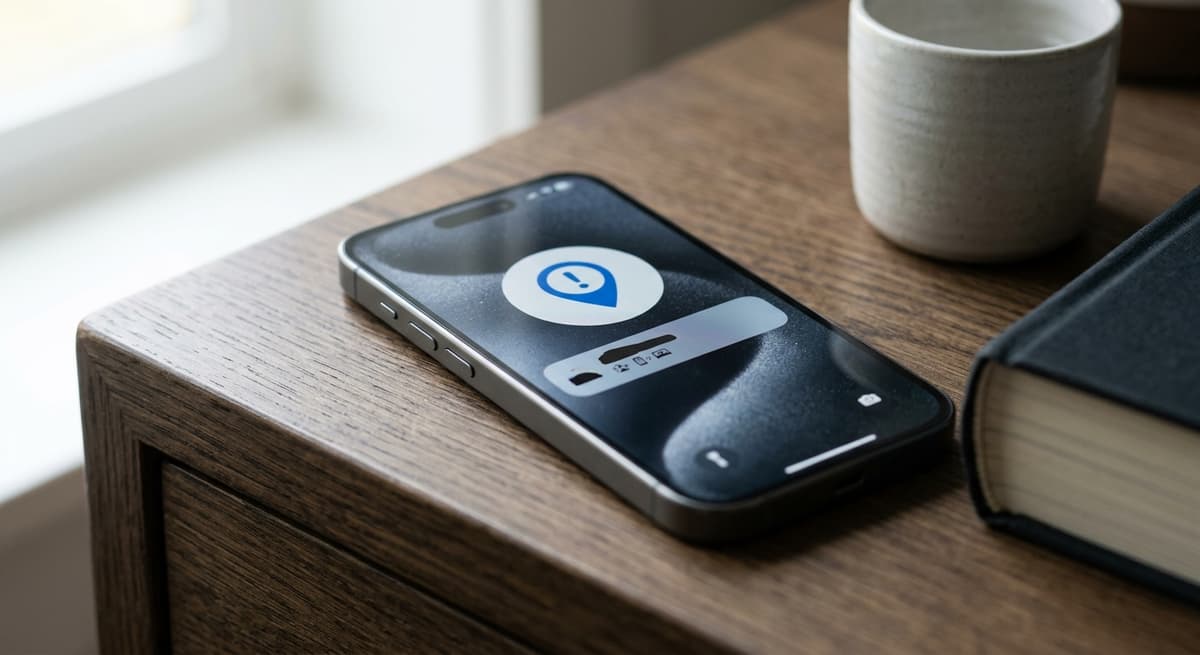
Both Apple and Google now push unknown-tracker alerts to iPhones and Android phones. If your phone warns you that an unrecognized tracker is moving with you, take it seriously.
Penalties: From a Misdemeanor to 15 Years in Two Years
Few criminal statutes have escalated this fast. Here is how the penalty for tracking someone without consent in Florida has changed:
| Time period | Offense level | Maximum penalty |
|---|---|---|
| Before October 1, 2024 | Second-degree misdemeanor | 60 days in jail, $500 fine |
| October 1, 2024 (SB 758) | Third-degree felony | 5 years in prison, $5,000 fine |
| October 1, 2025 (SB 1168), when committed to facilitate a dangerous crime | Second-degree felony | 15 years in prison, $10,000 fine |
Maximum terms come from Florida's general sentencing statute, Section 775.082. A conviction also means a permanent felony record, and tracking conduct frequently brings parallel charges for stalking, aggravated stalking, or violating an injunction.
Civil Lawsuits and Injunctions
Statute 934.425 is a criminal statute and does not create its own right to sue. Florida's wiretap remedy, Section 934.10, covers intercepted communications, not location tracking. Victims still have civil options:
- Invasion of privacy. Florida recognizes the tort of intrusion upon seclusion. Secretly monitoring someone's daily movements is the kind of conduct this claim was built for, and victims can seek damages.
- Protective injunctions. A victim can petition for a stalking injunction or a domestic violence injunction, and covert tracking is strong evidence. Our guide to Florida restraining order laws walks through the process, which is free to file.
- Family court consequences. Evidence obtained by illegal tracking can backfire badly in divorce or custody cases, and the tracking itself can be raised against the person who did it.
What to Do If You Find a Tracker on Your Car
Finding a tracker is unnerving. What you do next matters, both for your safety and for any prosecution.
- Do not destroy it. The device is evidence, and it often carries serial numbers police can trace to a purchaser or linked account.
- Photograph it in place before touching anything. Capture where and how it was hidden.
- Think about safety before removing it. If you suspect a stalker or abusive ex, removing the tracker tells them you found it. Many advocates suggest contacting police or a domestic violence advocate first to plan safely.
- Report it to law enforcement. Reference Florida Statute 934.425. Since the felony upgrade, agencies take these reports far more seriously.
- Consider an injunction. A stalking or domestic violence injunction adds criminal consequences if the person contacts or follows you again.
- Turn on tracker alerts on your phone, and have a mechanic or police department sweep the vehicle if you cannot locate a suspected device.
Sources
- Fla. Stat. § 934.425 - Installation or use of tracking devices or tracking applications
- CS/SB 758 (2024) - Tracking Devices and Applications, Chapter 2024-114
- SB 1168 (2025) - Tracking Devices and Applications, Chapter 2025-71
- Fla. Stat. § 784.048 - Stalking
- Fla. Stat. § 907.041 - Pretrial detention and release (dangerous crime definition)
- Fla. Stat. § 775.082 - Penalties
- United States v. Jones, 565 U.S. 400 (2012) - Cornell Law School LII
- 18 U.S.C. § 2261A - Stalking - Cornell Law School LII
Disclaimer: This article is for general informational purposes only and is not legal advice. Laws change, and how they apply depends on your specific situation. If you are facing charges or believe you are being tracked, consult a licensed Florida attorney. If you are in immediate danger, call 911.
Explore tracking rules in other states in our GPS Tracking Laws by State hub.
More Florida Laws
Frequently Asked Questions
Is it illegal to put a GPS tracker on my spouse's car in Florida?
If the car is titled in your spouse's name and they have not consented, yes. It is a third-degree felony under Statute 934.425, and marriage does not create an exception. If you are a co-owner of the vehicle, the owner exception may cover you, but using a tracker to stalk or harass a spouse can still bring stalking charges and the second-degree felony enhancement.
Can I put a tracker on a car I own if someone else drives it?
Generally yes. The owner and lessee exception lets you track your own vehicle even when a family member is the primary driver. If you sell the car, you must remove the device or get the buyer's consent. And ownership is not a license to stalk: a pattern of monitoring someone can still violate Florida's stalking statute.
Can I track my teenager's car or phone in Florida?
Usually yes. Parents and legal guardians may track their minor children if the statute's consent rules are met: married parents where either consents, a sole surviving parent, a parent with sole custody, or divorced or separated parents who both consent. Once a child turns 18, the parental exception ends.
Is putting an AirTag in someone's bag a felony in Florida?
Yes. The statute covers any tracking device or application, and AirTags and Tile trackers qualify. Slipping one into a bag, purse, or vehicle without consent is a third-degree felony, and it becomes a second-degree felony with up to 15 years in prison if done to facilitate stalking or another dangerous crime.
Can a private investigator use a GPS tracker in Florida?
Not without the vehicle owner's consent. Statute 934.425 expressly excludes private investigators from the business purpose exception. A PI can lawfully track a vehicle only when the client owns or leases it, or another exception applies. A PI who plants a tracker on a subject's car commits a felony.
Can my employer require a tracking app on my personal phone?
An employer can require location tracking as a condition of employment if you know about it and consent, and many limit it to work hours. Installing tracking software on your personal phone or car without your knowledge is a felony. You can refuse consent, though refusal may carry job consequences in an at-will state.
Do police need a warrant to put a GPS tracker on my car?
Generally yes. In United States v. Jones (2012), the U.S. Supreme Court held that attaching a GPS device to a vehicle and monitoring its movements is a search under the Fourth Amendment. Florida's statute exempts law enforcement acting as part of a criminal investigation, but constitutional warrant requirements still apply.
What is the penalty for [GPS tracking](/us-laws/gps-tracking-laws) someone in Florida in 2026?
Tracking a person or their property without consent is a third-degree felony punishable by up to 5 years in prison and a $5,000 fine. If the tracking was committed to facilitate a dangerous crime such as stalking, domestic violence, or kidnapping, it is a second-degree felony punishable by up to 15 years in prison.
Updates
Corrected the count of statutory exceptions under Fla. Stat. 934.425(4) from seven to eight, listing the Department of Corrections and Department of Juvenile Justice exemptions separately as the statute does.
Corrected the description of consent revocation under Fla. Stat. 934.425(3): the statute presumes consent revoked only on a divorce filing between spouses or a protective injunction between the parties, not through a general, anytime withdrawal of permission.
Governing law re-checked for recent changes
Independently fact-checked against the cited primary sources
The Law Behind This Article
This article rests on the statutory provisions below, held in our own legal record and retrieved from the official source. Tap a section to read the operative text.
Florida Statutes
§ 934.425Installation or use of tracking devices or tracking applications; exceptions; penalties.In forcecited in 4 of our articles
(1) As used in this section, the term:(a) “Business entity” means any form of corporation, partnership, association, cooperative, joint venture, business trust, or sole proprietorship that conducts business in this state. (b) “Tracking application” means any software program whose primary purpose is to track or identify the location or movement of an individual. (c) “Tracking device” means any device whose primary purpose is to reveal its location or movement by the transmission of electronic signals. (d) “Person” means an individual but does not include a business entity. (2) Except as provided in subsection (4), a person may not knowingly:(a) Install or place a tracking device or tracking application on another person’s property without that person’s consent; or (b) Use a tracking device or tracking application to determine the location or movement of another person or another person’s property without that person’s consent.
Official text (excerpt) · last checked 2026-07-28 · Read the full text in our law library · Verify at leg.state.fl.us
Also relied on in: Florida Makes Using a GPS Tracker or AirTag to Aid a Violent Crime a Second-Degree Felony, Florida Employee Monitoring Laws: Employer Rules (2026), GPS Tracking Laws by State: Is It Legal to Put a Tracker on a Car? (2026)
§ 784.048Stalking; definitions; penalties.In force
(1) As used in this section, the term:(a) “Harass” means to engage in a course of conduct directed at a specific person which causes substantial emotional distress to that person and serves no legitimate purpose. (b) “Course of conduct” means a pattern of conduct composed of a series of acts over a period of time, however short, which evidences a continuity of purpose. The term does not include constitutionally protected activity such as picketing or other organized protests. (c) “Credible threat” means a verbal or nonverbal threat, or a combination of the two, including threats delivered by electronic communication or implied by a pattern of conduct, which places the person who is the target of the threat in reasonable fear for his or her safety or the safety of his or her family members or individuals closely associated with the person, and which is made with the apparent ability to carry out the threat to cause such harm. It is not necessary to prove that the person making the threat had the intent to actually carry out the threat. The present incarceration of the person making the threat is not a bar to prosecution under this section. (d) “Cyberstalk” means:1.
Official text (excerpt) · last checked 2026-07-28 · Read the full text in our law library · Verify at leg.state.fl.us
Cited in 71 court opinions in our collectionLatest citing opinion in our collection: 2026
Opinions citing this section in our collection:
- In Re Standard Jury Inst.-Criminal Cases (Supreme Court of Florida 2000, 765 So. 2d 692)“…Comment This instruction is based on the text of section 784.048, Florida Statutes, (1997), and generally patterned after…”
- State v. Kahles (District Court of Appeal of Florida 1994, 644 So. 2d 512)“…for appellee. PER CURIAM. The trial court has held that section 784.048, Florida Statutes (Supp. 1992), Florida's Stalking Statut…”
- Sult v. State (Supreme Court of Florida 2005, 906 So. 2d 1013)“…1997); or Bouters v. State, 659 So.2d 235 (Fla.1995). Section 784.048, Florida Statutes (Supp.1992), Florida's stalking statute…”
Identified automatically from the court opinions citing this section — not a ranking of which case controls.
§ 907.041Pretrial detention and release.In forcecited in 2 of our articles
(1) LEGISLATIVE INTENT.—It is the policy of this state that persons committing serious criminal offenses, posing a threat to the safety of the community or the integrity of the judicial process, failing to appear at trial, or posing a substantial flight risk because of their status as unauthorized aliens be detained upon arrest. However, persons found to meet specified criteria shall be released under certain conditions until proceedings are concluded and adjudication has been determined. The Legislature finds that this policy of pretrial detention and release will assure the detention of those persons posing a threat to society while reducing the costs for incarceration by releasing, until trial, those persons not considered a danger to the community who meet certain criteria. It is the intent of the Legislature that the primary consideration be the protection of the community from risk of physical harm to persons. (2) RULES OF PROCEDURE.—Procedures for pretrial release determinations shall be governed by rules adopted by the Supreme Court.
Official text (excerpt) · last checked 2026-07-28 · Read the full text in our law library · Verify at leg.state.fl.us
Cited in 58 court opinions in our collectionLatest citing opinion in our collection: 2025
Opinions citing this section in our collection:
- Merdian v. Cochran (District Court of Appeal of Florida 1995, 654 So. 2d 573)“…Rule. 3.131(f). [2] See also Art. I, § 14 Fla. Const.; Fla. Stat. § 907.041 (3): "It is the intent of the Legislatu…”
- Bush v. State (District Court of Appeal of Florida 2011, 74 So. 3d 130)“…view an order entered under the pretrial detention statute, section 907.041, Florida Statutes (2011). We conclude that the detention…”
- Harvey v. State (District Court of Appeal of Florida 2017, 238 So. 3d 353)“…the Petitioner to await his January 16, 2018 trial date. Section 907.041, Florida Statutes (2017), provides that it is the intent…”
Identified automatically from the court opinions citing this section — not a ranking of which case controls.
§ 775.082Penalties; applicability of sentencing structures; mandatory minimum sentences for certain reoffenders previously released from prison.In forcecited in 8 of our articles
(1)(a) Except as provided in paragraph (b), a person who has been convicted of a capital felony shall be punished by death if the proceeding held to determine sentence according to the procedure set forth in s. 921.141 results in a determination that such person shall be punished by death, otherwise such person shall be punished by life imprisonment and shall be ineligible for parole. (b)1. A person who actually killed, intended to kill, or attempted to kill the victim and who is convicted under s. 782.04 of a capital felony, or an offense that was reclassified as a capital felony, which was committed before the person attained 18 years of age shall be punished by a term of imprisonment for life if, after a sentencing hearing conducted by the court in accordance with s. 921.1401, the court finds that life imprisonment is an appropriate sentence. If the court finds that life imprisonment is not an appropriate sentence, such person shall be punished by a term of imprisonment of at least 40 years. A person sentenced pursuant to this subparagraph is entitled to a review of his or her sentence in accordance with s. 921.1402(2)(a). 2.
Official text (excerpt) · last checked 2026-07-28 · Read the full text in our law library · Verify at leg.state.fl.us
Cited in 291 court opinions in our collectionLatest citing opinion in our collection: 2026
In the courts (editorial summary, independently checked):State v. Dixon (1973) held Section 775.082, with sections 782.04 and 921.141, constitutional under the test of Furman v. Georgia. Kenneth R. Jackson v. State of Florida (2017) held that Section 775.082(2)'s automatic life-sentence remedy did not apply after Hurst v. Florida, which invalidated only certain sentencing procedures.
Opinions citing this section in our collection:
- State v. Dixon (Supreme Court of Florida 1973, 283 So. 2d 1)✓Four consolidated murder cases challenged Florida's post-Furman capital scheme; the Florida Supreme Court held sections 775.082, 782.04 and 921.141 constitutional, reading the listed aggravating and mitigating circumstances as definite enough to channel sentencing discretion.
- Woods v. State (District Court of Appeal of Florida 1999, 740 So. 2d 20)✓Woods committed an unarmed robbery about a month after release from prison and was sentenced to 15 years as a prison releasee reoffender under section 775.082(8); the court affirmed, rejecting separation of powers, vagueness and equal protection challenges.
- Kenneth R. Jackson v. State of Florida (Supreme Court of Florida 2017, 42 Fla. L. Weekly Supp. 361)✓Jackson was sentenced to death for a murder during a sexual battery on an 11-1 jury recommendation; the court found Hurst error but held section 775.082(2)'s life-sentence remedy inapplicable, since Hurst voided only part of section 921.141, and ordered a new penalty phase.
Identified automatically from the court opinions citing this section — not a ranking of which case controls.
Also relied on in: Hit and Run Laws in the United States (2026 Guide), How Long Is a Life Sentence in Florida? (2026 Guide), Florida's New Hit-and-Run Law Lets Courts Order Restitution for Property Damage
United States Code Title 18
§ 2261AStalkingIn forcecited in 53 of our articles
Whoever— travels in interstate or foreign commerce or is present within the special maritime and territorial jurisdiction of the United States, or enters or leaves Indian country, with the intent to kill, injure, harass, intimidate, or place under surveillance with intent to kill, injure, harass, or intimidate another person, and in the course of, or as a result of, such travel or presence engages in conduct that— places that person in reasonable fear of the death of, or serious bodily injury to— that person; an immediate family member (as defined in section 115) of that person; a spouse or intimate partner of that person; or the pet, service animal, emotional support animal, or horse of that person; or causes, attempts to cause, or would be reasonably expected to cause substantial emotional distress to a person described in clause (i), (ii), or (iii) of subparagraph (A); or with the intent to kill, injure, harass, intimidate, or place under surveillance with intent to kill, injure, harass, or intimidate another person, uses the mail, any interactive computer service or electronic communication service or electronic communication system of interstate commerce, or any other…
Official text (excerpt) · last checked 2026-07-28 · Read the full text in our law library · Verify at uscode.house.gov
Cited in 350 court opinions in our collectionLatest citing opinion in our collection: 2026
In the courts (editorial summary, independently checked):Federal appeals courts have construed and upheld Section 2261A. United States v. Walker (2011) read in the course of, or as a result of such travel disjunctively, so pre-travel threats plus resulting fear sufficed. United States v. Amy Gonzalez (2018) held it neither overbroad nor vague and no First Amendment violation as applied.
Opinions citing this section in our collection:
- United States v. Walker (Court of Appeals for the First Circuit 2011, 665 F.3d 212)✓After emailing threats to his estranged wife, the defendant flew from Michigan to Puerto Rico and was arrested on arrival. The court read the disjunctive phrase in 2261A(1) to cover travel that itself places the target in reasonable fear, and upheld the stalking conviction.
- United States v. Amy Gonzalez (Court of Appeals for the Third Circuit 2018, 905 F.3d 165)✓Relatives waged a years-long campaign against a mother that ended in a courthouse shooting. The court held 2261A is neither overbroad nor vague because it reaches harassing conduct, and that the mental states it lists are alternative means, not elements; convictions affirmed.
- United States v. Wills (Court of Appeals for the Fourth Circuit 2003, 346 F.3d 476)✓A burglary suspect pursued the witness who identified him at a preliminary hearing; the witness later died. The court held the evidence met each element of 2261A: travel from D.C. to Virginia, intent to harm or harass, and reasonable fear of death; conviction affirmed.
Identified automatically from the court opinions citing this section — not a ranking of which case controls.
Also relied on in: Alabama GPS Tracking Laws: Is It Legal to Put a Tracker on a Car? (2026), Colorado GPS Tracking Laws: Is It Legal to Put a Tracker on a Car? (2026), Ohio GPS Tracking Laws: Is It Legal to Put a Tracker on a Car? (2026)
Search our full record of US law — 2.1 million sections, every state + federal →
Sources and References
- Fla. Stat. § 934.425 (Installation or use of tracking devices or tracking applications)(leg.state.fl.us)
- CS/SB 758 (2024), Chapter 2024-114, Laws of Florida(flsenate.gov)
- SB 1168 (2025), Chapter 2025-71, Laws of Florida(flsenate.gov)
- Fla. Stat. § 784.048 (Stalking)(leg.state.fl.us)
- Fla. Stat. § 907.041 (Dangerous crime definition)(leg.state.fl.us)
- Fla. Stat. § 775.082 (Penalties)(leg.state.fl.us)
- United States v. Jones, 565 U.S. 400 (2012)(law.cornell.edu)
- 18 U.S.C. § 2261A (Federal stalking statute)(law.cornell.edu)