
Georgia
Georgia Recording Laws (2026): One-Party Audio, All-Party Video
Independently fact-checked against primary sources (last audited August 15, 2026). · Reviewed by the RecordingLaw editorial team. · Law checked current as of August 9, 2026. · 12 primary sources cited on this page. How we verify our legal content
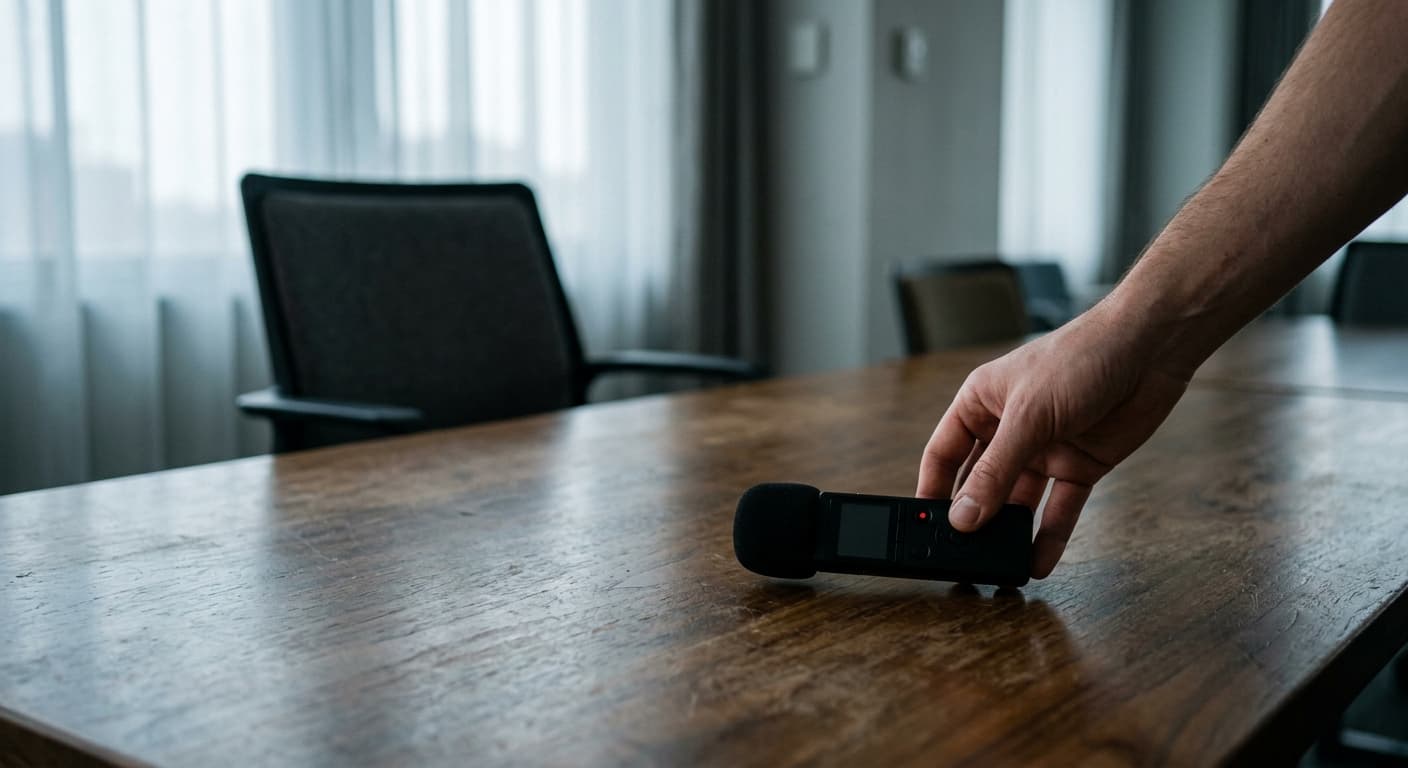
Georgia applies a split consent standard: audio recording requires only one-party consent under O.C.G.A. § 16-11-66(a), meaning any participant can record without telling anyone else. Video recording in a private place out of public view requires the consent of all persons observed under O.C.G.A. § 16-11-62(2). The Georgia Supreme Court anchored that split in State v. Cohen, 302 Ga. 616 (2017). Illegal recording is a felony carrying one to five years in prison, a fine of up to $10,000, or both, and a civil wrong.
Georgia recording law at a glance
| Question | Answer |
|---|---|
| Audio consent rule | One-party (O.C.G.A. § 16-11-66(a)) |
| Video in a private place out of public view | All-party (O.C.G.A. § 16-11-62(2)) |
| Video in a public place | Generally permitted; statute applies to private places only |
| Criminal penalty | Felony, 1 to 5 years and/or up to $10,000 (O.C.G.A. § 16-11-69) |
| Civil remedy | Common-law privacy torts (intrusion, public disclosure); punitives under O.C.G.A. § 51-12-5.1 |
| Hidden cameras / voyeurism | All-party consent required in private places; § 16-11-62(2) |
| Recording police in public | Protected under First Amendment per Smith v. City of Cumming (11th Cir. 2000) |
For a full list of states that share Georgia's audio one-party rule, see one-party consent states.
Recording in-person conversations in Georgia
Georgia's audio consent rule lives in O.C.G.A. § 16-11-66(a): "Nothing in Code Section 16-11-62 shall prohibit a person from intercepting a wire, oral, or electronic communication where such person is a party to the communication or one of the parties to the communication has given prior consent to such interception." If you are in the conversation, you can record it.
The Georgia Supreme Court established the foundational participant-recording rule in Mitchell v. State, 239 Ga. 3, 235 S.E.2d 509 (1977), holding that a party to a conversation does not commit criminal eavesdropping by recording or divulging it. That principle was later codified into § 16-11-66(a) and remains good law.
The prohibition on clandestine audio recording sits in O.C.G.A. § 16-11-62(1): it is unlawful to clandestinely overhear, transmit, or record the private conversation of another originating in any private place. The § 16-11-66(a) one-party exception is the gateway out of that prohibition for participants and anyone with a participant's prior consent. Outside a private place, such as on a public street or at a public meeting, the statute does not reach the recording at all.
One important carve-out involves minors. Under § 16-11-66(b), recording a telephone or electronic communication to which a child under 18 is a party requires either a superior-court order or a parent or guardian's prior consent. The Georgia Court of Appeals held in Bishop v. State, 241 Ga. App. 517, 526 S.E.2d 917 (1999), that a minor alone lacks the legal capacity to consent under the statute, even at older ages. A separate parental-monitoring carve-out in § 16-11-66(d) allows a parent to monitor a minor's calls or electronic communications from within the family home for the welfare of the child.
Recording phone calls in Georgia
The one-party consent rule of O.C.G.A. § 16-11-66(a) applies fully to phone calls. A Georgia caller who is a party to the call may record without telling the other person.
The complication arises with interstate calls. When the other party is in an all-party-consent state, the safer approach is to comply with the stricter state and get consent on the record before recording. Core all-party states include California, Florida, Illinois, Maryland, Massachusetts, Montana, New Hampshire, Pennsylvania, and Washington. A handful of states need a sharper hedge: Connecticut is criminally one-party but imposes civil liability for recording a call without all-party consent (Conn. Gen. Stat. section 52-570d); Oregon requires all-party consent for in-person conversations but stays one-party for phone calls (ORS 165.540); Delaware's status is contested, since its wiretap statute reads one-party while a separate privacy statute pulls the other way; and Nevada, though generally one-party, is treated as functionally all-party for phone calls under the Nevada Supreme Court's reading of NRS 200.620 in Lane v. Allstate Ins. Co., 114 Nev. 1176 (1998). For the full state-by-state breakdown, see two-party consent states.
For Georgia businesses, best practice is a recorded preamble at the start of each call ("This call may be recorded for quality assurance and training purposes") because customers may be calling from stricter states. That notice provides implied consent and covers the all-party states.
For a deeper treatment, see Georgia Phone Call Recording Laws.
Hidden cameras, doorbells, and nanny cams
Video recording in Georgia runs through O.C.G.A. § 16-11-62(2), which prohibits using any device, without the consent of all persons observed, to observe, photograph, or record activities in a private place out of public view. The statute carves out four main exceptions: (A) monitoring of incarcerated persons by correctional officers (except attorney-client consultations); (B) lawful security devices used by an owner or occupier to monitor their own property; (C) owner monitoring of a residence's curtilage; and (D) law-enforcement surveillance in an official capacity.
An outward-facing Ring doorbell pointing at a homeowner's own front porch or driveway generally falls within the security-device and curtilage exceptions under § 16-11-62(2)(B) and (C). The statute is designed to permit exactly that use.
A nanny cam in a shared living area (kitchen, living room) is a closer call, but generally permissible when the space is a common area of the homeowner's own home. Cameras placed in private spaces of guests, tenants, or domestic workers (bathrooms, guest bedrooms, an employee's quarters) without all-party consent can violate § 16-11-62(2) and trigger the § 16-11-69 felony penalty.
Audio is a separate trap. Many smart cameras record audio. A camera recording conversations in private spaces without a participant's consent can also violate § 16-11-62(1), even where the security-device exception covers the video. A camera owner who is not a party to the conversation in a guest room cannot rely on the § 16-11-66(a) participant rule. Dashcams are generally lawful: public roadways are not private places under § 16-11-62, and the driver-owner is typically a participant in any in-vehicle conversation.
For sub-page coverage, see Georgia Security Camera Laws and Georgia Voyeurism and Hidden Camera Laws.
Penalties for illegal recording in Georgia
Criminal penalties
Except as otherwise provided in § 16-11-66.1(d), a violation of any provision of Part 1 (O.C.G.A. §§ 16-11-60 through 16-11-70) is penalized under § 16-11-69 as a felony: 1 to 5 years in prison, a fine up to $10,000, or both. That single penalty schedule covers audio violations under § 16-11-62(1), video violations under § 16-11-62(2), and distribution violations under § 16-11-62(6).
| Conduct | Criminal penalty |
|---|---|
| Clandestine audio recording in a private place, § 16-11-62(1) | Felony, 1 to 5 years and/or up to $10,000 |
| Video recording in a private place without all-party consent, § 16-11-62(2) | Felony, 1 to 5 years and/or up to $10,000 |
| Distribution of unlawfully obtained recordings, § 16-11-62(6) | Felony, 1 to 5 years and/or up to $10,000 |
| Recording a minor's call without required consent, § 16-11-66(b) | Felony (charged via § 16-11-62, penalized via § 16-11-69) |
| NCII first offense via other means, § 16-11-90 | Misdemeanor of a high and aggravated nature |
| NCII first offense posted to pornographic website, § 16-11-90 | Felony, 1 to 5 years and/or up to $100,000 |
| NCII second or subsequent offense (other means), § 16-11-90 | Felony, 1 to 5 years and/or up to $100,000 |
| NCII second or subsequent offense (pornographic website), § 16-11-90 | Felony, 2 to 5 years and/or up to $100,000 (2021 amendment) |
Statutory exclusionary rule
O.C.G.A. § 16-11-67 provides that no evidence obtained in violation of Part 1 is admissible in any Georgia court, except to prove a Part 1 violation. This exclusionary rule applies in both civil and criminal cases, and it is broader than the federal Fourth Amendment rule. When § 16-11-66(a) one-party consent applies, the recording is lawfully obtained and § 16-11-67 does not bar admissibility.
Civil remedies
Georgia recognizes the four common-law invasion-of-privacy branches: intrusion upon seclusion, appropriation of likeness, public disclosure of private facts, and false light. The foundational Georgia privacy-tort decision is Pavesich v. New England Life Ins. Co., 122 Ga. 190 (1905). Punitive damages are available under O.C.G.A. § 51-12-5.1 on a clear-and-convincing showing of willful misconduct, malice, or wantonness. The personal-injury statute of limitations under § 9-3-33 is two years. A parallel federal cause of action under the Wiretap Act, 18 U.S.C. § 2520, provides statutory damages.
Recording the police in Georgia
The Eleventh Circuit established the First Amendment right to record police performing public duties in public in Smith v. City of Cumming, 212 F.3d 1332 (11th Cir. 2000), a case that arose in Cumming, Forsyth County, Georgia. The right is subject to reasonable time, place, and manner restrictions. The 11th Circuit covers Georgia, Florida, and Alabama; Smith is binding in Georgia federal courts.
Georgia's recording statute reinforces the same outcome. O.C.G.A. § 16-11-62 applies only to private places, so filming officers on a public street, at a public arrest, or at a public-meeting venue is outside the statute's reach entirely. Recording a traffic stop on a public roadway, an arrest on a public sidewalk, or a police interaction at a public park is protected under both federal and state law.
Practical limits remain: do not physically interfere with police operations, do not trespass to get a better vantage point, and comply with lawful orders to step back to a safe distance. Georgia's Open Meetings Act, O.C.G.A. § 50-14-1, additionally permits visual and sound recording of open meetings of state and local agencies, including city and county commission meetings, school board meetings, and public hearings.
For a deeper treatment, see Georgia Laws on Recording Police.
Special topics in Georgia
Audio vs. video: Georgia's defining split
Georgia is unusual in applying different consent standards to audio and video. The Georgia Supreme Court resolved the question definitively in State v. Cohen, 302 Ga. 616, 807 S.E.2d 861 (2017): the § 16-11-66(a) one-party-consent exception applies to interception of wire, oral, or electronic communications (the audio prong) and does not extend to the § 16-11-62(2) visual-surveillance prong. A person who arranges a covert video recording of a sexual encounter, even with the consent of one participant, can be prosecuted under § 16-11-62(2). Audio one-party consent does not bail anyone out of the all-party video rule.
Workplace recording and the NLRB
An employer who is a party to a workplace audio conversation can record under § 16-11-66(a). Video in private spaces such as restrooms or locker rooms is restricted under § 16-11-62(2). On the federal labor side, the NLRB held in Stericycle, Inc., 372 NLRB No. 113 (2023), that a blanket no-recording handbook rule is presumptively unlawful unless the employer can show a substantial, narrowly tailored business interest. Separately, NLRB Acting General Counsel Cowen issued GC 25-07 (June 25, 2025) treating surreptitious recording of collective-bargaining sessions as a per se NLRA violation; that memo is prosecutorial guidance, not binding Board precedent, and its reach is limited to the bargaining table. An employee who is a participant in a workplace conversation may still record it lawfully under § 16-11-66(a), independent of what the handbook says. For a national treatment, see Can an employer record conversations without consent.
NCII, deepfakes, and sexual extortion
Georgia's primary NCII statute, O.C.G.A. § 16-11-90, prohibits electronically transmitting or posting a photograph or video depicting nudity or sexually explicit conduct of an adult "including a falsely created videographic or still image." The "falsely created" clause was added by the 2020 amendment (eff. Aug. 3, 2020) to capture AI-generated and edited deepfake imagery. Posting to a pornographic website on a first offense is a felony (1 to 5 years, up to $100,000 fine); posting via other means on a first offense is a misdemeanor of a high and aggravated nature; second or subsequent offenses are felonies. The companion sexual extortion statute, O.C.G.A. § 16-11-92 (enacted 2019, eff. July 1, 2019), is a misdemeanor of a high and aggravated nature on a first offense and a felony on subsequent offenses. Note: § 16-11-66.1 is the stored-communications warrant-procedure statute, not a recording-consent or extortion provision.
Federal overlay
The federal Wiretap Act, 18 U.S.C. §§ 2510 to 2522, sets a one-party-consent floor under § 2511(2)(d). Georgia follows that floor for audio but is stricter for video in private places. The FCC's February 2024 declaratory ruling (FCC 24-17) confirmed that AI-generated voice in calls qualifies as "artificial or prerecorded voice" under the TCPA; a Georgian receiving an AI-cloned-voice scam call has a federal TCPA claim and may record the call under § 16-11-66(a). The FCC's One-to-One Consent Rule (FCC 24-24) was vacated by the Eleventh Circuit (mandate issued April 30, 2025) and is not in force. The federal TAKE IT DOWN Act (signed May 19, 2025; platform compliance May 19, 2026) adds a federal notice-and-takedown remedy for NCII alongside § 16-11-90.
Body-worn cameras and open records
Georgia law-enforcement body-worn-camera and in-vehicle video retention is governed by O.C.G.A. § 50-18-96: 180-day baseline retention, extended to 30 months when the recording is part of a criminal investigation, vehicular accident, detainment or arrest, or use of force. Public access flows through the Open Records Act, O.C.G.A. § 50-18-70 et seq.
Recording court proceedings
Georgia's eavesdropping statute does not govern cameras or recorders inside a courtroom; a separate court rule does. Uniform Superior Court Rule 22, revised effective May 1, 2018 to implement O.C.G.A. § 15-1-10.1, requires anyone who wants to record, photograph, or broadcast a Georgia superior court proceeding, including news media, to first request the presiding judge's permission, typically on a form supplied by the court. The Georgia Supreme Court applies a similar advance-request process to its own sessions. Recording a courtroom without following Rule 22 can violate the court's own rules independent of Title 16's eavesdropping provisions.
Recent legal developments
- 2022 SB 10 (Ga. L. 2022): added the GPS-tracking prohibition to § 16-11-62, now codified at paragraph (8). It bars intentionally and clandestinely placing a global positioning system or other electronic monitoring device on a vehicle owned or leased by a person who holds a protective order against the person placing it.
- 2022 SB 539 (Ga. L. 2022): added § 16-11-62(7), making it unlawful to knowingly photograph or record patients in a facility operated by a county board of health without the consent of all patients observed, subject to the same subparagraph (2)(A) through (2)(D) exceptions. It made no change to the incarcerated-person, security-device, curtilage, or law-enforcement exceptions in § 16-11-62(2).
- 2020 amendment to § 16-11-90 (eff. Aug. 3, 2020): added "falsely created videographic or still image" to capture AI deepfake NCII.
- TAKE IT DOWN Act (May 19, 2025): federal NCII/deepfake notice-and-takedown; platform compliance May 19, 2026.
- FCC 24-24 vacatur: 11th Circuit (Georgia's own circuit) vacated the One-to-One Consent TCPA rule; mandate April 30, 2025; rule removed by FCC via DA 25-621.
- NLRB GC 25-07 (June 25, 2025): prosecutorial memo treating surreptitious recording of bargaining sessions as per se NLRA violation; targeted at the bargaining table only.
- Proposed Georgia AI bills: Georgia bill numbers are reused each biennium, so a bare number is not a reliable identifier. Two numbers that circulate in AI coverage are in fact the numbers of enacted acts behind the statutes on this page: § 16-11-92 was enacted by Ga. L. 2019, p. 912, § 2/SB 9, and § 16-11-90 was amended by Ga. L. 2021, p. 442, § 1/SB 78. The only AI-specific provision in force in this area is the "falsely created videographic or still image" language added to § 16-11-90 by the 2020 amendment. Check the status and session of any other proposed AI bill at legis.ga.gov before treating it as Georgia law.
Georgia recording laws in depth
By type of recording
- Georgia Audio Recording Laws: One-Party Consent Rules and Penalties (2026)
- Georgia Video Recording Laws: All-Party Consent in Private Places (2026)
- Georgia Phone Call Recording Laws: One-Party Consent Rules (2026)
- Georgia Voyeurism and Hidden Camera Laws: Criminal Penalties (2026)
- Georgia Dashcam Laws: Windshield Mounting and Recording Rules (2026)
By place or relationship
- Georgia Workplace Recording Laws: Employee and Employer Rules (2026)
- Georgia Laws on Recording Police: Your First Amendment Rights (2026)
- Georgia Laws on Recording in Public: What Is Legal (2026)
- Georgia Security Camera Laws: Residential and Business Rules (2026)
- Georgia Landlord-Tenant Recording Laws: Rights and Restrictions (2026)
- Georgia Medical Recording Laws: Patient Rights and HIPAA Rules (2026)
- Georgia School Recording Laws: Student and Parent Rights (2026)
More Georgia laws
- Georgia AI Laws and Regulation
- Georgia At-Will Employment Laws
- Georgia Data Privacy Laws
- Georgia Landlord-Tenant Laws
- Georgia Expungement Laws
This article is general legal information, not legal advice. Recording laws change and apply differently to each situation. For advice about your situation, consult a licensed Georgia attorney.
More Georgia Laws
Frequently Asked Questions
Is Georgia a one-party or two-party consent state?
Georgia is a one-party consent state for audio under O.C.G.A. § 16-11-66(a). Any participant in the conversation may record without notifying anyone else. Video in a private place out of public view is different: O.C.G.A. § 16-11-62(2) requires all-party consent, a split the Georgia Supreme Court confirmed in State v. Cohen, 302 Ga. 616 (2017).
Can I record a phone call in Georgia without telling the other person?
Yes, if both parties are in Georgia, under O.C.G.A. § 16-11-66(a). If the other person is in an all-party-consent state such as California, Florida, Illinois, or Washington, comply with the stricter rule and get their consent before recording. Federal one-party consent under 18 U.S.C. § 2511(2)(d) sets the floor, but the more protective state law governs.
Is it legal to video record someone in Georgia without their consent?
In public, generally yes. In a private place out of public view (a home, hotel room, closed office, bathroom, or locker room), no. O.C.G.A. § 16-11-62(2) requires all-party consent for video in such settings, and the Georgia Supreme Court confirmed in State v. Cohen (2017) that the audio one-party exception does not extend to video.
Is recording someone without consent a felony in Georgia?
Yes. Violations of Part 1 (§§ 16-11-60 through 16-11-70), including both the audio rule of § 16-11-62(1) and the video rule of § 16-11-62(2), are felonies under O.C.G.A. § 16-11-69: 1 to 5 years in prison, a fine up to $10,000, or both. The statute carves out one express exception, for § 16-11-66.1(d).
Are Ring doorbell or nanny cam recordings legal in Georgia?
An outward-facing Ring doorbell on the homeowner's own property is generally lawful under the security-device and curtilage exceptions in O.C.G.A. § 16-11-62(2)(B) and (C). Indoor cameras placed in private spaces of guests, tenants, or domestic workers (bathrooms, guest bedrooms) without all-party consent can violate § 16-11-62(2). Many smart cameras also record audio, which can separately implicate § 16-11-62(1) for private conversations.
Can I record police officers in Georgia?
Yes, openly and in public, subject to reasonable time, place, and manner restrictions. The Eleventh Circuit recognized the right in Smith v. City of Cumming, 212 F.3d 1332 (11th Cir. 2000), a case arising in Georgia. O.C.G.A. § 16-11-62 applies only to private places, so filming officers performing public duties in public is outside the statute entirely.
Can my employer record me at work in Georgia?
An employer who is a party to the audio conversation can record under § 16-11-66(a). Video in private spaces such as restrooms or locker rooms is restricted under § 16-11-62(2). Under federal NLRB doctrine (Stericycle, 2023), a blanket no-recording handbook policy is presumptively unlawful unless the employer can show a narrowly tailored, substantial business interest.
Can I sue someone for recording me illegally in Georgia?
Yes. Georgia recognizes common-law invasion-of-privacy torts, including intrusion upon seclusion and public disclosure of private facts, established in Pavesich v. New England Life Ins. Co., 122 Ga. 190 (1905). Punitive damages are available under O.C.G.A. § 51-12-5.1 on a clear-and-convincing showing of willful misconduct. A parallel federal claim under 18 U.S.C. § 2520 provides additional statutory damages.
Updates
Corrected the 2022 legislative history (the GPS-tracking prohibition in O.C.G.A. § 16-11-62 was added by SB 10, not SB 539), removed a bill-number list that contradicted the enacted acts this page relies on, and restated the § 16-11-69 felony penalty with its one-to-five-year range and its express § 16-11-66.1(d) exception.
Added Nevada to the interstate all-party-consent caution list and gave Connecticut, Oregon, and Delaware precise nuance instead of a flat all-party label, since each is more complicated than that; also repointed a dead case-law citation link.
Independently fact-checked against the cited primary sources
Governing law re-checked for recent changes
Fixed the lettering of O.C.G.A. § 16-11-62(2)'s four exceptions, which were rotated relative to the actual statute, and corrected the Ring doorbell citation (security-device and curtilage exceptions are subsections (B) and (C), not (A) and (B)) in the body text, FAQ, and Sources list.
Governing law re-checked for recent changes
Reviewed and approved by an editor
Restructured page per 2026 rewrite spec: added AEO lede, condensed at-a-glance table, split into focused H2 sections (in-person, phone calls, hidden cameras, penalties, police), pushed special topics (NCII, workplace/NLRB, federal overlay, body-cam) to compact subsections. Replaced FAQ with 8 plain-language questions. Added in-depth sub-page index. All statutes, case citations, and penalties re-verified against primary sources; no factual corrections required.
Refreshed for 2026: anchored audio/video distinction in State v. Cohen, 302 Ga. 616 (2017). Corrected O.C.G.A. § 16-11-66.1 from sexual-extortion (incorrect baseline) to stored-communications statute. Added § 16-11-90 NCII / deepfake (2020 amendment) and § 16-11-92 sexual-extortion (2021). Corrected body-cam retention citation to § 50-18-96 (not § 50-18-72(a)(4)). Added federal TAKE IT DOWN Act (signed May 19, 2025; platform compliance May 19, 2026). Documented the 11th Circuit vacatur of FCC 24-24 One-to-One Consent Rule (same circuit as Georgia, direct synergy hook). Added NLRB GC 25-07 surreptitious-bargaining memo (Tier 2 prosecutorial guidance, not Stericycle clarification). Replaced commercial-codifier URLs with state-college and reporter-form citations. Title and meta rewritten to surface the audio/video split in the SERP snippet. Keywords array populated (was empty in DB).
Refreshed for 2026: anchored audio/video distinction in State v. Cohen, 302 Ga. 616 (2017). Corrected O.C.G.A. § 16-11-66.1 from sexual-extortion (incorrect baseline) to stored-communications statute. Added § 16-11-90 NCII / deepfake (2020 amendment) and § 16-11-92 sexual-extortion (2019, eff. July 1, 2019). Corrected body-cam retention citation to § 50-18-96 (not § 50-18-72(a)(4)). Added federal TAKE IT DOWN Act (signed May 19, 2025; platform compliance May 19, 2026). Documented the 11th Circuit vacatur of FCC 24-24 One-to-One Consent Rule. Added NLRB GC 25-07 surreptitious-bargaining memo (Tier 2 prosecutorial guidance, not Stericycle clarification). Replaced commercial-codifier URLs with state-college and reporter-form citations.
Added wearable recording device guidance covering AI voice recorders (Plaud) and smart glasses (Meta Ray-Bans) under Georgia one-party consent law.
The Law Behind This Article
This article rests on the statutory provisions below, held in our own legal record and retrieved from the official source. Tap a section to read the operative text.
Official Code of Georgia Annotated
§ 16-11-66Interception of wire, oral, or electronic communication by party thereto; consent requirements for recording and divulging conversations to which child under 18 years is a party; parental exception.In forcecited in 18 of our articles
(a) Nothing in Code Section 16-11-62 shall prohibit a person from intercepting a wire, oral, or electronic communication where such person is a party to the communication or one of the parties to the communication has given prior consent to such interception. (b) After obtaining the consent…
Official text (excerpt) · last checked 2026-08-31 · Read the full text in our law library · Verify at advance.lexis.com
Cited in 43 court opinions in our collectionLatest citing opinion in our collection: 2020
In the courts (editorial summary, independently checked):State v. Cohen (2017) held OCGA 16-11-66(a) reaches only intercepted wire, oral, or electronic communications, so one party's consent does not authorize secretly video recording others in a private place. Bishop v. State (1999) barred vicarious parental consent under the text in force before the 2000 amendment.
Opinions citing this section in our collection:
- Dobbins v. State (Supreme Court of Georgia 1992, 262 Ga. 161)✓An investigator recorded a child's call to the defendant using only her father's consent and no warrant; the Supreme Court held the state had neither an investigation warrant nor valid consent of a party to the call, so the recording and its fruits were inadmissible.
- State v. Cohen (Supreme Court of Georgia 2017, 302 Ga. 616)✓A housekeeper secretly videoed her employer naked at home; the Supreme Court held the one-party-consent rule of OCGA 16-11-66(a) covers only intercepted wire, oral or electronic communications and does not permit video recording without the consent of all observed.
- State v. Madison (Court of Appeals of Georgia 2011, 311 Ga. App. 31)✓A molestation complainant secretly videoed the defendant in his law office; the court read the 16-11-66(a) participant exception to reach section 16-11-62, but found no wire, oral or electronic communication captured, so it affirmed suppression. Cohen overruled that reading.
Identified automatically from the court opinions citing this section — not a ranking of which case controls.
Also relied on in: Georgia AI Meeting Recording Laws (2026), Georgia Ring Doorbell Laws: What You Need to Know in 2026, Georgia Surveillance Camera Laws (2026 Guide)
§ 16-11-62Eavesdropping, surveillance, or intercepting communication which invades privacy of another; divulging private message.In forcecited in 25 of our articles
It shall be unlawful for: (1) Any person in a clandestine manner intentionally to overhear, transmit, or record or attempt to overhear, transmit, or record the private conversation of another which shall originate in any private place; (2) Any person, through the use of any device, without the
Official text (excerpt) · last checked 2026-08-31 · Read the full text in our law library · Verify at legis.ga.gov
Cited in 94 court opinions in our collectionLatest citing opinion in our collection: 2026
In the courts (editorial summary, independently checked):Kelley v. State (1998) held OCGA 16-11-62(2) reached a guardian who photographed a nude 16-year-old in the family bathroom, with no exception for family members. Burgeson v. State (1996) held a conversation recorded in a patrol car was not covered, because no reasonable expectation of privacy existed there.
Opinions citing this section in our collection:
- Burgeson v. State (Supreme Court of Georgia 1996, 267 Ga. 102)✓Police secretly recorded two arrestees talking in the back of a patrol car. The court held a police car is much like a jail cell, with no reasonable expectation of privacy, so intercepting that conversation did not offend OCGA 16-11-62 and the tape was admissible.
- Kelley v. State (Court of Appeals of Georgia 1998, 233 Ga. App. 244)✓A guardian photographed her 16-year-old niece nude and passed out in the family bathtub. The court held OCGA 16-11-62(2) reaches any person with no family exception, that the film need not be developed, and that a jury could find the bathroom a private place.
- Dobbins v. State (Supreme Court of Georgia 1992, 262 Ga. 161)“…th the consent of one of the parties to the conversation. OCGA § 16-11-62 (1) provides that: It shall be unlawf…”
Identified automatically from the court opinions citing this section — not a ranking of which case controls.
Also relied on in: Georgia Data Privacy Laws: Breach Notification & Consumer Rights (2026), Georgia Windshield Mounting Laws (2026 Guide), Georgia Audio Recording Laws: One-Party Consent Rules and Penalties (2026)
§ 16-11-69Penalty for violations of part.In forcecited in 13 of our articles
Except as otherwise provided in subsection (d) of Code Section 16-11-66.1, any person violating any of the provisions of this part shall be guilty of a felony and, upon conviction thereof, shall be punished by imprisonment for not less than one nor more than five years or a fine not to exceed…
Official text (excerpt) · last checked 2021-08-17 · Read the full text in our law library
Cited in 8 court opinions in our collectionLatest citing opinion in our collection: 2019
Opinions citing this section in our collection:
- Rutter v. Rutter (Court of Appeals of Georgia 2012, 316 Ga. App. 894)“…a penal statute, a violation being punishable as a felony. OCGA § 16-11-69. As such, the rule of lenity is a prope…”
- Prophitt v. the State (Court of Appeals of Georgia 2016, 336 Ga. App. 262)“…The crime of invasion of privacy constitutes a felony, see OCGA § 16-11-69, and this Court has previously held tha…”
- Price v. State (Court of Appeals of Georgia 2013, 320 Ga. App. 85)“…rt order. 2 Because Price was convicted of a felony, see OCGA § 16-11-69, and sentenced to five years of confine…”
Identified automatically from the court opinions citing this section — not a ranking of which case controls.
Also relied on in: Georgia Medical Recording Laws: Patient Rights and HIPAA Rules (2026), Georgia Phone Call Recording Laws: One-Party Consent Rules (2026), Georgia Security Camera Laws: Residential and Business Rules (2026)
§ 16-11-67Admissibility of evidence obtained in violation of part.In forcecited in 3 of our articles
No evidence obtained in a manner which violates any of the provisions of this part shall be admissible in any court of this state except to prove violations of this part. (Ga. L. 1967, p. 844, § 1; Code 1933, § 26-3007, enacted by Ga. L. 1968, p. 1249, § 1.)
Official text (excerpt) · last checked 2021-08-17 · Read the full text in our law library
Cited in 41 court opinions in our collectionLatest citing opinion in our collection: 2026
Opinions citing this section in our collection:
- Ransom v. Ransom (Supreme Court of Georgia 1985, 253 Ga. 656)“…Ann. § 26-2001, quoted in the majority opinion. In enacting OCGA § 16-11-67 the legislature effected an additional…”
- Registe v. State (Supreme Court of Georgia 2012, 292 Ga. 154)“…er OCGA § lG-ll-ee.Uor 18USC § 2702 (c) (4). 1 2 However, OCGA § 16-11-67 provides: “No evidence obtained in a ma…”
- Suggs v. State (Supreme Court of Georgia 2021, 310 Ga. 762)“…nversation that he had with Appellant. Appellant relies on OCGA § 16-11-67, which says: “No evidence obtained in…”
Identified automatically from the court opinions citing this section — not a ranking of which case controls.
Also relied on in: Was the Trump-Raffensperger Call Recording Legal Under Georgia Law?
§ 16-11-90Prohibition on nude or sexually explicit electronic transmissions.In forcecited in 7 of our articles
(a) As used in this Code section, the term: (1) "Harassment" means engaging in conduct directed at a depicted person that is intended to cause substantial emotional harm to the depicted person. (2) "Nudity" means: (A) The showing of the human male or female genitals, pubic area, or buttocks witho
Official text (excerpt) · last checked 2026-09-03 · Read the full text in our law library · Verify at legis.ga.gov
Cited in 6 court opinions in our collectionLatest citing opinion in our collection: 2023
In the courts (editorial summary, independently checked):Somerville v. White (2016) held that this Code section creates no private right of action. The Court of Appeals of Georgia reversed compensatory and punitive damages awarded to a woman whose nude photographs were emailed to her contacts, because a criminal statute enacted after July 1, 2010 must expressly provide a civil remedy.
Opinions citing this section in our collection:
- Somerville v. White (Court of Appeals of Georgia 2016, 337 Ga. App. 414)✓A trial court found a man violated OCGA 16-11-90 by electronically transmitting nude photos of his ex-girlfriend and awarded her $500 plus $15,000 in punitive damages; the court held the criminal statute creates no private right of action and reversed both awards.
- Rogers v. Dupree (Court of Appeals of Georgia 2017, 340 Ga. App. 811)“…based on a defendant’s counterclaim for “Intentional Tort (OCGA § 16-11-90).” Somerville v. White, 337 Ga. App…”
- Joe Rogers, Jr. v. Hylton B. Dupree (Court of Appeals of Georgia 2017)“…based on a defendant’s counterclaim for “Intentional Tort (OCGA § 16-11-90).” Somerville v. White, 337 Ga. App. 41…”
Identified automatically from the court opinions citing this section — not a ranking of which case controls.
Also relied on in: Georgia Sexting Laws: Legal Consequences and Penalties, Georgia Voyeurism and Hidden Camera Laws: Criminal Penalties (2026), Georgia AI Laws and Regulation (2026)
§ 16-11-92Sexual extortion.In forcecited in 3 of our articles
(a) As used in this Code section, the term: (1) "Coerce" means: (A) Exposing or threatening to expose any fact or information that if revealed would tend to subject an individual to hatred, contempt, ridicule, or economic harm; (B) Exposing or threatening to expose any photograph or video…
Official text (excerpt) · last checked 2021-08-17 · Read the full text in our law library
§ 16-11-66.1Disclosure of stored wire or electronic communications; records; search warrants; issuance of subpoena; violation.In forcecited in 2 of our articles
(a) A law enforcement officer, a prosecuting attorney, or the Attorney General may require the disclosure of stored wire or electronic communications, as well as transactional records pertaining thereto, to the extent and under the procedures and conditions provided for by the laws of the United…
Official text (excerpt) · last checked 2021-08-17 · Read the full text in our law library
Cited in 15 court opinions in our collectionLatest citing opinion in our collection: 2026
Opinions citing this section in our collection:
- Hampton v. State (Supreme Court of Georgia 2014, 295 Ga. 665)“…apply the legal principles to the facts. Id. Citing OCGA §§ 16-11-66.1 (a)2; 16-11-673, and 18 USCA § 2703 (a)…”
- Registe v. State (Supreme Court of Georgia 2012, 292 Ga. 154)“…not clearly settled in the majority opinion, I believe that OCGA § 16-11-66.1 regulates only those situations in whic…”
- Lofton v. State (Supreme Court of Georgia 2021, 310 Ga. 770)“…Registe also argued that the release failed to comply with OCGA § 16-11-66.1 (d), which provides: “A subpoena for th…”
Identified automatically from the court opinions citing this section — not a ranking of which case controls.
§ 50-18-96Retention of video recordings from law enforcement sources; destruction; presumption from destruction; fee for duplication.In forcecited in 3 of our articles
(a) As used in this Code section, the term "governing body" shall have the same meaning as set forth in Code Section 50-18-99. (b) Video recordings from law enforcement body-worn devices or devices located on or inside of law enforcement vehicles shall be retained for 180 days from the date of…
Official text (excerpt) · last checked 2026-08-31 · Read the full text in our law library · Verify at georgiaarchives.org
Also relied on in: Georgia Laws on Recording Police: Your First Amendment Rights (2026), Georgia Police Bodycam Laws: Retention & Open Records Rules
§ 50-18-70Legislative intent; definitions.In forcecited in 6 of our articles
(a) The General Assembly finds and declares that the strong public policy of this state is in favor of open government; that open government is essential to a free, open, and democratic society; and that public access to public records should be encouraged to foster confidence in government and so t
Official text (excerpt) · last checked 2026-08-04 · Read the full text in our law library · Verify at legis.ga.gov
Cited in 173 court opinions in our collectionLatest citing opinion in our collection: 2026
Opinions citing this section in our collection:
- Deal v. Coleman (Supreme Court of Georgia 2013, 294 Ga. 170)“…reference to their membership in the People. 18 See, e.g., OCGA §§ 50-18-70 (b) (2012) (public records “shall be op…”
- Smith v. Northside Hospital, Inc. (Supreme Court of Georgia 2017, 302 Ga. 517)“…92, pp. 1061, 1064, § 5 (codified at prior *521 version of OCGA § 50-18-70 (a)). In 1999, the legislature amended…”
- Dortch v. Atlanta Journal & Atlanta Constitution (Supreme Court of Georgia 1991, 261 Ga. 350)“…"city"). In May of 1990, pursuant to the Open Records Act, OCGA § 50-18-70 et seq. (the "act"), appellees, The Atl…”
Identified automatically from the court opinions citing this section — not a ranking of which case controls.
Also relied on in: Georgia Laws on Recording in Public: What Is Legal (2026), Are Autopsy Reports Public in Georgia? (2026 Guide), Georgia Public Records Laws: The Georgia Open Records Act Explained
§ 50-14-1Meetings to be open to public; limitation on action to contest agency action; recording; notice of time and place; access to minutes; teleconference.In forcecited in 5 of our articles
(a) As used in this chapter, the term: (1) "Agency" means: (A) Every state department, agency, board, bureau, office, commission, public corporation, and authority; (B) Every county, municipal corporation, school district, or other political subdivision of this state; (C) Every department, agenc
Official text (excerpt) · last checked 2026-08-04 · Read the full text in our law library · Verify at legis.ga.gov
Cited in 98 court opinions in our collectionLatest citing opinion in our collection: 2026
Opinions citing this section in our collection:
- WILLIAMS v. DEKALB COUNTY (Supreme Court of Georgia 2020, 308 Ga. 265)“…the commissioners for violating the Open Meetings Act, see OCGA § 50-14-1 et seq., before passing the salary ord…”
- Lue, Mayor v. Eady (Supreme Court of Georgia 2015)“…ries: alleged violations of the Georgia Open Meetings Act, OCGA § 50-14-1, et seq. (“Act”); alleged violations o…”
- Red & Black Publishing Co. v. Board of Regents (Supreme Court of Georgia 1993, 262 Ga. 848)“…q., but not to the proceedings under the Open Meetings Act, OCGA § 50-14-1 et seq. The trial court also granted de…”
Identified automatically from the court opinions citing this section — not a ranking of which case controls.
Also relied on in: Georgia Video Recording Laws: All-Party Consent in Private Places (2026)
§ 51-12-5.1Punitive damages.In forcecited in 2 of our articles
(a) As used in this Code section, the term "punitive damages" is synonymous with the terms "vindictive damages," "exemplary damages," and other descriptions of additional damages awarded because of aggravating circumstances in order to penalize, punish, or deter a defendant. (b) Punitive damages…
Official text (excerpt) · last checked 2021-08-17 · Read the full text in our law library
Cited in 580 court opinions in our collectionLatest citing opinion in our collection: 2026
Opinions citing this section in our collection:
- Carlock v. Kmart Corp. (Court of Appeals of Georgia 1997, 227 Ga. App. 356)“…ment on Carlock's claim for punitive damages. Pursuant to OCGA § 51-12-5.1(b), "[p]unitive damages may be awarded…”
- MacK Trucks, Inc. v. Conkle (Supreme Court of Georgia 1993, 263 Ga. 539)“…e, the trial court granted the appellees' motion to declare OCGA § 51-12-5.1 (e) (2) unconstitutional. That subsecti…”
- Taylor v. Powertel, Inc. (Court of Appeals of Georgia 2001, 250 Ga. App. 356)“…damages. We do not agree. (a) Punitive damages under OCGA §§ 51-12-5.1 and 13-6-10 are not recoverable for bre…”
Identified automatically from the court opinions citing this section — not a ranking of which case controls.
Also relied on in: Truck Accident Laws in Georgia (2026): Deadlines & Liability
§ 15-1-10.1Standards in determining grant of requests for televising, videotaping, or motion picture filming of judicial proceedings.In force
(a) It is declared to be the purpose and intent of the General Assembly that certain standards be considered by the courts in determining whether to grant requests for the televising, videotaping, or motion picture filming of judicial proceedings.…
Official text (excerpt) · last checked 2021-08-17 · Read the full text in our law library
Cited in 8 court opinions in our collectionLatest citing opinion in our collection: 2026
Opinions citing this section in our collection:
- MOORE v. THE STATE (Two Cases) (Supreme Court of Georgia 2021, 311 Ga. 506)“…vely show that the court considered the factors set out in OCGA § 15-1-10.1 (b).3 However, Milbourne cites…”
- WALB-TV, INC. v. Gibson (Supreme Court of Georgia 1998, 269 Ga. 564)“…the court denied the request and WALB-TV appeals. [2] 1. OCGA § 15-1-10.1 sets forth standards courts are to cons…”
- ROBERTS v. the STATE. (Court of Appeals of Georgia 2018, 810 S.E.2d 169)“…shall be evaluated pursuant to the standards set forth in OCGA § 15-1-10.1.”15 And under that Code section, when…”
Identified automatically from the court opinions citing this section — not a ranking of which case controls.
United States Code Title 18
§ 2511Interception and disclosure of wire, oral, or electronic communications prohibitedIn forcecited in 422 of our articles
Except as otherwise specifically provided in this chapter any person who— intentionally intercepts, endeavors to intercept, or procures any other person to intercept or endeavor to intercept, any wire, oral, or electronic communication; intentionally uses, endeavors to use, or procures any other person to use or endeavor to use any electronic, mechanical, or other device to intercept any oral communication when— such device is affixed to, or otherwise transmits a signal through, a wire, cable, or other like connection used in wire communication; or such device transmits communications by radio, or interferes with the transmission of such communication; or such person knows, or has reason to know, that such device or any component thereof has been sent through the mail or transported in interstate or foreign commerce; or such use or endeavor to use (A) takes place on the premises of any business or other commercial establishment the operations of which affect interstate or foreign commerce; or (B) obtains or is for the purpose of obtaining information relating to the operations of any business or other commercial establishment the operations of which affect interstate or foreign…
Official text (excerpt) · last checked 2026-08-28 · Read the full text in our law library · Verify at uscode.house.gov
Cited in 2,045 court opinions in our collectionLatest citing opinion in our collection: 2026
In the courts (editorial summary, independently checked):Griggs-Ryan v. Smith (1990) applied the Section 2511(2)(d) prior-consent exception, treating a tenant repeatedly told that all incoming calls were taped as having impliedly consented. United States v. United States District Court (1972) read the then-current Section 2511(3) as conferring no presidential surveillance power.
Opinions citing this section in our collection:
- Mitchell v. Forsyth (Supreme Court of the United States 1985, 472 U.S. 511)✓The Attorney General authorized a warrantless 1970 national security wiretap that caught the plaintiff's calls; the Court held the since-repealed Section 2511(3) disclaimer left the tap lawful under Title III, and that Mitchell had qualified immunity.
- United States v. United States District Court for the Eastern District of Michigan (Supreme Court of the United States 1972, 407 U.S. 297)✓The Attorney General approved warrantless wiretaps on members of a domestic group accused of bombing a CIA office; the Court read Section 2511(3) as a congressional disclaimer conferring no surveillance power, then held the Fourth Amendment required prior judicial approval.
- Forsyth v. Barr (Court of Appeals for the Fifth Circuit 1994, 19 F.3d 1527)✓Dallas police used, in an internal affairs probe of an officer, calls private parties allegedly intercepted illegally; assuming that was unlawful, the Fifth Circuit held Section 2517(1) and (2) allowed the disclosure and use, defeating the Section 2511(1)(c) and (d) claims.
Identified automatically from the court opinions citing this section — not a ranking of which case controls.
Also relied on in: Connecticut Recording Laws (2026): Hybrid Consent Rules Explained, Oregon Recording Laws (2026): Hybrid One-Party and All-Party Rules, US Recording Laws by State (2026): All 50 States Explained
§ 2510DefinitionsIn forcecited in 126 of our articles
As used in this chapter— “wire communication” means any aural transfer made in whole or in part through the use of facilities for the transmission of communications by the aid of wire, cable, or other like connection between the point of origin and the point of reception (including the use of such connection in a switching station) furnished or operated by any person engaged in providing or operating such facilities for the transmission of interstate or foreign communications or communications affecting interstate or foreign commerce; “oral communication” means any oral communication uttered by a person exhibiting an expectation that such communication is not subject to interception under circumstances justifying such expectation, but such term does not include any electronic communication; “State” means any State of the United States, the District of Columbia, the Commonwealth of Puerto Rico, and any territory or possession of the United States; “intercept” means the aural or other acquisition of the contents of any wire, electronic, or oral communication through the use of any electronic, mechanical, or other device.1 So in original. The period probably should be a semicolon.
Official text (excerpt) · last checked 2026-07-28 · Read the full text in our law library · Verify at uscode.house.gov
Cited in 2,382 court opinions in our collectionLatest citing opinion in our collection: 2026
In the courts (editorial summary, independently checked):United States v. New York Telephone Co. (1977) held that pen registers fall outside Title III because they do not acquire the contents of a communication as Section 2510(4) and (8) define interception. Forsyth v. Barr (1994) applied the same definitions, treating the defendant officers as law enforcement officers under Section 2510(7).
Opinions citing this section in our collection:
- Forsyth v. Barr (Court of Appeals for the Fifth Circuit 1994, 19 F.3d 1527)✓Neighbors tapped an informant's home line and the overheard charges reached Dallas internal affairs; the Fifth Circuit saw no evidence the police defendants intercepted anything and held they were 2510(7) law enforcement officers, so 2517(1) and (2) allowed their use of it.
- Nixon v. Administrator of General Services (Supreme Court of the United States 1977, 433 U.S. 425)“…of the Omnibus Crime Control and Safe Streets Act of 1968, 18 U. S. C. §§ 2510 et seq. 408 F. Supp., at 363 . We…”
- Gannett Co. v. DePasquale (Supreme Court of the United States 1979, 443 U.S. 368)“…of the Omnibus Crime Control and Safe Streets Act of 1968, 18 U. S. C. § 2510 et seq., be preserved prior to the d…”
Identified automatically from the court opinions citing this section — not a ranking of which case controls.
Also relied on in: Surveillance Camera Laws by State (2026 Guide), District of Columbia Recording Laws (2026): One-Party Consent Rules, Kentucky Phone Call Recording Laws: What You Need to Know
§ 2520Recovery of civil damages authorizedIn forcecited in 115 of our articles
Except as provided in section 2511(2)(a)(ii), any person whose wire, oral, or electronic communication is intercepted, disclosed, or intentionally used in violation of this chapter may in a civil action recover from the person or entity, other than the United States, which engaged in that violation such relief as may be appropriate. In an action under this section, appropriate relief includes— such preliminary and other equitable or declaratory relief as may be appropriate; damages under subsection (c) and punitive damages in appropriate cases; and a reasonable attorney’s fee and other litigation costs reasonably incurred.
Official text (excerpt) · last checked 2026-07-28 · Read the full text in our law library · Verify at uscode.house.gov
Cited in 860 court opinions in our collectionLatest citing opinion in our collection: 2026
In the courts (editorial summary, independently checked):Walker v. Darby (1990) held a 2520 plaintiff need not prove the contents of intercepted conversations, only interception and a justified expectation against it. Bartnicki v. Vopper (2001) barred 2520 damages against defendants who took no part in the interception, obtained the tape lawfully, and disclosed a matter of public concern.
Opinions citing this section in our collection:
- Jessie Walker v. Thomas E. Darby, Hugh L. Robinson, Jr., and Kenneth Day (Court of Appeals for the Eleventh Circuit 1990, 911 F.2d 1573)✓A postal letter carrier said three supervisors wired an intercom near his workstation to listen in. Reversing summary judgment, the Eleventh Circuit held a section 2520 plaintiff can show interception without proving the contents of specific conversations.
- Gelbard v. United States (Supreme Court of the United States 1972, 408 U.S. 41)“…disclosure, or use is entitled to recover civil damages, 18 U. S. C. § 2520 . Title III also bars the use as eviden…”
- DirecTV, Inc. v. Hoa Huynh (Court of Appeals for the Ninth Circuit 2007, 503 F.3d 847)“…7 U.S.C. § 605 (e)(4), or alternatively, for violations of 18 U.S.C. § 2520 (a), or alternatively, for violations o…”
Identified automatically from the court opinions citing this section — not a ranking of which case controls.
Also relied on in: Alabama Audio Recording Laws: Consent Rules and Penalties, Alabama Phone Call Recording Laws: What You Need to Know, Alaska Phone Call Recording Laws: Rules for Landline, Cell, and VoIP (2026)
Search our full record of US law — 2.1 million sections, every state + federal →
Sources and References
- O.C.G.A. § 16-11-66(a)(law.justia.com)
- O.C.G.A. § 16-11-62(2)(law.justia.com)
- State v. Cohen, 302 Ga. 616, 807 S.E.2d 861 (2017)
- O.C.G.A. § 16-11-62(1)(law.justia.com)
- O.C.G.A. § 16-11-62(2)(A)-(D)(law.justia.com)
- Mitchell v. State, 239 Ga. 3, 235 S.E.2d 509 (1977)
- O.C.G.A. § 16-11-66(b), (d)(law.justia.com)
- Bishop v. State, 241 Ga. App. 517, 526 S.E.2d 917 (1999)
- O.C.G.A. § 16-11-69(law.justia.com)
- O.C.G.A. § 16-11-67(law.justia.com)
- Pavesich v. New England Life Ins. Co., 122 Ga. 190 (1905); O.C.G.A. § 51-12-5.1(law.justia.com)
- O.C.G.A. § 16-11-62(1)-(2)(law.justia.com)
- Georgia O.C.G.A. § 16-11-66(a) plus stricter-state survey (CA Penal Code § 632; FL Stat. § 934.03; 720 ILCS 5/14-2; etc.)(law.justia.com)
- O.C.G.A. § 16-11-62(2)(B)-(C)(law.justia.com)
- Stericycle, Inc., 372 NLRB No. 113 (2023)(nlrb.gov).gov
- NLRB GC 25-07 (June 25, 2025)(nlrb.gov).gov
- Smith v. City of Cumming, 212 F.3d 1332 (11th Cir. 2000)(courtlistener.com)
- O.C.G.A. § 50-18-96; O.C.G.A. § 50-18-70 et seq.(law.justia.com)
- 18 U.S.C. §§ 2510-2522; 18 U.S.C. § 2511(2)(d)(law.cornell.edu)
- FCC 24-17 Declaratory Ruling (Feb. 2024); 47 U.S.C. § 227(fcc.gov).gov
- Insurance Marketing Coalition Ltd. v. FCC, No. 24-10277 (11th Cir. mandate Apr. 30, 2025); FCC DA 25-621(media.ca11.uscourts.gov).gov
- O.C.G.A. § 16-11-90 (2020 amendment effective Aug. 3, 2020)(law.justia.com)
- O.C.G.A. § 16-11-92 (sexual extortion); O.C.G.A. § 16-11-66.1 (stored communications, distinct)(law.justia.com)
- Georgia General Assembly(legis.ga.gov).gov
- TAKE IT DOWN Act (signed May 19, 2025; platform compliance May 19, 2026)(congress.gov).gov
- O.C.G.A. § 16-11-66; O.C.G.A. § 16-11-62; Stericycle, Inc., 372 NLRB No. 113 (2023)(law.justia.com)
- FTC v. Ring (2023); 15 U.S.C. § 45 (FTC Act § 5)(ftc.gov).gov
- U.S. Dep't of Justice, Justice Manual § 9-7.302(justice.gov).gov
- O.C.G.A. § 50-14-1 - Open Meetings Act recording provision(law.justia.com)
- courtlistener.com
- uscode.house.gov.gov
- uscode.house.gov.gov
- legis.ga.gov.gov
- O.C.G.A. § 15-1-10.1; Uniform Superior Court Rule 22 (amended eff. May 1, 2018)(cobbcounty.gov).gov
- 2022 Ga. Laws SB 10 (enrolled), § 2 (adding the GPS-tracking paragraph to O.C.G.A. § 16-11-62)(gov.georgia.gov)
- 2022 Ga. Laws SB 539 (enrolled), § 1 (adding O.C.G.A. § 16-11-62(7), county board of health facility patients)(gov.georgia.gov)
- O.C.G.A. § 16-11-62 (current paragraph numbering: (7) health facility, (8) GPS, (9) catch-all)(legis.ga.gov)