Georgia Security Camera Laws: Residential and Business Rules (2026)
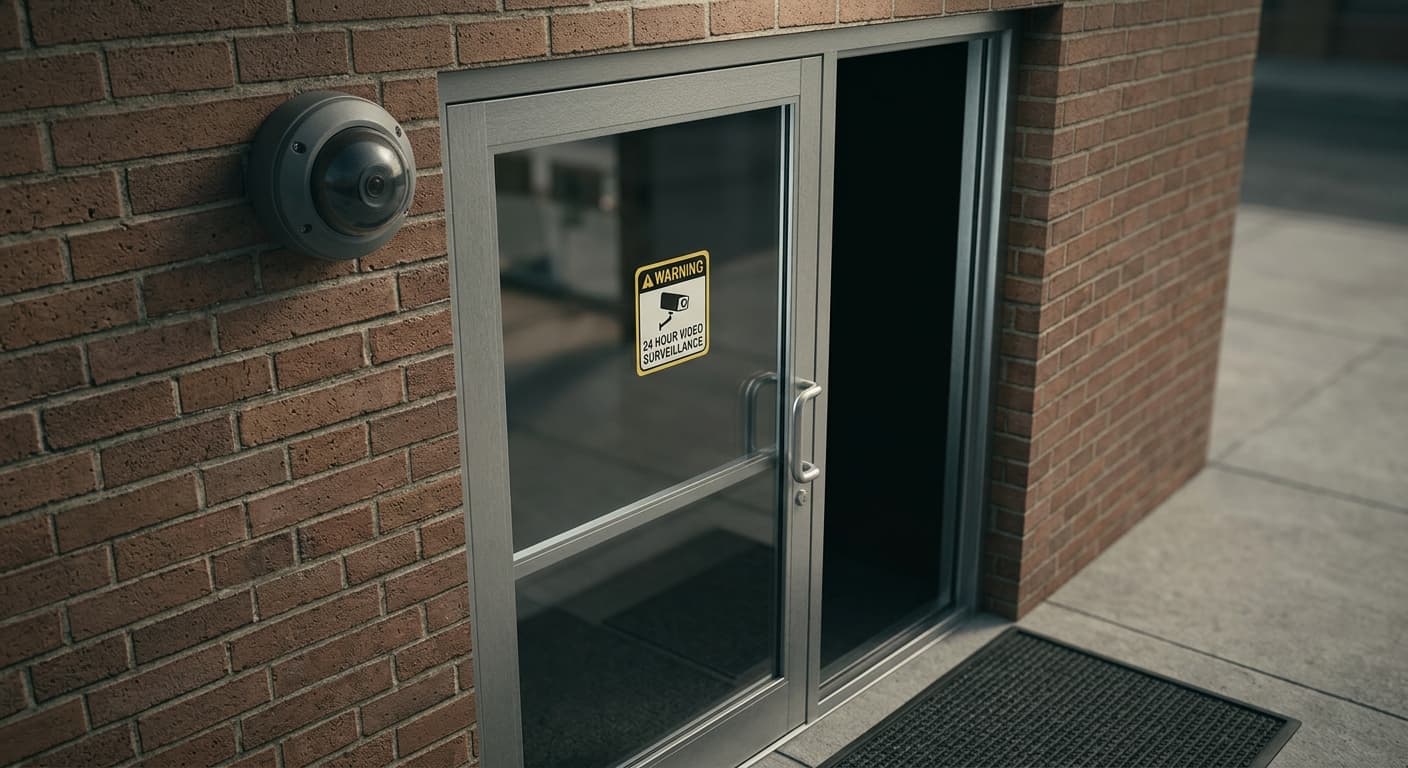
Security cameras are legal in Georgia, but their placement and capabilities must comply with the state's privacy laws. O.C.G.A. § 16-11-62 sets the boundaries between lawful surveillance and criminal invasion of privacy, and the distinction between video-only and audio-equipped cameras creates different legal obligations.
This guide covers residential security cameras, commercial surveillance systems, audio recording through cameras, neighbor disputes, HOA regulations, and the penalties for unlawful surveillance in Georgia.
The Legal Framework for Security Cameras in Georgia
Video-Only Cameras
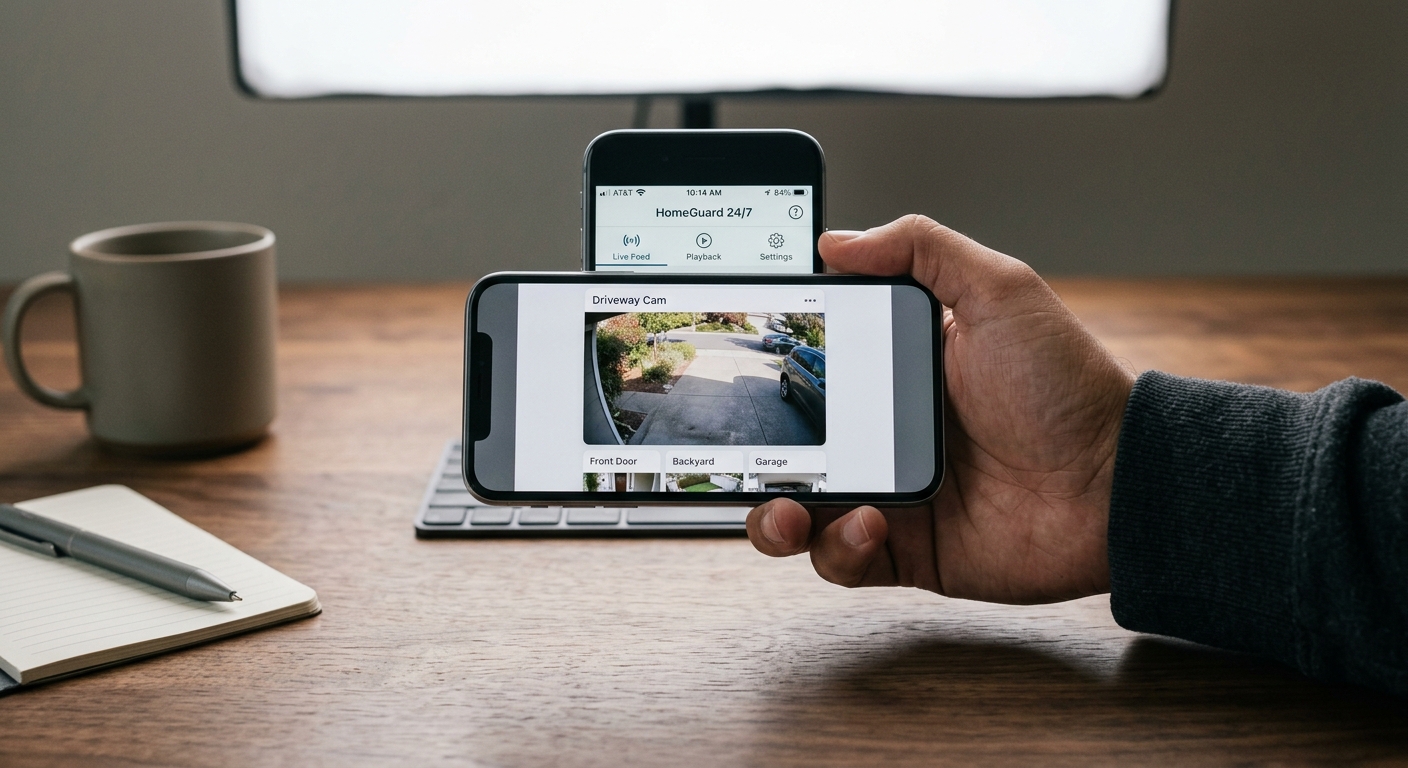
Georgia law does not prohibit the general use of security cameras. You can install and operate video-only security cameras on property you own or control. The primary restriction is that cameras must not record activities in "any private place and out of public view" without the consent of all persons observed, as stated in O.C.G.A. § 16-11-62(2).
For security cameras on your own property, this means:
- Exterior cameras pointing at your driveway, front door, yard, and sidewalk are lawful
- Interior cameras in your own living spaces are lawful when you live there (though issues arise with guests, renters, and domestic employees)
- Cameras in private areas like bathrooms, guest bedrooms, and changing areas are prohibited even on your own property if they record other people without consent
Cameras With Audio
Security cameras equipped with microphones add a separate layer of legal complexity. Audio recording follows Georgia's one-party consent rule (O.C.G.A. § 16-11-66), which requires at least one party to a conversation to consent to the audio recording. A security camera that continuously records audio of conversations between visitors, delivery drivers, or passersby without any participant's consent could violate the wiretapping statute.
| Camera Type | Legal Standard | Key Concern |
|---|---|---|
| Video-only (exterior) | Generally lawful on your property | Do not record neighbor's private areas |
| Video-only (interior) | Lawful in your own spaces | Prohibited in guest bathrooms, bedrooms |
| Audio-equipped (exterior) | Must comply with one-party consent | Recording third-party conversations without consent |
| Audio-equipped (interior) | Must comply with one-party consent | Cannot record guests' private conversations |
Residential Security Cameras
What Homeowners Can Do
Georgia homeowners can install security cameras to protect their property and family. Lawful placements include:
- Doorbell cameras (like Ring or Nest) covering your front door, porch, and walkway
- Driveway cameras monitoring vehicle access and parking
- Backyard cameras covering your own yard, pool, and outdoor spaces
- Garage cameras recording entry points and stored vehicles
- Interior common area cameras monitoring living rooms, kitchens, and hallways in your own home
- Perimeter cameras covering the boundary of your property
Where Cameras Are Prohibited
Even on your own property, cameras cannot be placed in areas where other people have a reasonable expectation of privacy:
- Guest bathrooms and guest bedrooms. If you invite guests or have overnight visitors, they have a reasonable expectation of privacy in the bathroom and bedroom you provide.
- Nanny or domestic worker private areas. If you employ a live-in caretaker, their designated private spaces cannot be monitored.
- Rental spaces. If you rent out part of your home (including through Airbnb or similar platforms), the tenant's private living spaces cannot be surveilled.
Neighbor-Facing Cameras and Privacy
One of the most common security camera disputes in Georgia involves cameras that capture a neighbor's property. The general rules:
- You can record your own property boundary. If your camera captures part of a neighbor's property incidentally while monitoring your own, this is generally acceptable.
- You cannot target a neighbor's private spaces. Pointing a camera directly at a neighbor's bedroom window, bathroom window, or fenced backyard area can violate O.C.G.A. § 16-11-62(2) and the Peeping Tom statute (O.C.G.A. § 16-11-61).
- Visible activities are not private. If your neighbor's activities are visible from the street or other public vantage points, recording them incidentally is unlikely to violate privacy laws.
Dealing With a Neighbor's Camera
If you believe a neighbor's security camera is unlawfully surveilling your private spaces:
- Document the situation. Photograph the camera's position and note what areas it appears to cover.
- Talk to your neighbor. Many camera disputes result from poor placement rather than intentional surveillance. The neighbor may be willing to reposition their camera.
- Contact local law enforcement. If the camera clearly targets your private areas, you can report a potential violation of O.C.G.A. § 16-11-62 or the Peeping Tom statute.
- Consult an attorney. A lawyer can assess whether the camera placement violates Georgia privacy law and advise on civil remedies.
- Consider physical barriers. Fences, privacy screens, and window treatments can block a camera's view of your private spaces.
Business Security Cameras
Commercial Surveillance Systems
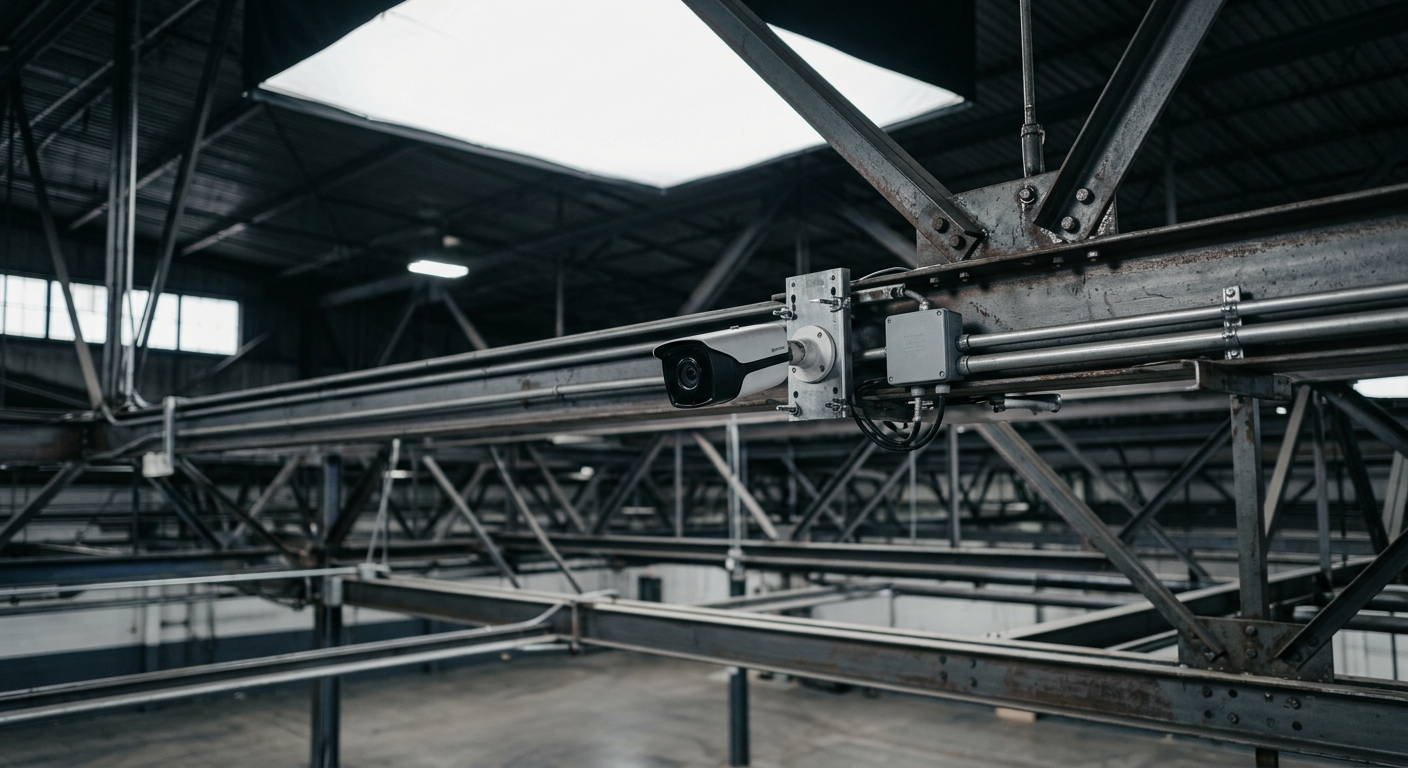
Georgia businesses can use security cameras for legitimate business purposes, including:
- Theft prevention. Cameras monitoring retail floors, cash registers, and inventory areas
- Employee safety. Surveillance in parking lots, loading docks, and hazardous areas
- Access control. Cameras at building entrances, restricted areas, and server rooms
- Liability protection. Recording slip-and-fall incidents, customer interactions, and delivery areas
- Regulatory compliance. Certain industries (banking, pharmaceuticals) may require surveillance
Prohibited Areas for Business Cameras
Businesses cannot install cameras in areas where employees or customers have a reasonable expectation of privacy:
- Restrooms and bathrooms
- Locker rooms and changing areas
- Fitting rooms and dressing rooms
- Lactation rooms and nursing spaces
- Private office spaces (without consent of occupants for video in private settings)
Installing cameras in these areas can result in felony charges under O.C.G.A. § 16-11-62 and civil liability for invasion of privacy.
Signage and Notification
Georgia does not have a specific statute requiring businesses to post signs about video surveillance. However, posting visible signage is a strong best practice because it:
- Reduces the expectation of privacy in monitored areas
- Serves as implied notice and potential consent
- Deters theft and misconduct
- Provides a defense against invasion of privacy claims
For audio recording through surveillance cameras, Georgia's one-party consent rule applies. If no employee or authorized person is a party to the conversations being recorded, capturing audio may violate the wiretapping statute.
Smart Home Cameras and Doorbell Cameras
Ring, Nest, and Similar Devices
Smart doorbell cameras and Wi-Fi security cameras are popular in Georgia homes. These devices are generally lawful when:
- Positioned to monitor your own property (front door, porch, driveway)
- Not pointing directly into a neighbor's private spaces
- Audio features are used with awareness of one-party consent rules
Audio Considerations for Smart Cameras
Many smart cameras have two-way audio that activates when someone approaches. When you speak through the camera to a visitor, you are a party to the conversation, which satisfies Georgia's one-party consent requirement for audio recording. The visitor does not need to consent.
However, if the camera records audio continuously (including conversations between visitors when you are not interacting), the one-party consent requirement may not be satisfied for those third-party conversations.
Cloud Storage and Data Security
Smart cameras typically store footage in the cloud. Georgia does not have a comprehensive consumer data privacy law governing how camera manufacturers handle your footage. However, the companies' terms of service and privacy policies control how footage is stored, accessed, and potentially shared with law enforcement.
In 2022, national attention focused on law enforcement requests for Ring camera footage. Georgia homeowners should understand that cloud-stored footage may be accessible through subpoenas or court orders.
HOA and Community Regulations
HOA Camera Policies
Many Georgia homeowners' associations (HOAs) have their own rules about security cameras. Common HOA restrictions include:
- Limits on camera visibility from the street (aesthetic concerns)
- Requirements for specific camera types or mounting methods
- Prohibitions on cameras pointing at common areas
- Rules about shared surveillance systems
HOA rules cannot override Georgia state law. Even if an HOA restricts camera use, homeowners retain their right to reasonable security surveillance. Conversely, an HOA cannot authorize surveillance that would violate state privacy law.
Community Surveillance Programs
Some Georgia communities and neighborhoods operate shared surveillance programs or participate in law enforcement camera-sharing initiatives. These programs must comply with the same state privacy laws as individual camera installations.
Security Camera Footage as Evidence
Admissibility in Georgia Courts
Security camera footage is regularly used as evidence in Georgia courts. For footage to be admissible, it must meet the requirements of O.C.G.A. Title 24:
- Authentication. Someone with knowledge must testify that the footage is genuine and shows what it claims to show.
- Relevance. The footage must relate to the issues in the case.
- Integrity. The footage should not have been edited, altered, or tampered with. Continuous, timestamped recordings are preferred.
Providing Footage to Law Enforcement
You can voluntarily share your security camera footage with law enforcement. Police cannot compel you to provide footage without a warrant or subpoena unless you consent. However, if your footage captured a crime, sharing it voluntarily can assist investigations and may be required under certain circumstances (such as a court order).
Penalties for Illegal Surveillance
Criminal Penalties
Unlawful surveillance in Georgia carries serious consequences under O.C.G.A. § 16-11-69:
| Offense | Classification | Penalty |
|---|---|---|
| Recording in private place without consent | Felony | 1-5 years prison, up to $10,000 fine |
| Peeping Tom (O.C.G.A. § 16-11-61) | Felony | 1-5 years prison |
| Voyeurism by device (O.C.G.A. § 16-11-91) | Felony | 1-5 years prison, up to $10,000 fine |
Civil Remedies
Victims of unlawful surveillance can pursue:
- Invasion of privacy lawsuits
- Emotional distress claims
- Injunctive relief (court order to remove or reposition cameras)
- Compensatory and punitive damages
- Federal Wiretap Act damages under 18 U.S.C. § 2520 for audio violations
More Georgia Laws
- Georgia Whistleblower Laws
- Georgia Sexting Laws
- Georgia Recording Laws
- Georgia Recording Laws
- Georgia Recording Laws
- Georgia Dog Bite Laws
- Georgia Recording Laws
- Georgia Recording Laws
More Georgia Recording Laws
Audio Recording | Video Recording | Voyeurism & Hidden Cameras | Workplace Recording | Recording Police | Phone Call Recording | Security Cameras | Recording in Public | Landlord-Tenant | Dashcam Laws | Schools | Medical Recording
Sources and References
- O.C.G.A. § 16-11-62(law.justia.com)
- O.C.G.A. § 16-11-61 - Peeping Toms(law.justia.com)
- O.C.G.A. § 16-11-66(law.justia.com)
- Georgia Open Meetings Act(law.georgia.gov).gov
- Georgia AG FAQ(law.georgia.gov).gov
- Georgia SB 539 (2022)(gov.georgia.gov).gov