
Georgia
Georgia Dashcam Laws: Windshield Mounting and Recording Rules (2026)
Independently fact-checked against primary sources (last audited August 15, 2026). · Reviewed by the RecordingLaw editorial team. · Law checked current as of August 9, 2026. · 4 primary sources cited on this page. How we verify our legal content
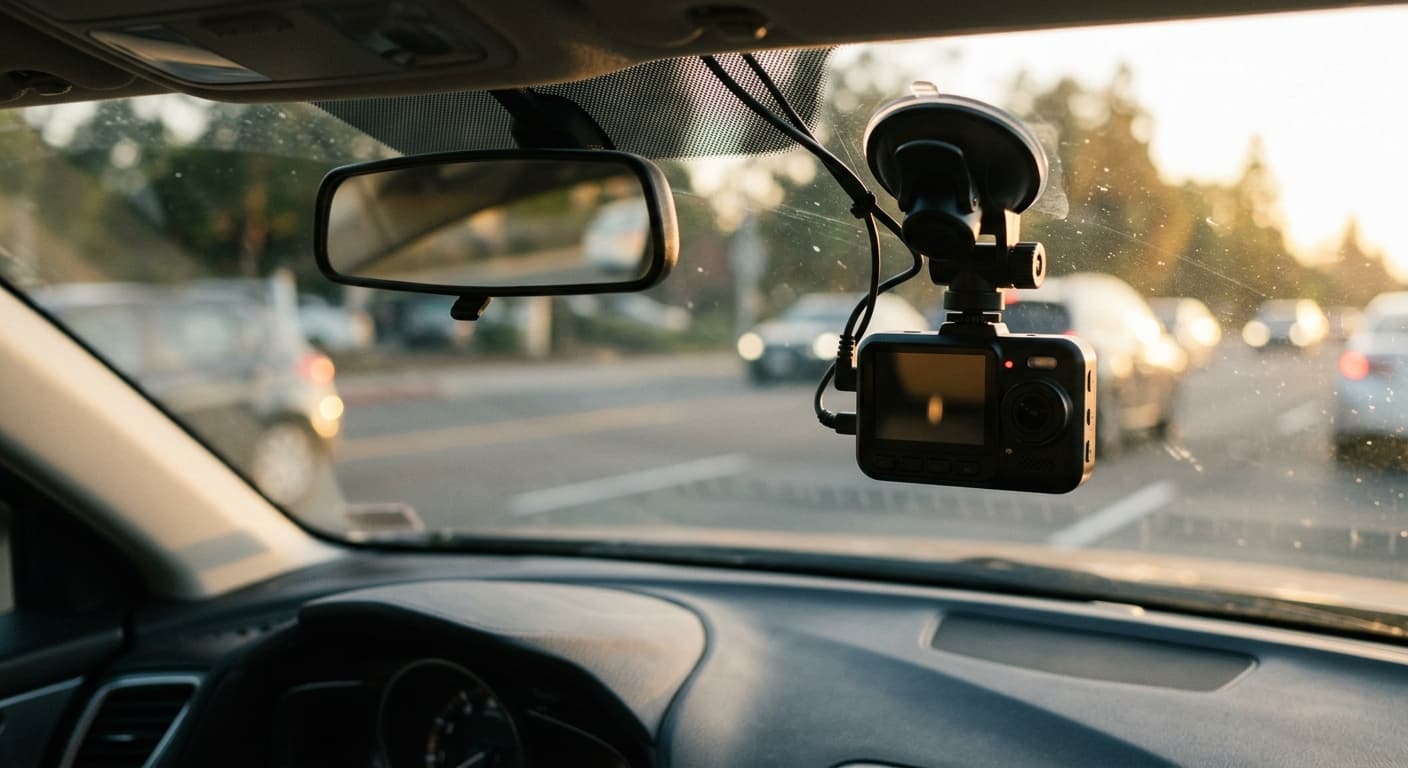
Dashcams are legal in Georgia. Audio recording through your dashcam is lawful under O.C.G.A. 16-11-66, Georgia's one-party consent law, because the driver's presence satisfies the consent requirement for in-car conversations. Mount the camera behind the rearview mirror or low on the windshield to avoid obstructing your view under O.C.G.A. 40-8-73.
Dashcams are legal in Georgia and serve as valuable tools for documenting road incidents, accidents, and interactions with law enforcement. Georgia has no statute prohibiting the use of dashboard cameras, but windshield mounting restrictions under O.C.G.A. § 40-8-73 and audio recording rules under O.C.G.A. § 16-11-66 set the boundaries for lawful dashcam use.
This guide covers mounting requirements, audio recording considerations, using dashcam footage as evidence, commercial vehicle rules, and practical tips for Georgia drivers.
Georgia's Windshield Mounting Rules
O.C.G.A. § 40-8-73: Windshield Requirements
Georgia's windshield statute, O.C.G.A. § 40-8-73, prohibits driving a motor vehicle with any sign, poster, or other nontransparent material on the front windshield, side windows, or rear windows that obstructs the driver's clear view of the highway or any intersecting highway.
However, the statute includes a specific exception for electronic device mounts. A person may drive a motor vehicle with a mount for the support of a wireless telecommunications device or stand-alone electronic device on the front windshield, provided that the mount is located in a manner that minimizes obstruction of the driver's view.
How to Mount a Dashcam Legally
To comply with Georgia law, mount your dashcam in a position that minimizes view obstruction:
- Behind the rearview mirror. This is the most popular and legally safe position. The camera sits behind the mirror where it does not block any part of your forward view.
- Low on the windshield near the dashboard. Mounting the camera at the bottom edge of the windshield keeps it below your normal line of sight.
- On the dashboard itself. Suction-cup or adhesive mounts on the dashboard avoid the windshield entirely, eliminating any obstruction concern.
Positions to Avoid
Avoid mounting a dashcam:
- In the center of the windshield at eye level
- On the driver's side where it blocks your view of the left lane or intersections
- In a position that creates a blind spot for oncoming traffic or pedestrians
- On the windshield using a large suction cup that covers significant glass area
Additional Windshield Requirements
O.C.G.A. § 40-8-73 also requires that:
- No windshield or rear window shall have a starburst or spider webbing effect greater than three inches by three inches
- Windshields must be equipped with adequate wipers in good working order
- Window tint must comply with Georgia's tint laws (O.C.G.A. § 40-8-73.1)
Audio Recording Through Dashcams
One-Party Consent and In-Car Conversations
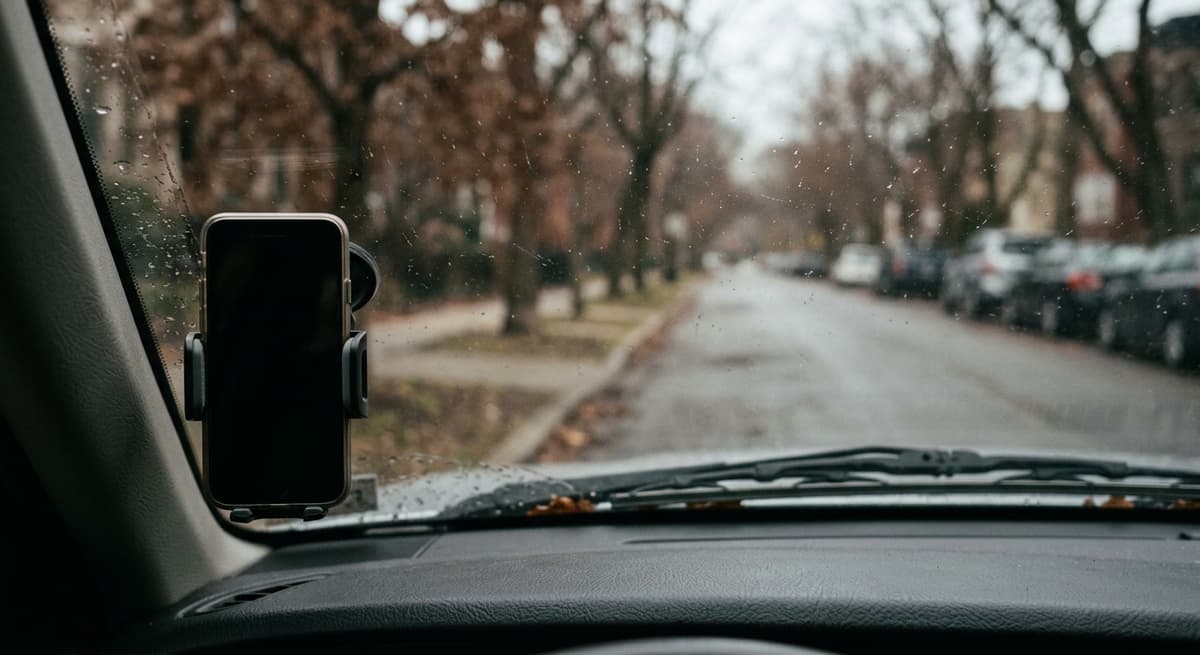
Most modern dashcams record audio along with video. Under Georgia's one-party consent law (O.C.G.A. § 16-11-66), the driver is a party to any conversation happening inside the vehicle. Your presence and participation in in-car conversations satisfies the one-party consent requirement.
This means you can legally capture audio of:
- Conversations with passengers
- Phone calls on speakerphone
- Interactions with police officers during traffic stops
- Drive-through window conversations
- Any discussion happening inside your vehicle while you are present
When Audio Recording May Be Problematic
Audio recording through a dashcam could raise issues when:
- Your car is parked and unoccupied. If your dashcam records continuously (including when parked), it may capture conversations between people outside your car without any party's consent. This could violate O.C.G.A. § 16-11-62(1) if it records private conversations in a clandestine manner.
- Someone borrows your car. If a friend or family member drives your car with the dashcam running, they become the "one party" who can consent to recording conversations in the vehicle. If the car is unoccupied and recording, no consenting party exists.
Disabling Audio
If you want to avoid audio recording complications, most dashcams allow you to disable the microphone while continuing to record video. This is a common approach for rideshare drivers and commercial vehicle operators.
Using Dashcam Footage as Evidence in Georgia
Car Accident Claims
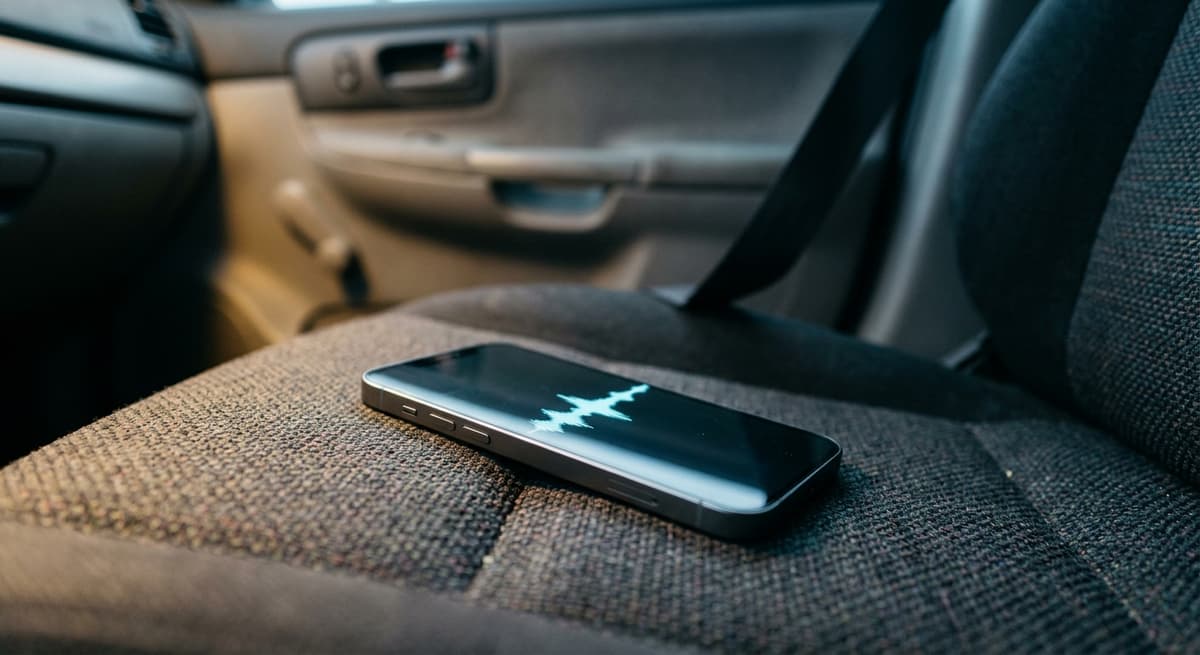
Dashcam footage is frequently used in Georgia car accident claims. The footage can establish:
- Fault determination. Video evidence showing who ran a red light, failed to yield, or crossed the center line
- Speed estimation. Timestamps and visual references can help reconstruct vehicle speeds
- Road conditions. Rain, ice, fog, construction zones, and other hazards captured on video
- Traffic signal status. Whether a light was red, yellow, or green at the time of the collision
- Other driver behavior. Distracted driving, aggressive driving, or impaired driving
Insurance Claims
Georgia insurance companies routinely accept dashcam footage when processing claims. Providing footage to your insurer can:
- Speed up claims processing by providing clear evidence
- Support your version of events when the other driver disagrees
- Document hit-and-run vehicles (capturing license plates)
- Reduce disputes about who was at fault
Admissibility Requirements
For dashcam footage to be admissible in Georgia courts, it must meet the evidence standards of O.C.G.A. Title 24:
- Authentication. You must be able to testify that the footage is genuine, unaltered, and accurately represents what happened.
- Relevance. The footage must relate to the issues in the case.
- Integrity. The video should be unedited with original timestamps intact.
- Chain of custody. Maintaining a clear record of how the footage was stored and preserved strengthens admissibility.
Georgia's Modified Comparative Negligence
Georgia follows a modified comparative negligence rule under O.C.G.A. § 51-12-33. If you are less than 50% at fault for an accident, you can recover damages reduced by your percentage of fault. Dashcam footage can be critical in establishing that you were not at fault or that your share of fault was minimal.
Commercial Vehicle Dashcams

Trucking and Fleet Management
Georgia commercial vehicle operators and fleet managers widely use dashcams for:
- Driver safety monitoring and training
- Accident documentation and liability protection
- Compliance with Federal Motor Carrier Safety Administration (FMCSA) regulations
- Insurance premium reduction programs
- Protection against fraudulent claims
Rideshare Drivers (Uber and Lyft)
Georgia rideshare drivers can use dashcams in their vehicles. Both Uber and Lyft permit drivers to use dashcams, though company policies may require drivers to post a notice informing passengers that recording is in progress.
Under Georgia's one-party consent law, the rideshare driver can record audio of conversations with passengers without their explicit consent. However, many rideshare drivers post small signs informing passengers about the dashcam as a courtesy and to reduce complaints.
Commercial Driver Considerations
Commercial drivers should be aware that:
- Employer dashcam policies may impose additional requirements beyond state law
- Dual-facing cameras (recording both road and driver) raise workplace privacy considerations
- Audio recording of passengers in commercial vehicles (buses, taxis) follows the same one-party consent rules
- The FMCSA does not require dashcams but does not prohibit them
Dashcam Parking Mode
Legal Considerations
Many dashcams include a "parking mode" that activates recording when the car detects motion or impact while parked. Legal considerations for parking mode in Georgia:
- Video recording of public areas while parked is generally lawful. Your car is in a public or semi-public space, and people passing by have no reasonable expectation of privacy in public.
- Audio recording while parked and unoccupied presents a risk. Without a consenting party present, continuous audio recording could capture private conversations in violation of O.C.G.A. § 16-11-62(1).
- Best practice: Disable audio for parking mode or use a dashcam that records video only when in parking mode.
Rear-Facing and Multi-Camera Systems
Legality of Multiple Cameras
Georgia law does not prohibit using multiple camera angles in your vehicle. Common setups include:
- Front-facing dashcam only
- Front and rear-facing dashcam system
- Front-facing with interior cabin camera
- 360-degree camera systems
All camera positions must comply with the windshield obstruction rules for any camera mounted on glass. Rear window cameras must not create additional windshield obstructions.
Interior Cabin Cameras
Interior cabin cameras that record the driver and passengers are lawful under Georgia's one-party consent rule when the driver is present. These cameras are commonly used by rideshare drivers, fleet operators, and parents monitoring teen drivers.
Practical Tips for Georgia Dashcam Users
- Mount behind the rearview mirror. This position minimizes obstruction and keeps the camera discreet.
- Use a camera with loop recording. Continuous loop recording overwrites old footage automatically, so you never run out of storage.
- Set the correct date and time. Accurate timestamps are essential for evidentiary value.
- Save important clips immediately. Most dashcams have a button to lock and protect the current recording. Use it after any incident.
- Check your dashcam regularly. Verify that it is recording properly and that the storage card is functioning.
- Back up footage after incidents. Transfer important recordings to a computer or cloud storage as soon as possible.
- Consider GPS-enabled cameras. GPS data can confirm your speed and location, strengthening the evidentiary value of footage.
- Know your insurance discounts. Some Georgia insurance companies offer discounts for dashcam users.
More Georgia Recording Laws
Audio Recording | Video Recording | Voyeurism & Hidden Cameras | Workplace Recording | Recording Police | Phone Call Recording | Security Cameras | Recording in Public | Landlord-Tenant | Dashcam Laws | Schools | Medical Recording
Back to Georgia Recording Laws
More Georgia Recording Topics
More Georgia Laws
Frequently Asked Questions
Are dashcams legal in Georgia?
Yes. Georgia has no law prohibiting dashcams. You can use a dashcam in any personal or commercial vehicle. The camera must be mounted in a way that does not obstruct the driver's clear view of the road under O.C.G.A. § 40-8-73. The best position is behind the rearview mirror or on the dashboard.
Where should I mount a dashcam in Georgia?
Mount your dashcam behind the rearview mirror or low on the windshield to minimize view obstruction. You can also mount it on the dashboard itself. O.C.G.A. § 40-8-73 allows device mounts on the front windshield when positioned to minimize obstruction. Avoid center-windshield or driver-side positions that could block your view.
Does a dashcam recording audio violate Georgia law?
No, as long as you are in the vehicle. Georgia's one-party consent law under O.C.G.A. § 16-11-66 allows audio recording when at least one party to the conversation consents. As the driver, your presence satisfies this requirement for conversations happening in your car. If the car is parked and unoccupied, consider disabling audio to avoid complications.
Can dashcam footage be used as evidence in Georgia?
Yes. Dashcam footage is regularly used as evidence in Georgia car accident cases, insurance claims, and traffic violation proceedings. The footage must be authentic, unaltered, and relevant. Accurate timestamps and GPS data strengthen its evidentiary value. Courts evaluate dashcam footage under Georgia's evidence rules in O.C.G.A. Title 24.
Can I use a dashcam as a rideshare driver in Georgia?
Yes. Both Uber and Lyft permit dashcams. Georgia's one-party consent law allows you to record audio of conversations with passengers. Many rideshare drivers post a small notice informing passengers about the dashcam as a courtesy, though it is not legally required under Georgia's one-party consent framework.
Updates
No content changes were needed on this page; both flagged citation issues were already resolved by the prior link sweep, and the windshield-mount exception claim was independently re-verified as accurate.
Independently fact-checked against the cited primary sources
Governing law re-checked for recent changes
Corrected the statute citation for clandestine recording of private conversations from O.C.G.A. § 16-11-62(3) (a trespass-based eavesdropping provision) to § 16-11-62(1), which actually covers clandestine recording of private conversations.
Governing law re-checked for recent changes
Reviewed and approved by an editor
The Law Behind This Article
This article rests on the statutory provisions below, held in our own legal record and retrieved from the official source. Tap a section to read the operative text.
Official Code of Georgia Annotated
§ 16-11-66Interception of wire, oral, or electronic communication by party thereto; consent requirements for recording and divulging conversations to which child under 18 years is a party; parental exception.In forcecited in 18 of our articles
(a) Nothing in Code Section 16-11-62 shall prohibit a person from intercepting a wire, oral, or electronic communication where such person is a party to the communication or one of the parties to the communication has given prior consent to such interception. (b) After obtaining the consent…
Official text (excerpt) · last checked 2026-08-31 · Read the full text in our law library · Verify at advance.lexis.com
Cited in 43 court opinions in our collectionLatest citing opinion in our collection: 2020
In the courts (editorial summary, independently checked):State v. Cohen (2017) held OCGA 16-11-66(a) reaches only intercepted wire, oral, or electronic communications, so one party's consent does not authorize secretly video recording others in a private place. Bishop v. State (1999) barred vicarious parental consent under the text in force before the 2000 amendment.
Opinions citing this section in our collection:
- Dobbins v. State (Supreme Court of Georgia 1992, 262 Ga. 161)✓An investigator recorded a child's call to the defendant using only her father's consent and no warrant; the Supreme Court held the state had neither an investigation warrant nor valid consent of a party to the call, so the recording and its fruits were inadmissible.
- State v. Cohen (Supreme Court of Georgia 2017, 302 Ga. 616)✓A housekeeper secretly videoed her employer naked at home; the Supreme Court held the one-party-consent rule of OCGA 16-11-66(a) covers only intercepted wire, oral or electronic communications and does not permit video recording without the consent of all observed.
- State v. Madison (Court of Appeals of Georgia 2011, 311 Ga. App. 31)✓A molestation complainant secretly videoed the defendant in his law office; the court read the 16-11-66(a) participant exception to reach section 16-11-62, but found no wire, oral or electronic communication captured, so it affirmed suppression. Cohen overruled that reading.
Identified automatically from the court opinions citing this section — not a ranking of which case controls.
Also relied on in: Georgia Recording Laws (2026): One-Party Audio, All-Party Video, Georgia AI Meeting Recording Laws (2026), Georgia Ring Doorbell Laws: What You Need to Know in 2026
§ 16-11-62Eavesdropping, surveillance, or intercepting communication which invades privacy of another; divulging private message.In forcecited in 25 of our articles
It shall be unlawful for: (1) Any person in a clandestine manner intentionally to overhear, transmit, or record or attempt to overhear, transmit, or record the private conversation of another which shall originate in any private place; (2) Any person, through the use of any device, without the
Official text (excerpt) · last checked 2026-08-31 · Read the full text in our law library · Verify at legis.ga.gov
Cited in 94 court opinions in our collectionLatest citing opinion in our collection: 2026
In the courts (editorial summary, independently checked):Kelley v. State (1998) held OCGA 16-11-62(2) reached a guardian who photographed a nude 16-year-old in the family bathroom, with no exception for family members. Burgeson v. State (1996) held a conversation recorded in a patrol car was not covered, because no reasonable expectation of privacy existed there.
Opinions citing this section in our collection:
- Burgeson v. State (Supreme Court of Georgia 1996, 267 Ga. 102)✓Police secretly recorded two arrestees talking in the back of a patrol car. The court held a police car is much like a jail cell, with no reasonable expectation of privacy, so intercepting that conversation did not offend OCGA 16-11-62 and the tape was admissible.
- Kelley v. State (Court of Appeals of Georgia 1998, 233 Ga. App. 244)✓A guardian photographed her 16-year-old niece nude and passed out in the family bathtub. The court held OCGA 16-11-62(2) reaches any person with no family exception, that the film need not be developed, and that a jury could find the bathroom a private place.
- Dobbins v. State (Supreme Court of Georgia 1992, 262 Ga. 161)“…th the consent of one of the parties to the conversation. OCGA § 16-11-62 (1) provides that: It shall be unlawf…”
Identified automatically from the court opinions citing this section — not a ranking of which case controls.
Also relied on in: Georgia Data Privacy Laws: Breach Notification & Consumer Rights (2026), Georgia Surveillance Camera Laws (2026 Guide), Georgia Windshield Mounting Laws (2026 Guide)
§ 40-8-73Windshields, windows, and windshield wipers.In forcecited in 2 of our articles
(a) No person shall drive any motor vehicle with any sign, poster, or other nontransparent material upon the front windshield, side windows, or rear windows of such vehicle which obstructs the driver's clear view of the highway or any intersecting highway;…
Official text (excerpt) · last checked 2021-08-17 · Read the full text in our law library
Cited in 7 court opinions in our collectionLatest citing opinion in our collection: 2014
Opinions citing this section in our collection:
- Darby v. State (Court of Appeals of Georgia 1999, 239 Ga. App. 492)“…beyond the actual starburst. Appellant argues that because OCGA § 40-8-73 (e) provides that “[n]o motor vehicle s…”
- Holt v. State (Court of Appeals of Georgia 1997, 227 Ga. App. 46)“…rized to stop the vehicle due to the broken windshield. See OCGA § 40-8-73(e) (it is unlawful to operate a vehicle…”
- Gutierrez v. State (Court of Appeals of Georgia 1998, 235 Ga. App. 878)“…OCGA § 40-8-76.1 (b)); and driving with improper equipment (OCGA § 40-8-73 (e)). The court merged the felony obstr…”
Identified automatically from the court opinions citing this section — not a ranking of which case controls.
§ 40-8-73.1Tinting of windows or windshields.In forcecited in 3 of our articles
(a) As used in this Code section, the term: (1) "Light reflectance" means the ratio of the amount of total light that is reflected outward by a product or material to the amount of total light falling on the product or material. (2) "Light transmission" means the ratio of the amount of total light
Official text (excerpt) · last checked 2026-09-01 · Read the full text in our law library · Verify at legis.ga.gov
Cited in 29 court opinions in our collectionLatest citing opinion in our collection: 2020
In the courts (editorial summary, independently checked):Ciak v. State (2004) struck the then-current OCGA 40-8-73.1 on equal protection grounds because it reached only Georgia residents, but held that unconstitutionality did not require suppressing evidence from the stop. Christy v. State (2012) applied that rule and upheld a stop based on an officer's view of dark tint.
Opinions citing this section in our collection:
- Ciak v. State (Supreme Court of Georgia 2004, 278 Ga. 27)✓An officer stopped Ciak solely for dark purple tint on a Georgia-registered car; the court held OCGA 40-8-73.1 denied equal protection because it reached only Georgia residents, but held that the statute's invalidity did not require suppressing the DUI evidence.
- Davis v. State (Court of Appeals of Georgia 2010, 303 Ga. App. 785)“…ehicle Davis was driving, based on a suspected violation of OCGA § 40-8-73.1 (b) (2), which limits the tint allowed…”
- Christy v. State (Court of Appeals of Georgia 2012, 315 Ga. App. 647)✓After the trial court declared OCGA 40-8-73.1 (b) unconstitutional, the court held the officer's observation of very dark tint still gave reasonable suspicion for the stop, and that the statute's invalidity did not require suppressing the DUI evidence.
Identified automatically from the court opinions citing this section — not a ranking of which case controls.
Also relied on in: Georgia Window Tint Laws (2026): Legal VLT Limits
§ 51-12-33Reduction and apportionment of award or bar of recovery according to percentage of fault of parties and nonparties.In forcecited in 8 of our articles
(a) Where an action is brought against one or more persons for injury to person or property and the plaintiff is to some degree responsible for the injury or damages claimed, the trier of fact, in its determination of the total amount of damages to be awarded, if any, shall determine the percentage
Official text (excerpt) · last checked 2026-09-08 · Read the full text in our law library · Verify at legis.ga.gov
Cited in 187 court opinions in our collectionLatest citing opinion in our collection: 2026
Opinions citing this section in our collection:
- Zaldivar v. Prickett (Supreme Court of Georgia 2015)“…path. Commonly known as the “apportionment statute,” OCGA § 51-12-33 requires the trier of fact in some cas…”
- Couch v. Red Roof Inns, Inc. (Supreme Court of Georgia 2012, 291 Ga. 359)“…century of Georgia’s common law simply by using “fault” in OCGA § 51-12-33. Because I believe our case law prevent…”
- Martin v. Six Flags Over Georgia II, L.P. (Supreme Court of Georgia 2017, 301 Ga. 323)“…liability, we now address the apportionment of damages. See OCGA § 51-12-33 (prescribing method of apportioning dam…”
Identified automatically from the court opinions citing this section — not a ranking of which case controls.
Also relied on in: Georgia Dog Bite Laws: Liability and Victim Rights, Georgia Car Accident Laws: Fault, Insurance, and Your Claim, Medical Malpractice Laws in Georgia (2026): Deadlines & Caps
Search our full record of US law — 2.1 million sections, every state + federal →
Sources and References
- O.C.G.A. § 40-8-73 - Windshields, Windows, and Windshield Wipers(law.justia.com)
- O.C.G.A. § 16-11-66 - One-Party Consent Exception(law.justia.com)
- O.C.G.A. § 16-11-62 - Eavesdropping and Surveillance(law.justia.com)
- Georgia Open Meetings Act(law.georgia.gov).gov
- Georgia AG FAQ(law.georgia.gov).gov
- FMCSA - Commercial Vehicle Regulations(fmcsa.dot.gov).gov
- Georgia DDS - Driver Services(dds.georgia.gov).gov
- O.C.G.A. § 51-12-33 - Georgia Comparative Negligence(law.justia.com)