
Georgia
Georgia Police Bodycam Laws: Retention & Open Records Rules
Independently fact-checked against primary sources (last audited August 20, 2026). · Reviewed by the RecordingLaw editorial team. · Law checked current as of August 9, 2026. · 3 primary sources cited on this page. How we verify our legal content
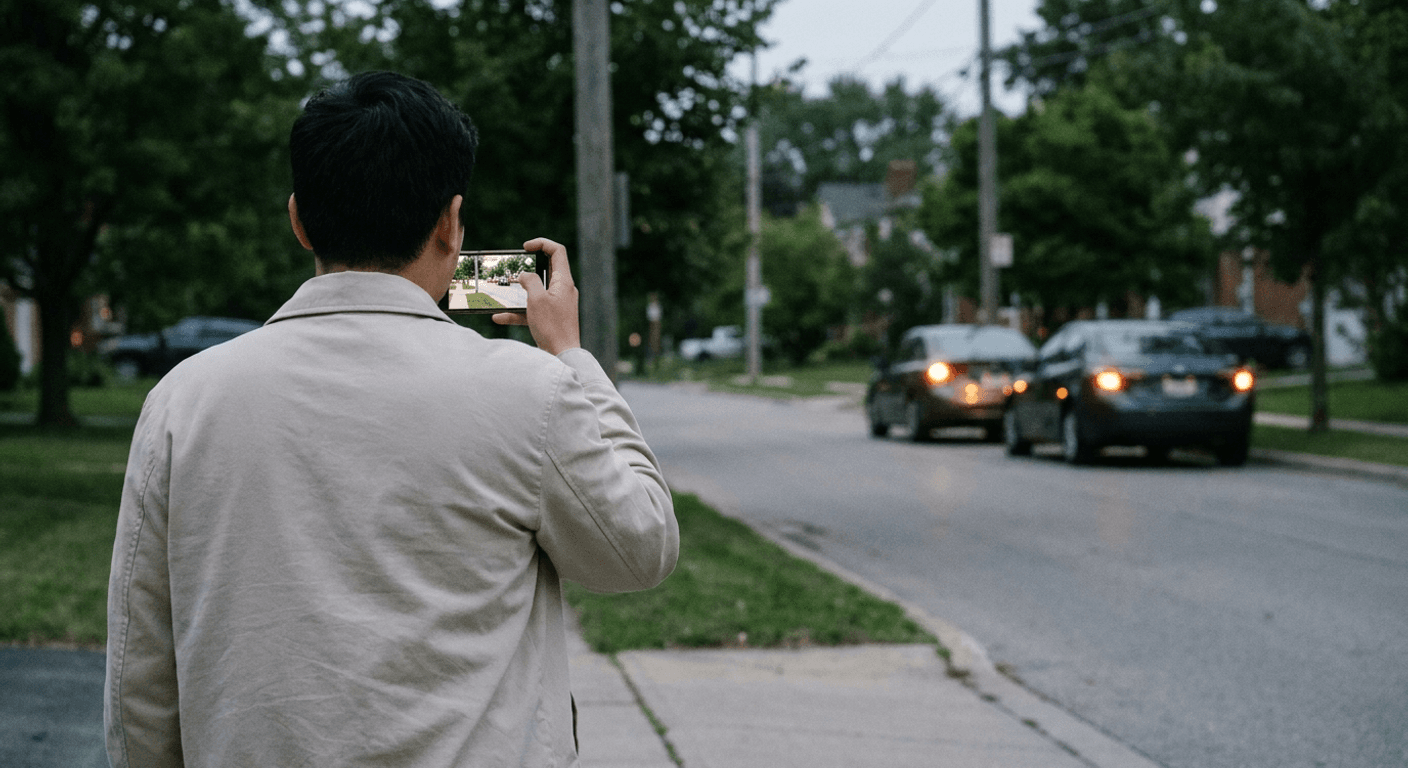
Georgia has no statewide law requiring police to wear body cameras, and troopers with the Georgia State Patrol are generally not equipped with one at all. Once footage exists, O.C.G.A. § 50-18-96 sets a 180-day retention floor that extends to 30 months for serious incidents, while access runs through Georgia's general Open Records Act.
This page covers whether Georgia police must use body cameras, how long footage must be kept, and how the public can request a copy. It does not cover whether a civilian may record an on-duty Georgia officer, a separate and well-settled question addressed on Recording Law's guide to recording police.
Are Georgia police required to wear body cameras?
No. Georgia has no statute requiring any law enforcement agency, state or local, to equip its officers with body cameras. Adoption is a local, agency-by-agency decision, and coverage across the state is uneven as a result. The gap is sharpest at the state level: the Georgia State Patrol and Georgia Bureau of Investigation do not generally equip their officers with body cameras, even though many county and municipal police departments in Georgia have adopted their own programs.
That gap drew national attention after Georgia State Patrol troopers, working alongside Atlanta police, DeKalb County police, and other agencies during a January 18, 2023 operation to clear a forest encampment near the planned site of Atlanta's public safety training center, shot and killed 26-year-old environmental activist Manuel "Tortuguita" Paez Teran. The Georgia Bureau of Investigation, which investigated the shooting, confirmed that "the officers who were near the incident at the time of shooting were not wearing body worn cameras," although other officers at the scene who were equipped with cameras captured footage of the aftermath. A 2023 bill, the Transparency in Policing Act (HB 325), would have required nearly all uniformed Georgia officers, including state troopers, to wear body cameras and would have made tampering with a recording a misdemeanor. The bill never reached a House floor vote and died when the 2024 legislative session ended, so no statewide activation or equipment mandate exists in Georgia as of mid-2026.
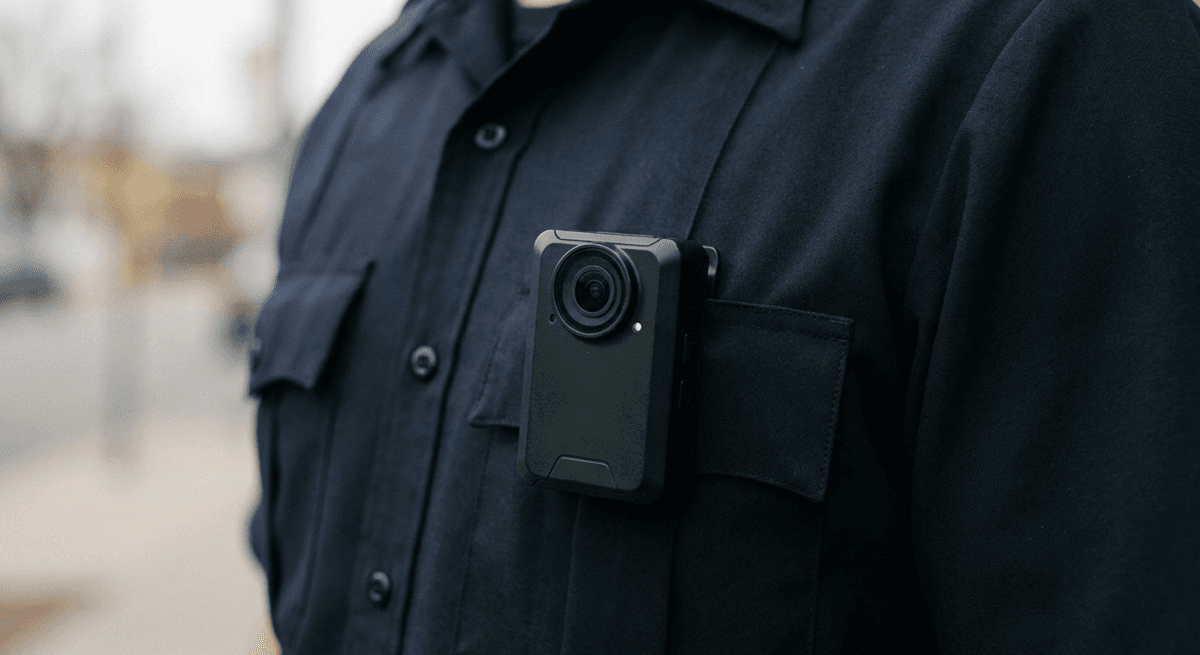
How long must Georgia agencies keep body camera video?
Once an agency does record body camera video, Georgia law sets a specific, escalating retention schedule.
Video recordings from law enforcement body-worn devices or devices located on or inside law enforcement vehicles shall be retained for 180 days from the date of such recording, except that recordings that are part of a criminal investigation, show a vehicular accident, show the detainment or arrest of an individual, or show a law enforcement officer's use of force shall be retained for 30 months, as shall recordings containing evidence that is or can reasonably be anticipated to be necessary for pending litigation. (paraphrasing the retention schedule in O.C.G.A. § 50-18-96)
In practice, that means routine footage, a traffic stop that ends in a warning, a welfare check with no incident, can be deleted after 180 days. Footage tied to an arrest, an accident, a use of force, or a criminal case must be kept for 30 months from the date it was recorded, and longer still if litigation is filed during that window. The statute does not require destruction once the minimum period passes; agencies are free to retain footage longer under their own records policies.
Is police body camera footage a public record in Georgia?
Georgia has no bodycam-specific access statute comparable to Florida's or South Carolina's. Instead, a request for footage is treated like a request for any other government record under the Georgia Open Records Act, O.C.G.A. § 50-18-70 et seq., which starts from a presumption that records held by a public agency are open to inspection. Whether a particular recording is disclosed depends on whether one of the Act's general exemptions applies, not on a rule written specifically for body cameras.
Two exemptions come up most often with bodycam footage. First, O.C.G.A. § 50-18-72(a)(4) lets an agency withhold records that are part of a pending investigation or prosecution, which commonly delays release of footage from an active criminal case, sometimes for months. Second, O.C.G.A. § 50-18-72(a)(26.2) separately restricts audio and video recorded by a law enforcement device in a place carrying a reasonable expectation of privacy once there is no pending investigation, meaning that category of footage can remain closed even after a case ends. That provision does allow a narrower set of people to request access through a defined procedure, each by submitting a sworn affidavit: an estate representative for a deceased person shown in the recording, a parent or legal guardian of a minor who appears in it, a criminal defendant who believes the recording is relevant to their case, a party to a civil action who believes the recording is relevant to that action, or an attorney for any of those people. Initial police arrest reports and initial incident reports themselves remain public regardless of how the footage is classified.
Recent legislative activity
Georgia lawmakers have repeatedly revisited both sides of the bodycam question, expanding access on one hand and restricting it on the other, without landing new law on either front as of mid-2026. Beyond the failed 2023 mandate bill, a 2026 measure, SB 482, would have required people requesting mugshots or body camera footage to appear in person, identify everyone shown in the recording by name, and submit a notarized statement, changes supporters framed as targeting "mugshot mill" websites and critics warned would slow legitimate public-accountability requests. The bill passed the Senate 53-0 in March 2026 but did not survive the House before the session's close, according to the Georgia First Amendment Foundation's legislative tracking. Anyone researching a current Georgia records request should check whether a similar bill has since passed, since this is an area lawmakers keep returning to.
What happened after the Tortuguita shooting
The absence of camera footage from the shooting itself did not prevent an outcome in the criminal investigation. The district attorney overseeing the case ultimately declined to bring charges against the troopers involved, concluding the shooting was justified based on other evidence, including footage from nearby officers' cameras, physical evidence, and the fact that a trooper was shot and wounded during the encounter. The case remains one of the clearest illustrations nationally of why activation coverage, not just retention or access rules, matters: Georgia's 180-day and 30-month retention schedule and its Open Records Act exemptions only govern footage that exists in the first place, and neither applies to an encounter no camera recorded.
For how other states handle bodycam mandates and public access, see Recording Law's Police Bodycam Laws hub.
This article provides general legal information about Georgia's body camera and open-records rules as of mid-2026. It is not legal advice. For help with a specific records request, consult a Georgia attorney or the custodian agency's records office.
More Georgia Laws
Frequently Asked Questions
Do Georgia police officers have to wear body cameras?
No. Georgia has no statewide law requiring any agency to use body cameras. Adoption is left to each department, and the Georgia State Patrol and Georgia Bureau of Investigation generally do not equip their officers with them.
How long does a Georgia agency have to keep body camera footage?
At least 180 days under O.C.G.A. § 50-18-96. That period extends to 30 months if the recording is part of a criminal investigation, shows a vehicle accident, a detainment or arrest, or an officer's use of force, or if it is needed for pending litigation.
Is body camera video a public record in Georgia?
It can be, but Georgia has no bodycam-specific access law. Requests go through the general Georgia Open Records Act, O.C.G.A. § 50-18-70 et seq., and disclosure depends on whether an exemption, such as the pending-investigation exemption in § 50-18-72(a)(4), applies.
Can Georgia police withhold body camera footage during an investigation?
Yes. O.C.G.A. § 50-18-72(a)(4) lets an agency withhold records, including body camera footage, that are part of a pending criminal investigation or prosecution, which commonly delays release until the case concludes.
Why was there no body camera footage of the Tortuguita shooting?
The Georgia State Patrol troopers involved in the January 18, 2023 shooting were not wearing body cameras; the Georgia Bureau of Investigation confirmed this, though other officers at the scene were equipped and captured footage of the aftermath. No Georgia law required the troopers to have cameras.
Did Georgia pass a law requiring police body cameras after Tortuguita?
No. A 2023 bill, the Transparency in Policing Act (HB 325), would have required most Georgia officers to wear body cameras, but it died in the House when the 2024 legislative session ended. As of mid-2026, no statewide mandate exists.
Is Georgia making it harder to get body camera footage?
A 2026 bill, SB 482, would have added in-person and notarized-request requirements for obtaining body camera footage and mugshots. It passed the Georgia Senate but did not survive the House before the 2026 session ended, so current access rules were unchanged as of mid-2026.
Updates
Added the omitted access category under O.C.G.A. section 50-18-72(a)(26.2): a party to a civil action (and their attorney) may also request restricted-privacy bodycam footage via sworn affidavit, alongside the estate-representative, minor's-guardian, and criminal-defendant paths already listed.
Independently fact-checked against the cited primary sources
Governing law re-checked for recent changes
Reviewed and approved by an editor
The Law Behind This Article
This article rests on the statutory provisions below, held in our own legal record and retrieved from the official source. Tap a section to read the operative text.
Official Code of Georgia Annotated
§ 50-18-96Retention of video recordings from law enforcement sources; destruction; presumption from destruction; fee for duplication.In forcecited in 3 of our articles
(a) As used in this Code section, the term "governing body" shall have the same meaning as set forth in Code Section 50-18-99. (b) Video recordings from law enforcement body-worn devices or devices located on or inside of law enforcement vehicles shall be retained for 180 days from the date of…
Official text (excerpt) · last checked 2026-08-31 · Read the full text in our law library · Verify at georgiaarchives.org
Also relied on in: Georgia Laws on Recording Police: Your First Amendment Rights (2026), Georgia Recording Laws (2026): One-Party Audio, All-Party Video
§ 50-18-72When public disclosure not required.In forcecited in 6 of our articles
(a) Public disclosure shall not be required for records that are: (1) Specifically required by federal statute or regulation to be kept confidential; (2) Medical or veterinary records and similar files, the disclosure of which would be an invasion of personal privacy; (3) Except as otherwise prov
Official text (excerpt) · last checked 2026-09-02 · Read the full text in our law library · Verify at legis.ga.gov
Cited in 85 court opinions in our collectionLatest citing opinion in our collection: 2026
In the courts (editorial summary, independently checked):Napper v. Georgia Television Co. (1987) applied O.C.G.A. 50-18-72(a)'s medical-records exemption only where disclosure would invade privacy, balancing privacy against the public interest; Deal v. Coleman (2013) held the (a)(47) exemption applies retroactively because Open Records access is a public right that cannot vest.
Opinions citing this section in our collection:
- Deal v. Coleman (Supreme Court of Georgia 2013, 294 Ga. 170)✓Requesters sought Technical College System records on Kia's hiring under the Quick Start program; the court held the section 50-18-72(a)(47) exception for records relating to job applicants is not limited to the period before a binding commitment and applied to their suit.
- Napper v. Georgia Television Co. (Supreme Court of Georgia 1987, 257 Ga. 156)✓News organizations sought the Atlanta Child Murders task force files, sealed in a vault after the task force disbanded; the court held that once trial, direct appeal and certiorari are done the file is open, and the party opposing disclosure must show an item is exempt.
- Dortch v. Atlanta Journal & Atlanta Constitution (Supreme Court of Georgia 1991, 261 Ga. 350)✓Atlanta newspapers sought the city's 1990 cellular phone bills, which officials produced with every called number redacted for privacy; the court measured section 50-18-72(a)(2) by the invasion of privacy tort and affirmed the order to hand over unredacted bills.
Identified automatically from the court opinions citing this section — not a ranking of which case controls.
Also relied on in: Georgia Public Records Laws: The Georgia Open Records Act Explained, Georgia Police Reports: How to Get a Crash Report or Incident Report, How to Request Body Cam Footage: State Laws and the Request Process
§ 50-18-70Legislative intent; definitions.In forcecited in 7 of our articles
(a) The General Assembly finds and declares that the strong public policy of this state is in favor of open government; that open government is essential to a free, open, and democratic society; and that public access to public records should be encouraged to foster confidence in government and so t
Official text (excerpt) · last checked 2026-08-04 · Read the full text in our law library · Verify at legis.ga.gov
Cited in 173 court opinions in our collectionLatest citing opinion in our collection: 2026
Opinions citing this section in our collection:
- Deal v. Coleman (Supreme Court of Georgia 2013, 294 Ga. 170)“…reference to their membership in the People. 18 See, e.g., OCGA §§ 50-18-70 (b) (2012) (public records “shall be op…”
- Smith v. Northside Hospital, Inc. (Supreme Court of Georgia 2017, 302 Ga. 517)“…92, pp. 1061, 1064, § 5 (codified at prior *521 version of OCGA § 50-18-70 (a)). In 1999, the legislature amended…”
- Dortch v. Atlanta Journal & Atlanta Constitution (Supreme Court of Georgia 1991, 261 Ga. 350)“…"city"). In May of 1990, pursuant to the Open Records Act, OCGA § 50-18-70 et seq. (the "act"), appellees, The Atl…”
Identified automatically from the court opinions citing this section — not a ranking of which case controls.
Also relied on in: Georgia Laws on Recording in Public: What Is Legal (2026), Are Autopsy Reports Public in Georgia? (2026 Guide)
Search our full record of US law — 2.1 million sections, every state + federal →
Sources and References
- O.C.G.A. § 50-18-96 (retention of video recordings from law enforcement sources)(legis.ga.gov).gov
- O.C.G.A. § 50-18-72 (Georgia Open Records Act; when public disclosure not required)(legis.ga.gov).gov
- Georgia Bureau of Investigation, "GBI Investigates Officer Involved Shooting Following Multi-Agency Operation near Site of Future Atlanta Public Safety Training Center"(gbi.georgia.gov).gov
- Georgia First Amendment Foundation, "Legislative Watch 2026"(gfaf.org)
- CBS News, "Troopers who fatally shot 'Cop City' activist near Atlanta won't be charged, prosecutor says"(cbsnews.com)