California SB 1247: The Sharenting Bill That Lets Kids Delete Their Parents' Content
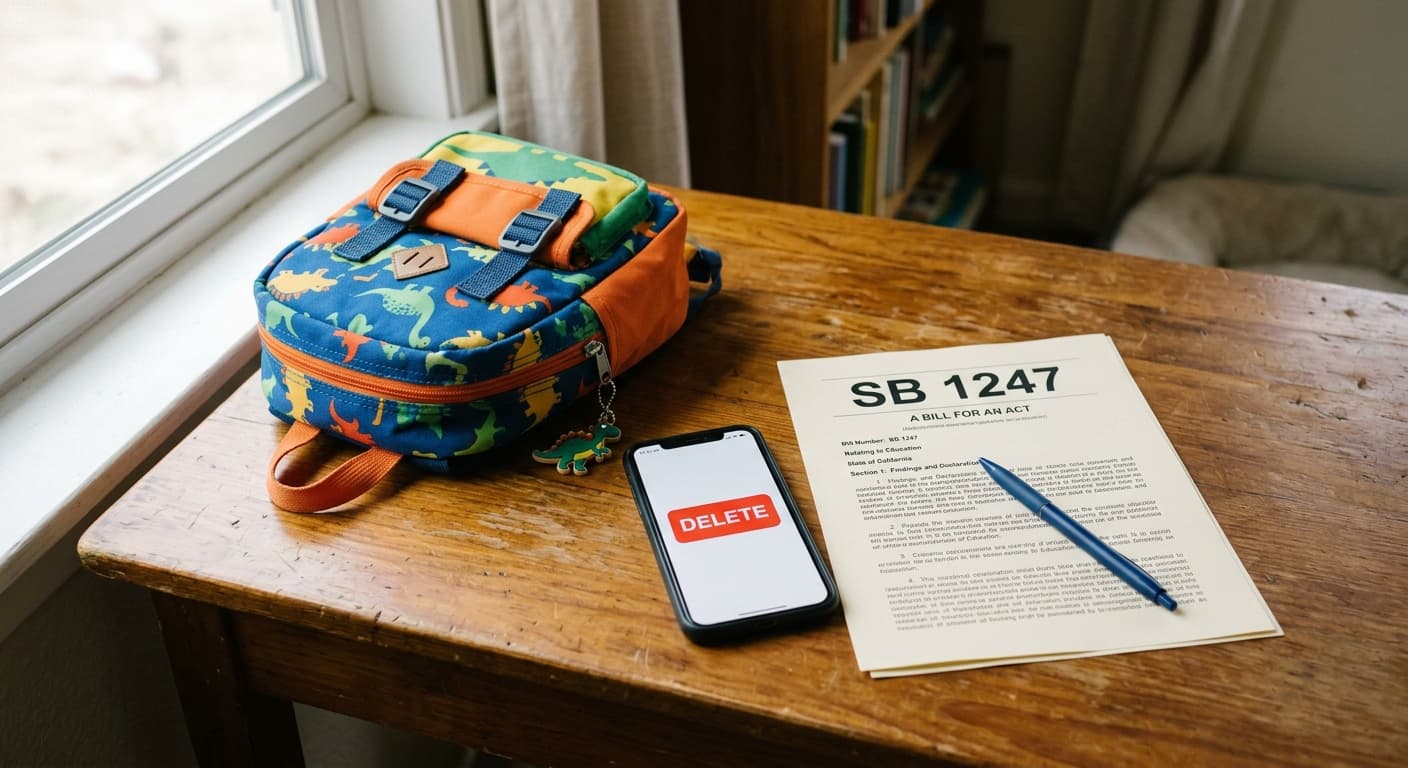
California Senator Steve Padilla has introduced Senate Bill 1247, a proposal that would give people who were featured as children in monetized social media content the right to demand its deletion once they turn 18. Parents who refuse to comply within 10 business days would face $3,000-per-day fines and civil lawsuits.
The bill, referred to the Senate Privacy, Digital Technologies and Consumer Protection Committee with a hearing scheduled for April 6, 2026, arrives as the influencer economy approaches half a trillion dollars and legislative momentum around child exploitation in family vlogging accelerates across the country.
What SB 1247 Would Do
The bill, formally titled the "Social media platforms: child influencers" act, would add Chapter 22.1.3 to the California Business and Professions Code. It creates a legal framework for what advocates call the "right to delete," giving adults who appeared in monetized content as minors the power to control their own digital footprint.
Who Qualifies
Under the bill, a "child influencer" is defined as a person who is at least 18 years of age and was featured as a minor in paid content on a social media platform. The "vlogger" is the parent, legal guardian, or family member who shared the content and received compensation.
"Paid content" means image or video content shared on a social media platform by a vlogger for which the vlogger receives compensation. This covers sponsorships, ad revenue, brand deals, and any other monetization tied to the content.
The Deletion Process
Once a former child influencer submits a removal request through a platform's designated mechanism, the process moves quickly:
- The social media platform must notify the vlogger within 3 business days of receiving the request
- The vlogger must delete or edit the content within 10 business days
- If the vlogger refuses, the former child influencer can file a civil lawsuit
Penalties and Enforcement
The bill's enforcement provisions carry real teeth. Former child influencers who file suit can recover:
- Actual damages suffered as a result of the content
- Statutory damages of $3,000 per day for each day the vlogger remains in violation
- Injunctive relief ordering removal
- Attorney fees and costs
Courts must consider emotional harm, safety risks, loss of privacy control, and impact on future opportunities when evaluating damages. This language signals that California intends for courts to take the psychological toll of unwanted childhood exposure seriously.

Building on SB 764: The Financial Foundation
SB 1247 is the second bill in Senator Padilla's legislative strategy for protecting child influencers. The first, SB 764, was signed into law by Governor Newsom in September 2024 and took effect January 1, 2025.
SB 764 addressed the financial exploitation angle. It requires content creators who feature minors in at least 30% of their content to deposit 65% of the child's proportional earnings into a trust account the minor can access at adulthood. The threshold drops to any content when the creator earns at least $1,250 per month from content featuring the child.
That law mirrored California's landmark Coogan Act, the 1930s law that protected child actors' earnings after Jackie Coogan discovered his parents had spent his entire fortune. SB 764 extended those protections to the digital era.
SB 1247 adds the privacy layer. While SB 764 ensures kids get paid, SB 1247 ensures they can erase the content entirely. Together, the two bills form the most comprehensive child influencer protection framework in the country.

The Ruby Franke Case and Why This Matters Now
The legislative push gained urgency after the Ruby Franke case shocked the public. Franke ran "8 Passengers," a YouTube channel with over 2 million subscribers that documented her family life in Utah. In August 2023, her 12-year-old son escaped from a window, ran to a neighbor's house, and asked for help. He had duct tape on his ankles and wrists, severe wounds, and signs of malnourishment.
Franke and her business partner Jodi Hildebrandt pleaded guilty to four counts of aggravated child abuse. In February 2024, a Utah court sentenced both women to four to 30 years in prison, the maximum for the charges.
Franke's eldest daughter, Shari Franke, became a national advocate for child content creator protections. She helped draft Utah's House Bill 322, which Governor Spencer Cox signed in March 2025. That law gave Utah children the right to request content deletion at 18 and required parents earning over $150,000 from child content to deposit 15% in trust.
"I want to be clear: there's never, ever a good reason for posting your children online for money or fame," Shari Franke told Utah lawmakers during testimony.
Voices of Support
The personal testimonies behind SB 1247 are difficult to ignore.
Caymi Barrett, the daughter of a social media influencer, testified about the lasting damage: "Everything my mom posted is still on social media. Photos I wish never saw the light of day, private details about my health, even when I started my first menstrual cycle."
Alyson Stoner, a former child actor and mental health practitioner, spoke from experience: "I was 12 years old when my face was superimposed onto pornographic content. As a teen, I faced kidnapping plots, stalkers, and mass media coverage of the most intimate and vulnerable details of my life. The content that was captured and shared didn't stay in the past. It traveled forward, determining my employment prospects, public reputation, and everyday safety."
Stoner added: "This bill gives children something my generation never had: the right to their own image, and the legal means to protect it."
Chris McCarty, founder of Quit Clicking Kids, an advocacy organization, called the bill a critical next step: "This new bill ensures that once children reach 18, they can request content deletion, restoring control over their digital footprint."
As of March 2026, no formal opposition to SB 1247 has been registered with the committee.
How Other States and Countries Are Responding
California is not acting alone. A wave of sharenting and child influencer legislation has swept across multiple jurisdictions.
| Jurisdiction | Law | Key Provisions |
|---|---|---|
| Utah | HB 322 (2025) | Right to delete at 18; 15% earnings in trust for creators earning $150K+ |
| Illinois | Child Influencer Act (2024) | First state to mandate earnings protections for child influencers |
| Minnesota | HF 3488 | Right to erasure; broader than other states' financial-only approach |
| France | Law No. 2024-120 | Amended Civil Code to enshrine children's image rights as part of parental authority |
Sixteen states have now introduced legislation requiring trust accounts for minor content creators' earnings. California's combination of financial protections (SB 764) and deletion rights (SB 1247) represents the most aggressive approach in the U.S.

Privacy Law Implications
SB 1247 intersects with several existing legal frameworks that RecordingLaw.com covers extensively.
Children's Online Privacy
The federal Children's Online Privacy Protection Act (COPPA) protects children under 13 from data collection by websites and online services. But COPPA does not address content posted by parents. SB 1247 fills this gap by targeting the parent-as-creator dynamic specifically.

Right to Be Forgotten
California's existing California Consumer Privacy Act (CCPA) already grants state residents the right to request deletion of personal information held by businesses. SB 1247 extends a similar concept to content created by family members, a category that existing privacy law does not address directly.
International Standards
The approach aligns with Article 16 of the UN Convention on the Rights of the Child, which states that "no child shall be subjected to arbitrary or unlawful interference with his or her privacy." France has moved furthest in codifying this principle, amending its Civil Code in 2024 to explicitly include children's image rights within the scope of parental authority.
What Happens Next
The bill's first committee hearing is scheduled for April 6, 2026, before the Senate Privacy, Digital Technologies and Consumer Protection Committee. Given the lack of registered opposition and the bipartisan support that child protection legislation has received in other states, the bill is expected to advance.
If SB 1247 follows the path of SB 764, it could reach Governor Newsom's desk by late 2026. Newsom signed SB 764 alongside Demi Lovato in a public ceremony, signaling strong executive support for child influencer protections.
The influencer economy that SB 1247 targets continues to grow rapidly. Senator Padilla has noted the industry could reach half a trillion dollars by the end of the decade. As that economy expands, the number of children featured in monetized content grows with it, and so does the population of young adults who may someday want their childhoods back.
Consult an attorney for advice specific to your situation, particularly if you were featured in monetized content as a minor or if you create content featuring your children.
Sources and References
- SB-1247 Bill Text - Social media platforms: child influencers(leginfo.legislature.ca.gov).gov
- Senator Padilla Introduces Right to Delete Legislation(sd18.senate.ca.gov).gov
- Governor Newsom Signs SB 764 to Protect Child Influencers(gov.ca.gov).gov
- Governor Newsom Signs Bills Protecting Children Online(gov.ca.gov).gov
- Utah vs Franke/Hildebrandt - Washington County Attorney(washco.utah.gov).gov
- FTC COPPA Rule(ftc.gov).gov
- California Consumer Privacy Act (CCPA)(oag.ca.gov).gov
- UN Convention on the Rights of the Child(ohchr.org)
- California bill seeks to protect kids from influencer parents - CapRadio(capradio.org)
- Utah Child Influencer Protections - ABC News(abcnews.go.com)