Meta Smart Glasses Privacy Scandal: Class Action, Recording Laws, and What Users Need to Know
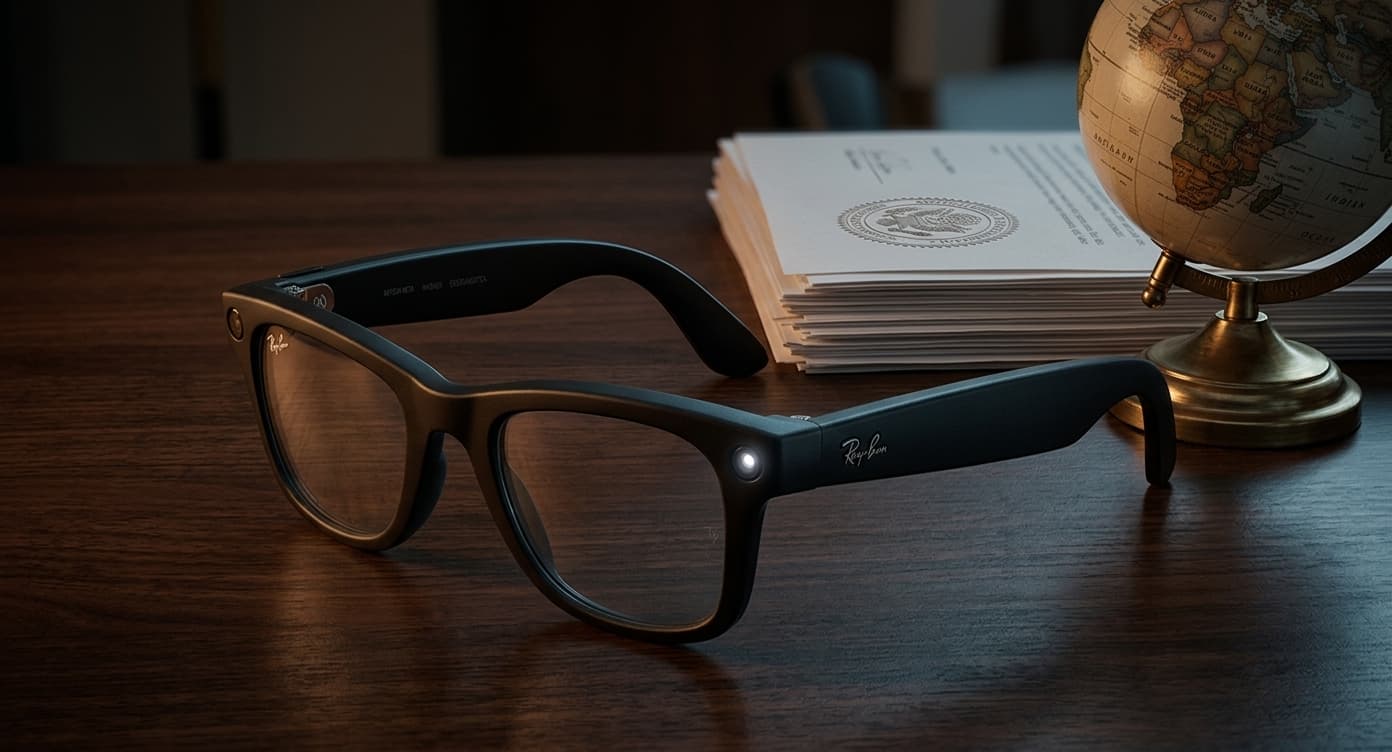
A class action lawsuit filed on March 5, 2026 accuses Meta of shipping intimate footage recorded by its Ray-Ban smart glasses to human contractors in Kenya for AI training. The complaint alleges Meta marketed the $299 smart glasses as "designed for privacy, controlled by you" while concealing that recordings of bathroom visits, sexual encounters, and financial information were reviewed by workers at a Nairobi subcontractor.
The case, Bartone v. Meta Platforms Inc., raises critical questions about how wearable recording devices interact with federal and state wiretapping laws, one-party and two-party consent requirements, and international data transfer regulations.
What the Swedish Investigation Found
In late February 2026, investigative journalists at Sweden's Svenska Dagbladet and Göteborgs-Posten published a joint report that exposed Meta's AI training pipeline. The investigation centered on Sama, a data annotation company based in Nairobi, Kenya, that Meta contracted to label images and video captured by Ray-Ban smart glasses users.
Workers at Sama described viewing deeply personal content. Videos showed users going to the bathroom, undressing, engaging in sexual activity, and handling financial documents including bank cards. In one documented case, a user had placed the glasses on a bedside table, and their partner entered the room and undressed, apparently unaware of the recording.
"You understand that it is someone's private life you are looking at, but at the same time you are just expected to carry out the work," one employee told the newspapers. "You are not supposed to question it. If you start asking questions, you are gone."
The contractors indicated they would prefer not to view such intimate content but risked losing their employment if they refused to label the material. Meta's own privacy policy states that "in some cases, Meta will review your interactions with AIs...this review may be automated or manual (human)." But the company's consumer-facing marketing emphasized user control, not third-party access.
The Class Action Lawsuit
On March 5, 2026, the Clarkson Law Firm filed a proposed class action in the U.S. District Court for the Northern District of California (Case No. 3:26-cv-01897). The named plaintiffs are Gina Bartone of New Jersey and Mateo Canu of California, both of whom purchased Ray-Ban Meta smart glasses based on the company's privacy representations.
The complaint targets both Meta Platforms Inc. and Luxottica of America Inc. (the eyewear manufacturer) and centers on two core legal theories.
False Advertising Claims
The lawsuit points to specific advertising claims Meta used to sell the glasses: "designed for privacy, controlled by you," "built for your privacy," and "you're in control of your data and content." The complaint argues these statements were materially false given that footage was routed to overseas contractors without meaningful user awareness.
"Meta chose to make privacy the centerpiece of its pervasive marketing campaign while concealing the facts that reveal those promises to be false," the complaint states.
Failure to Disclose the Data Pipeline
The complaint alleges Meta misled consumers by concealing the fact that videos captured by the glasses travel from the device to Meta's servers, and from there to a subcontractor in Kenya where human workers manually view and label the footage. While Meta claims its system blurs faces before human review, the lawsuit alleges those filters are "hit or miss" and frequently fail in low-light conditions. Contractors reported seeing identifiable faces, credit card numbers, and other personal identifiers.
The plaintiffs seek injunctive relief to stop Meta from misrepresenting the product's privacy features, as well as restitution for consumers who purchased the glasses based on those claims.
How Federal Wiretapping Law Applies
The Federal Wiretap Act, codified at 18 U.S.C. 2511, prohibits the intentional interception, use, or disclosure of wire, oral, or electronic communications. The statute also makes it unlawful to "procure any other person to intercept or endeavor to intercept" such communications.
Under this framework, the key question is whether Meta's transmission of user-captured footage to third-party contractors constitutes an unauthorized "disclosure" of intercepted communications. If a user records a private conversation through the glasses, and that recording is then shared with annotators in Kenya without the recorded party's knowledge or consent, the disclosure may violate Section 2511.
Violations carry penalties of up to five years in prison and fines of up to $250,000 per incident. The statute also provides a civil cause of action, allowing affected individuals to sue for actual damages, punitive damages, and attorney fees.
A second, separate lawsuit has also been filed against Meta and Luxottica, specifically alleging violations of federal and state wiretapping laws through the secret disclosure of user videos to third-party contractors, according to Bloomberg Law.
State Recording Laws and Consent Requirements
The Meta smart glasses case collides directly with the patchwork of state recording consent laws across the United States.
One-Party Consent States
In the 38 states that follow one-party consent rules, a person can legally record a conversation they participate in without notifying the other party. Under this framework, a Meta glasses wearer could record their own interactions. However, one-party consent does not authorize sharing those recordings with third parties like Meta's contractors without the recorded person's knowledge.
Two-Party (All-Party) Consent States
In states like California, Florida, Illinois, Maryland, Massachusetts, and Washington, all parties to a conversation must consent to recording. Meta glasses wearers in these states face heightened legal exposure.
California Penal Code Section 632 prohibits recording confidential communications without the consent of all parties. Violations carry fines of up to $2,500 and up to one year in jail. Given that plaintiff Mateo Canu resides in California, this statute is directly relevant to the case.
The LED Light Does Not Equal Consent
The small LED indicator light on the glasses, which Meta designed to signal when recording is active, does not constitute legal consent in any jurisdiction. Courts have consistently held that consent requires affirmative agreement, not merely the opportunity to notice an indicator light. The glasses themselves look like ordinary Ray-Ban eyewear, making it difficult for bystanders to even realize they might be recorded.
Reasonable Expectation of Privacy
Smart glasses complicate the traditional privacy analysis because they are nearly invisible as recording devices. Unlike a phone held up to record or a visible body camera, smart glasses capture video without most bystanders realizing it. This is particularly significant in places where people have a reasonable expectation of privacy: restrooms, changing rooms, private residences, and medical facilities.
The content reviewed by Sama contractors included footage from exactly these kinds of private settings, raising questions about both the initial recording and its subsequent transmission to overseas workers.
UK and International Response
The UK's Information Commissioner's Office (ICO) moved quickly after the Swedish investigation broke. On March 5, 2026, the ICO confirmed it had written to Meta demanding "urgent clarification" on how the company was meeting its obligations under UK data protection law.
If the ICO determines that Meta violated UK GDPR, the regulator has the authority to impose fines of up to 17.5 million pounds or 4% of global annual turnover, whichever is higher. For Meta, whose parent company generated over $134 billion in revenue in 2025, the 4% threshold could reach more than $5 billion.
The European response adds another dimension. Bloomberg reported on March 25 that Meta had withheld its new display glasses from the EU market, citing battery regulations and supply shortages. Privacy advocates noted the timing, suggesting regulatory uncertainty in Europe may also factor into Meta's distribution decisions.
Meta's Defense
Meta has pushed back on the narrative. A company spokesperson stated: "When people share content with Meta AI, like other companies we sometimes use contractors to review this data to improve people's experience with the glasses, as stated in our privacy policy. This data is first filtered to protect people's privacy."
The company points to its privacy policy, which does reference human review of AI interactions. Meta also claims that faces are automatically blurred before contractors see the footage. But the lawsuit alleges this filtering is unreliable, particularly in low-light conditions where the blurring algorithms fail to detect faces consistently.
Privacy experts have noted a significant gap between what Meta discloses in dense legal language buried in its terms of service and what consumers actually understand when they see marketing materials emphasizing "designed for privacy."
The Broader Privacy Backlash
The Kenya contractor revelation did not occur in a vacuum. Public anxiety about smart glasses and surveillance has been building for months.
In a widely shared incident, a New York City subway rider broke another passenger's Meta Ray-Ban smart glasses, becoming an unexpected folk hero online. The incident sparked discussions about whether bystanders have the right to object to being recorded by wearable devices in public spaces.
In 2024, two Harvard students built a system called I-XRAY that connected Meta's Ray-Ban smart glasses to a facial recognition pipeline. The project demonstrated how the glasses could identify strangers in real time, pulling up names, addresses, and family members within minutes. The demonstration went viral and prompted the Electronic Frontier Foundation (EFF) to issue warnings about the technology.
On March 25, 2026, the EFF published a detailed advisory titled "Think Twice Before Buying or Using Meta's Ray-Bans." The EFF warned that the glasses automatically import media to Meta's mobile app by default, AI features require sending footage to Meta's servers with no local processing option, and conversations with Meta AI are saved by default. The organization also flagged internal Meta documents revealing plans to add facial recognition to the glasses.
Despite all this, Meta is moving forward. On March 27, 2026, FCC filings revealed two new Ray-Ban smart glasses models codenamed "Scriber" and "Blazer," even as the privacy lawsuits and investigations continue.
What Smart Glasses Users Can Do
The EFF recommends several steps for current Meta smart glasses owners who want to reduce their privacy exposure:
- Disable "Cloud media" in privacy settings to prevent automatic uploads
- Turn off additional data sharing options
- Delete saved conversations with Meta AI regularly
- Use the glasses for specific purposes rather than continuous recording
- Blur faces in footage before uploading anything publicly
For people concerned about being recorded by others wearing smart glasses, legal options depend on jurisdiction. In two-party consent states, you can ask a glasses wearer to stop recording and report violations to law enforcement. In all states, you retain the right to object to recording in places where you have a reasonable expectation of privacy.
This legal situation is evolving rapidly. As smart glasses become more common (over 7 million sold in 2025 alone), legislatures may need to update wiretapping and surveillance statutes that were written long before wearable cameras became mainstream consumer products.
Consult an attorney for advice specific to your situation, particularly if you believe your conversations or image were recorded without consent.
Sources and References
- 18 U.S.C. 2511 - Interception and disclosure of wire, oral, or electronic communications prohibited(govinfo.gov).gov
- 18 U.S.C. 2511 - Full text at Legal Information Institute(law.cornell.edu)
- Cal. Penal Code Section 632 - Recording confidential communications(leginfo.legislature.ca.gov).gov
- ECPA Overview - Congressional Research Service(congress.gov).gov
- DOJ Justice Manual - Elements of Section 2511 Offenses(justice.gov).gov
- Meta sued over AI smart glasses privacy concerns - TechCrunch(techcrunch.com)
- Meta promised it would not spy on you - Fortune(fortune.com)
- Think Twice Before Buying or Using Metas Ray-Bans - EFF(eff.org)
- Meta AI Glasses Class Action Lawsuit - Clarkson Law Firm(clarksonlawfirm.com)
- Meta, Luxottica Again Sued Over AI Smart Glasses Video Sharing - Bloomberg Law(news.bloomberglaw.com)
