
Florida
Florida Landlord-Tenant Recording Laws: Cameras and Privacy Rules (2026)
Independently fact-checked against primary sources (last audited August 22, 2026). · Reviewed by the RecordingLaw editorial team. · Law checked current as of August 22, 2026. · 6 primary sources cited on this page. How we verify our legal content
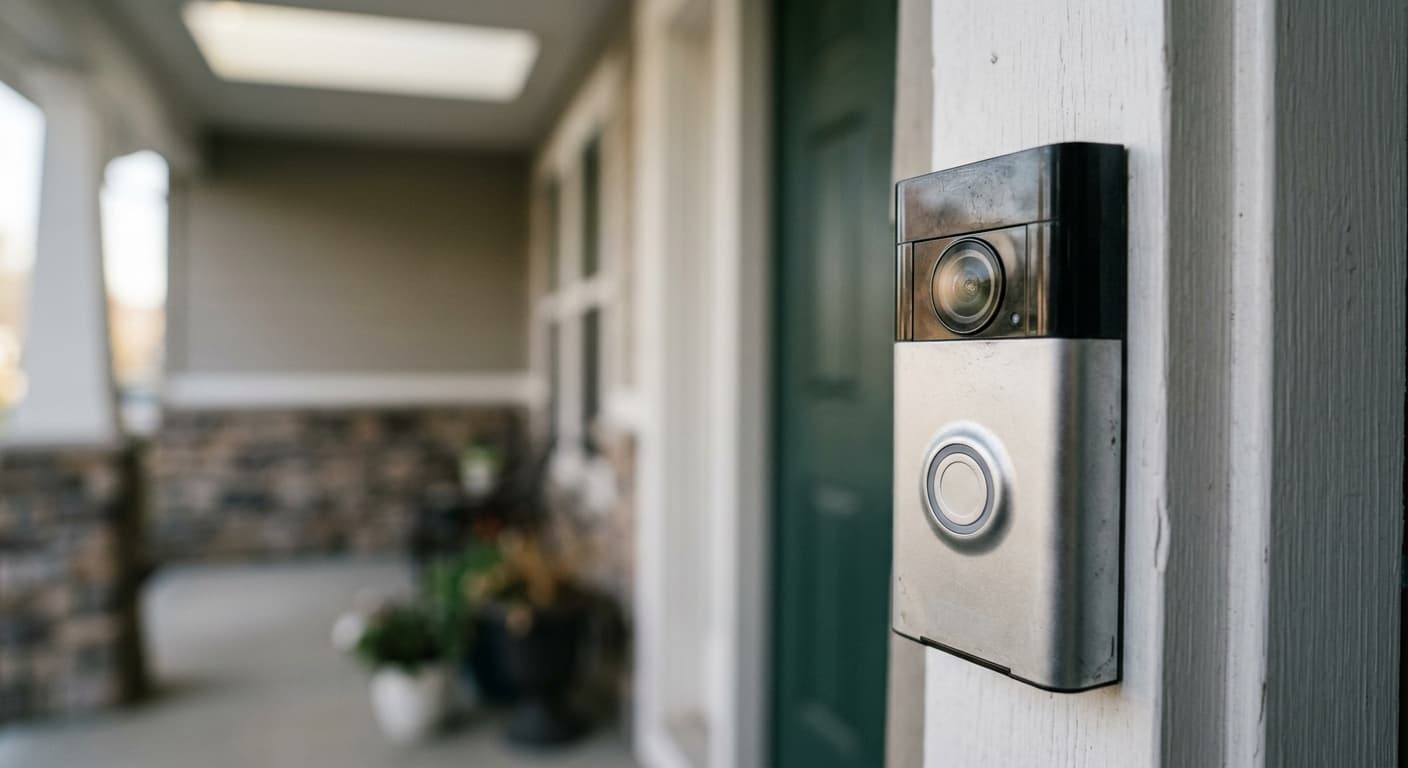
Florida requires all-party consent for audio recording under Fla. Stat. 934.03, so landlords and tenants must get everyone's agreement before recording conversations. Landlords cannot install cameras inside rental units, though video-only cameras in shared common areas of multi-unit buildings are permitted with proper notice.
The landlord-tenant relationship in Florida creates unique recording and surveillance issues. Tenants have a strong reasonable expectation of privacy inside their rental units, which limits what landlords can monitor. At the same time, landlords have legitimate security interests in protecting their property. Florida's wiretapping law (F.S. 934.03), digital voyeurism statute (F.S. 810.145), and the Residential Landlord and Tenant Act (Chapter 83) all play a role in determining what recording is legal.
Landlord Surveillance: What Is Legal
Cameras in Common Areas
Landlords of multi-unit residential buildings may install video surveillance cameras in common areas that all tenants share. These include:
- Building lobbies and foyers
- Hallways and corridors
- Stairwells and elevators
- Parking lots and garages
- Laundry rooms
- Mail rooms
- Pool areas and fitness centers
- Building entrances and exits
Common area surveillance serves legitimate security purposes and is generally accepted by Florida courts. Tenants in shared spaces of a multi-unit building have a reduced expectation of privacy compared to inside their individual units.
Requirements for Common Area Cameras
Even in common areas, landlords should follow best practices to stay compliant:
- Post visible signage informing tenants and visitors that video surveillance is in use
- Use video-only cameras to avoid triggering F.S. 934.03's all-party consent requirement
- Disclose surveillance in the lease agreement or a separate addendum
- Position cameras to monitor common spaces, not to peer into individual units
- Avoid placing cameras near unit doors at angles that can see inside when doors open
Cameras on Single-Family Rental Property Exteriors
Landlords who rent single-family homes may install exterior cameras to monitor:
- The driveway and parking area
- The front entrance and porch
- The yard and property perimeter (viewed from public vantage points)
Cameras should be installed before the tenant moves in and disclosed in the lease. Cameras that existed before the tenancy began are less likely to create disputes than cameras installed after a tenant has moved in.
Landlord Surveillance: What Is Illegal
Cameras Inside Rental Units
Landlords are strictly prohibited from installing surveillance cameras inside rental units. Once a tenant signs a lease and takes possession, the interior of the unit belongs to the tenant's private space. Installing cameras inside a tenant's apartment or house violates:
- F.S. 810.145: Digital voyeurism, which prohibits secretly using an imaging device to record a person who is dressing, undressing, or exposing the body, for an improper purpose such as sexual gratification or degrading the person, in a place where that person has a reasonable expectation of privacy. For a landlord aged 19 or older who meets those elements, this is a third-degree felony (up to 5 years in prison, $5,000 fine). If the landlord also holds a "position of authority or trust" with the tenant, F.S. 810.145(7)(b) requires the court to reclassify the offense to the next higher degree (second-degree felony, up to 15 years); the statute defines that term broadly enough to plausibly reach a landlord's control over a tenant's housing, though no Florida court has ruled on the point. An ordinary camera not aimed at capturing nudity or undressing may fall outside the statute, though lease terms and common-law privacy protections can still apply.
- F.S. 934.03: If cameras record audio, this constitutes illegal interception of oral communications, also a third-degree felony.
- Common law privacy rights: Florida recognizes the tort of intrusion upon seclusion, which a tenant can use as the basis for a civil lawsuit.
Audio Recording
Landlords who add audio recording capabilities to any surveillance system (including exterior cameras) must comply with F.S. 934.03's all-party consent requirement. Audio-capable cameras that capture tenants' private conversations without consent violate the wiretapping statute, regardless of where the cameras are located.
Cameras Aimed at Private Tenant Spaces
Even exterior cameras become illegal when they are positioned to:
- Peer through windows into the tenant's living space
- Monitor fenced backyards or patios that are exclusively used by a specific tenant
- Capture images of tenants in areas where they reasonably expect privacy (outdoor showers, enclosed porches, private balconies)
Tenant Recording Rights
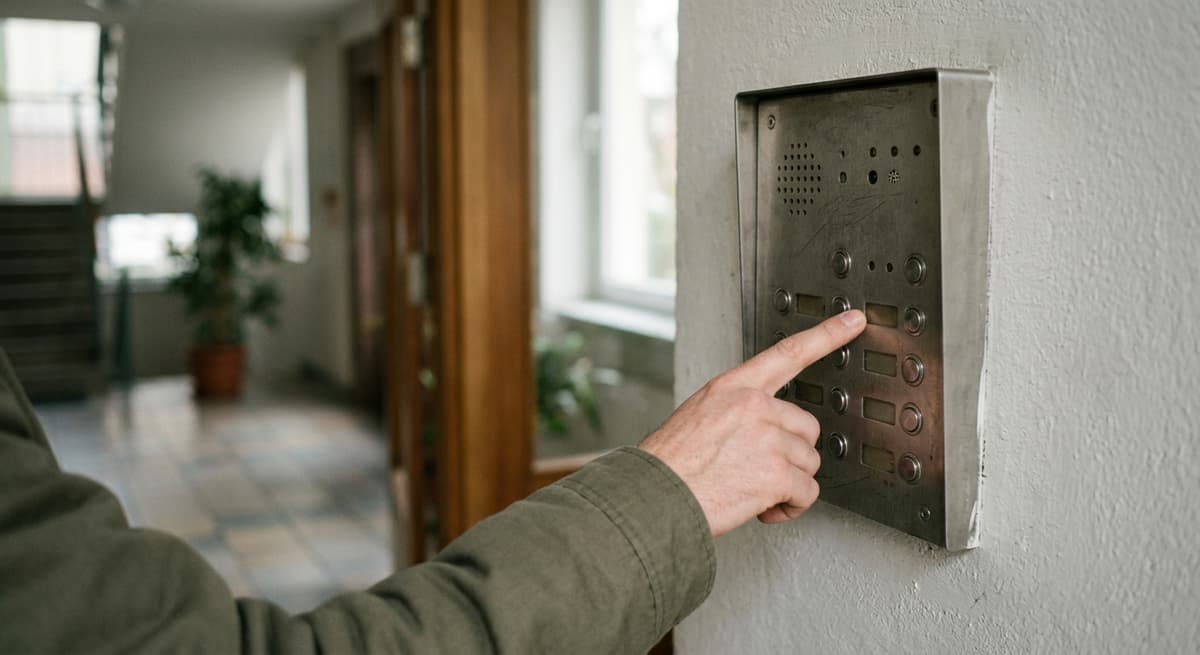
Cameras Inside the Rental Unit
Tenants may install security cameras inside their own rental unit, subject to:
- Lease restrictions: Some leases prohibit modifications to the property, which may include mounting cameras. Check your lease before installation.
- Privacy of others: If the tenant has roommates, cameras should not be placed in roommates' private areas (bedrooms, bathrooms) without consent.
- Audio recording: All-party consent under F.S. 934.03 applies. Cameras with microphones that capture conversations of visitors or roommates without consent are illegal.
Cameras on Exterior Areas
Tenants who have exclusive use of exterior areas (a private patio, assigned parking space, front porch of a single-family rental) can generally install cameras to monitor those spaces, subject to:
- Lease terms regarding property modifications
- HOA or condo association rules
- Positioning cameras to monitor only areas under the tenant's control, not neighboring units or common areas
Smart Doorbells (Ring, Nest, etc.)
Tenants may install smart doorbells such as Ring or Nest Hello on their unit's entrance, though:
- Lease terms may restrict installation if it requires drilling or modifying the door/frame
- Video recording of the area immediately in front of the door is generally legal
- Audio recording features should be disabled unless the tenant is prepared to comply with F.S. 934.03 (obtaining consent from everyone whose conversations are captured)
Recording Landlord-Tenant Interactions
Recording Conversations with Your Landlord
Both landlords and tenants should understand that recording conversations between them is subject to F.S. 934.03's all-party consent requirement. This means:
- A tenant cannot secretly record a phone call with the landlord
- A landlord cannot secretly record a conversation with a tenant
- A tenant cannot secretly record a maintenance worker's visit to document what was said
- A landlord cannot secretly record a property inspection to document the tenant's behavior
To legally record any of these interactions, all parties must consent to the recording before it begins.
Documenting Lease Violations and Maintenance Issues
Tenants often want to record evidence of maintenance failures, lease violations, or habitability issues. While secret audio recording is illegal, legal documentation methods include:
- Video-only recording: Silently recording visible conditions (mold, water damage, pest infestations, broken fixtures) is not an "oral communication" and does not trigger F.S. 934.03
- Photographs: Taking photos of property conditions is always legal
- Written communication: Documenting issues in writing (emails, certified letters) creates a paper trail
- Witness statements: Having witnesses observe conditions and provide written accounts
Recording Evidence of Illegal Entry
Florida's Residential Landlord and Tenant Act (F.S. 83.53) requires landlords to provide at least 24 hours' notice before entering a rental unit for repairs, except in emergencies. If a tenant suspects the landlord is entering without notice:
- A video-only camera inside the unit can document unauthorized entries without violating wiretapping laws
- The video should capture the entry itself, not audio of conversations
- The footage can serve as evidence in a dispute or legal action
Lease Provisions About Recording
What Landlords Can Include in Leases
Landlords may include lease provisions that:
- Disclose the location and type of surveillance cameras on the property
- Require tenant notification before installing cameras
- Restrict tenants from mounting cameras on building exteriors (especially in multi-unit buildings)
- Prohibit audio recording on the premises beyond what is required by law
What Landlords Cannot Enforce
Lease provisions cannot override Florida statutory protections. A landlord cannot:
- Include a lease clause waiving the tenant's right to privacy inside the unit
- Require tenants to consent to interior surveillance as a condition of the lease
- Include provisions that would authorize illegal recording under F.S. 934.03 or F.S. 810.145
Vacation Rentals and Short-Term Rentals
Airbnb, VRBO, and Short-Term Rental Properties
Florida's vacation rental industry creates specific recording concerns. Property owners must understand that short-term rental guests have the same reasonable expectation of privacy inside the rental unit as long-term tenants.
What is legal:
- Exterior cameras monitoring the property perimeter, driveway, and entrances
- Cameras in common areas of multi-unit vacation rental buildings
- Noise monitoring devices that detect decibel levels without recording actual conversations
What is illegal:
- Hidden cameras inside the rental unit (bedrooms, bathrooms, living areas)
- Audio recording of guests' conversations without consent
- Cameras in areas where guests expect privacy (pools, hot tubs, outdoor showers)
Platform Disclosure Requirements
Vacation rental platforms like Airbnb and VRBO require hosts to disclose all surveillance devices in their listings. Failure to disclose may violate both the platform's terms of service and Florida law if the devices capture protected content.
Penalties for Violations
| Violation | Penalty | Statute |
|---|---|---|
| Camera inside tenant's unit (offender 19+) | Third-degree felony: up to 5 years prison, $5,000 fine (second-degree, up to 15 years, if the landlord holds a position of authority or trust over the tenant) | F.S. 810.145 |
| Audio recording without consent | Third-degree felony: up to 5 years prison, $5,000 fine | F.S. 934.03 |
| Civil damages for illegal recording | $100/day or $1,000 (whichever higher), plus actual/punitive damages | F.S. 934.10 |
| Illegal entry without notice | Tenant may terminate lease or seek injunctive relief | F.S. 83.53 |
More Florida Recording Laws
Audio Recording | Video Recording | Voyeurism & Hidden Cameras | Workplace Recording | Recording Police | Phone Call Recording | Security Cameras | Recording in Public | Landlord-Tenant | Dashcam Laws | Schools | Medical Recording
Back to Florida Recording Laws
More Florida Recording Topics
More Florida Laws
Frequently Asked Questions
Can my landlord put cameras inside my apartment in Florida?
No. Once you sign a lease and take possession, the interior of your rental unit is your private space. A camera that secretly captures you dressing, undressing, or exposing your body for an improper purpose (such as sexual gratification or degrading you) violates F.S. 810.145 (digital voyeurism), a third-degree felony for offenders aged 19 and older, punishable by up to 5 years in prison and a $5,000 fine. If your landlord holds a position of authority or trust over you, F.S. 810.145(7)(b) reclassifies the offense to the next higher degree, a second-degree felony punishable by up to 15 years. Even a camera that does not meet those specific elements can still expose your landlord to civil liability for invasion of privacy or a lease violation.
Can my landlord have cameras in the hallway of my apartment building?
Yes. Landlords may install video-only cameras in common areas of multi-unit buildings, including hallways, lobbies, parking lots, and elevators. These areas are shared spaces where tenants have a reduced expectation of privacy. The cameras should be disclosed to tenants, and audio recording should be disabled to comply with F.S. 934.03.
Can I install a Ring doorbell on my apartment in Florida?
You may install a smart doorbell, but check your lease first. Some leases prohibit modifications that require drilling or altering the property. If permitted, video recording of the area in front of your door is generally legal. Consider disabling audio recording features to avoid all-party consent issues under F.S. 934.03 when the doorbell captures visitors' conversations.
Can I secretly record my landlord refusing to make repairs in Florida?
No, you cannot secretly record audio of conversations with your landlord. Florida's all-party consent law (F.S. 934.03) requires every party to consent before recording. Instead, document maintenance issues with photographs, video-only recordings of visible conditions, written requests sent by email or certified mail, and contemporaneous notes.
Are Airbnb hosts required to disclose cameras in Florida?
Airbnb and similar platforms require hosts to disclose all surveillance devices in their listings. Under Florida law, hidden cameras inside rental units violate F.S. 810.145 (digital voyeurism), and audio-capable cameras without guest consent violate F.S. 934.03. Exterior cameras monitoring the property perimeter should be disclosed but are generally legal if they are video-only.
Updates
Added the F.S. 810.145(7)(b) enhanced penalty (second-degree felony, up to 15 years) that applies when a landlord holds a position of authority or trust over the recorded tenant, which the prior penalty table and FAQ left out.
Independently fact-checked against the cited primary sources; governing law re-checked for recent changes
Corrected F.S. 83.53's landlord entry-notice minimum from 12 to 24 hours, and narrowed the F.S. 810.145 digital-voyeurism claim about interior cameras to the statute's actual elements (secret recording of nudity/undressing for an improper purpose), since it does not criminalize every landlord camera placed inside a unit.
Governing law re-checked for recent changes
Title updated to 2026. No substantive landlord-tenant [recording law](/united-states-recording-laws/) changes; F.S. 810.145 digital voyeurism and F.S. 934.03 all-party consent rules unchanged.
Reviewed and approved by an editor
The Law Behind This Article
This article rests on the statutory provisions below, held in our own legal record and retrieved from the official source. Tap a section to read the operative text.
Florida Statutes
§ 934.03Interception and disclosure of wire, oral, or electronic communications prohibited.In forcecited in 51 of our articles
(1) Except as otherwise specifically provided in this chapter, any person who:(a) Intentionally intercepts, endeavors to intercept, or procures any other person to intercept or endeavor to intercept any wire, oral, or electronic communication; (b) Intentionally uses, endeavors to use, or procures any other person to use or endeavor to use any electronic, mechanical, or other device to intercept any oral communication when:1. Such device is affixed to, or otherwise transmits a signal through, a wire, cable, or other like connection used in wire communication; or 2.
Official text (excerpt) · last checked 2026-08-31 · Read the full text in our law library · Verify at leg.state.fl.us
Cited in 74 court opinions in our collectionLatest citing opinion in our collection: 2026
In the courts (editorial summary, independently checked):State v. Walls (1978) held that recording an in-home oral communication without the consent of all parties violated section 934.03 and required suppression, and State v. Inciarrano (1985) held the statute protects only communications uttered with a reasonable expectation of privacy.
Opinions citing this section in our collection:
- State v. Walls (Supreme Court of Florida 1978, 356 So. 2d 294)✓An extortion victim secretly recorded threats made to him in his own home; the court held that was a protected oral communication, that recording it without every party's consent violated Section 934.03, and that Section 934.06 barred using the tape as evidence.
- SHARRON TASHA FORD v. CITY OF BOYNTON BEACH (District Court of Appeal of Florida 2021)“…ng oral communications in violation of the wiretap statute, section 934.03, Florida Statutes (2009), and for obstructing without vio…”
- State v. Calhoun (Circuit Court for the Judicial Circuits of Florida 1984, 7 Fla. Supp. 2d 3)“…hall not be violated” . . . (emphasis mine) Furthermore, section 934.03, Florida Statutes, makes it unlawful for *6 any person (…”
Identified automatically from the court opinions citing this section — not a ranking of which case controls.
Also relied on in: Florida Recording Laws (2026): All-Party Consent Rules, Florida Dashcam Laws: Rules for Dashboard Cameras (2026), Can an Employer Record Conversations Without Consent? (2026)
§ 810.145Digital voyeurism.In forcecited in 17 of our articles
(1) As used in this section, the term:(a) “Broadcast” means electronically transmitting a visual image or visual recording with the intent that it be viewed by another person. (b) “Family or household member” has the same meaning as in s. 741.28. (c) “Imaging device” means any mechanical, digital, or electronic viewing device; still camera; camcorder; motion picture camera; or any other instrument, equipment, or format capable of recording, storing, or transmitting visual images of another person. (d) “Position of authority or trust” means a position occupied by a person 18 years of age or older who is a relative, caregiver, coach, employer, or other person who, by reason of his or her relationship with the victim, is able to exercise undue influence over him or her or exploit his or her trust. (e) “Privately exposing the body” means exposing a sexual organ.
Official text (excerpt) · last checked 2026-08-31 · Read the full text in our law library · Verify at leg.state.fl.us
Cited in 3 court opinions in our collectionLatest citing opinion in our collection: 2024
In the courts (editorial summary, independently checked):Kenneth Isaac Parkerson v. State of Florida (2015) rejected a facial overbreadth challenge to section 810.145, holding the video voyeurism statute regulates conduct, not pure speech. Clemen v. Surterra Holdings, Inc. (2024) drew on its privacy definition and exemption for clearly visible cameras when dismissing an intrusion claim.
Opinions citing this section in our collection:
- Kenneth Isaac Parkerson v. State of Florida (District Court of Appeal of Florida 2015, 163 So. 3d 683)✓A man caught watching people inside their homes, once carrying a camera, argued Florida's video voyeurism statute was facially overbroad because it could reach journalists and investigators; the court held section 810.145 is not overbroad and affirmed his convictions.
- Clemen v. Surterra Holdings, Inc. (District Court, M.D. Florida 2024)✓A worker sued over cameras aimed at a workplace changing area; dismissing her intrusion on seclusion claim, the court drew on section 810.145's privacy definition and its exclusion for obvious cameras, and found no authority making an alleged violation outrageous per se.
- Keith Taig v. City of Vero Beach (Court of Appeals for the Eleventh Circuit 2023)✓A spa customer recorded by covert police cameras installed under a court order argued Florida statutes including section 810.145 gave officers clear notice of customers' privacy rights; the court held those state statutes do not clearly establish a federal constitutional right.
Identified automatically from the court opinions citing this section — not a ranking of which case controls.
Also relied on in: Is It Illegal to Video Record Someone Without Their Consent? (2026), Florida School Recording Laws: Classroom, Campus, and Student Privacy (2026), Florida Security Camera Laws: Home, Business, and HOA Rules (2026)
§ 83.53Landlord’s access to dwelling unit.In force
(1) The tenant shall not unreasonably withhold consent to the landlord to enter the dwelling unit from time to time in order to inspect the premises; make necessary or agreed repairs, decorations, alterations, or improvements; supply agreed services; or exhibit the dwelling unit to prospective or actual purchasers, mortgagees, tenants, workers, or contractors. (2) The landlord may enter the dwelling unit at any time for the protection or preservation of the premises. The landlord may enter the dwelling unit upon reasonable notice to the tenant and at a reasonable time for the purpose of repair of the premises. “Reasonable notice” for the purpose of repair is notice given at least 24 hours prior to the entry, and reasonable time for the purpose of repair shall be between the hours of 7:30 a.m. and 8:00 p.m.
Official text (excerpt) · last checked 2026-07-28 · Read the full text in our law library · Verify at leg.state.fl.us
Cited in 1 court opinions in our collectionLatest citing opinion in our collection: 1986
Opinions citing this section in our collection:
- Quinones v. Durkis (District Court, S.D. Florida 1986, 638 F. Supp. 856)“…claim) V. A count for damages alleging violations of Fla. Stat. 83.53 et seq., (Florida Landlord Tenant Act),…”
Identified automatically from the court opinions citing this section — not a ranking of which case controls.
§ 934.10Civil remedies.In forcecited in 12 of our articles
(1) Any person whose wire, oral, or electronic communication is intercepted, disclosed, or used in violation of ss. 934.03-934.09 shall have a civil cause of action against any person or entity who intercepts, discloses, or uses, or procures any other person or entity to intercept, disclose, or use, such communications and shall be entitled to recover from any such person or entity which engaged in that violation such relief as may be appropriate, including:(a) Preliminary or equitable or declaratory relief as may be appropriate; (b) Actual damages, but not less than liquidated damages computed at the rate of $100 a day for each day of violation or $1,000, whichever is higher; (c) Punitive damages; and (d) A reasonable attorney’s fee and other litigation costs reasonably incurred. (2) A good faith reliance on:(a) A court order, subpoena, or legislative authorization as provided in ss. 934.03-934.09, (b) A request of an investigative or law enforcement officer under s. 934.09(7), or (c) A good faith determination that Florida or federal law, other than 18 U.S.C. s.
Official text (excerpt) · last checked 2026-07-28 · Read the full text in our law library · Verify at leg.state.fl.us
Cited in 33 court opinions in our collectionLatest citing opinion in our collection: 2026
In the courts (editorial summary, independently checked):Minotty v. Baudo (2010) held the civil action reaches only actual interception, not attempts, and does not cover silent video surveillance. Jatar v. Lamaletto (2000) affirmed summary judgment where the plaintiff had no reasonable expectation of privacy. Burgess v. Burgess (1984) held interspousal immunity does not bar the action.
Opinions citing this section in our collection:
- Burgess v. Burgess (Supreme Court of Florida 1984, 447 So. 2d 220)“…mages brought by one spouse against the other spouse, under Section 934.10, Florida Statutes (1979)? Burgess v. Burgess, 417 S…”
- Minotty v. Baudo (District Court of Appeal of Florida 2010, 42 So. 3d 824)✓A doctor hid cameras in colleagues' offices, but the microphones never worked, so only silent video was captured. The court held section 934.10 gives a civil claim only for actual interception of oral communications, not attempts or silent video, and reversed those judgments.
- Roberts v. Jardine (District Court of Appeal of Florida 1978, 358 So. 2d 588)✓Sued under section 934.10 for secretly taping a phone call, the defendant refused to answer interrogatories. The court held she could invoke the Fifth Amendment, since interception is also a crime, and could not be defaulted for it, but had to produce the tape already played.
Identified automatically from the court opinions citing this section — not a ranking of which case controls.
Also relied on in: Florida Audio Recording Laws: All-Party Consent Rules and Penalties (2026), Florida Medical Recording Laws: Patient Rights and HIPAA Rules (2026), Florida Phone Call Recording Laws: Consent Rules for Calls (2026)
Explore the law
This article also draws on these acts and chapters (opening at their first section): Florida Statutes § 720.31 (Recreational leaseholds; right to acquire; escalation clauses.) · Florida Statutes § 83.001 (Application.)
Related law for further reading — not part of this article’s citations.
Search our full record of US law — 2.1 million sections, every state + federal →
Sources and References
- Florida Statute 934.03(flsenate.gov).gov
- Florida Statute 810.145 - Digital Voyeurism(flsenate.gov).gov
- Florida Statute 934.10 - Civil Remedies(flsenate.gov).gov
- Florida Chapter 83 - Landlord and Tenant Act(leg.state.fl.us).gov
- Florida Statute 83.53 - Landlord Access(flsenate.gov).gov
- Florida Chapter 720 - HOA Act(leg.state.fl.us).gov