
Florida
Florida Video Recording Laws: What You Can and Cannot Record (2026)
Independently fact-checked against primary sources (last audited August 22, 2026). · Reviewed by the RecordingLaw editorial team. · Law checked current as of August 22, 2026. · 7 primary sources cited on this page. How we verify our legal content
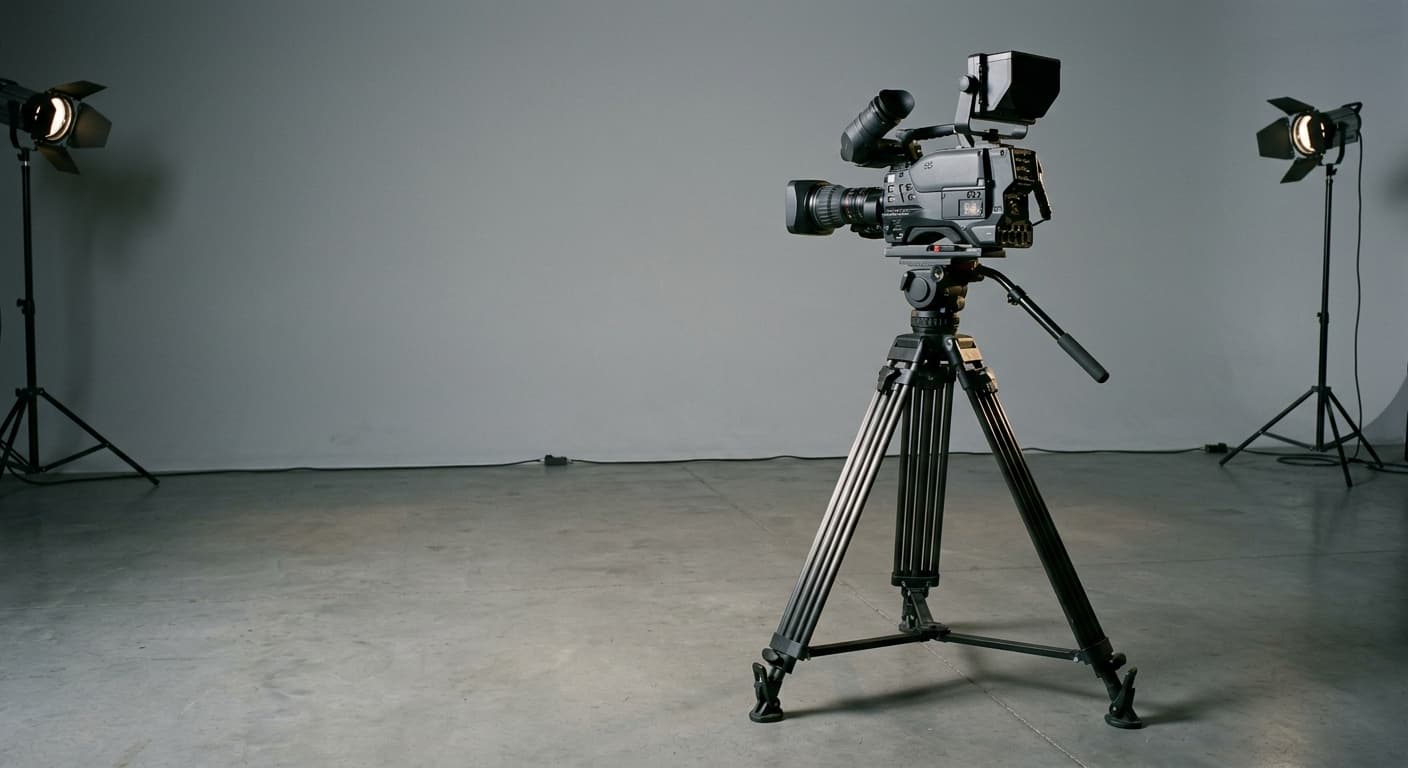
In Florida, silent video recording in public spaces is generally legal because Fla. Stat. 934.03 governs only audio interception. The moment a camera captures audio, all-party consent is required under that same statute. Separately, Fla. Stat. 810.145 prohibits recording in private locations or under clothing without consent.
Florida draws a clear legal line between video recording with audio and video recording without audio. The state's wiretapping statute, Florida Statute 934.03, governs the interception of wire, oral, and electronic communications. Because pure video without sound does not involve an "oral communication," silent video recording in public spaces generally falls outside the scope of this statute. However, the moment a camera captures audio of a private conversation, Florida's strict all-party consent requirement applies.
Florida also has a separate statute targeting invasive visual recording. Florida Statute 810.145, titled "Digital Voyeurism," prohibits recording images of people in private settings or under/through their clothing without consent. Together, these two statutes create a framework that protects both auditory and visual privacy while allowing reasonable video recording in public settings.
Silent Video Recording in Florida
When Silent Video Is Legal
Because Florida Statute 934.03 only covers wire, oral, and electronic communications, recording video without audio does not trigger the wiretapping statute. Silent video recording is generally permitted in these situations:
- Filming in public spaces such as streets, parks, sidewalks, and plazas
- Operating home security cameras pointed at your own property or public areas
- Using dashcams that record video without a microphone enabled
- Recording in businesses with proper notice to customers and employees
- Filming public events, demonstrations, and government proceedings
The First Amendment also protects the right to record matters of public interest in public places. The U.S. Court of Appeals for the Eleventh Circuit, which covers Florida, has recognized a First Amendment right to photograph and videotape police conduct and other matters of public interest occurring on public property.
When Silent Video Becomes Illegal
Even without audio, video recording crosses legal lines when it:
- Captures images of people in locations where they have a reasonable expectation of privacy (bathrooms, bedrooms, changing rooms, locker rooms)
- Records under or through a person's clothing without consent
- Is conducted for voyeuristic purposes as defined in Fla. Stat. 810.145
- Violates trespass laws by recording on private property without authorization
- Constitutes harassment or stalking under Florida's harassment statutes
Video Recording with Audio: The All-Party Consent Rule
When a video camera also records audio, the recording becomes subject to Florida Statute 934.03. This means the all-party consent requirement applies in full. You must obtain permission from every person whose private conversation your camera captures before recording.
Common Scenarios Where Audio Triggers the Law
Home security cameras with microphones: If your Ring doorbell, Nest camera, or other security device records audio of visitors' private conversations, the all-party consent rule applies. Many homeowners unknowingly violate this law by leaving audio recording enabled on outdoor cameras that pick up neighbors' conversations.
Dashcams with audio enabled: A dashcam that records only video is legal. A dashcam that also records conversations inside the vehicle requires consent from every passenger. If the dashcam microphone picks up private conversations of people outside the vehicle, additional legal issues arise.
Business surveillance systems: Video-only surveillance in common areas is generally acceptable with proper notice. Adding microphones to those cameras changes the legal calculus entirely and requires compliance with the all-party consent rule.
Smartphones and tablets: Using a phone to record video of a public event is generally legal. Using a phone to record a private conversation (even if you frame it as "just taking a video") triggers the full weight of Section 934.03.
Penalties for Video Recording with Unauthorized Audio
Recording video that captures audio of private conversations without all-party consent is a third-degree felony under Fla. Stat. 934.03, punishable by:
- Up to 5 years in state prison
- Up to $5,000 in fines
- Civil liability under Fla. Stat. 934.10 for $100 per day of violation or $1,000 (whichever is higher), plus actual damages, punitive damages, and attorney's fees
Florida's Digital Voyeurism Law (F.S. 810.145)

In 2024, the Florida Legislature updated Section 810.145, redesignating the offense from "video voyeurism" to "digital voyeurism" and expanding both the scope and the penalties. This statute operates independently from the wiretapping law and targets invasive visual recording regardless of whether audio is captured.
What Digital Voyeurism Prohibits
Under Fla. Stat. 810.145, it is illegal to:
- Record in private locations: Use an imaging device to secretly view, broadcast, or record a person in a dwelling, structure, or conveyance where the person has a reasonable expectation of privacy
- Record under or through clothing: Use an imaging device to view, broadcast, or record under or through the clothing of another person without consent for the purpose of viewing the body or undergarments
- Disseminate voyeuristic recordings: Share, distribute, or transfer images or recordings created through digital voyeurism
- Sell voyeuristic recordings: Engage in commercial distribution of voyeuristic images or recordings
Key Definitions in the Statute
Imaging device: Any mechanical, digital, or electronic viewing device, still camera, camcorder, motion picture camera, or any other instrument capable of recording, storing, or transmitting visual images.
Place and time when a person has a reasonable expectation of privacy: A place and time when a reasonable person would believe they can fully disrobe in privacy. This includes bathrooms, bedrooms, changing rooms, dressing rooms, fitting rooms, and similar enclosed spaces.
Criminal Penalties for Digital Voyeurism
| Offense | Age of Offender | Classification | Maximum Penalty |
|---|---|---|---|
| Digital voyeurism | Under 19 | First-degree misdemeanor | 1 year jail, $1,000 fine |
| Digital voyeurism | 19 or older | Third-degree felony | 5 years prison, $5,000 fine |
| Dissemination of voyeuristic images | Any age | Third-degree felony | 5 years prison, $5,000 fine |
| Commercial dissemination | Any age | Third-degree felony | 5 years prison, $5,000 fine |
| Repeat offenders | Any age | Second-degree felony | 15 years prison, $10,000 fine |
The distinction between offenders under 19 and those 19 or older reflects the Legislature's intent to treat juvenile offenders less harshly for first offenses while maintaining serious consequences for adults.
Voyeurism Under F.S. 810.14
Separate from digital voyeurism, Florida Statute 810.14 addresses the broader offense of voyeurism, which includes secretly observing another person (even without a camera) when the person has a reasonable expectation of privacy. A first violation is a first-degree misdemeanor. A person with two or more prior voyeurism convictions faces felony charges.
Recording in Specific Locations
Public Spaces
Recording video in public spaces such as parks, sidewalks, streets, and public buildings is generally legal in Florida. People in public have a diminished expectation of privacy. However, even in public:
- You cannot record up someone's skirt or down their shirt
- You cannot follow and record someone in a manner that constitutes stalking
- Audio recording of private conversations still requires all-party consent
- Some government buildings may have internal policies restricting recording
Private Property
On private property, the property owner or occupant controls whether recording is permitted. You generally cannot:
- Record inside someone else's home without their permission
- Place cameras aimed at areas where neighbors have a reasonable expectation of privacy (bedroom windows, fenced yards, bathroom windows)
- Record inside private businesses that prohibit recording (they can ask you to leave)
Workplaces
Video surveillance in workplaces is legal in common areas (lobbies, hallways, production floors) with proper employee notification. Cameras are prohibited in restrooms, locker rooms, and changing areas. Audio-capable cameras in the workplace require all-party consent under F.S. 934.03.
Rental Properties
Landlords may install video cameras in common areas of multi-unit buildings (lobbies, hallways, parking areas) but cannot place cameras inside rental units or in areas where tenants have a reasonable expectation of privacy. See the full guide on landlord-tenant recording.
Body Cameras and Wearable Video Devices
Wearable cameras, including body-mounted cameras and smart glasses, are legal for recording video in public settings where the wearer has a right to be. The legal issues arise when:
- The device also records audio of private conversations (triggering Section 934.03)
- The wearer enters a private location and records without consent (potentially violating Section 810.145)
- The recording is conducted in a manner that constitutes harassment or stalking
Law enforcement body cameras operate under a separate framework. The Florida Legislature enacted Fla. Stat. 943.1718, which establishes standards for law enforcement body camera programs, including policies on activation, retention, and public records access.
Video Recording and Court Proceedings
Admissibility of Video Evidence
For video recordings to be admissible in Florida courts, they must be:
- Obtained lawfully (with proper consent if audio is included)
- Properly authenticated by a witness who can verify the recording's accuracy
- Free from tampering or alteration
- Relevant to the matter being litigated
Video recordings that capture audio without all-party consent are generally inadmissible under Florida's exclusionary provisions related to Section 934.03.
Recording in Courtrooms
Florida state courts generally allow cameras and recording devices in courtrooms under Florida Rule of General Practice and Judicial Administration 2.450. The presiding judge has discretion to limit or prohibit recording if it would adversely affect the fairness of proceedings. Federal courts in Florida follow different rules and are generally more restrictive about cameras.
Florida Video Recording at a Glance
| Scenario | Legal? | Key Statute |
|---|---|---|
| Silent video in public | Generally yes | First Amendment |
| Video with audio of private conversation | Only with all-party consent | F.S. 934.03 |
| Recording in private locations without consent | No | F.S. 810.145 |
| Recording under/through clothing | No | F.S. 810.145 |
| Home security cameras (video only, own property) | Generally yes | N/A |
| Security cameras with audio | Only with all-party consent | F.S. 934.03 |
| Distributing voyeuristic recordings | No (felony) | F.S. 810.145 |
| Recording police in public | Yes (with distance limits) | First Amendment, F.S. 843.31 |
More Florida Recording Topics
- Florida Recording Laws
- Florida Audio Recording
- Florida Medical Recording
- Florida Schools Recording
- Florida Police Recording
- Florida Phone Calls Recording
- Florida Security Cameras Recording
- Florida Voyeurism Recording
- Florida Dashcam Recording
- Florida Public Recording Recording
- Florida Biometric Privacy Laws
- Surveillance Camera Laws
More Florida Recording Laws
- Florida Smart Glasses Recording Laws (2026)
- Florida Whistleblower Laws: Protections and How to Report
- Florida GPS Tracking Laws: Is It Legal to Put a Tracker on a Car? (2026)
More Florida Laws
Frequently Asked Questions
Is it legal to record video without audio in Florida?
Generally yes, in public spaces. Florida Statute 934.03 governs the interception of oral, wire, and electronic communications, not silent video. Recording video without audio in public areas such as streets, parks, and businesses (with notice) is typically legal. However, recording in private locations where people expect privacy violates F.S. 810.145, regardless of whether audio is captured.
Can I record someone on video if my camera also records audio?
Only with all-party consent. The moment your camera captures audio of a private conversation, Florida's all-party consent requirement under F.S. 934.03 applies. You must inform every person whose conversation your camera records and obtain their consent. Failing to do so is a third-degree felony punishable by up to 5 years in prison.
What is digital voyeurism in Florida?
Digital voyeurism under F.S. 810.145 involves using any imaging device to secretly record a person in a location where they have a reasonable expectation of privacy, or recording under or through their clothing without consent. For offenders aged 19 or older, this is a third-degree felony. Disseminating or selling voyeuristic images carries additional felony charges.
Can my neighbor legally point a security camera at my property in Florida?
It depends on what the camera captures. A neighbor can record their own property and public areas visible from their property. However, pointing a camera directly into your private spaces, such as bedroom windows, fenced backyards, or bathrooms, may violate F.S. 810.145 and common law privacy protections. Adding audio recording to an outdoor camera could also violate F.S. 934.03 if it captures your private conversations.
Are body cameras legal in Florida?
Yes, wearing a body camera to record video in public is generally legal. However, if the body camera also records audio of private conversations, the all-party consent requirement of F.S. 934.03 applies. Law enforcement body cameras operate under separate rules established in F.S. 943.1718, which sets standards for activation, retention, and public records access.
Updates
Independently fact-checked against the cited primary sources; governing law re-checked for recent changes
Governing law re-checked for recent changes
Title updated to 2026. F.S. 810.145 digital voyeurism designation (replacing 'video voyeurism') confirmed effective October 1, 2024 under Ch. 2024-132. No other substantive changes.
Reviewed and approved by an editor
The Law Behind This Article
This article rests on the statutory provisions below, held in our own legal record and retrieved from the official source. Tap a section to read the operative text.
Florida Statutes
§ 934.03Interception and disclosure of wire, oral, or electronic communications prohibited.In forcecited in 51 of our articles
(1) Except as otherwise specifically provided in this chapter, any person who:(a) Intentionally intercepts, endeavors to intercept, or procures any other person to intercept or endeavor to intercept any wire, oral, or electronic communication; (b) Intentionally uses, endeavors to use, or procures any other person to use or endeavor to use any electronic, mechanical, or other device to intercept any oral communication when:1. Such device is affixed to, or otherwise transmits a signal through, a wire, cable, or other like connection used in wire communication; or 2.
Official text (excerpt) · last checked 2026-08-31 · Read the full text in our law library · Verify at leg.state.fl.us
Cited in 74 court opinions in our collectionLatest citing opinion in our collection: 2026
In the courts (editorial summary, independently checked):State v. Walls (1978) held that recording an in-home oral communication without the consent of all parties violated section 934.03 and required suppression, and State v. Inciarrano (1985) held the statute protects only communications uttered with a reasonable expectation of privacy.
Opinions citing this section in our collection:
- State v. Walls (Supreme Court of Florida 1978, 356 So. 2d 294)✓An extortion victim secretly recorded threats made to him in his own home; the court held that was a protected oral communication, that recording it without every party's consent violated Section 934.03, and that Section 934.06 barred using the tape as evidence.
- SHARRON TASHA FORD v. CITY OF BOYNTON BEACH (District Court of Appeal of Florida 2021)“…ng oral communications in violation of the wiretap statute, section 934.03, Florida Statutes (2009), and for obstructing without vio…”
- State v. Calhoun (Circuit Court for the Judicial Circuits of Florida 1984, 7 Fla. Supp. 2d 3)“…hall not be violated” . . . (emphasis mine) Furthermore, section 934.03, Florida Statutes, makes it unlawful for *6 any person (…”
Identified automatically from the court opinions citing this section — not a ranking of which case controls.
Also relied on in: Florida Recording Laws (2026): All-Party Consent Rules, Florida Dashcam Laws: Rules for Dashboard Cameras (2026), Can an Employer Record Conversations Without Consent? (2026)
§ 810.14Voyeurism prohibited; penalties.In forcecited in 3 of our articles
(1) A person commits the offense of voyeurism when he or she, with lewd, lascivious, or indecent intent:(a) Secretly observes another person when the other person is located in a dwelling, structure, or conveyance and such location provides a reasonable expectation of privacy. (b) Secretly observes another person’s intimate areas in which the person has a reasonable expectation of privacy, when the other person is located in a public or private dwelling, structure, or conveyance. As used in this paragraph, the term “intimate area” means any portion of a person’s body or undergarments that is covered by clothing and intended to be protected from public view. (2) A person who violates this section commits a misdemeanor of the first degree for the first violation, punishable as provided in s. 775.082 or s. 775.083. (3) A person who violates this section and who has been previously convicted or adjudicated delinquent two or more times of any violation of this section commits a felony of the third degree, punishable as provided in s. 775.082, s. 775.083, or s. 775.084.
Official text (excerpt) · last checked 2026-07-28 · Read the full text in our law library · Verify at leg.state.fl.us
Cited in 3 court opinions in our collectionLatest citing opinion in our collection: 2026
Opinions citing this section in our collection:
- In Re Standard Jury Inst.-Criminal Cases (Supreme Court of Florida 2000, 765 So. 2d 692)“…Comment This instruction is based on section 810.14, Florida Statutes (Supp.1998). It is error to inform the…”
- Kenneth Isaac Parkerson v. State of Florida (District Court of Appeal of Florida 2015, 163 So. 3d 683)“…allenge to the Voyeurism Statute The voyeurism statute, section 810.14, Florida Statutes (2011), provides, in pertinent part:…”
- United States v. Watkins (Court of Appeals for the Tenth Circuit 2026)“…20;1 Del. Code Ann. tit. 11, § 1335;1 D.C. Code § 22-3531;3 Fla. Stat. Ann. § 810.14;2 Ga. Code Ann. § 16-11-61; Haw. Rev. S…”
Identified automatically from the court opinions citing this section — not a ranking of which case controls.
Also relied on in: Florida Voyeurism and Hidden Camera Laws: Digital Voyeurism Penalties (2026), Florida Surveillance Camera Laws (2026 Guide)
§ 810.145Digital voyeurism.In forcecited in 17 of our articles
(1) As used in this section, the term:(a) “Broadcast” means electronically transmitting a visual image or visual recording with the intent that it be viewed by another person. (b) “Family or household member” has the same meaning as in s. 741.28. (c) “Imaging device” means any mechanical, digital, or electronic viewing device; still camera; camcorder; motion picture camera; or any other instrument, equipment, or format capable of recording, storing, or transmitting visual images of another person. (d) “Position of authority or trust” means a position occupied by a person 18 years of age or older who is a relative, caregiver, coach, employer, or other person who, by reason of his or her relationship with the victim, is able to exercise undue influence over him or her or exploit his or her trust. (e) “Privately exposing the body” means exposing a sexual organ.
Official text (excerpt) · last checked 2026-08-31 · Read the full text in our law library · Verify at leg.state.fl.us
Cited in 3 court opinions in our collectionLatest citing opinion in our collection: 2024
In the courts (editorial summary, independently checked):Kenneth Isaac Parkerson v. State of Florida (2015) rejected a facial overbreadth challenge to section 810.145, holding the video voyeurism statute regulates conduct, not pure speech. Clemen v. Surterra Holdings, Inc. (2024) drew on its privacy definition and exemption for clearly visible cameras when dismissing an intrusion claim.
Opinions citing this section in our collection:
- Kenneth Isaac Parkerson v. State of Florida (District Court of Appeal of Florida 2015, 163 So. 3d 683)✓A man caught watching people inside their homes, once carrying a camera, argued Florida's video voyeurism statute was facially overbroad because it could reach journalists and investigators; the court held section 810.145 is not overbroad and affirmed his convictions.
- Clemen v. Surterra Holdings, Inc. (District Court, M.D. Florida 2024)✓A worker sued over cameras aimed at a workplace changing area; dismissing her intrusion on seclusion claim, the court drew on section 810.145's privacy definition and its exclusion for obvious cameras, and found no authority making an alleged violation outrageous per se.
- Keith Taig v. City of Vero Beach (Court of Appeals for the Eleventh Circuit 2023)✓A spa customer recorded by covert police cameras installed under a court order argued Florida statutes including section 810.145 gave officers clear notice of customers' privacy rights; the court held those state statutes do not clearly establish a federal constitutional right.
Identified automatically from the court opinions citing this section — not a ranking of which case controls.
Also relied on in: Is It Illegal to Video Record Someone Without Their Consent? (2026), Florida Landlord-Tenant Recording Laws: Cameras and Privacy Rules (2026), Florida School Recording Laws: Classroom, Campus, and Student Privacy (2026)
§ 934.10Civil remedies.In forcecited in 12 of our articles
(1) Any person whose wire, oral, or electronic communication is intercepted, disclosed, or used in violation of ss. 934.03-934.09 shall have a civil cause of action against any person or entity who intercepts, discloses, or uses, or procures any other person or entity to intercept, disclose, or use, such communications and shall be entitled to recover from any such person or entity which engaged in that violation such relief as may be appropriate, including:(a) Preliminary or equitable or declaratory relief as may be appropriate; (b) Actual damages, but not less than liquidated damages computed at the rate of $100 a day for each day of violation or $1,000, whichever is higher; (c) Punitive damages; and (d) A reasonable attorney’s fee and other litigation costs reasonably incurred. (2) A good faith reliance on:(a) A court order, subpoena, or legislative authorization as provided in ss. 934.03-934.09, (b) A request of an investigative or law enforcement officer under s. 934.09(7), or (c) A good faith determination that Florida or federal law, other than 18 U.S.C. s.
Official text (excerpt) · last checked 2026-07-28 · Read the full text in our law library · Verify at leg.state.fl.us
Cited in 33 court opinions in our collectionLatest citing opinion in our collection: 2026
In the courts (editorial summary, independently checked):Minotty v. Baudo (2010) held the civil action reaches only actual interception, not attempts, and does not cover silent video surveillance. Jatar v. Lamaletto (2000) affirmed summary judgment where the plaintiff had no reasonable expectation of privacy. Burgess v. Burgess (1984) held interspousal immunity does not bar the action.
Opinions citing this section in our collection:
- Burgess v. Burgess (Supreme Court of Florida 1984, 447 So. 2d 220)“…mages brought by one spouse against the other spouse, under Section 934.10, Florida Statutes (1979)? Burgess v. Burgess, 417 S…”
- Minotty v. Baudo (District Court of Appeal of Florida 2010, 42 So. 3d 824)✓A doctor hid cameras in colleagues' offices, but the microphones never worked, so only silent video was captured. The court held section 934.10 gives a civil claim only for actual interception of oral communications, not attempts or silent video, and reversed those judgments.
- Roberts v. Jardine (District Court of Appeal of Florida 1978, 358 So. 2d 588)✓Sued under section 934.10 for secretly taping a phone call, the defendant refused to answer interrogatories. The court held she could invoke the Fifth Amendment, since interception is also a crime, and could not be defaulted for it, but had to produce the tape already played.
Identified automatically from the court opinions citing this section — not a ranking of which case controls.
Also relied on in: Florida Audio Recording Laws: All-Party Consent Rules and Penalties (2026), Florida Medical Recording Laws: Patient Rights and HIPAA Rules (2026), Florida Phone Call Recording Laws: Consent Rules for Calls (2026)
§ 943.1718Body cameras; policies and procedures.In forcecited in 4 of our articles
(1) As used in this section, the term:(a) “Body camera” means a portable electronic recording device that is worn on a law enforcement officer’s person that records audio and video data of the officer’s law-enforcement-related encounters and activities. (b) “Law enforcement agency” means an agency that has a primary mission of preventing and detecting crime and enforcing the penal, criminal, traffic, and motor vehicle laws of the state and in furtherance of that primary mission employs law enforcement officers as defined in s. 943.10. (c) “Law enforcement officer” has the same meaning as provided in s. 943.10. (2) A law enforcement agency that permits its law enforcement officers to wear body cameras shall establish policies and procedures addressing the proper use, maintenance, and storage of body cameras and the data recorded by body cameras. The policies and procedures must include:(a) General guidelines for the proper use, maintenance, and storage of body cameras. (b) Any limitations on which law enforcement officers are permitted to wear body cameras.
Official text (excerpt) · last checked 2026-07-28 · Read the full text in our law library · Verify at leg.state.fl.us
Also relied on in: Florida Laws on Recording Police: Halo Law and Your Rights (2026), Florida Police Bodycam Laws & Public Records, Florida Police Reports: How to Get a Copy, Fees, and What's Public
Explore the law
This article also draws on these acts and chapters (opening at their first section): Florida Statutes § 934.01 (Legislative findings.)
Related law for further reading — not part of this article’s citations.
Search our full record of US law — 2.1 million sections, every state + federal →
Sources and References
- Florida Statute 934.03 - Interception and Disclosure of Communications(flsenate.gov).gov
- Florida Statute 810.145 - Digital Voyeurism(flsenate.gov).gov
- Florida Statute 810.14 - Voyeurism(leg.state.fl.us).gov
- Florida Statute 934.10 - Civil Remedies(flsenate.gov).gov
- Florida Statute 943.1718 - Body Camera Procedures(flsenate.gov).gov
- Florida Chapter 934 - Security of Communications Act(leg.state.fl.us).gov
- Florida Rule of Judicial Administration 2.450(flcourts.gov).gov