
Florida
Florida Police Bodycam Laws & Public Records
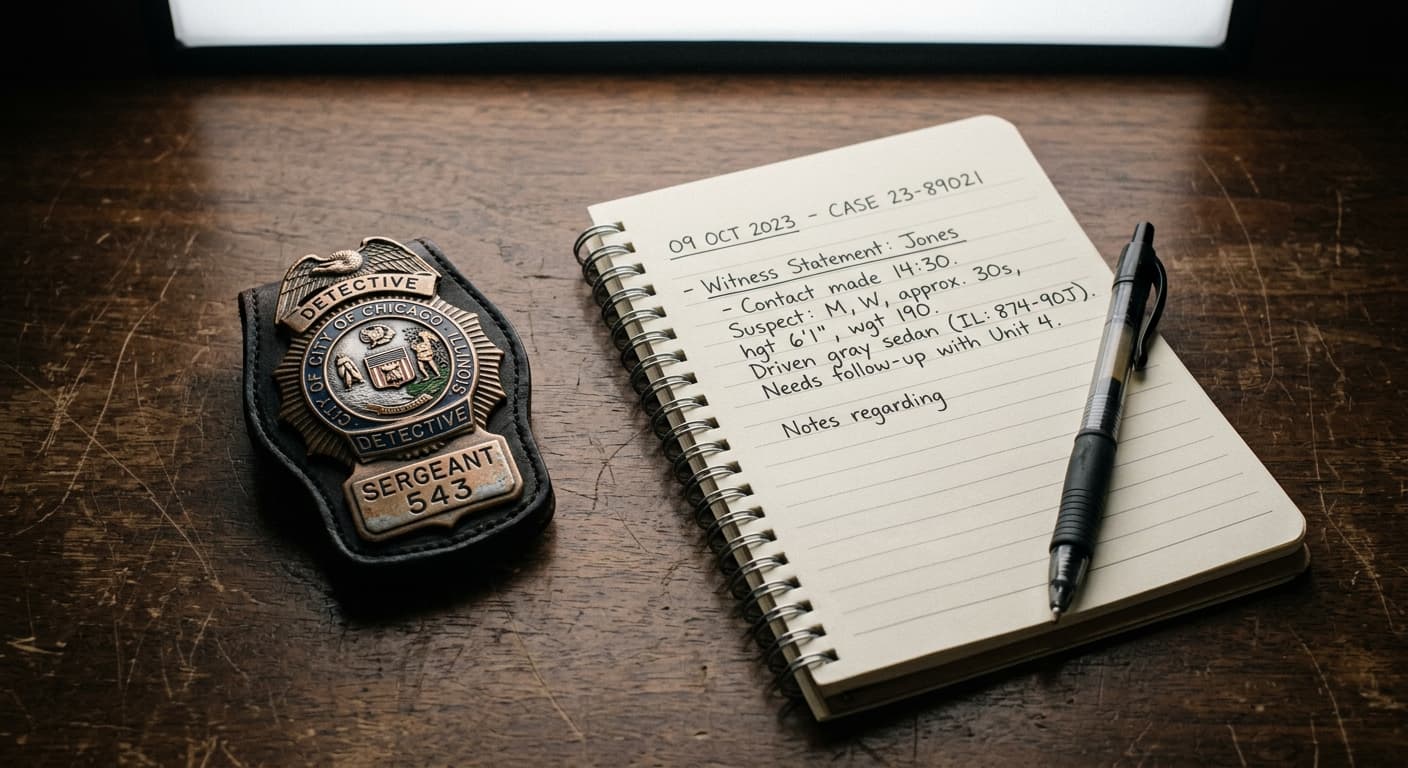
Florida treats police body camera footage as a public record by default under (2)(l), but it automatically shields footage recorded inside a private residence, a health care facility, or any place a reasonable person would expect privacy. No state law requires an agency to use the cameras at all.
This page covers Florida's rules for police-worn body cameras: whether agencies must use them, how long footage must be kept, and when the public (or the person recorded) can obtain a copy. It does not address whether a private citizen may record an on-duty Florida police officer, which is a separate, well-settled First Amendment question covered on Recording Law's guide to recording police.
Does Florida require police to wear body cameras?
No. Florida has not enacted a statewide mandate requiring law enforcement agencies to equip officers with body cameras. addresses body cameras only for agencies that voluntarily choose to use them: an agency that permits its officers to wear body cameras must adopt written policies covering the proper use, maintenance, and storage of the cameras, and the storage, retention, and release of the audio and video they capture. The decision to adopt a body camera program, and the rules for exactly when an officer must turn one on, are both left to each agency's own policy rather than state law.
That local-policy structure means activation triggers vary by department. One agency may require continuous recording during every call for service, while another limits mandatory activation to traffic stops, arrests, and use-of-force incidents. Because § 943.1718 does not itself set an activation rule or create a penalty for failing to record, whether an officer who fails to activate a camera faces discipline depends entirely on the employing agency's internal policy, not on state statute.

Is police body camera footage a public record in Florida?
Yes, generally. Florida's public-records law, Chapter 119 of the Florida Statutes, presumes that records made or received by a government agency in connection with official business, including body camera video, are open to inspection and copying. (2)(l) applies that presumption to body camera recordings specifically, while carving out a narrower category of footage the law instead treats as confidential and exempt.
Understanding Florida's rule means separating the general rule (open) from the exemption (closed), because the exemption turns on where the camera was pointed, not on who is asking or why. A recording made on a public street, inside a store, or during a roadside traffic stop is a public record subject to a standard Chapter 119 request. A recording made through the open door of someone's home, or inside a hospital room during a welfare check, generally is not, regardless of what led the officer there.
When is body camera footage confidential under Florida law?
Recordings are confidential and exempt from disclosure if made "within the interior of a private residence," "within the interior of a facility that offers health care, mental health care, or social services," or "in a place that a reasonable person would expect to be private." (Fla. Stat. § 119.071(2)(l))
These three categories cover the situations Florida lawmakers judged most privacy-sensitive: a domestic disturbance call answered inside someone's home, a psychiatric hold captured inside a treatment facility, or an officer's bodycam catching an undressed bystander through a bathroom window. The exemption applies to the recording itself, not to the underlying incident report or arrest record, which typically remain public under the rest of Chapter 119.
The exemption is not absolute. Fla. Stat. § 119.071(2)(l) lets a court order disclosure of otherwise-exempt footage if it finds disclosure is "necessary to advance a compelling interest" that outweighs the privacy harm, after weighing factors that include the risk to reputation or safety, whether confidentiality is necessary for the fair administration of justice, and whether redacting the video (blurring a face, muting audio) could protect the same privacy interest without full withholding. That gives journalists, civil litigants, and family members of a person shown in the recording a path to court-ordered access even when an agency initially denies a request.
Can you get a copy of body camera footage that shows you?
Yes, within limits. Fla. Stat. § 119.071(2)(l)4.a. requires an agency to disclose a copy of an otherwise-exempt recording to a person recorded by the camera, but the agency may release only the portions relevant to that person's presence in the video, not the entire file. A separate clause extends a similar right to someone who lawfully resided in or was present at a recorded private location, again limited to the portions showing that person. A personal representative acting for a recorded individual generally has the same access.
In practice, this means a person who was inside their own apartment during a police encounter, and who is later denied a copy of the full body camera video because it is "confidential," can still demand the segment that depicts their own presence in the recording.
How long must Florida agencies keep body camera recordings?
Florida sets a floor, not a ceiling. Fla. Stat. § 119.071(2)(l)5. requires a law enforcement agency to retain a body camera recording for at least 90 days, regardless of whether the footage is exempt or open. Many agencies keep footage far longer under their own records-retention schedules, particularly when a recording becomes evidence in a criminal case, an internal-affairs investigation, or civil litigation, since destroying potential evidence in those situations can create separate legal exposure for the agency. Florida's statute does not set a single statewide retention ceiling the way some other states do; the 90-day figure is a statutory minimum, and agency policy fills in the rest.
The cost of getting footage: redaction and fees
Even non-exempt footage is not always quick or free to obtain. Chapter 119 allows an agency to charge a reasonable fee for the labor involved in producing a record, and body camera video often requires that labor before release: faces of bystanders, minors, undercover officers, and other individuals who are not the subject of the request may need to be blurred, and portions of audio may need to be muted to protect confidential informants or juvenile witnesses. Redaction work on a lengthy video can take agency staff hours, and Florida law lets the agency pass that cost on to the requester. The Reporters Committee for Freedom of the Press has documented this redaction-and-fee process as one of the more significant practical barriers Florida requesters face, distinct from the statutory exemptions themselves.
A real case: the shooting of Roger Fortson
Body camera footage functions as both a records-law subject and courtroom evidence, and the 2024 killing of Senior Airman Roger Fortson shows both roles at once. On May 3, 2024, an Okaloosa County Sheriff's Office deputy, Eddie Duran, shot and killed Fortson, a 23-year-old Air Force airman, at the door of Fortson's off-base apartment while responding to a disturbance call. The sheriff's office released body camera video of the shooting, and Sheriff Eric Aden fired Duran after an internal investigation concluded Duran's life was not in danger when he fired. Duran was later charged with manslaughter, pleaded not guilty, and, as of mid-2026, faces a trial set for September 28, 2026, after multiple delays. Fortson's family also filed a federal civil rights lawsuit in May 2025 alleging excessive force. The case illustrates how a single body camera recording can simultaneously be a Chapter 119 public record, evidence in a criminal prosecution, and the central exhibit in a separate civil case, each governed by different rules for who can see it and when.
For the broader landscape of how other states handle bodycam mandates and access, see Recording Law's Police Bodycam Laws hub.
This article provides general legal information about Florida's body camera statutes as of mid-2026. It is not legal advice. For help with a specific records request or case, consult a Florida attorney or the custodian agency's records division.
More Florida Laws
Frequently Asked Questions
Does Florida require every police department to use body cameras?
No. Florida has no statewide mandate. Fla. Stat. § 943.1718 only requires agencies that choose to use body cameras to adopt written policies governing their use, storage, and retention; whether to adopt a program at all is left to each agency.
Can I get body camera footage of my own arrest in Florida?
Generally yes. Under Fla. Stat. § 119.071(2)(l)4.a., a law enforcement agency must disclose the portions of a recording relevant to your own presence, even if the full recording is otherwise exempt because it was made in a private location.
Is body camera footage from inside my house a public record in Florida?
No. Footage recorded inside the interior of a private residence is confidential and exempt from disclosure under Fla. Stat. § 119.071(2)(l). A court can still order release if it finds disclosure necessary to advance a compelling interest that outweighs the privacy harm.
How long does a Florida police department have to keep body camera video?
At least 90 days, under Fla. Stat. § 119.071(2)(l)5. Many agencies retain footage substantially longer under their own records-retention schedules, especially once a recording becomes evidence in a criminal case.
Can a Florida agency charge me for body camera footage?
Yes. Chapter 119 of the Florida Statutes allows agencies to charge a reasonable fee for the labor of producing a record, and body camera video frequently requires paid redaction work, such as blurring bystanders' faces, before release.
Does Florida law say when an officer must turn on the camera?
No. State law does not set a statewide activation trigger. Fla. Stat. § 943.1718 requires an agency that uses body cameras to have a written policy, but each agency decides for itself when officers must start and stop recording.
Can the public watch body camera footage of a police shooting in Florida?
Usually, unless the footage falls within one of the confidentiality categories under Fla. Stat. § 119.071(2)(l), such as footage recorded inside a private residence. Agencies can also face requests to delay release while a criminal investigation is active, though Florida's exemption structure is based on location, not investigative status.
Updates
Independently fact-checked against the cited primary sources; governing law re-checked for recent changes
Governing law re-checked for recent changes
Reviewed and approved by an editor
The Law Behind This Article
This article rests on 2 statutory provisions held in our own legal record, each retrieved from the official source. Tap a section to read the operative text.
Florida Statutes
§ 119.071General exemptions from inspection or copying of public records.In forcecited in 3 of our articles
(1) AGENCY ADMINISTRATION.—(a) Examination questions and answer sheets of examinations administered by a governmental agency for the purpose of licensure, certification, or employment are exempt from s. 119.07(1) and s. 24(a), Art. I of the State Constitution. A person who has taken such an examination has the right to review his or her own completed examination. (b)1. For purposes of this paragraph, “competitive solicitation” means the process of requesting and receiving sealed bids, proposals, or replies in accordance with the terms of a competitive process, regardless of the method of procurement. 2. Sealed bids, proposals, or replies received by an agency pursuant to a competitive solicitation are exempt from s. 119.07(1) and s. 24(a), Art. I of the State Constitution until such time as the agency provides notice of an intended decision or until 30 days after opening the bids, proposals, or final replies, whichever is earlier. 3.
Official text (excerpt) · as of 2026-07-28 · Read the full section at leg.state.fl.us
Cited in 13 court opinionsMost recently applied by a court: 2024
Leading cases: State v. Wooten (District Court of Appeal of Florida 2018, 260 So. 3d 1060) · Rameses, Inc. v. Demings (District Court of Appeal of Florida 2010, 29 So. 3d 418) · Ingram v. State (District Court of Appeal of Florida 2014, 164 So. 3d 676)
Identified automatically from the court opinions citing this section — not a ranking of which case controls.
Also relied on in: Florida Public Records Laws: The Public Records Act (Chapter 119) Explained, Florida Police Reports: How to Get a Copy, Fees, and What's Public
§ 943.1718Body cameras; policies and procedures.In forcecited in 4 of our articles
(1) As used in this section, the term:(a) “Body camera” means a portable electronic recording device that is worn on a law enforcement officer’s person that records audio and video data of the officer’s law-enforcement-related encounters and activities. (b) “Law enforcement agency” means an agency that has a primary mission of preventing and detecting crime and enforcing the penal, criminal, traffic, and motor vehicle laws of the state and in furtherance of that primary mission employs law enforcement officers as defined in s. 943.10. (c) “Law enforcement officer” has the same meaning as provided in s. 943.10. (2) A law enforcement agency that permits its law enforcement officers to wear body cameras shall establish policies and procedures addressing the proper use, maintenance, and storage of body cameras and the data recorded by body cameras. The policies and procedures must include:(a) General guidelines for the proper use, maintenance, and storage of body cameras. (b) Any limitations on which law enforcement officers are permitted to wear body cameras.
Official text (excerpt) · as of 2026-07-28 · Read the full section at leg.state.fl.us
Also relied on in: Florida Laws on Recording Police: Halo Law and Your Rights (2026), Florida Video Recording Laws: What You Can and Cannot Record (2026)
Search our full record of US law — 2.1 million sections, every state + federal →
Sources and References
- Fla. Stat. § 119.071(2)(l) (public records exemption for body camera recordings)(flsenate.gov).gov
- Fla. Stat. § 943.1718 (law enforcement body cameras; agency policy requirements)(leg.state.fl.us).gov
- NBC News, "Florida sheriff's office releases bodycam video of fatal shooting of Air Force airman by deputy"(nbcnews.com)
- FOX10 News, "Trial date set for former OCSO deputy charged with killing Senior Airman Roger Fortson"(fox10tv.com)
- Reporters Committee for Freedom of the Press, "Access to Police Body-Worn Camera Video"(rcfp.org)