
District of Columbia
DC Police Body Camera Laws: Rules & Public Access (2026)
Independently fact-checked against primary sources (last audited August 20, 2026). · Reviewed by the RecordingLaw editorial team. · Law checked current as of August 20, 2026. · 4 primary sources cited on this page. How we verify our legal content
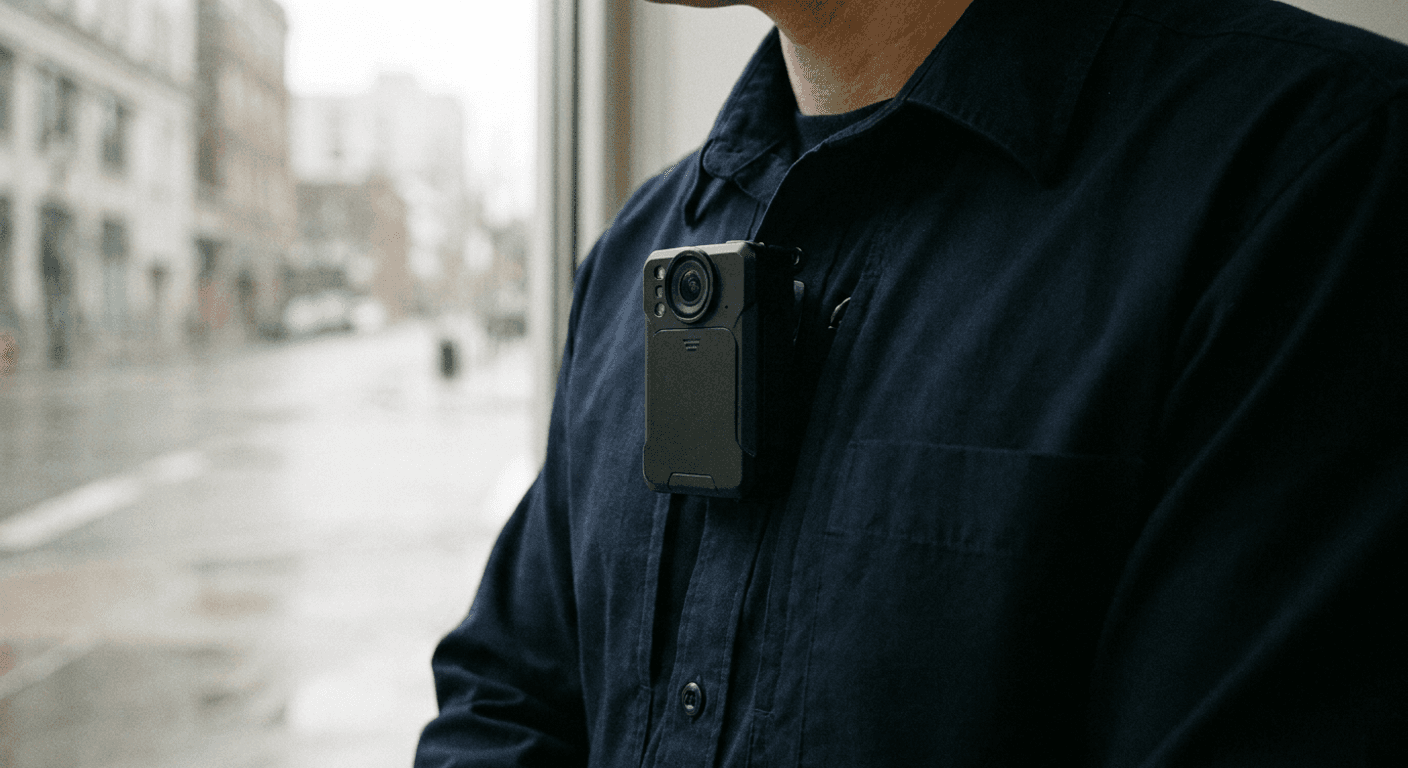
The District of Columbia was one of the first major US cities to deploy body cameras department-wide, and its Metropolitan Police Department now operates under D.C. Code § 5-116.33, one of the country's more detailed public-access statutes for body camera footage.
Information last verified on 2026-07-08. This article presents general legal information, not legal advice.
This article addresses body-worn camera law under D.C. Code § 5-116.33, D.C. Municipal Regulations Title 24, Chapter 39, and DC's Freedom of Information Act, D.C. Code § 2-532, as they apply to the Metropolitan Police Department. It does not address a civilian's right to record an on-duty officer, a separate question covered in Is It Illegal to Record Someone?. For other jurisdictions' body camera rules, see the Police Bodycam Laws by State hub.
Does the District of Columbia Require Police to Wear Body Cameras?
Yes, and DC got there earlier than almost every other US jurisdiction. MPD launched a body-worn camera pilot in October 2014, and the DC Council made the program permanent through the Body-Worn Camera Program Amendment Act of 2015, with implementing rules taking effect under Section 3003 of the Fiscal Year 2016 Budget Support Act of 2015 (D.C. Law 21-36) on October 22, 2015. By December 2016, MPD had completed deployment of roughly 2,800 body-worn cameras across the department, a rollout widely reported at the time as the largest single-department body camera deployment in the country. The program's current core statute is codified at D.C. Code § 5-116.33, part of the Body-Worn Camera Regulation and Reporting Requirements Act of 2015, which the DC Council has amended several times since, most recently in 2026.
| Quick facts | District of Columbia |
|---|---|
| Statute | D.C. Code § 5-116.33; 24 DCMR Ch. 39 |
| Mandate | MPD-wide since 2014-2016 rollout |
| Retention baseline | 90 days standard, longer for flagged categories |
| Public access route | DC FOIA, D.C. Code § 2-532, 25-business-day response plus up to a 15-day extension |
| Mandatory release | Death/serious force: 5 business days, consent-dependent |
When Must an MPD Officer Activate the Camera?
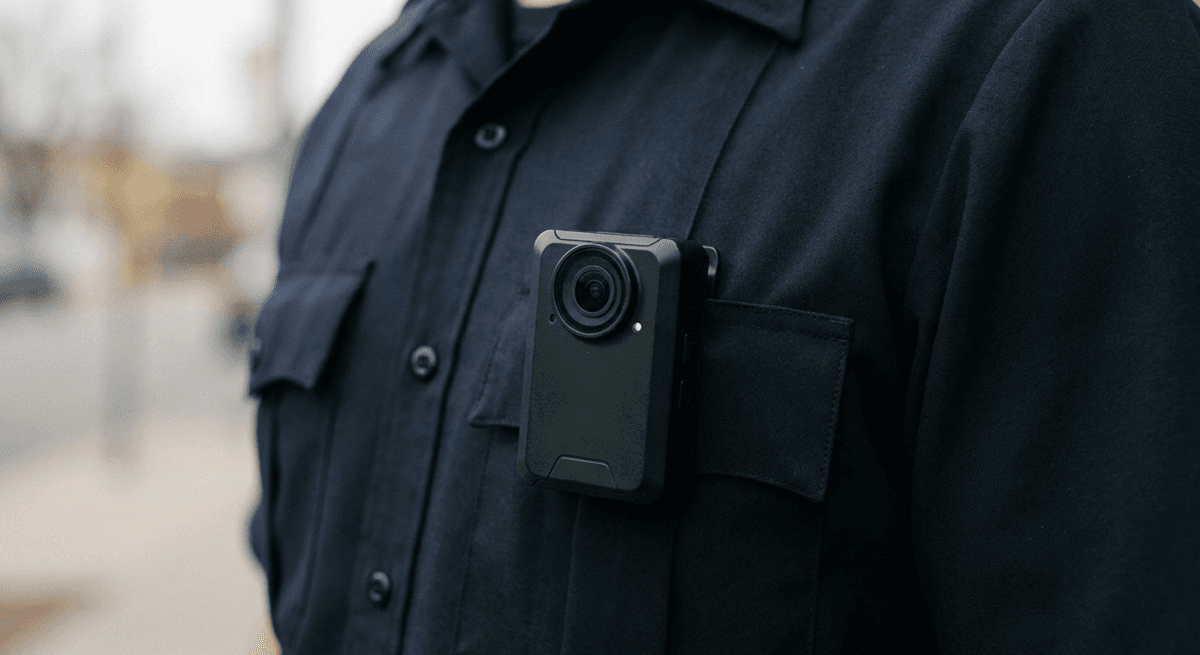
MPD General Order 302.13 sets the activation rules. An officer must activate the camera immediately upon developing reasonable suspicion or probable cause to attempt a traffic, bicycle, or person stop, or upon responding to back up another officer on a stop, and whenever present with a prisoner, arrestee, suspect, or other stopped person, regardless of whether that officer is the primary unit on scene. Any encounter where a use of force or an arrest can reasonably be foreseen, including the contacts leading up to it, is a mandatory recording incident. D.C. Municipal Regulations Title 24, Chapter 39 adds further rules: officers must tell contact subjects they are being recorded when practicable, may record First Amendment assemblies only to document unlawful conduct rather than identify lawful participants, and may not record ordinary, non-critical contacts with students at a school.
If a camera malfunctions or an officer fails to activate it, General Order 302.13 requires notifying a supervising official and documenting the circumstances in the incident report. That duty has real teeth: MPD Officer Brian Trainer did not activate his camera until moments after he fatally shot Terrence Sterling in September 2016, a policy violation that contributed to MPD's finding that the shooting was unjustified and to Trainer's firing in 2018, one of the earliest high-profile accountability cases tied to DC's bodycam program.
How Long Does MPD Keep Body Camera Footage?
Under 24 DCMR § 3901, MPD's standard retention period is 90 calendar days from creation, with metadata kept at least five years regardless of the video's fate. MPD must set longer retention schedules by published policy directive for recordings tied to a criminal investigation, a misconduct complaint, a death investigation, a civil litigation hold or active FOIA request, or any category the Chief of Police designates, though the regulation leaves the exact extended day count to that published schedule rather than fixing one in the text itself.
Can the Public Get a Copy of DC Body Camera Footage?
A member of the public generally accesses MPD body camera footage through DC's Freedom of Information Act. Because standard DC FOIA requests carry a 15-business-day response window under D.C. Code § 2-532(c)(1), the Council carved out a longer, body-camera-specific timeline in § 2-532(c)(2): MPD has 25 business days after receiving a request that reasonably describes the recording to either make it accessible or notify the requester of its determination not to and the reasons why.
That 25 days is not a hard outer bound. Section 2-532(d)(1) permits an unusual-circumstances extension of up to 10 business days for a standard request and up to 15 business days for a request under (c)(2), and § 2-532(d)(2) supplies an extension ground unique to body camera footage: MPD's inability to procure a vendor able to perform the redactions within the 25-day period. A body camera request can therefore legitimately run to 40 business days. Under § 2-532(e), a request is deemed denied only once the agency misses the time limits in subsections (c) and (d) together, and at that point the requester may petition the Mayor to review the denial under D.C. Code § 2-537.
24 DCMR § 3902 fills in more of the access picture. A recording's subject may view it at a police station under specified conditions and, if they request a copy through FOIA, may receive it at no cost. Oversight bodies such as the Office of Police Complaints get direct, unredacted access, and Council committee chairs can obtain unredacted recordings within 5 business days, though only for internal oversight rather than public release.
The no-redaction rule for an officer's face is black-letter statute rather than agency practice: D.C. Code § 5-116.33(f) provides that when releasing body-worn camera recordings, the likenesses of any local, county, state, or federal government law enforcement officers acting in their professional capacities, other than those acting undercover, shall not be redacted or otherwise obscured. A 2020 Office of Open Government advisory opinion resolved several further redaction disputes on non-statutory grounds: an officer's badge number likewise cannot be redacted, since an officer has no reasonable expectation of privacy performing public duties, a residential address may be redacted but a business address may not, and license plates generally need no redaction because federal driver's-privacy law already covers them. MPD must also publish its per-minute and per-person redaction costs in advance.
Outside an ordinary FOIA request, § 5-116.33 imposes an affirmative, mandatory release duty for the most serious incidents: when an MPD officer is involved in a death or a serious use of force, the Mayor must publicly release that officer's name and recording within 5 business days. That duty can be blocked if the decedent's next of kin, or the affected individual in a non-fatal case, withholds consent.
Where the incident is an officer-involved death, § 5-116.33(d) adds pre-release steps that do not attach to a serious-use-of-force release. Before publishing the recording, MPD must consult an organization with expertise in trauma and grief on best practices for letting the decedent's next of kin view the footage privately first, then give the next of kin actual notice at least 24 hours before release, including the date and manner of release, and offer them that private viewing in a non-law-enforcement setting.
The 2026 changes that brought federal agents within the release duty rest on temporary legislation, not permanent law. The Body-Worn Camera Transparency for Use of Force Emergency Amendment Act of 2026 (D.C. Act 26-282) took effect March 23, 2026 as a 90-day emergency measure and has since lapsed; the same language is now carried by the Body-Worn Camera Transparency for Use of Force Temporary Amendment Act of 2026 (D.C. Law 26-139), effective June 11, 2026. Those acts extended the release duty to an incident an MPD officer merely witnesses involving serious force by a federal agency such as ICE, Homeland Security Investigations, DHS, or the FBI, because the definition in § 5-116.33(g) reaches force used by any other law enforcement officer while an MPD officer is present. They also required retroactive release, within 10 business days of March 23, 2026, for qualifying incidents back to August 1, 2025.
Check the calendar before relying on that expansion. The DC Code flags § 5-116.33 as containing amendments by temporary legislation that will expire on January 22, 2027. Unless the Council enacts permanent legislation before that date, the federal-agent coverage lapses and the section reverts to its earlier text.
That amendment already has a track record. MPD released footage in April 2026 from an October 17, 2025 traffic stop on Benning Road NE, in which a Homeland Security Investigations agent fired multiple shots at a car driven by Phillip Brown after MPD and federal partners tried to stop the vehicle over an alleged window-tint violation; Brown was not hit. A second, similar shooting on the same road a month later stayed unreleased, because the driver exercised his right under § 5-116.33(c)(3) to withhold consent, illustrating how the consent condition can override the release duty even under the newer law.
Related articles
Last updated: 2026-07-08.
More District of Columbia Laws
Frequently Asked Questions
Does DC's Metropolitan Police Department require officers to wear body cameras?
Yes. MPD piloted body cameras in October 2014 and completed a department-wide rollout of roughly 2,800 cameras by December 2016, now governed by D.C. Code § 5-116.33 and D.C. Municipal Regulations Title 24, Chapter 39.
How long does MPD keep body camera footage?
The standard retention period is 90 calendar days under 24 DCMR § 3901. MPD must set longer, published retention schedules for footage tied to criminal investigations, misconduct complaints, death investigations, or active litigation holds or FOIA requests.
How do I request DC police body camera footage?
Submit a Freedom of Information Act request to MPD describing the recording. MPD has 25 business days under D.C. Code § 2-532(c)(2) to make the recording accessible or explain why it is denying the request, longer than the standard 15-business-day DC FOIA window. In unusual circumstances § 2-532(d) lets MPD extend a body camera request by up to 15 more business days, including when it cannot line up a vendor to do the redactions in time.
Is body camera footage of an MPD officer-involved shooting automatically released to the public?
For a death or serious use of force by an MPD officer, § 5-116.33 requires the Mayor to publicly release the officer's name and recording within 5 business days, unless the decedent's next of kin or the affected individual withholds consent. The extra pre-release steps in § 5-116.33(d), consulting a trauma and grief organization, giving the next of kin 24 hours' notice, and offering a private viewing, apply only to a recording of an officer-involved death, not to a serious-use-of-force release.
Does DC require release of body camera footage when a federal agent, not an MPD officer, uses force?
Yes, but only under temporary legislation. The Body-Worn Camera Transparency for Use of Force Temporary Amendment Act of 2026 (D.C. Law 26-139, effective June 11, 2026), carrying forward an emergency act effective March 23, 2026, extends MPD's mandatory release duty to incidents an MPD officer merely witnesses involving serious force by a federal agency such as ICE, Homeland Security Investigations, DHS, or the FBI. The DC Code flags these amendments as expiring January 22, 2027, so confirm they are still in force before relying on them.
Can MPD blur or hide an officer's face in released body camera footage?
No. D.C. Code § 5-116.33(f) provides that the likenesses of local, county, state, or federal law enforcement officers acting in their professional capacities, other than those acting undercover, shall not be redacted or otherwise obscured. A 2020 DC Office of Open Government advisory opinion adds that an officer's badge number cannot be redacted either, because officers have no reasonable expectation of privacy while performing their duties in public.
What happens if an MPD officer does not turn on their body camera?
MPD General Order 302.13 requires the officer to notify a supervising official and document the malfunction or failure to activate in the incident report. A documented non-activation contributed to the department's finding that the 2016 fatal shooting of Terrence Sterling by Officer Brian Trainer violated policy, leading to Trainer's firing.
Updates
Corrected the DC body camera page: the federal-agent release duty rests on temporary legislation (D.C. Law 26-139) that expires January 22, 2027, the trauma-expert consultation and 24-hour notice apply only to officer-involved deaths, the ban on redacting an officer’s likeness is statutory under D.C. Code § 5-116.33(f), and FOIA requests for body camera footage can be extended past 25 business days under § 2-532(d).
Independently fact-checked against the cited primary sources; governing law re-checked for recent changes
Governing law re-checked for recent changes
Reviewed and approved by an editor
The Law Behind This Article
This article rests on the statutory provisions below, held in our own legal record and retrieved from the official source. Tap a section to read the operative text.
Code of the District of Columbia, Title 5: Police, Firefighters, Medical Examiner, and Forensic Sciences. - Chapter 1: Metropolitan Police. - Subchapter VIII-B: Body-Worn Cameras. - Part A: Regulation and Reporting Requirements.
§ 5-116.33Body-Worn Camera Program; reporting requirements; access.In forcecited in 5 of our articles
*NOTE: This section includes amendments by temporary legislation that will expire on January 22, 2027. To view the text of this section after the expiration of all emergency and temporary legislation, click this link: Past Permanent Version.* (a) By October 1, 2015, and every 6 months thereafter, the Mayor shall collect, and make available in a publicly accessible format, data on the Metropolitan Police Department’s Body-Worn Camera Program, including: (1) How many hours of body-worn camera recordings were collected; (2) How many times body-worn cameras failed while officers were on shift and the reasons for the failures; (3) How many times internal investigations were opened for a failure to turn on body-worn cameras during interactions, and the results of those internal investigations, including any discipline imposed; (4) How many times body-worn camera recordings were used by the Metropolitan Police Department in internal affairs investigations; (5) How many times body-worn camera recordings were used by the Metropolitan Police Department to investigate complaints made by an individual or group; (6) How many body-worn cameras are assigned to each police district and…
Official text (excerpt) · last checked 2026-08-31 · Read the full text in our law library · Verify at github.com
Cited in 1 court opinions in our collectionLatest citing opinion in our collection: 2023
Opinions citing this section in our collection:
- Fraternal Order of Police-Metropolitan Police Department Labor Committee v. District of Columbia (District of Columbia Court of Appeals 2023)“…e B of the Emergency Act amended 24 D.C.M.R. § 3900.10 and D.C. Code § 5-116.33 and required the Mayor to “publicly re…”
Identified automatically from the court opinions citing this section — not a ranking of which case controls.
Also relied on in: District of Columbia Recording Laws (2026): One-Party Consent Rules, District of Columbia Laws on Recording Police: Your Rights and Limits, District of Columbia Video Recording Laws: What You Need to Know
Code of the District of Columbia, Title 2: Government Administration. - Chapter 5: Administrative Procedure. - Subchapter II: Freedom of Information.
§ 2-532Right of access to public records; allowable costs; time limits.In forcecited in 7 of our articles
(a) Any person has a right to inspect, and at his or her discretion, to copy any public record of a public body, except as otherwise expressly provided by § 2-534, in accordance with reasonable rules that shall be issued by a public body after notice and comment, concerning the time and place of access. (a-1) In making any record available to a person pursuant to this section, a public body shall provide the record in any form or format requested by the person, provided that the person shall pay the costs of reproducing the record in that form or format. (a-2) In responding to a request for records pursuant to this section, a public body shall make reasonable efforts to search for the records in electronic form or format, except when the efforts would significantly interfere with the operation of the public body’s automated information system.
Official text (excerpt) · last checked 2026-09-02 · Read the full text in our law library · Verify at github.com
Cited in 14 court opinions in our collectionLatest citing opinion in our collection: 2025
In the courts (editorial summary, independently checked):The D.C. Court of Appeals has construed section 2-532(c) in Fraternal Order of Police litigation: its 2013 decision held a good-faith production plus Vaughn index within 15 business days is timely even if more records follow, and its 2016 decision rejected reading "reasonably describing" as a specificity screen that voids a request.
Opinions citing this section in our collection:
- Fraternal Order of Police, Metropolitan Police Labor Committee v. The District of Columbia (District of Columbia Court of Appeals 2013, 79 A.3d 347)✓The police union argued the District's later document productions were untimely; the court held section 2-532(c) is met when a public body responds in good faith within the fifteen business days, and that releasing more responsive records afterward does not breach the deadline.
- Dubose, DDS v. District of Columbia (District of Columbia Court of Appeals 2023)“…ic record of a public body,” except as expressly provided. D.C. Code § 2-532(a). Agencies may charge a reasonable f…”
- FRATERNAL ORDER OF POLICE, METROPOLITAN POLICE LABOR COMMITTEE v. DISTRICT OF COLUMBIA (District of Columbia Court of Appeals 2016, 139 A.3d 853)“…1 Ms. Cenatus appears to have been referring to D.C. Code § 2-532 (c) (2006 Repl.), which provides that ―…”
Identified automatically from the court opinions citing this section — not a ranking of which case controls.
Also relied on in: How to Get a Police Report in DC (2026): PD-10 & PD-251 Reports, Public Records Laws by State: FOIA Guide for All 50 States (2026), District of Columbia FOIA: Deadlines, Bodycam Rules, and Mayoral Appeals
§ 2-537Administrative appeals.In forcecited in 2 of our articles
(a) Except as provided in subsections (a-1) and (a-2) of this section, any person denied the right to inspect a public record of a public body may petition the Mayor to review the public record to determine whether it may be withheld from public inspection. Such determination shall be made in writing with a statement of reasons therefor in writing within 10 days (excluding Saturdays, Sundays, and legal holidays) of the submission of the petition. (1) If the Mayor denies the petition or does not make a determination within the time limits provided in this subsection, or if a person is deemed to have exhausted his or her administrative remedies pursuant to subsection (e) of § 2-532, the person seeking disclosure may institute proceedings for injunctive or declaratory relief in the Superior Court for the District of Columbia. (2) If the Mayor decides that the public record may not be withheld, he shall order the public body to disclose the record immediately.
Official text (excerpt) · last checked 2026-07-30 · Read the full text in our law library · Verify at github.com
Cited in 9 court opinions in our collectionLatest citing opinion in our collection: 2025
Opinions citing this section in our collection:
- David P. Frankel v. District of Columbia Office for Planning and Economic Development (District of Columbia Court of Appeals 2015, 110 A.3d 553)“…On January 21, 2010, Mr. Frankel sued ODMPED pursuant to D.C. Code § 2-537 (a-1) to compel a response. ODMPED fil…”
- Kane v. Dist. of Columbia (District of Columbia Court of Appeals 2018, 180 A.3d 1073)“…ught Mayoral intervention prior to filing suit pursuant to D.C. Code § 2-537. The Superior Court denied the motion,…”
- District of Columbia v. Terris, Pravlik & Millian, LLP (District of Columbia Court of Appeals 2025)“…made public and do not require a written request”; and (3) D.C. Code § 2-537(a)(2), authorizing a “person seeking di…”
Identified automatically from the court opinions citing this section — not a ranking of which case controls.
Search our full record of US law — 2.1 million sections, every state + federal →
Sources and References
- D.C. Code § 5-116.33 (Body-Worn Camera Program; reporting requirements; access)(code.dccouncil.gov).gov
- D.C. Code § 2-532 (Right of access to public records; allowable costs; time limits)(code.dccouncil.gov).gov
- D.C. Act 26-282, Body-Worn Camera Transparency for Use of Force Emergency Amendment Act of 2026(code.dccouncil.gov).gov
- D.C. Municipal Regulations, Title 24, Chapter 39, Metropolitan Police Department Body-Worn Cameras (§§ 3900-3902)(dcrules.elaws.us)
- DC Office of Open Government, FOIA Body Worn Cameras Advisory Opinion (2020)(open-dc.gov).gov
- The Washington Post, "Footage shows moments after federal agent shot at a driver in D.C." (April 2026)(washingtonpost.com)
- NBC4 Washington, "Officer Who Killed Terrence Sterling to Be Fired"(nbcwashington.com)
- D.C. Law 26-139, Body-Worn Camera Transparency for Use of Force Temporary Amendment Act of 2026 (eff. June 11, 2026; temporary amendments expire January 22, 2027)(code.dccouncil.gov)