
District of Columbia
District of Columbia Laws on Recording in Public: Complete Legal Guide
Independently fact-checked against primary sources (last audited August 15, 2026). · Reviewed by the RecordingLaw editorial team. · Law checked current as of August 7, 2026. · 12 primary sources cited on this page. How we verify our legal content
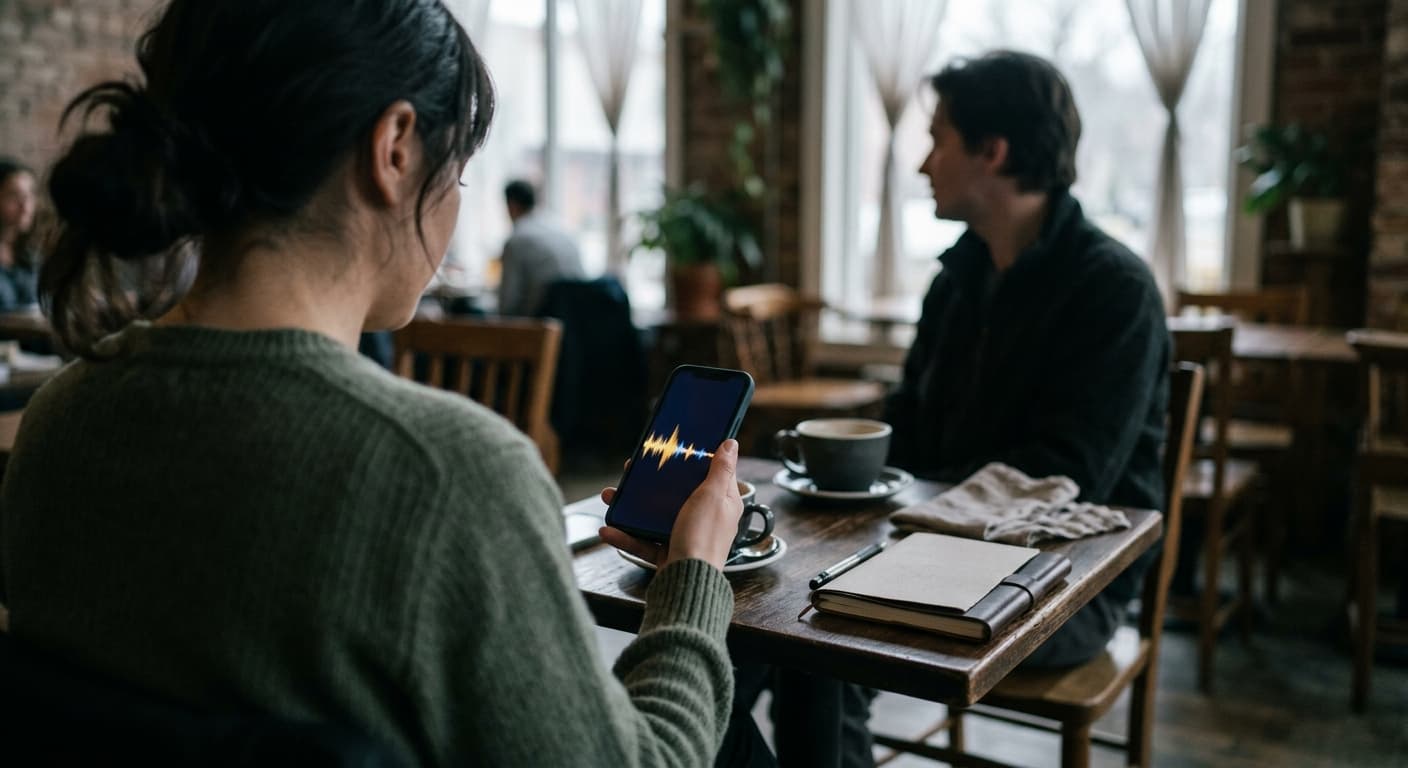
Recording in public places in the District of Columbia is broadly protected by the First Amendment, covering streets, sidewalks, parks, and the National Mall. No permit is required for personal recording. Audio capture in public is governed by D.C. Code Section 23-542, but conversations in openly accessible areas generally lack a reasonable expectation of privacy.
The District of Columbia is one of the most photographed and recorded cities in the world. From tourists capturing the National Mall to journalists covering political events to citizens documenting police encounters, recording in public is a daily reality. D.C. law strongly protects the right to record in public spaces, supported by the First Amendment and the District's own legal framework.
This guide covers every major aspect of public recording in D.C., including your rights on streets and sidewalks, the rules for the National Mall and federal property, commercial filming permits, drone restrictions, and what happens when your recording captures private conversations.
The Right to Record in Public Spaces
First Amendment Protections
The First Amendment protects the right to record in public places throughout the District of Columbia. This protection encompasses both photography and video recording, and it applies to all people, not just credentialed journalists or media professionals.
You have the right to record:
- Public streets, sidewalks, and crosswalks
- Public parks, plazas, and open spaces
- The National Mall and surrounding monuments
- Government buildings from public vantage points
- Public transit stations and vehicles (subject to WMATA rules)
- Public events, festivals, and parades
- Protests, demonstrations, and rallies
- Government officials performing their public duties
No Permit Required for Personal Recording
Personal, non-commercial recording in public spaces does not require a permit in D.C. You can use any recording device, including:
- Smartphones and tablets
- DSLR cameras and mirrorless cameras
- Video cameras and camcorders
- GoPro and action cameras
- Audio recorders
- Body-worn cameras
You do not need to justify your recording or explain its purpose to anyone, including law enforcement officers.
Recording on the National Mall
National Park Service Rules
The National Mall and Memorial Parks are managed by the National Park Service (NPS). NPS rules for the National Mall are established under 36 C.F.R. Part 7 and the general regulations at 36 C.F.R. Part 1.
Personal recording on the National Mall is unrestricted. You can:
- Take photos and videos at any monument or memorial
- Use tripods, monopods, and stabilizers for personal recording
- Record at any time the area is open to the public
- Capture images of other visitors in publicly accessible areas
Commercial Filming Permits
Commercial recording on NPS property may require a permit. 36 C.F.R. Section 5.5 provides that commercial filming and still photography are governed by 43 C.F.R. Part 5, Subpart A, and that failing to comply with that part is itself a violation of Section 5.5. Section 5.5 separately sets its own permit trigger for audio recording: a permit is required when the recording takes place somewhere the public is generally not allowed, uses equipment requiring mechanical transport or an external power source beyond a battery pack, or would add administrative cost for the agency to manage.
The NPS defines "commercial filming" as recording motion pictures, videos, or sound recordings for commercial purposes. Small-scale recording by individual content creators using handheld equipment typically does not require a permit.
Specific Monument Rules
Individual monuments and memorials may have additional rules:
- Lincoln Memorial: Open-air recording is unrestricted. Interior spaces may have restrictions during special events.
- Vietnam Veterans Memorial: Recording is permitted but visitors should be respectful of the solemn nature of the site.
- U.S. Capitol exterior: Recording from public areas outside the Capitol building is permitted. Interior recording is subject to congressional rules.
- White House exterior: Recording from public sidewalks and Lafayette Square is permitted. The area immediately around the White House has security zones with varying restrictions.
Recording on D.C. Streets and Sidewalks
General Rules
D.C. streets and sidewalks are traditional public forums where recording rights are at their strongest. You can:
- Film anything visible from a public street or sidewalk
- Record storefronts, buildings, vehicles, and people in public view
- Photograph or film government buildings, embassies, and institutional facilities from public rights-of-way
- Use a camera, phone, or other recording device openly or discreetly
Limitations
Your right to record on public streets has practical limits:
- Obstruction: You cannot block pedestrian traffic, vehicle lanes, or emergency access while recording
- Trespass: You cannot enter private property to get a better recording angle
- Harassment: Using a camera as a tool for stalking, intimidation, or harassment can violate other D.C. laws
- Traffic safety: Recording while driving may violate distracted driving laws
Federal Law Enforcement Overlay in D.C.
Concurrent Federal Jurisdiction
Unlike most U.S. cities, D.C. has overlapping federal and local law-enforcement presence. D.C. Code Section 5-133.17, enacted as part of the 1997 Police Coordination Act (Pub. L. 105-33, part of the National Capital Revitalization and Self-Government Improvement Act of 1997), lets the U.S. Capitol Police, U.S. Park Police, U.S. Secret Service, FBI, and other listed federal agencies enter cooperative agreements with MPD authorizing patrol and arrest powers in areas immediately surrounding each agency's own jurisdiction. D.C. Code Section 10-503.19 is a separate, older statute (originally enacted in 1946, unrelated to the 1997 Police Coordination Act) that governs Capitol Police jurisdiction over the Capitol Buildings and Grounds specifically. When you record in public spaces in D.C., the right-to-record rules apply to all of these agencies, but you may also need to navigate agency-specific regulations:
- National Park Service properties (Mall, Lafayette Square, Rock Creek): Personal recording is unrestricted; commercial filming requires a permit under 36 CFR Section 5.5. The D.C. Circuit upheld this NPS commercial-permit framework in Price v. Garland, 45 F.4th 1059 (D.C. Cir. 2022), cert. denied, 143 S. Ct. 1797 (2023).
- GSA-managed federal buildings: Photography is restricted under 41 CFR Section 102-74.420.
- Pentagon Reservation: Photography is restricted under 32 CFR Section 234.15 (Pentagon Force Protection Agency rules), not the unrelated 32 CFR Section 228.8 (which covers the NSA Security Protective Force).
Audio Recording in Public
When D.C. Code Section 23-542 Applies
While video recording in public is broadly unrestricted, audio recording requires analysis under D.C. Code Section 23-542. The key question is whether the conversation being recorded qualifies as an "oral communication," which requires that the speaker have a reasonable expectation that the communication is not subject to interception.
In most public settings, people do not have a reasonable expectation of privacy for their conversations:
- People speaking in normal or raised voices on a busy street have no expectation of privacy
- Public speakers, performers, and protesters have no expectation of privacy for their public statements
- Conversations conducted in openly accessible areas where others can easily overhear are generally not protected
However, audio recording may implicate the wiretap statute when:
- Two people are speaking quietly in a secluded area, even if technically "public"
- You use a directional microphone or audio amplification to capture a private conversation from a distance
- You position yourself to deliberately eavesdrop on a conversation not intended for you to hear
Practical Guidance
For most public recording situations, ambient audio capture is not a legal concern. Street noise, public announcements, and conversations in crowded areas are not protected "oral communications." The risk arises only when you specifically target a private conversation between other people.
If you cross the line into an illegal interception, the victim can pursue civil damages under D.C. Code Section 23-554(c) (the greater of actual damages or $100 per day of violation or a $1,000 floor, plus punitive damages and attorney fees), in addition to criminal exposure of up to 5 years and $12,500 under D.C. Code Section 23-542.
Recording at Protests and Demonstrations
Constitutional Protections
Recording protests and demonstrations in D.C. is at the core of First Amendment protection. The District has a long and significant history of public protest, from the March on Washington to modern-day demonstrations. Recording these events serves essential democratic functions.
Your rights when recording protests include:
- Filming from any public location, including streets, sidewalks, and parks
- Recording police interactions with protesters
- Livestreaming events in real time
- Photographing participants, signs, and activities visible in public
Police Cannot Restrict Protest Recording
Law enforcement officers cannot:
- Create "media-only" zones that exclude non-credentialed individuals
- Confiscate your recording device for filming a protest
- Order you to stop recording simply because you are at a protest
- Arrest you for recording unless you are genuinely obstructing police operations
First Amendment Assembly Act
D.C.'s First Amendment Assemblies Act establishes specific protections for people exercising their rights to assemble and protest. D.C. Code Section 5-331.07 sets rules for how the Metropolitan Police Department must handle and disperse First Amendment assemblies, including voluntary-compliance-first enforcement and minimum warning procedures before any dispersal order. The section does not itself address recording bystanders; the right to record at D.C. protests comes from the First Amendment itself.
Recording Government Meetings
Open Meetings Act
D.C.'s Open Meetings Act requires that meetings of D.C. public bodies be open to the public. You can record these meetings, which include:
- D.C. Council sessions and committee hearings
- Advisory Neighborhood Commission (ANC) meetings
- Board of Education meetings
- Zoning commission hearings
- Public utility commission meetings
- Other board and commission meetings
Under D.C. Code Section 2-578, each public body must make a complete record of its meetings available for public inspection within 7 business days. You can supplement these official records with your own recordings.
Federal Government Meetings in D.C.
Many federal government meetings and hearings take place in D.C. Recording rules for federal proceedings vary:
- Congressional hearings: Open hearings are generally accessible to the public, and recording rules are set by each committee
- Federal agency hearings: Public hearings by agencies like the FCC, SEC, and EPA generally allow recording, but rules vary
- Court proceedings: Recording in federal courts is prohibited
Drone Recording in D.C.
Heavy Restrictions
Drone use in the District of Columbia is among the most restricted in the country. The Federal Aviation Administration (FAA) maintains a Temporary Flight Restriction (TFR) over the Washington, D.C. metropolitan area that severely limits drone operations.
Key restrictions include:
- No recreational drone flights within the D.C. Special Flight Rules Area (SFRA) without specific authorization
- No drone flights within the Flight Restricted Zone (FRZ), which covers a 15-mile radius around Ronald Reagan Washington National Airport, without prior authorization from the FAA and the Transportation Security Administration (TSA)
- Violations can result in civil penalties up to $20,000 per violation and criminal penalties including fines and imprisonment
Limited Exceptions
Some drone operations may be permitted with proper authorization:
- Law enforcement and emergency operations
- Government agency operations with appropriate approvals
- Commercial operators with specific FAA waivers (extremely limited in the D.C. area)
- Certain recreational activities at FAA-approved fixed flying sites outside the FRZ
Practical Reality
For most individuals, drone recording in D.C. is effectively prohibited. The combination of the TFR, FRZ, and National Capital Region security measures makes obtaining authorization extremely difficult for non-government operators.
Recording on Public Transit
WMATA Rules
The Washington Metropolitan Area Transit Authority (WMATA) operates the D.C. Metro system, including rail stations, buses, and transit facilities. WMATA's policies regarding recording include:
- Personal photography and video recording for personal use is generally permitted in stations and on vehicles
- Commercial filming and photography require advance permission from WMATA
- Recording should not interfere with transit operations, safety equipment, or other passengers
- Flash photography is permitted but should not be directed at train operators or bus drivers
Metro Station Recording
Metro stations are public spaces where recording is generally permitted. However, you should:
- Stay behind safety lines while recording near platform edges
- Not obstruct fare gates, escalators, or emergency exits
- Not use tripods or large equipment that block pedestrian flow
- Follow instructions from WMATA personnel regarding safety
Using Public Recordings as Evidence
Admissibility in Court
Recordings made legally in public spaces are generally admissible as evidence in D.C. courts. Requirements include:
- The recording must be authenticated as genuine
- The recording must be relevant to the case
- The recording must not be substantially more prejudicial than probative
Social Media and Public Recordings
Posting public recordings to social media is generally protected by the First Amendment. However, consider these factors:
- Recordings that capture identifiable individuals may raise defamation concerns if accompanied by false statements
- Recordings used to harass or stalk specific individuals may violate other laws
- Commercial use of recordings featuring identifiable people may require consent or release forms
Explore More D.C. Recording Laws
Audio Recording | Video Recording | Voyeurism & Hidden Cameras | Workplace Recording | Recording Police | Phone Call Recording | Security Cameras | Recording in Public | Landlord-Tenant | Dashcam Laws | Schools | Medical Recording
Back to District of Columbia Recording Laws
More District of Columbia Recording Topics
More District of Columbia Laws
Frequently Asked Questions
Do I need a permit to record video in public in Washington, D.C.?
No permit is needed for personal, non-commercial recording in public spaces. You can freely use phones, cameras, and other recording devices on D.C. streets, sidewalks, parks, and the National Mall. Commercial filming on National Park Service property may require a permit under 36 C.F.R. Section 5.5.
Can I fly a drone to record video in D.C.?
Drone use in D.C. is heavily restricted. The FAA maintains a Temporary Flight Restriction over the D.C. metropolitan area, and the Flight Restricted Zone covers a 15-mile radius around Reagan National Airport. Recreational drone flights within these zones are effectively prohibited without special authorization.
Can I record at protests in Washington, D.C.?
Yes. Recording protests and demonstrations is protected by the First Amendment. You can film from any public location, record police interactions with protesters, and livestream events. Police cannot create media-only zones, confiscate your device, or order you to stop recording simply because you are at a protest.
Can I record government meetings in D.C.?
Yes. D.C.'s Open Meetings Act requires that meetings of public bodies be open to the public, and you can bring your own recording equipment. This includes D.C. Council sessions, ANC meetings, board hearings, and commission meetings.
Does D.C. law restrict audio recording in public places?
D.C. Code Section 23-542 applies to audio recording of oral communications where speakers have a reasonable expectation of privacy. In most public settings, people speaking at normal volume in openly accessible areas do not have this expectation, so ambient audio capture is generally not restricted.
Updates
Corrected a misattribution of D.C. Code 10-503.19 (a 1946 Capitol Police jurisdiction statute) to the 1997 Police Coordination Act, and removed an inaccurate claim that D.C. Code 5-331.07 sets guidelines for interacting with people recording assemblies, a provision that statute does not contain.
Independently fact-checked against the cited primary sources
Corrected the description of commercial-filming permit criteria on NPS property (36 C.F.R. Section 5.5 defers filming/photography permitting to a different regulation and sets its own separate audio-recording permit trigger) and the overstated claim that the D.C. Police Coordination Act gives federal agencies blanket citywide concurrent jurisdiction alongside MPD.
Removed an incorrect citation: 36 CFR Section 7.96 (National Capital Region special regulations covering athletics, fishing, demonstrations, camping, etc.) does not address photography, filming, or recording of any kind, so it does not support the claim that personal recording is unrestricted there. The underlying claim (personal recording is unrestricted, commercial filming needs a permit) is unaffected and remains correctly anchored to 36 CFR Section 5.5 elsewhere on the page.
Governing law re-checked for recent changes
Reviewed and approved by an editor
The Law Behind This Article
This article rests on the statutory provisions below, held in our own legal record and retrieved from the official source. Tap a section to read the operative text.
Code of the District of Columbia, Title 23: Criminal Procedure. - Chapter 5: Warrants and Arrests. - Subchapter III: Wire Interception and Interception of Oral Communications.
§ 23-542Interception, disclosure, and use of wire or oral communications prohibited.In forcecited in 22 of our articles
(a) Except as otherwise specifically provided in this subchapter, any person who in the District of Columbia — (1) willfully intercepts, endeavors to intercept, or procures any other person to intercept or endeavor to intercept any wire or oral communication; (2) willfully discloses or endeavors to disclose to any other person the contents of any wire or oral communication, or evidence derived therefrom, knowing or having reason to know that the information was obtained through the interception of a wire or oral communication; or (3) willfully uses or endeavors to use the contents of any wire or oral communication, or evidence derived therefrom, knowing or having reason to know, that the information was obtained through the interception of a wire or oral communication; shall be fined not more than the amount set forth in [§ 22-3571.01] or imprisoned not more than five years, or both; except that paragraphs (2) and (3) of this subsection shall not apply to the contents of any wire or oral communication, or evidence derived therefrom, that has become common knowledge or public information.
Official text (excerpt) · last checked 2026-08-31 · Read the full text in our law library · Verify at github.com
Cited in 16 court opinions in our collectionLatest citing opinion in our collection: 2024
In the courts (editorial summary, independently checked):District of Columbia courts have construed the one-party consent provision of D.C. Code 23-542(b)(2). United States v. Sell (1985) held the consent must be voluntary, the government meeting its burden by showing the party cooperated knowing what officers were doing. Thomas v. United States (2017) applied it to an interstate call.
Opinions citing this section in our collection:
- United States v. Sell (District of Columbia Court of Appeals 1985, 487 A.2d 225)✓Police recorded a woman's calls with an officer she accused of coercing sex acts. Construing the one-party consent provision for the first time, the court held the government need only show she cooperated knowing what police were doing, and reversed the suppression order.
- David Thomas v. United States (District of Columbia Court of Appeals 2017)“…s. & .lud. Proc. § 10- 402 [c)(.'£)(ii) (West 2015). Under D.C. Code § 23-542." the legislature has clearly defined w…”
- Thomas v. United States (District of Columbia Court of Appeals 2017, 171 A.3d 151)✓Police in the District recorded a call between a voyeurism victim and the defendant, who was in Maryland and did not consent. The court held this section governs admissibility in District courts and does not incorporate Maryland's two-party rule, so suppression was denied.
Identified automatically from the court opinions citing this section — not a ranking of which case controls.
Also relied on in: District of Columbia Recording Laws (2026): One-Party Consent Rules, One-Party Consent States: Complete 2026 Guide, District of Columbia Laws on Recording Police: Your Rights and Limits
§ 23-554Authorization for recovery of civil damages.In forcecited in 14 of our articles
(a) Any person whose wire or oral communication is intercepted, disclosed, or used in violation of this subchapter shall — (1) have a civil cause of action against any person who intercepts, discloses, or uses, or procures any other person to intercept, disclose, or use, such communications; and (2) be entitled to recover from any such person — (A) actual damages, but not less than liquidated damages computed at the rate of $100 a day for each day of violation, or $1,000 whichever is higher; (B) punitive damages; and (C) a reasonable attorney’s fee and other litigation costs reasonably incurred. (b) Good faith reliance on a court order or legislative authorization shall constitute a complete defense to an action brought under this section or any other law. (c) As used in this section, the term “person” includes the District of Columbia. The District of Columbia shall not assert any governmental immunity to avoid liability under this section. Judgment against the District of Columbia shall not constitute a bar to action against any other person.
Official text (excerpt) · last checked 2026-07-30 · Read the full text in our law library · Verify at github.com
Cited in 3 court opinions in our collectionLatest citing opinion in our collection: 2022
Opinions citing this section in our collection:
- Democracy Partners, LLC v. Project Veritas Action Fund (District Court, District of Columbia 2020)“…each day of violation, or $1,000, whichever is higher. See D.C. Code § 23-554(a)(2)(A). Both statutes also allow for…”
- Council on American-Islamic Relations Action Network, Inc. v. Gaubatz (District Court, District of Columbia 2022)“…oral or wire communication.” D.C. Code § 23-542(a)(2)-(3); D.C. Code § 23-554(a)(1) (authorizing civil action for re…”
Identified automatically from the court opinions citing this section — not a ranking of which case controls.
Also relied on in: DC Dashcam Laws: Recording Rules, Windshield Mounting, and Legal Limits (2026), DC Landlord-Tenant Recording Laws: Cameras, Privacy Rights, and Disputes (2026), DC Medical Recording Laws: Patient Rights, HIPAA, and One-Party Consent (2026)
Code of the District of Columbia, Title 10: Parks, Public Buildings, Grounds, and Space. - Chapter 5: Regulatory Provisions. - Subchapter II: Capitol Grounds. - Part B: General.
§ 10-503.19Policing.In forcecited in 3 of our articles
The Capitol Police shall police the United States Capitol Buildings and Grounds under the direction of the Capitol Police Board, consisting of the Sergeant at Arms of the United States Senate, the Sergeant at Arms of the House of Representatives, and the Architect of the Capitol, and shall have the power to enforce the provisions of this part, and regulations promulgated under § 10-503.25 and to make arrests within the United States Capitol Buildings and Grounds for any violations of any law of the United States, of the District of Columbia, or of any State, or any regulation promulgated pursuant thereto; provided, that for the fiscal year for which appropriations are made by this Act, the Capitol Police shall have the additional authority to make arrests within the District of Columbia for crimes of violence, as defined in 18 U.S.C. § 16 , committed within the Capitol Buildings and Grounds and shall have the additional authority to make arrests, without a warrant, for crimes of violence, as defined in 18 U.S.C.
Official text (excerpt) · last checked 2026-07-30 · Read the full text in our law library · Verify at github.com
Cited in 2 court opinions in our collectionLatest citing opinion in our collection: 2024
Opinions citing this section in our collection:
- Glosser & Malimon v. United States (District of Columbia Court of Appeals 2024)“…l Grounds “with the consent or upon the request of” USCP); D.C. Code § 10-503.19 (same). There also was evidence that th…”
- Christmann v. District of Columbia (District Court, District of Columbia 2024)“…property secured by the USCP, see 40 U.S.C. §§ 5101-5102; D.C. Code § 10-503.19, and not on “streets, sidewalks, and ot…”
Identified automatically from the court opinions citing this section — not a ranking of which case controls.
Code of the District of Columbia, Title 2: Government Administration. - Chapter 5: Administrative Procedure. - Subchapter IV: Open Meetings.
§ 2-575Open meetings.In forcecited in 2 of our articles
(a) Except as provided in subsection (b) of this section, a meeting shall be open to the public. A meeting shall be deemed open to the public if: (1) The public is permitted to be physically present; (2) The news media, as defined by § 16-4701, is permitted to be physically present; or (3) The meeting is televised. (b) A meeting, or portion of a meeting, may be closed for the following reasons: (1) A law or court order requires that a particular matter or proceeding not be public; (2) To discuss, establish, or instruct the public body’s staff or negotiating agents concerning the position to be taken in negotiating the price and other material terms of a contract, including an employment contract, if an open meeting would adversely affect the bargaining position or negotiating strategy of the public body; (3) To discuss, establish, or instruct the public body’s staff or negotiating agents concerning the position to be taken in negotiating incentives relating to the location or expansion of industries or other businesses or business activities in the District; (A) To consult with an attorney to obtain legal advice and to preserve the attorney-client privilege between an…
Official text (excerpt) · last checked 2026-07-30 · Read the full text in our law library · Verify at github.com
Also relied on in: District of Columbia Audio Recording Laws: Complete Legal Guide
§ 2-578Record of meetings.In forcecited in 2 of our articles
(a) All meetings of public bodies, whether open or closed, shall be recorded by electronic means, and the recording shall be preserved for a minimum of 5 years; provided, that if a recording is not feasible, detailed minutes of the meeting shall be taken and preserved for a minimum of 5 years. (b) Copies of records shall be made available for public inspection according to the following schedule; provided, that a record, or a portion of a record, may be withheld under the standard established for closed meetings pursuant to § 2-575(b): (1) A copy of the minutes of a meeting shall be made available for public inspection as soon as practicable, but no later than 3 business days after the meeting, or in the case of a board of trustees for a public charter school, no later than 30 business days after the meeting. (2) A copy of the full record, including any recording or transcript, shall be made available for public inspection as soon as practicable, but no later than 7 business days after the meeting.
Official text (excerpt) · last checked 2026-07-30 · Read the full text in our law library · Verify at github.com
Code of the District of Columbia, Title 5: Police, Firefighters, Medical Examiner, and Forensic Sciences. - Chapter 3A: First Amendment Rights and Police Standards. - Subchapter I: First Amendment Assemblies.
§ 5-331.07Police handling and response to First Amendment assemblies.In forcecited in 2 of our articles
(a) The MPD’s handling of, and response to, all First Amendment assemblies shall be designed and implemented to carry out the District policy on First Amendment assemblies established in § 5-331.03. (1) Where participants in a First Amendment assembly fail to comply with reasonable time, place, and manner restrictions, the MPD shall, to the extent reasonably possible, first seek to enforce the restrictions through voluntary compliance and then seek, as appropriate, to enforce the restrictions by issuing citations to, or by arresting, the specific non-compliant persons, where probable cause to issue a citation or to arrest is present. (2) Nothing in this subsection is intended to restrict the authority of the MPD to arrest persons who engage in unlawful disorderly conduct, or violence directed at persons or property; provided, that there is individualized probable cause for arrest.
Official text (excerpt) · last checked 2026-07-30 · Read the full text in our law library · Verify at github.com
Cited in 6 court opinions in our collectionLatest citing opinion in our collection: 2025
Opinions citing this section in our collection:
- Ochs v. District of Columbia (District of Columbia Court of Appeals 2021)“…isions at issue by their terms are directed solely to MPD. D.C. Code § 5-331.07(b)(1), (d)(1). Mr. Ochs and Mr. Schultz…”
- Christmann v. District of Columbia (District Court, District of Columbia 2024)“…ligence under the First Amendment Assemblies Act (“FAAA”), D.C. Code § 5-331.07(e)(1), and common law claims of “malice…”
- Goodwin v. District of Columbia (District Court, District of Columbia 2022)“…negligence per se under the First Amendment Assemblies Act, D.C. Code §§ 5-331.07(e)(1)-(2), 5-331.16(b), id. ¶¶ 125-31 (…”
Identified automatically from the court opinions citing this section — not a ranking of which case controls.
Code of Federal Regulations Title 32
§ 234.15Use of visual recording devices.In forcecited in 4 of our articles
(a) The use of cameras or other visual recording devices on the Pentagon Reservation is prohibited, unless the use of such items are approved by the Pentagon Force Protection Agency, the Installation Commander, or the Office of the Assistant to the Secretary of Defense for Public Affairs. (b) It shall be unlawful to make any photograph, sketch, picture, drawing, map or graphical representation of the Pentagon Reservation without first obtaining permission of the Pentagon Force Protection Agency, Installation Commander, or the Office of the Assistant to the Secretary of Defense for Public Affairs.
Official text (excerpt) · last checked 2026-07-28 · Read the full text in our law library · Verify at ecfr.gov
Cited in 1 court opinions in our collectionLatest citing opinion in our collection: 2013
Opinions citing this section in our collection:
- Davis v. ICI Services Corp. (District Court, District of Columbia 2013, 952 F. Supp. 2d 156)“…on the Pentagon Reservation without special authorization. 32 C.F.R. § 234.15. On July 7, 2011, ICI reported t…”
Identified automatically from the court opinions citing this section — not a ranking of which case controls.
Also relied on in: District of Columbia Video Recording Laws: What You Need to Know
Code of Federal Regulations Title 36
§ 5.5Commercial filming, still photography, and audio recording.In forcecited in 4 of our articles
(a) Commercial filming and still photography activities are subject to the provisions of 43 CFR part 5, subpart A. Failure to comply with any provision of 43 CFR part 5 is a violation of this section. (b) Audio recording does not require a permit unless: (1) It takes place at location(s) where or when members of the public are generally not allowed; (2) It uses equipment that requires mechanical transport; (3) It uses equipment that requires an external power source other than a battery pack; or (4) The agency would incur additional administrative costs to provide management and oversight of the permitted activity to: (i) Avoid unacceptable impacts and impairment to resources or values; or (ii) Minimize health or safety risks to the visiting public. (c) Cost recovery charges associated with processing the permit request and monitoring the permitted activity will be collected. (d) The location fee schedule for still photography conducted under a permit issued under 43 CFR part 5 applies to audio recording permits issued under this part. (e) Information collection.
Official text (excerpt) · last checked 2026-07-28 · Read the full text in our law library · Verify at ecfr.gov
Cited in 2 court opinions in our collectionLatest citing opinion in our collection: 2021
Opinions citing this section in our collection:
- United States v. Baca (District Court, E.D. California 2009, 610 F. Supp. 2d 1203)“…R. § 2.1 (a) (5), trespassing on a cultural resource, (2) 36 C.F.R. § 5.5 (a), filming a motion picture in a nati…”
- Price v. Barr (District Court, District of Columbia 2021)“…905 and its implementing regulations, 43 C.F.R. Part 5 and 36 C.F.R. § 5.5. Mr. Price brings this action against th…”
Identified automatically from the court opinions citing this section — not a ranking of which case controls.
§ 7.96National Capital Region.In forcecited in 4 of our articles
(a) Applicability of regulations. This section applies to all park areas administered by National Capital Region in the District of Columbia and in Arlington, Fairfax, Loudoun, Prince William, and Stafford Counties and the City of Alexandria in Virginia and Prince Georges, Charles, Anne Arundel, and Montgomery Counties in Maryland and to other federal reservations in the environs of the District of Columbia, policed with the approval or concurrence of the head of the agency having jurisdiction or control over such reservations, pursuant to the provisions of the act of March 17, 1948 (62 Stat. 81). (b) Athletics —(1) Permits for organized games. Playing baseball, football, croquet, tennis, and other organized games or sports except pursuant to a permit and upon the grounds provided for such purposes, is prohibited. (2) Wet grounds. Persons holding a permit to engage in athletics at certain times and at places authorized for this use are prohibited from exercising the privilege of play accorded by the permit if the grounds are wet or otherwise unsuitable for play without damage to the turf. (3) Golf and tennis; fees.
Official text (excerpt) · last checked 2026-07-28 · Read the full text in our law library · Verify at ecfr.gov
Cited in 60 court opinions in our collectionLatest citing opinion in our collection: 2026
Opinions citing this section in our collection:
- International Society for Krishna Consciousness, Inc. v. Lee (Supreme Court of the United States 1992, 505 U.S. 672)“…y in the parks of the Nation's capital within its control. 36 CFR § 7.96 (h) (1991); see also United States v.…”
- Rita Warren v. Fairfax County (Court of Appeals for the Fourth Circuit 1999, 196 F.3d 186)“…arks and monuments have similar restrictions. See, e.g., 36 C.F.R. § 7.96 (g)(3)(ii)(A) (prohibiting demonstratio…”
- Oberwetter v. Hilliard (Court of Appeals for the D.C. Circuit 2011, 639 F.3d 545)“…in violation of the National Park Service Regulations. See 36 C.F.R. § 7.96(g)(3)(ii)(C). On May 21, 2008, Oberwett…”
Identified automatically from the court opinions citing this section — not a ranking of which case controls.
Search our full record of US law — 2.1 million sections, every state + federal →
Sources and References
- D.C. Code Section 23-542 - Interception of Wire or Oral Communications(code.dccouncil.gov).gov
- D.C. Code Section 2-575 - Open Meetings Act(code.dccouncil.gov).gov
- D.C. Code Section 2-578 - Record of Meetings(code.dccouncil.gov).gov
- D.C. Code Section 5-331.07 - First Amendment Assemblies(code.dccouncil.gov).gov
- National Park Service - National Mall(nps.gov).gov
- 36 C.F.R. Section 5.5 - Commercial Filming(ecfr.gov).gov
- FAA - No Drone Zone(faa.gov).gov
- WMATA(wmata.com).gov
- D.C. Code Section 23-554(c) - Civil Damages (sovereign-immunity waiver)(code.dccouncil.gov).gov
- D.C. Code Section 10-503.19 - Capitol Police Jurisdiction Over Capitol Buildings and Grounds (enacted 1946)(code.dccouncil.gov).gov
- 32 CFR Section 234.15 - Pentagon Photographic Regulations(ecfr.gov).gov
- 41 CFR Section 102-74.420 - Federal Building Photographs(ecfr.gov).gov
- Price v. Garland, 45 F.4th 1059 (D.C. Cir. 2022), cert. denied, 143 S. Ct. 1797 (2023)(law.justia.com)