District of Columbia Recording Laws (2026): One-Party Consent Rules
Independently fact-checked against primary sources (last audited August 15, 2026). · Reviewed by the RecordingLaw editorial team. · Law checked current as of August 15, 2026. · 37 primary sources cited on this page. How we verify our legal content
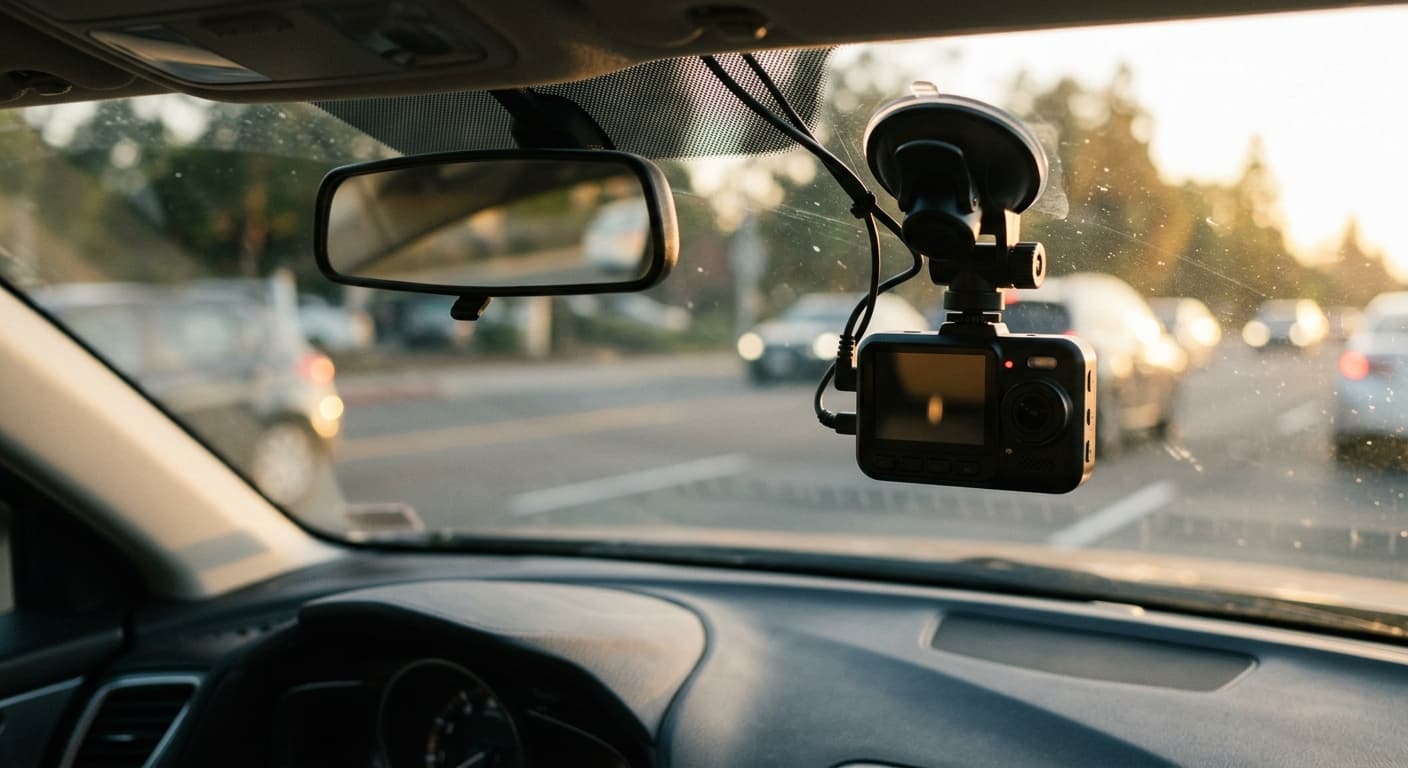
The District of Columbia is a one-party consent jurisdiction under D.C. Code section 23-542(b)(3): any party to a conversation may record without notifying others, unless the recording is made to commit a criminal, tortious, or "any other injurious act." Violations are felonies carrying up to five years imprisonment and a $12,500 fine, and the District has expressly waived its governmental immunity for civil wiretap claims.
District of Columbia recording law at a glance
| Question | Answer |
|---|---|
| Consent rule | One-party consent |
| Main statute | D.C. Code section 23-542(b)(3) |
| When recording is illegal | Recording a conversation you are not part of; or recording with a criminal, tortious, or injurious purpose |
| Criminal penalty | Felony: up to 5 years imprisonment, up to $12,500 fine (D.C. Code section 22-3571.01(b)(6)) |
| Civil penalty | Greater of actual damages or $100/day or $1,000; plus punitives and attorney fees (D.C. Code section 23-554(a)) |
| Hidden cameras | Voyeurism: 1-year misdemeanor; distribution of voyeurism images: 5-year felony (D.C. Code section 22-3531) |
| Recording police | No clearly established D.C. Cir. right; eight sister circuits have recognized the right (persuasive only) |
For deeper coverage of each topic, see the in-depth guides below.
Recording in-person conversations in the District of Columbia
The District's wiretap statute, D.C. Code section 23-542, makes it a felony to willfully intercept, use, or disclose the contents of any wire or oral communication. Subsection (b)(3) carves out the one-party consent defense: a person not acting under color of law may lawfully record a conversation they are part of, or where one party has given prior consent. No notice to other parties is required.
The critical limitation is the purpose clause at the end of subsection (b)(3). The defense fails if the recording is made "for the purpose of committing any criminal or tortious act in violation of the Constitution or laws of the United States, any State, or the District of Columbia, or for the purpose of committing any other injurious act." That final phrase, "any other injurious act," extends the restriction beyond the federal floor. The federal one-party rule at 18 U.S.C. section 2511(2)(d) only bars criminal or tortious purposes; D.C. adds an open-ended injurious-act category with no analog in most other one-party jurisdictions.
For everyday purposes the rule is straightforward: if you are in the conversation, you may record it. A journalist recording a source interview, a party recording an argument, an employee recording a meeting they attend, all fall within the defense. What would void it: recording a conversation specifically to use as leverage in an extortion scheme, or to facilitate harassment.
Recording phone calls in the District of Columbia
The same one-party rule under D.C. Code section 23-542(b)(3) applies to phone calls: a participant may record without notifying the other party. This covers landlines, cell calls, and VoIP.
The interstate complication arises because the District borders Maryland (a strict all-party consent state under Md. Code Cts. & Jud. Proc. section 10-402) and Virginia (a one-party state under Va. Code section 19.2-62). For a DC-to-Maryland call, courts applying the most-protective-jurisdiction rule would require all-party consent, so the safer practice is to notify or obtain Maryland-side consent. For DC-to-Virginia calls, both jurisdictions allow one-party recording and no conflict arises.
For detailed rules on phone recording, see District of Columbia Phone Call Recording Laws.
Hidden cameras, doorbells, and nanny cams
D.C. Code section 22-3531 is the voyeurism statute. It has three conduct prongs: subsection (b) prohibits hidden observation posts or peepholes targeting someone in a bathroom, undressing, or engaged in sexual activity; subsection (c) prohibits electronically recording someone in those same contexts without express consent; subsection (d) prohibits capturing images of "private areas" (genitals, pubic area, anus, buttocks, or female breast below the areola) wherever the person has a reasonable privacy expectation.
Violating any of those three prongs is a misdemeanor under subsection (f)(1): up to 1 year imprisonment and a $2,500 fine. D.C. Code does not grade misdemeanors into lettered classes such as "Class A" the way many states do; the statute itself simply says "a misdemeanor." Distributing or publishing images obtained through a subsection (b), (c), or (d) violation is a separate felony under subsection (f)(2): up to 5 years and a $12,500 fine. That distribution felony is often overlooked and applies even if the original capture was, for example, a subsection (b) observation-post violation.
Practical applications: video-only security cameras in a home are generally lawful when pointed at non-private areas. A camera recording a bathroom or bedroom without consent is illegal regardless of whether the owner installed it. Audio-capable cameras add a wiretap layer; a homeowner who is not a participant in the conversation being captured cannot rely on the one-party defense for the audio portion. A District landlord may not install cameras in tenant bedrooms or bathrooms without express written consent. See District of Columbia Security Camera Laws and District of Columbia Voyeurism Laws for more.
Penalties for illegal recording in the District of Columbia
Criminal penalties under D.C. Code section 23-542(a) are set by reference to the omnibus fine table at D.C. Code section 22-3571.01. Felony interception prosecutions in the District are handled by the U.S. Attorney for the District of Columbia (USAO-DC), not the D.C. Office of the Attorney General, because D.C. Code section 23-101 gives USAO-DC jurisdiction over all adult felonies.
Civil remedies under D.C. Code section 23-554(a) are unusually broad. A plaintiff recovers the greater of actual damages or $100 per day per violation or $1,000, whichever is higher, plus punitive damages and attorney fees. Procurement liability is express: whoever procured the illegal recording is jointly liable with the interceptor. Subsection (c) waives the District government's immunity for wiretap civil claims, allowing direct suit against D.C. agencies. The civil statute of limitations is 3 years under D.C. Code section 12-301(a)(8); the criminal felony SoL is 6 years under D.C. Code section 23-113(a)(4).
| Offense | Statute | Max prison | Max fine |
|---|---|---|---|
| Illegal interception / disclosure / use | D.C. Code section 23-542(a) | 5 years | $12,500 |
| Possession or sale of intercept devices | D.C. Code section 23-543 | 5 years | $12,500 |
| Voyeurism (base offense) | D.C. Code section 22-3531(f)(1) | 1 year | $2,500 |
| Distribution of voyeurism images (felony) | D.C. Code section 22-3531(f)(2) | 5 years | $12,500 |
| NCII disclosure (misdemeanor) | D.C. Code section 22-3052 | 180 days | $1,000 |
| NCII publication (felony) | D.C. Code section 22-3053 | 3 years | $12,500 |
| NCII downstream republication (misdemeanor) | D.C. Code section 22-3054 | 180 days | $1,000 |
Recording the police in the District of Columbia
Whether a civilian has a clearly established First Amendment right to record on-duty police in public is settled in eight other federal circuits but not in the D.C. Circuit. The leading D.C. Circuit authority on filming on government property is Price v. Garland, 45 F.4th 1059 (D.C. Cir. 2022), cert. denied, 143 S. Ct. 1797 (2023). That case involved NPS commercial-filming permits, not civilian recording of police, but it applied only a "reasonableness" standard to filming on government property rather than the heightened scrutiny applicable to traditional public forums. The opinion creates a restrictive analytic backdrop for any future D.C. Circuit panel asked to recognize the civilian recording right.
Every numbered circuit that has squarely addressed the question has recognized the right (1st, 3d, 4th, 5th, 7th, 9th, 10th, and 11th). Those decisions bind only their own circuits; they are persuasive in the D.C. Circuit but not controlling. The practical result: civilians in the District have good doctrinal arguments supporting the right, but it is not clearly established at the circuit level for qualified-immunity purposes. MPD General Order GO-SPT-302.13 internally acknowledges civilian recording of police, which provides operational support at the agency level.
Civilians suing federal officers in the District (FBI, USCP, USPP, ATF, U.S. Marshals, etc.) face an additional constraint: Egbert v. Boule, 142 S. Ct. 1793 (2022), sharply limits the availability of Bivens damages claims against federal officers for constitutional violations.
For more detail, see District of Columbia Laws on Recording Police.
Special topics in the District of Columbia
Federal-property overlay
The District has the densest federal law-enforcement footprint in the United States, and recording rules shift depending on which jurisdiction controls the block. Capitol grounds are policed by the U.S. Capitol Police under 2 U.S.C. sections 1961 and following, and the Capitol Police Board is the body authorized to make and enforce regulations for the grounds. Those U.S. Code sections are enabling authority only. They establish policing jurisdiction and the Board's regulatory power; they set out no camera, tripod, or filming rules of their own. The operative equipment restrictions come from U.S. Capitol Police regulations and congressional press-gallery guidance, which are not published in the U.S. Code or the CFR and are revised from time to time. Hand-held recording by visitors in publicly accessible outdoor areas of the grounds is generally permitted, but confirm the current rules with the U.S. Capitol Police before setting up a tripod or any equipment that is not hand-carried.
The National Mall and federal monuments fall under 36 CFR sections 5.5 and 7.96 (NPS National Capital Region), as modified by the EXPLORE Act (Pub. L. 118-234), codified at 54 U.S.C. section 100905. Under that statute the National Park Service states that permits and fees are not required for filming, still photography, or audio recording that involves eight or fewer individuals, provided the activity occurs in areas open to the public, uses hand-carried equipment only, does not require exclusive use of a site, does not adversely impact park resources, values, or other visitors, and is not likely to result in additional administrative costs for the Park Service. GSA federal buildings fall under 41 CFR Part 102-74 and Federal Protective Service enforcement. The Pentagon falls under 32 CFR section 234.15. The D.C.-to-federal jurisdictional transition often happens mid-block; D.C. Code section 23-542 only governs where D.C. has primary jurisdiction.
DC Body-Worn Camera Act
The DC Body-Worn Camera Act, D.C. Code sections 5-116.31 through 5-116.33, requires the Mayor to publicly release the names and BWC recordings of all MPD officers involved in an officer-involved death or serious use of force within 5 business days, subject to a next-of-kin consent exception. D.C. Law 25-175 (Secure DC, effective June 8, 2024) added three provisions: a prohibition on redacting officer likenesses (except undercover), a statutory definition of serious bodily injury, and a bar on officers reviewing BWC footage before writing their initial reports in covered incidents. Federal agencies (USCP, USPP, FBI, etc.) are not covered by section 5-116.33; federal BWC footage is accessed via FOIA to the relevant agency.
Nonconsensual intimate imagery and deepfakes
D.C. Code section 22-3052 (knowing disclosure, 180-day misdemeanor) and section 22-3053 (knowing publication, 3-year felony) criminalize NCII. The distinction is the verb: private disclosure is a misdemeanor; broader publication (posting online) is a felony. No recipient-count threshold appears in the statutory text. Section 22-3054 separately makes a downstream republisher who receives the image and republishes it liable as a misdemeanant. Section 22-3056 provides an affirmative defense where the disclosure or publication is made in the public interest, including reporting unlawful conduct, the lawful and common practices of law enforcement, or legal proceedings; it applies to violations of sections 22-3052, 22-3053, or 22-3054 and imposes no separate harm-minimization requirement. D.C. Law 25-268 (effective March 7, 2025) added a separate civil remedy at D.C. Code Title 7 Chapter 21D: up to $10,000 statutory damages per defendant under section 7-2165, plus punitive damages and attorney fees, with a 4-year statute of limitations under section 7-2166. The intimate-image definition at section 7-2161(7) does not expressly cover AI-generated deepfakes; application to synthetic media is litigation-untested. The federal TAKE IT DOWN Act (Pub. L. 119-12, signed May 19, 2025) expressly reaches AI-generated digital forgeries; its platform 48-hour notice-and-takedown obligation took effect May 19, 2026. Pending D.C. Council bill B26-0524 (introduced December 1, 2025) would add explicit criminal coverage for digitally created intimate content, but as of June 2026 remains in committee.
Workplace recording: NLRA and federal sector
In the private sector, D.C. Code section 23-542(b)(3) permits a participant to record a workplace conversation they are part of. A covert non-participant recording in a break room cannot rely on the defense. The NLRB's controlling standard for employer no-recording policies under Section 8(a)(1) is Stericycle, Inc., 372 NLRB No. 113 (Aug. 2, 2023): a policy with a reasonable tendency to chill protected activity is presumptively unlawful unless the employer shows a legitimate business interest that cannot be served by a narrower rule. NLRB GC 25-07 (June 25, 2025) separately declares surreptitious recording of formal collective-bargaining sessions a per se violation, but its scope is limited to bargaining sessions. Federal-sector employees in the District are not covered by the NLRA; they fall under the Federal Service Labor-Management Relations Statute, 5 U.S.C. chapter 71, administered by the Federal Labor Relations Authority.
For more, see District of Columbia Workplace Recording Laws.

Recent legal developments
- May 19, 2026: Federal TAKE IT DOWN Act platform compliance (48-hour notice-and-takedown for NCII including AI deepfakes) took effect.
- December 1, 2025: B26-0524 (Distribution of False Sexual Imagery Prohibition Amendment Act of 2025) introduced in D.C. Council; pending in committee as of June 2026.
- June 25, 2025: NLRB GC 25-07 declared surreptitious recording of NLRA collective-bargaining sessions a per se unfair labor practice (narrow scope: bargaining sessions only).
- May 19, 2025: TAKE IT DOWN Act (Pub. L. 119-12) signed; criminal provisions covering NCII including AI deepfakes effective immediately.
- March 7, 2025: D.C. Law 25-268 (UCRUDII Act) effective; created civil cause of action for unauthorized intimate-image disclosure (up to $10,000 statutory damages, 4-year SoL).
- June 8, 2024: D.C. Law 25-175 (Secure DC) permanent provisions effective; added no-redact-officer-likeness rule and officer pre-report BWC review prohibition to section 5-116.33.
- March 11, 2024: Mayor Bowser signed D.C. Law 25-175 (Secure DC Omnibus Amendment Act of 2024).
District of Columbia recording laws in depth
Want to know more about how D.C. recording law applies in a specific context? Each guide below goes deeper than this hub.
By type of recording
- District of Columbia Audio Recording Laws: Complete Legal Guide
- District of Columbia Video Recording Laws: What You Need to Know
- DC Dashcam Laws: Recording Rules, Windshield Mounting, and Legal Limits (2026)
By place or relationship
- District of Columbia Phone Call Recording Laws: Consent Rules and Interstate Calls
- District of Columbia Laws on Recording Police: Your Rights and Limits
- District of Columbia Laws on Recording in Public: Complete Legal Guide
- District of Columbia Workplace Recording Laws: Employee and Employer Rights
- DC Landlord-Tenant Recording Laws: Cameras, Privacy Rights, and Disputes (2026)
- DC School Recording Laws: Student Privacy, FERPA, and Classroom Rules (2026)
- DC Medical Recording Laws: Patient Rights, HIPAA, and One-Party Consent (2026)
- District of Columbia Security Camera Laws: Installation Rules and Privacy Limits
- District of Columbia Voyeurism Laws: Hidden Camera Penalties and Privacy Rights
More District of Columbia laws
- Maryland recording laws (cross-border calls: two-party)
- Virginia recording laws (cross-border calls: one-party)
- United States recording laws (parent hub: federal overlay and 50-state map)
- One-party consent states (sibling hub)
- Is it illegal to video record someone without their consent?
This article is general legal information, not legal advice. Recording laws change and apply differently to each situation. For advice about your situation, consult a licensed District of Columbia attorney.
More District of Columbia Laws
Frequently Asked Questions
Is the District of Columbia a one-party or two-party consent state?
The District is a one-party consent jurisdiction under D.C. Code section 23-542(b)(3). Any party to a wire or oral communication may record without notifying the other parties. The defense is voided only if the recording is made for a criminal, tortious, or 'any other injurious act' purpose. For federal wiretap law, 18 U.S.C. section 2510(3) expressly defines the District as a 'State.'
Can I record a phone call in Washington, D.C.?
Yes, if you are a party to the call. D.C. Code section 23-542(b)(3) allows one-party recording for landlines, cell calls, and VoIP. For a D.C.-to-Maryland call, Maryland's all-party consent rule under Md. Code Cts. and Jud. Proc. section 10-402 may apply, so obtaining consent from all parties is the safer practice. D.C.-to-Virginia calls need only one-party consent on both sides.
Is illegal recording a felony in Washington, D.C.?
Yes. Violations of D.C. Code section 23-542(a) are felonies punishable by up to 5 years imprisonment and a fine of up to $12,500 under D.C. Code section 22-3571.01(b)(6). Felony interception cases are prosecuted by the U.S. Attorney for the District of Columbia, not the D.C. Office of the Attorney General, under D.C. Code section 23-101.
What can I sue for if someone illegally recorded me in D.C.?
Under D.C. Code section 23-554(a), you can recover the greater of actual damages or $100 per day per violation or $1,000 in liquidated damages, whichever is higher, plus punitive damages and attorney fees. The District government cannot assert governmental immunity as a defense (section 23-554(c)). The civil statute of limitations is 3 years under D.C. Code section 12-301(a)(8).
Are Ring doorbells and nanny cams legal in D.C.?
Video-only cameras are generally lawful when the owner is the recorder and the camera does not capture enumerated private contexts covered by D.C. Code section 22-3531 (bathrooms, undressing, sexual activity). Audio-capable cameras add a wiretap consideration: a homeowner who is not a participant in the conversation being captured cannot rely on the one-party defense for the audio. Distributing any image obtained through a voyeurism violation is a separate 5-year felony under section 22-3531(f)(2).
Can I record my boss or an HR meeting in D.C.?
Yes, if you are present in the meeting. D.C. Code section 23-542(b)(3) permits participant recording with no advance notice. The covert-recording wrinkle: NLRB Stericycle (372 NLRB No. 113, 2023) means an employer no-recording policy may be challengeable as an unfair labor practice if it tends to chill protected Section 7 activity. Federal employees in the District are covered by FLRA precedent, not the NLRA.
Can I record the police in Washington, D.C.?
You likely can, but the right is not clearly established at the D.C. Circuit level for qualified-immunity purposes. The D.C. Circuit has no published civilian record-the-police opinion. Eight other circuits (1st, 3d, 4th, 5th, 7th, 9th, 10th, 11th) have recognized the right, and those decisions are persuasive. MPD General Order GO-SPT-302.13 internally acknowledges civilian recording. Civilians suing federal officers also face Bivens constraints under Egbert v. Boule, 142 S. Ct. 1793 (2022).
Does D.C. have a law against AI deepfake intimate images?
Not yet as a stand-alone criminal statute. D.C. Law 25-268 (effective March 7, 2025) provides a civil remedy for NCII with up to $10,000 statutory damages, but its intimate-image definition does not expressly cover AI deepfakes. The federal TAKE IT DOWN Act (Pub. L. 119-12) expressly reaches AI-generated digital forgeries and its platform compliance obligation took effect May 19, 2026. D.C. Council bill B26-0524 (introduced December 2025) would add explicit AI / digital-technology coverage if enacted.
Updates
Corrected the federal-property section: National Mall filming now reflects the EXPLORE Act rule at 54 U.S.C. 100905 (no permit for eight or fewer individuals) instead of a superseded court-based five-or-fewer threshold, and Capitol-grounds camera rules are no longer attributed to statutory text that does not contain them.
Corrected the description of the D.C. Code section 22-3056 public-interest defense to state its actual statutory elements (no harm-minimization requirement was ever part of the law), and fixed a wrong subsection cite in the May 2026 changelog entry so it matches the correct $12,500 fine citation used throughout the rest of the page.
Independently fact-checked against the cited primary sources; governing law re-checked for recent changes
Corrected the voyeurism penalty description (D.C. Code Section 22-3531(f)(1)): the statute's actual text says only "a misdemeanor," with no "Class A" grading. The 1-year/$2,500 penalty figures were already correct and are unchanged.
Governing law re-checked for recent changes
Reviewed and approved by an editor
Restructured page per recording-redo spec: added AEO lede, at-a-glance table, and reorganized into canonical section order (in-person / phone / hidden cameras / penalties / police / special topics / recent developments). Condensed ~400-line current page to readable hub format; preserved all verified statutes, case citations, and penalty figures. Special-topics subsections cover federal-property overlay, BWCA, NCII / deepfakes, and workplace recording. FAQ expanded to 8 questions. Verified D.C. Code sections 23-542, 23-554, 22-3531, and 22-3571.01 fine tiers against code.dccouncil.gov. No corrections to load-bearing facts; confirmed $12,500 max fine under section 22-3571.01(b)(6) for 5-year offenses, $2,500 for 1-year offenses. Retained all primary-source citations; removed no banlist links.
Wave 8 refresh. Added federal-overlay framing covering USCP, USPP, GSA, Pentagon, and NARA regulations. Added BWCA H2 with Secure DC (D.C. Law 25-175) amendments. Reframed the D.C. Circuit record-the-police section as unsettled with Price v. Garland restrictive analytic gravity (NOT a direct holding). Added D.C. Law 25-268 UCRUDII Act civil remedy (effective March 7, 2025). Corrected fine cap from $25,000 and $10,000 references to the verified $12,500 under D.C. Code section 22-3571.01(b)(4). Corrected the sovereign-immunity waiver citation from section 23-554(b) to section 23-554(c). Reframed sections 22-3052 / 22-3053 distinction as disclose-versus-publish (no recipient-count threshold). Noted that the January 23, 2026 35-AG xAI/Grok demand letter was led by NC AG Jeff Jackson, with D.C. AG Brian Schwalb as a signatory. Noted that the federal TAKE IT DOWN Act platform compliance deadline of May 19, 2026 takes effect five days from this refresh. Updated citations to use 36 CFR sections 5.5 and 7.96 for the National Mall (not section 1280.52, which is NARA-specific) and 32 CFR section 234.15 for the Pentagon (not section 228.8, which is NSA-specific).
Wave 8 refresh. Added federal-overlay framing covering USCP, USPP, GSA, Pentagon, and NARA regulations. Added BWCA H2 with Secure DC (D.C. Law 25-175) amendments. Reframed the D.C. Circuit record-the-police section as unsettled with Price v. Garland restrictive analytic gravity. Added D.C. Law 25-268 UCRUDII Act civil remedy (effective March 7, 2025). Corrected fine cap from $25,000 and $10,000 references to the verified $12,500 under D.C. Code section 22-3571.01(b)(6). Corrected sovereign-immunity waiver citation from section 23-554(b) to section 23-554(c). Reframed sections 22-3052 / 22-3053 distinction as disclose-versus-publish (no recipient-count threshold). Noted that the January 23, 2026 35-AG xAI/Grok demand letter was led by NC AG Jeff Jackson, with D.C. AG Brian Schwalb as a signatory. Noted that the federal TAKE IT DOWN Act platform compliance deadline of May 19, 2026 takes effect five days from this refresh. Updated citations to use 36 CFR sections 5.5 and 7.96 for the National Mall and 32 CFR section 234.15 for the Pentagon.
Added wearable recording device guidance covering AI voice recorders (Plaud) and smart glasses (Meta Ray-Bans) under District of Columbia one-party consent law.
DC Office of Police Complaints released its FY25 Annual Report. 81% of OPC investigations included BWC footage (up from 77% in FY24); BWC non-compliance rate fell to 17% (from 33% in FY24).
A bipartisan coalition of 35 state attorneys general led by North Carolina AG Jeff Jackson sent a demand letter to xAI / X regarding Grok-generated nonconsensual sexually explicit deepfake images. D.C. AG Brian Schwalb joined the coalition as a signatory.
B26-0524 (Distribution of False Sexual Imagery Prohibition Amendment Act of 2025) introduced in DC Council. Pending in committee.
NLRB General Counsel released GC 25-07, declaring surreptitious recording of NLRA collective-bargaining sessions a per se violation of Sections 8(a)(5) and 8(b)(3). Narrow scope: bargaining sessions only, not general workplace recording.
Federal TAKE IT DOWN Act (Pub. L. 119-12) signed. Criminal provisions effective immediately. Platform 48-hour notice-and-takedown compliance effective May 19, 2026.
D.C. AG Brian Schwalb issued a consumer alert warning District residents about AI-generated deepfake telemarketing scams that impersonate trusted contacts.
D.C. Law 25-268 (Uniform Civil Remedies for Unauthorized Disclosure of Intimate Images Act of 2024) effective. Created D.C. Code Title 7 Chapter 21D. Civil cause of action with up to $10,000 statutory damages per defendant, plus punitive damages, attorney fees, and injunctive relief. Statute of limitations: 4 years from discovery, tolled for minors until age 18.
NLRB Acting General Counsel released GC 25-05, a housekeeping rescission of multiple Biden-era General Counsel memoranda. Stericycle remains controlling Board law.
Eleventh Circuit vacated the FCC one-to-one consent rule (FCC Order 23-107). Pre-amendment prior express written consent standard governs [TCPA](/us-laws/tcpa) robocall consent.
D.C. Law 25-175 (Secure DC Omnibus Amendment Act of 2024) permanent law became effective. Added no-redact-officer-likeness rule, serious-bodily-injury definition, and officer pre-report BWC review prohibition to section 5-116.33.
Mayor Bowser signed D.C. Law 25-175 (Secure DC Omnibus Amendment Act of 2024). Primary sponsor Councilmember Brooke Pinto (Ward 2).
FCC Declaratory Ruling 24-17 classified AI-generated voices in robocalls as 'artificial or prerecorded' messages under the TCPA.
The Law Behind This Article
This article rests on the statutory provisions below, held in our own legal record and retrieved from the official source. Tap a section to read the operative text.
Code of the District of Columbia, Title 23: Criminal Procedure. - Chapter 5: Warrants and Arrests. - Subchapter III: Wire Interception and Interception of Oral Communications.
§ 23-542Interception, disclosure, and use of wire or oral communications prohibited.In forcecited in 22 of our articles
(a) Except as otherwise specifically provided in this subchapter, any person who in the District of Columbia — (1) willfully intercepts, endeavors to intercept, or procures any other person to intercept or endeavor to intercept any wire or oral communication; (2) willfully discloses or endeavors to disclose to any other person the contents of any wire or oral communication, or evidence derived therefrom, knowing or having reason to know that the information was obtained through the interception of a wire or oral communication; or (3) willfully uses or endeavors to use the contents of any wire or oral communication, or evidence derived therefrom, knowing or having reason to know, that the information was obtained through the interception of a wire or oral communication; shall be fined not more than the amount set forth in [§ 22-3571.01] or imprisoned not more than five years, or both; except that paragraphs (2) and (3) of this subsection shall not apply to the contents of any wire or oral communication, or evidence derived therefrom, that has become common knowledge or public information.
Official text (excerpt) · last checked 2026-08-31 · Read the full text in our law library · Verify at github.com
Cited in 16 court opinions in our collectionLatest citing opinion in our collection: 2024
In the courts (editorial summary, independently checked):District of Columbia courts have construed the one-party consent provision of D.C. Code 23-542(b)(2). United States v. Sell (1985) held the consent must be voluntary, the government meeting its burden by showing the party cooperated knowing what officers were doing. Thomas v. United States (2017) applied it to an interstate call.
Opinions citing this section in our collection:
- United States v. Sell (District of Columbia Court of Appeals 1985, 487 A.2d 225)✓Police recorded a woman's calls with an officer she accused of coercing sex acts. Construing the one-party consent provision for the first time, the court held the government need only show she cooperated knowing what police were doing, and reversed the suppression order.
- David Thomas v. United States (District of Columbia Court of Appeals 2017)“…s. & .lud. Proc. § 10- 402 [c)(.'£)(ii) (West 2015). Under D.C. Code § 23-542." the legislature has clearly defined w…”
- Thomas v. United States (District of Columbia Court of Appeals 2017, 171 A.3d 151)✓Police in the District recorded a call between a voyeurism victim and the defendant, who was in Maryland and did not consent. The court held this section governs admissibility in District courts and does not incorporate Maryland's two-party rule, so suppression was denied.
Identified automatically from the court opinions citing this section — not a ranking of which case controls.
§ 23-554Authorization for recovery of civil damages.In forcecited in 14 of our articles
(a) Any person whose wire or oral communication is intercepted, disclosed, or used in violation of this subchapter shall — (1) have a civil cause of action against any person who intercepts, discloses, or uses, or procures any other person to intercept, disclose, or use, such communications; and (2) be entitled to recover from any such person — (A) actual damages, but not less than liquidated damages computed at the rate of $100 a day for each day of violation, or $1,000 whichever is higher; (B) punitive damages; and (C) a reasonable attorney’s fee and other litigation costs reasonably incurred. (b) Good faith reliance on a court order or legislative authorization shall constitute a complete defense to an action brought under this section or any other law. (c) As used in this section, the term “person” includes the District of Columbia. The District of Columbia shall not assert any governmental immunity to avoid liability under this section. Judgment against the District of Columbia shall not constitute a bar to action against any other person.
Official text (excerpt) · last checked 2026-07-30 · Read the full text in our law library · Verify at github.com
Cited in 3 court opinions in our collectionLatest citing opinion in our collection: 2022
Opinions citing this section in our collection:
- Democracy Partners, LLC v. Project Veritas Action Fund (District Court, District of Columbia 2020)“…each day of violation, or $1,000, whichever is higher. See D.C. Code § 23-554(a)(2)(A). Both statutes also allow for…”
- Council on American-Islamic Relations Action Network, Inc. v. Gaubatz (District Court, District of Columbia 2022)“…oral or wire communication.” D.C. Code § 23-542(a)(2)-(3); D.C. Code § 23-554(a)(1) (authorizing civil action for re…”
Identified automatically from the court opinions citing this section — not a ranking of which case controls.
§ 23-541Definitions.In forcecited in 5 of our articles
As used in this subchapter — (1) the term “wire communication” means any communication made in whole or in part through the use of facilities for the transmission of communications by the aid of wire, cable, or other like connection between the point of origin and the point of reception furnished or operated by any person engaged as a common carrier in providing or operating such facilities; (2) the term “oral communication” means any oral communication uttered by a person exhibiting an expectation that the communication is not subject to interception under circumstances justifying the expectation; (3) the term “intercept” means the aural acquisition of the contents of any wire or oral communication through the use of any intercepting device; (4) the term “intercepting device” means any electronic, mechanical, or other device or apparatus which can be used to intercept a wire or oral communication other than — (A) any telephone or telegraph instrument, equipment, or facility, or any component thereof, (i) furnished to the subscriber or user by a communications common carrier in the ordinary course of its business and being used by the subscriber or user in the ordinary course…
Official text (excerpt) · last checked 2026-07-30 · Read the full text in our law library · Verify at github.com
Cited in 8 court opinions in our collectionLatest citing opinion in our collection: 2023
Opinions citing this section in our collection:
- United States v. Sell (District of Columbia Court of Appeals 1985, 487 A.2d 225)“…itution because she had not recanted her statement. . D.C.Code §§ 23-541, -556 (1981). . Section 23-542(b)…”
- United States v. Gerald F. Johnson, United States of America v. Thomas Johnson, United States of America v. Edward T. Wooten (Court of Appeals for the D.C. Circuit 1982, 696 F.2d 115)“…conceded, D.C.Code Ann. § 23-547 (1981), read together with D.C.Code Ann. § 23-541(7) (1981), explicitly authorizes the is…”
- Democracy Partners, LLC v. Project Veritas Action Fund (District Court, District of Columbia 2018)“…against all defendants (id. ¶¶ 78-85); (4) violation of D.C. Code § 23-541 et seq. (“D.C. Wiretap Act”) against al…”
Identified automatically from the court opinions citing this section — not a ranking of which case controls.
Code of the District of Columbia, Title 22: Criminal Offenses and Penalties. - Chapter 35B: Fines for Criminal Offenses.
§ 22-3571.01Fines for criminal offenses.In forcecited in 9 of our articles
(a) Notwithstanding any other provision of the law, and except as provided in § 22-3571.02, a defendant who has been found guilty of an offense under the District of Columbia Official Code punishable by imprisonment may be sentenced to pay a fine as provided in this section. (b) An individual who has been found guilty of such an offense may be fined not more than the greatest of: (1) $100 if the offense is punishable by imprisonment for 10 days or less; (2) $250 if the offense is punishable by imprisonment for 30 days, or one month, or less but more than 10 days; (3) $500 if the offense is punishable by imprisonment for 90 days, or 3 months, or less but more than 30 days; (4) $1,000 if the offense is punishable by imprisonment for 180 days, or 6 months, or less but more than 90 days; (5) $2,500 if the offense is punishable by imprisonment for one year or less but more than 180 days; (6) $12,500 if the offense is punishable by imprisonment for 5 years or less but more than one year; (7) $25,000 if the offense is punishable by imprisonment for 10 years or less but more than 5 years; (8) $37,500 if the offense is punishable by imprisonment for 15 years or less but more than…
Official text (excerpt) · last checked 2026-07-30 · Read the full text in our law library · Verify at github.com
Cited in 5 court opinions in our collectionLatest citing opinion in our collection: 2025
Opinions citing this section in our collection:
- Gilberto Lopez-Ramirez v. United States (District of Columbia Court of Appeals 2017, 171 A.3d 169)“…dardized the maximum fine for 180-day crimes at 31,000. See D.C. Code § 22-3571.01 ibi (2012 Repi. a supp. 2014); 60 D.C.R…”
- Mario Giovani Valendzuela-Castillo v. United States (District of Columbia Court of Appeals 2018, 180 A.3d 74)“…eamlining Act set maximum fines for misdemeanors at $1000); D.C. Code § 22-3571.01 (2013 Repl.) (standardizing $1000 as th…”
- Tornero v. United States (District of Columbia Court of Appeals 2025)“…onment may be sentenced to pay a fine as provided” therein. D.C. Code § 22-3571.01(a). The provision also enumerates the s…”
Identified automatically from the court opinions citing this section — not a ranking of which case controls.
Code of the District of Columbia, Title 22: Criminal Offenses and Penalties. - Chapter 35A: Voyeurism.
§ 22-3531Voyeurism.In forcecited in 12 of our articles
(a) For the purposes of this section, the term: (1) “Electronic device” means any electronic, mechanical, or digital equipment that captures visual or aural images, including cameras, computers, tape recorders, video recorders, and cellular telephones. (2) “Private area” means the naked or undergarment-clad genitals, pubic area, anus, or buttocks, or female breast below the top of the areola. (b) Except as provided in subsection (e) of this section, it is unlawful for any person to occupy a hidden observation post or to install or maintain a peephole, mirror, or any electronic device for the purpose of secretly or surreptitiously observing an individual who is: (1) Using a bathroom or rest room; (2) Totally or partially undressed or changing clothes; or (3) Engaging in sexual activity. (1) Except as provided in subsection (e) of this section, it is unlawful for a person to electronically record, without the express and informed consent of the individual being recorded, an individual who is: (A) Using a bathroom or rest room; (B) Totally or partially undressed or changing clothes; or (C) Engaging in sexual activity.
Official text (excerpt) · last checked 2026-08-31 · Read the full text in our law library · Verify at github.com
Cited in 14 court opinions in our collectionLatest citing opinion in our collection: 2026
In the courts (editorial summary, independently checked):BERNARD FREUNDEL v. UNITED STATES (2016) held section 22-3531(c) permits a separate punishment for each person unlawfully recorded, upholding 52 counts. In re Prosecution of Clinton Perrow (2017) held subsection (g), which assigned voyeurism prosecutions to the DC Attorney General, invalid under the Home Rule Act.
Opinions citing this section in our collection:
- BERNARD FREUNDEL v. UNITED STATES (District of Columbia Court of Appeals 2016, 146 A.3d 375)✓A rabbi hid cameras in a mikvah changing room and recorded 52 women undressing over several years; the court held section 22-3531(c) is directed at individual privacy and permits a separate conviction and sentence for each victim recorded.
- In re Prosecution of Clinton Perrow (District of Columbia Court of Appeals 2017, 172 A.3d 894)✓A man was charged with voyeurism for using his phone to record under a woman's dress; the court held voyeurism is a distinct offense from disorderly conduct or lewd acts, so subsection (g) assigning it to the DC Attorney General is invalid.
- Mario Giovani Valendzuela-Castillo v. United States (District of Columbia Court of Appeals 2018, 180 A.3d 74)✓A restaurant worker quietly entered a ladies' room and lay on the floor to look under a stall door at a customer; the court held that position was a hidden observation post under section 22-3531(b)(1) even though he was concealed only briefly.
Identified automatically from the court opinions citing this section — not a ranking of which case controls.
Code of the District of Columbia, Title 23: Criminal Procedure. - Chapter 1: General Provisions.
§ 23-101Conduct of prosecutions.In forcecited in 2 of our articles
(a) Prosecutions for violations of all police or municipal ordinances or regulations and for violations of all penal statutes in the nature of police or municipal regulations, where the maximum punishment is a fine only, or imprisonment not exceeding one year, shall be conducted in the name of the District of Columbia by the Corporation Counsel for the District of Columbia [Attorney General for the District of Columbia] or his assistants, except as otherwise provided in such ordinance, regulation, or statute, or in this section. (b) Prosecutions for violations of section 6 of the Act of July 29, 1892 (D.C. Official Code, sec. 22-1307), relating to disorderly conduct, and for violations of section 9 of that Act (D.C. Official Code, sec. 22-1312), relating to lewd, indecent, or obscene acts, shall be conducted in the name of the District of Columbia by the Corporation Counsel [Attorney General for the District of Columbia] or his assistants. (c) All other criminal prosecutions shall be conducted in the name of the United States by the United States attorney for the District of Columbia or his assistants, except as otherwise provided by law.
Official text (excerpt) · last checked 2026-07-30 · Read the full text in our law library · Verify at github.com
Cited in 32 court opinions in our collectionLatest citing opinion in our collection: 2025
Opinions citing this section in our collection:
- In re Prosecution of Clinton Perrow (District of Columbia Court of Appeals 2017, 172 A.3d 894)“…s making up the crime of voyeurism. 2 Under D.C. Code § 23-101 (f): If in any case any…”
- In Re Prosecution of Nicco Settles (District of Columbia Court of Appeals 2019)“…e trial court properly certified that issue to this court. D.C. Code § 23-101(f) (2012 Repl.). This court must “hear…”
- United States v. Bailey (District of Columbia Court of Appeals 1985, 495 A.2d 756)“…mbia by the Corporation Counsel or his assistants. D.C.Code § 23-101(a), (b) (1981). The U.S. Attorney for t…”
Identified automatically from the court opinions citing this section — not a ranking of which case controls.
§ 23-113Limitations on actions for criminal violations.In forcecited in 2 of our articles
(1) A prosecution for the following crimes may be commenced at any time: (A) murder in the first or second degree (D.C. Official Code §§ 22-2101 and 2102 [22-2102]); (B) murder in the second degree (D.C. Official Code § 22-2103); (C) murder of a law enforcement officer or public safety employee (D.C. Official Code § 22-2106); (D) first degree murder that constitutes an act of terrorism (D.C. Official Code § 22-3153(a)); (E) second degree murder that constitutes an act of terrorism (D.C. Official Code § 22-3153(c)); (F) murder of a law enforcement officer or public safety employee that constitutes an act of terrorism (D.C.
Official text (excerpt) · last checked 2026-07-30 · Read the full text in our law library · Verify at github.com
Cited in 5 court opinions in our collectionLatest citing opinion in our collection: 2023
Opinions citing this section in our collection:
- Benoit O. Brookens, II v. United States (District of Columbia Court of Appeals 2018, 182 A.3d 123)“…he three-year catchall statute of limitations set forth in D.C. Code § 23-113 (a)(5), which we now hold applies to c…”
- In re S.G. (District of Columbia Court of Appeals 1990, 581 A.2d 771)“…n by denying the stepfather’s motion for a severance. See D.C.Code § 23-113 (1989) and Super. Ct.Crim.R. 14. *77…”
- United States v. Jackson (District of Columbia Court of Appeals 1987, 528 A.2d 1211)“…tute of Limitations Act of 1982, at 4-5 (January 13, 1982); D.C.Code § 23-113(a)(1) (1986 Supp.). Finally, Jackson’s…”
Identified automatically from the court opinions citing this section — not a ranking of which case controls.
Code of the District of Columbia, Title 12: Right to Remedy. - Chapter 3: Limitation of Actions.
§ 12-301Limitation of time for bringing actions.In forcecited in 11 of our articles
[(a)] Except as otherwise specifically provided by law, actions for the following purposes may not be brought after the expiration of the period specified below from the time the right to maintain the action accrues: (1) for the recovery of lands, tenements, or hereditaments— 15 years; (2) for the recovery of personal property or damages for its unlawful detention— 3 years; (3) for the recovery of damages for an injury to real or personal property— 3 years; (4) for libel, slander, assault, battery, mayhem, wounding, malicious prosecution, false arrest or false imprisonment— 1 year; (5) for a statutory penalty or forfeiture— 1 year; (6) on an executor’s or administrator’s bond— 5 years; on any other bond or single bill, covenant, or other instrument under seal— 12 years; (7) on a simple contract, express or implied— 3 years; (8) for which a limitation is not otherwise specially prescribed— 3 years; (9) for a violation of § 7-1201.01(11)— 1 year; (10) for the recovery of damages for an injury to real property from toxic substances including products containing asbestos— 5 years from the date the injury is discovered or with reasonable diligence should have been…
Official text (excerpt) · last checked 2026-09-08 · Read the full text in our law library · Verify at github.com
Cited in 492 court opinions in our collectionLatest citing opinion in our collection: 2026
In the courts (editorial summary, independently checked):Bussineau v. President of Georgetown College (1986) held that under 12-301 a discovery-rule claim accrues only when plaintiff knows or should know of the injury, its cause in fact, and some evidence of wrongdoing. Greenpeace, Inc. v. The Dow Chemical Company (2014) applied 12-301(4)'s one-year period to intrusion upon seclusion.
Opinions citing this section in our collection:
- Bussineau v. President of Georgetown College (District of Columbia Court of Appeals 1986, 518 A.2d 423)✓A dental patient, reassured her treatment was proper, sued years later. Reversing summary judgment, the court held that where the discovery rule applies, a D.C. Code 12-301(8) claim accrues only on knowledge of the injury, its cause in fact, and some evidence of wrongdoing.
- District of Columbia v. OWENS-CORNING FIBERGLAS CORPORATION (District of Columbia Court of Appeals 1990, 572 A.2d 394)✓The District sued asbestos makers over removal costs in roughly 2,400 public buildings, and most claims were held time barred. The court held the District is immune from D.C. Code 12-301 when it sues to vindicate public rights in performing a public function, and reversed.
- Greenpeace, Inc. v. The Dow Chemical Company (District of Columbia Court of Appeals 2014, 97 A.3d 1053)✓Greenpeace alleged corporate espionage, including rummaging through its trash for confidential documents. The court held an intrusion upon seclusion claim is governed by the one-year period in D.C. Code 12-301(4), not a three-year period, so the claim was time barred.
Identified automatically from the court opinions citing this section — not a ranking of which case controls.
Code of the District of Columbia, Title 22: Criminal Offenses and Penalties. - Chapter 30A: Non-Consensual Pornography.
§ 22-3052Unlawful disclosure.In forcecited in 5 of our articles
(a) It shall be unlawful in the District of Columbia for a person to knowingly disclose one or more sexual images of another identified or identifiable person when: (1) The person depicted did not consent to the disclosure of the sexual image; (2) The person disclosing the sexual image knew or consciously disregarded a substantial and unjustifiable risk that the person depicted did not consent to the disclosure; and (3) The person disclosed the sexual image with the intent to harm the person depicted or to receive financial gain. (b) A person who violates this section shall be guilty of a misdemeanor and, upon conviction, shall be fined not more than the amount set forth in § 22-3571.01, imprisoned for not more than 180 days, or both.
Official text (excerpt) · last checked 2026-08-30 · Read the full text in our law library · Verify at github.com
Cited in 1 court opinions in our collectionLatest citing opinion in our collection: 2019
Opinions citing this section in our collection:
- Roberts v. United States (District of Columbia Court of Appeals 2019)“…A. The unlawful-disclosure statute, D.C. Code § 22-3052 (2019 Supp.), provides in pertinent pa…”
Identified automatically from the court opinions citing this section — not a ranking of which case controls.
§ 22-3053First-degree unlawful publication.In forcecited in 4 of our articles
(a) It shall be unlawful in the District of Columbia for a person to knowingly publish one or more sexual images of another identified or identifiable person, whether obtained directly from the person or from a third party or other source, when: (1) The person depicted did not consent to the publication of the sexual image; (2) The person publishing the sexual image knew or consciously disregarded a substantial and unjustifiable risk that the person depicted did not consent to the publication; and (3) The person published the sexual image with the intent to harm the person depicted or to receive financial gain. (b) A person who violates this section shall be guilty of a felony and, upon conviction, shall be fined not more than the amount set forth in § 22-3571.01, imprisoned for not more than 3 years, or both.
Official text (excerpt) · last checked 2026-07-30 · Read the full text in our law library · Verify at github.com
Cited in 1 court opinions in our collectionLatest citing opinion in our collection: 2019
Opinions citing this section in our collection:
- Roberts v. United States (District of Columbia Court of Appeals 2019)“…other two offenses are first-degree unlawful publication, D.C. Code § 22-3053, which is a felony, and second-degree…”
Identified automatically from the court opinions citing this section — not a ranking of which case controls.
§ 22-3054Second degree unlawful publication.In forcecited in 2 of our articles
(a) It shall be unlawful in the District of Columbia for a person to knowingly publish one or more sexual images of another identified or identifiable person obtained from a third party or other source when: (1) The person depicted did not consent to the publication of the sexual image; and (2) The person publishing the sexual image knew or consciously disregarded a substantial and unjustifiable risk that the sexual image was obtained as a result of a previous disclosure or publication of the sexual image made with intent to harm the person depicted or to receive financial gain. (b) A person who violates this section shall be guilty of a misdemeanor and, upon conviction, shall be fined not more than the amount set forth in § 22-3571.01, imprisoned for not more than 180 days, or both.
Official text (excerpt) · last checked 2026-07-30 · Read the full text in our law library · Verify at github.com
Cited in 1 court opinions in our collectionLatest citing opinion in our collection: 2019
Opinions citing this section in our collection:
- Roberts v. United States (District of Columbia Court of Appeals 2019)“…which is a felony, and second-degree unlawful publication, D.C. Code § 22-3054, which is a misdemeanor. For current p…”
Identified automatically from the court opinions citing this section — not a ranking of which case controls.
§ 22-3056Affirmative defenses.In forcecited in 2 of our articles
It shall be an affirmative defense to a violation of § 22-3052, § 22-3053, or § 22-3054 if the disclosure or publication of a sexual image is made in the public interest, including the reporting of unlawful conduct, the lawful and common practices of law enforcement, or legal proceedings.
Official text (excerpt) · last checked 2026-07-30 · Read the full text in our law library · Verify at github.com
Code of the District of Columbia, Title 7: Human Health Care and Safety. - Chapter 21D: Uniform Civil Remedies for Unauthorized Disclosure of Intimate Images.
§ 7-2165Remedies.In forcecited in 3 of our articles
(a) In an action under this chapter, a prevailing plaintiff may recover: (1) The greater of: (A) Economic and noneconomic damages proximately caused by the defendant's disclosure or threatened disclosure, including damages for emotional distress whether or not accompanied by other damages; or (B) Statutory damages not to exceed $10,000 against each defendant found liable under this chapter for all disclosures and threatened disclosures by the defendant of which the plaintiff knew or reasonably should have known when filing the action or which became known during the pendency of the action. In determining the amount of statutory damages under this subparagraph, consideration must be given to the age of the parties at the time of the disclosure or threatened disclosure, the number of disclosures or threatened disclosures made by the defendant, the breadth of distribution of the image by the defendant, and other exacerbating or mitigating factors; (2) An amount equal to any monetary gain made by the defendant from disclosure of the intimate image; and (3) Punitive damages.
Official text (excerpt) · last checked 2026-07-30 · Read the full text in our law library · Verify at github.com
§ 7-2166Statute of limitations.In force
(a) An action under § 7-2162(b) for: (1) An unauthorized disclosure may not be brought later than 4 years from the date the disclosure was discovered or should have been discovered with the exercise of reasonable diligence; and (2) A threat to disclose may not be brought later than 4 years from the date of the threat to disclose. (b) In an action under § 7-2162(b) by a depicted individual who was a minor on the date of the disclosure or threat to disclose, the time specified in subsection (a) of this section does not begin to run until the depicted individual attains the age of majority.
Official text (excerpt) · last checked 2026-07-30 · Read the full text in our law library · Verify at github.com
Code of the District of Columbia, Title 5: Police, Firefighters, Medical Examiner, and Forensic Sciences. - Chapter 1: Metropolitan Police. - Subchapter VIII-B: Body-Worn Cameras. - Part A: Regulation and Reporting Requirements.
§ 5-116.33Body-Worn Camera Program; reporting requirements; access.In forcecited in 5 of our articles
*NOTE: This section includes amendments by temporary legislation that will expire on January 22, 2027. To view the text of this section after the expiration of all emergency and temporary legislation, click this link: Past Permanent Version.* (a) By October 1, 2015, and every 6 months thereafter, the Mayor shall collect, and make available in a publicly accessible format, data on the Metropolitan Police Department’s Body-Worn Camera Program, including: (1) How many hours of body-worn camera recordings were collected; (2) How many times body-worn cameras failed while officers were on shift and the reasons for the failures; (3) How many times internal investigations were opened for a failure to turn on body-worn cameras during interactions, and the results of those internal investigations, including any discipline imposed; (4) How many times body-worn camera recordings were used by the Metropolitan Police Department in internal affairs investigations; (5) How many times body-worn camera recordings were used by the Metropolitan Police Department to investigate complaints made by an individual or group; (6) How many body-worn cameras are assigned to each police district and…
Official text (excerpt) · last checked 2026-08-31 · Read the full text in our law library · Verify at github.com
Cited in 1 court opinions in our collectionLatest citing opinion in our collection: 2023
Opinions citing this section in our collection:
- Fraternal Order of Police-Metropolitan Police Department Labor Committee v. District of Columbia (District of Columbia Court of Appeals 2023)“…e B of the Emergency Act amended 24 D.C.M.R. § 3900.10 and D.C. Code § 5-116.33 and required the Mayor to “publicly re…”
Identified automatically from the court opinions citing this section — not a ranking of which case controls.
United States Code Title 18
§ 2510DefinitionsIn forcecited in 126 of our articles
As used in this chapter— “wire communication” means any aural transfer made in whole or in part through the use of facilities for the transmission of communications by the aid of wire, cable, or other like connection between the point of origin and the point of reception (including the use of such connection in a switching station) furnished or operated by any person engaged in providing or operating such facilities for the transmission of interstate or foreign communications or communications affecting interstate or foreign commerce; “oral communication” means any oral communication uttered by a person exhibiting an expectation that such communication is not subject to interception under circumstances justifying such expectation, but such term does not include any electronic communication; “State” means any State of the United States, the District of Columbia, the Commonwealth of Puerto Rico, and any territory or possession of the United States; “intercept” means the aural or other acquisition of the contents of any wire, electronic, or oral communication through the use of any electronic, mechanical, or other device.1 So in original. The period probably should be a semicolon.
Official text (excerpt) · last checked 2026-07-28 · Read the full text in our law library · Verify at uscode.house.gov
Cited in 2,382 court opinions in our collectionLatest citing opinion in our collection: 2026
In the courts (editorial summary, independently checked):United States v. New York Telephone Co. (1977) held that pen registers fall outside Title III because they do not acquire the contents of a communication as Section 2510(4) and (8) define interception. Forsyth v. Barr (1994) applied the same definitions, treating the defendant officers as law enforcement officers under Section 2510(7).
Opinions citing this section in our collection:
- Forsyth v. Barr (Court of Appeals for the Fifth Circuit 1994, 19 F.3d 1527)✓Neighbors tapped an informant's home line and the overheard charges reached Dallas internal affairs; the Fifth Circuit saw no evidence the police defendants intercepted anything and held they were 2510(7) law enforcement officers, so 2517(1) and (2) allowed their use of it.
- Nixon v. Administrator of General Services (Supreme Court of the United States 1977, 433 U.S. 425)“…of the Omnibus Crime Control and Safe Streets Act of 1968, 18 U. S. C. §§ 2510 et seq. 408 F. Supp., at 363 . We…”
- Gannett Co. v. DePasquale (Supreme Court of the United States 1979, 443 U.S. 368)“…of the Omnibus Crime Control and Safe Streets Act of 1968, 18 U. S. C. § 2510 et seq., be preserved prior to the d…”
Identified automatically from the court opinions citing this section — not a ranking of which case controls.
§ 2511Interception and disclosure of wire, oral, or electronic communications prohibitedIn forcecited in 422 of our articles
Except as otherwise specifically provided in this chapter any person who— intentionally intercepts, endeavors to intercept, or procures any other person to intercept or endeavor to intercept, any wire, oral, or electronic communication; intentionally uses, endeavors to use, or procures any other person to use or endeavor to use any electronic, mechanical, or other device to intercept any oral communication when— such device is affixed to, or otherwise transmits a signal through, a wire, cable, or other like connection used in wire communication; or such device transmits communications by radio, or interferes with the transmission of such communication; or such person knows, or has reason to know, that such device or any component thereof has been sent through the mail or transported in interstate or foreign commerce; or such use or endeavor to use (A) takes place on the premises of any business or other commercial establishment the operations of which affect interstate or foreign commerce; or (B) obtains or is for the purpose of obtaining information relating to the operations of any business or other commercial establishment the operations of which affect interstate or foreign…
Official text (excerpt) · last checked 2026-08-28 · Read the full text in our law library · Verify at uscode.house.gov
Cited in 2,045 court opinions in our collectionLatest citing opinion in our collection: 2026
In the courts (editorial summary, independently checked):Griggs-Ryan v. Smith (1990) applied the Section 2511(2)(d) prior-consent exception, treating a tenant repeatedly told that all incoming calls were taped as having impliedly consented. United States v. United States District Court (1972) read the then-current Section 2511(3) as conferring no presidential surveillance power.
Opinions citing this section in our collection:
- Mitchell v. Forsyth (Supreme Court of the United States 1985, 472 U.S. 511)✓The Attorney General authorized a warrantless 1970 national security wiretap that caught the plaintiff's calls; the Court held the since-repealed Section 2511(3) disclaimer left the tap lawful under Title III, and that Mitchell had qualified immunity.
- United States v. United States District Court for the Eastern District of Michigan (Supreme Court of the United States 1972, 407 U.S. 297)✓The Attorney General approved warrantless wiretaps on members of a domestic group accused of bombing a CIA office; the Court read Section 2511(3) as a congressional disclaimer conferring no surveillance power, then held the Fourth Amendment required prior judicial approval.
- Forsyth v. Barr (Court of Appeals for the Fifth Circuit 1994, 19 F.3d 1527)✓Dallas police used, in an internal affairs probe of an officer, calls private parties allegedly intercepted illegally; assuming that was unlawful, the Fifth Circuit held Section 2517(1) and (2) allowed the disclosure and use, defeating the Section 2511(1)(c) and (d) claims.
Identified automatically from the court opinions citing this section — not a ranking of which case controls.
§ 2520Recovery of civil damages authorizedIn forcecited in 115 of our articles
Except as provided in section 2511(2)(a)(ii), any person whose wire, oral, or electronic communication is intercepted, disclosed, or intentionally used in violation of this chapter may in a civil action recover from the person or entity, other than the United States, which engaged in that violation such relief as may be appropriate. In an action under this section, appropriate relief includes— such preliminary and other equitable or declaratory relief as may be appropriate; damages under subsection (c) and punitive damages in appropriate cases; and a reasonable attorney’s fee and other litigation costs reasonably incurred.
Official text (excerpt) · last checked 2026-07-28 · Read the full text in our law library · Verify at uscode.house.gov
Cited in 860 court opinions in our collectionLatest citing opinion in our collection: 2026
In the courts (editorial summary, independently checked):Walker v. Darby (1990) held a 2520 plaintiff need not prove the contents of intercepted conversations, only interception and a justified expectation against it. Bartnicki v. Vopper (2001) barred 2520 damages against defendants who took no part in the interception, obtained the tape lawfully, and disclosed a matter of public concern.
Opinions citing this section in our collection:
- Jessie Walker v. Thomas E. Darby, Hugh L. Robinson, Jr., and Kenneth Day (Court of Appeals for the Eleventh Circuit 1990, 911 F.2d 1573)✓A postal letter carrier said three supervisors wired an intercom near his workstation to listen in. Reversing summary judgment, the Eleventh Circuit held a section 2520 plaintiff can show interception without proving the contents of specific conversations.
- Gelbard v. United States (Supreme Court of the United States 1972, 408 U.S. 41)“…disclosure, or use is entitled to recover civil damages, 18 U. S. C. § 2520 . Title III also bars the use as eviden…”
- DirecTV, Inc. v. Hoa Huynh (Court of Appeals for the Ninth Circuit 2007, 503 F.3d 847)“…7 U.S.C. § 605 (e)(4), or alternatively, for violations of 18 U.S.C. § 2520 (a), or alternatively, for violations o…”
Identified automatically from the court opinions citing this section — not a ranking of which case controls.
Code of Federal Regulations Title 36
§ 5.5Commercial filming, still photography, and audio recording.In forcecited in 4 of our articles
(a) Commercial filming and still photography activities are subject to the provisions of 43 CFR part 5, subpart A. Failure to comply with any provision of 43 CFR part 5 is a violation of this section. (b) Audio recording does not require a permit unless: (1) It takes place at location(s) where or when members of the public are generally not allowed; (2) It uses equipment that requires mechanical transport; (3) It uses equipment that requires an external power source other than a battery pack; or (4) The agency would incur additional administrative costs to provide management and oversight of the permitted activity to: (i) Avoid unacceptable impacts and impairment to resources or values; or (ii) Minimize health or safety risks to the visiting public. (c) Cost recovery charges associated with processing the permit request and monitoring the permitted activity will be collected. (d) The location fee schedule for still photography conducted under a permit issued under 43 CFR part 5 applies to audio recording permits issued under this part. (e) Information collection.
Official text (excerpt) · last checked 2026-07-28 · Read the full text in our law library · Verify at ecfr.gov
Cited in 2 court opinions in our collectionLatest citing opinion in our collection: 2021
Opinions citing this section in our collection:
- United States v. Baca (District Court, E.D. California 2009, 610 F. Supp. 2d 1203)“…R. § 2.1 (a) (5), trespassing on a cultural resource, (2) 36 C.F.R. § 5.5 (a), filming a motion picture in a nati…”
- Price v. Barr (District Court, District of Columbia 2021)“…905 and its implementing regulations, 43 C.F.R. Part 5 and 36 C.F.R. § 5.5. Mr. Price brings this action against th…”
Identified automatically from the court opinions citing this section — not a ranking of which case controls.
§ 7.96National Capital Region.In forcecited in 4 of our articles
(a) Applicability of regulations. This section applies to all park areas administered by National Capital Region in the District of Columbia and in Arlington, Fairfax, Loudoun, Prince William, and Stafford Counties and the City of Alexandria in Virginia and Prince Georges, Charles, Anne Arundel, and Montgomery Counties in Maryland and to other federal reservations in the environs of the District of Columbia, policed with the approval or concurrence of the head of the agency having jurisdiction or control over such reservations, pursuant to the provisions of the act of March 17, 1948 (62 Stat. 81). (b) Athletics —(1) Permits for organized games. Playing baseball, football, croquet, tennis, and other organized games or sports except pursuant to a permit and upon the grounds provided for such purposes, is prohibited. (2) Wet grounds. Persons holding a permit to engage in athletics at certain times and at places authorized for this use are prohibited from exercising the privilege of play accorded by the permit if the grounds are wet or otherwise unsuitable for play without damage to the turf. (3) Golf and tennis; fees.
Official text (excerpt) · last checked 2026-07-28 · Read the full text in our law library · Verify at ecfr.gov
Cited in 60 court opinions in our collectionLatest citing opinion in our collection: 2026
Opinions citing this section in our collection:
- International Society for Krishna Consciousness, Inc. v. Lee (Supreme Court of the United States 1992, 505 U.S. 672)“…y in the parks of the Nation's capital within its control. 36 CFR § 7.96 (h) (1991); see also United States v.…”
- Rita Warren v. Fairfax County (Court of Appeals for the Fourth Circuit 1999, 196 F.3d 186)“…arks and monuments have similar restrictions. See, e.g., 36 C.F.R. § 7.96 (g)(3)(ii)(A) (prohibiting demonstratio…”
- Oberwetter v. Hilliard (Court of Appeals for the D.C. Circuit 2011, 639 F.3d 545)“…in violation of the National Park Service Regulations. See 36 C.F.R. § 7.96(g)(3)(ii)(C). On May 21, 2008, Oberwett…”
Identified automatically from the court opinions citing this section — not a ranking of which case controls.
Code of Federal Regulations Title 32
§ 234.15Use of visual recording devices.In forcecited in 4 of our articles
(a) The use of cameras or other visual recording devices on the Pentagon Reservation is prohibited, unless the use of such items are approved by the Pentagon Force Protection Agency, the Installation Commander, or the Office of the Assistant to the Secretary of Defense for Public Affairs. (b) It shall be unlawful to make any photograph, sketch, picture, drawing, map or graphical representation of the Pentagon Reservation without first obtaining permission of the Pentagon Force Protection Agency, Installation Commander, or the Office of the Assistant to the Secretary of Defense for Public Affairs.
Official text (excerpt) · last checked 2026-07-28 · Read the full text in our law library · Verify at ecfr.gov
Cited in 1 court opinions in our collectionLatest citing opinion in our collection: 2013
Opinions citing this section in our collection:
- Davis v. ICI Services Corp. (District Court, District of Columbia 2013, 952 F. Supp. 2d 156)“…on the Pentagon Reservation without special authorization. 32 C.F.R. § 234.15. On July 7, 2011, ICI reported t…”
Identified automatically from the court opinions citing this section — not a ranking of which case controls.
Code of the District of Columbia, Title 10: Parks, Public Buildings, Grounds, and Space. - Chapter 5: Regulatory Provisions. - Subchapter II: Capitol Grounds. - Part B: General.
§ 10-503.19Policing.In forcecited in 3 of our articles
The Capitol Police shall police the United States Capitol Buildings and Grounds under the direction of the Capitol Police Board, consisting of the Sergeant at Arms of the United States Senate, the Sergeant at Arms of the House of Representatives, and the Architect of the Capitol, and shall have the power to enforce the provisions of this part, and regulations promulgated under § 10-503.25 and to make arrests within the United States Capitol Buildings and Grounds for any violations of any law of the United States, of the District of Columbia, or of any State, or any regulation promulgated pursuant thereto; provided, that for the fiscal year for which appropriations are made by this Act, the Capitol Police shall have the additional authority to make arrests within the District of Columbia for crimes of violence, as defined in 18 U.S.C. § 16 , committed within the Capitol Buildings and Grounds and shall have the additional authority to make arrests, without a warrant, for crimes of violence, as defined in 18 U.S.C.
Official text (excerpt) · last checked 2026-07-30 · Read the full text in our law library · Verify at github.com
Cited in 2 court opinions in our collectionLatest citing opinion in our collection: 2024
Opinions citing this section in our collection:
- Glosser & Malimon v. United States (District of Columbia Court of Appeals 2024)“…l Grounds “with the consent or upon the request of” USCP); D.C. Code § 10-503.19 (same). There also was evidence that th…”
- Christmann v. District of Columbia (District Court, District of Columbia 2024)“…property secured by the USCP, see 40 U.S.C. §§ 5101-5102; D.C. Code § 10-503.19, and not on “streets, sidewalks, and ot…”
Identified automatically from the court opinions citing this section — not a ranking of which case controls.
Search our full record of US law — 2.1 million sections, every state + federal →
Sources and References
- D.C. Code section 23-541 (wiretap chapter definitions)(code.dccouncil.gov).gov
- D.C. Code section 23-542 (interception prohibited; civilian one-party-consent defense)(code.dccouncil.gov).gov
- D.C. Code section 23-554 (civil cause of action; sovereign-immunity waiver at subsection (c))(code.dccouncil.gov).gov
- D.C. Code section 22-3571.01 (omnibus criminal fine proportionality)(code.dccouncil.gov).gov
- D.C. Code section 22-3531 (voyeurism)(code.dccouncil.gov).gov
- D.C. Code section 22-3052 (unlawful disclosure of intimate images, misdemeanor)(code.dccouncil.gov).gov
- D.C. Code section 22-3053 (first-degree unlawful publication of intimate images, felony)(code.dccouncil.gov).gov
- D.C. Code section 22-3054 (downstream republisher misdemeanor)(code.dccouncil.gov).gov
- D.C. Code section 22-3056 (NCII public-interest affirmative defense)(code.dccouncil.gov).gov
- D.C. Code section 5-116.33 (BWCA reporting and access)(code.dccouncil.gov).gov
- D.C. Code section 12-301 (civil statute of limitations)(code.dccouncil.gov).gov
- D.C. Code section 23-113 (criminal statute of limitations)(code.dccouncil.gov).gov
- D.C. Code section 23-101 (USAO-DC adult-felony prosecution authority)(code.dccouncil.gov).gov
- D.C. Code section 10-503.19 (USCP-MPD concurrent jurisdiction)(code.dccouncil.gov).gov
- D.C. Code Title 7 Chapter 21D (UCRUDII Act codified)(code.dccouncil.gov).gov
- D.C. Code section 7-2165 (UCRUDII remedies)(code.dccouncil.gov).gov
- D.C. Code section 7-2166 (UCRUDII statute of limitations)(code.dccouncil.gov).gov
- D.C. Law 25-268 (UCRUDII Act of 2024)(code.dccouncil.gov).gov
- D.C. Law 25-175 (Secure DC Omnibus Amendment Act of 2024)(code.dccouncil.gov).gov
- B26-0524 bill status (Distribution of False Sexual Imagery, PENDING)(lims.dccouncil.gov).gov
- 18 U.S.C. section 2510 (ECPA definitions; DC is a 'State')(uscode.house.gov).gov
- 18 U.S.C. section 2511 (ECPA prohibitions; federal one-party consent floor)(uscode.house.gov).gov
- 18 U.S.C. section 2520 (federal Wiretap Act civil cause)(uscode.house.gov).gov
- TAKE IT DOWN Act, S. 146 (Pub. L. 119-12)(congress.gov).gov
- 36 CFR section 5.5 (commercial filming on NPS lands)(ecfr.gov).gov
- 36 CFR section 7.96 (National Capital Region special regulations)(ecfr.gov).gov
- 32 CFR section 234.15 (Pentagon Reservation visual recording)(ecfr.gov).gov
- 41 CFR Part 102-74 (GSA Federal Property Conduct Rules)(ecfr.gov).gov
- USCP Regulations and Prohibitions(uscp.gov).gov
- DOJ Justice Manual 9-7.000 (Electronic Surveillance)(justice.gov).gov
- MPD General Order GO-SPT-302.13 (Body-Worn Camera Program)(go.mpdconline.com)
- D.C. OOG Advisory Opinion OOG-2023-002(open-dc.gov).gov
- DC OPC FY25 Annual Report release(policecomplaints.dc.gov).gov
- NC DOJ release on 35-AG xAI/Grok demand letter (Jan. 23, 2026)(ncdoj.gov).gov
- NLRB Stericycle, 372 NLRB No. 113 (Aug. 2, 2023)(nlrb.gov).gov
- NLRB GC 25-07 (June 25, 2025) narrow bargaining-session memo(nlrb.gov).gov
- Federal Labor Relations Authority(flra.gov).gov
- FCC Declaratory Ruling 24-17 (AI voice in robocalls)(docs.fcc.gov).gov
- RCFP Reporters Recording Guide: District of Columbia(rcfp.org)
- NPS commercial film and photo permits (EXPLORE Act, 54 U.S.C. 100905: no permit for eight or fewer individuals)(nps.gov)
- 2 U.S.C. section 1961 (U.S. Capitol Police jurisdiction over the Capitol Buildings and Grounds)(law.cornell.edu)
- 2 U.S.C. section 1969 (Capitol Police Board regulatory authority for the Capitol Grounds)(law.cornell.edu)