
Wyoming
Wyoming Recording Laws (2026): One-Party Consent Rules
Independently fact-checked against primary sources (last audited August 15, 2026). · Reviewed by the RecordingLaw editorial team. · Law checked current as of August 15, 2026. · 18 primary sources cited on this page. How we verify our legal content
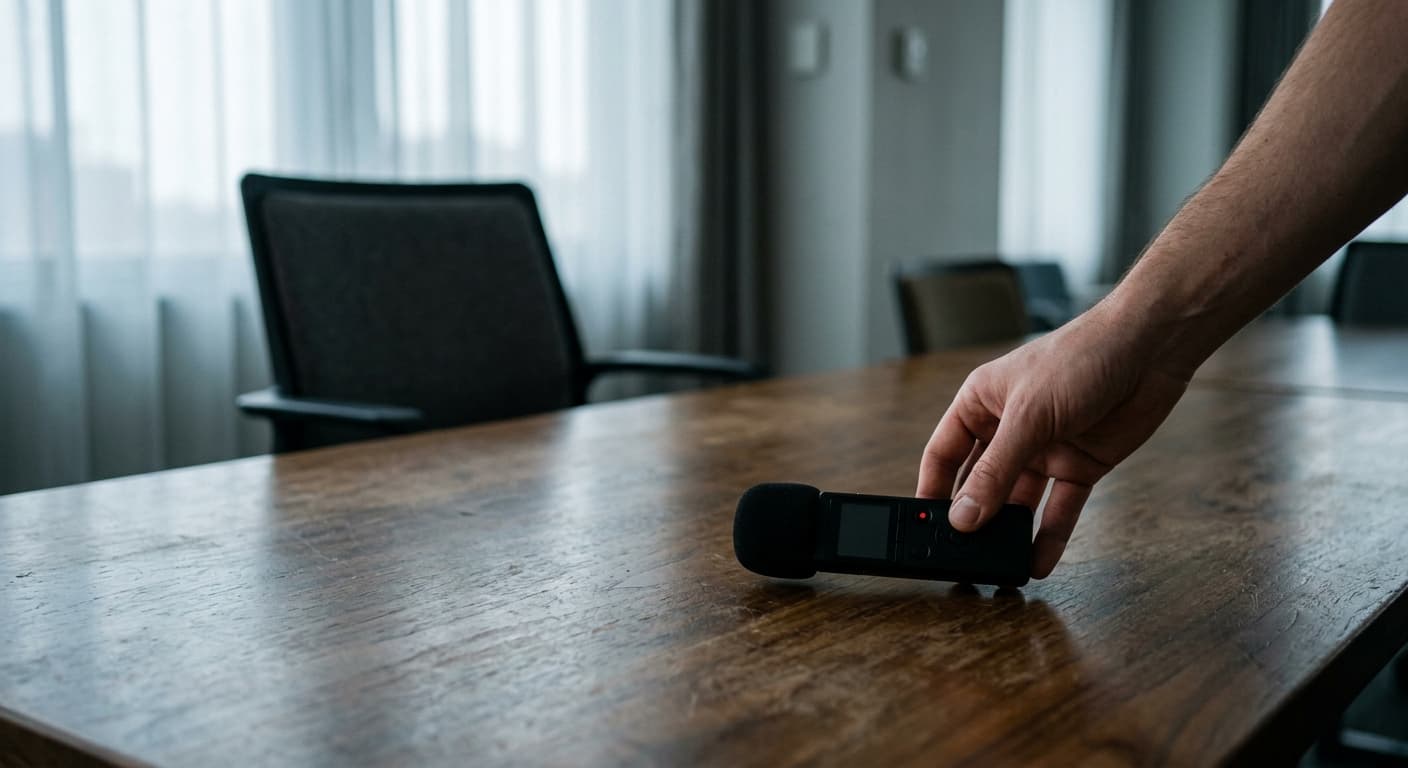
Wyoming is a one-party consent state under Wyo. Stat. 7-3-702(b)(iv). Any party to a wire, oral, or electronic communication may record it without telling the other participants, unless the recording is made to commit a criminal or tortious act. Illegal interception is a felony carrying up to 5 years imprisonment, and civil liability runs at least $1,000 per day of violation.
Wyoming recording law at a glance
| Question | Answer |
|---|---|
| Consent rule | One-party consent |
| Main statute | Wyo. Stat. 7-3-702(b)(iv) |
| When recording is illegal | Recording a conversation you are not a party to, or recording to commit a crime or tort |
| Criminal penalty | Felony: up to 5 years and $1,000 fine; misdemeanor tier (6 months, $750) for radio portions of cellular/cordless/paging |
| Civil penalty | Actual damages, floor $1,000 per day of violation, plus punitive damages and attorney fees |
| Hidden cameras | Felony (up to 5 years, $5,000) when a recording device is used in a place of expected privacy; 10-year tier when victim is a minor |
| Recording police | Clearly established First Amendment right as of May 26, 2019 (Irizarry v. Yehia, 10th Cir. 2022) |
For in-depth analysis of each topic, see the Wyoming recording laws in depth section below.
Recording in-person conversations in Wyoming
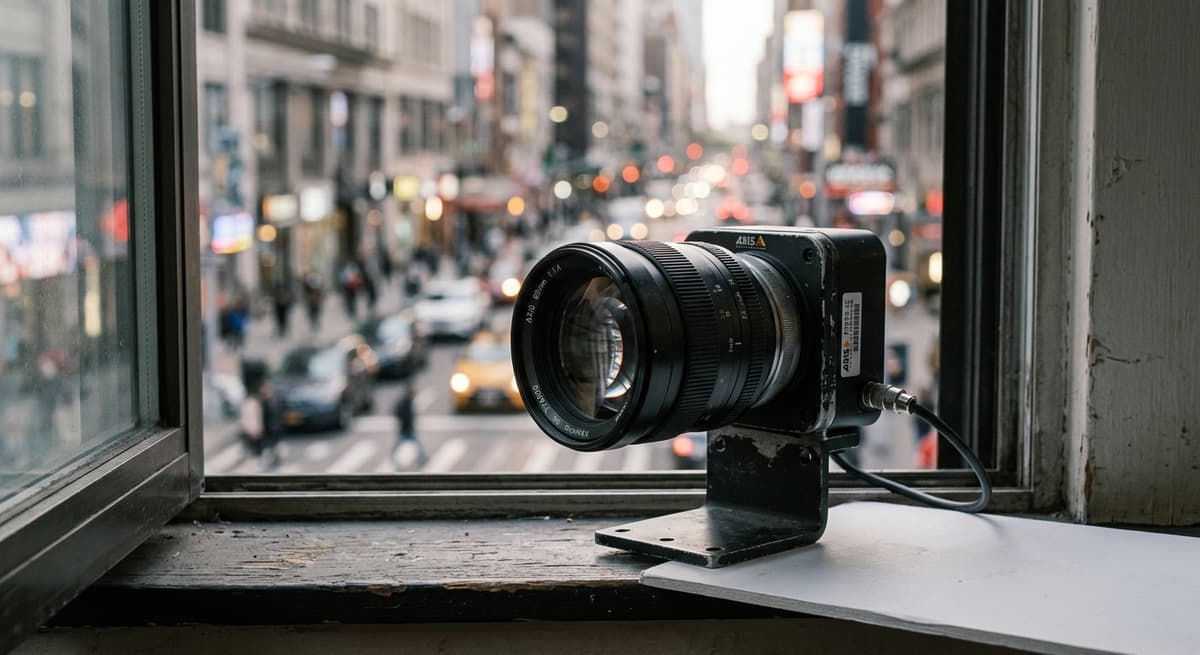
Wyoming's wiretap statute at Wyo. Stat. 7-3-702(a) prohibits intentionally intercepting, or attempting to intercept, any wire, oral, or electronic communication. The one-party consent exception at subsection (b)(iv) carves out any person who is a party to the communication, or who has the prior consent of at least one party, as long as the recording is not made for the purpose of committing any criminal or tortious act.
The "criminal or tortious purpose" proviso matters in practice. Recording a coworker to document harassment for an HR complaint is not a criminal or tortious act, so the defense applies. Recording the same coworker to extort them strips the defense entirely.
One important clarification: the one-party consent exception lives at section 7-3-702(b)(iv). Some outdated guides cite section 7-3-704 as the source. That is wrong. Section 7-3-704 is the device seizure-and-forfeiture procedure, not a consent provision.
Wyoming's structure tracks federal 18 U.S.C. 2511(2)(d) almost verbatim, and the Wyoming Supreme Court held in Almada v. State, 994 P.2d 299 (Wyo. 1999) that one-party consent is a complete defense to a wiretap charge, including in body-wire scenarios. The court also held that using a body-worn device with one party's consent does not violate Article I, Section 4 of the Wyoming Constitution.
Recording phone calls in Wyoming
The same one-party rule applies to phone calls, including landline, cellular, and VoIP. Wyoming Wyo. Stat. 7-3-702(b)(iv) covers "wire, oral, or electronic" communications without distinction, so a participant in the call may record it without notifying anyone else.
One wrinkle: Wyo. Stat. 7-3-702(f) creates a reduced misdemeanor tier (6 months, $750) specifically for unlawful interception of the radio portion of cellular telephone, cordless telephone, public land mobile radio service, or paging service communications. That reduced tier does not benefit a participant who lawfully records under (b)(iv); it reduces penalties for third-party interception of those legacy radio signals.
For interstate calls, Wyoming's one-party default does not override a stricter co-participant state. The most relevant border-state hazard is Montana, which prohibits recording by a hidden device without notice to all parties under Mont. Code Ann. 45-8-213. Wyoming's other five border states (Colorado, Idaho, Nebraska, South Dakota, Utah) are all one-party jurisdictions, so Montana is the principal cross-border concern. The conservative rule: if any participant is in a stricter state, comply with the stricter rule.
See also the Wyoming phone call recording laws sub-page.
Hidden cameras, doorbells, and nanny cams
Wyoming's voyeurism statute at Wyo. Stat. 6-4-304 creates three penalty tiers:
- Eye-only voyeurism (subsection a): Misdemeanor, up to 6 months and $750. Covers restrooms, baths, showers, dressing rooms, bedrooms, and under-clothing observation anywhere.
- Camera voyeurism (subsection b): Felony, up to 5 years and $5,000. Applies when the offense is committed by knowingly or intentionally capturing an image with a camera, video camera, or other image recording device, including livestreaming.
- Adult perpetrator, minor victim (subsection d): Felony, up to 10 years and $5,000, where the perpetrator is 18 or older and the victim is under 18.
The Wyoming Supreme Court interpreted the camera-felony tier in Kobielusz v. State, 2024 WY 10, No. S-23-0020 (Wyo. Jan. 24, 2024). Defendant installed hidden camera-equipped alarm clocks in restrooms and bedrooms in his home. The court held that the "looking" element in subsection (b)(i) is satisfied by the act of knowingly or intentionally capturing an image. The state does not have to prove the defendant ever viewed the stored footage. An automated camera on a memory card or in cloud storage triggers the felony tier even if the footage is never reviewed.
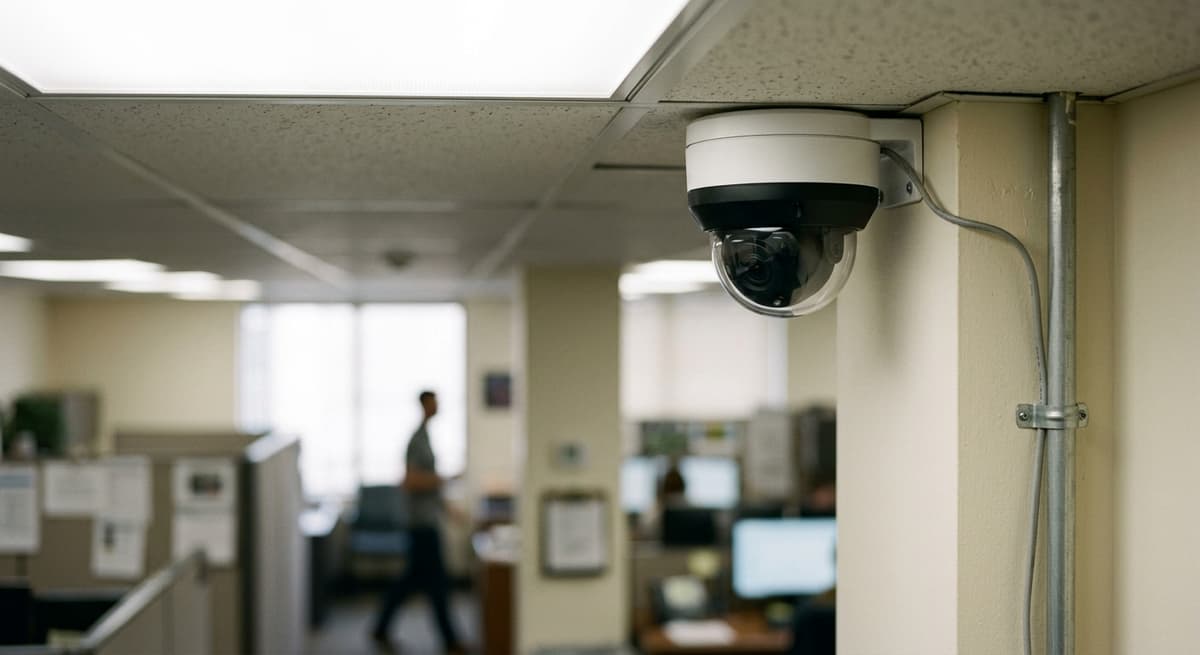
For audio: a camera that also records conversations may separately implicate Wyo. Stat. 7-3-702 if no participant has consented. A nanny cam in the common areas of your own home is generally lawful; a hidden camera in a guest bathroom or bedroom is a felony. A Ring doorbell at your own front door is generally lawful (the homeowner is a party to conversations at the door), and the FTC's 2023 settlement with Ring required affirmative express consent for any human review of footage.
See the Wyoming voyeurism laws and Wyoming security camera laws sub-pages for deeper coverage.
Penalties for illegal recording in Wyoming
Criminal penalties
Illegal interception under Wyo. Stat. 7-3-702(f) is a felony punishable by up to 5 years imprisonment and a fine of not more than $1,000, or both. The $1,000 felony fine cap is one of the lowest in the U.S. recording-law landscape. Wyoming weights the punishment toward the prison term, not the financial penalty.
A reduced misdemeanor tier (up to 6 months and $750) applies only when the intercepted communication is the radio portion of a cellular telephone, a cordless telephone (between handset and base), a public land mobile radio service, or a paging service.
Disclosing or using the contents of an illegally intercepted communication is a separate felony under Wyo. Stat. 7-3-702(a)(iii) and (iv), independent of the interception itself. Someone who knowingly redistributes an illegally recorded conversation faces the same felony exposure as the person who intercepted it. The U.S. Supreme Court narrowed that exposure for an innocent third party in Bartnicki v. Vopper, 532 U.S. 514 (2001): publishing the contents of an illegally intercepted communication is protected by the First Amendment when the publisher played no role in the interception, lawfully obtained the material, and the content is a truthful matter of public concern.
Wyoming has no general criminal statute of limitations. Felonies and misdemeanors may be prosecuted at any time after commission, making Wyoming one of only two U.S. states without a general criminal limitations period.
Civil damages
Wyo. Stat. 7-3-710(a) provides:
- Actual damages, but not less than $1,000 per day for each day of violation
- Punitive damages
- Reasonable attorney fees and other litigation costs
The $1,000/day figure is a floor. A plaintiff who can prove actual damages above that amount recovers the higher figure. A plaintiff who cannot quantify actual damages still recovers $1,000 for each day the violation continued. Compare federal statutory damages at 18 U.S.C. 2520(c)(2): the greater of $100 per day or $10,000. Wyoming's per-day rate is ten times the federal per-day rate, but the federal $10,000 alternative is the larger number until a violation has run for ten days.
Good-faith reliance on a court order is a complete defense to both civil and criminal liability under Wyo. Stat. 7-3-710(b).
| Criminal | Civil | |
|---|---|---|
| Standard penalty | Felony: up to 5 years, $1,000 fine | $1,000/day floor + punitives + fees |
| Radio-portion tier | Misdemeanor: 6 months, $750 | Same civil exposure |
| Statute of limitations | None (no general criminal SOL) | Ambiguous: 1-year conservative filing |
Note on civil limitations: Wyo. Stat. 1-3-105 contains three potentially applicable subsections (8-year for liability created by statute, 4-year for injury to rights, 1-year for penalty or forfeiture). Wyoming case law has not resolved which applies to section 7-3-710 actions. The conservative practice is to file within one year of discovery.
Recording the police in Wyoming
Wyoming sits in the U.S. Court of Appeals for the Tenth Circuit. Two Tenth Circuit decisions define the right to record police.
Frasier v. Evans, 992 F.3d 1003 (10th Cir. 2021) reversed a denial of qualified immunity for Denver officers who detained a man filming an arrest in August 2014. The Tenth Circuit held that, as of August 2014, the right to record police in public was not clearly established within the circuit, and officer training alone does not satisfy that standard.
Irizarry v. Yehia, 38 F.4th 1282 (10th Cir. 2022) course-corrected. A YouTube journalist filming a traffic stop in Lakewood, Colorado on May 26, 2019 had a clearly established First Amendment right to do so. The court relied on the persuasive weight of six sister circuits and reversed a qualified-immunity dismissal. For Wyoming events on or after May 26, 2019, officers who retaliate against peaceful recorders face qualified-immunity denial under Irizarry. Frasier still governs events before that date.
On the criminal side, a Wyoming citizen recording on-duty police in public is not committing wiretap interception under section 7-3-702. Officers performing public duties typically have no reasonable expectation of privacy in what they say on duty, and a participating bystander who speaks with an officer is a party to the communication under (b)(iv). Recording police is not, on its own, a Wyoming criminal offense.
See the Wyoming laws on recording police sub-page.
Special topics in Wyoming
Nonconsensual intimate imagery and deepfakes
Wyo. Stat. 6-4-306 criminalizes disseminating an intimate image of another person without consent, with a harassment or sexual-gratification intent element. The current offense is a misdemeanor carrying up to 1 year and $5,000. Wyoming has not elevated real-image NCII to a felony.
HB 0102 of the 2026 Budget Session (Enrolled Act 32), signed by Governor Mark Gordon, created a package of five new sections that took effect July 1, 2026. Wyo. Stat. 6-4-307 makes knowing distribution of nonconsensual synthetic sexual material a felony carrying up to 10 years and $10,000 for a first offense, and up to 12 years for a repeat offense. Wyo. Stat. 6-4-308 makes knowingly developing or distributing an AI system specifically designed to create child pornography a felony (up to 10 years, $10,000). Wyo. Stat. 6-1-206 declares that use of an AI system is not a defense to a criminal charge. Wyo. Stat. 1-1-143 provides civil immunity for AI developers unless the system's primary purpose is illegal activity. Wyo. Stat. 6-4-701 criminalizes knowing development or distribution of an AI system specifically designed to promote self-harm. The same act also amended Wyo. Stat. 6-4-303 to bring AI-generated child sexual abuse material within the existing child-exploitation offenses.
The resulting structure is unusual: synthetic NCII is a felony starting July 1, 2026, while real-image NCII of the same victim remains a misdemeanor under section 6-4-306.
Federal TAKE IT DOWN Act
The federal TAKE IT DOWN Act, Pub. L. 119-12, signed May 19, 2025, fills part of this gap. It criminalizes knowing publication of nonconsensual intimate visual depictions, including AI-generated deepfakes, with penalties up to 2 years for adult victims and 3 years where a minor is depicted. The platform notice-and-removal obligation (48-hour takedown) became mandatory May 19, 2026. Wyoming victims can invoke federal TAKE IT DOWN Act protections alongside section 6-4-306 now and section 6-4-307 on and after July 1, 2026.
Recording at work and the NLRB
Wyoming's one-party rule extends to the workplace. An employee who is a party to an HR or supervisor meeting may record it without notice, provided the recording is not for an unlawful purpose. Wyoming is a right-to-work state under Wyo. Stat. 27-7-108, but NLRA jurisdiction over Wyoming private-sector employers is unaffected.
Under NLRB Stericycle, Inc., 372 NLRB No. 113 (Aug. 2, 2023), broad blanket no-recording handbook rules are presumptively unlawful unless narrowly tailored to a substantial business interest. NLRB GC 25-05 (Feb. 14, 2025) was a housekeeping rescission of prior enforcement-priority guidance, not a reinstatement of the prior Boeing standard. Stericycle remains controlling. Separately, NLRB GC 25-07 (June 25, 2025) declares surreptitious recording of formal collective-bargaining sessions a per se duty-to-bargain violation; that narrow rule does not apply to general workplace recording.
See the Wyoming workplace recording laws sub-page.
Body cameras and public records
Wyoming has no dedicated body-worn-camera operations statute. The only statutory framework for public access to peace-officer recordings is the Wyoming Public Records Act exception at Wyo. Stat. 16-4-203(d)(xviii). That provision defines "peace officer recording" and splits access into one mandatory circumstance and four discretionary ones. Under subparagraph (A) the custodian shall allow inspection by law enforcement personnel or public agencies for the purpose of conducting official business or pursuant to a court order. Under subparagraph (B) the custodian may allow inspection by the person in interest, where the information involves an incident of deadly force or serious bodily injury, in response to a complaint against law enforcement personnel where the custodian determines inspection is not contrary to the public interest, or in the interest of public safety. Deployment is voluntary and local.
Federal ECPA overlay
18 U.S.C. 2511(2)(d) provides the federal one-party-consent floor, tracking Wyoming's (b)(iv) text almost verbatim. For calls with automated or prerecorded voice, FCC Declaratory Ruling 24-17 (Feb. 2024) confirmed that AI-generated voice calls require prior express consent under the TCPA. The FCC's former beep-tone notice rule at 47 C.F.R. 64.501 was removed effective November 20, 2017 and is no longer in force.
Recent legal developments
- January 24, 2024: Kobielusz v. State, 2024 WY 10, confirmed the camera-felony tier of section 6-4-304(b)(i) is satisfied by the act of capturing an image, without proof of later viewing.
- July 11, 2022: Irizarry v. Yehia, 38 F.4th 1282 (10th Cir.), established a clearly established First Amendment right to film police in public as of May 26, 2019.
- May 19, 2025: Federal TAKE IT DOWN Act signed; platform notice-and-removal compliance became mandatory May 19, 2026.
- 2026 Budget Session (in effect since July 1, 2026): HB 0102 / Enrolled Act 32 (House) creates Wyoming's synthetic-NCII felony (Wyo. Stat. 6-4-307), AI-system-for-CSAM felony (6-4-308), AI-is-not-a-defense provision (6-1-206), AI-developer civil immunity (1-1-143), and self-harm AI system offense (6-4-701).
Wyoming recording laws in depth
The sub-pages below cover specific Wyoming recording contexts in greater depth.
By type of recording
- Wyoming Audio Recording Laws: One-Party Consent Guide
- Wyoming Video Recording Laws: Privacy Rules and Consent
- Wyoming Phone Call Recording Laws: Rules and Consent Guide
- Wyoming Dashcam Laws: Legality, Mounting, and Evidence Rules
- Wyoming Voyeurism Laws: Hidden Cameras and Privacy Violations
- Wyoming Security Camera Laws: Rules for Homes and Businesses
By place or relationship
- Wyoming Workplace Recording Laws: Employee and Employer Rights
- Wyoming Laws on Recording Police: Your Rights and Limits
- Wyoming Laws on Recording in Public: What You Can and Cannot Do
- Wyoming Landlord-Tenant Recording Laws: Rights and Rules
- Wyoming Medical Recording Laws: Patient Rights and HIPAA Guide
- Wyoming School Recording Laws: Security, Parents, and Students
More Wyoming laws
- Wyoming AI Meeting Recording Laws
- Wyoming At-Will Employment Laws
- Wyoming Data Privacy Laws
- Wyoming Divorce Laws
- Wyoming Expungement Laws
This article is general legal information, not legal advice. Recording laws change and apply differently to each situation. For advice about your situation, consult a licensed Wyoming attorney.
More Wyoming Laws
Frequently Asked Questions
Is Wyoming a one-party or two-party consent state?
Wyoming is a one-party consent state. Under Wyo. Stat. 7-3-702(b)(iv), a participant in a conversation may record it without notifying anyone else, as long as the recording is not made for the purpose of committing a criminal or tortious act. The one-party exception lives at (b)(iv), not at section 7-3-704, which is the device seizure-and-forfeiture procedure.
Can I record a phone call in Wyoming?
Yes, if you are a party to the call. Wyoming Wyo. Stat. 7-3-702(b)(iv) covers wire, oral, and electronic communications without distinction. For interstate calls, comply with the stricter rule if the other party is in an all-party state. The principal border-state hazard is Montana, which requires notice of recording under Mont. Code Ann. 45-8-213.
Is illegal recording a felony in Wyoming?
Yes. Unlawful interception under Wyo. Stat. 7-3-702(f) is a felony carrying up to 5 years imprisonment and a fine capped at $1,000. A reduced misdemeanor tier (6 months, $750) applies only to the radio portion of cellular, cordless, public land mobile radio, or paging service communications. Wyoming has no general criminal statute of limitations, so prosecutions can be brought years after the offense.
What can I sue for if someone illegally recorded me in Wyoming?
Under Wyo. Stat. 7-3-710(a), you can recover actual damages with a floor of $1,000 per day of violation, plus punitive damages and reasonable attorney fees. That daily rate is ten times the federal ECPA per-day rate of $100, though federal statutory damages under 18 U.S.C. 2520(c)(2) are the greater of $100 per day or $10,000, so the federal figure is larger for any violation shorter than ten days. Good-faith reliance on a court order is a complete defense. File within one year of discovery to preserve all theories under the ambiguous Wyo. Stat. 1-3-105 limitations framework.
Are Ring doorbells and nanny cams legal in Wyoming?
A Ring doorbell at your own front door is generally lawful; the homeowner is a party to conversations at the door under section 7-3-702(b)(iv). Hidden cameras in places where occupants reasonably expect privacy (bathrooms, bedrooms, dressing areas) trigger the Wyo. Stat. 6-4-304(b) camera-felony tier. Kobielusz v. State, 2024 WY 10, held that simply capturing footage is enough for the felony, even if you never view it.
Can I record my boss or an HR meeting in Wyoming?
Yes, as a participant under Wyo. Stat. 7-3-702(b)(iv) and federal 18 U.S.C. 2511(2)(d). Employer no-recording handbook rules are presumptively unlawful under NLRB Stericycle, Inc., 372 NLRB No. 113 (2023), unless narrowly tailored to a substantial business interest. NLRB GC 25-05 (2025) was a housekeeping rescission that did not overrule Stericycle. NLRB GC 25-07 separately bars surreptitious recording of formal collective-bargaining sessions.
Can I record the police in Wyoming?
Yes. Irizarry v. Yehia, 38 F.4th 1282 (10th Cir. 2022), clearly established the First Amendment right to film on-duty police in public as of May 26, 2019, binding Wyoming courts and officers. The right is subject to reasonable time, place, and manner restrictions and requires that the recorder not physically interfere with the officer. Frasier v. Evans, 992 F.3d 1003 (10th Cir. 2021), still governs events before May 26, 2019 on a qualified-immunity theory.
Does Wyoming have a deepfake law?
Partially. HB 0102 of the 2026 Budget Session (Enrolled Act 32, House), signed by Governor Mark Gordon and effective July 1, 2026, creates Wyo. Stat. 6-4-307 (synthetic-NCII felony, up to 10 years and $10,000 for a first offense) and Wyo. Stat. 6-4-308 (AI-system-for-CSAM felony, up to 10 years and $10,000). Real-image NCII under Wyo. Stat. 6-4-306 remains a misdemeanor (up to 1 year and $5,000). The federal TAKE IT DOWN Act fills the federal-felony gap for real-image NCII.
Updates
Clarified that federal ECPA statutory damages are the greater of $100 per day or $10,000 (so the federal figure exceeds Wyoming’s $1,000-per-day accrual for violations under ten days), and corrected the description of Wyo. Stat. 16-4-203(d)(xviii) to distinguish the one mandatory inspection circumstance from the four discretionary ones.
Independently fact-checked against the cited primary sources; governing law re-checked for recent changes
Governing law re-checked for recent changes
Governing law re-checked for recent changes
Reviewed and approved by an editor
Restructured for readability: condensed the 10,000-word hub into tight core sections (at-a-glance table, in-person, phone, hidden cameras, penalties, police, special topics), grouped special topics (NCII/deepfakes, workplace/NLRB, body cameras, federal overlay) into short subsections, added the in-depth sub-page index with By-type and By-place groupings, refreshed FAQSection to 8 Qs. All statutes, cases, and penalties re-verified against primary sources (wyoleg.gov, wyocourts.gov, ca10.uscourts.gov, rcfp.org). No fact corrections required; key facts confirmed: one-party consent at 7-3-702(b)(iv), felony up to 5 years/$1,000 fine cap, civil floor $1,000/day, voyeurism camera felony 5 years/$5,000, Kobielusz 2024 WY 10, Irizarry 38 F.4th 1282 (10th Cir. 2022), HB 0102 Enrolled Act 32 effective July 1 2026.
Refresh: Corrected Wyo. Stat. 7-3-710 civil damages formula to the verbatim statutory floor of $1,000 per day for each day of violation, plus punitive damages, plus reasonable attorney's fees and litigation costs reasonably incurred. Stripped the inherited baseline phantom of a federal-ECPA-style 'greater of $100/day or $1,000' construction; the verbatim Wyoming text has no $100/day alternative and no lump-sum floor. Surfaced the Wyo. Stat. 7-3-702(f) felony penalty as up to 5 years imprisonment and a $1,000 fine cap (one of the lowest felony fine caps in U.S. recording law), with the reduced misdemeanor tier of 6 months and $750 reserved for the radio portion of cellular, cordless, public land mobile radio, or paging service communications. Corrected the placement of the one-party-consent exception: section 7-3-702(b)(iv), not section 7-3-704 (which is the device seizure-and-forfeiture procedure). Added Kobielusz v. State, 2024 WY 10, No. S-23-0020 (Wyo. Jan. 24, 2024), as the recent on-point Wyoming Supreme Court decision interpreting the camera-felony tier of section 6-4-304(b)(i); the act of knowingly or intentionally capturing an image satisfies the 'looking' element without proof of later viewing. Walked the three-tier voyeurism penalty structure (eye-only misdemeanor 6 months and $750; camera or livestreaming felony 5 years and $5,000; adult perpetrator with minor victim felony 10 years and $5,000). Added the section 6-4-304(b)(i) livestreaming enumeration. Paired Frasier v. Evans, 992 F.3d 1003 (10th Cir. 2021), and Irizarry v. Yehia, 38 F.4th 1282 (10th Cir. 2022), as the doctrinal progression on the First Amendment right to film on-duty police; Irizarry is a Tenth Circuit case, not Eleventh, and clearly established the right as of May 26, 2019 based on the persuasive weight of six sister circuits. Added Almada v. State, 994 P.2d 299 (Wyo. 1999), as the Wyoming Supreme Court anchor for one-party consent as a complete defense to a section 7-3-702 charge and a Wyoming-constitutional search-and-seizure objection in body-wire scenarios. Added HB 0102 of the 2026 Budget Session (Enrolled Act 32), signed by Governor Mark Gordon and effective July 1, 2026, creating sections 6-4-307 (synthetic NCII felony 10/12 years and $10,000), 6-4-308 (AI-system-for-CSAM felony 10 years and $10,000), 6-1-206 (use of an AI system is not a defense), 1-1-143 (AI developer civil immunity unless system's primary purpose is illegal activity), and 6-4-701 (AI self-harm and political-speech offenses). Stripped the baseline-named HB 113, HB 213, and HB 137 as enacted vehicles; SF 0051 of 2024 died in the House and Wyoming has no election-deepfake disclosure law. Reframed Wyoming's body-camera framework: no dedicated operations or deployment statute; only Wyo. Stat. 16-4-203(d)(xviii) public-records exception governs public access; sections 7-2-105 and 9-1-209 are not body-camera provisions. Reframed Wyoming's criminal-side limitations posture: no general criminal statute of limitations; Wyoming is one of only two U.S. states (with South Carolina) where felonies and misdemeanors are prosecutable at any time; Wyo. Stat. 6-1-107 is not a general criminal limitations statute. Honestly disclosed the ambiguity of the civil statute of limitations under section 1-3-105 as applied to section 7-3-710 actions (8-year, 4-year, and 1-year subsections all plausibly apply; no Wyoming case law resolves) and recommended the conservative one-year defensive filing. Added the Montana border-state hazard (Mont. Code Ann. 45-8-213 all-party consent) as a distinctive recordinglaw frame for Wyoming residents phoning into Montana. Reframed NLRB GC 25-05 (Feb. 14, 2025) as a housekeeping rescission of prior General Counsel enforcement-priority memoranda issued by Acting General Counsel William B. Cowen; GC 25-05 did NOT reinstate Boeing and did NOT overrule Stericycle, which remains controlling Board work-rule law. Added GC 25-07 (June 25, 2025) as a narrow per se rule against surreptitious recording of formal collective-bargaining sessions. Updated the federal overlay: ECPA at 18 U.S.C. 2511(2)(d) and 2520; DOJ Justice Manual section 9-7.302; FCC Declaratory Ruling 24-17 (AI voice in robocalls, in force); Insurance Marketing Coalition Ltd. v. FCC, No. 24-10277 (11th Cir. Jan. 24, 2025; mandate Apr. 30, 2025), vacating the FCC 23-107 / 24-24 one-to-one consent rule nationally; 47 C.F.R. 64.501 removed effective Nov. 20, 2017; federal TAKE IT DOWN Act, Pub. L. 119-12, signed May 19, 2025, with covered-platform 48-hour notice-and-removal compliance mandatory May 19, 2026 (five days from this refresh date). Replaced commercial-codifier URLs with wyoleg.gov, wyocourts.gov, ag.wyo.gov, psc.wyo.gov, ca10.uscourts.gov, media.ca11.uscourts.gov, uscode.house.gov, justice.gov, congress.gov, docs.fcc.gov, federalregister.gov, ecfr.gov, nlrb.gov, ftc.gov, and leg.mt.gov primaries. Populated 24 secondary keywords to the Supabase secondary_keywords column (previously eight).
Refresh: Corrected Wyo. Stat. 7-3-710 civil damages formula to the verbatim statutory floor of $1,000 per day for each day of violation, plus punitive damages, plus reasonable attorney's fees and litigation costs reasonably incurred. Stripped the inherited baseline phantom of a federal-ECPA-style 'greater of $100/day or $1,000' construction; the verbatim Wyoming text has no $100/day alternative and no lump-sum floor. Surfaced the Wyo. Stat. 7-3-702(f) felony penalty as up to 5 years imprisonment and a $1,000 fine cap (one of the lowest felony fine caps in U.S. recording law), with the reduced misdemeanor tier of 6 months and $750 reserved for the radio portion of cellular, cordless, public land mobile radio, or paging service communications. Corrected the placement of the one-party-consent exception: section 7-3-702(b)(iv), not section 7-3-704. Added Kobielusz v. State, 2024 WY 10; Frasier v. Evans and Irizarry v. Yehia; Almada v. State. Added HB 0102 Enrolled Act 32 AI package (sections 6-4-307, 6-4-308, 6-1-206, 1-1-143, 6-4-701, effective July 1 2026). Reframed body-camera framework (no dedicated statute; only 16-4-203(d)(xviii)). Added Montana border-state hazard. Added NLRB GC 25-05 housekeeping clarification and GC 25-07 bargaining-session per se rule. Updated federal overlay including TAKE IT DOWN Act Pub. L. 119-12.
Added wearable recording devices section and related FAQs
The Law Behind This Article
This article rests on the statutory provisions below, held in our own legal record and retrieved from the official source. Tap a section to read the operative text.
Wyoming Statutes, Title 7 - Criminal Procedure - Chapter 3: Fugitives and Prevention of Crime - Article 7: Communication Interception
§ 7-3-702Prohibition against interception or disclosure of wire, oral or electronic communications; exceptions; penalties.In forcecited in 18 of our articles
(a) Except as provided in subsection (b) of this section, no person shall intentionally: (i) Intercept, attempt to intercept, or procure any other person to intercept or attempt to intercept any wire, oral or electronic communication; (ii) Use, attempt to use, or procure any other person to use or attempt to use any electronic, mechanical or other device to intercept any oral communication when: (A) Such device is affixed to, or otherwise transmits a signal through, a wire, cable or other like connection used in wire communication; or (B) Such device transmits communications by radio or interferes with the transmission of such communication.
Official text (excerpt) · last checked 2026-08-31 · Read the full text in our law library · Verify at wyoleg.gov
Cited in 1 court opinions in our collectionLatest citing opinion in our collection: 2015
Opinions citing this section in our collection:
- Serna v. Bureau of Land Management Worland Field Office (Court of Appeals for the Tenth Circuit 2015, 614 F. App'x 384)“…nic communications except under certain circumstances. See Wyo. Stat. Ann. § 7-3-702(a). As relevant here, the statute cont…”
Identified automatically from the court opinions citing this section — not a ranking of which case controls.
Also relied on in: Wyoming Audio Recording Laws: One-Party Consent Guide, Wyoming Phone Call Recording Laws: Rules and Consent Guide, Wyoming Smart Glasses Recording Laws 2025
United States Code Title 18
§ 2511Interception and disclosure of wire, oral, or electronic communications prohibitedIn forcecited in 422 of our articles
Except as otherwise specifically provided in this chapter any person who— intentionally intercepts, endeavors to intercept, or procures any other person to intercept or endeavor to intercept, any wire, oral, or electronic communication; intentionally uses, endeavors to use, or procures any other person to use or endeavor to use any electronic, mechanical, or other device to intercept any oral communication when— such device is affixed to, or otherwise transmits a signal through, a wire, cable, or other like connection used in wire communication; or such device transmits communications by radio, or interferes with the transmission of such communication; or such person knows, or has reason to know, that such device or any component thereof has been sent through the mail or transported in interstate or foreign commerce; or such use or endeavor to use (A) takes place on the premises of any business or other commercial establishment the operations of which affect interstate or foreign commerce; or (B) obtains or is for the purpose of obtaining information relating to the operations of any business or other commercial establishment the operations of which affect interstate or foreign…
Official text (excerpt) · last checked 2026-08-28 · Read the full text in our law library · Verify at uscode.house.gov
Cited in 2,045 court opinions in our collectionLatest citing opinion in our collection: 2026
In the courts (editorial summary, independently checked):Griggs-Ryan v. Smith (1990) applied the Section 2511(2)(d) prior-consent exception, treating a tenant repeatedly told that all incoming calls were taped as having impliedly consented. United States v. United States District Court (1972) read the then-current Section 2511(3) as conferring no presidential surveillance power.
Opinions citing this section in our collection:
- Mitchell v. Forsyth (Supreme Court of the United States 1985, 472 U.S. 511)✓The Attorney General authorized a warrantless 1970 national security wiretap that caught the plaintiff's calls; the Court held the since-repealed Section 2511(3) disclaimer left the tap lawful under Title III, and that Mitchell had qualified immunity.
- United States v. United States District Court for the Eastern District of Michigan (Supreme Court of the United States 1972, 407 U.S. 297)✓The Attorney General approved warrantless wiretaps on members of a domestic group accused of bombing a CIA office; the Court read Section 2511(3) as a congressional disclaimer conferring no surveillance power, then held the Fourth Amendment required prior judicial approval.
- Forsyth v. Barr (Court of Appeals for the Fifth Circuit 1994, 19 F.3d 1527)✓Dallas police used, in an internal affairs probe of an officer, calls private parties allegedly intercepted illegally; assuming that was unlawful, the Fifth Circuit held Section 2517(1) and (2) allowed the disclosure and use, defeating the Section 2511(1)(c) and (d) claims.
Identified automatically from the court opinions citing this section — not a ranking of which case controls.
Also relied on in: Connecticut Recording Laws (2026): Hybrid Consent Rules Explained, Oregon Recording Laws (2026): Hybrid One-Party and All-Party Rules, US Recording Laws by State (2026): All 50 States Explained
§ 2520Recovery of civil damages authorizedIn forcecited in 115 of our articles
Except as provided in section 2511(2)(a)(ii), any person whose wire, oral, or electronic communication is intercepted, disclosed, or intentionally used in violation of this chapter may in a civil action recover from the person or entity, other than the United States, which engaged in that violation such relief as may be appropriate. In an action under this section, appropriate relief includes— such preliminary and other equitable or declaratory relief as may be appropriate; damages under subsection (c) and punitive damages in appropriate cases; and a reasonable attorney’s fee and other litigation costs reasonably incurred.
Official text (excerpt) · last checked 2026-07-28 · Read the full text in our law library · Verify at uscode.house.gov
Cited in 860 court opinions in our collectionLatest citing opinion in our collection: 2026
In the courts (editorial summary, independently checked):Walker v. Darby (1990) held a 2520 plaintiff need not prove the contents of intercepted conversations, only interception and a justified expectation against it. Bartnicki v. Vopper (2001) barred 2520 damages against defendants who took no part in the interception, obtained the tape lawfully, and disclosed a matter of public concern.
Opinions citing this section in our collection:
- Jessie Walker v. Thomas E. Darby, Hugh L. Robinson, Jr., and Kenneth Day (Court of Appeals for the Eleventh Circuit 1990, 911 F.2d 1573)✓A postal letter carrier said three supervisors wired an intercom near his workstation to listen in. Reversing summary judgment, the Eleventh Circuit held a section 2520 plaintiff can show interception without proving the contents of specific conversations.
- Gelbard v. United States (Supreme Court of the United States 1972, 408 U.S. 41)“…disclosure, or use is entitled to recover civil damages, 18 U. S. C. § 2520 . Title III also bars the use as eviden…”
- DirecTV, Inc. v. Hoa Huynh (Court of Appeals for the Ninth Circuit 2007, 503 F.3d 847)“…7 U.S.C. § 605 (e)(4), or alternatively, for violations of 18 U.S.C. § 2520 (a), or alternatively, for violations o…”
Identified automatically from the court opinions citing this section — not a ranking of which case controls.
Also relied on in: Alabama Audio Recording Laws: Consent Rules and Penalties, Alabama Phone Call Recording Laws: What You Need to Know, Alaska Phone Call Recording Laws: Rules for Landline, Cell, and VoIP (2026)
Montana Code Annotated, Title 45
§ 45-8-213Privacy In CommunicationsIn forcecited in 23 of our articles
45-8-213. Privacy in communications. (1) Except as provided in 69-6-104, a person commits the offense of violating privacy in communications if the person knowingly or purposely: (a) with the purpose to terrify, intimidate, threaten, harass, or injure, communicates with a person by electronic communication and threatens to inflict injury or physical harm to the person or property of the person or makes repeated use of obscene, lewd, or profane language or repeated lewd or lascivious suggestions; (b) uses an electronic communication to attempt to extort money or any other thing of value from a person or to disturb by repeated communications the peace, quiet, or right of privacy of a person at the place where the communications are received; (c) records or causes to be recorded a conversation by use of a hidden electronic or mechanical device that reproduces a human conversation without the knowledge of all parties to the conversation; (d) with the purpose to terrify, intimidate, threaten, harass, or injure or to obtain money or other valuable consideration, publishes, distributes, or discloses real or digitally fabricated printed or electronic photographs, pictures, images, or…
Official text (excerpt) · last checked 2026-08-31 · Read the full text in our law library · Verify at mca.legmt.gov
Cited in 23 court opinions in our collectionLatest citing opinion in our collection: 2025
In the courts (editorial summary, independently checked):State v. Dugan (2013) struck the statute's prima facie intent clause as overbroad. State v. Brown (1988) noted the statute still bars recording without all participants' permission and rejected an overbreadth attack on its public-official exception. State v. DuBray (2003) found no violation where the defendant knew of the recording.
Opinions citing this section in our collection:
- State v. Smith (Montana Supreme Court 2004, 322 Mont. 206)✓A man who phoned threats to kill his estranged wife's boyfriend argued he should have been charged under section 45-8-213(1)(a) instead of assault with a weapon. The court held the two statutes punish different conduct, so the charge was within prosecutorial discretion.
- State v. Dugan (Montana Supreme Court 2013, 369 Mont. 39)“…rbroad, the Court today strikes the prima facie language in § 45-8-213, MCA. However, a narrow application would be…”
- In re C.S. (Montana Supreme Court 1984, 210 Mont. 144)“…n of privacy in communication, a misdemeanor as provided in Section 45-8-213, MCA. The facts underlying the offense were…”
Identified automatically from the court opinions citing this section — not a ranking of which case controls.
Also relied on in: Montana Recording Laws (2026): Announcement Exception and Penalties, Montana Video Recording Laws: Consent Rules, Surveillance, and Penalties (2026), Montana Smart Glasses Recording Laws (MCA 45-8-213)
Search our full record of US law — 2.1 million sections, every state + federal →
Sources and References
- wyoleg.gov.gov
- wyoleg.gov.gov
- wyoleg.gov.gov
- wyocourts.gov.gov
- wyoleg.gov.gov
- courtlistener.com.gov
- courtlistener.com.gov
- wyoleg.gov.gov
- wyoleg.gov.gov
- nlrb.gov.gov
- nlrb.gov.gov
- nlrb.gov.gov
- mca.legmt.gov.gov
- uscode.house.gov.gov
- uscode.house.gov.gov
- congress.gov.gov
- docs.fcc.gov.gov
- ftc.gov.gov