DC Medical Recording Laws: Patient Rights, HIPAA, and One-Party Consent (2026)
Independently fact-checked against primary sources (last audited August 15, 2026). · Reviewed by the RecordingLaw editorial team. · Law checked current as of August 15, 2026. · 6 primary sources cited on this page. How we verify our legal content

In the District of Columbia, patients may record their own medical appointments without informing providers under D.C. Code Section 23-542, the one-party consent law. HIPAA (45 CFR Part 164) restricts how covered entities handle recordings, not how patients capture their own visits.
The District of Columbia's one-party consent law gives patients broad rights to record medical appointments. Under D.C. Code Section 23-542, any party to a conversation can record it without informing other participants. For patients, this means you can capture your doctor's instructions, diagnoses, and treatment plans without asking permission.
D.C.'s concentration of medical facilities, including major hospital systems, the National Institutes of Health, and Walter Reed National Military Medical Center, makes understanding medical recording rights especially important for District residents.
Can Patients Record Medical Appointments in DC?
One-Party Consent in Medical Settings
Yes. As a patient attending your own appointment, you are a party to the conversation. Your consent alone is sufficient under D.C. law. You do not need to inform your doctor, nurse, or any staff that you are recording.
This right covers all types of medical appointments: primary care, specialist consultations, emergency room visits, dental appointments, mental health sessions, and rehabilitation visits.
Why Patients Record Medical Visits
Research from the National Institutes of Health shows patients forget 40 to 80 percent of information from medical appointments. Recording helps patients:
- Review complex treatment plans and medication instructions
- Share accurate information with family members and caregivers
- Maintain informed consent records
- Track evolving diagnoses
- Document interactions for potential malpractice concerns
- Reduce follow-up care errors
Practical Considerations
Even though D.C. law permits recording without notification:
- Facility policies: Many D.C. healthcare facilities have recording policies. Violating a policy is not criminal but could affect the patient-provider relationship.
- Provider comfort: Some providers communicate more thoroughly when they know they are being recorded. Transparency can improve care quality.
- Recording quality: Place your device where it captures clear audio. A smartphone on the exam table works well.
HIPAA and Medical Recording in DC
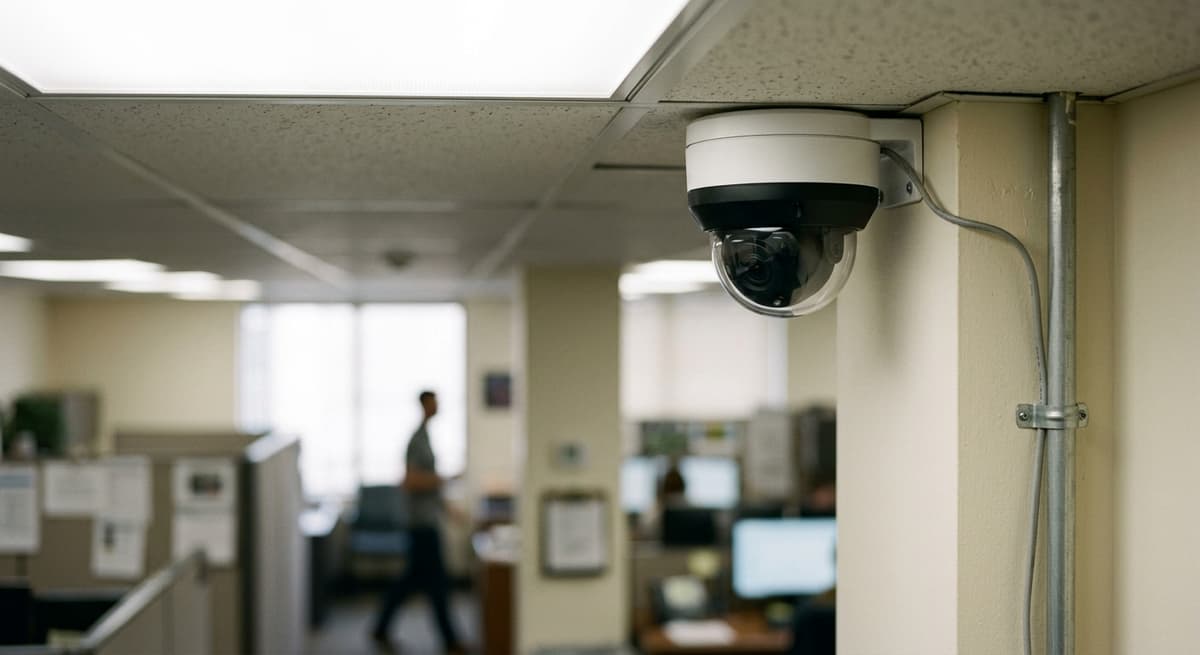
What HIPAA Does and Does Not Prohibit
HIPAA governs how covered entities handle protected health information (PHI). The Privacy Rule at 45 CFR Part 164 applies to providers, health plans, and clearinghouses.
Key principles:
- HIPAA does not prohibit patients from recording. It restricts covered entities, not patients.
- Providers cannot cite HIPAA to prevent recording. This is a common misconception.
- Provider-initiated recordings become PHI subject to HIPAA storage and security requirements.
- Patients have a right of access to recordings the provider maintains.
Provider Recording of Patients
When a D.C. healthcare provider records a patient:
- Written authorization is required under 45 CFR Section 164.508
- The recording enters the medical record
- HIPAA Security Rule governs storage and access
- The facility's Notice of Privacy Practices must address recording
Facility Recording Policies
Many D.C. healthcare facilities maintain recording policies that may require disclosure, restrict recording in certain areas, or prohibit recording in shared patient spaces. These policies do not override D.C. state law but may affect your relationship with the facility.
Telehealth Recording in DC

One-Party Consent for Telehealth
Telehealth visits are subject to the same one-party consent rules. Either party can record without notification. The D.C. Department of Health supports telehealth access for District residents.
Platform Recording Features
Many telehealth platforms include recording features. Either party can activate them under D.C. law. Verify that the platform stores recordings in a HIPAA-compliant manner and review terms of service regarding data retention.
Screen Recording
Patients can use screen recording software to capture telehealth visits. This is legal without provider notification under one-party consent.
Recording in DC Hospitals and Clinics

Emergency Rooms
Recording in D.C. emergency rooms is legal under one-party consent. Focus on your own treatment interactions and avoid capturing other patients' medical conversations.
Mental Health Settings
While D.C. law permits recording therapy sessions, therapists may request that sessions not be recorded. The therapeutic relationship depends on trust. Consider discussing recording with your therapist and exploring alternatives like session notes.
Walter Reed and Federal Facilities
Federal healthcare facilities in D.C. (such as Walter Reed National Military Medical Center and VA hospitals) may have additional recording restrictions under federal regulations. Military and VA patients should check facility-specific policies.
Medical Research Recording
Research involving human subjects must comply with 45 CFR Part 46. D.C. hosts extensive medical research through NIH, Georgetown University Medical Center, George Washington University Hospital, and other institutions. Research recording requires IRB approval and informed consent disclosure.
Patients can record their own interactions with research staff under one-party consent, though research consent documents may address recording.
Using Medical Recordings as Evidence
Malpractice Claims
D.C. medical malpractice cases can benefit from appointment recordings. Recordings capturing provider statements about diagnosis, treatment, and risks establish what was communicated. Under one-party consent, these recordings are admissible in D.C. Superior Court.
Insurance Disputes
Recordings documenting a provider's recommendation help counter insurer denials of medical necessity.
Admissibility
For a recording to be admissible in D.C. courts:
- Lawfully made (one-party consent satisfied)
- Authentic and unaltered
- Relevant to the case
- Proper chain of custody maintained
Penalties for Illegal Medical Recording
Criminal Penalties
| Offense | Max Prison | Max Fine |
|---|---|---|
| Illegal interception (D.C. Code Section 23-542) | 5 years | $12,500 |
| Illegal disclosure | 5 years | $12,500 |
Civil Liability
Under D.C. Code Section 23-554(a)(2), the civil-damages provision:
- The greater of actual damages, or statutory damages of $100 per day, or a $1,000 floor;
- Punitive damages;
- Attorney fees and costs.
Subsection 23-554(c) separately confirms the District of Columbia itself is a person subject to suit, so victims may sue government-affiliated healthcare facilities (DC Health, Howard University Hospital, federal facilities) directly. A good-faith reliance on a court order is a defense for the recording party.
HIPAA Penalties for Providers
The HHS Office for Civil Rights enforces HIPAA violations:
HIPAA civil penalties are inflation-adjusted annually under 45 CFR Part 102. As of the 2025 adjustment: Tier 1 runs $145 to $73,011 per violation, Tier 2 $1,461 to $73,011, Tier 3 $14,602 to $73,011, and Tier 4 $73,011 to $2,190,294, with a calendar-year cap of $2,190,294 per provision violated.
Best Practices
For Patients
- You have the legal right to record medical appointments in D.C.
- Consider informing your provider as a courtesy
- Store recordings securely for personal medical use
- Preserve originals without editing if needed as evidence
- Bring a family member for additional support during complex appointments
For Healthcare Providers
- Patients have a legal right to record under one-party consent
- Do not cite HIPAA to prohibit patient recording
- Develop a clear recording policy for your practice
- Obtain written HIPAA authorization before provider-initiated recording
- Communicate clearly, knowing patients may record
Explore More DC Recording Laws
Audio Recording | Video Recording | Voyeurism Laws | Workplace Recording | Recording Police | Phone Call Recording | Security Cameras | Recording in Public | Landlord-Tenant Recording | Dashcam Laws | School Recording | Medical Recording
More District of Columbia Recording Topics
More District of Columbia Laws
Frequently Asked Questions
Can I record my doctor in DC without telling them?
Yes. D.C.'s one-party consent law (D.C. Code Section 23-542) allows you to record any conversation you participate in. As the patient at your own appointment, you can record without informing your provider.
Does HIPAA prevent me from recording my medical visit in DC?
No. HIPAA restricts how healthcare providers handle protected health information, not how patients use their own data. Providers cannot cite HIPAA to prevent you from recording.
Can a DC hospital ban recording?
A hospital can have internal policies restricting recording. Violating the policy is not criminal, but it could affect your status as a patient. The policy does not override your legal right under D.C. law.
Can I record a telehealth visit in DC?
Yes. Telehealth visits are subject to the same one-party consent rules. You can record without informing the provider.
What are the penalties for illegal medical recording in DC?
Illegally intercepting a medical conversation you are not part of carries up to 5 years in prison and a $12,500 fine. Victims can also sue for civil damages of at least $100 per day or $1,000, plus punitive damages and attorney fees.
Updates
Updated the HIPAA civil penalty figures to the current inflation-adjusted amounts under 45 CFR Part 102 and corrected the D.C. civil-damages citation to 23-554(a)(2).
Independently fact-checked against the cited primary sources; governing law re-checked for recent changes
Governing law re-checked for recent changes
Reviewed and approved by an editor
The Law Behind This Article
This article rests on the statutory provisions below, held in our own legal record and retrieved from the official source. Tap a section to read the operative text.
Code of the District of Columbia, Title 23: Criminal Procedure. - Chapter 5: Warrants and Arrests. - Subchapter III: Wire Interception and Interception of Oral Communications.
§ 23-542Interception, disclosure, and use of wire or oral communications prohibited.In forcecited in 22 of our articles
(a) Except as otherwise specifically provided in this subchapter, any person who in the District of Columbia — (1) willfully intercepts, endeavors to intercept, or procures any other person to intercept or endeavor to intercept any wire or oral communication; (2) willfully discloses or endeavors to disclose to any other person the contents of any wire or oral communication, or evidence derived therefrom, knowing or having reason to know that the information was obtained through the interception of a wire or oral communication; or (3) willfully uses or endeavors to use the contents of any wire or oral communication, or evidence derived therefrom, knowing or having reason to know, that the information was obtained through the interception of a wire or oral communication; shall be fined not more than the amount set forth in [§ 22-3571.01] or imprisoned not more than five years, or both; except that paragraphs (2) and (3) of this subsection shall not apply to the contents of any wire or oral communication, or evidence derived therefrom, that has become common knowledge or public information.
Official text (excerpt) · last checked 2026-08-31 · Read the full text in our law library · Verify at github.com
Cited in 16 court opinions in our collectionLatest citing opinion in our collection: 2024
In the courts (editorial summary, independently checked):District of Columbia courts have construed the one-party consent provision of D.C. Code 23-542(b)(2). United States v. Sell (1985) held the consent must be voluntary, the government meeting its burden by showing the party cooperated knowing what officers were doing. Thomas v. United States (2017) applied it to an interstate call.
Opinions citing this section in our collection:
- United States v. Sell (District of Columbia Court of Appeals 1985, 487 A.2d 225)✓Police recorded a woman's calls with an officer she accused of coercing sex acts. Construing the one-party consent provision for the first time, the court held the government need only show she cooperated knowing what police were doing, and reversed the suppression order.
- David Thomas v. United States (District of Columbia Court of Appeals 2017)“…s. & .lud. Proc. § 10- 402 [c)(.'£)(ii) (West 2015). Under D.C. Code § 23-542." the legislature has clearly defined w…”
- Thomas v. United States (District of Columbia Court of Appeals 2017, 171 A.3d 151)✓Police in the District recorded a call between a voyeurism victim and the defendant, who was in Maryland and did not consent. The court held this section governs admissibility in District courts and does not incorporate Maryland's two-party rule, so suppression was denied.
Identified automatically from the court opinions citing this section — not a ranking of which case controls.
Also relied on in: District of Columbia Recording Laws (2026): One-Party Consent Rules, One-Party Consent States: Complete 2026 Guide, District of Columbia Laws on Recording Police: Your Rights and Limits
§ 23-554Authorization for recovery of civil damages.In forcecited in 14 of our articles
(a) Any person whose wire or oral communication is intercepted, disclosed, or used in violation of this subchapter shall — (1) have a civil cause of action against any person who intercepts, discloses, or uses, or procures any other person to intercept, disclose, or use, such communications; and (2) be entitled to recover from any such person — (A) actual damages, but not less than liquidated damages computed at the rate of $100 a day for each day of violation, or $1,000 whichever is higher; (B) punitive damages; and (C) a reasonable attorney’s fee and other litigation costs reasonably incurred. (b) Good faith reliance on a court order or legislative authorization shall constitute a complete defense to an action brought under this section or any other law. (c) As used in this section, the term “person” includes the District of Columbia. The District of Columbia shall not assert any governmental immunity to avoid liability under this section. Judgment against the District of Columbia shall not constitute a bar to action against any other person.
Official text (excerpt) · last checked 2026-07-30 · Read the full text in our law library · Verify at github.com
Cited in 3 court opinions in our collectionLatest citing opinion in our collection: 2022
Opinions citing this section in our collection:
- Democracy Partners, LLC v. Project Veritas Action Fund (District Court, District of Columbia 2020)“…each day of violation, or $1,000, whichever is higher. See D.C. Code § 23-554(a)(2)(A). Both statutes also allow for…”
- Council on American-Islamic Relations Action Network, Inc. v. Gaubatz (District Court, District of Columbia 2022)“…oral or wire communication.” D.C. Code § 23-542(a)(2)-(3); D.C. Code § 23-554(a)(1) (authorizing civil action for re…”
Identified automatically from the court opinions citing this section — not a ranking of which case controls.
Also relied on in: District of Columbia Audio Recording Laws: Complete Legal Guide, DC Dashcam Laws: Recording Rules, Windshield Mounting, and Legal Limits (2026), DC Landlord-Tenant Recording Laws: Cameras, Privacy Rights, and Disputes (2026)
Search our full record of US law — 2.1 million sections, every state + federal →
Sources and References
- D.C. Code Section 23-542 - Interception of Communications(code.dccouncil.gov).gov
- D.C. Code Section 23-554 - Civil Liability(code.dccouncil.gov).gov
- HIPAA Privacy Rule - 45 CFR Part 164(ecfr.gov).gov
- D.C. Department of Health(dchealth.dc.gov).gov
- HHS Office for Civil Rights(hhs.gov).gov
- National Institutes of Health(nih.gov).gov