
Washington
Washington Laws on Recording Police: Your Rights and Legal Limits (2026)
Independently fact-checked against primary sources (last audited August 22, 2026). · Reviewed by the RecordingLaw editorial team. · Law checked current as of August 22, 2026. · 7 primary sources cited on this page. How we verify our legal content
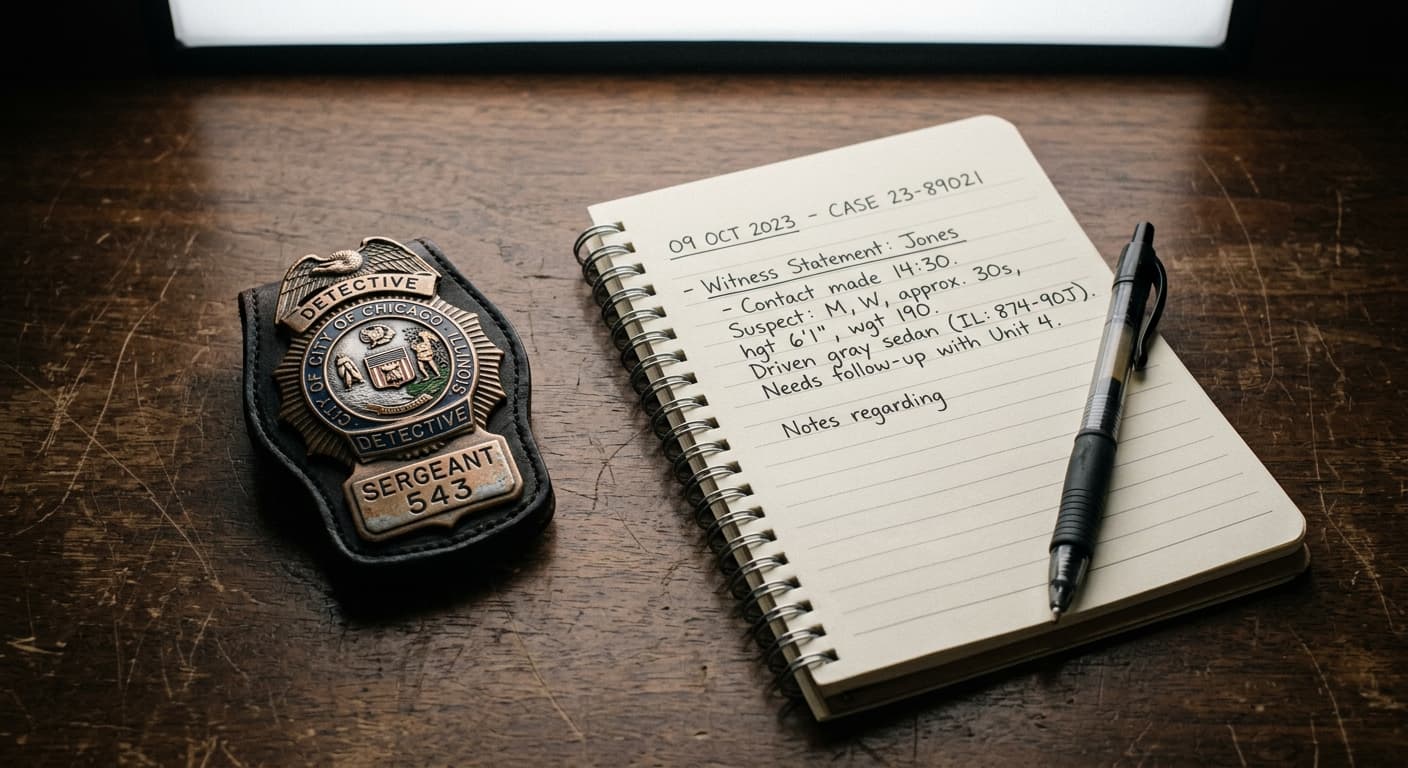
Washington residents have a First Amendment right to record police officers performing their duties in public. On-duty officers have a reduced expectation of privacy, and RCW 9.73.090 creates specific recording authorities for uniformed officers. Officers cannot lawfully order you to stop recording or demand that you delete footage.
Recording police officers during public encounters is a protected right in Washington. The First Amendment to the United States Constitution protects the right of individuals to document law enforcement activities in public spaces. At the same time, Washington law provides specific recording authorities to law enforcement under RCW 9.73.090, creating a two-way framework where both citizens and officers have defined recording rights and responsibilities.
Understanding these rules helps both citizens and law enforcement operate within the law. For citizens, knowing your rights prevents unnecessary confrontation. For officers, understanding the public's recording rights reduces the risk of constitutional violations.
Your Right to Record Police in Washington
The Constitutional Foundation
The right to record law enforcement officers performing their public duties is grounded in the First Amendment to the United States Constitution. Multiple federal circuits have recognized this right. The Ninth Circuit -- which covers Washington -- did so in Fordyce v. City of Seattle, 55 F.3d 436 (9th Cir. 1995), a case that arose from a Seattle protest march. Fordyce is the foundational Ninth Circuit precedent on this issue and carries special weight in Washington courts as a case decided on Washington facts. The U.S. Department of Justice has also affirmed the right in guidance documents and court filings.
Key principles:
- Public duty, public accountability: Police officers performing their duties in public have a reduced expectation of privacy regarding those activities.
- Documentation as protected speech: Recording government officials in the performance of their duties is a form of expression and newsgathering protected by the First Amendment.
- No prior restraint: Officers cannot prevent recording before it occurs based on a general concern about interference.
What You Can Record
You have the right to record:
- Traffic stops involving your own vehicle or others
- Arrests occurring in public view
- Protests and demonstrations where police are present
- Police interactions with members of the public on streets, sidewalks, and other public spaces
- Public meetings where law enforcement is present
- Any police activity visible from a location where you have a legal right to be
What Officers Cannot Do
Law enforcement officers in Washington cannot lawfully:
- Order you to stop recording unless you are physically interfering with their duties
- Demand that you delete photos, video, or audio recordings
- Seize your recording device without a warrant, except in very narrow exigent circumstances
- Arrest you solely for recording their activities
- Retaliate against you for exercising your recording rights
Your Responsibilities While Recording
While you have the right to record, you must follow certain rules:
- Do not physically interfere with police operations. Maintain a safe distance that allows officers to perform their duties.
- Do not obstruct police activities. Under RCW 9A.76.020, obstructing a law enforcement officer is a gross misdemeanor.
- Follow lawful orders to move back if you are too close to an active scene, as long as the order is related to safety or operational needs and not designed solely to prevent recording.
- Do not trespass on private property to get a better recording angle.
Law Enforcement Recording Authority Under RCW 9.73.090
Overview
While Washington's two-party consent law generally requires consent from all parties to record a private communication, RCW 9.73.090 carves out specific exceptions for law enforcement activities.
Emergency Call Recording
Under RCW 9.73.090(1), incoming telephone calls to police and fire stations and similar facilities may be recorded without the caller's consent. This exception ensures that 911 calls and other emergency communications are preserved as evidence and for quality review.
Recording Arrested Persons
RCW 9.73.090(1) also allows officers responsible for making arrests or holding persons in custody to record those individuals without their consent. This includes:
- Statements made during arrest
- Booking conversations
- Communications in holding facilities
Dashboard and Body Camera Recording
One of the most significant provisions of RCW 9.73.090(1)(c) addresses body camera and dashboard camera recordings by law enforcement officers. Under this provision:
- Sound recordings may be made by a uniformed law enforcement officer equipped with a body camera or dashboard camera system
- The recording must be part of a video recording system that has been activated for a specific event
- Officers cannot intentionally turn off the audio recording during an active event
- The video recording system must be capable of recording audio and video simultaneously
Important Limitations on Police Recording
The law enforcement recording exceptions are not unlimited:
- Officers conducting undercover investigations do not have a blanket exception. Undercover recordings generally require a court order.
- The body camera exception applies to uniformed officers equipped with the recording system. It does not extend to plainclothes officers.
- Officers must comply with their department's body camera policies, which may impose additional requirements beyond the statute.
Custodial Interrogation Recording Requirements
The Uniform Electronic Recordation Act (RCW 10.122)
Washington adopted the Uniform Electronic Recordation of Custodial Interrogations Act, codified at RCW 10.122. This law requires law enforcement to electronically record custodial interrogations in certain cases.
When Recording Is Required
Electronic recording is required for custodial interrogations involving:
- Juvenile suspects of any crime
- Adult suspects of felony offenses
The recording must capture the entire interrogation, including any Miranda warnings given and the suspect's responses.
Notice Requirements
Officers must inform the individual that the interrogation is being recorded. However, the individual's consent is not required. The statute overrides the normal two-party consent requirement of RCW 9.73.030 for these specific situations.
Consequences of Failing to Record
If law enforcement fails to record a custodial interrogation as required:
- The court must consider the failure when evaluating the admissibility of any statement made during the interrogation
- The court may instruct the jury regarding the failure to record
- A statement obtained during an unrecorded interrogation may be suppressed or given reduced weight
Body Camera Policies in Washington
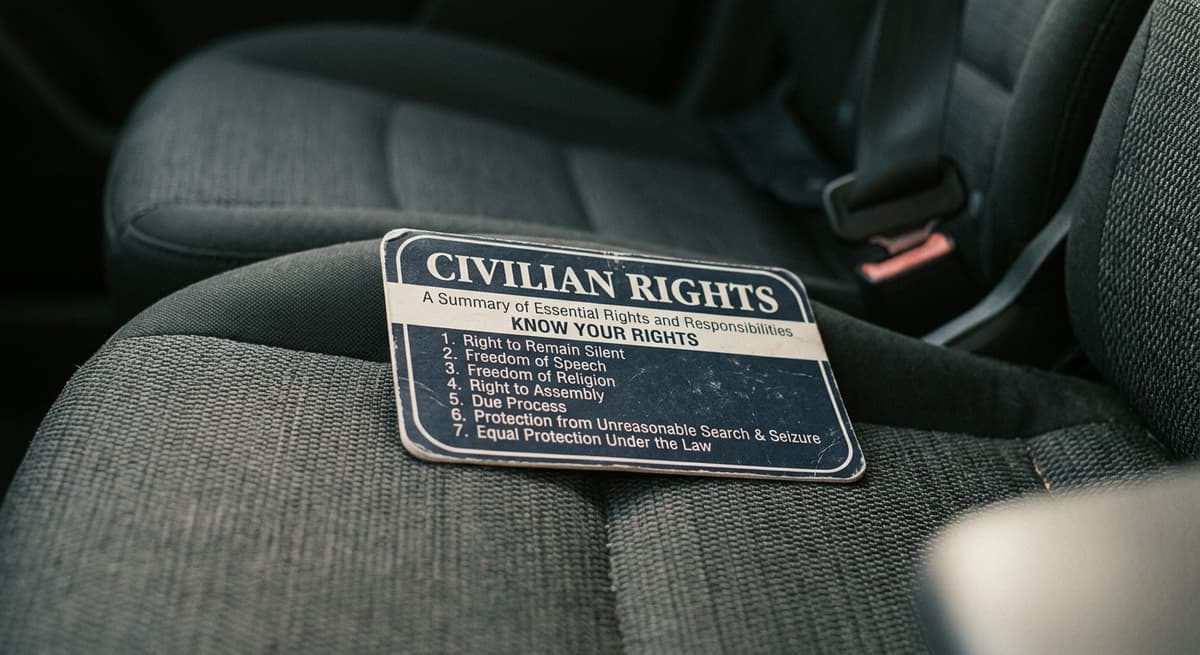
Statewide Framework
Washington does not have a single statewide body camera mandate, but the legislature has established a framework for agencies that choose to use them. Key statutory provisions include:
- RCW 9.73.090: Authorizes audio recording by uniformed officers with body cameras
- RCW 42.56.240: Addresses public records requests for body camera footage
- RCW 10.109: Provides guidelines for law enforcement use of body cameras
When Officers Must Activate Cameras
Department policies typically require officers to activate body cameras during:
- Traffic stops
- Arrests and detentions
- Use-of-force incidents
- Searches of persons or property
- Responses to calls for service
- Interactions with the public during law enforcement activities
When Officers May Deactivate Cameras
Officers may deactivate cameras in limited situations:
- When speaking with confidential informants
- During conversations with undercover officers
- In situations where recording would compromise a sensitive investigation
- At the request of a crime victim, in some circumstances
Prohibition on Intentional Deactivation During Events
Under RCW 9.73.090, officers cannot intentionally turn off audio recording during an active event. This provision was designed to prevent officers from selectively recording only portions of an encounter.
Public Records and Body Camera Footage
Public Records Act
Body camera footage is subject to Washington's Public Records Act (RCW 42.56). Members of the public may request body camera footage through a public records request.
Exemptions and Redactions
Certain portions of body camera footage may be exempt from disclosure or require redaction:
- Faces of witnesses and bystanders may be redacted to protect privacy
- Footage inside private residences may be partially exempt
- Recordings involving minors may be withheld or redacted
- Ongoing investigation footage may be temporarily withheld
- Footage capturing intimate images is exempt from disclosure
Response Timeline
Under the Public Records Act, agencies must respond to records requests within five business days, though the actual production of footage may take longer depending on the volume of material and required redactions.
Recording Police During Protests
Protected Activity
Recording police during protests and public demonstrations is constitutionally protected activity. Washington has a strong tradition of protecting protest rights, and courts have consistently held that documenting police conduct at protests serves important democratic accountability functions.
Practical Tips for Recording at Protests
- Stay on public property: Record from sidewalks, public parks, or other areas where you have a legal right to be.
- Maintain distance: Stay far enough from police lines that you cannot be accused of interference.
- Be visible: Open, visible recording is less likely to provoke confrontation than concealed recording.
- Back up footage: Use cloud storage or streaming to preserve footage in case your device is seized.
- Know the obstruction law: RCW 9A.76.020 makes it a gross misdemeanor to obstruct a law enforcement officer. Recording alone is not obstruction, but physically blocking an officer while recording could be.
Recording at Open Public Meetings
Washington's Open Public Meetings Act does not contain a statute that expressly grants a right to record. Instead, a 1998 opinion from the Washington Attorney General (AGO 1998 No. 15) concluded that a person may audio- or video-record an open public meeting as long as the recording does not disrupt the proceedings. RCW 42.30.040 reinforces this by barring a governing body from conditioning attendance at a meeting on registering, completing a questionnaire, or fulfilling any other precondition -- a rule the Attorney General's guidance treats as prohibiting a blanket no-recording condition on attendance. Members of the public attending a city council session, county commission hearing, school board meeting, or other open public meeting may generally audio- or video-record the proceedings with a stationary device that does not disrupt the meeting. The governing body may impose reasonable restrictions tied to preventing disruption -- such as requiring that equipment not obstruct the view of other attendees -- but it cannot prohibit recording outright.
Because the meeting is open to the public, participants have no reasonable expectation of privacy. Washington's all-party consent requirement under RCW 9.73.030 does not apply to recording official government proceedings at open public meetings.
For executive sessions and closed meetings, recording rights do not apply.
What to Do If Police Interfere with Your Recording
During the Encounter
If a police officer attempts to stop you from recording:
- Stay calm and respectful
- State clearly: "I am exercising my First Amendment right to record in a public space."
- Do not physically resist if an officer attempts to take your device. Verbal objection is sufficient.
- Note the officer's name and badge number if possible
- Note the time, date, and location of the encounter
- Ask for the legal basis of any order to stop recording
After the Encounter
If your recording rights were violated:
- File a complaint with the officer's department or the city's civilian oversight board
- Contact the ACLU of Washington (aclu-wa.org) for legal assistance
- Consult an attorney about potential civil rights claims under 42 U.S.C. Section 1983
- Preserve all evidence, including any footage you managed to retain
Penalties for Interfering with Police
Under RCW 9A.76.020, obstructing a law enforcement officer is a gross misdemeanor, punishable by up to 364 days in jail and a $5,000 fine. This statute applies when a person willfully hinders, delays, or obstructs any law enforcement officer in the discharge of their official duties.
However, simply recording an officer's actions from a reasonable distance is not obstruction. The recording must actually interfere with the officer's ability to perform their duties.
More Washington Recording Laws
Audio Recording | Video Recording | Voyeurism & Hidden Cameras | Workplace Recording | Recording Police | Phone Call Recording | Security Cameras | Recording in Public | Landlord-Tenant | Dashcam Laws | Schools | Medical Recording
Back to Washington Recording Laws
More Washington Recording Topics
More Washington Laws
Frequently Asked Questions
Can I record police officers in Washington?
Yes. The First Amendment protects your right to record police officers performing their duties in public. You may record from any location where you have a legal right to be, as long as you do not physically interfere with police operations. Officers cannot order you to stop recording, delete your footage, or seize your device without a warrant.
Do police officers have to wear body cameras in Washington?
Washington does not have a universal body camera mandate for all officers. However, RCW 9.73.090 authorizes uniformed officers equipped with body camera systems to record audio and video during events. Individual departments set their own body camera policies. When a body camera is activated during an event, officers cannot intentionally turn off the audio recording.
Can police record me without my consent in Washington?
In specific situations, yes. Under RCW 9.73.090, law enforcement can record emergency calls, arrested persons, and encounters captured by uniformed officers' body cameras and dashboard cameras without consent. Custodial interrogations for felonies and juvenile cases must also be recorded under RCW 10.122, and the suspect's consent is not required.
Can I request body camera footage from Washington police?
Yes. Body camera footage is subject to Washington's Public Records Act (RCW 42.56). You can submit a public records request to the relevant law enforcement agency. Some portions of footage may be redacted or exempt from disclosure to protect witness privacy, ongoing investigations, or images of minors.
What happens if police delete my recording in Washington?
If a police officer deletes your recording or seizes your device without a warrant, you may have grounds for a civil rights complaint. You can file a complaint with the officer's department, contact the ACLU of Washington for legal assistance, or consult an attorney about a civil rights claim under 42 U.S.C. Section 1983. Preserving backup copies through cloud storage is recommended.
Updates
Independently fact-checked against the cited primary sources; governing law re-checked for recent changes
Corrected the legal basis for the public's right to record open public meetings in Washington: RCW 42.30.040 bars conditioning meeting attendance on registration or similar preconditions but does not itself 'expressly' grant a recording right; that right rests on a 1998 Washington Attorney General opinion (AGO 1998 No. 15).
Governing law re-checked for recent changes
Reviewed and approved by an editor
The Law Behind This Article
This article rests on the statutory provisions below, held in our own legal record and retrieved from the official source. Tap a section to read the operative text.
Revised Code of Washington
§ 9.73.030Intercepting, recording, or divulging private communication—Consent required—Exceptions.In forcecited in 41 of our articles
(1) Except as otherwise provided in this chapter, it shall be unlawful for any individual, partnership, corporation, association, or the state of Washington, its agencies, and political subdivisions to intercept, or record any: (a) Private communication transmitted by telephone, telegraph, radio, or other device between two or more individuals between points within or without the state by any device electronic or otherwise designed to record and/or transmit said communication regardless how such device is powered or actuated, without first obtaining the consent of all the participants in the communication; (b) Private conversation, by any device electronic or otherwise designed to record or transmit such conversation regardless how the device is powered or actuated without first obtaining the consent of all the persons engaged in the conversation.
Official text (excerpt) · last checked 2026-08-31 · Read the full text in our law library · Verify at app.leg.wa.gov
Cited in 221 court opinions in our collectionLatest citing opinion in our collection: 2026
In the courts (editorial summary, independently checked):Washington courts have policed what counts as a private communication under Sec. 9.73.030: State v. Gunwall (1986) concluded a pen register intercept comes within a private communication transmitted by telephone, while State v. Riley (1993) held a line trap that reveals only the calling number does not record one.
Opinions citing this section in our collection:
- State v. Salinas (Washington Supreme Court 1992, 119 Wash. 2d 192)“…alties for divulging a telegram or opening a sealed letter. RCW 9.73.030-.070, making it unlawful to intercept,…”
- State v. Gunwall (Washington Supreme Court 1986, 106 Wash. 2d 54)✓Everett police pulled a suspected cocaine dealer's toll records and put a pen register on her line without valid legal process; the court held a pen register intercept is a private communication transmitted by telephone, installable only under the eavesdropping statutes.
- State v. Brown (Washington Supreme Court 1997, 132 Wash. 2d 529)✓Palm Springs officers secretly recorded a Washington murder suspect's statements after his arrest; the court treated RCW 9.73.090, not 9.73.030, as the provision reaching recordings of arrested persons, and held the Privacy Act did not require suppressing that recording.
Identified automatically from the court opinions citing this section — not a ranking of which case controls.
Also relied on in: US Recording Laws by State (2026): All 50 States Explained, Washington Recording Laws (2026): All-Party Consent Rules, Federal Wiretap Act and ECPA: The Complete Guide (2026)
§ 42.30.040Conditions to attendance not to be required.In force
A member of the public shall not be required, as a condition to attendance at a meeting of a governing body, to register his or her name and other information, to complete a questionnaire, or otherwise to fulfill any condition precedent to his or her attendance. This section does not prohibit any generally applicable conditions determined by the governing body to be reasonably necessary to protect the public health or safety, or to protect against interruption of the meeting, including a meeting at which the physical attendance by some or all members of the public is limited due to a declared emergency.
Official text (excerpt) · last checked 2026-07-29 · Read the full text in our law library · Verify at app.leg.wa.gov
Cited in 6 court opinions in our collectionLatest citing opinion in our collection: 2024
Opinions citing this section in our collection:
- Ago (Washington Attorney General Reports 1998)“…o the conclusion that such recording may not be prohibited. RCW 42.30.040 prohibits the imposition of conditions…”
- Loeffelholz v. Citizens for Leaders With Ethics & Accountability Now (Court of Appeals of Washington 2004, 119 Wash. App. 665)“…RCW 42.30.030. RCW 42.30.060(1). RCW 42.30.040. RCW 42.30.120(1); Wood, 107…”
- Donna Zink & Jeff Zink v. City of Mesa (Court of Appeals of Washington 2021, 17 Wash. App. 2d 701)“…ot be restricted to fulfilment of a “condition precedent.” RCW 42.30.040. The statute does not define what is me…”
Identified automatically from the court opinions citing this section — not a ranking of which case controls.
§ 42.56.240Investigative, law enforcement, and crime victims.In forcecited in 12 of our articles
The following investigative, law enforcement, and crime victim information is exempt from public inspection and copying under this chapter: (1) Specific intelligence information and specific investigative records compiled by investigative, law enforcement, and penology agencies, and state agencies vested with the responsibility to discipline members of any profession, the nondisclosure of which is essential to effective law enforcement or for the protection of any person's right to privacy; (2) Information revealing the identity of persons who are witnesses to or victims of crime or who file complaints with investigative, law enforcement, or penology agencies, other than the commission, if disclosure would endanger any person's life, physical safety, or property. If at the time a complaint is filed the complainant, victim, or witness indicates a desire for disclosure or nondisclosure, such desire shall govern.
Official text (excerpt) · last checked 2026-09-02 · Read the full text in our law library · Verify at app.leg.wa.gov
Cited in 81 court opinions in our collectionLatest citing opinion in our collection: 2025
In the courts (editorial summary, independently checked):Sargent v. Seattle Police Dept. (2013) held the effective law enforcement exemption in RCW 42.56.240(1) is not categorical once a case goes to a prosecutor, nor for internal investigation files; the agency must justify each withheld record. Bainbridge Island Police Guild v. City of Puyallup (2011) exempted only an officer's identity.
Opinions citing this section in our collection:
- Bainbridge Island Police Guild v. City of Puyallup (Washington Supreme Court 2011, 172 Wash. 2d 398)✓Police reports on an unsubstantiated sexual misconduct claim against an officer were withheld in full; the court held Section 42.56.240(1) exempts only the officer's identity, since its privacy analysis is the same, and ordered the rest produced with his name redacted.
- BAINBRIDGE POLICE GUILD v. City of Puyallup (Washington Supreme Court 2011, 259 P.3d 190)✓Police reports on an unsubstantiated sexual misconduct claim against an officer were withheld in full; the court held Section 42.56.240(1) exempts only the officer's identity, since its privacy analysis is the same, and ordered the rest produced with his name redacted.
- Sargent v. Seattle Police Dept. (Washington Supreme Court 2013, 179 Wash. 2d 376)✓Seattle police withheld criminal and internal affairs files from a man arrested after a scuffle with an off-duty officer; the court held Section 42.56.240(1) stops applying categorically once a case reaches a prosecutor and never applies categorically to internal investigations.
Identified automatically from the court opinions citing this section — not a ranking of which case controls.
Also relied on in: Washington Police Body Camera Laws: Mandate & Access, Washington Public Records Act: Requests, Fees, and Body Camera Video (2026), Are 911 Calls Public Records? State Access Guide (2026)
§ 9.73.090Certain emergency response personnel exempted from RCW 9.73.030 through 9.73.080—Standards—Court authorizations—Admissibility.In forcecited in 6 of our articles
(1) The provisions of RCW 9.73.030 through 9.73.080 shall not apply to police, fire, emergency medical service, emergency communication center, and poison center personnel in the following instances: (a) Recording incoming telephone calls to police and fire stations, licensed emergency medical service providers, emergency communication centers, and poison centers; (b) Video and/or sound recordings may be made of arrested persons by police officers responsible for making arrests or holding persons in custody before their first appearance in court.
Official text (excerpt) · last checked 2026-07-29 · Read the full text in our law library · Verify at app.leg.wa.gov
Cited in 99 court opinions in our collectionLatest citing opinion in our collection: 2025
Opinions citing this section in our collection:
- State v. Salinas (Washington Supreme Court 1992, 119 Wash. 2d 192)“…all participants in the communication, was passed in 1967. RCW 9.73.090 was enacted in 1970, and allowed police…”
- State v. Brown (Washington Supreme Court 1997, 132 Wash. 2d 529)“…133 Recording of Appellant’s Custodial Statements and RCW 9.73.090 (7) Whether Appellant’s statement…”
- State v. Wanrow (Washington Supreme Court 1977, 88 Wash. 2d 221)“…mergency telephone call, on the basis that RCW 9.73.050 and RCW 9.73.090 which authorize the recording of such a…”
Identified automatically from the court opinions citing this section — not a ranking of which case controls.
Also relied on in: Washington Audio Recording Laws: Two-Party Consent Rules and Penalties (2026), Washington Phone Call Recording Laws: Consent Rules and Exceptions (2026), Washington School Recording Laws: Students, Teachers, and Campus Rules (2026)
United States Code Title 42
§ 1983Civil action for deprivation of rightsIn forcecited in 50 of our articles
Every person who, under color of any statute, ordinance, regulation, custom, or usage, of any State or Territory or the District of Columbia, subjects, or causes to be subjected, any citizen of the United States or other person within the jurisdiction thereof to the deprivation of any rights, privileges, or immunities secured by the Constitution and laws, shall be liable to the party injured in an action at law, suit in equity, or other proper proceeding for redress, except that in any action brought against a judicial officer for an act or omission taken in such officer’s judicial capacity, injunctive relief shall not be granted unless a declaratory decree was violated or declaratory relief was unavailable. For the purposes of this section, any Act of Congress applicable exclusively to the District of Columbia shall be considered to be a statute of the District of Columbia.
Official text (excerpt) · last checked 2026-09-16 · Read the full text in our law library · Verify at uscode.house.gov
Cited in 282,365 court opinions in our collectionLatest citing opinion in our collection: 2026
Opinions citing this section in our collection:
- Ashcroft v. Iqbal (Supreme Court of the United States 2009, 556 U.S. 662)“…its brought against state officials under Rev. Stat. §1979, 42 U. S. C. §1983.” Hartman, 547 U. S., at 254, n. 2. Cf.…”
- Celotex Corp. v. Catrett, Administratrix of the Estate of Catrett (Supreme Court of the United States 1986, 477 U.S. 317)“…policeman as she left. Petitioner brought an action under 42 U. S. C. § 1983 claiming that the refusal of service a…”
- Monell v. New York City Dept. of Social Servs. (Supreme Court of the United States 1978, 436 U.S. 658)“…decided less than two decades ago. Focusing new light on 42 U. S. C. § 1983 , that decision widened access to the f…”
Identified automatically from the court opinions citing this section — not a ranking of which case controls.
Also relied on in: Alabama Laws on Recording Police: Your Rights and Limits, Alaska Laws on Recording Police: Your Rights and Limits (2026), Arkansas Laws on Recording Police: Your Rights and Limits (2026)
Search our full record of US law — 2.1 million sections, every state + federal →
Sources and References
- RCW 9.73.090 - Law Enforcement Recording Exceptions(app.leg.wa.gov).gov
- RCW 9.73.030 - Intercepting, Recording, or Divulging Private Communications(app.leg.wa.gov).gov
- RCW 10.122 - Uniform Electronic Recordation of Custodial Interrogations Act(app.leg.wa.gov).gov
- RCW 9A.76.020 - Obstructing a Law Enforcement Officer(app.leg.wa.gov).gov
- RCW 42.56 - Public Records Act(app.leg.wa.gov).gov
- RCW 42.56.240 - Public Records Exemptions(app.leg.wa.gov).gov
- 42 U.S.C. Section 1983 - Civil Rights Claims(law.cornell.edu)
- RCW 42.30.040 - Conditions to Attendance Not to Be Required(app.leg.wa.gov).gov
- Fordyce v. City of Seattle, 55 F.3d 436 (9th Cir. 1995) - First Amendment right to record police(law.cornell.edu)