
Washington
Washington Landlord-Tenant Recording and Surveillance Laws (2026)
Independently fact-checked against primary sources (last audited August 22, 2026). · Reviewed by the RecordingLaw editorial team. · Law checked current as of August 22, 2026. · 8 primary sources cited on this page. How we verify our legal content
Washington requires all-party consent before recording private audio conversations under RCW 9.73.030, which applies to both landlords and tenants. Landlords may use silent video cameras in common areas but cannot install any cameras inside a tenant's rental unit. Tenants may place cameras within their own leased space, subject to the same audio consent rules.
The relationship between landlords and tenants in Washington involves important privacy protections that govern when and how recording and surveillance can occur. Landlords have legitimate interests in protecting their property, while tenants have strong privacy rights within their rented homes. Washington law strikes a balance through the Privacy Act (RCW 9.73.030), voyeurism statutes, and the Residential Landlord-Tenant Act.
This guide explains the recording and surveillance rules that apply to both landlords and tenants in Washington.
Landlord Surveillance: What Is Legal
Common Area Surveillance
Landlords of multi-unit residential buildings may install security cameras in common areas that are shared by all tenants and accessible to the public. These areas include:
- Building lobbies and entryways
- Hallways and stairwells
- Parking lots and garages
- Laundry rooms (with notice)
- Mail areas and package rooms
- Exterior grounds and walkways
For common area surveillance to be lawful:
- Silent video cameras are generally permissible with appropriate notice
- Audio recording in common areas triggers the all-party consent requirement under RCW 9.73.030. Landlords should disable audio on common area cameras or provide conspicuous signage
- Visible cameras are preferred over hidden cameras. Tenants should be able to see that surveillance is in use
- Written notice about camera locations should be provided in the lease or a separate disclosure
Exterior Camera Placement
Landlords may install cameras on the exterior of rental properties, including:
- Building entrances and exits
- Parking areas
- Driveways and pathways
- Fenced perimeters
Cameras should not be aimed at tenant windows, patios, or other areas where tenants have a reasonable expectation of privacy. A camera pointed at a building entrance is acceptable. A camera aimed into a tenant's bedroom window is not.
Landlord Surveillance: What Is Illegal
Hidden Cameras in Living Spaces
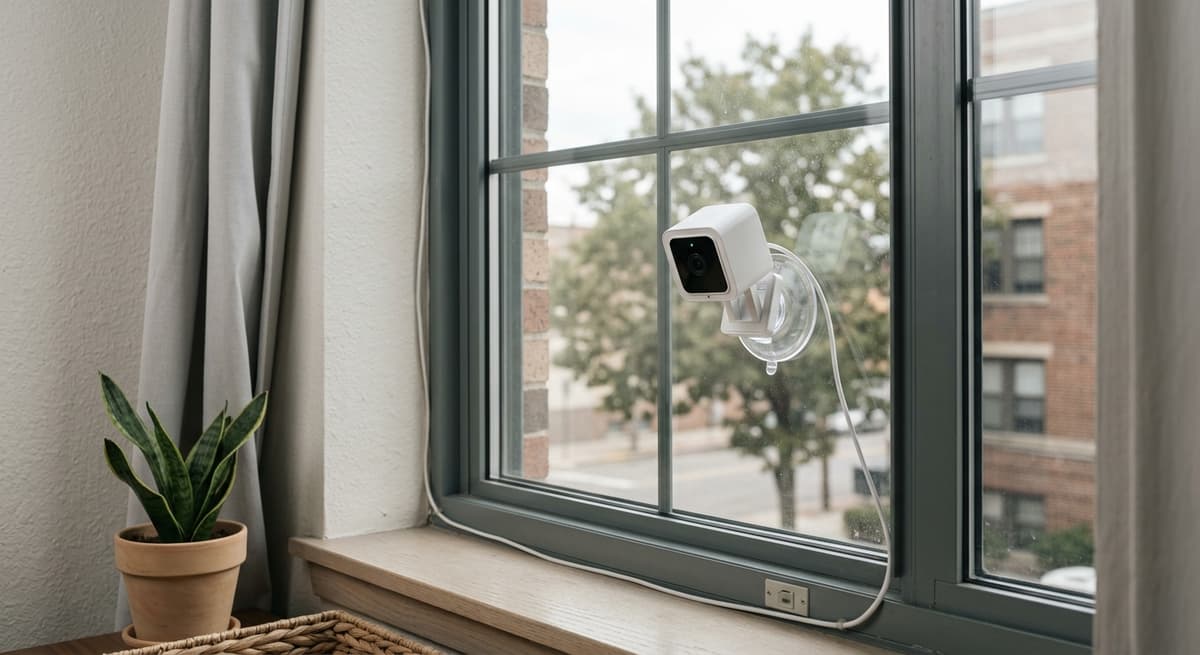
Installing hidden cameras inside a tenant's rental unit is illegal under multiple Washington statutes:
Voyeurism (RCW 9A.44.115): If the camera is placed for the purpose of sexual gratification, the landlord commits voyeurism in the first degree, a Class C felony punishable by up to five years in prison and sex offender registration.
Privacy Act (RCW 9.73.030): If the camera records audio of private conversations within the tenant's home, the landlord violates the Privacy Act. This is a gross misdemeanor carrying up to 364 days in jail and a $5,000 fine.
Invasion of privacy: Even silent hidden cameras in a tenant's living space constitute an invasion of privacy under common law tort principles.
Cameras in Private Tenant Areas
The following areas are off-limits for landlord surveillance:
- Inside rental units (apartments, houses, rooms)
- Private bathrooms within tenant spaces
- Bedrooms and sleeping areas
- Enclosed balconies or patios that are part of the tenant's exclusive space
- Storage units assigned exclusively to a specific tenant (unless the tenant is informed)
Audio Recording of Tenant Conversations
Landlords cannot record the audio of tenant conversations anywhere on the property without all-party consent. This includes:
- Conversations in hallways near apartment doors
- Discussions on shared patios or balconies
- Phone calls made in common areas
- Conversations captured by smart doorbell cameras at unit entrances
The Building Owner Exception and Its Limits
What RCW 9.73.110 Allows
Under RCW 9.73.110, building owners may intercept, record, or disclose communications within their building without consent, but only when the persons being recorded are engaged in a criminal act at the time.
How This Applies to Rental Properties
This exception is extremely narrow in the landlord-tenant context:
- A landlord may record an intruder committing a burglary
- A landlord may record someone unlawfully entering the building
- A landlord may record criminal damage to the property in progress
The exception does not allow:
- General surveillance of tenant activities
- Recording tenant conversations for any reason
- Monitoring tenant comings and goings as a form of control or harassment
- Using cameras to enforce lease provisions (noise violations, guest policies, etc.)
Tenant Recording Rights
Can Tenants Install Cameras in Their Rental?
Tenants generally have the right to install their own security cameras within their rented living space, subject to the following considerations:
Inside the unit: Tenants may place cameras inside their rental unit for security purposes. If cameras record audio of conversations with visitors or other household members, the all-party consent requirement under RCW 9.73.030 applies.
Doorbell cameras: Tenants may install smart doorbell cameras on or near their unit entrance. The lease should be checked for provisions about modifications to the property. Audio recording from doorbell cameras triggers the consent requirement.
Exterior cameras on the unit: Cameras aimed at the tenant's assigned parking space or private patio are generally acceptable. Cameras should not record areas beyond the tenant's exclusive use, such as neighboring units or common areas, without the landlord's permission.
Can Tenants Record Conversations with Their Landlord?
Tenants in Washington cannot secretly record conversations with their landlord. The all-party consent requirement under RCW 9.73.030 applies to landlord-tenant conversations, whether in person or on the phone. Tenants must announce the recording and obtain consent.
If a landlord makes threats of bodily harm, extortion, or blackmail, the threat exception under RCW 9.73.030(2)(b) allows one-party consent recording of the threatening content.
Documenting Landlord Violations Without Recording
Tenants who need to document landlord misconduct without secret recording can:
- Take photographs and video of property conditions (no audio consent needed for silent photos/video of the property)
- Keep written records of conversations with dates, times, and content
- Send follow-up emails or texts summarizing verbal conversations
- Bring a witness to interactions with the landlord
- File complaints with local housing authorities or the Washington Attorney General's Office
Landlord Entry and Notice Requirements
The Residential Landlord-Tenant Act
Washington's Residential Landlord-Tenant Act (RCW 59.18) governs when and how landlords may enter a tenant's rental unit. These entry rules interact with surveillance and recording laws.
Required Notice
Under RCW 59.18.150, landlords must provide at least two days' written notice before entering a tenant's unit, except in emergencies. The notice must specify the date, approximate time, and purpose of entry.
Lawful Reasons for Entry
Landlords may enter a rental unit for:
- Repairs and maintenance requested by the tenant
- Inspections agreed upon in the lease
- Showing the unit to prospective tenants or buyers (with proper notice)
- Emergencies (fire, flood, gas leak) requiring immediate access
Recording During Entry
When a landlord enters a tenant's unit, the tenant's own security cameras may capture the landlord's activities. This is generally acceptable because:
- The tenant owns the cameras and has placed them in their own space
- The landlord has been given notice that they are entering the tenant's private space
- Silent video of the landlord's activities during a lawful entry does not require consent
However, if the tenant's cameras record audio of the landlord's conversations during the entry, the all-party consent requirement applies.
Lease Provisions About Recording
What Landlords Can Include in Leases
Landlords may include lease provisions related to recording and surveillance, such as:
- Disclosure of common area cameras: Informing tenants about the presence and location of security cameras
- Restrictions on exterior modifications: Limiting where tenants can mount exterior cameras to prevent damage to the building
- Audio recording prohibitions: Clarifying that common area cameras do not record audio
- Notice requirements: Requiring tenants to notify the landlord before installing exterior cameras
What Landlords Cannot Include in Leases
Certain lease provisions related to surveillance would be unenforceable:
- Consent to hidden cameras in the unit: A lease provision purporting to grant consent for hidden cameras inside the tenant's unit would be unenforceable under Washington law
- Waiver of privacy rights: A blanket waiver of privacy rights under the Privacy Act would likely be unenforceable
- Consent to audio recording everywhere: A lease provision granting blanket consent to record all conversations on the property may not satisfy the statute's requirement for specific, informed consent
Remedies for Tenants
Criminal Prosecution
If a landlord illegally records tenants, the tenant should contact law enforcement. Potential charges include:
- Privacy Act violation (RCW 9.73.080): Gross misdemeanor, up to 364 days jail, $5,000 fine
- Voyeurism in the first degree (RCW 9A.44.115): Class C felony, up to 5 years prison, sex offender registration
- Voyeurism in the second degree: Gross misdemeanor
Civil Remedies
Tenants may pursue civil claims:
- Privacy Act damages under RCW 9.73.060: Actual damages or $100/day (capped at $1,000), plus attorney fees
- Invasion of privacy tort claims: Actual and punitive damages
- Breach of the warranty of habitability: Under RCW 59.18.060
- Retaliatory action claims: RCW 59.18.240 protects a tenant only from landlord reprisals for a good-faith report to a governmental authority about a code, safety, or maintenance violation, or for asserting rights under chapter 59.18 RCW. A tenant's complaint about hidden-camera surveillance is a Privacy Act matter under chapter 9.73 RCW, not clearly one of the categories RCW 59.18.240 protects, so retaliation for that complaint alone may not support a claim under this statute.
Protective Orders
Tenants may seek protective orders under RCW 7.105 to prevent further surveillance or harassment by the landlord.
Breaking the Lease
In cases of egregious landlord surveillance, a tenant may have grounds to terminate the lease without penalty. A landlord who installs hidden cameras in a tenant's unit has materially breached the lease and the implied warranty of habitability.
More Washington Recording Laws
Audio Recording | Video Recording | Voyeurism & Hidden Cameras | Workplace Recording | Recording Police | Phone Call Recording | Security Cameras | Recording in Public | Landlord-Tenant | Dashcam Laws | Schools | Medical Recording
Back to Washington Recording Laws
More Washington Recording Topics
More Washington Laws
Frequently Asked Questions
Can my landlord put cameras inside my apartment in Washington?
No. Landlords cannot install cameras inside a tenant's rental unit. Hidden cameras in a living space may constitute voyeurism (a Class C felony) if placed for sexual purposes, or a Privacy Act violation if they record audio. Even visible cameras inside a tenant's unit are an invasion of privacy. If you discover cameras in your apartment, contact law enforcement.
Can my landlord record audio in the hallway of my apartment building?
Audio recording in common areas like hallways requires all-party consent under RCW 9.73.030. Most landlords cannot practically obtain consent from every person who has a conversation in a hallway. The safest practice is for landlords to use silent video cameras in common areas and post visible signage about the surveillance.
Can I install a Ring doorbell camera on my apartment door?
Generally yes, but check your lease for restrictions on modifications to the property. If your Ring doorbell records audio of conversations, the all-party consent requirement under RCW 9.73.030 applies. Consider posting a small sign near the doorbell indicating that audio and video recording is in use, and check if your lease restricts exterior-mounted devices.
Can I secretly record my landlord making threats?
If your landlord is making threats of bodily harm, extortion, or blackmail, the threat exception under RCW 9.73.030(2)(b) allows you to record the threatening content with one-party consent. For other conversations, you must announce the recording and obtain consent. Document non-threatening disputes through written records, emails, and formal complaints instead.
What should I do if I find a hidden camera in my rental?
Contact law enforcement immediately. A hidden camera in your rental unit is a serious crime in Washington. Do not remove or disturb the camera, as it is evidence. File a police report, consult a tenant rights attorney, and contact the Washington Attorney General's Office. You may have grounds to break your lease without penalty and pursue civil damages.
Updates
Independently fact-checked against the cited primary sources; governing law re-checked for recent changes
Rescoped the retaliatory-action claim: RCW 59.18.240 protects code-violation reports to authorities and chapter-59.18 rights assertions, not clearly a surveillance/privacy complaint under the separate Privacy Act (chapter 9.73).
Governing law re-checked for recent changes
Governing law re-checked for recent changes
Reviewed and approved by an editor
The Law Behind This Article
This article rests on the statutory provisions below, held in our own legal record and retrieved from the official source. Tap a section to read the operative text.
Revised Code of Washington
§ 9.73.030Intercepting, recording, or divulging private communication—Consent required—Exceptions.In forcecited in 41 of our articles
(1) Except as otherwise provided in this chapter, it shall be unlawful for any individual, partnership, corporation, association, or the state of Washington, its agencies, and political subdivisions to intercept, or record any: (a) Private communication transmitted by telephone, telegraph, radio, or other device between two or more individuals between points within or without the state by any device electronic or otherwise designed to record and/or transmit said communication regardless how such device is powered or actuated, without first obtaining the consent of all the participants in the communication; (b) Private conversation, by any device electronic or otherwise designed to record or transmit such conversation regardless how the device is powered or actuated without first obtaining the consent of all the persons engaged in the conversation.
Official text (excerpt) · last checked 2026-08-31 · Read the full text in our law library · Verify at app.leg.wa.gov
Cited in 221 court opinions in our collectionLatest citing opinion in our collection: 2026
In the courts (editorial summary, independently checked):Washington courts have policed what counts as a private communication under Sec. 9.73.030: State v. Gunwall (1986) concluded a pen register intercept comes within a private communication transmitted by telephone, while State v. Riley (1993) held a line trap that reveals only the calling number does not record one.
Opinions citing this section in our collection:
- State v. Salinas (Washington Supreme Court 1992, 119 Wash. 2d 192)“…alties for divulging a telegram or opening a sealed letter. RCW 9.73.030-.070, making it unlawful to intercept,…”
- State v. Gunwall (Washington Supreme Court 1986, 106 Wash. 2d 54)✓Everett police pulled a suspected cocaine dealer's toll records and put a pen register on her line without valid legal process; the court held a pen register intercept is a private communication transmitted by telephone, installable only under the eavesdropping statutes.
- State v. Brown (Washington Supreme Court 1997, 132 Wash. 2d 529)✓Palm Springs officers secretly recorded a Washington murder suspect's statements after his arrest; the court treated RCW 9.73.090, not 9.73.030, as the provision reaching recordings of arrested persons, and held the Privacy Act did not require suppressing that recording.
Identified automatically from the court opinions citing this section — not a ranking of which case controls.
Also relied on in: US Recording Laws by State (2026): All 50 States Explained, Washington Recording Laws (2026): All-Party Consent Rules, Federal Wiretap Act and ECPA: The Complete Guide (2026)
§ 59.18.060Landlord—Duties.In forcecited in 2 of our articles
The landlord will at all times during the tenancy keep the premises fit for human habitation, and shall in particular: (1) Maintain the premises to substantially comply with any applicable code, statute, ordinance, or regulation governing their maintenance or operation, which the legislative body enacting the applicable code, statute, ordinance or regulation could enforce as to the premises rented if such condition endangers or impairs the health or safety of the tenant; (2) Maintain the structural components including, but not limited to, the roofs, floors, walls, chimneys, fireplaces, foundations, and all other structural components, in reasonably good repair so as to be usable; (3) Keep any shared or common areas reasonably clean, sanitary, and safe from defects increasing the hazards of fire or accident; (4) Provide a reasonable program for the control of infestation by insects, rodents, and other pests at the initiation of the tenancy and, except in the case of a single-family residence, control infestation during tenancy except where such infestation is caused by the tenant; (5) Except where the condition is attributable to wear resulting from ordinary use of the…
Official text (excerpt) · last checked 2026-09-06 · Read the full text in our law library · Verify at app.leg.wa.gov
Cited in 40 court opinions in our collectionLatest citing opinion in our collection: 2026
Opinions citing this section in our collection:
- Martini v. Post (Court of Appeals of Washington 2013, 178 Wash. App. 153)“…Martini also argued that Post breached his duties under RCW 59.18.060(1) and (5) and Tacoma Municipal Code se…”
- Lian v. Stalick (Court of Appeals of Washington 2001, 106 Wash. App. 811)“…ition as a minimum for habitation. This duty, as imposed in RCW 59.18.060, further states: The landlord will at…”
- Dexheimer v. CDS, INC. (Court of Appeals of Washington 2001, 17 P.3d 641)“…ed the jury on a number of the duties required by the RLTA (RCW 59.18.060 [1] ). Instruction 15. It also instruct…”
Identified automatically from the court opinions citing this section — not a ranking of which case controls.
Also relied on in: Washington Landlord-Tenant Laws (2026): Deposits, Rent Cap, and Tenant Rights
§ 59.18.150Landlord's right of entry—Purposes—Searches by fire officials—Searches by code enforcement officials for inspection purposes—Conditions.In forcecited in 3 of our articles
(1) The tenant shall not unreasonably withhold consent to the landlord to enter into the dwelling unit in order to inspect the premises, make necessary or agreed repairs, alterations, or improvements, supply necessary or agreed services, or exhibit the dwelling unit to prospective or actual purchasers, mortgagees, tenants, workers, or contractors. (2) Upon written notice of intent to seek a search warrant, when a tenant or landlord denies a fire official the right to search a dwelling unit, a fire official may immediately seek a search warrant and, upon a showing of probable cause specific to the dwelling unit sought to be searched that criminal fire code violations exist in the dwelling unit, a court of competent jurisdiction shall issue a warrant allowing a search of the dwelling unit.
Official text (excerpt) · last checked 2026-07-29 · Read the full text in our law library · Verify at app.leg.wa.gov
Cited in 17 court opinions in our collectionLatest citing opinion in our collection: 2023
Opinions citing this section in our collection:
- Kalmas v. Wagner (Washington Supreme Court 1997, 133 Wash. 2d 210)“…o refuse entry, so Russi prepared a "Notice of Violation of RCW 59.18.150Denial of Entry" form. Meanwhile, Kyr…”
- City of Pasco v. Shaw (Washington Supreme Court 2007, 161 Wash. 2d 450)“…consent of the tenant,” with exceptions not relevant to us. RCW 59.18.150(6). Thus, any inspection of an occupied…”
- State v. Roberts (Court of Appeals of Washington 1996, 80 Wash. App. 342)“…grow operation in the subleased premises. See RCW 59.18.150 (severely restricting a landlord’s righ…”
Identified automatically from the court opinions citing this section — not a ranking of which case controls.
Also relied on in: Washington Ring Doorbell Laws: What You Need to Know in 2026
§ 59.18.240Reprisals or retaliatory actions by landlord—Prohibited.In forcecited in 2 of our articles
So long as the tenant is in compliance with this chapter, the landlord shall not take or threaten to take reprisals or retaliatory action against the tenant because of any good faith and lawful: (1) Complaints or reports by the tenant to a governmental authority concerning the failure of the landlord to substantially comply with any code, statute, ordinance, or regulation governing the maintenance or operation of the premises, if such condition may endanger or impair the health or safety of the tenant; or (2) Assertions or enforcement by the tenant of his or her rights and remedies under this chapter. "Reprisal or retaliatory action" shall mean and include but not be limited to any of the following actions by the landlord when such actions are intended primarily to retaliate against a tenant because of the tenant's good faith and lawful act: (a) Eviction of the tenant; (b) Increasing the rent required of the tenant; (c) Reduction of services to the tenant; and (d) Increasing the obligations of the tenant.
Official text (excerpt) · last checked 2026-07-29 · Read the full text in our law library · Verify at app.leg.wa.gov
Cited in 13 court opinions in our collectionLatest citing opinion in our collection: 2026
Opinions citing this section in our collection:
- Stephanus v. Anderson (Court of Appeals of Washington 1980, 26 Wash. App. 326)“…assertion of their rights under the Act. They contend that RCW 59.18.240(2) and .250 authorize this retaliatory…”
- Lian v. Stalick (Court of Appeals of Washington 2001, 106 Wash. App. 811)“…no excuse given the tenant’s protection under the statute. RCW 59.18.240, .250. Indeed, there is a presumption o…”
- State v. Schwab (Washington Supreme Court 1985, 103 Wash. 2d 542)“…ndlord to recover his costs, including attorney fees. See RCW 59.18.240, .250. Additionally, the right to termi…”
Identified automatically from the court opinions citing this section — not a ranking of which case controls.
§ 9.73.060Violating right of privacy—Civil action—Liability for damages.In forcecited in 14 of our articles
Any person who, directly or by means of a detective agency or any other agent, violates the provisions of this chapter shall be subject to legal action for damages, to be brought by any other person claiming that a violation of this statute has injured his or her business, his or her person, or his or her reputation. A person so injured shall be entitled to actual damages, including mental pain and suffering endured by him or her on account of violation of the provisions of this chapter, or liquidated damages computed at the rate of one hundred dollars a day for each day of violation, not to exceed one thousand dollars, and a reasonable attorney's fee and other costs of litigation.
Official text (excerpt) · last checked 2026-07-29 · Read the full text in our law library · Verify at app.leg.wa.gov
Cited in 36 court opinions in our collectionLatest citing opinion in our collection: 2025
In the courts (editorial summary, independently checked):Washington courts read RCW 9.73.060 as supplying civil damages only for conduct chapter 9.73 prohibits. Kearney v. Kearney (1999) held RCW 9.73.050 creates no civil liability for filing illegally recorded material. Dillon v. Seattle Deposition Reporters, LLC (2014) reversed summary judgment on secretly transcribed calls.
Opinions citing this section in our collection:
- State v. Wanrow (Washington Supreme Court 1977, 88 Wash. 2d 221)“…case under RCW 9.73.050; there is no civil liability under RCW 9.73.060; and, there is no criminal liability un…”
- Kearney v. Kearney (Court of Appeals of Washington 1999, 95 Wash. App. 405)✓A father sued a guardian ad litem, an evaluator and an attorney under RCW 9.73.060 for filing transcripts of calls with his children that his estranged wife taped; the court held the act creates liability only for recording or intercepting, not filing, and affirmed dismissal.
- Dillon v. Seattle Deposition Reporters, LLC (Court of Appeals of Washington 2014, 179 Wash. App. 41)“…act is a gross misdemeanor and is also actionable in tort. RCW 9.73.060, .080. “We engage in a four-pronged ana…”
Identified automatically from the court opinions citing this section — not a ranking of which case controls.
Also relied on in: Washington Audio Recording Laws: Two-Party Consent Rules and Penalties (2026), Washington Dashcam Laws: Mounting Rules, Audio Recording, and Evidence (2026), Washington Medical Recording Laws: Recording Doctors, Hospitals, and Telehealth (2026)
§ 9.73.080Penalties.In forcecited in 16 of our articles
(1) Except as otherwise provided in this chapter, any person who violates RCW 9.73.030 is guilty of a gross misdemeanor. (2) Any person who knowingly alters, erases, or wrongfully discloses any recording in violation of RCW 9.73.090(1)(c) is guilty of a gross misdemeanor.
Official text (excerpt) · last checked 2026-07-29 · Read the full text in our law library · Verify at app.leg.wa.gov
Cited in 13 court opinions in our collectionLatest citing opinion in our collection: 2023
Opinions citing this section in our collection:
- State v. Wanrow (Washington Supreme Court 1977, 88 Wash. 2d 221)“…9.73.090, which opens with a waiver of RCW 9.73.030 through RCW 9.73.080, [9] i.e., the recording is not unlaw…”
- State v. Williams (Washington Supreme Court 1980, 94 Wash. 2d 531)✓ATF agents recorded a suspect's conversations with an informant and undercover agents with only one party's consent. The court assumed without deciding that the RCW 9.73.080 criminal penalty may not reach federal agents, but held the tapes were still inadmissible in state court.
- State v. Clark (Washington Supreme Court 2007, 916 P.2d 384)“…Violation of RCW 9.73.030 constitutes a gross misdemeanor, RCW 9.73.080, and may also result in civil liability…”
Identified automatically from the court opinions citing this section — not a ranking of which case controls.
Also relied on in: Washington Phone Call Recording Laws: Consent Rules and Exceptions (2026), Washington Laws on Recording in Public: What Is Legal and What Is Not (2026), Washington Security Camera Laws: Rules for Home and Business Surveillance (2026)
§ 9.73.110Intercepting, recording, or disclosing private communications—Not unlawful for building owner—Conditions.In forcecited in 6 of our articles
It shall not be unlawful for the owner or person entitled to use and possession of a building, as defined in RCW 9A.04.110(5), or the agent of such person, to intercept, record, or disclose communications or conversations which occur within such building if the persons engaged in such communication or conversation are engaged in a criminal act at the time of such communication or conversation by virtue of unlawful entry or remaining unlawfully in such building.
Official text (excerpt) · last checked 2026-07-29 · Read the full text in our law library · Verify at app.leg.wa.gov
Also relied on in: Washington Video Recording Laws: Filming, Surveillance, and Consent Rules (2026), Washington Surveillance Camera Laws (2026 Guide)
Search our full record of US law — 2.1 million sections, every state + federal →
Sources and References
- RCW 9.73.030 - Intercepting, Recording, or Divulging Private Communications(app.leg.wa.gov).gov
- RCW 9A.44.115 - Voyeurism(app.leg.wa.gov).gov
- RCW 9.73.110 - Building Owner Exception(app.leg.wa.gov).gov
- RCW 9.73.060 - Civil Damages for Privacy Violations(app.leg.wa.gov).gov
- RCW 59.18 - Residential Landlord-Tenant Act(app.leg.wa.gov).gov
- RCW 59.18.150 - Landlord Entry Requirements(app.leg.wa.gov).gov
- RCW 7.105 - Civil Protection Orders(app.leg.wa.gov).gov
- Washington Attorney General(atg.wa.gov).gov