
Yukon
Yukon Recording Laws: One-Party Consent Rules
Independently fact-checked against primary sources (last audited June 18, 2026). · 11 primary sources cited on this page. How we verify our legal content
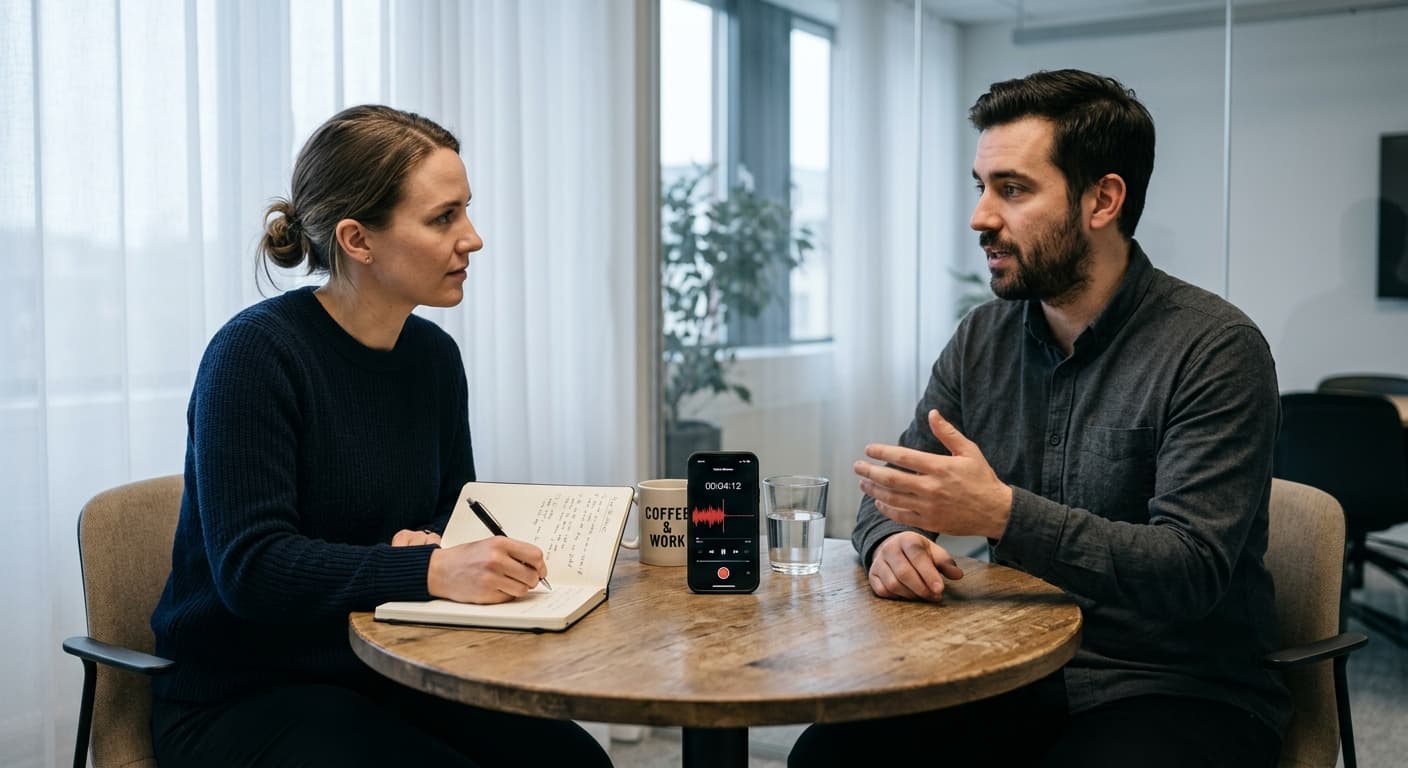
Recording a conversation you are part of is lawful in the Yukon. Canada operates under a one-party consent rule nationwide: section 184(2)(a) of the Criminal Code permits any party to a private communication to record it without notifying or obtaining consent from the other parties. Recording a conversation you are not part of (and without the consent of any party) is a criminal offence punishable by up to five years imprisonment.
Is It Legal to Record Conversations in the Yukon?
Yes, in most everyday situations. The governing rule is not a territorial law. It is a federal one embedded in the Criminal Code of Canada, which applies uniformly to every province and territory, including the Yukon.
Section 184(1) of the Criminal Code creates the baseline offence: it is a crime to intercept a private communication by any electro-magnetic, acoustic, mechanical, or other device without the consent of a party to that communication. The penalty is an indictable offence carrying up to five years imprisonment, or a summary conviction.
Section 184(2)(a) carves out the critical exception. The offence in s. 184(1) does not apply to a person who has the consent (express or implied) of the originator of the private communication or of the person intended by the originator to receive it. In plain language: if you are one of the parties to the conversation, you are already a consenting party by definition, and you may record it.
This is Canada's one-party consent rule, and it is identical in every province and territory. No Yukon law modifies or tightens it.
Section 183 of the Criminal Code defines "private communication" as an oral communication or telecommunication made under circumstances in which it is reasonable for the originator to expect it will not be intercepted by anyone other than the intended recipient. This reasonable-expectation-of-privacy standard is embedded in the definition itself. A conversation in a genuinely public setting (a speech in a park, a statement at a public meeting, a conversation in a crowded restaurant) may not qualify as a "private communication" at all, which means s. 184 is not even triggered.
Recording Conversations You Are a Party To
If you are a participant in the conversation, you can record it lawfully under s. 184(2)(a) regardless of the medium: face-to-face conversations, telephone calls, video calls, group chats, or any other form of communication.
You do not need to announce that you are recording. You do not need the other person's agreement. One-party consent (your own) is legally sufficient.
Section 183.1 of the Criminal Code extends this rule explicitly to multi-party communications. Where a private communication involves more than one originator or more than one intended recipient, the consent of any one of those persons is sufficient consent for all purposes under Part VI of the Criminal Code. A group call involving several people in the Yukon and elsewhere in Canada can be lawfully recorded by any single participant.
Lawful recording does not mean consequence-free recording. You are permitted to make the recording, but what you do with it is a separate question addressed below.
Recording Others Without Their Consent
Recording a private communication you are not a party to, and without the express or implied consent of at least one party, is an indictable offence under s. 184(1), punishable by up to five years imprisonment or, at the Crown's election, by summary conviction.
The offence is not limited to sophisticated wiretapping. Any device (a smartphone held up in a hallway, a voice-activated recorder left in a room, a listening app installed on someone else's phone) can constitute interception if the person deploying it is not a party to the communication and no party has consented.
Phone Calls
Phone calls are private communications within the meaning of s. 183. The same one-party rule applies: a party to the call may record it; a third party may not.
There is no regulatory obligation in the Yukon that requires businesses or individuals to announce call recording to callers, except to the extent that PIPEDA (discussed below) may impose notification requirements on organisations that record customer calls in the course of commercial activity. Individuals recording their own personal calls are not subject to PIPEDA.
Video Recording and Voyeurism
The one-party consent rule under s. 184 is an audio-communication rule. It does not authorise all video recording.
Section 162(1) of the Criminal Code creates the voyeurism offence: it is a crime to surreptitiously observe or make a visual recording of a person who is in circumstances that give rise to a reasonable expectation of privacy. The three circumstances covered are: (a) a place such as a changing room, toilet, or private dwelling where nudity or sexual exposure is reasonably expected; (b) a situation where the person is nude or exposing themselves and the purpose of the recording is to capture that state; and (c) any situation where the observation or recording is made for a sexual purpose. The penalty is an indictable offence carrying up to five years imprisonment or a summary conviction.
Section 162.1 creates a separate offence for the non-consensual distribution of intimate images: knowingly publishing, distributing, transmitting, selling, or making available an intimate image of a person without their consent, or being reckless as to consent, carries up to five years imprisonment on indictment. This offence applies regardless of how the image was originally obtained. Even a lawfully recorded image cannot be distributed without the depicted person's consent.
In public spaces where there is no reasonable expectation of privacy, casual video recording (filming a street scene, recording a public event, documenting activity at a government building) is generally not restricted by s. 162.
Recording Police and Public Officials
Recording police officers and other public officials performing their duties in a publicly accessible location is generally lawful in the Yukon, as in every jurisdiction across Canada.
No provision of the Criminal Code prohibits filming or recording law enforcement. The right is grounded in s. 2(b) of the Canadian Charter of Rights and Freedoms, which protects freedom of expression including the gathering of information in public spaces.
The one criminal limit is s. 129 of the Criminal Code, which makes it an offence to obstruct or resist a peace officer in the execution of their duties. Recording from a safe distance without impeding police operations does not violate s. 129. Officers cannot lawfully order a bystander to stop filming as a routine matter, and cannot seize a recording device without a warrant unless a recognised warrant exception applies.
This right is especially relevant in the Yukon, where concerns about policing in remote communities and Indigenous territories have historically generated public interest in civilian oversight.
Workplace Recording in the Yukon
Recording a workplace conversation you are a party to is lawful under s. 184(2)(a) of the Criminal Code. This applies whether the conversation is a performance review, a disciplinary meeting, a team call, or an informal discussion with a supervisor.
Yukon employees and employers should be aware of a critical distinction: lawfulness under the Criminal Code does not insulate an employee from employment consequences. Canadian courts and labour arbitrators have repeatedly held that covert recording in a workplace can constitute a breach of trust, a violation of the employment relationship, or conduct incompatible with continued employment, even when the recording itself was technically legal. Whether a dismissal for cause based on covert recording will be upheld depends on the context, the nature of the employment relationship, the employer's reasonable expectations of confidentiality, and whether the recording was proportionate to the concern it was meant to address.
Employers who record employees through call-monitoring, video surveillance, or electronic monitoring systems are subject to PIPEDA's requirements for commercial organisations (see below) and must generally provide notice of the recording.
Yukon Privacy Law: PIPEDA Applies, No Territorial Private-Sector Act
This is the key privacy nuance for the Yukon.
British Columbia, Alberta, and Quebec each have provincial private-sector privacy statutes deemed "substantially similar" to PIPEDA by the Governor in Council. The Yukon has enacted no such legislation. There is no Yukon equivalent of BC's Personal Information Protection Act or Alberta's Personal Information Protection Act that displaces PIPEDA for intra-territorial commercial activity.
Instead, the Office of the Privacy Commissioner of Canada has confirmed that organisations operating in the Yukon, the Northwest Territories, and Nunavut are treated as federally regulated for the purposes of PIPEDA. PIPEDA therefore applies fully and directly to any private-sector organisation in the Yukon that collects, uses, or discloses personal information in the course of commercial activity.
PIPEDA's 10 fair information principles (accountability, identifying purposes, consent, limiting collection, limiting use and disclosure and retention, accuracy, safeguards, openness, individual access, and challenging compliance) bind Yukon commercial organisations in the same way they bind federally regulated businesses across Canada.
Critically, PIPEDA does not apply to an individual recording their own personal conversations. Its scope is organisations engaged in commercial activity. A Yukon resident recording a call with a friend or a conversation with a family member is entirely outside PIPEDA's reach. The Personal Information Protection and Electronic Documents Act (SC 2000, c 5) explicitly carves out personal or domestic activities.
Enforcement of PIPEDA is handled by the Office of the Privacy Commissioner of Canada, based in Ottawa, which accepts complaints, conducts investigations, and issues findings and recommendations.
Territorial Public-Sector Privacy: ATIPP
The Yukon's Access to Information and Protection of Privacy Act (ATIPP) governs Yukon government bodies and public institutions. It gives individuals a right of access to government records and imposes privacy obligations on public-sector organisations: Yukon government departments, agencies, boards, and commissions.
ATIPP is a public-sector statute. It does not create any civil right of action for a private individual against another private individual. It does not regulate private-sector data practices. It does not affect the right to record private conversations.
For most residents of the Yukon, ATIPP is relevant when seeking government information or filing a complaint about how a Yukon government body handled their personal information. It is not a source of civil liability between private parties.
Civil Remedies: A Significant Gap
The civil privacy landscape in the Yukon is notably thin compared to several other Canadian jurisdictions.
The Yukon has no statutory Privacy Act creating a tort of violation of privacy, unlike British Columbia (Privacy Act, RSBC 1996, c 373), Saskatchewan (The Privacy Act, RSS 1978, c P-24), Manitoba (The Privacy Act, CCSM c P125), and Newfoundland and Labrador (Privacy Act, RSNL 1990, c P-22). Those four jurisdictions allow a person to sue for a privacy violation without proving financial loss.
The Yukon is also not Ontario, where the Court of Appeal in Jones v. Tsige (2012 ONCA 32) definitively recognised a common-law tort of intrusion upon seclusion. Ontario residents can sue for intentional or reckless intrusion into their private affairs without proving actual financial damage, and may recover up to approximately $20,000.
In the Yukon, a person whose private communications are recorded without consent, or whose personal information is misused, would face real difficulty pursuing a civil claim. No Yukon court has definitively adopted the tort of intrusion upon seclusion, and there is no territorial Privacy Act to fall back on. Potential plaintiffs might attempt to rely on the common law in the hope that a Yukon court would follow the Ontario Court of Appeal's reasoning in Jones v. Tsige, but such a claim remains uncertain and untested in the territory.
The practical consequence is that criminal enforcement under ss. 184(1) and 193 of the Criminal Code is, for most Yukon residents, the primary legal remedy for unlawful interception.
Penalties Summary
The relevant Criminal Code penalties for unlawful recording and related conduct in the Yukon are as follows.
Intercepting a private communication without the consent of any party under s. 184(1): indictable offence, up to five years imprisonment, or summary conviction.
Knowingly disclosing, revealing the substance of, or disclosing the existence of an unlawfully intercepted private communication under s. 193(1): indictable offence, up to two years imprisonment, or summary conviction.
Voyeurism under s. 162(1) (surreptitious visual recording in circumstances of reasonable expectation of privacy): indictable offence, up to five years imprisonment, or summary conviction.
Non-consensual distribution of intimate images under s. 162.1: indictable offence, up to five years imprisonment, or summary conviction.
Obstructing a peace officer in the execution of their duties under s. 129 while recording: summary conviction offence.
Practical Tips for Recording in the Yukon
Be a party to the conversation before you record it. The one-party consent rule in s. 184(2)(a) protects you when you are a participant. If you record a conversation you are not part of and no party has consented, you are committing a criminal offence.
Understand that lawful recording does not mean safe sharing. Even a recording you made lawfully can expose you to criminal liability under s. 193 if you share it and the underlying communication was intercepted without consent by someone else, or to civil liability in defamation if the contents are false or misleading.
In workplace contexts, think carefully before recording covertly. Criminal lawfulness and employment lawfulness are not the same thing. Covert workplace recording has resulted in dismissal for cause in Canadian tribunals even where the recording itself was not a criminal act.
For video recording, the voyeurism offence in s. 162 applies regardless of whether you are a party to any communication. Any surreptitious visual recording in a space where a person has a reasonable expectation of privacy is a criminal matter.
Commercial organisations recording customer or employee communications in the Yukon must comply with PIPEDA. This includes providing notice, obtaining appropriate consent, and implementing reasonable safeguards.
Cross-border recording (for example, a Yukon resident recording a call with a person in a US state) remains governed by Canada's Criminal Code on the Canadian side, but the laws of the other jurisdiction may impose additional requirements. For calls with people in two-party consent US states such as California, failure to notify the other party may violate that state's law.
Related Canadian Guides
- Canadian law by province and topic
- Recording laws in Canada
- Yukon Hit and Run laws
- Yukon Child Support laws
- Yukon Slip and Fall laws
Frequently Asked Questions
Is the Yukon a one-party or two-party consent territory for recording?
The Yukon follows Canada's federal one-party consent rule under Criminal Code s. 184(2)(a). Any person who is a party to the conversation may record it without the other party's knowledge or agreement. No Yukon territorial law modifies or tightens this rule.
Can I record a phone call in the Yukon without telling the other person?
Yes, if you are a party to the call. Section 184(2)(a) of the Criminal Code permits any party to record a private communication. You do not need to announce the recording. Recording a call you are not part of, without a party's consent, is a criminal offence punishable by up to five years imprisonment.
Is it legal to record police in the Yukon?
Generally yes, in publicly accessible locations. No Criminal Code provision prohibits filming law enforcement. The right is grounded in s. 2(b) of the Canadian Charter of Rights and Freedoms (freedom of expression, including gathering information). You must not physically obstruct officers performing their duties, as s. 129 of the Criminal Code prohibits obstruction of a peace officer.
Can I record a meeting with my employer or a workplace conversation in the Yukon?
You may record any workplace conversation you are a party to under s. 184(2)(a) of the Criminal Code. However, covert recording in a workplace can breach your duties as an employee and has been upheld as just cause for dismissal in Canadian labour decisions even when the recording itself was not criminal. Context and proportionality matter.
Does the Yukon have its own recording law?
No. Recording-consent law in Canada is entirely federal, not territorial. The relevant provisions are in the Criminal Code of Canada (ss. 183, 183.1, 184, 193) which apply uniformly across all provinces and territories. The Yukon has not enacted any territorial legislation that alters this framework.
What privacy law applies to businesses in the Yukon?
PIPEDA (the Personal Information Protection and Electronic Documents Act, SC 2000, c 5) applies directly to all private-sector organisations in the Yukon that collect, use, or disclose personal information in the course of commercial activity. The Yukon has no territorial private-sector privacy act. Organisations in the territory are treated as federally regulated for PIPEDA purposes.
What is ATIPP and does it affect private recording?
ATIPP is the Yukon's Access to Information and Protection of Privacy Act. It applies to Yukon government bodies and public institutions only. It does not regulate private-sector conduct, does not create any civil right of action between private individuals, and has no bearing on whether you may record a private conversation.
What is the penalty for illegally recording someone in the Yukon?
Intercepting a private communication without the consent of any party is an indictable offence under s. 184(1) of the Criminal Code, punishable by up to five years imprisonment or summary conviction. Disclosing or revealing such a recording is a further offence under s. 193(1), punishable by up to two years imprisonment or summary conviction.
Can I sue someone in the Yukon for recording me without consent?
This is difficult. The Yukon has no statutory Privacy Act creating a civil tort of violation of privacy (unlike BC, Saskatchewan, Manitoba, and Newfoundland and Labrador). No Yukon court has definitively adopted the common-law tort of intrusion upon seclusion established in Ontario's Jones v. Tsige. Civil remedies for intrusive recording in the Yukon are uncertain. Criminal charges under s. 184(1) or a PIPEDA complaint (if an organisation is involved) may be more viable routes.
Is it illegal to share a recording of someone in the Yukon?
Sharing a recording that was itself unlawfully intercepted (without any party's consent) is a criminal offence under s. 193(1) of the Criminal Code, punishable by up to two years imprisonment. Sharing intimate images without consent violates s. 162.1, punishable by up to five years. Sharing a lawfully recorded conversation has no specific Criminal Code prohibition, but may attract civil liability in defamation depending on the contents.
Updates
Independently fact-checked against the cited primary sources
The Law Behind This Article
This article rests on the statutory provisions below, held in our own legal record and retrieved from the official source. Tap a section to read the operative text.
Criminal Code
s. 129Offences relating to public or peace officerIn forcecited in 22 of our articles
Every one who (a) resists or wilfully obstructs a public officer or peace officer in the execution of his duty or any person lawfully acting in aid of such an officer, (b) omits, without reasonable excuse, to assist a public officer or peace officer in the execution of his duty in arresting a person or in preserving the peace, after having reasonable notice that he is required to do so, or (c) resists or wilfully obstructs any person in the lawful execution of a process against lands or goods or in making a lawful distress or seizure, is guilty of (d) an indictable offence and is liable to imprisonment for a term not exceeding two years, or (e) an offence punishable on summary conviction.
Official text (excerpt) · last checked 2026-08-12 · Read the full text in our law library · Verify at laws-lois.justice.gc.ca
Cited in 15 court opinions in our collectionLatest citing opinion in our collection: 2025
Opinions citing this section in our collection:
- Kosoian v. Société de transport de Montréal (Supreme Court of Canada 2019, 2019 SCC 59)
- R. v. Greenbaum (Supreme Court of Canada 1993, [1993] 1 SCR 674)
- R. v. Sharma (Supreme Court of Canada 1993, [1993] 1 SCR 650)
Identified automatically from the court opinions citing this section — not a ranking of which case controls.
Also relied on in: Alberta Recording Laws: One-Party Consent Rules (2026), British Columbia Recording Laws: One-Party Consent & Privacy Act, Manitoba Recording Laws: One-Party Consent & Privacy Act
s. 162VoyeurismIn forcecited in 33 of our articles
(1) Every one commits an offence who, surreptitiously, observes — including by mechanical or electronic means — or makes a visual recording of a person who is in circumstances that give rise to a reasonable expectation of privacy, if (a) the person is in a place in which a person can reasonably be expected to be nude, to expose his or her genital organs or anal region or her breasts, or to be engaged in explicit sexual activity; (b) the person is nude, is exposing his or her genital organs or anal region or her breasts, or is engaged in explicit sexual activity, and the observation or recording is done for the purpose of observing or recording a person in such a state or engaged in such an activity; or (c) the observation or recording is done for a sexual purpose. (2) In this section, visual recording includes a photographic, film or video recording made by any means. (3) Paragraphs (1)(a) and (b) do not apply to a peace officer who, under the authority of a warrant issued under section 487.01, is carrying out any activity referred to in those paragraphs.
Official text (excerpt) · last checked 2026-08-12 · Read the full text in our law library · Verify at laws-lois.justice.gc.ca
Cited in 6 court opinions in our collectionLatest citing opinion in our collection: 2023
Opinions citing this section in our collection:
- R. v. Tim (Supreme Court of Canada 2022, 2022 SCC 12)
- R. v. Jarvis (Supreme Court of Canada 2019, 2019 SCC 10)
- Reference re Genetic Non‑Discrimination Act (Supreme Court of Canada 2020, 2020 SCC 17)
Identified automatically from the court opinions citing this section — not a ranking of which case controls.
Also relied on in: Canada Privacy Law: PIPEDA, Provincial Acts, and Recording Rules, Recording Phone Calls in Canada: One-Party Consent Rule, Security Camera & Doorbell Camera Laws in Canada
s. 162.1Publication, etc., of an intimate image without consentIn forcecited in 29 of our articles
(1) Everyone who knowingly publishes, distributes, transmits, sells, makes available or advertises an intimate image of a person knowing that the person depicted in the image did not give their consent to that conduct, or being reckless as to whether or not that person gave their consent to that conduct, is guilty (a) of an indictable offence and liable to imprisonment for a term of not more than five years; or (b) of an offence punishable on summary conviction. (2) In this section, intimate image means a visual recording of a person made by any means including a photographic, film or video recording, (a) in which the person is nude, is exposing his or her genital organs or anal region or her breasts or is engaged in explicit sexual activity; (b) in respect of which, at the time of the recording, there were circumstances that gave rise to a reasonable expectation of privacy; and (c) in respect of which the person depicted retains a reasonable expectation of privacy at the time the offence is committed.
Official text (excerpt) · last checked 2026-08-12 · Read the full text in our law library · Verify at laws-lois.justice.gc.ca
Also relied on in: Canada Bill C-16: Deepfake Intimate Images Are Now a Crime, Canada Recording Laws: One-Party Consent Rules and Penalties (2026), New Brunswick Recording Laws: One-Party Consent Guide
s. 183DefinitionsIn forcecited in 28 of our articles
In this Part, authorization means an authorization to intercept a private communication given under subsection 184.2(3), section 186 or subsection 188(2); ( autorisation ) electro-magnetic, acoustic, mechanical or other device means any device or apparatus that is used or is capable of being used to intercept a private communication, but does not include a hearing aid used to correct subnormal hearing of the user to not better than normal hearing; ( dispositif électromagnétique, acoustique, mécanique ou autre ) intercept includes listen to, record or acquire a communication or acquire the substance, meaning or purport thereof;
Official text (excerpt) · last checked 2026-08-12 · Read the full text in our law library · Verify at laws-lois.justice.gc.ca
Cited in 8 court opinions in our collectionLatest citing opinion in our collection: 2024
Opinions citing this section in our collection:
- R. v. Marakah (Supreme Court of Canada 2017, 2017 SCC 59)
- R. v. Mills (Supreme Court of Canada 2019, 2019 SCC 22)
- R. v. Campbell (Supreme Court of Canada 2024, 2024 SCC 42)
Identified automatically from the court opinions citing this section — not a ranking of which case controls.
Also relied on in: Newfoundland and Labrador Recording Laws, Northwest Territories Recording Laws: One-Party Consent, Nova Scotia Recording Laws: One-Party Consent Rules
s. 183.1Consent to interceptionIn forcecited in 26 of our articles
Where a private communication is originated by more than one person or is intended by the originator thereof to be received by more than one person, a consent to the interception thereof by any one of those persons is sufficient consent for the purposes of any provision of this Part.
Official text (excerpt) · last checked 2026-08-12 · Read the full text in our law library · Verify at laws-lois.justice.gc.ca
Also relied on in: Nunavut Recording Laws: One-Party Consent Rules, Ontario Recording Laws: Is It Legal to Record? (2026), PEI Recording Laws: One-Party Consent & Privacy Rights
s. 184InterceptionIn forcecited in 55 of our articles
(1) Every person who, by means of any electro-magnetic, acoustic, mechanical or other device, knowingly intercepts a private communication is guilty of (a) an indictable offence and liable to imprisonment for a term of not more than five years; or (b) an offence punishable on summary conviction. (2) Subsection (1) does not apply to (a) a person who has the consent to intercept, express or implied, of the originator of the private communication or of the person intended by the originator thereof to receive it; (b) a person who intercepts a private communication in accordance with an authorization or pursuant to section 184.4 or any person who in good faith aids in any way another person who the aiding person believes on reasonable grounds is acting with an authorization or pursuant to section 184.4;
Official text (excerpt) · last checked 2026-08-12 · Read the full text in our law library · Verify at laws-lois.justice.gc.ca
Cited in 5 court opinions in our collectionLatest citing opinion in our collection: 2023
Opinions citing this section in our collection:
- X (Re) (Federal Court 2017, 2017 FC 1047)
- Canada (Information Commissioner) v. Canada (Transportation Accident Investigation and Safety Board) (Federal Court 2005, 2005 FC 384)
- Morgan v. Alta Flights (Charters)Inc. (Federal Court 2005, 2005 FC 421)
Identified automatically from the court opinions citing this section — not a ranking of which case controls.
Also relied on in: Canadian Law by Province: Federal and Provincial Guide, Dash Cam Laws in Canada: Rules, Audio Consent, Evidence, Workplace Privacy and Employee Monitoring in Canada
s. 193Disclosure of informationIn forcecited in 28 of our articles
(1) If a private communication has been intercepted by means of an electro-magnetic, acoustic, mechanical or other device without the consent, express or implied, of the originator of that communication or of the person intended by the originator to receive it, every person commits an offence who, without the express consent of the originator of that communication or of the person intended to receive it, knowingly (a) uses or discloses the private communication or any part of it or the substance, meaning or purpose of it or of any part of it, or (b) discloses the existence of the private communication. (1.1) Every person who commits an offence under subsection (1) is guilty of (a) an indictable offence and liable to imprisonment for a term of not more than two years; or (b) an offence punishable on summary conviction.
Official text (excerpt) · last checked 2026-08-12 · Read the full text in our law library · Verify at laws-lois.justice.gc.ca
Cited in 79 court opinions in our collectionLatest citing opinion in our collection: 2026
Opinions citing this section in our collection:
- Blencoe v. British Columbia (Human Rights Commission) (Supreme Court of Canada 2000, 2000 SCC 44)
- Canada (Attorney General) v. Bedford (Supreme Court of Canada 2013, 2013 SCC 72)
- R. v. Sharpe (Supreme Court of Canada 2001, 2001 SCC 2)
Identified automatically from the court opinions citing this section — not a ranking of which case controls.
Also relied on in: Quebec Recording Laws: One-Party Consent & Civil Code, Saskatchewan Recording Laws: One-Party Consent Guide
Search our full record of Canadian federal law — every consolidated Act, in English and French →
Sources and References
- Criminal Code, RSC 1985, c C-46, s 184 — Interception of private communications (offence and one-party consent exception)(laws-lois.justice.gc.ca).gov
- Criminal Code, RSC 1985, c C-46, s 183 — Definition of 'private communication'(laws-lois.justice.gc.ca).gov
- Criminal Code, RSC 1985, c C-46, s 183.1 — One-party consent sufficient for multi-party communications(laws-lois.justice.gc.ca).gov
- Criminal Code, RSC 1985, c C-46, s 193 — Offence: disclosing an intercepted private communication (up to 2 years)(laws-lois.justice.gc.ca).gov
- Criminal Code, RSC 1985, c C-46, s 162 — Voyeurism offence (surreptitious visual recording, up to 5 years)(laws-lois.justice.gc.ca).gov
- Criminal Code, RSC 1985, c C-46, s 162.1 — Non-consensual distribution of intimate images (up to 5 years)(laws-lois.justice.gc.ca).gov
- Criminal Code, RSC 1985, c C-46, s 129 — Obstructing a peace officer(laws-lois.justice.gc.ca).gov
- Canadian Charter of Rights and Freedoms, s 2(b) — Freedom of expression (basis for right to film police in public)(laws-lois.justice.gc.ca).gov
- Personal Information Protection and Electronic Documents Act (PIPEDA), SC 2000, c 5 — Federal private-sector privacy law applying to Yukon commercial organisations(laws-lois.justice.gc.ca).gov
- Office of the Privacy Commissioner of Canada — PIPEDA requirements in brief(priv.gc.ca).gov
- Office of the Privacy Commissioner of Canada — Provincial and territorial laws that may apply instead of PIPEDA (confirms Yukon governed by PIPEDA directly)(priv.gc.ca).gov
- Jones v Tsige, 2012 ONCA 32 (CanLII) — Ontario Court of Appeal recognises common-law tort of intrusion upon seclusion (Ontario; not yet adopted in Yukon)(canlii.org)