
Yukon
Lois sur l'enregistrement au Yukon : la règle du consentement à une seule partie
Independently fact-checked against primary sources (last audited 18 juin 2026). · 11 primary sources cited on this page. How we verify our legal content
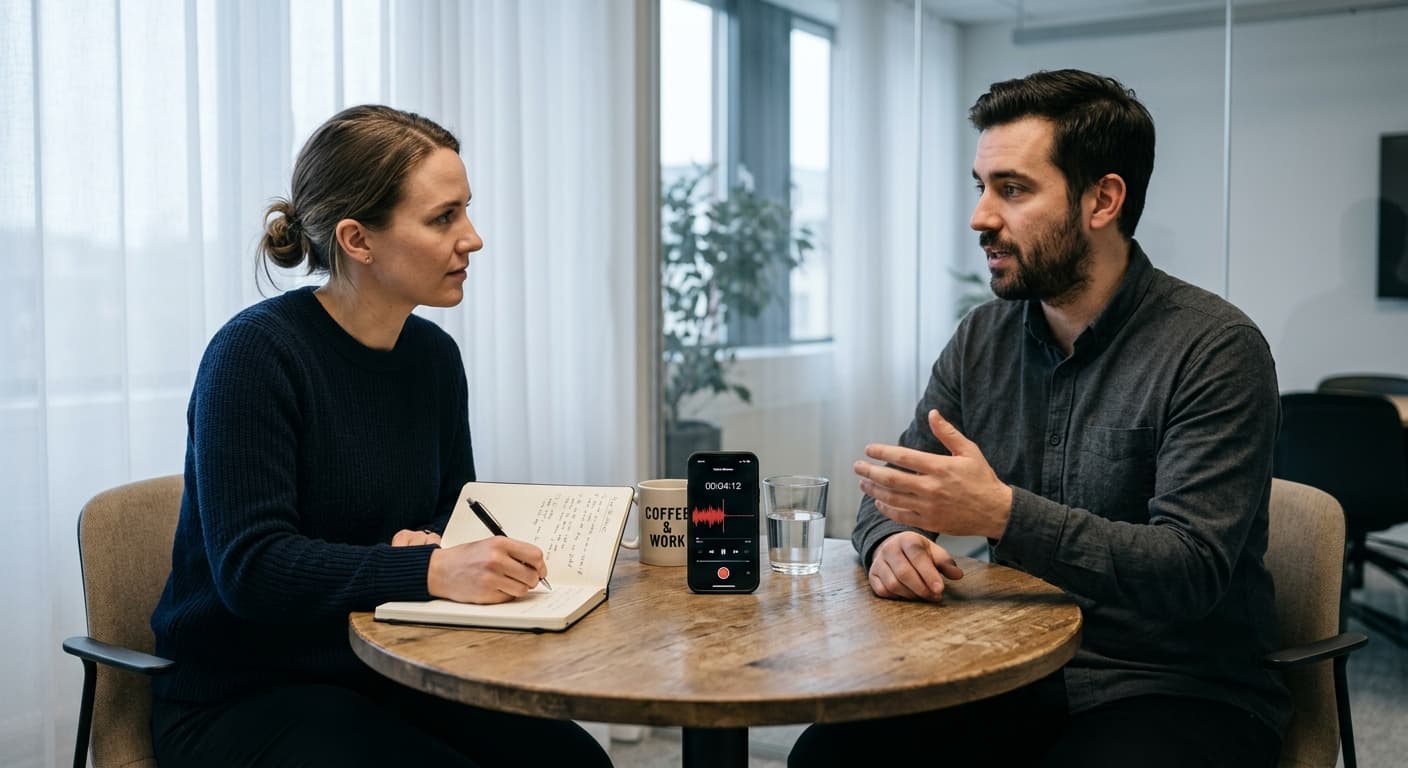
Enregistrer une conversation à laquelle vous participez est légal au Yukon. Le Canada applique une règle de consentement à une seule partie à l'échelle nationale : l'alinéa 184(2)a) du Code criminel permet à toute partie à une communication privée de l'enregistrer sans en aviser ni obtenir le consentement des autres parties. Enregistrer une conversation à laquelle vous n'êtes pas partie (et sans le consentement d'aucune partie) constitue une infraction criminelle passible d'une peine maximale de cinq ans d'emprisonnement.
Est-il légal d'enregistrer des conversations au Yukon ?
Oui, dans la plupart des situations courantes. La règle applicable n'est pas une loi territoriale. Il s'agit d'une règle fédérale inscrite dans le Code criminel du Canada, qui s'applique uniformément dans toutes les provinces et tous les territoires, y compris le Yukon.
Le paragraphe 184(1) du Code criminel crée l'infraction de base : il est criminel d'intercepter une communication privée au moyen d'un dispositif électromagnétique, acoustique, mécanique ou autre sans le consentement d'une partie à cette communication. La peine est un acte criminel passible d'une peine maximale de cinq ans d'emprisonnement, ou une procédure sommaire.
L'alinéa 184(2)a) prévoit l'exception essentielle. L'infraction prévue au paragraphe 184(1) ne s'applique pas à une personne qui a la permission, expresse ou tacite, de l'auteur de la communication privée ou de la personne que l'auteur voulait en faire le destinataire. En clair : si vous êtes l'une des parties à la conversation, vous êtes déjà, par définition, une partie consentante, et vous pouvez donc l'enregistrer.
Il s'agit de la règle canadienne du consentement à une seule partie, et elle est identique dans chaque province et territoire. Aucune loi du Yukon ne la modifie ni ne la resserre.
L'article 183 du Code criminel définit la « communication privée » comme une communication orale ou une télécommunication faite dans des circonstances qui permettent à l'auteur de s'attendre raisonnablement à ce qu'elle ne soit interceptée par personne d'autre que le destinataire visé. Cette norme de l'attente raisonnable en matière de vie privée est intégrée à la définition même. Une conversation tenue dans un contexte véritablement public (un discours dans un parc, une déclaration lors d'une assemblée publique, une conversation dans un restaurant bondé) pourrait ne pas constituer une « communication privée » du tout, ce qui signifie que l'article 184 n'est même pas déclenché.
Enregistrer des conversations auxquelles vous êtes partie
Si vous êtes participant à la conversation, vous pouvez l'enregistrer légalement en vertu de l'alinéa 184(2)a), peu importe le support : conversations en personne, appels téléphoniques, appels vidéo, clavardages de groupe ou toute autre forme de communication.
Vous n'avez pas besoin d'annoncer que vous enregistrez. Vous n'avez pas besoin de l'accord de l'autre personne. Le consentement d'une seule partie (le vôtre) est légalement suffisant.
L'article 183.1 du Code criminel étend explicitement cette règle aux communications entre plusieurs personnes. Lorsqu'une communication privée provient de plus d'un auteur ou est destinée à plus d'un destinataire, le consentement de l'une de ces personnes suffit aux fins de la partie VI du Code criminel. Un appel de groupe réunissant plusieurs personnes au Yukon et ailleurs au Canada peut être légalement enregistré par un seul participant.
Un enregistrement légal ne signifie pas un enregistrement sans conséquence. Vous êtes autorisé à faire l'enregistrement, mais ce que vous en faites ensuite est une question distincte, traitée ci-dessous.
Enregistrer autrui sans son consentement
Enregistrer une communication privée à laquelle vous n'êtes pas partie, et sans le consentement exprès ou tacite d'au moins une partie, constitue un acte criminel en vertu du paragraphe 184(1), passible d'une peine maximale de cinq ans d'emprisonnement ou, au choix de la Couronne, d'une procédure sommaire.
L'infraction ne se limite pas à des techniques sophistiquées d'écoute électronique. Tout dispositif (un téléphone intelligent tenu dans un couloir, un enregistreur à activation vocale laissé dans une pièce, une application d'écoute installée sur le téléphone d'une autre personne) peut constituer une interception si la personne qui le déploie n'est pas partie à la communication et qu'aucune partie n'y a consenti.
Appels téléphoniques
Les appels téléphoniques sont des communications privées au sens de l'article 183. La même règle du consentement à une seule partie s'applique : une partie à l'appel peut l'enregistrer; un tiers ne le peut pas.
Il n'existe aucune obligation réglementaire au Yukon exigeant que les entreprises ou les particuliers annoncent l'enregistrement d'un appel aux appelants, sauf dans la mesure où la LPRPDE (traitée ci-dessous) pourrait imposer des exigences d'avis aux organisations qui enregistrent les appels de leurs clients dans le cadre d'une activité commerciale. Les particuliers qui enregistrent leurs propres appels personnels ne sont pas assujettis à la LPRPDE.
Enregistrement vidéo et voyeurisme
La règle du consentement à une seule partie prévue à l'article 184 est une règle relative aux communications audio. Elle n'autorise pas tout enregistrement vidéo.
Le paragraphe 162(1) du Code criminel crée l'infraction de voyeurisme : constitue un crime le fait d'observer subrepticement ou de faire un enregistrement visuel d'une personne se trouvant dans des circonstances qui donnent lieu à une attente raisonnable en matière de vie privée. Les trois circonstances visées sont : a) un lieu comme une salle d'essayage, des toilettes ou une résidence privée où l'on peut raisonnablement s'attendre à ce qu'une personne soit nue ou s'expose sexuellement; b) une situation où la personne est nue ou s'expose et où le but de l'enregistrement est de capter cet état; et c) toute situation où l'observation ou l'enregistrement est fait à des fins sexuelles. La peine est un acte criminel passible d'une peine maximale de cinq ans d'emprisonnement, ou une procédure sommaire.
L'article 162.1 crée une infraction distincte pour la publication non consensuelle d'images intimes : publier, distribuer, transmettre, vendre ou rendre accessible, sciemment, une image intime d'une personne sans son consentement, ou en faisant preuve d'insouciance à cet égard, est passible d'une peine maximale de cinq ans d'emprisonnement sur mise en accusation. Cette infraction s'applique peu importe la manière dont l'image a été obtenue à l'origine. Même une image enregistrée légalement ne peut être distribuée sans le consentement de la personne représentée.
Dans les lieux publics où aucune attente raisonnable en matière de vie privée n'existe, l'enregistrement vidéo occasionnel (filmer une scène de rue, enregistrer un événement public, documenter une activité près d'un édifice gouvernemental) n'est généralement pas restreint par l'article 162.
Enregistrer la police et les représentants publics
Enregistrer des policiers et d'autres représentants publics dans l'exercice de leurs fonctions, dans un lieu accessible au public, est généralement légal au Yukon, comme dans tout ressort au Canada.
Aucune disposition du Code criminel n'interdit de filmer ou d'enregistrer les forces de l'ordre. Ce droit est fondé sur l'alinéa 2b) de la Charte canadienne des droits et libertés, qui protège la liberté d'expression, y compris la collecte d'information dans les lieux publics.
La seule limite criminelle est l'article 129 du Code criminel, qui érige en infraction le fait d'entraver ou de résister à un agent de la paix dans l'exécution de ses fonctions. Enregistrer à une distance sécuritaire sans nuire aux opérations policières ne viole pas l'article 129. Les agents ne peuvent pas légalement ordonner à un témoin de cesser de filmer par principe, et ne peuvent pas saisir un appareil d'enregistrement sans mandat, à moins qu'une exception reconnue à cette exigence ne s'applique.
Ce droit est particulièrement pertinent au Yukon, où les préoccupations relatives aux services policiers dans les collectivités éloignées et les territoires autochtones ont historiquement suscité un intérêt public pour la surveillance civile.
Enregistrement en milieu de travail au Yukon
Enregistrer une conversation en milieu de travail à laquelle vous êtes partie est légal en vertu de l'alinéa 184(2)a) du Code criminel. Cela s'applique, que la conversation soit une évaluation de rendement, une réunion disciplinaire, un appel d'équipe ou une discussion informelle avec un superviseur.
Les employés et employeurs du Yukon devraient connaître une distinction essentielle : la légalité au regard du Code criminel ne met pas un employé à l'abri des conséquences liées à l'emploi. Les tribunaux canadiens et les arbitres en droit du travail ont jugé à maintes reprises que l'enregistrement clandestin en milieu de travail peut constituer une violation de la confiance, une atteinte à la relation d'emploi, ou une conduite incompatible avec le maintien de l'emploi, même lorsque l'enregistrement lui-même était techniquement légal. La confirmation d'un congédiement pour motif valable fondé sur un enregistrement clandestin dépend du contexte, de la nature de la relation d'emploi, des attentes raisonnables de l'employeur en matière de confidentialité, et de la proportionnalité de l'enregistrement par rapport à la préoccupation qu'il visait à résoudre.
Les employeurs qui enregistrent leurs employés au moyen de la surveillance des appels, de la vidéosurveillance ou de systèmes de surveillance électronique sont assujettis aux exigences de la LPRPDE applicables aux organisations commerciales (voir ci-dessous) et doivent généralement donner un avis de l'enregistrement.
Droit de la vie privée au Yukon : la LPRPDE s'applique, aucune loi territoriale sur le secteur privé
C'est la nuance clé en matière de vie privée pour le Yukon.
La Colombie-Britannique, l'Alberta et le Québec ont chacune des lois provinciales sur la vie privée dans le secteur privé jugées « essentiellement similaires » à la LPRPDE par le gouverneur en conseil. Le Yukon n'a adopté aucune loi de ce type. Il n'existe aucun équivalent yukonnais à la Personal Information Protection Act de la C.-B. ou de l'Alberta qui écarterait l'application de la LPRPDE pour l'activité commerciale intraterritoriale.
Au contraire, le Commissariat à la protection de la vie privée du Canada a confirmé que les organisations exerçant leurs activités au Yukon, dans les Territoires du Nord-Ouest et au Nunavut sont considérées comme assujetties à la réglementation fédérale aux fins de la LPRPDE. La LPRPDE s'applique donc pleinement et directement à toute organisation du secteur privé au Yukon qui recueille, utilise ou communique des renseignements personnels dans le cadre d'une activité commerciale.
Les 10 principes équitables en matière de traitement de l'information de la LPRPDE (responsabilité, détermination des fins, consentement, limitation de la collecte, limitation de l'utilisation, de la communication et de la conservation, exactitude, mesures de sécurité, transparence, accès individuel, et possibilité de porter plainte) lient les organisations commerciales du Yukon de la même manière qu'ils lient les entreprises assujetties à la réglementation fédérale partout au Canada.
Fait important, la LPRPDE ne s'applique pas à une personne qui enregistre ses propres conversations personnelles. Son champ d'application vise les organisations exerçant une activité commerciale. Un résident du Yukon qui enregistre un appel avec un ami ou une conversation avec un membre de sa famille échappe entièrement à la portée de la LPRPDE. La Loi sur la protection des renseignements personnels et les documents électroniques (L.C. 2000, ch. 5) exclut expressément les activités personnelles ou domestiques.
L'application de la LPRPDE relève du Commissariat à la protection de la vie privée du Canada, basé à Ottawa, qui reçoit les plaintes, mène des enquêtes et publie des conclusions et des recommandations.
Protection de la vie privée dans le secteur public territorial : la Loi ATIPP
La Loi sur l'accès à l'information et la protection de la vie privée du Yukon (Loi ATIPP) régit les organismes gouvernementaux et les institutions publiques du Yukon. Elle accorde aux particuliers un droit d'accès aux documents gouvernementaux et impose des obligations en matière de vie privée aux organisations du secteur public : les ministères, organismes, offices et commissions du gouvernement du Yukon.
La Loi ATIPP est une loi visant le secteur public. Elle ne crée aucun droit d'action civile pour un particulier contre un autre particulier. Elle ne réglemente pas les pratiques de traitement des données du secteur privé. Elle n'a aucune incidence sur le droit d'enregistrer des conversations privées.
Pour la plupart des résidents du Yukon, la Loi ATIPP est pertinente lorsqu'ils demandent des renseignements gouvernementaux ou déposent une plainte sur la façon dont un organisme gouvernemental du Yukon a traité leurs renseignements personnels. Elle n'est pas une source de responsabilité civile entre particuliers.
Recours civils : une lacune importante
Le paysage civil en matière de vie privée au Yukon est nettement plus limité que dans plusieurs autres ressorts canadiens.
Le Yukon n'a aucune Privacy Act de nature législative créant un délit de violation de la vie privée, contrairement à la Colombie-Britannique (Privacy Act, RSBC 1996, ch. 373), à la Saskatchewan (The Privacy Act, RSS 1978, ch. P-24), au Manitoba (The Privacy Act, CCSM ch. P125) et à Terre-Neuve-et-Labrador (Privacy Act, RSNL 1990, ch. P-22). Ces quatre ressorts permettent à une personne de poursuivre pour atteinte à la vie privée sans prouver de perte financière.
Le Yukon n'est pas non plus l'Ontario, où la Cour d'appel a définitivement reconnu, dans Jones c. Tsige (2012 ONCA 32), un délit de common law d'intrusion dans l'intimité. Les résidents de l'Ontario peuvent poursuivre pour une intrusion intentionnelle ou téméraire dans leurs affaires privées sans prouver de préjudice financier réel, et peuvent recouvrer jusqu'à environ 20 000 $.
Au Yukon, une personne dont les communications privées sont enregistrées sans consentement, ou dont les renseignements personnels sont utilisés de manière abusive, ferait face à une réelle difficulté pour intenter une poursuite civile. Aucun tribunal du Yukon n'a définitivement adopté le délit d'intrusion dans l'intimité, et il n'existe aucune Privacy Act territoriale sur laquelle s'appuyer. Un demandeur potentiel pourrait tenter de s'appuyer sur la common law, en espérant qu'un tribunal du Yukon suive le raisonnement de la Cour d'appel de l'Ontario dans Jones c. Tsige, mais une telle réclamation demeure incertaine et n'a pas été mise à l'épreuve sur le territoire.
La conséquence pratique est que l'application du droit criminel en vertu des articles 184(1) et 193 du Code criminel constitue, pour la plupart des résidents du Yukon, le principal recours juridique contre l'interception illégale.
Résumé des peines
Les peines pertinentes du Code criminel pour l'enregistrement illégal et les conduites connexes au Yukon sont les suivantes.
Intercepter une communication privée sans le consentement d'une partie en vertu du paragraphe 184(1) : acte criminel, peine maximale de cinq ans d'emprisonnement, ou procédure sommaire.
Utiliser, révéler la substance d'une communication privée interceptée illégalement, ou en révéler l'existence, sciemment, en vertu du paragraphe 193(1) : acte criminel, peine maximale de deux ans d'emprisonnement, ou procédure sommaire.
Le voyeurisme en vertu du paragraphe 162(1) (enregistrement visuel clandestin dans des circonstances donnant lieu à une attente raisonnable en matière de vie privée) : acte criminel, peine maximale de cinq ans d'emprisonnement, ou procédure sommaire.
La publication non consensuelle d'images intimes en vertu de l'article 162.1 : acte criminel, peine maximale de cinq ans d'emprisonnement, ou procédure sommaire.
Entraver un agent de la paix dans l'exécution de ses fonctions en vertu de l'article 129 pendant un enregistrement : infraction punissable par procédure sommaire.
Conseils pratiques pour l'enregistrement au Yukon
Soyez partie à la conversation avant de l'enregistrer. La règle du consentement à une seule partie prévue à l'alinéa 184(2)a) vous protège lorsque vous êtes participant. Si vous enregistrez une conversation à laquelle vous n'êtes pas partie et qu'aucune partie n'y a consenti, vous commettez une infraction criminelle.
Comprenez qu'un enregistrement légal ne signifie pas un partage sans danger. Même un enregistrement fait légalement peut vous exposer à une responsabilité criminelle en vertu de l'article 193 si vous le partagez et que la communication sous-jacente a été interceptée sans consentement par une autre personne, ou à une responsabilité civile en diffamation si le contenu est faux ou trompeur.
Dans un contexte de travail, réfléchissez soigneusement avant d'enregistrer clandestinement. La légalité criminelle et la légalité en matière d'emploi ne sont pas identiques. L'enregistrement clandestin en milieu de travail a entraîné des congédiements pour motif valable devant des tribunaux canadiens, même lorsque l'enregistrement lui-même n'était pas un acte criminel.
Pour l'enregistrement vidéo, l'infraction de voyeurisme prévue à l'article 162 s'applique peu importe que vous soyez ou non partie à une communication. Tout enregistrement visuel clandestin dans un lieu où une personne a une attente raisonnable en matière de vie privée constitue une affaire criminelle.
Les organisations commerciales qui enregistrent les communications de leurs clients ou de leurs employés au Yukon doivent se conformer à la LPRPDE. Cela comprend la fourniture d'un avis, l'obtention d'un consentement approprié et la mise en place de mesures de sécurité raisonnables.
L'enregistrement transfrontalier (par exemple, un résident du Yukon qui enregistre un appel avec une personne se trouvant dans un État américain) demeure régi par le Code criminel du Canada du côté canadien, mais les lois de l'autre ressort peuvent imposer des exigences additionnelles. Pour les appels avec des personnes se trouvant dans des États américains à consentement de deux parties, comme la Californie, l'omission d'aviser l'autre partie pourrait violer la loi de cet État.
Guides juridiques canadiens connexes
- Droit canadien par province et par sujet
- Lois sur l'enregistrement au Canada
- Lois sur les délits de fuite au Yukon
- Lois sur la pension alimentaire pour enfants au Yukon
- Lois sur les chutes et glissades au Yukon
Questions fréquentes
Le Yukon applique-t-il la règle du consentement à une seule partie ou à deux parties pour l'enregistrement ?
Le Yukon applique la règle fédérale canadienne du consentement à une seule partie prévue à l'alinéa 184(2)a) du Code criminel. Toute personne partie à la conversation peut l'enregistrer sans la connaissance ni l'accord de l'autre partie. Aucune loi territoriale du Yukon ne modifie ni ne resserre cette règle.
Puis-je enregistrer un appel téléphonique au Yukon sans en informer l'autre personne ?
Oui, si vous êtes partie à l'appel. L'alinéa 184(2)a) du Code criminel permet à toute partie d'enregistrer une communication privée. Vous n'avez pas besoin d'annoncer l'enregistrement. Enregistrer un appel auquel vous ne participez pas, sans le consentement d'une partie, constitue une infraction criminelle passible d'une peine maximale de cinq ans d'emprisonnement.
Est-il légal d'enregistrer la police au Yukon ?
Généralement oui, dans les lieux accessibles au public. Aucune disposition du Code criminel n'interdit de filmer les forces de l'ordre. Ce droit est fondé sur l'alinéa 2b) de la Charte canadienne des droits et libertés (liberté d'expression, y compris la collecte d'information). Vous ne devez pas entraver physiquement les agents dans l'exercice de leurs fonctions, puisque l'article 129 du Code criminel interdit l'entrave à un agent de la paix.
Puis-je enregistrer une réunion avec mon employeur ou une conversation en milieu de travail au Yukon ?
Vous pouvez enregistrer toute conversation en milieu de travail à laquelle vous êtes partie en vertu de l'alinéa 184(2)a) du Code criminel. Toutefois, l'enregistrement clandestin en milieu de travail peut violer vos devoirs en tant qu'employé et a été jugé constituer un motif valable de congédiement dans des décisions canadiennes en droit du travail, même lorsque l'enregistrement lui-même n'était pas criminel. Le contexte et la proportionnalité sont importants.
Le Yukon a-t-il sa propre loi sur l'enregistrement ?
Non. Le droit du consentement à l'enregistrement au Canada relève entièrement du fédéral, et non du territorial. Les dispositions pertinentes se trouvent dans le Code criminel du Canada (art. 183, 183.1, 184, 193), qui s'appliquent uniformément dans toutes les provinces et tous les territoires. Le Yukon n'a adopté aucune loi territoriale qui modifie ce cadre.
Quelle loi sur la vie privée s'applique aux entreprises au Yukon ?
La LPRPDE (Loi sur la protection des renseignements personnels et les documents électroniques, L.C. 2000, ch. 5) s'applique directement à toutes les organisations du secteur privé au Yukon qui recueillent, utilisent ou communiquent des renseignements personnels dans le cadre d'une activité commerciale. Le Yukon n'a aucune loi territoriale sur la vie privée dans le secteur privé. Les organisations du territoire sont considérées comme assujetties à la réglementation fédérale aux fins de la LPRPDE.
Qu'est-ce que la Loi ATIPP et affecte-t-elle l'enregistrement privé ?
La Loi ATIPP est la Loi sur l'accès à l'information et la protection de la vie privée du Yukon. Elle s'applique uniquement aux organismes gouvernementaux et institutions publiques du Yukon. Elle ne réglemente pas la conduite du secteur privé, ne crée aucun droit d'action civile entre particuliers, et n'a aucune incidence sur votre droit d'enregistrer une conversation privée.
Quelle est la peine pour avoir illégalement enregistré une personne au Yukon ?
Intercepter une communication privée sans le consentement d'une partie constitue un acte criminel en vertu de l'article 184(1) du Code criminel, passible d'une peine maximale de cinq ans d'emprisonnement ou d'une procédure sommaire. Communiquer ou révéler un tel enregistrement constitue une infraction additionnelle en vertu du paragraphe 193(1), passible d'une peine maximale de deux ans d'emprisonnement ou d'une procédure sommaire.
Puis-je poursuivre quelqu'un au Yukon pour m'avoir enregistré sans mon consentement ?
C'est difficile. Le Yukon n'a aucune Privacy Act de nature législative créant un délit civil de violation de la vie privée (contrairement à la C.-B., à la Saskatchewan, au Manitoba et à Terre-Neuve-et-Labrador). Aucun tribunal du Yukon n'a définitivement adopté le délit de common law d'intrusion dans l'intimité établi en Ontario dans Jones c. Tsige. Les recours civils contre un enregistrement intrusif au Yukon sont incertains. Des accusations criminelles en vertu du paragraphe 184(1) ou une plainte à la LPRPDE (si une organisation est impliquée) pourraient constituer des voies plus viables.
Est-il illégal de partager un enregistrement d'une personne au Yukon ?
Partager un enregistrement qui a lui-même été intercepté illégalement (sans le consentement d'aucune partie) constitue une infraction criminelle en vertu du paragraphe 193(1) du Code criminel, passible d'une peine maximale de deux ans d'emprisonnement. Partager des images intimes sans consentement viole l'article 162.1, passible d'une peine maximale de cinq ans. Partager une conversation légalement enregistrée n'est visé par aucune interdiction précise du Code criminel, mais peut entraîner une responsabilité civile en diffamation selon le contenu.
Mises à jour
Vérification indépendante contre les sources primaires citées
Les textes de loi derrière cet article
This article rests on the statutory provisions below, held in our own legal record and retrieved from the official source. Tap a section to read the operative text.
Criminal Code
s. 129Offences relating to public or peace officerEn vigueurcited in 22 of our articles
Every one who (a) resists or wilfully obstructs a public officer or peace officer in the execution of his duty or any person lawfully acting in aid of such an officer, (b) omits, without reasonable excuse, to assist a public officer or peace officer in the execution of his duty in arresting a person or in preserving the peace, after having reasonable notice that he is required to do so, or (c) resists or wilfully obstructs any person in the lawful execution of a process against lands or goods or in making a lawful distress or seizure, is guilty of (d) an indictable offence and is liable to imprisonment for a term not exceeding two years, or (e) an offence punishable on summary conviction.
Official text (excerpt) · last checked 2026-08-12 · Read the full text in our law library · Verify at laws-lois.justice.gc.ca
Cité dans 15 décisions judiciaires de notre collectionDécision la plus récente la citant dans notre collection : 2025
Décisions citant cette disposition dans notre collection :
- Kosoian v. Société de transport de Montréal (Supreme Court of Canada 2019, 2019 SCC 59)
- R. v. Greenbaum (Supreme Court of Canada 1993, [1993] 1 SCR 674)
- R. v. Sharma (Supreme Court of Canada 1993, [1993] 1 SCR 650)
Identified automatically from the court opinions citing this section — not a ranking of which case controls.
Also relied on in: Lois de l'Alberta sur l'enregistrement : règles du consentement d'une seule partie (2026), Lois sur l'enregistrement en Colombie-Britannique : consentement d'une seule partie et Privacy Act, Lois sur l'enregistrement au Manitoba : consentement d'une seule partie et Privacy Act
s. 162VoyeurismEn vigueurcited in 33 of our articles
(1) Every one commits an offence who, surreptitiously, observes — including by mechanical or electronic means — or makes a visual recording of a person who is in circumstances that give rise to a reasonable expectation of privacy, if (a) the person is in a place in which a person can reasonably be expected to be nude, to expose his or her genital organs or anal region or her breasts, or to be engaged in explicit sexual activity; (b) the person is nude, is exposing his or her genital organs or anal region or her breasts, or is engaged in explicit sexual activity, and the observation or recording is done for the purpose of observing or recording a person in such a state or engaged in such an activity; or (c) the observation or recording is done for a sexual purpose. (2) In this section, visual recording includes a photographic, film or video recording made by any means. (3) Paragraphs (1)(a) and (b) do not apply to a peace officer who, under the authority of a warrant issued under section 487.01, is carrying out any activity referred to in those paragraphs.
Official text (excerpt) · last checked 2026-08-12 · Read the full text in our law library · Verify at laws-lois.justice.gc.ca
Cité dans 6 décisions judiciaires de notre collectionDécision la plus récente la citant dans notre collection : 2023
Décisions citant cette disposition dans notre collection :
- R. v. Tim (Supreme Court of Canada 2022, 2022 SCC 12)
- R. v. Jarvis (Supreme Court of Canada 2019, 2019 SCC 10)
- Reference re Genetic Non‑Discrimination Act (Supreme Court of Canada 2020, 2020 SCC 17)
Identified automatically from the court opinions citing this section — not a ranking of which case controls.
Also relied on in: Enregistrer un appel au Canada : consentement d'une partie, Caméras de surveillance et sonnettes vidéo au Canada, Lois canadiennes sur l'enregistrement : consentement d'une seule partie et sanctions (2026)
s. 162.1Publication, etc., of an intimate image without consentEn vigueurcited in 29 of our articles
(1) Everyone who knowingly publishes, distributes, transmits, sells, makes available or advertises an intimate image of a person knowing that the person depicted in the image did not give their consent to that conduct, or being reckless as to whether or not that person gave their consent to that conduct, is guilty (a) of an indictable offence and liable to imprisonment for a term of not more than five years; or (b) of an offence punishable on summary conviction. (2) In this section, intimate image means a visual recording of a person made by any means including a photographic, film or video recording, (a) in which the person is nude, is exposing his or her genital organs or anal region or her breasts or is engaged in explicit sexual activity; (b) in respect of which, at the time of the recording, there were circumstances that gave rise to a reasonable expectation of privacy; and (c) in respect of which the person depicted retains a reasonable expectation of privacy at the time the offence is committed.
Official text (excerpt) · last checked 2026-08-12 · Read the full text in our law library · Verify at laws-lois.justice.gc.ca
Also relied on in: Lois sur l'enregistrement au Nouveau-Brunswick : guide du consentement d'une seule partie, Lois sur l'enregistrement à Terre-Neuve-et-Labrador, Lois sur l'enregistrement dans les Territoires du Nord-Ouest : consentement d'une seule partie
s. 183DefinitionsEn vigueurcited in 28 of our articles
In this Part, authorization means an authorization to intercept a private communication given under subsection 184.2(3), section 186 or subsection 188(2); ( autorisation ) electro-magnetic, acoustic, mechanical or other device means any device or apparatus that is used or is capable of being used to intercept a private communication, but does not include a hearing aid used to correct subnormal hearing of the user to not better than normal hearing; ( dispositif électromagnétique, acoustique, mécanique ou autre ) intercept includes listen to, record or acquire a communication or acquire the substance, meaning or purport thereof;
Official text (excerpt) · last checked 2026-08-12 · Read the full text in our law library · Verify at laws-lois.justice.gc.ca
Cité dans 8 décisions judiciaires de notre collectionDécision la plus récente la citant dans notre collection : 2024
Décisions citant cette disposition dans notre collection :
- R. v. Marakah (Supreme Court of Canada 2017, 2017 SCC 59)
- R. v. Mills (Supreme Court of Canada 2019, 2019 SCC 22)
- R. v. Campbell (Supreme Court of Canada 2024, 2024 SCC 42)
Identified automatically from the court opinions citing this section — not a ranking of which case controls.
Also relied on in: Lois sur l'enregistrement en Nouvelle-Écosse : règles du consentement d'une seule partie, Lois sur l'enregistrement au Nunavut : la règle du consentement à une seule partie, Lois sur l'enregistrement en Ontario : est-ce légal d'enregistrer ? (2026)
s. 183.1Consent to interceptionEn vigueurcited in 26 of our articles
Where a private communication is originated by more than one person or is intended by the originator thereof to be received by more than one person, a consent to the interception thereof by any one of those persons is sufficient consent for the purposes of any provision of this Part.
Official text (excerpt) · last checked 2026-08-12 · Read the full text in our law library · Verify at laws-lois.justice.gc.ca
Also relied on in: Lois sur l'enregistrement à l'Île-du-Prince-Édouard : consentement à une seule partie et droits à la vie privée, Lois sur l'enregistrement au Québec : consentement à une seule partie et Code civil, Lois sur l'enregistrement en Saskatchewan : guide du consentement à une seule partie
s. 184InterceptionEn vigueurcited in 55 of our articles
(1) Every person who, by means of any electro-magnetic, acoustic, mechanical or other device, knowingly intercepts a private communication is guilty of (a) an indictable offence and liable to imprisonment for a term of not more than five years; or (b) an offence punishable on summary conviction. (2) Subsection (1) does not apply to (a) a person who has the consent to intercept, express or implied, of the originator of the private communication or of the person intended by the originator thereof to receive it; (b) a person who intercepts a private communication in accordance with an authorization or pursuant to section 184.4 or any person who in good faith aids in any way another person who the aiding person believes on reasonable grounds is acting with an authorization or pursuant to section 184.4;
Official text (excerpt) · last checked 2026-08-12 · Read the full text in our law library · Verify at laws-lois.justice.gc.ca
Cité dans 5 décisions judiciaires de notre collectionDécision la plus récente la citant dans notre collection : 2023
Décisions citant cette disposition dans notre collection :
- X (Re) (Federal Court 2017, 2017 FC 1047)
- Canada (Information Commissioner) v. Canada (Transportation Accident Investigation and Safety Board) (Federal Court 2005, 2005 FC 384)
- Morgan v. Alta Flights (Charters)Inc. (Federal Court 2005, 2005 FC 421)
Identified automatically from the court opinions citing this section — not a ranking of which case controls.
Also relied on in: Droit canadien par province : guide fédéral et provincial, Lois sur les caméras de bord au Canada : règles et preuve, Vie privée au travail et surveillance des employés au Canada
s. 193Disclosure of informationEn vigueurcited in 28 of our articles
(1) If a private communication has been intercepted by means of an electro-magnetic, acoustic, mechanical or other device without the consent, express or implied, of the originator of that communication or of the person intended by the originator to receive it, every person commits an offence who, without the express consent of the originator of that communication or of the person intended to receive it, knowingly (a) uses or discloses the private communication or any part of it or the substance, meaning or purpose of it or of any part of it, or (b) discloses the existence of the private communication. (1.1) Every person who commits an offence under subsection (1) is guilty of (a) an indictable offence and liable to imprisonment for a term of not more than two years; or (b) an offence punishable on summary conviction.
Official text (excerpt) · last checked 2026-08-12 · Read the full text in our law library · Verify at laws-lois.justice.gc.ca
Cité dans 79 décisions judiciaires de notre collectionDécision la plus récente la citant dans notre collection : 2026
Décisions citant cette disposition dans notre collection :
- Blencoe v. British Columbia (Human Rights Commission) (Supreme Court of Canada 2000, 2000 SCC 44)
- Canada (Attorney General) v. Bedford (Supreme Court of Canada 2013, 2013 SCC 72)
- R. v. Sharpe (Supreme Court of Canada 2001, 2001 SCC 2)
Identified automatically from the court opinions citing this section — not a ranking of which case controls.
Sources et références
- Code criminel, L.R.C. 1985, ch. C-46, art. 184 — interception de communications privées (infraction et exception du consentement à une seule partie)(laws-lois.justice.gc.ca).gov
- Code criminel, L.R.C. 1985, ch. C-46, art. 183 — définition de « communication privée »(laws-lois.justice.gc.ca).gov
- Code criminel, L.R.C. 1985, ch. C-46, art. 183.1 — consentement d'une seule partie suffisant pour les communications entre plusieurs personnes(laws-lois.justice.gc.ca).gov
- Code criminel, L.R.C. 1985, ch. C-46, art. 193 — infraction de communication d'une communication privée interceptée (peine maximale de 2 ans)(laws-lois.justice.gc.ca).gov
- Code criminel, L.R.C. 1985, ch. C-46, art. 162 — infraction de voyeurisme (enregistrement visuel clandestin, peine maximale de 5 ans)(laws-lois.justice.gc.ca).gov
- Code criminel, L.R.C. 1985, ch. C-46, art. 162.1 — publication non consensuelle d'images intimes (peine maximale de 5 ans)(laws-lois.justice.gc.ca).gov
- Code criminel, L.R.C. 1985, ch. C-46, art. 129 — entrave à un agent de la paix(laws-lois.justice.gc.ca).gov
- Charte canadienne des droits et libertés, al. 2b) — liberté d'expression (fondement du droit de filmer la police en public)(laws-lois.justice.gc.ca).gov
- Loi sur la protection des renseignements personnels et les documents électroniques (LPRPDE), L.C. 2000, ch. 5 — loi fédérale sur la vie privée dans le secteur privé applicable aux organisations commerciales du Yukon(laws-lois.justice.gc.ca).gov
- Commissariat à la protection de la vie privée du Canada — aperçu des exigences de la LPRPDE(priv.gc.ca).gov
- Commissariat à la protection de la vie privée du Canada — lois provinciales et territoriales pouvant s'appliquer à la place de la LPRPDE (confirme que le Yukon est régi directement par la LPRPDE)(priv.gc.ca).gov
- Jones c. Tsige, 2012 ONCA 32 (CanLII) — la Cour d'appel de l'Ontario reconnaît le délit de common law d'intrusion dans l'intimité (Ontario; non encore adopté au Yukon)(canlii.org)