
Alberta
Alberta Slip and Fall Laws: Occupiers' Liability Act Guide
Independently fact-checked against primary sources (last audited June 18, 2026). · 12 primary sources cited on this page. How we verify our legal content
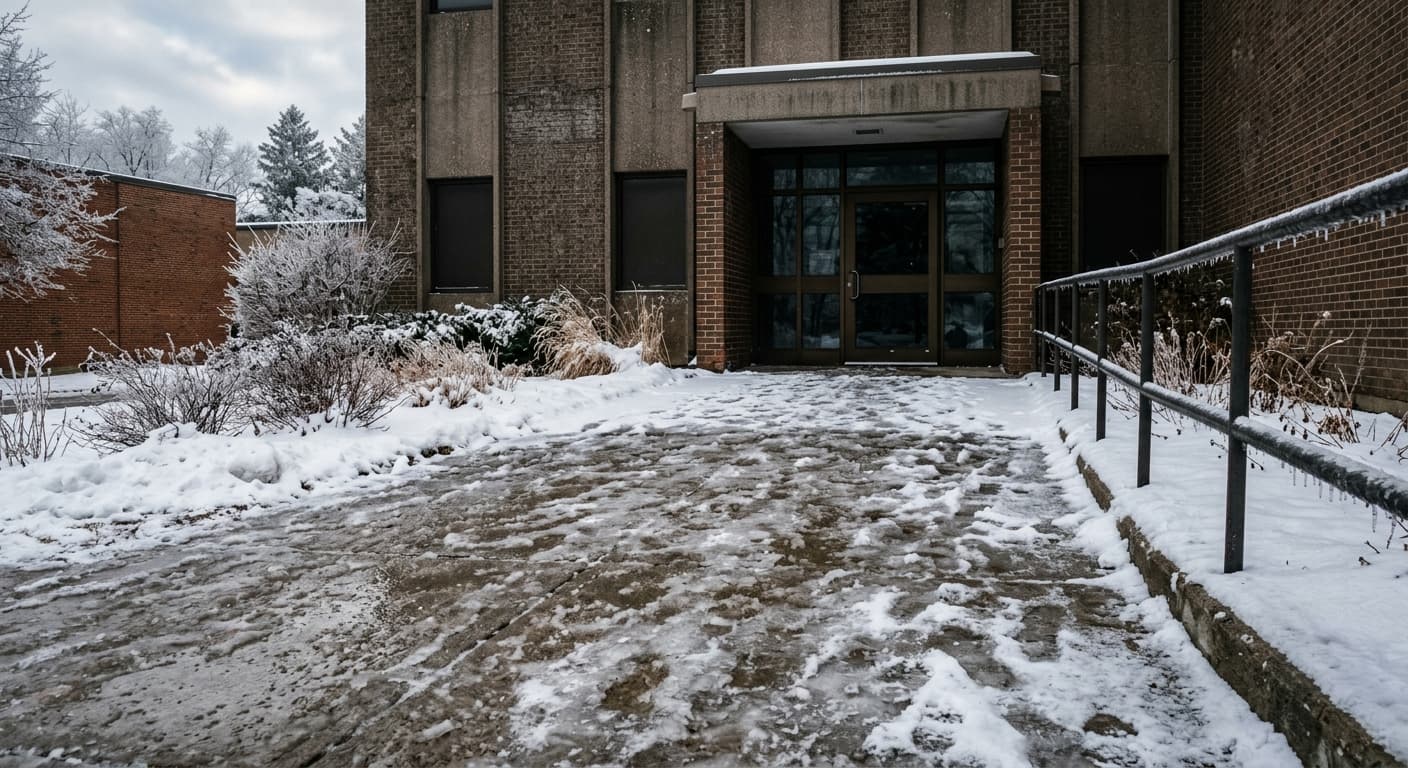
In Alberta, slip and fall claims are governed by the Occupiers' Liability Act, RSA 2000, c O-4. Section 5 of the Act imposes a statutory duty of reasonable care on every occupier of premises toward all visitors, replacing the old common-law categories of invitee and licensee with a single standard.
The scope of this article
This article covers slip and fall liability in Alberta under provincial law only. It addresses the Occupiers' Liability Act, RSA 2000, c O-4 (the "Act" or "OLA"), the recreational-use carve-out in section 6.1, the trespasser regime in sections 12 and 13, the 2-year limitation period under the Limitations Act, RSA 2000, c L-12, and municipal notice considerations under the Municipal Government Act, RSA 2000, c M-26. It does not address federal law, other provinces, or the common-law negligence regimes that still apply in Saskatchewan, New Brunswick, and Newfoundland and Labrador. For a national overview, see the Canada slip and fall laws hub.
Section 5: the statutory duty of care to visitors
Section 5 of the Occupiers' Liability Act states:
"An occupier of premises owes a duty to every visitor on the occupier's premises to take such care as in all the circumstances of the case is reasonable to see that the visitor will be reasonably safe in using the premises for the purposes for which the visitor is invited or permitted by the occupier to be there or is permitted by law to be there."
This is Alberta's "common duty of care." It replaced the old common-law approach that imposed different duties depending on whether the entrant was an invitee, a licensee, or a trespasser. Under the OLA, any person who qualifies as a "visitor" receives the same reasonable-care standard.
The Act defines "visitor" broadly in section 1(e). A visitor includes an entrant as of right (a person empowered by law to enter without the occupier's permission, such as a utility worker or building inspector), a person lawfully present by virtue of an express or implied contract term, any other person whose presence is lawful, and a person whose presence has become unlawful but who is taking reasonable steps to leave. In practice, shoppers, restaurant patrons, office visitors, guests at private residences, and users of commercial parking lots all qualify as visitors.
The duty extends to the condition of the premises, activities carried on the premises, and the conduct of third parties on the premises (s.6). An occupier can include more than one person: anyone in physical possession of the premises, or anyone with responsibility for and control over the condition of the premises, the activities conducted there, and the persons allowed to enter, can be an occupier (s.1(c)).
A warning sign alone does not discharge the duty unless, in all the circumstances, the warning was sufficient to enable the visitor to be reasonably safe (s.9). Liability for an independent contractor's negligence is displaced only where the occupier exercised reasonable care in selecting and supervising the contractor and it was reasonable to have engaged the contractor in the first place (s.11).
Recreational and rural premises: the section 6.1 carve-out
Section 6.1, added in 2003, is one of the most practically significant provisions of the Alberta OLA. It provides that a person who uses certain types of premises for a recreational purpose is treated as a trespasser unless the occupier receives commercial payment for their entry or activity, or provides them with living accommodation on the premises.
The categories of premises to which section 6.1 applies are:
- Rural premises used for agricultural purposes, including land under cultivation
- Vacant or undeveloped premises
- Forested or wilderness premises
- Golf courses when not open for playing
- Utility rights-of-way (excluding structures on them)
- Recreational trails that are reasonably marked as such
The payment exception is deliberately narrow. A government grant or contribution to an occupier, or a payment from a government agency, does not trigger visitor status. Nor does payment received from a non-profit recreation club or association. The legislature's intention was to encourage landowners to leave rural and wilderness land accessible to recreational users without the deterrent effect of the full visitor duty of care.
In practice, this means that a hiker injured on a marked recreational trail on private forested land recovers nothing unless the occupier's conduct was wilful or reckless, which is the trespasser standard under section 12. A mountain biker using a marked trail on agricultural land receives the same reduced protection. By contrast, a paying customer at a ski resort or a guided trail ride receives the full visitor duty because the commercial payment takes them outside section 6.1.
Section 11.1, added alongside section 6.1, applies a trespasser standard to persons who enter land under an agricultural disposition issued under the Public Lands Act, where the entry is authorised under section 62.1 of that Act. The liability of the disposition holder is determined as if the entrant were a trespasser.
Trespassers: sections 12 and 13
General trespassers
Section 12 divides trespassers into two categories: ordinary trespassers and criminal trespassers.
For an ordinary (non-criminal) trespasser, section 12(2) provides that the occupier is not liable for death or injury to the trespasser unless the death or injury results from the occupier's wilful or reckless conduct. Simple negligence is not enough; a person who slips on a dangerously maintained portion of private property they entered without permission cannot succeed on an ordinary negligence theory.
The threshold rises further for criminal trespassers. Section 12(4) defines a criminal trespasser as a person whom the occupier has reasonable grounds to believe is committing or is about to commit a Criminal Code offence. Section 12(3) provides that where the trespasser is a criminal trespasser, no action lies unless the death or injury was caused by occupier conduct that was both wilful and grossly disproportionate in the circumstances, and that resulted in the occupier being convicted of an indictable Criminal Code offence. In practice, this standard is almost never met.
The 2019 amendment (SA 2019 c 23 s2) made section 12 retroactive to any trespass occurring on or after 1 January 2018.
Child trespassers: the allurement doctrine
Section 13 carves out a distinct category for child trespassers. Where an occupier knows or has reason to know both that a child trespasser is on the premises and that a condition or activity on the premises creates a danger of death or serious bodily harm to that child, the occupier owes a duty to take such care as in all the circumstances is reasonable to see that the child will be reasonably safe from that danger.
Section 13(3) gives "reason to know" a generous meaning: the occupier has reason to know if they have knowledge of facts from which a reasonable person would infer that a child is present, or that the presence of a child is so probable that the occupier should act on the assumption that a child is present. Factors such as a property's proximity to a school or residential neighbourhood, or the presence of features known to attract children such as unfenced pools, climbing structures, or construction equipment, can give an occupier reason to know.
In determining whether the section 13 duty was discharged, courts consider the child's age, the child's ability to appreciate the danger, and the burden on the occupier of eliminating the danger or protecting the child as compared to the risk that the danger poses to the child (s.13(2)). This three-factor balancing test captures the classic allurement analysis: a low-cost fix of a high-attraction, high-risk feature near a likely child population will almost always require action.
Risks willingly accepted
Section 7 of the Act provides that an occupier is not under an obligation to discharge the common duty of care to a visitor in respect of risks willingly accepted by the visitor. This statutory volenti non fit injuria provision applies to visitors, not only to trespassers.
Willing acceptance of a risk means something more than mere awareness of it. Courts in Alberta and other OLA provinces have held that the visitor must freely and voluntarily accept both the physical risk and the legal risk of injury without compensation. Signing a comprehensive liability waiver at a commercial recreation facility can constitute willing acceptance, but courts scrutinise such waivers carefully, particularly where the language was not brought clearly to the visitor's attention before entry.
Section 8 confirms that an occupier's liability under the Act can be extended, restricted, modified, or excluded by express agreement or express notice, but only if reasonable steps were taken to bring the restriction to the visitor's attention. Section 8(2) removes this power entirely for visitors who are entrants as of right: an occupier cannot contractually reduce the duty owed to a building inspector, bylaw officer, or other person with a legal right of entry.
Contributory fault in Alberta
Section 15(1) of the OLA provides that when an occupier fails to discharge the common duty of care and the visitor suffers damage partly as a result of the occupier's fault and partly as a result of the visitor's own fault, the Contributory Negligence Act, RSA 2000, c C-27, applies. Section 15(2) extends the same rule to trespassers and child trespassers where the occupier is found liable under sections 12(2) or 13.
Alberta's Contributory Negligence Act apportions damages proportionately among all persons at fault. A visitor who was careless contributes to their own injury, and their award is reduced by their percentage of fault. Unlike the old common-law rule that treated any contributory negligence as a complete bar to recovery, the statutory apportionment regime means a visitor who was 30% responsible for a fall can still recover 70% of their proven damages from the occupier.
Defence arguments that visitors contributed to their falls are common in Alberta slip and fall litigation. Typical allegations include: wearing footwear unsuitable for the conditions (particularly relevant in winter), failing to watch where one was walking, ignoring visible warnings or barriers, or proceeding into a clearly hazardous area when a safe alternative route was available. Courts weigh these factors against the occupier's own conduct and the circumstances of the premises.
The 2-year limitation period
The Limitations Act, RSA 2000, c L-12, s.3 sets out the basic limitation period for civil claims in Alberta, including slip and fall claims under the OLA. No proceeding may be commenced after the expiry of 2 years from the date the claim was discovered.
Discovery occurs when the claimant first knew, or in the circumstances ought to have known, that the injury occurred, that it was caused by or contributed to by an act or omission of the defendant, and that a court proceeding would be an appropriate means to remedy the injury. For most slip and fall claims, discovery occurs on the date of the fall itself, since the injury, cause, and potential defendant are immediately apparent. The 2-year clock begins running that day.
A minor's limitation period does not run until that person turns 18 (subject to the Act's rules on disability). Where the claimant was under a legal disability at the time the claim arose, the 2-year period is suspended until the disability ends.
There is no 60-day snow and ice pre-notice requirement in Alberta comparable to Ontario's OLA section 6.1 (added by SO 2020, c 33). Alberta's OLA contains no equivalent provision. A person who slips on ice or snow on private premises in Alberta need only comply with the 2-year limitation period; there is no preliminary notice deadline to the occupier or a contractor.
Municipal and government property
Where a slip and fall occurs on premises owned or maintained by a municipality or the Crown in right of Alberta, two additional considerations arise.
First, section 16 of the OLA provides that the Crown in right of Alberta is bound by the Act. Provincial government properties such as courthouses, public buildings, and provincial parks are therefore subject to the same section 5 duty of care as private occupiers.
Second, section 532 of the Municipal Government Act, RSA 2000, c M-26, limits municipal liability for injury or damage caused by a failure to maintain a road or public place in a reasonable state of repair. A municipality is not liable unless it had notice of the failure to maintain and failed to take action within a reasonable time. Claims against municipalities for falls on municipal sidewalks, parking lots, and public buildings must also comply with any notice requirements under the MGA and related regulations.
Unlike Ontario, Alberta does not impose a short statutory pre-suit notice period (such as Ontario's 10-day Municipal Act window) that can summarily bar a claim against a municipality for failure to comply. Alberta municipalities are nonetheless entitled to be notified of a claim within a reasonable time, and delay in notifying can prejudice a claimant's ability to gather evidence and establish the municipality's prior knowledge of the hazard. Anyone injured on municipal property should document the scene, notify the municipality promptly in writing, and seek legal advice as early as possible.
What damages are recoverable
A successful slip and fall plaintiff in Alberta can recover both economic and non-economic damages.
Economic damages include all quantifiable financial losses caused by the injury: past and future medical and rehabilitation expenses, prescription costs, physiotherapy, lost income during recovery, reduced future earning capacity, and any costs of home care or assistive devices. These categories are uncapped.
Non-economic damages cover pain and suffering, loss of enjoyment of life, loss of amenities, and similar intangible harms. The Supreme Court of Canada established an informal cap on non-pecuniary general damages in Andrews v. Grand and Toy Alberta Ltd, 1978 CanLII 1 (SCC), a case that itself arose in Alberta. Indexed for inflation, this cap sits at approximately CAD $430,000 to $450,000 in 2025 dollars. It applies across Canada and limits the ceiling on pain and suffering awards in slip and fall personal injury claims, though most cases settle well below that ceiling.
Contributory negligence under the Contributory Negligence Act will reduce every category of award proportionately by the claimant's assigned percentage of fault.
This article presents general legal information about slip and fall law in Alberta under the Occupiers' Liability Act, RSA 2000, c O-4, and related statutes. It is not legal advice. The law may have changed since the information was last verified (June 2026). For advice about a specific incident, consult a lawyer licensed to practise in Alberta.
Related:
- Canada Slip and Fall Laws Hub
- Alberta Statute of Limitations
Related Canadian Guides
- Canadian law by province and topic
- Slip and Fall laws in Canada
- Alberta Recording laws
- Alberta Hit and Run laws
- Alberta Child Support laws
Frequently Asked Questions
What law governs slip and fall claims in Alberta?
Slip and fall claims in Alberta are governed by the Occupiers' Liability Act, RSA 2000, c O-4. Section 5 imposes a single statutory duty of reasonable care on every occupier toward all visitors, replacing the old common-law categories. The duty requires the occupier to take such care as is reasonable in the circumstances to see that the visitor will be reasonably safe while using the premises for the purposes for which they were invited or permitted to be there.
What is the limitation period for a slip and fall claim in Alberta?
The basic limitation period is 2 years from the date the claim was discovered, under the Limitations Act, RSA 2000, c L-12, s.3. For most falls, discovery occurs on the date of the fall itself because the injury, cause, and potential defendant are immediately apparent. Missing the 2-year deadline will almost always bar the claim entirely.
Does Alberta have a 60-day notice rule for snow and ice falls?
No. Alberta has no equivalent to Ontario's 60-day written notice requirement for snow and ice claims under OLA s.6.1 (SO 2020, c 33). In Alberta, a person who slips on ice or snow on private premises simply has 2 years from the date of the fall to commence proceedings. There is no preliminary written notice deadline to the occupier.
What duty does an occupier owe to a trespasser in Alberta?
Section 12(2) of the Occupiers' Liability Act limits occupier liability to non-criminal trespassers: the occupier is not liable for the death or injury of a non-criminal trespasser unless it resulted from the occupier's wilful or reckless conduct. Simple negligence is not enough. For criminal trespassers (persons the occupier has reasonable grounds to believe are committing a Criminal Code offence), the bar is higher still: the conduct must be wilful and grossly disproportionate and must result in an indictable Criminal Code conviction (s.12(3)).
What is the recreational user carve-out in section 6.1?
Section 6.1 of the Alberta OLA provides that a person who uses rural agricultural land, vacant or undeveloped land, forested or wilderness premises, golf courses (when not open), utility rights-of-way, or marked recreational trails for a recreational purpose is treated as a trespasser unless the occupier receives commercial payment for the entry or activity, or provides the person with living accommodation. Government grants and payments from non-profit recreation associations do not trigger visitor status.
Can a child trespasser sue in Alberta?
Yes. Section 13 of the Occupiers' Liability Act creates a heightened duty toward child trespassers. Where an occupier knows or has reason to know that a child is on the premises and that a condition or activity creates a danger of death or serious bodily harm to that child, the occupier owes a duty to take reasonable care to protect the child. Courts weigh the child's age, the child's ability to appreciate the danger, and the cost to the occupier of eliminating the risk. Reason to know is established if a reasonable person would infer a child's presence from the circumstances, such as proximity to a school or the presence of an attractive feature.
Can I recover if I was partly at fault for my fall in Alberta?
Yes. Section 15(1) of the Occupiers' Liability Act directs courts to apply the Contributory Negligence Act, RSA 2000, c C-27, which apportions damages proportionately. Your award is reduced by your percentage of fault, but recovery is not barred entirely. If you were 25% at fault for a fall, you can still recover 75% of your proven damages from the occupier.
What happens if I fall on a municipal sidewalk in Alberta?
The Occupiers' Liability Act applies to the Crown in right of Alberta (s.16) and, through the Municipal Government Act, RSA 2000, c M-26 s.532, to municipalities. A municipality is generally not liable for failure to maintain unless it had prior notice of the deficiency and failed to act within a reasonable time. Alberta has no short 10-day municipal pre-suit notice deadline comparable to Ontario's Municipal Act, s.44(10). However, notifying the municipality in writing as soon as possible after a fall on municipal property is strongly advisable.
Is there a cap on pain and suffering damages in Alberta slip and fall cases?
There is no statutory cap, but the Supreme Court of Canada established an informal ceiling on non-pecuniary general damages in Andrews v. Grand and Toy Alberta Ltd, 1978 CanLII 1 (SCC), a case that arose in Alberta. Indexed for inflation, the cap sits at approximately CAD $430,000 to $450,000 in 2025 dollars. Economic damages such as lost income and medical costs are uncapped. Most slip and fall claims settle well below the non-pecuniary ceiling.
Does a warning sign protect an occupier from liability in Alberta?
Not automatically. Section 9 of the Occupiers' Liability Act provides that a warning, without more, shall not be treated as discharging the common duty of care unless in all the circumstances the warning was enough to enable the visitor to be reasonably safe. A sign is a factor courts consider, but it does not by itself transfer responsibility to the visitor. The occupier must still take whatever additional steps are reasonable given the nature and severity of the hazard.
Updates
Independently fact-checked against the cited primary sources
Sources and References
- Occupiers' Liability Act, RSA 2000, c O-4, s.5 (duty of care to visitors)(kings-printer.alberta.ca).gov
- Occupiers' Liability Act, RSA 2000, c O-4, s.6 (scope of common duty of care)(open.alberta.ca).gov
- Occupiers' Liability Act, RSA 2000, c O-4, s.6.1 (recreational users treated as trespassers)(kings-printer.alberta.ca).gov
- Occupiers' Liability Act, RSA 2000, c O-4, s.7 (risks willingly accepted)(kings-printer.alberta.ca).gov
- Occupiers' Liability Act, RSA 2000, c O-4, s.8 (variation of duty of care)(kings-printer.alberta.ca).gov
- Occupiers' Liability Act, RSA 2000, c O-4, s.9 (effect of warning)(kings-printer.alberta.ca).gov
- Occupiers' Liability Act, RSA 2000, c O-4, s.11 (independent contractor liability)(kings-printer.alberta.ca).gov
- Occupiers' Liability Act, RSA 2000, c O-4, s.11.1 (agricultural disposition holder liability)(kings-printer.alberta.ca).gov
- Occupiers' Liability Act, RSA 2000, c O-4, s.12 (trespassers; wilful or reckless standard; criminal trespasser bar; 2019 amendment)(kings-printer.alberta.ca).gov
- Occupiers' Liability Act, RSA 2000, c O-4, s.13 (child trespassers; allurement; age/appreciation/burden balancing)(kings-printer.alberta.ca).gov
- Occupiers' Liability Act, RSA 2000, c O-4, s.15 (Contributory Negligence Act applies to visitor and trespasser claims)(kings-printer.alberta.ca).gov
- Occupiers' Liability Act, RSA 2000, c O-4, s.16 (Crown in right of Alberta bound by Act)(kings-printer.alberta.ca).gov
- Limitations Act, RSA 2000, c L-12, s.3 (2-year basic limitation period from date of discovery)(canlii.org)
- Contributory Negligence Act, RSA 2000, c C-27 (proportionate apportionment of fault)(canlii.org)
- Municipal Government Act, RSA 2000, c M-26, s.532 (municipal liability for failure to maintain roads and public places)(canlii.org)
- Andrews v. Grand and Toy Alberta Ltd, 1978 CanLII 1 (SCC) — non-pecuniary damages cap, originating in Alberta(canlii.org)