
Washington
Washington Slip and Fall Laws: Proving Premises Liability Under Pure Comparative Fault
Independently fact-checked against primary sources (last audited August 17, 2026). · Reviewed by the RecordingLaw editorial team. · Law checked current as of August 17, 2026. · 5 primary sources cited on this page. How we verify our legal content
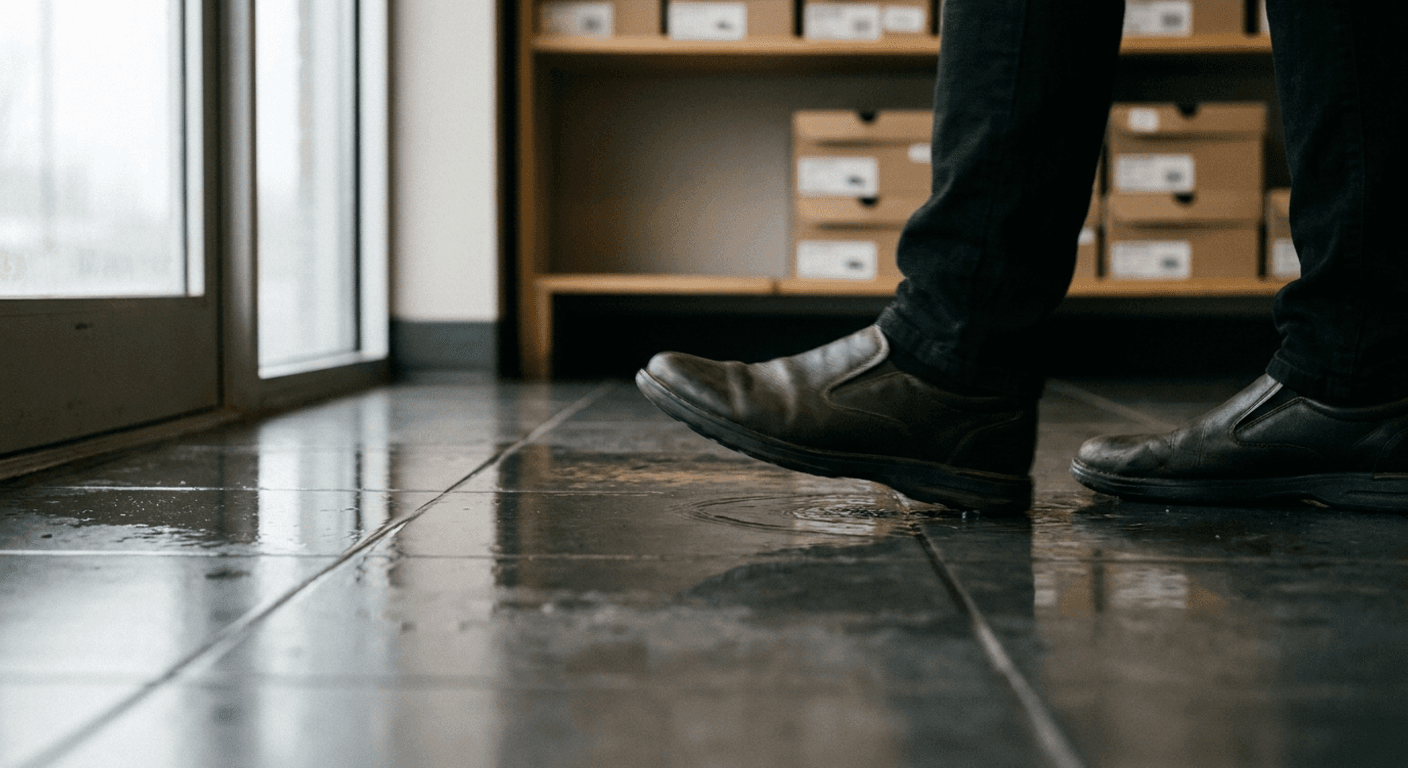
To win a slip and fall claim in Washington, you must prove the property owner failed to exercise reasonable care to discover and remedy or warn of a dangerous condition, and that the failure caused your injury. Notice of the hazard is the general rule but not an absolute element: Washington excuses notice when the owner created the condition, and when the owner's methods of operation make unsafe conditions reasonably foreseeable. Washington uses pure comparative fault under RCW 4.22.005, meaning partial fault reduces but never bars recovery.
Proving a slip and fall claim in Washington
Washington slip and fall cases are governed by general premises liability principles derived from the Restatement (Second) of Torts sections 343 and 343A, which the Washington Supreme Court formally adopted in Tincani v. Inland Empire Zoological Society, 124 Wn.2d 121, 875 P.2d 621 (1994). There is no standalone Premises Liability Act in Washington; instead, the standards come from common law shaped through that and subsequent decisions, alongside the comparative-fault rules codified in RCW 4.22.005 through 4.22.015.
Your right to recover turns on your visitor status. An invitee (a customer, business visitor, or member of the public invited onto land held open for a business or public purpose) is owed the highest duty of care: the owner must use reasonable care to inspect for unreasonably dangerous conditions and either repair them or provide adequate warning. A licensee (a social guest, for example) is generally owed a duty only regarding known dangers the owner fails to disclose. A trespasser is typically owed only a duty not to be willfully or wantonly harmed, with heightened protection for child trespassers under the attractive-nuisance doctrine.
Notice is the pivotal issue in most invitee claims. The general rule is that you must show the owner had actual notice of the hazard (someone reported it, a complaint was logged) or constructive notice (the condition existed long enough that a reasonable inspection would have found it). Courts look to inspection logs, surveillance footage, maintenance records, employee testimony, and incident reports to establish what the owner knew and when they knew it. Two exceptions, covered in the next section, remove the notice requirement altogether, and they cover a large share of ordinary retail and parking-lot falls.
When you do not have to prove notice
Washington treats notice as the general rule, not a fixed element that every plaintiff must satisfy. The Washington Supreme Court stated both the rule and its limits in a single passage in Pimentel v. Roundup Co., 100 Wn.2d 39, 666 P.2d 888 (1983): the unsafe condition "must either be caused by the proprietor or his employees, or the proprietor must have actual or constructive notice of the unsafe condition. Such notice need not be shown, however, when the nature of the proprietor's business and his methods of operation are such that the existence of unsafe conditions on the premises is reasonably foreseeable."
That passage describes two situations in which the notice burden falls away.
The owner or its contractor created the condition. If the hazard was made by the property owner, its employees, or a contractor working for it, you do not have to prove the owner separately learned about it afterward. As the court put it in Falconer v. Safeway Stores, Inc., 49 Wn.2d 478, 480, 303 P.2d 294 (1956), "[t]he rule requiring such notice is not applicable where the dangerous condition of the premises was created in the first instance by the occupant. The negligence in the instant case consists of creating a dangerous condition, not in permitting it to continue. One is presumed to know what one does." A spill left by an employee, a floor treatment applied that morning, or a lot plowed so that meltwater runs across the walkway and refreezes can each fall under this exception.
The hazard was reasonably foreseeable from how the business operates. This is the mode-of-operation exception. It grew out of self-service retail, where merchandise and spills predictably reach the floor, but the court has said the self-service label is not what controls. In Ingersoll v. DeBartolo, Inc., 123 Wn.2d 649, 654, 869 P.2d 1014 (1994), the court wrote that "self-service" is not the key to the exception; rather, the question is whether "the nature of the proprietor's business and his methods of operation are such that the existence of unsafe conditions on the premises is reasonably foreseeable." Where the exception applies, you establish liability by showing the operator failed to inspect as often as the foreseeable risk demanded, instead of pinning down how long one particular puddle had been on the floor.
The exception is not automatic, and Ingersoll itself marks the limit. The plaintiff there fell in a shopping mall common area and lost on summary judgment, because the record contained no evidence about the number and location of food vendors, how they operated, or any history of similar falls. You still have to build a factual record about how the business actually runs.
Iwai v. State, 129 Wn.2d 84, 915 P.2d 1089 (1996) applied this thinking to a fall on ice. The plaintiff slipped in a sloped state agency parking lot and could not show how long that particular patch of ice had existed, which under the general rule would have ended her case. The court held that her "failure to establish actual or constructive notice of the specific dangerous condition should not preclude a trial court from hearing this case," because the agency knew from experience that the inclined strip became treacherous in winter, and it sent the foreseeability question to a jury. The court added that if the plaintiff could prove the agency or its contractor created the ice by plowing the lot negligently, the created-condition exception would independently excuse notice. One caution when relying on this case: only four of the nine justices joined the portion of Iwai that extends the foreseeability exception beyond self-service businesses, so that extension is a plurality position rather than a settled majority holding, even though the court as a whole agreed the case should go to trial. The created-condition exception rests on much older and firmer ground.
The open-and-obvious doctrine in Washington
Washington does not allow a property owner to escape liability simply because a hazard was visible or easily detectable. In Tincani v. Inland Empire Zoological Society, 124 Wn.2d 121, 875 P.2d 621 (1994), the Washington Supreme Court adopted Restatement (Second) of Torts section 343A, which provides that a possessor of land is not liable for physical harm caused to invitees by an obvious condition "unless the possessor should anticipate the harm despite such knowledge or obviousness." The court held that where the landowner should anticipate harm (for example, where the advantages of encountering the hazard outweigh the apparent risk, or where an invitee may be distracted or compelled to confront the danger), the open-and-obvious character of the condition does not defeat liability.

This is an important protection for Washington slip and fall victims. A property owner cannot simply point to a visible wet patch, an obvious uneven curb, or a clearly marked ice patch and claim automatic immunity from liability. The "known or obvious" standard applied in Washington is demanding: the condition must be known to exist, recognized as dangerous, and its probability and gravity of harm appreciated. Where those conditions are met, the possessor can still face liability if it should have anticipated the harm.
Where that duty exists, Tincani treated the plaintiff's unreasonable choice to encounter the risk as a damage-reducing factor that does not obviate the landowner's duty, with the jury apportioning fault between the parties under Washington's pure comparative-fault system (RCW 4.22.005). If you were partly at fault for not avoiding an obvious hazard, your damages are reduced proportionally. But even substantial comparative fault never bars recovery entirely in Washington.
Ice, snow, and natural accumulation in Washington
Washington has not adopted the "natural accumulation rule" that immunizes property owners in states like Illinois or Ohio from liability for falls on naturally accumulated ice and snow. The Washington Supreme Court rejected that rule in Geise v. Lee, 84 Wn.2d 866, 529 P.2d 1054 (1975), and in Iwai v. State, 129 Wn.2d 84, 915 P.2d 1089 (1996) it turned down an express invitation to adopt the rule for commercial parking lots. Washington takes a different approach: the ordinary reasonable-care duty applies to ice and snow conditions just as it does to any other dangerous condition on the premises.
Under the Restatement sections 343 and 343A framework adopted in Tincani v. Inland Empire Zoological Society, 124 Wn.2d 121 (1994), a possessor of land owes invitees a duty to discover and remedy or warn of unreasonably dangerous conditions. That duty extends to naturally accumulating ice and snow. Liability turns on whether the possessor knew or should have discovered the icy condition, should have recognized it posed an unreasonable risk, should have expected invitees would not protect themselves, and failed to exercise reasonable care to address it.
A retailer whose parking lot regularly develops black ice overnight, a landlord whose building entrance accumulates ice after winter rain, or a shopping center that fails to clear snow from pedestrian paths after a storm can each face premises liability claims in Washington. Iwai matters here for a second reason: the plaintiff reached a jury even though she could not identify how long the ice patch had existed, because the agency's own knowledge that the sloped lot iced over in winter made the hazard foreseeable. The comparative-fault rules mean that a plaintiff who chose to walk across obviously icy terrain may bear some portion of fault, but that does not extinguish the property owner's duty. Washington stands apart from the categorical natural-accumulation immunity states.
How fault is shared: Washington's negligence rule
Washington follows pure comparative fault under RCW 4.22.005. The statute provides that a claimant's contributory fault "diminishes proportionately the amount awarded as compensatory damages for an injury attributable to the claimant's contributory fault, but does not bar recovery." There is no fault-percentage cutoff: a plaintiff who is 99% at fault can still recover 1% of damages.

Washington adopted pure comparative negligence by statute in 1973 and then the current pure comparative-fault framework in 1981, replacing the harsh contributory-negligence bar that once blocked recovery for any plaintiff with even minimal fault. Liability among multiple defendants is generally several (proportionate share only) under RCW 4.22.070, subject to two exceptions: defendants who acted in concert or as principal and agent share joint and several liability for each other's fault, and if the claimant is found completely free of fault, the defendants are jointly and severally liable for the full judgment.
In practical terms: if a jury finds your total damages to be $100,000 but assigns you 40% of the fault, you recover $60,000. If the jury assigns you 80% fault, you still recover $20,000. There is no percentage at which you are completely barred. Insurance defense attorneys will argue that you saw, or should have seen, the hazard and bear a large share of the fault; thoroughly documenting how and why you encountered the condition matters from the moment of the fall.
Deadlines: statute of limitations and government claims
Two separate deadlines can govern a Washington slip and fall case. Missing either one can permanently compromise or end your claim.
Personal-injury statute of limitations: Under RCW 4.16.080(2), you have 3 years to commence a personal-injury action. Washington courts apply this provision to general negligence and premises-liability claims, including slip and falls. The clock typically begins on the date of the fall, though the discovery rule can delay accrual in cases where the injury is not immediately apparent. For more on Washington's civil filing deadlines, see the Washington statute of limitations page.
Government notice of claim: If your fall occurred on state or local government property (a public sidewalk, a government building, a municipal park, a public school), Washington requires a two-step process under RCW 4.96.020 (for local governments) and RCW 4.92.100/.110 (for the State). You must (1) file a written tort-claim form with the entity's designated agent at any time within the 3-year statute of limitations, and then (2) wait 60 calendar days after presenting the claim before filing suit. RCW 4.96.020(4) provides that no lawsuit may be commenced until 60 days have elapsed after the claim was first presented, and the limitations period is tolled during that waiting period. Unlike New York's strict 90-day notice cutoff, Washington has no separate short filing deadline; the 60-day period is a pre-suit waiting period, not an independent deadline by which your claim must be presented.
Recreational use immunity can bar the claim outright. Before counting deadlines for a fall on public land, check whether RCW 4.24.210 applies, because it is a substantive defense rather than a procedural step. That statute provides that public and private landowners who allow members of the public to use their land for outdoor recreation, a term the statute defines to include hiking, bicycling, camping, picnicking, swimming, nature study, and viewing scenic sites, "without charging a fee of any kind therefor, shall not be liable for unintentional injuries to such users." A fall on a park trail, a public campground, or similar land opened for free recreational use can therefore be immune from an ordinary negligence claim no matter how carefully you follow the tort-claim procedure. The principal carve-out is RCW 4.24.210(4)(a), which preserves liability for injuries caused by "a known dangerous artificial latent condition for which warning signs have not been conspicuously posted." The immunity is tied to land opened free of charge for outdoor recreation, so it does not reach a fall inside a government office building or a commercial store. This defense ends a case rather than reducing it, so have a Washington injury lawyer check early, in a free consultation, whether it covers the place you fell (attorney advertising).
What a Washington slip and fall claim is worth
The value of a slip and fall settlement or verdict in Washington depends on the severity of the injury, the strength of the negligence case, and the plaintiff's own share of comparative fault.

Economic damages cover all actual financial losses: emergency and hospital care, surgery, physical therapy, future medical treatment, lost wages, lost earning capacity, and out-of-pocket costs like assistive devices or home modifications. Washington does not cap economic damages.
Non-economic damages cover pain and suffering, emotional distress, loss of enjoyment of life, and similar intangible harms. Washington does not impose a general statutory cap on non-economic damages in standard personal-injury cases, so there is no fixed ceiling on pain-and-suffering recovery in a slip and fall lawsuit.
Comparative-fault reduction: Whatever total damages a jury awards are reduced by your percentage of fault under RCW 4.22.005. Pure comparative fault means even a 70% or 80% responsible plaintiff still recovers a portion. However, because most premises-liability settlements are negotiated rather than litigated to verdict, the likely comparative-fault assignment heavily influences what the insurer will offer.
Use the Washington Slip and Fall Settlement Calculator to estimate how these factors interact for your specific situation.
This article is general legal information, not legal advice. Premises liability law varies by state and changes, and case values depend on the specific facts. For advice about a specific fall, consult a licensed attorney in Washington.
Related:
- Slip and Fall Laws by State (full 50-state hub)
- Washington Slip and Fall Settlement Calculator
More Washington Liability and Personal Injury Laws
- Washington Workers' Compensation Laws
- Washington Landlord-Tenant Laws
- Washington Dog Bite Laws
- Washington Car Accident Laws
More Washington Laws
Frequently Asked Questions
How do I prove a slip and fall in Washington?
You must show that you were an invitee (or licensee), that a dangerous condition existed on the property, that the owner failed to exercise reasonable care to fix or warn about it, and that this failure caused your injury. As a general rule you must also prove actual or constructive notice of the hazard, with constructive notice established by showing the condition existed long enough that a reasonable inspection would have found it. Notice is not required, however, if the owner or its employees created the condition, or if the nature of the business and its methods of operation make unsafe conditions reasonably foreseeable (Pimentel v. Roundup Co., 100 Wn.2d 39 (1983)). Washington courts apply the Restatement (Second) of Torts sections 343 and 343A framework from Tincani v. Inland Empire Zoological Society, 124 Wn.2d 121 (1994).
Do I always have to prove the property owner knew about the hazard?
No. Washington recognizes two exceptions to the notice requirement. First, if the owner, its employees, or its contractor created the dangerous condition, notice is not required, because as Falconer v. Safeway Stores, 49 Wn.2d 478 (1956) put it, one is presumed to know what one does. Second, under the mode-of-operation exception from Pimentel v. Roundup Co., 100 Wn.2d 39 (1983), notice need not be shown when the nature of the proprietor's business and its methods of operation are such that unsafe conditions are reasonably foreseeable. In Iwai v. State, 129 Wn.2d 84 (1996), a plaintiff who slipped on ice in a sloped agency parking lot reached a jury even though she could not prove how long that patch of ice had existed. You still need evidence about how the business operates; in Ingersoll v. DeBartolo, Inc., 123 Wn.2d 649 (1994) the plaintiff lost because she offered none.
Is Washington an open-and-obvious state?
No, not in the sense of an absolute bar. In Tincani v. Inland Empire Zoological Society, 124 Wn.2d 121 (1994), the Washington Supreme Court adopted Restatement section 343A, which holds that a landowner can still be liable for a known or obvious hazard if it should have anticipated the harm. Obviousness can still defeat a claim where the owner had no reason to anticipate the harm, but where that duty exists, the court in Tincani treated the plaintiff's unreasonable choice to encounter the risk as a damage-reducing factor under comparative fault rather than a complete bar.
Can I sue for falling on ice in Washington?
Yes. Washington has no natural-accumulation immunity rule. Property owners owe invitees ordinary reasonable care for ice and snow conditions they knew or should have known about, applying the same Restatement sections 343 and 343A framework from Tincani. In Iwai v. State, 129 Wn.2d 84 (1996), the Washington Supreme Court declined to adopt the natural accumulation rule for a commercial parking lot and allowed an icy-parking-lot claim to proceed to trial. Unlike Illinois or Ohio, Washington has no categorical no-duty rule for naturally accumulated ice and snow. A plaintiff's own fault in encountering obvious ice may reduce recovery under pure comparative fault, but it does not bar the claim.
How long do I have to file a slip and fall lawsuit in Washington?
Three years from the date of injury under RCW 4.16.080(2). If your fall occurred on government property (city, county, or state), you must also file a written tort-claim form and then wait 60 calendar days before filing suit under RCW 4.96.020 or RCW 4.92.100/.110. The limitations period is tolled during the 60-day waiting period. There is no separate short notice-filing deadline in Washington equivalent to New York's 90-day rule.
Can I recover damages if I was partly at fault for my fall?
Yes, under any level of fault. Washington uses pure comparative fault under RCW 4.22.005. Your recovery is reduced by your percentage of fault, but there is no cutoff that bars recovery entirely. Even a plaintiff who is 90% at fault can still recover 10% of the total damages. This is more favorable than the modified-50 or modified-51 comparative-fault rules used in many other states.
How much is a Washington slip and fall claim worth?
It depends on your economic losses (medical bills, lost wages, future care), non-economic losses (pain and suffering, loss of enjoyment), and your share of comparative fault. Washington does not cap economic or non-economic damages in most personal-injury cases, so there is no statutory ceiling on what a jury can award. Your total award is then reduced by your share of fault under RCW 4.22.005.
What happens if I slipped on government property in Washington?
You must present a written tort-claim form to the government entity's designated agent before filing suit. Under RCW 4.96.020 (local governments) and RCW 4.92.100/.110 (the State), you must then wait 60 calendar days after submitting the claim before commencing the lawsuit. The 3-year statute of limitations is tolled during those 60 days. There is no shorter standalone notice deadline. Check RCW 4.24.210 as well: landowners, including government landowners, who open land to the public for outdoor recreation without charging a fee are not liable for unintentional injuries to those recreational users, subject to a carve-out for a known dangerous artificial latent condition for which warning signs have not been conspicuously posted. That immunity is a substantive bar rather than a procedural step, so it can end a park or trail claim no matter how correctly the tort-claim form was filed.
Updates
Corrected the description of Tincani v. Inland Empire Zoological Society: an obvious hazard can defeat liability unless the owner should have anticipated the harm, and the court treated a plaintiff's unreasonable choice to encounter the risk as reducing damages rather than barring recovery.
Corrected the notice discussion to explain that owner notice is the general rule rather than an absolute element in Washington, adding the created-condition and mode-of-operation exceptions from Falconer, Pimentel, Ingersoll and Iwai, and added RCW 4.24.210 recreational use immunity as a potential outright bar to claims for falls on land opened to the public for outdoor recreation free of charge.
Fixed the case citation for Tincani v. Inland Empire Zoological Society, which incorrectly linked to a government tort-claims statute instead of the court opinion.
Independently fact-checked against the cited primary sources; governing law re-checked for recent changes
Corrected: RCW 4.
Governing law re-checked for recent changes
Governing law re-checked for recent changes
Reviewed and approved by an editor
The Law Behind This Article
This article rests on the statutory provisions below, held in our own legal record and retrieved from the official source. Tap a section to read the operative text.
Revised Code of Washington
§ 4.22.005Effect of contributory fault.In forcecited in 7 of our articles
In an action based on fault seeking to recover damages for injury or death to person or harm to property, any contributory fault chargeable to the claimant diminishes proportionately the amount awarded as compensatory damages for an injury attributable to the claimant's contributory fault, but does not bar recovery. This rule applies whether or not under prior law the claimant's contributory fault constituted a defense or was disregarded under applicable legal doctrines, such as last clear chance.
Official text (excerpt) · last checked 2026-09-15 · Read the full text in our law library · Verify at app.leg.wa.gov
Cited in 95 court opinions in our collectionLatest citing opinion in our collection: 2026
Opinions citing this section in our collection:
- Sofie v. Fibreboard Corp. (Washington Supreme Court 1989, 112 Wash. 2d 636)“…ce Dolliver's discussion, on pages 684-85, of the effect of RCW 4.22.005 on Seay v. Chrysler Corp., 93 Wn.2d…”
- Keller v. City of Spokane (Washington Supreme Court 2002, 146 Wash. 2d 237)“…ative fault in 1981. Laws of 1981, ch. 27, § 8 (codified at RCW 4.22.005). RCW 4.22.005 states in part: In an…”
- Davis v. Globe MacHine Manufacturing Co. (Washington Supreme Court 1984, 102 Wash. 2d 68)“…ion of comparative negligence or comparative fault", citing RCW 4.22.005. We reject petitioner's argument for se…”
Identified automatically from the court opinions citing this section — not a ranking of which case controls.
Also relied on in: Washington Dog Bite Laws: Liability and Victim Rights, Truck Accident Laws in Washington (2026): Deadlines & Liability, Washington Wrongful Death Laws (2026): Deadlines & Who Sues
§ 4.16.080Actions limited to three years.In forcecited in 11 of our articles
The following actions shall be commenced within three years: (1) An action for waste or trespass upon real property; (2) An action for taking, detaining, or injuring personal property, including an action for the specific recovery thereof, or for any other injury to the person or rights of another not hereinafter enumerated; (3) Except as provided in RCW 4.16.040(2), an action upon a contract or liability, express or implied, which is not in writing, and does not arise out of any written instrument; (4) An action for relief upon the ground of fraud, the cause of action in such case not to be deemed to have accrued until the discovery by the aggrieved party of the facts constituting the fraud; (5) An action against a sheriff, coroner, or constable upon a liability incurred by the doing of an act in his or her official capacity and by virtue of his or her office, or by the omission of an official duty, including the nonpayment of money collected upon an execution; but this subsection shall not apply to action for an escape; (6) An action against an officer charged with misappropriation or a failure to properly account for public funds intrusted to his or her custody; an action…
Official text (excerpt) · last checked 2026-09-14 · Read the full text in our law library · Verify at app.leg.wa.gov
Cited in 937 court opinions in our collectionLatest citing opinion in our collection: 2026
Opinions citing this section in our collection:
- Robinson v. City of Seattle (Washington Supreme Court 1992, 119 Wash. 2d 34)“…ly for the trial court's grant of HPO payment refunds under RCW 4.16.080(3), but also to what extent such consid…”
- Ruth v. Dight (Washington Supreme Court 1969, 75 Wash. 2d 660)“…tatute of limitations (RCW 4.16.010 *664 and RCW 4.16.080(2)); but defendant estate’s motion rest…”
- Tingey v. Haisch (Washington Supreme Court 2007, 159 Wash. 2d 652)“…applicable statute of limitation for Tingey’s action is the RCW 4.16.080(3) three-year limitation for oral contr…”
Identified automatically from the court opinions citing this section — not a ranking of which case controls.
Also relied on in: Washington Car Accident Laws: Fault, Insurance, and Your Claim, Washington Motorcycle Accident Laws (2026): Deadlines & Helmets, Washington Statute of Limitations: Filing Deadlines by Case Type
§ 4.96.020Tortious conduct of local governmental entities and their agents—Claims—Presentment and filing—Contents.In forcecited in 3 of our articles
(1) The provisions of this section apply to claims for damages against all local governmental entities and their officers, employees, or volunteers, acting in such capacity. (2) The governing body of each local governmental entity shall appoint an agent to receive any claim for damages made under this chapter. The identity of the agent and the address where he or she may be reached during the normal business hours of the local governmental entity are public records and shall be recorded with the auditor of the county in which the entity is located. All claims for damages against a local governmental entity, or against any local governmental entity's officers, employees, or volunteers, acting in such capacity, shall be presented to the agent within the applicable period of limitations within which an action must be commenced. A claim is deemed presented when the claim form is delivered in person or is received by the agent by regular mail, registered mail, or certified mail, with return receipt requested, to the agent or other person designated to accept delivery at the agent's office.
Official text (excerpt) · last checked 2026-07-29 · Read the full text in our law library · Verify at app.leg.wa.gov
Cited in 182 court opinions in our collectionLatest citing opinion in our collection: 2026
Opinions citing this section in our collection:
- Hunter v. North Mason School Dist. (Washington Supreme Court 1975, 85 Wash. 2d 810)“…formal notice of his claim within 120 days, as required by RCW 4.96.020. [1] The dismissal was reversed by the…”
- Medina v. Public Utility District No. 1 (Washington Supreme Court 2002, 147 Wash. 2d 303)“…stice Chambers, but only to the extent that he asserts that RCW 4.96.020 is unconstitutional as applied to the f…”
- Jenkins v. State (Washington Supreme Court 1975, 85 Wash. 2d 883)“…cluding tort' actions, by its own terms and by the terms of RCW 4.96.020, which provides in part:' (1) Ch…”
Identified automatically from the court opinions citing this section — not a ranking of which case controls.
§ 4.92.100Tortious conduct of state or its agents—Claims—Presentment and filing—Contents.In forcecited in 2 of our articles
(1) All claims against the state, or against the state's officers, employees, or volunteers, acting in such capacity, for damages arising out of tortious conduct, must be presented to the office of risk management. A claim is deemed presented when the claim form is delivered in person or by regular mail, registered mail, or certified mail, with return receipt requested, or as an attachment to email or by fax, to the office of risk management. For claims for damages presented after July 26, 2009, all claims for damages must be presented on the standard tort claim form that is maintained by the office of risk management. The standard tort claim form must be posted on the department of enterprise services' website.
Official text (excerpt) · last checked 2026-07-29 · Read the full text in our law library · Verify at app.leg.wa.gov
Cited in 81 court opinions in our collectionLatest citing opinion in our collection: 2026
Opinions citing this section in our collection:
- Hunter v. North Mason School Dist. (Washington Supreme Court 1975, 85 Wash. 2d 810)“…ntiff's age and disabilities excused her noncompliance with RCW 4.92.100, which requires notice of claims agains…”
- Shafer v. State (Washington Supreme Court 1974, 83 Wash. 2d 618)“…or within 120 days from the' date of her injury pursuant to RCW 4.92.100. The relevant facts as alleged are th…”
- Cook v. State (Washington Supreme Court 1974, 83 Wash. 2d 599)“…dismissed the suit upon the basis that the requirements of RCW 4.92.100, our "nonclaim" statute, had not been m…”
Identified automatically from the court opinions citing this section — not a ranking of which case controls.
§ 4.22.070Percentage of fault—Determination—Exception—Limitations.In force
(1) In all actions involving fault of more than one entity, the trier of fact shall determine the percentage of the total fault which is attributable to every entity which caused the claimant's damages except entities immune from liability to the claimant under Title 51 RCW. The sum of the percentages of the total fault attributed to at-fault entities shall equal one hundred percent. The entities whose fault shall be determined include the claimant or person suffering personal injury or incurring property damage, defendants, third-party defendants, entities released by the claimant, entities with any other individual defense against the claimant, and entities immune from liability to the claimant, but shall not include those entities immune from liability to the claimant under Title 51 RCW. Judgment shall be entered against each defendant except those who have been released by the claimant or are immune from liability to the claimant or have prevailed on any other individual defense against the claimant in an amount which represents that party's proportionate share of the claimant's total damages.
Official text (excerpt) · last checked 2026-07-29 · Read the full text in our law library · Verify at app.leg.wa.gov
Cited in 176 court opinions in our collectionLatest citing opinion in our collection: 2026
Opinions citing this section in our collection:
- Sofie v. Fibreboard Corp. (Washington Supreme Court 1989, 112 Wash. 2d 636)“…s point out that the trial judge instructed the jury, under RCW 4.22.070(3), to apply joint and several liabilit…”
- Washburn v. Beatt Equipment Co. (Washington Supreme Court 1992, 120 Wash. 2d 246)“…0, and Washington Natural Gas paid $210,000. As required by RCW 4.22.070(1), the jury in this case apportioned f…”
- Adcox v. Children's Orthopedic Hospital & Medical Center (Washington Supreme Court 1993, 123 Wash. 2d 15)“…fault among the Hospital, Dr. Herndon and Dr. Lush violated RCW 4.22.070(1). 2 This statute, as wel…”
Identified automatically from the court opinions citing this section — not a ranking of which case controls.
§ 4.24.210Liability of owners or others in possession of land and water areas for injuries to recreation users—Known dangerous artificial latent conditions—Other limitations.In force
(1) Except as otherwise provided in subsection (3) or (4) of this section, any public or private landowners, hydroelectric project owners, or others in lawful possession and control of any lands whether designated resource, rural, or urban, or water areas or channels and lands adjacent to such areas or channels, who allow members of the public to use them for the purposes of outdoor recreation, which term includes, but is not limited to, the cutting, gathering, and removing of firewood by private persons for their personal use without purchasing the firewood from the landowner, hunting, fishing, camping, picnicking, swimming, hiking, bicycling, skateboarding or other nonmotorized wheel-based activities, aviation activities including, but not limited to, the operation of airplanes, ultra-light airplanes, hang gliders, parachutes, and paragliders, rock climbing, the riding of horses or other animals, clam digging, pleasure driving of off-road vehicles, snowmobiles, and other vehicles, boating, kayaking, canoeing, rafting, nature study, winter or water sports, viewing or enjoying historical, archaeological, scenic, or scientific sites, without charging a fee of any kind therefor,…
Official text (excerpt) · last checked 2026-07-29 · Read the full text in our law library · Verify at app.leg.wa.gov
Cited in 72 court opinions in our collectionLatest citing opinion in our collection: 2026
Opinions citing this section in our collection:
- Ravenscroft v. Washington Water Power Co. (Washington Supreme Court 1998, 136 Wash. 2d 911)“…tional Use Statute Washington’s recreational use statute, RCW 4.24.210, currently provides, in pertinent part:…”
- Van Dinter v. City of Kennewick (Washington Supreme Court 1993, 121 Wash. 2d 38)“…City is immune under Washington's recreational use statute, RCW 4.24.210. The Court of Appeals affirmed. We affi…”
- Camicia v. Howard S. Wright Construction Co. (Washington Supreme Court 2014, 179 Wash. 2d 684)“…e of Washington’s recreational use immunity statute, former RCW 4.24.210 (2003). 1 Susan Camicia sustained seve…”
Identified automatically from the court opinions citing this section — not a ranking of which case controls.
Search our full record of US law — 2.1 million sections, every state + federal →
Sources and References
- RCW 4.22.005: Pure Comparative Fault(app.leg.wa.gov).gov
- RCW 4.16.080(2): 3-Year Personal-Injury Statute of Limitations(app.leg.wa.gov).gov
- RCW 4.96.020: Local Government Tort Claims, 60-Day Pre-Suit Waiting Period(app.leg.wa.gov).gov
- RCW 4.92.100 and 4.92.110: Claims Against the State of Washington(app.leg.wa.gov).gov
- Tincani v. Inland Empire Zoological Society, 124 Wn.2d 121, 875 P.2d 621 (1994) (Washington Supreme Court)(law.justia.com)
- Iwai v. State, 129 Wn.2d 84, 915 P.2d 1089 (1996) (Washington Supreme Court: exceptions to the notice requirement; refusal to adopt the natural accumulation rule)(courtlistener.com)
- Pimentel v. Roundup Co., 100 Wn.2d 39, 666 P.2d 888 (1983) (Washington Supreme Court: mode-of-operation exception to the notice requirement)(courtlistener.com)
- Falconer v. Safeway Stores, Inc., 49 Wn.2d 478, 303 P.2d 294 (1956) (Washington Supreme Court: no notice required where the occupant created the condition)(courtlistener.com)
- Ingersoll v. DeBartolo, Inc., 123 Wn.2d 649, 869 P.2d 1014 (1994) (Washington Supreme Court: self-service is not the key to the mode-of-operation exception)(courtlistener.com)
- Geise v. Lee, 84 Wn.2d 866, 529 P.2d 1054 (1975) (Washington Supreme Court rejecting the natural accumulation rule for ice and snow)(courtlistener.com)
- RCW 4.24.210: Recreational Use Immunity for Landowners, and the Known Dangerous Artificial Latent Condition Exception(app.leg.wa.gov).gov
Paid attorney referral. RecordingLaw may receive compensation when you use an attorney-help link. RecordingLaw is not a law firm. Submitting a request does not guarantee that an attorney will accept your case and does not create an attorney-client relationship.