
Utah
Utah Laws on Recording Police
Independently fact-checked against primary sources (last audited August 15, 2026). · Reviewed by the RecordingLaw editorial team. · Law checked current as of August 15, 2026. · 3 primary sources cited on this page. How we verify our legal content
Utah residents have a First Amendment right to record on-duty police officers in public, backed by Tenth Circuit precedent. Utah's one-party consent law, Utah Code 77-23a-4, also lets you audio record any police interaction you are part of, with no obligation to notify the officer.
Utah residents have the right to record police officers performing their duties in public. This right is grounded in the First Amendment and supported by Tenth Circuit Court of Appeals precedent. Utah's one-party consent law (77-23a-4) further allows you to audio record any interaction with police that you are part of.
This guide explains when and how you can legally record police in Utah, your rights during traffic stops, body camera rules, and what to do if your rights are violated.
Your Constitutional Right to Record Police
First Amendment and Tenth Circuit Precedent
The U.S. Court of Appeals for the Tenth Circuit, which covers Utah, has recognized the First Amendment right to record police officers performing their duties in public. In Irizarry v. Yehia, 38 F.4th 1282 (10th Cir. July 11, 2022), the Tenth Circuit held that the First Amendment right to film police performing their duties in public was clearly established as of May 26, 2019. For incidents predating that date, Frasier v. Evans, 992 F.3d 1003 (10th Cir. 2021) governs (the court declined to find a clearly established right under qualified immunity). Together, Frasier and Irizarry define the 10th Circuit progression on this right.
This means recording police in Utah is constitutionally protected. Officers who seize devices or arrest people solely for recording face potential liability under 42 U.S.C. 1983.
One-Party Consent
Under Utah Code Ann. 77-23a-4, you can audio record any conversation you participate in. During a traffic stop or other police interaction, you are a participant and can lawfully record.
When You Can Record
- Traffic stops (your own or from a bystander position)
- Arrests happening in public
- Police checkpoints
- Public protests where police are present
- Interactions at government buildings
- Any public encounter with law enforcement
Limits on Recording
- Do not physically interfere with police operations
- Do not trespass on private property to record
- Follow lawful orders to maintain a safe distance
- Do not obstruct officers performing their duties
Device Seizure Protections
Police cannot confiscate your phone solely for recording. Under Riley v. California (2014), searching a phone generally requires a warrant. If an officer takes your device, clearly state you do not consent to the search or seizure.
Utah Body Camera Programs

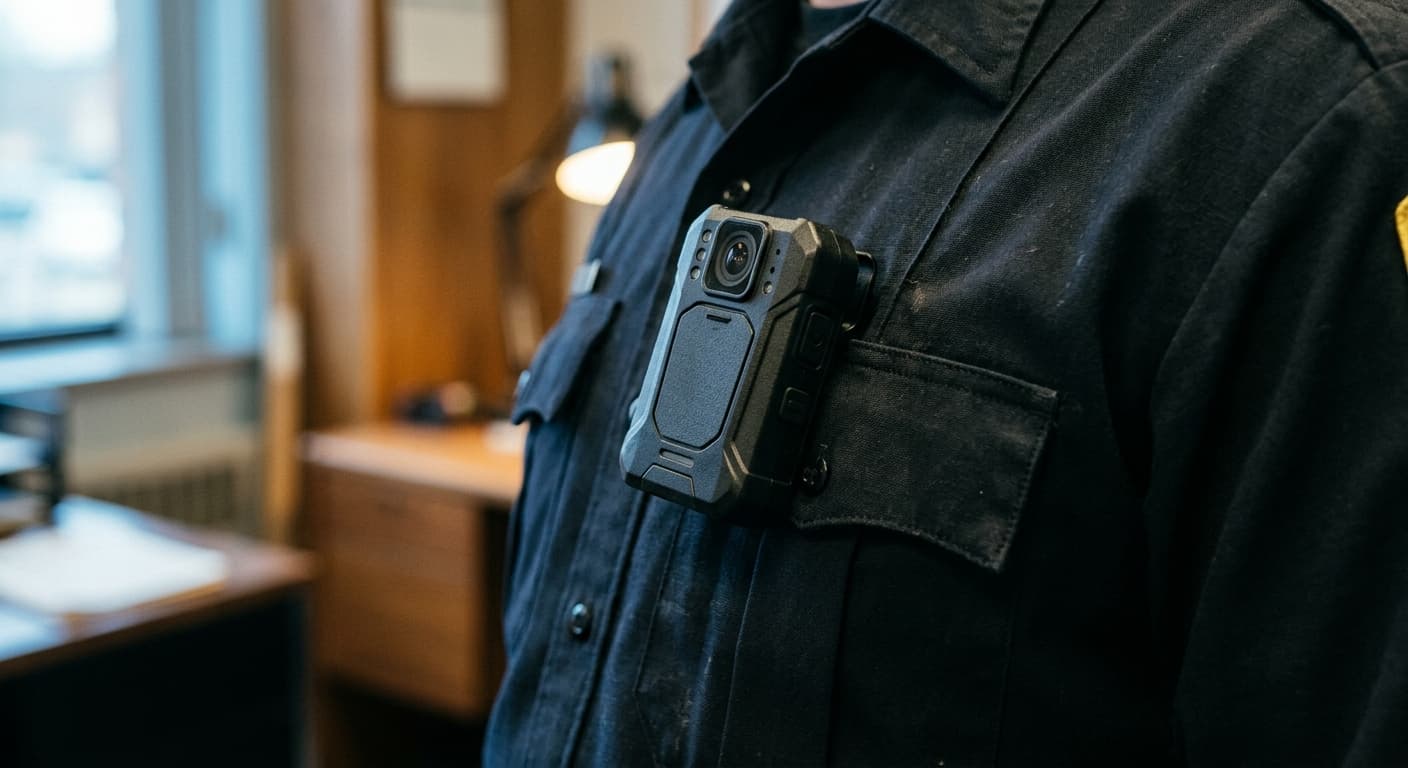
Utah has been proactive in adopting body cameras for law enforcement. The state established the Utah Body-Worn Camera Program to provide funding and guidelines for agencies implementing body camera systems. Many Utah police departments now equip officers with body cameras.
Body camera footage is generally subject to the Government Records Access and Management Act (GRAMA), though certain records may be classified as private or protected.
Recording Government Meetings
Utah's Open and Public Meetings Act (52-4-203) requires public bodies to record their own meetings and allows the public to record as well.
What to Do If Your Rights Are Violated
- Remain calm and do not physically resist
- Clearly state your First Amendment right to record
- Document the officer's name, badge number, and agency
- Contact an attorney about a civil rights claim under 42 U.S.C. 1983
- File a complaint with the officer's agency or the ACLU of Utah
More Utah Recording Laws
Audio Recording | Video Recording | Voyeurism & Hidden Cameras | Workplace Recording | Recording Police | Phone Call Recording | Security Cameras | Recording in Public | Landlord-Tenant | Dashcam Laws | Schools | Medical Recording
More Utah Recording Topics
More Utah Laws
Frequently Asked Questions
Can I record police officers in Utah?
Yes. The First Amendment and Tenth Circuit precedent protect your right to record police performing duties in public. Utah's one-party consent law also allows you to audio record your interactions with officers.
Can police take my phone for recording them in Utah?
No. Under Riley v. California (2014), police generally need a warrant to search a phone. Officers cannot confiscate your device solely for recording. If they do, state you do not consent and contact an attorney.
Can I record a traffic stop in Utah?
Yes. You can record your own traffic stop using a phone, dashcam, or any recording device. Passengers can also record. Keep hands visible and avoid sudden movements.
Can I get police body camera footage in Utah?
Body camera footage is subject to GRAMA (Utah's public records law). Some records may be classified as private or protected. Defendants can obtain footage through legal discovery. Public records requests may be partially fulfilled depending on classification.
What should I do if police order me to stop recording?
Calmly state your First Amendment right to record. Do not physically resist. Comply to avoid arrest but document the interaction. Contact an attorney about a civil rights claim under 42 U.S.C. 1983.
Updates
Clarified that Riley v. California requires a warrant to search a seized phone, not for the seizure itself.
Independently fact-checked against the cited primary sources; governing law re-checked for recent changes
Governing law re-checked for recent changes
Corrected Irizarry v. Yehia citation year from 2023 to 2022 (38 F.4th 1282, 10th Cir. Jul 11 2022). Added Frasier v. Evans, 992 F.3d 1003 (10th Cir. 2021) as the pre-May-26-2019 baseline per Frasier-then-Irizarry progression. Removed erroneous 2023 year.
Reviewed and approved by an editor
The Law Behind This Article
This article rests on the statutory provisions below, held in our own legal record and retrieved from the official source. Tap a section to read the operative text.
Utah Code, Title 77: Criminal Procedure
§ 77-23a-4Offenses -- Criminal and civil -- Lawful interception.In forcecited in 19 of our articles
(1) (a) Except as otherwise specifically provided in this chapter, any person who violates Subsection (1)(b) is guilty of an offense and is subject to punishment under Subsection (10), or when applicable, the person is subject to civil action under Subsection (11). (b) A person commits a violation of this subsection who: (i) intentionally or knowingly intercepts, endeavors to intercept, or procures any other person to intercept or endeavor to intercept any wire, electronic, or oral communication; (ii) intentionally or knowingly uses, endeavors to use, or procures any other person to use or endeavor to use any electronic, mechanical, or other device to intercept any oral communication, when the device is affixed to, or otherwise transmits a signal through a wire, cable, or other like connection used in wire communication or when the device transmits communications by radio, or interferes with the transmission of the communication; (iii) intentionally or knowingly discloses or endeavors to disclose to any other person the contents of any wire, electronic, or oral communication, knowing or having reason to know that the information was obtained through the interception of a wire,…
Official text (excerpt) · last checked 2026-08-31 · Read the full text in our law library · Verify at le.utah.gov
Cited in 5 court opinions in our collectionLatest citing opinion in our collection: 2026
In the courts (editorial summary, independently checked):State v. Wood (2023) held a jail's recording of inmate calls fell within the consent exception in section 77-23a-4(7)(a) because the inmate impliedly consented by using phones he was told were monitored. The Quarasan Group, Inc. v. Nozani, LLC (2020) dismissed an eavesdropping claim once Utah law governed and did not bar the recording.
Opinions citing this section in our collection:
- State v. Wood (Utah Supreme Court 2023, 532 P.3d 997)✓A jail recorded an inmate's calls to his wife after warning him by handbook, placard and a message before each call; the Utah Supreme Court held he impliedly consented, so the interception fell within section 77-23a-4(7)(a) and suppression was denied.
- State v. Draughon (Court of Appeals of Utah 2026, 2026 UT App 52)“…rties to the call—consented to the call being recorded. See Utah Code §§ 77-23a-4(7)(b), -7. He claims Counsel should hav…”
- United States v. Maynard (Court of Appeals for the D.C. Circuit 2010, 615 F.3d 544)“…ined by the police acting pursuant to a warrant. See, e.g., Utah Code Ann. §§ 77-23a-4, 77-23a-7, 77-23a-15.5; Minn Stat §§ 62…”
Identified automatically from the court opinions citing this section — not a ranking of which case controls.
Also relied on in: Utah Smart Glasses Recording Laws (2026), Utah AI Meeting Recording Laws (2026), Utah Surveillance Camera Laws (2026 Guide)
Utah Code, Title 52: Public Officers
§ 52-4-203Written minutes of open meetings -- Public records -- Recording of meetings.In forcecited in 4 of our articles
(1) Except as provided under Subsection (7), written minutes and a recording shall be kept of all open meetings. (2) (a) Written minutes of an open meeting shall include: (i) the date, time, and place of the meeting; (ii) the names of members present and absent; (iii) the substance of all matters proposed, discussed, or decided by the public body which may include a summary of comments made by members of the public body; (iv) a record, by individual member, of each vote taken by the public body; (v) the name of each person who: (A) is not a member of the public body; and (B) after being recognized by the presiding member of the public body, provided testimony or comments to the public body; (vi) the substance, in brief, of the testimony or comments provided by the public under Subsection (2)(a)(v); and (vii) any other information that is a record of the proceedings of the meeting that any member requests be entered in the minutes or recording.
Official text (excerpt) · last checked 2026-07-29 · Read the full text in our law library · Verify at le.utah.gov
Cited in 2 court opinions in our collectionLatest citing opinion in our collection: 2021
Opinions citing this section in our collection:
- Southern Utah Wilderness v. San Juan County (Utah Supreme Court 2021, 484 P.3d 1160)“…20 UTAH CODE § 52-4-203(2)(a)(iii). 21 Id. at § 52-4-203(4…”
- Southern Utah Wilderness v. Kane County (Utah Supreme Court 2021, 484 P.3d 1146)“…43 Utah Chapter of Sierra Club, 2006 UT 74, ¶ 26. 44 UTAH CODE § 52-4-203(2)(a)(iii).…”
Identified automatically from the court opinions citing this section — not a ranking of which case controls.
Also relied on in: Utah Laws on Recording in Public, Utah School Recording Laws, Utah Video Recording Laws
United States Code Title 42
§ 1983Civil action for deprivation of rightsIn forcecited in 50 of our articles
Every person who, under color of any statute, ordinance, regulation, custom, or usage, of any State or Territory or the District of Columbia, subjects, or causes to be subjected, any citizen of the United States or other person within the jurisdiction thereof to the deprivation of any rights, privileges, or immunities secured by the Constitution and laws, shall be liable to the party injured in an action at law, suit in equity, or other proper proceeding for redress, except that in any action brought against a judicial officer for an act or omission taken in such officer’s judicial capacity, injunctive relief shall not be granted unless a declaratory decree was violated or declaratory relief was unavailable. For the purposes of this section, any Act of Congress applicable exclusively to the District of Columbia shall be considered to be a statute of the District of Columbia.
Official text (excerpt) · last checked 2026-09-16 · Read the full text in our law library · Verify at uscode.house.gov
Cited in 282,365 court opinions in our collectionLatest citing opinion in our collection: 2026
Opinions citing this section in our collection:
- Ashcroft v. Iqbal (Supreme Court of the United States 2009, 556 U.S. 662)“…its brought against state officials under Rev. Stat. §1979, 42 U. S. C. §1983.” Hartman, 547 U. S., at 254, n. 2. Cf.…”
- Celotex Corp. v. Catrett, Administratrix of the Estate of Catrett (Supreme Court of the United States 1986, 477 U.S. 317)“…policeman as she left. Petitioner brought an action under 42 U. S. C. § 1983 claiming that the refusal of service a…”
- Monell v. New York City Dept. of Social Servs. (Supreme Court of the United States 1978, 436 U.S. 658)“…decided less than two decades ago. Focusing new light on 42 U. S. C. § 1983 , that decision widened access to the f…”
Identified automatically from the court opinions citing this section — not a ranking of which case controls.
Also relied on in: Alabama Laws on Recording Police: Your Rights and Limits, Alaska Laws on Recording Police: Your Rights and Limits (2026), Arkansas Laws on Recording Police: Your Rights and Limits (2026)
Search our full record of US law — 2.1 million sections, every state + federal →
Sources and References
- Utah Code Ann. 77-23a-4 -- Interception of Communications(le.utah.gov).gov
- Utah Code Ann. 52-4-203 -- Open and Public Meetings Act(le.utah.gov).gov
- GRAMA -- Government Records Access and Management Act(le.utah.gov).gov
- 42 U.S.C. 1983 -- Civil Action for Deprivation of Rights(law.cornell.edu)
- Reporters Committee -- Utah Recording Guide(rcfp.org)