
Utah
Utah Ring Doorbell Laws: What You Need to Know in 2026
Independently fact-checked against primary sources (last audited August 17, 2026). · Reviewed by the RecordingLaw editorial team. · Law checked current as of August 7, 2026. · 12 primary sources cited on this page. How we verify our legal content
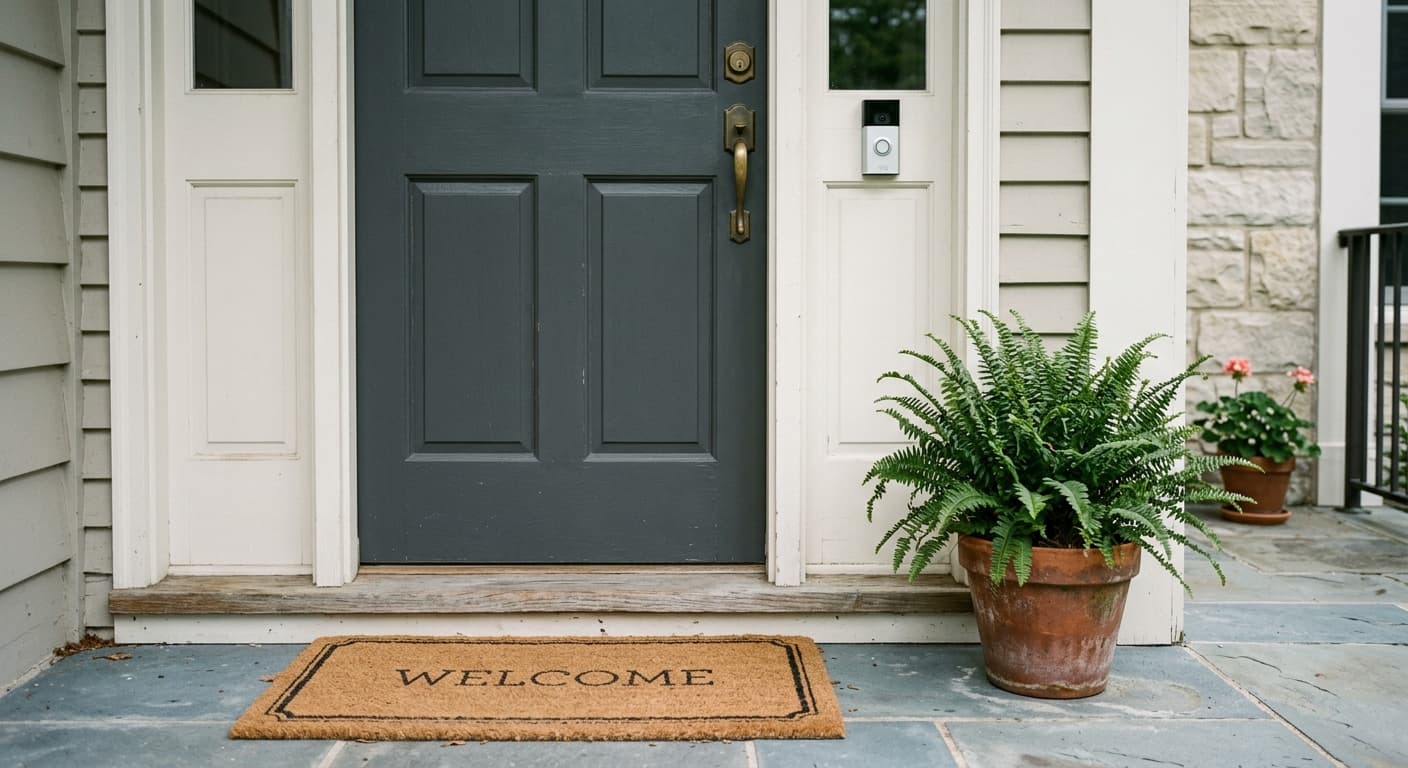
Ring doorbells are legal to use in Utah. State law follows one-party consent under Utah Code 77-23a-4, so audio recording is permitted when you participate in the conversation. Video recording of your porch, driveway, and public areas is also lawful under Utah's outdoor surveillance rules.
Ring doorbells record video and audio of activity at your front door. In Utah, the legality of those recordings depends on what the camera captures and whether you participate in recorded conversations. Utah follows one-party consent for audio recording, and the state has relatively permissive rules for outdoor video surveillance. Condominium owners also have statutory protection for installing cameras near their unit entryways.
This guide covers every relevant Utah statute, explains how Ring doorbell footage interacts with law enforcement access rules, and provides practical steps for legal compliance.

Audio Recording Laws and Ring Doorbells
Utah governs audio recording through the Interception of Communications Act, Utah Code 77-23a. The primary offense provision is Section 77-23a-4, which makes it illegal to intentionally intercept any wire, electronic, or oral communication.
One-Party Consent Standard
Utah follows one-party consent. Under Section 77-23a-4, a person may lawfully intercept a wire, electronic, or oral communication if that person is a party to the communication or if one of the parties has given prior consent to the interception. The interception cannot be for the purpose of committing a criminal or tortious act.
For Ring doorbell owners, this means audio recording is legal when you engage in a two-way conversation with someone at your door. Your participation as one party satisfies the consent requirement.
When Audio Recording Gets Risky
The one-party consent exception requires that a consenting party actually participate in the communication. If your Ring doorbell records a conversation between two visitors on your porch while you are not involved, no party to that conversation may have consented to the recording. Capturing that exchange could violate Section 77-23a-4.
The risk also extends to phone conversations. If your Ring microphone picks up someone's phone call near your doorbell, intercepting that wire communication without a participant's consent raises concerns under the same statute.
Managing Audio on Your Ring Device
As of April 2026, Ring devices allow users to disable audio recording through the app settings. Utah homeowners who rarely use the two-way talk feature can eliminate wiretapping exposure by turning off the microphone entirely.
Posting a visible notice near the doorbell stating that audio and video recording is in progress provides an additional layer of protection. While a posted sign does not automatically satisfy the consent requirement under Utah Code 77-23a-4, it weakens any claim that the recording was covert.

Video Recording Laws and Ring Doorbells
Utah does not have a general statute prohibiting outdoor video surveillance on residential property. Recording video from a Ring doorbell pointed at your own property, driveway, porch, or public areas is legal.
Unlawful Privacy Violation: Utah Code 76-12-302
Utah Code 76-12-302 defines unlawful privacy violation to include installing, or using after unauthorized installation, a device in a private place for observing, photographing, hearing, recording, amplifying, or broadcasting sounds or events there without the consent of the person entitled to privacy. It separately covers installing or using such a device outside a private place to capture sounds or events originating inside it that would not ordinarily be audible, visible, or comprehensible outside, without that consent. This outside-device prong is the one most relevant to a doorbell camera. The statute also covers trespassing on property with intent to subject anyone to eavesdropping or surveillance. This section was renumbered from Utah Code 76-9-402 effective May 7, 2025.
For Ring doorbell owners, this statute matters when a camera picks up what is happening inside a private place, such as a neighbor's home, that could not ordinarily be seen or heard from outside. A standard Ring doorbell installation facing outward toward a porch, driveway, and street does not violate this provision.
Where the Line Falls
Utah courts use the reasonable expectation of privacy standard to evaluate surveillance complaints. A Ring doorbell that records:
- Your own porch, driveway, and walkway: Legal
- The public sidewalk and street: Legal
- A neighbor's front yard visible from public areas: Generally legal
- Through a neighbor's window into private rooms: Potentially illegal under Utah Code 76-12-302
Aiming your Ring doorbell to avoid capturing interior views of neighboring homes keeps you within safe legal boundaries.
Voyeurism Statute: Utah Code 76-12-307
Utah Code 76-12-307 (recorded or photographed voyeurism), together with the base voyeurism offense at Utah Code 76-12-306, addresses voyeurism offenses in Utah as of these sections' May 7, 2025 effective date. Section 76-12-307 covers intentionally using technology to secretly or surreptitiously record an individual, without the individual's knowledge or consent, for the purpose of viewing a portion of the body the individual reasonably expects to keep private, under circumstances where the individual has a reasonable expectation of privacy. Section 76-12-306 covers viewing, or attempting to view, a person under the same conditions. While these offenses apply more to hidden cameras than Ring doorbells, they reinforce the principle that recording in private areas without consent is illegal in Utah.

HOA and Ring Doorbells in Utah
Utah law provides some protection for security camera installation, particularly in condominiums.
Utah Code 57-8-8.1: Condominium Security Camera Protections
Utah Code 57-8-8.1 restricts the ability of condominium associations to ban personal security cameras. Under this statute, a condominium association rule may not prohibit a unit owner from installing a personal security camera immediately adjacent to the entryway, window, or other outside entry point of the owner's unit.
This directly protects Ring doorbell installation at condominium unit entryways. A Ring doorbell mounted next to a unit owner's front door falls squarely within this protected category.
What Condominium Associations Can Still Restrict
The same statute allows associations to prohibit cameras in common areas not physically connected to the owner's unit. An HOA can also establish reasonable rules about:
- Camera placement that captures common area facilities
- Installation methods that damage shared building structures
- Aesthetic requirements for visible devices
The key protection is that the association cannot prevent installation at or near the unit entryway itself.

Non-Condominium HOAs
For homeowners in planned communities governed by Utah Code Chapter 57-8a (Community Association Act), the rules depend on the association's CC&Rs and governing documents. Unlike the condominium statute, there is no explicit statutory protection preventing non-condominium HOAs from restricting doorbell cameras. Homeowners in these communities should review their CC&Rs and, if needed, request approval from the architectural review committee before installation.
Landlord and Tenant Rights
Utah's landlord-tenant law, the Utah Fit Premises Act (Utah Code 57-22), does not specifically address doorbell camera installation. General principles for property modifications apply.
Tenant Installation
Tenants in Utah who want to install a Ring doorbell should:
- Get written landlord approval before making any exterior modifications. Most Utah leases require consent for changes to the property.
- Agree to remove the device and restore the property when the lease ends.
- Ensure the camera angle does not capture areas beyond the tenant's leased space in ways that violate other tenants' privacy under Utah Code 76-12-302.
Landlord Obligations
Under Utah Code 57-22-4, landlords must maintain rental units in a condition fit for human habitation and keep common areas reasonably safe. While a Ring doorbell is not required, landlords who install them on rental property exteriors should:
- Disclose the camera's presence to tenants
- Ensure audio recording does not capture tenant conversations without proper one-party consent
- Refrain from pointing cameras at areas where tenants have a reasonable expectation of privacy
Lease Review
Check the lease agreement for provisions about exterior modifications, security devices, or surveillance equipment. If the lease is silent, requesting written permission from the landlord provides documentation that can prevent disputes.

Law Enforcement Access to Ring Footage
How police access Ring doorbell footage in Utah involves both federal and state protections, along with Amazon's corporate policies.
Utah's Electronic Information or Data Privacy Act
Utah passed the Electronic Information or Data Privacy Act in 2019, which requires law enforcement to obtain a warrant before accessing certain electronic communications. However, this protection has limits. Doorbell footage that a homeowner stores locally or shares voluntarily falls outside some of the act's protections.
Constitutional Protections
The Fourth Amendment and Article I, Section 14 of the Utah Constitution protect against unreasonable searches and seizures. Police in Utah generally need:
- A valid search warrant issued by a Utah court based on probable cause
- Homeowner consent to voluntarily share footage
- A court order or subpoena for records held by Amazon
Amazon Ring's Current Policy
As of 2024, Amazon discontinued the Request for Assistance feature that allowed police to request Ring footage through the Neighbors app. Law enforcement must now obtain footage through:
- A legally binding warrant or court order served to Amazon
- Direct requests to the homeowner, who can voluntarily share
- Emergency disclosure requests for imminent threats to life
Ring does not produce video content in response to subpoenas. A search warrant is typically required for actual footage.
End-to-End Encryption
Ring offers end-to-end encryption (E2EE) as an optional feature. When enabled, E2EE prevents anyone, including Ring and Amazon, from accessing your video recordings. This is the strongest protection available for Utah homeowners who want to ensure footage remains private unless they choose to share it.

Penalties for Illegal Recording in Utah
Violating Utah's recording and surveillance laws carries both criminal and civil consequences.
Criminal Penalties for Illegal Interception (Utah Code 77-23a-4)
Illegal interception of wire, oral, or electronic communications under Section 77-23a-4 is a third-degree felony in Utah. Penalties include:
| Penalty | Details |
|---|---|
| Prison | Up to 5 years in the Utah State Prison |
| Fine | Up to $5,000 |
| Civil liability | Victim can sue for damages |
Civil Remedies for Illegal Interception
Under Utah Code 77-23a-11, victims of illegal interception can bring a civil lawsuit. Available damages include:
- Actual damages suffered
- Any profits the violator made from the illegal interception
- Statutory damages of $100 per day of violation or $10,000, whichever is greater
- Reasonable attorney's fees and litigation costs
Privacy Violation Penalties (Utah Code 76-12-302)
An unlawful privacy violation under Section 76-12-302 is a class B misdemeanor, carrying up to 6 months in jail and a fine of up to $1,000. The statute sets a single penalty level with no repeat-offense or aggravating-circumstance tier.
Voyeurism Penalties (Utah Code 76-12-306 and 76-12-307)
Recorded or photographed voyeurism under Section 76-12-307 is a class A misdemeanor as a base offense (up to 1 year in jail, up to $2,500 fine). It becomes a third-degree felony when the victim is under 14 years old, the recording occurs in a sex-designated privacy space not intended for the actor's sex, or it is committed alongside criminal trespass in a changing room, lewdness involving a child, or loitering in a privacy space, not based on repeat offenses. The base viewing-only offense under Section 76-12-306 is a class B misdemeanor, escalating to a class A misdemeanor under the same aggravating circumstances.
How to Use a Ring Doorbell Legally in Utah
Following these guidelines helps Utah residents stay within the bounds of state law.
1. Point the camera at your property and public areas. Focus the Ring doorbell on your porch, driveway, and walkway. Avoid angles that capture through neighbors' windows or into private interior spaces.
2. Consider your audio settings. One-party consent makes audio legal when you participate in conversations. If you rarely use two-way talk, disabling audio in the Ring app eliminates wiretapping concerns entirely.
3. Post a visible notice. A sign near your Ring doorbell stating "Audio and Video Recording in Progress" informs visitors and reduces the argument that recording was covert.
4. Know your condominium rights. Utah Code 57-8-8.1 protects your right to install a security camera near your unit entryway. If your condo association objects, reference this statute.
5. Review HOA or condo documents. For non-condominium communities, check your CC&Rs for camera restrictions and submit any required approval requests before installation.
6. Get landlord permission if renting. Obtain written approval and plan to remove the device at the end of the lease.
7. Secure your Ring account. Enable two-factor authentication, use a strong unique password, and consider enabling end-to-end encryption for maximum footage privacy.
8. Understand your rights with police. Sharing Ring footage with law enforcement is voluntary unless compelled by a warrant or court order. Utah's Electronic Information or Data Privacy Act provides some additional protections for electronic communications.
More Utah Laws
Utah has additional laws covering related topics that affect residents:
- Utah Recording Laws cover the full scope of audio and video recording rules across the state.
- Utah Hit and Run Laws explain reporting requirements and penalties for leaving the scene of an accident.
- Utah Lemon Law outlines protections for consumers who purchase defective vehicles.
This article provides general legal information about Utah Ring doorbell laws as of April 2026. Laws and their interpretations can change. Consult an attorney licensed in Utah for advice specific to your situation.
Frequently Asked Questions
Is it legal to record audio with a Ring doorbell in Utah?
Utah follows one-party consent under Utah Code 77-23a-4. Audio recording is legal when you participate in the conversation through Ring's two-way talk feature. Recording third-party conversations without any participant's consent could violate the Interception of Communications Act.
Can my Utah condominium association ban Ring doorbells?
No, not at your entryway. Utah Code 57-8-8.1 prevents condominium associations from prohibiting unit owners from installing personal security cameras immediately adjacent to the entryway, window, or other outside entry point of the owner's unit. The association can restrict cameras in common areas not connected to your unit.
Do Utah police need a warrant to access my Ring footage?
Generally, yes. The Fourth Amendment and Utah's Electronic Information or Data Privacy Act require law enforcement to obtain a warrant for certain electronic communications. Police can ask you to voluntarily share footage, but you are not required to comply without legal process. Amazon requires a warrant or court order for footage requests.
What are the penalties for illegal recording with a Ring doorbell in Utah?
Illegal interception of communications under Utah Code 77-23a-4 is a third-degree felony, punishable by up to 5 years in prison and fines up to $5,000. An unlawful privacy violation under Utah Code 76-12-302 is a class B misdemeanor, carrying up to 6 months in jail and a $1,000 fine. Civil damages can reach $10,000 or more.
Can I point my Ring doorbell at a neighbor's property in Utah?
You can record video of areas visible from public spaces, including a neighbor's front yard. Pointing your Ring doorbell through a neighbor's windows or into private interior areas could violate Utah Code 76-12-302, which prohibits, without consent, using a device outside a private place to capture sounds or events inside it that would not ordinarily be visible or audible from outside.
Updates
Corrected our description of Utah's unlawful privacy violation statute to include its prong on devices placed outside a private place, and restated the elements of Utah's voyeurism offenses to match the statutes.
Corrected the privacy-violation statute cite from the superseded Utah Code 76-9-402 to its current number, 76-12-302, and removed an inaccurate first-offense/repeat-offense penalty tier: the offense is a flat class B misdemeanor.
Updated the voyeurism citations on this page from Utah Code 76-9-702.7, which was repealed effective May 7, 2025, to its current replacement sections (76-12-306 and 76-12-307), and corrected the felony-escalation description: the offense becomes a third-degree felony when the victim is under 14, the recording occurs in a mismatched sex-designated privacy space, or it accompanies certain other offenses, not for repeat offenses.
Independently fact-checked against the cited primary sources
Governing law re-checked for recent changes
Reviewed and approved by an editor
The Law Behind This Article
This article rests on the statutory provisions below, held in our own legal record and retrieved from the official source. Tap a section to read the operative text.
Utah Code, Title 77: Criminal Procedure
§ 77-23a-4Offenses -- Criminal and civil -- Lawful interception.In forcecited in 19 of our articles
(1) (a) Except as otherwise specifically provided in this chapter, any person who violates Subsection (1)(b) is guilty of an offense and is subject to punishment under Subsection (10), or when applicable, the person is subject to civil action under Subsection (11). (b) A person commits a violation of this subsection who: (i) intentionally or knowingly intercepts, endeavors to intercept, or procures any other person to intercept or endeavor to intercept any wire, electronic, or oral communication; (ii) intentionally or knowingly uses, endeavors to use, or procures any other person to use or endeavor to use any electronic, mechanical, or other device to intercept any oral communication, when the device is affixed to, or otherwise transmits a signal through a wire, cable, or other like connection used in wire communication or when the device transmits communications by radio, or interferes with the transmission of the communication; (iii) intentionally or knowingly discloses or endeavors to disclose to any other person the contents of any wire, electronic, or oral communication, knowing or having reason to know that the information was obtained through the interception of a wire,…
Official text (excerpt) · last checked 2026-09-24 · Read the full text in our law library · Verify at le.utah.gov
Cited in 5 court opinions in our collectionLatest citing opinion in our collection: 2026
In the courts (editorial summary, independently checked):State v. Wood (2023) held a jail's recording of inmate calls fell within the consent exception in section 77-23a-4(7)(a) because the inmate impliedly consented by using phones he was told were monitored. The Quarasan Group, Inc. v. Nozani, LLC (2020) dismissed an eavesdropping claim once Utah law governed and did not bar the recording.
Opinions citing this section in our collection:
- State v. Wood (Utah Supreme Court 2023, 532 P.3d 997)✓A jail recorded an inmate's calls to his wife after warning him by handbook, placard and a message before each call; the Utah Supreme Court held he impliedly consented, so the interception fell within section 77-23a-4(7)(a) and suppression was denied.
- State v. Draughon (Court of Appeals of Utah 2026, 2026 UT App 52)“…rties to the call—consented to the call being recorded. See Utah Code §§ 77-23a-4(7)(b), -7. He claims Counsel should hav…”
- United States v. Maynard (Court of Appeals for the D.C. Circuit 2010, 615 F.3d 544)“…ined by the police acting pursuant to a warrant. See, e.g., Utah Code Ann. §§ 77-23a-4, 77-23a-7, 77-23a-15.5; Minn Stat §§ 62…”
Identified automatically from the court opinions citing this section — not a ranking of which case controls.
Also relied on in: Utah Smart Glasses Recording Laws (2026), Utah AI Meeting Recording Laws (2026), Utah Surveillance Camera Laws (2026 Guide)
§ 77-23a-11Civil remedy for unlawful interception -- Action for relief.In forcecited in 8 of our articles
(1) Except under Subsections 77-23a-4(3), (4), and (5), a person whose wire, electronic, or oral communication is intercepted, disclosed, or intentionally used in violation of this chapter may in a civil action recover relief as appropriate from the person or entity that engaged in the violation. (2) In an action under this section appropriate relief includes: (a) preliminary and other equitable or declaratory relief as is appropriate; (b) damages under Subsection (3) and punitive damages in appropriate cases; and (c) a reasonable attorney's fee and reasonably incurred litigation costs.
Official text (excerpt) · last checked 2026-07-29 · Read the full text in our law library · Verify at le.utah.gov
Also relied on in: Utah Audio Recording Laws, Utah Phone Call Recording Laws, Utah Workplace Recording Laws
Utah Code, Title 76: Criminal Offenses
§ 76-12-302Unlawful privacy violation.In forcecited in 4 of our articles
(1) (a) For purposes of this section, "expectation of privacy" means a property owner's expectation of privacy described in Subsection (6). (b) Terms defined in Sections 76-1-101.5, 76-12-101, and 76-12-301 apply to this section. (2) An actor commits unlawful privacy violation if, except as authorized by law, the actor: (a) trespasses on property with intent to subject anyone to eavesdropping or other surveillance in a private place; (b) installs, or uses after unauthorized installation in a private place, without the consent of the person or persons entitled to privacy in the private place, a device for observing, photographing, hearing, recording, amplifying, or broadcasting sounds or events in the private place; (c) installs or uses outside of a private place a device for observing, photographing, hearing, recording, amplifying, or broadcasting sounds or events originating in the private place that would not ordinarily be audible, visible, or comprehensible outside the private place, without the consent of the person or persons entitled to privacy in the private place; or (d) uses ground-penetrating technology, without the consent of the property owner, to detect,…
Official text (excerpt) · last checked 2026-08-31 · Read the full text in our law library · Verify at le.utah.gov
Cited in 1 court opinions in our collectionLatest citing opinion in our collection: 2026
Opinions citing this section in our collection:
- United States v. Watkins (Court of Appeals for the Tenth Circuit 2026)“…x. Penal Code Ann. § 21.17;2 Tex. Penal Code Ann. § 42.01;2 Utah Code Ann. § 76-12-302;3 Utah Code Ann. § 76-12-306;2 Vt. Stat…”
Identified automatically from the court opinions citing this section — not a ranking of which case controls.
Also relied on in: Utah Recording Laws (2026): One-Party Consent Rules, Utah Drone Laws (2026): Police Warrants, Prisons & Privacy
§ 76-12-307Recorded or photographed voyeurism.In forcecited in 14 of our articles
(1) (a) As used in this section, "sex-designated privacy space" means the same as that term is defined in Section 76-12-309. (b) Terms defined in Sections 76-1-101.5, 76-12-101, and 76-12-301 apply to this section. (2) An actor commits recorded or photographed voyeurism if the actor intentionally uses any type of technology to secretly or surreptitiously record, by video, photograph, or other means, an individual: (a) for the purpose of viewing any portion of the individual's body regarding which the individual has a reasonable expectation of privacy, whether or not that portion of the body is covered with clothing; (b) without the knowledge or consent of the individual; and (c) under circumstances in which the individual has a reasonable expectation of privacy. (3) (a) Except as provided in Subsection(3)(b), a violation of Subsection (2) is a class A misdemeanor.
Official text (excerpt) · last checked 2026-07-29 · Read the full text in our law library · Verify at le.utah.gov
Also relied on in: Utah Employee Monitoring Laws: Workplace Surveillance and Social Media (2026), Utah Voyeurism Laws, Utah Video Recording Laws
§ 76-12-306Voyeurism.In forcecited in 4 of our articles
(1) (a) As used in this section, "sex-designated privacy space" means the same as that term is defined in Section 76-12-309. (b) Terms defined in Sections 76-1-101.5, 76-12-101, and 76-12-301 apply to this section. (2) An actor commits voyeurism if: (a) the actor views, or attempts to view, an individual, with or without the use of an instrumentality: (i) with the intent of viewing any portion of the individual's body regarding which the individual has a reasonable expectation of privacy, whether or not that portion of the body is covered with clothing; (ii) without the knowledge or consent of the individual; and (iii) under circumstances in which the individual has a reasonable expectation of privacy; and (b) the actor's conduct described in Subsection (2)(a) does not amount to a violation of Section 76-12-307, Recorded or photographed voyeurism. (3) (a) Except as provided in Subsection (3)(b), a violation of Subsection (2) is a class B misdemeanor.
Official text (excerpt) · last checked 2026-07-29 · Read the full text in our law library · Verify at le.utah.gov
Cited in 1 court opinions in our collectionLatest citing opinion in our collection: 2026
Opinions citing this section in our collection:
- United States v. Watkins (Court of Appeals for the Tenth Circuit 2026)“…Tex. Penal Code Ann. § 42.01;2 Utah Code Ann. § 76-12-302;3 Utah Code Ann. § 76-12-306;2 Vt. Stat. Ann. tit. 13, § 2605;3 Va.…”
Identified automatically from the court opinions citing this section — not a ranking of which case controls.
Utah Code, Title 57: Real Estate
§ 57-8-8.1Equal treatment by rules required -- Limits on rules.In forcecited in 3 of our articles
(1) (a) Except as provided in Subsection (1)(b), a rule shall treat similarly situated unit owners similarly. (b) A rule may: (i) vary according to the level and type of service that the association of unit owners provides to unit owners; (ii) differ between residential and nonresidential uses; or (iii) for a unit that a unit owner leases for a term of less than 30 days, impose a reasonable limit on the number of individuals that may use the common areas and facilities as the rental unit tenant's guest or as the unit owner's guest. (2) (a) Except as provided in Subsection (2)(b), if a unit owner owns a rental unit and is in compliance with the association of unit owners' governing documents and any rule that the association of unit owners adopts under Subsection (4), a rule may not treat the unit owner differently because the unit owner owns a rental unit.
Official text (excerpt) · last checked 2026-07-29 · Read the full text in our law library · Verify at le.utah.gov
Also relied on in: HOA Security Camera Rules: Can They Make You Remove It?
§ 57-22-4Owner's duties.In forcecited in 3 of our articles
(1) To protect the physical health and safety of the ordinary renter, an owner: (a) may not rent the premises unless they are safe, sanitary, and fit for human occupancy; and (b) shall: (i) maintain common areas of the residential rental unit in a sanitary and safe condition; (ii) maintain electrical systems, plumbing, heating, and hot and cold water; (iii) maintain any air conditioning system in an operable condition; (iv) maintain other appliances and facilities as specifically contracted in the rental agreement; and (v) for buildings containing more than two residential rental units, provide and maintain appropriate receptacles for garbage and other waste and arrange for its removal, except to the extent that the renter and owner otherwise agree. (2) Except as otherwise provided in the rental agreement, an owner shall provide the renter at least 24 hours prior notice of the owner's entry into the renter's residential rental unit.
Official text (excerpt) · last checked 2026-09-06 · Read the full text in our law library · Verify at le.utah.gov
Cited in 2 court opinions in our collectionLatest citing opinion in our collection: 2021
Opinions citing this section in our collection:
- Building Monitoring Systems, Inc. v. Paxton (Utah Supreme Court 1995, 276 Utah Adv. Rep. 31)“…the rental agreement if the unit is unfit for occupancy.” Utah Code Ann. § 57-22-4 (4). Finally, section 57-22-6(2) provid…”
- Win-Win v. Dutson (Court of Appeals of Utah 2021, 483 P.3d 64)“…v. Century Mortg. LLC, 3. Win-Win points out that, under Utah Code section 57-22-4, before entering into the Lease, the Du…”
Identified automatically from the court opinions citing this section — not a ranking of which case controls.
Also relied on in: Utah Landlord-Tenant Recording Laws, Utah Landlord-Tenant Laws (2026): Deposits, Notice, and Tenant Rights
Search our full record of US law — 2.1 million sections, every state + federal →
Sources and References
- Utah Code 77-23a - Interception of Communications Act(le.utah.gov).gov
- Utah Code 77-23a-4 - Offenses, Criminal and Civil, Lawful Interception(le.utah.gov).gov
- Utah Code 76-9-402 - Privacy Violation(le.utah.gov).gov
- Utah Code 76-12-307 - Recorded or Photographed Voyeurism(le.utah.gov).gov
- Utah Code 57-8-8.1 - Condominium Association Security Camera Rules(le.utah.gov).gov
- Utah Code 57-22 - Utah Fit Premises Act(le.utah.gov).gov
- Utah Code 57-22-4 - Landlord Obligations(le.utah.gov).gov
- Utah Code 77-23a-11 - Civil Remedies for Illegal Interception(le.utah.gov).gov
- Utah Code 57-8a - Community Association Act(le.utah.gov).gov
- Ring Law Enforcement Information Requests(ring.com)
- FTC Settlement with Ring - Privacy and Security Violations(ftc.gov).gov
- Utah Code 76-12-302 - Unlawful Privacy Violation (renumbered from 76-9-402, effective May 7, 2025)(le.utah.gov)
- Utah Code 76-12-302, Unlawful privacy violation(le.utah.gov).gov
- Utah Code 76-12-307, Recorded or photographed voyeurism(le.utah.gov).gov