
Mississippi
Mississippi Smart Glasses Recording Laws (2026)
Independently fact-checked against primary sources (last audited August 24, 2026). · Reviewed by the RecordingLaw editorial team. · Law checked current as of August 9, 2026. How we verify our legal content
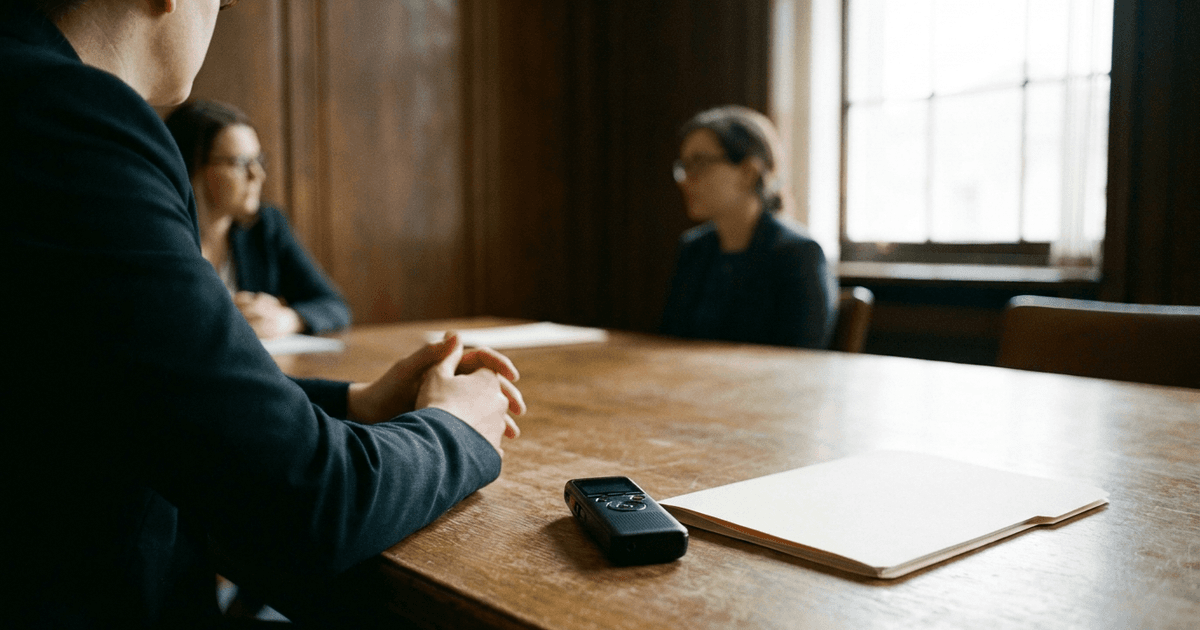
Smart glasses are legal to own and wear in Mississippi. Because Mississippi follows a one-party consent rule under Miss. Code Ann. § 41-29-531(e), whose exemption reaches the interception article's criminal penalties under § 41-29-533 as well as its civil remedy under § 41-29-529, you can lawfully record any conversation you are part of with smart glasses audio on without notifying the other participants. Video recording in public is generally lawful under both federal and state law. The critical limits are the voyeurism statute and private spaces where recording is always prohibited regardless of consent.
Information last verified on 2026-06-07. This article has not yet been reviewed by a licensed lawyer.
Jurisdiction scope: This article addresses Mississippi recording consent law under Miss. Code Ann. § 41-29-531(e) and unlawful photography and voyeurism under § 97-29-63. It does not address federal wiretap law in depth; for that background, see the Mississippi recording laws parent page. It does not address the laws of other states.
For a full explanation of Mississippi's one-party consent rule and how it applies to phones, in-person conversations, and the workplace, see the Mississippi recording laws guide.
Are Smart Glasses Legal to Own and Wear in Mississippi?
Smart glasses are entirely legal to own and wear in Mississippi. No Mississippi statute restricts the sale, possession, or use of wearable camera-equipped eyewear as a device category. Mississippi has not enacted any legislation specifically targeting smart glasses, digital eyewear, or wearable recording devices as of June 2026. The legality question turns not on the device itself but on what you do with it: the audio-recording capability is what triggers Mississippi's interception statute under Title 41, Chapter 29, and the visual capability in certain spaces triggers the voyeurism statute under § 97-29-63.
Meta Ray-Ban AI glasses include a built-in capture LED indicator, a white light near the right frame, that illuminates whenever the camera is actively recording video, taking a photo, or streaming live. Meta upgraded this LED from 1mm to 2mm and increased its brightness in response to privacy concerns. Meta's official guidance states that users should "let that capture LED light shine" and stop recording if anyone expresses that they would prefer not to be recorded. The LED is the most tangible external signal that recording is happening, and its visibility is relevant to whether another person has a reasonable expectation that a conversation is not being captured.
Wearing smart glasses in public, at work, or in social settings is not independently unlawful. The legal analysis focuses entirely on whether the audio component captures a private oral communication without any party's consent, and whether the recording device is used in a location where the voyeurism statute applies.
Recording Video in Public Versus Private Spaces
Under both federal and Mississippi law, video-only recording in public is generally lawful. The federal Wiretap Act (18 U.S.C. §§ 2510-2522) covers only "aural transfers" that contain the human voice. Silent video recording is not an interception under 18 U.S.C. § 2511 because it does not involve an oral communication as defined in § 2510(2). Mississippi's interception statutes follow the same principle: they address the capture of private oral communications, not the act of observing or filming people in public places where they can be seen.
The constitutional baseline is Katz v. United States, 389 U.S. 347 (1967), which held that the Fourth Amendment protects people, not places; Justice Harlan's concurrence framed the test as whether a person has an actual expectation of privacy that society is prepared to recognize as reasonable. People on public streets, in parks, at festivals, in stores, or on sidewalks have a reduced expectation of privacy from being observed or filmed. Smart glasses used to record video of a crowd, a public event, or street scenes generally do not create legal exposure under Mississippi law.
Private spaces present a categorically different analysis. In any location where a person has a reasonable expectation of privacy in their physical person and intimate conduct, such as a home, hotel room, medical office, or enclosed space where entry requires permission, recording without consent can be both a civil intrusion and a criminal voyeurism violation. The bright line is between the reduced privacy expectation of being seen in public and the strong expectation people hold in spaces where they reasonably believe they will not be observed or recorded.
Semi-public spaces introduce a middle category that requires judgment. A workplace break room, a private conference room, or a restaurant booth where two people are having a quiet conversation are all spaces where a person might be physically accessible to others yet still have a reasonable expectation that their words and conduct are not being captured. In those contexts, recording even without audio can support a civil intrusion-upon-seclusion claim under Restatement (Second) of Torts § 652B if the recording would be highly offensive to a reasonable person.
Recording Audio and Mississippi's One-Party Consent Rule
The central legal framework for smart glasses audio recording in Mississippi is Miss. Code Ann. § 41-29-531(e), read together with the criminal penalty provision at § 41-29-533. Section 41-29-531 is officially captioned "Exceptions to civil liability for violation of this article," but its own operative chapeau text reads "This article shall not apply to," not a narrower civil-defense clause. Because that language exempts qualifying conduct from the article as a whole, and § 41-29-533's misdemeanor and felony offenses are defined as acting "in violation of this article," the one-party exception in § 41-29-531(e) negates criminal exposure under § 41-29-533 as well as civil exposure under § 41-29-529. In practice, that means a person who is a party to a private oral communication may record it without the knowledge or consent of the other participants, provided the recording is not made for the purpose of committing any criminal, tortious, or injurious act, and faces neither criminal prosecution nor a civil suit for doing so. This mirrors the federal baseline in 18 U.S.C. § 2511(2)(d), and Mississippi adopts it without modification.
What this means in practice is straightforward: if you are wearing Meta Ray-Ban glasses and you are having a conversation with another person, activating the audio recording function is lawful because you are a participant in that conversation. You do not need to announce that you are recording. The other party need not consent.
The critical constraint is the nature of the communication as "private." Mississippi's interception statutes under Title 41, Chapter 29 govern private oral communications, meaning oral exchanges in which the participants have a reasonable expectation that what they say is not being overheard or intercepted by others. A conversation shouted across a crowded street where anyone could hear it is not a private oral communication. A quiet discussion in an office, a personal exchange in a home, or a one-on-one meeting between employees likely is. Smart glasses wearers should assess whether the conversation they are capturing would reasonably be understood by participants as private in that context.
Non-participant interception is the prohibited conduct. If a person who is not part of a conversation uses smart glasses to record the private oral communications of others, without any party to that conversation consenting, that person violates Mississippi's interception statute. Under Miss. Code Ann. §§ 41-29-501 to 41-29-537, unlawful interception is a misdemeanor, carrying up to 1 year in county jail or a fine of up to $10,000. Mississippi's felony tier in § 41-29-533(2), up to 5 years in the State Penitentiary and a fine up to $10,000, is tied to § 41-29-511, which covers disclosure and use of communications intercepted under the article's authorized procedures by officers and others who receive them that way. It does not make a private person's later sharing of an unlawful recording a separate state felony.
The civil damages exposure under § 41-29-529 runs independently of criminal prosecution. That provision provides for recovery of the greater of $100 per day of violation or $1,000 minimum, plus actual damages, punitive damages, attorney fees, and costs. A person harmed by an unlawful interception can sue in Mississippi state court on these grounds even if the state chooses not to prosecute criminally. Federal civil liability under the Electronic Communications Privacy Act adds a parallel track: a minimum of $100 per day of violation or $10,000 in statutory damages per violation, plus actual and punitive damages and reasonable attorney fees.
For the full detail of how Mississippi's one-party consent rule applies to phone calls, workplace recordings, and other contexts, see the Mississippi recording laws page.
Where You Cannot Record: Restrooms, Locker Rooms, and Private Spaces
Mississippi's voyeurism statute, Miss. Code Ann. § 97-29-63, draws an absolute line that no consent analysis can overcome. The statute criminalizes photographing, filming, or recording another person without their permission when the actor is motivated by lewd, licentious, or indecent intent and the subject is in a location where they have a reasonable expectation of privacy in their body or intimate conduct.
Protected locations include bathrooms, restrooms, bedrooms, fitting rooms, locker rooms, changing areas, private residences, and any other space where a person would reasonably expect that their body or intimate conduct will not be observed or recorded. Section 97-29-63 applies to smart glasses exactly as it applies to hidden cameras, body cameras, or any other recording device. The innocuous appearance of smart glasses, which look indistinguishable from ordinary prescription frames or sunglasses, does not create an exception. The covert nature of the recording is directly relevant to the "lewd intent" inference a prosecutor or jury would draw.
The criminal penalties under § 97-29-63 are substantial, and both tiers require the actor to have been over 21 at the time of the offense. When the victim is an adult, a violation by an actor over 21 carries imprisonment of up to 5 years in the custody of the Mississippi Department of Corrections, a fine of up to $5,000, or both. When the victim is under 16 years of age and the actor was over 21, the penalty increases to up to 10 years in custody, a fine of up to $5,000, or both. The statute's text does not set out a separate penalty for an actor who was 21 or younger at the time of the offense. These felony-level consequences reflect the seriousness with which Mississippi treats privacy violations in spaces where people are most vulnerable.
The federal Video Voyeurism Prevention Act (18 U.S.C. § 1801) provides a parallel prohibition for recordings on federal property, covering anyone who intentionally captures images of another person's private areas without consent where that person has a reasonable expectation of privacy. Federal law applies on federal land; Mississippi § 97-29-63 applies everywhere else in the state.
Watch out: The wearable form factor of smart glasses is not a defense to voyeurism charges. A court analyzing whether recording was made with lewd intent under § 97-29-63 would consider that the device appeared to be ordinary eyewear, which supports the inference that the recording was deliberately concealed. The only safe rule is to remove or deactivate smart glasses before entering restrooms, locker rooms, changing areas, or any other private space, regardless of whether recording is actively occurring.
Facial Recognition and Biometric Privacy
Mississippi does not have a dedicated biometric privacy statute comparable to Illinois' Biometric Information Privacy Act (740 ILCS 14), Texas' Capture or Use of Biometric Identifier Act (Tex. Bus. & Com. Code §§ 503.001-503.004), or Washington's biometric identifiers law (RCW Chapter 19.375) as of June 2026. A Mississippi resident who uses smart glasses equipped with facial-recognition software to identify strangers does not face per-person statutory damages under a state biometric law.
The absence of a Mississippi-specific biometric statute does not mean facial recognition via smart glasses is consequence-free in the state. Civil liability under common-law privacy torts remains available to individuals. Under Restatement (Second) of Torts § 652B, a person who intentionally intrudes upon the seclusion of another is liable if the intrusion would be "highly offensive to a reasonable person." The intrusion itself creates liability; there is no requirement that the information be published or shared. Using smart glasses with a facial-recognition application to identify strangers in real time, extracting names and other identifying information without their knowledge, satisfies both the intent and offensiveness elements of this tort.
The October 2024 demonstration by Harvard students AnhPhu Nguyen and Caine Ardayfio, who used Meta Ray-Ban glasses combined with a third-party facial-recognition tool to identify strangers on the street and retrieve home addresses and partial Social Security numbers in real time, illustrates precisely the conduct that supports an intrusion-upon-seclusion claim. Meta's glasses provided the camera; the facial-recognition capability came from a separately installed application. That distinction matters: the glasses themselves do not perform facial recognition, but they become the capture mechanism for a system that does.
If a Mississippi-based person uses smart glasses with facial-recognition features in Illinois, Texas, or Washington, the biometric statutes of those states apply to the residents of those states whose biometric data is captured. Illinois BIPA in particular provides a private right of action with statutory damages of $1,000 per negligent violation and $5,000 per intentional or reckless violation per person. A Mississippi resident traveling to or doing business in those states faces meaningful liability exposure if facial recognition is used without consent. Multi-state users should treat Illinois, Texas, and Washington as categorical prohibition zones for facial-recognition use without explicit prior consent.
Penalties for Violating Mississippi's Recording Laws
Mississippi's recording-related criminal and civil penalties span two statutes, each carrying distinct consequences for smart glasses misuse.
Under Miss. Code Ann. §§ 41-29-501 to 41-29-537, unlawful interception of a private oral communication is a misdemeanor, carrying up to 1 year in county jail or a fine of up to $10,000. This applies to a person who uses smart glasses to capture the private conversations of others while not being a participant. The felony tier in § 41-29-533(2), up to 5 years in the State Penitentiary and a fine up to $10,000, applies to violations of § 41-29-511, which governs disclosure and use of communications intercepted under the article's authorized procedures, not a private person sharing an unlawful recording.
Civil damages under Miss. Code Ann. § 41-29-529 run separately from criminal liability. The statute provides for the greater of $100 per day of violation or $1,000 minimum, plus actual damages, punitive damages, attorney fees, and costs. A single continuous recording of someone's private conversations could yield a substantial judgment under this provision.
Federal Wiretap Act civil liability under 18 U.S.C. § 2520 provides an additional avenue: the greater of actual damages (plus the violator's profits) or statutory damages of the greater of $100 per day of violation or $10,000, plus punitive damages in appropriate cases and reasonable attorney fees. Federal criminal penalties under 18 U.S.C. § 2511(4) run up to 5 years imprisonment, a fine, or both. The federal and state civil claims can be pursued concurrently.
Under Miss. Code Ann. § 97-29-63, voyeuristic recording in private spaces carries felony-level penalties, and both tiers apply only where the actor was over 21 at the time of the offense. For adult victims, the penalty is up to 5 years in the custody of the Mississippi Department of Corrections, a fine up to $5,000, or both. When the victim is under 16 and the actor was over 21, the penalty reaches up to 10 years in custody, a fine up to $5,000, or both. The statute does not specify a distinct penalty for an actor 21 or younger. Mississippi courts may also impose sex offender registration requirements in voyeurism cases, which impose significant lasting consequences beyond the criminal sentence.
| Violation | Statute | Classification | Imprisonment | Fine |
|---|---|---|---|---|
| Unlawful interception of private oral communication | Miss. Code Ann. §§ 41-29-501 to 41-29-537 | Misdemeanor | Up to 1 year county jail | Up to $10,000 |
| Voyeurism (adult victim, actor over 21) | Miss. Code Ann. § 97-29-63 | Felony | Up to 5 years | Up to $5,000 |
| Voyeurism (victim under 16, actor over 21) | Miss. Code Ann. § 97-29-63 | Felony | Up to 10 years | Up to $5,000 |
| Federal wiretap violation | 18 U.S.C. § 2511(4) | Federal felony | Up to 5 years | Fine under Title 18 (civil damages separately under § 2520) |
Practical Tips for Smart Glasses Users in Mississippi
Following a few straightforward practices significantly reduces legal exposure when using smart glasses in Mississippi.
Keep the capture LED visible. Meta Ray-Ban glasses include a built-in white LED that illuminates when the camera is recording, taking a photo, or streaming live. Meta's guidance is explicit: let the LED shine. Never cover, tape over, or otherwise obstruct the LED. Doing so removes the only external notice that recording is occurring and strengthens evidence of intentional covert recording, the exact intent that aggravates both interception and voyeurism charges.
Understand your one-party consent protection. Mississippi's one-party consent rule under § 41-29-531(e), which exempts qualifying recordings from criminal liability under § 41-29-533 as well as civil liability under § 41-29-529, gives participants a clear legal foundation to record conversations they are part of. Use this protection intentionally: it applies when you are actively engaged in the conversation being recorded. It does not apply if you leave the room and continue recording, or if you point your glasses at others to capture conversations you are not part of.
Do not record non-participants' private conversations. Using smart glasses to capture the private oral communications of others without being a party to the conversation is a criminal offense, even in public. The one-party consent protection requires that you yourself be a party to the recorded communication.
Never record in private spaces. Bathrooms, locker rooms, changing rooms, bedrooms, and any other space where a person would have a reasonable expectation of privacy in their body are absolute prohibitions under § 97-29-63. Remove or deactivate smart glasses before entering these spaces. The penalty is a felony, not a misdemeanor.
Be cautious crossing state lines. Mississippi's one-party rule is permissive, but it applies only within Mississippi. If you travel to California, Florida, Maryland, Massachusetts, Washington, or another all-party consent state, that state's more restrictive law governs any audio recording you make there. Smart glasses users who frequently travel should be aware that the legal environment changes at the state border.
Avoid facial-recognition features. Even without a Mississippi biometric statute, using facial recognition to identify individuals without their knowledge creates exposure under common-law privacy torts. In professional or commercial contexts involving residents of Illinois, Texas, or Washington, the biometric statutes of those states apply. Use facial-recognition features only with explicit, disclosed consent.
Consider disclosing recording even when not legally required. In Mississippi, one-party consent means you are not legally required to announce that you are recording a conversation you are part of. In practice, announcing "I'm recording this" or ensuring the capture LED is clearly visible to others removes ambiguity and eliminates any argument about reasonable expectations of privacy in the communication.
Disclaimer
This article provides general legal information about Mississippi recording consent law and voyeurism statutes as they apply to smart glasses. It does not constitute legal advice and does not create an attorney-client relationship. The statutes discussed reflect their in-force versions as of June 7, 2026. Laws may change; always verify current statute text with the Mississippi Secretary of State's official publication or a licensed Mississippi attorney. Readers who need advice about a specific situation, including whether a recording was lawful or whether civil or criminal liability may apply, should consult a lawyer licensed in Mississippi.
Last updated: 2026-06-07. Statutes cited reflect their in-force versions as of 2026-06-07.
More Mississippi Laws
- Mississippi Data Privacy Laws
- Mississippi Deepfake Laws
- Mississippi Drone Laws
- Mississippi Recording Laws
Frequently Asked Questions
Are smart glasses legal in Mississippi?
Yes. Smart glasses are legal to own and wear in Mississippi. No Mississippi statute restricts the device itself. The legal analysis focuses on how the glasses are used, specifically whether the audio recording captures private oral communications without any party's consent, or whether the device is used in spaces where the voyeurism statute applies.
Do I need consent to record audio with smart glasses in Mississippi?
No, if you are a participant in the conversation. Mississippi follows a one-party consent rule under Miss. Code Ann. § 41-29-531(e), which exempts qualifying recordings from criminal liability under § 41-29-533 as well as civil liability, meaning any party to a private oral communication may record it without notifying or obtaining consent from the other parties, as long as the recording is not made to commit a criminal, tortious, or injurious act. You must be an active participant in the conversation. Recording the conversations of others when you are not part of them is a criminal offense.
Is Mississippi a one-party consent state for recording?
Yes. Under Miss. Code Ann. § 41-29-531(e), whose exemption reaches both the article's criminal penalties under § 41-29-533 and its civil remedy under § 41-29-529, Mississippi requires only one party to a private oral communication to consent to its recording. Because the person doing the recording is typically a party to the conversation, a participant can lawfully record any conversation they are part of without notifying others.
Can I record a conversation at work with smart glasses in Mississippi?
Recording an in-person workplace conversation you are part of is lawful under Mississippi's one-party consent rule. However, workplace recordings may implicate employer policies and federal employment law, and recording a conversation you are not part of is still a criminal offense. Always check your employer's recording policy before recording at work, and ensure that any recording captures only conversations in which you are an active participant.
What happens if I record someone in a bathroom or locker room with smart glasses in Mississippi?
Recording in a bathroom, locker room, changing room, or any other private space where a person has a reasonable expectation of privacy in their body constitutes voyeurism under Miss. Code Ann. § 97-29-63, regardless of any consent analysis. Both penalty tiers require the actor to have been over 21 at the time of the offense: for an adult victim, the penalty is up to 5 years in custody, a fine up to $5,000, or both, and when the victim is under 16, the penalty increases to up to 10 years in custody, a fine up to $5,000, or both. The statute does not specify a separate penalty for an actor 21 or younger.
Can I be sued for recording someone with smart glasses in Mississippi?
Yes. Even if no criminal statute is violated, recording a person in a private or semi-private context without their knowledge can support a civil claim for intrusion upon seclusion under Restatement (Second) of Torts § 652B. The intrusion itself creates liability; the footage need not be published or shared. Mississippi state civil damages under § 41-29-529 provide recovery of at least $1,000 minimum or $100 per day of violation, plus actual damages, punitive damages, and attorney fees.
Is facial recognition with smart glasses legal in Mississippi?
Mississippi has no dedicated biometric privacy statute as of June 2026. However, using smart glasses with facial-recognition software to identify individuals without their consent can create civil liability under the intrusion-upon-seclusion tort. If the glasses are used to capture biometric data from residents of Illinois, Texas, or Washington, the biometric statutes of those states may apply regardless of where the recording occurred.
Does the capture LED on Meta Ray-Ban glasses matter legally in Mississippi?
Yes. The LED on Meta Ray-Ban glasses is the primary external notice that recording is occurring. Keeping it visible supports a position that recording was open rather than covert. Covering or disabling the LED removes this notice and strengthens evidence of intentional covert recording, which is directly relevant to both the interception and voyeurism statutes. Meta's own guidance requires users to keep the LED unobstructed.
What if I travel from Mississippi to a two-party consent state and use my smart glasses there?
Mississippi's one-party consent rule applies to recordings made in Mississippi. If you travel to an all-party consent state such as California, Florida, Maryland, Massachusetts, or Washington, that state's law governs audio recordings made there. Recording private conversations without all parties' consent in those states can be a criminal offense regardless of your home state's rules. Smart glasses users who travel should research the recording consent law of each state they visit.
Can I record a police officer with my smart glasses in Mississippi?
Recording police officers performing their duties in a public space is generally protected under the First Amendment and is consistent with Mississippi's one-party consent rule when you are present and a participant in or observer of a lawful public interaction. Audio recording of a public law enforcement encounter where you are present falls within the one-party consent protection. For a full analysis of recording police in Mississippi, see the Mississippi recording laws page.
Can I wear smart glasses while driving in Mississippi?
Mississippi law restricts handheld device use while driving. Whether wearing smart glasses while driving violates Mississippi distracted-driving statutes depends on the specific activity, as using glasses for navigation differs from actively recording or streaming video while operating a vehicle. The legal status of smart glasses for navigation use is not explicitly resolved in Mississippi law as of June 2026. Streaming video, social media use, or non-navigation activities while driving creates significantly greater legal and safety risk.
Updates
Corrected the description of Katz v. United States to distinguish the Court's holding from the reasonable-expectation-of-privacy test stated in Justice Harlan's concurrence.
Corrected the description of Mississippi's interception felony, which applies to misuse of communications intercepted under the statute's authorized procedures, and clarified that federal civil wiretap damages come from 18 U.S.C. § 2520.
Corrected this page's citation for Mississippi's one-party recording rule (Miss. Code Ann. § 41-29-531(e)) to explain, using the statute's own text, that it exempts qualifying recordings from criminal liability under § 41-29-533 as well as civil liability under § 41-29-529; replaced four dead law.sos.ms.gov citation links with verified Mississippi Code sources; and corrected the voyeurism penalty description under § 97-29-63 to state that both the adult-victim and under-16 felony tiers require the actor to have been over 21 at the time of the offense.
Independently fact-checked against the cited primary sources
Governing law re-checked for recent changes
Reviewed and approved by an editor
The Law Behind This Article
This article rests on the statutory provisions below, held in our own legal record and retrieved from the official source. Tap a section to read the operative text.
Mississippi Code of 1972 Annotated
§ 41-29-531Exceptions to civil liability for violation of this article.In forcecited in 19 of our articles
This article shall not apply to: An operator of a switchboard, or an officer, employee or agent of a communication common carrier whose facilities are used in the transmission of a wire communication, intercepts a communication, or who discloses or uses an intercepted communication in the normal…
Official text (excerpt) · last checked 2026-09-24 · Read the full text in our law library · Verify at billstatus.ls.state.ms.us
Cited in 4 court opinions in our collectionLatest citing opinion in our collection: 2026
Opinions citing this section in our collection:
- Campbell v. MESC (Court of Appeals of Mississippi 2000, 782 So. 2d 751)“…le involved in the conversation are aware of the recording. Miss.Code Ann. § 41-29-531(e) (the statute does not apply to a con…”
- Brian S. Pope v. Deborah Baird Martin a/k/a Deborah L. Martin a/k/a Deborah Martin Pope a/k/a Deborah L. Pope (Court of Appeals of Mississippi 2023)“…vides a list of those who are immune from civil liability. Miss. Code Ann. § 41-29-531 (Rev. 2018). Relevant to the present ca…”
- Rosenberg (District Court, S.D. Mississippi 2026)“…olation of the Mississippi Security of Communications Act, Miss. Code Ann. §§ 41-29-531 to -537 (Count IX). See id. at 40-47.…”
Identified automatically from the court opinions citing this section — not a ranking of which case controls.
Also relied on in: Mississippi Recording Laws (2026): One-Party Consent Rules, Mississippi AI Meeting Recording Laws (2026), Mississippi Ring Doorbell Laws: What You Need to Know in 2026
§ 41-29-533Penalties for violations of this article.In forcecited in 7 of our articles
(1) Any person who knowingly and intentionally possesses, installs, operates or monitors an electronic, mechanical or other device in violation of this article shall be guilty of a misdemeanor and, upon conviction thereof, shall be sentenced to not more than one (1) year in the county jail or fined…
Official text (excerpt) · last checked 2020-07-08 · Read the full text in our law library
Also relied on in: Mississippi Audio Recording Laws: One-Party Consent Rules and Penalties (2026), Mississippi Phone Call Recording Laws: Consent Rules and Interstate Calls (2026), Mississippi Surveillance Camera Laws (2026 Guide)
§ 97-29-63Photographing or filming another without permission where there is expectation of privacy; when victim is adult; when victim is child under sixteen.In forcecited in 12 of our articles
(1)(a) It is a felony for any person with lewd, licentious or indecent intent to photograph, film, videotape, record or otherwise reproduces the image of another person without the permission of the other person when the other person is located in a place where a person would intend to be in a…
Official text (excerpt) · last checked 2026-08-31 · Read the full text in our law library · Verify at billstatus.ls.state.ms.us
Cited in 9 court opinions in our collectionLatest citing opinion in our collection: 2023
In the courts (editorial summary, independently checked):Gilmer v. State (2007) construed Section 97-29-63 on first impression, holding it has four elements and that proof the victim was in a listed place like a private dwelling satisfies the protected-location element as a matter of law, and rejected an overbreadth challenge. Nuckolls v. State (2015) reversed counts where venue was unproven.
Opinions citing this section in our collection:
- Gilmer v. State (Mississippi Supreme Court 2007, 955 So. 2d 829)✓A constable parked at night about 87 feet away and used a zoom camcorder to film a clothed woman inside her apartment; the court held that filming a victim in a private dwelling satisfies the statute's protected-location element as a matter of law, and affirmed the conviction.
- Eddie Gilmer v. State of Mississippi (Mississippi Supreme Court 2004)“…te Med. Ass'n, 381 So. 2d 1046, 1048 (Miss. 1980). ¶10. Miss. Code Ann. §97-29-63 (Rev. 2006) reads: Any person w…”
- Nuckolls v. State (Mississippi Supreme Court 2015, 179 So. 3d 1046)✓Nuckolls hid cameras and filmed women in bathrooms, then was convicted on ten counts charging he later reproduced the videos on a laptop; the court reversed those ten because the State never proved where the transfers occurred, and affirmed one filming count.
Identified automatically from the court opinions citing this section — not a ranking of which case controls.
Also relied on in: Mississippi Employee Monitoring Laws: Workplace Surveillance and Privacy (2026)
§ 41-29-529Civil action for violation of this article.In forcecited in 7 of our articles
(1) A person whose wire, oral or other communication is intercepted, disclosed or used in violation of this article shall have a civil cause of action against any person who intercepts, discloses or uses or procures another person to intercept, disclose or use the communication, and is entitled to…
Official text (excerpt) · last checked 2020-07-08 · Read the full text in our law library
Cited in 1 court opinions in our collectionLatest citing opinion in our collection: 2023
Opinions citing this section in our collection:
- Brian S. Pope v. Deborah Baird Martin a/k/a Deborah L. Martin a/k/a Deborah Martin Pope a/k/a Deborah L. Pope (Court of Appeals of Mississippi 2023)“…provides civil recourse for violation of the statute. See Miss. Code Ann. § 41-29-529 (Rev. 2018).13 Just like the federal s…”
Identified automatically from the court opinions citing this section — not a ranking of which case controls.
Also relied on in: Mississippi Medical Recording Laws: Patient Rights, HIPAA, and Consent (2026)
United States Code Title 18
§ 2511Interception and disclosure of wire, oral, or electronic communications prohibitedIn forcecited in 441 of our articles
Except as otherwise specifically provided in this chapter any person who— intentionally intercepts, endeavors to intercept, or procures any other person to intercept or endeavor to intercept, any wire, oral, or electronic communication; intentionally uses, endeavors to use, or procures any other person to use or endeavor to use any electronic, mechanical, or other device to intercept any oral communication when— such device is affixed to, or otherwise transmits a signal through, a wire, cable, or other like connection used in wire communication; or such device transmits communications by radio, or interferes with the transmission of such communication; or such person knows, or has reason to know, that such device or any component thereof has been sent through the mail or transported in interstate or foreign commerce; or such use or endeavor to use (A) takes place on the premises of any business or other commercial establishment the operations of which affect interstate or foreign commerce; or (B) obtains or is for the purpose of obtaining information relating to the operations of any business or other commercial establishment the operations of which affect interstate or foreign…
Official text (excerpt) · last checked 2026-09-17 · Read the full text in our law library · Verify at uscode.house.gov
Cited in 2,045 court opinions in our collectionLatest citing opinion in our collection: 2026
In the courts (editorial summary, independently checked):Griggs-Ryan v. Smith (1990) applied the Section 2511(2)(d) prior-consent exception, treating a tenant repeatedly told that all incoming calls were taped as having impliedly consented. United States v. United States District Court (1972) read the then-current Section 2511(3) as conferring no presidential surveillance power.
Opinions citing this section in our collection:
- Mitchell v. Forsyth (Supreme Court of the United States 1985, 472 U.S. 511)✓The Attorney General authorized a warrantless 1970 national security wiretap that caught the plaintiff's calls; the Court held the since-repealed Section 2511(3) disclaimer left the tap lawful under Title III, and that Mitchell had qualified immunity.
- United States v. United States District Court for the Eastern District of Michigan (Supreme Court of the United States 1972, 407 U.S. 297)✓The Attorney General approved warrantless wiretaps on members of a domestic group accused of bombing a CIA office; the Court read Section 2511(3) as a congressional disclaimer conferring no surveillance power, then held the Fourth Amendment required prior judicial approval.
- Forsyth v. Barr (Court of Appeals for the Fifth Circuit 1994, 19 F.3d 1527)✓Dallas police used, in an internal affairs probe of an officer, calls private parties allegedly intercepted illegally; assuming that was unlawful, the Fifth Circuit held Section 2517(1) and (2) allowed the disclosure and use, defeating the Section 2511(1)(c) and (d) claims.
Identified automatically from the court opinions citing this section — not a ranking of which case controls.
Also relied on in: Connecticut Recording Laws (2026): Hybrid Consent Rules Explained, Oregon Recording Laws (2026): Hybrid One-Party and All-Party Rules, US Recording Laws by State (2026): All 50 States Explained
§ 2510DefinitionsIn forcecited in 137 of our articles
As used in this chapter— “wire communication” means any aural transfer made in whole or in part through the use of facilities for the transmission of communications by the aid of wire, cable, or other like connection between the point of origin and the point of reception (including the use of such connection in a switching station) furnished or operated by any person engaged in providing or operating such facilities for the transmission of interstate or foreign communications or communications affecting interstate or foreign commerce; “oral communication” means any oral communication uttered by a person exhibiting an expectation that such communication is not subject to interception under circumstances justifying such expectation, but such term does not include any electronic communication; “State” means any State of the United States, the District of Columbia, the Commonwealth of Puerto Rico, and any territory or possession of the United States; “intercept” means the aural or other acquisition of the contents of any wire, electronic, or oral communication through the use of any electronic, mechanical, or other device.1 So in original. The period probably should be a semicolon.
Official text (excerpt) · last checked 2026-07-28 · Read the full text in our law library · Verify at uscode.house.gov
Cited in 2,382 court opinions in our collectionLatest citing opinion in our collection: 2026
In the courts (editorial summary, independently checked):United States v. New York Telephone Co. (1977) held that pen registers fall outside Title III because they do not acquire the contents of a communication as Section 2510(4) and (8) define interception. Forsyth v. Barr (1994) applied the same definitions, treating the defendant officers as law enforcement officers under Section 2510(7).
Opinions citing this section in our collection:
- Forsyth v. Barr (Court of Appeals for the Fifth Circuit 1994, 19 F.3d 1527)✓Neighbors tapped an informant's home line and the overheard charges reached Dallas internal affairs; the Fifth Circuit saw no evidence the police defendants intercepted anything and held they were 2510(7) law enforcement officers, so 2517(1) and (2) allowed their use of it.
- Nixon v. Administrator of General Services (Supreme Court of the United States 1977, 433 U.S. 425)“…of the Omnibus Crime Control and Safe Streets Act of 1968, 18 U. S. C. §§ 2510 et seq. 408 F. Supp., at 363 . We…”
- Gannett Co. v. DePasquale (Supreme Court of the United States 1979, 443 U.S. 368)“…of the Omnibus Crime Control and Safe Streets Act of 1968, 18 U. S. C. § 2510 et seq., be preserved prior to the d…”
Identified automatically from the court opinions citing this section — not a ranking of which case controls.
Also relied on in: Surveillance Camera Laws by State (2026 Guide), Georgia Recording Laws (2026): One-Party Audio, All-Party Video, District of Columbia Recording Laws (2026): One-Party Consent Rules
§ 1801Video voyeurismIn forcecited in 81 of our articles
Whoever, in the special maritime and territorial jurisdiction of the United States, has the intent to capture an image of a private area of an individual without their consent, and knowingly does so under circumstances in which the individual has a reasonable expectation of privacy, shall be fined under this title or imprisoned not more than one year, or both. In this section— the term “capture”, with respect to an image, means to videotape, photograph, film, record by any means, or broadcast; the term “broadcast” means to electronically transmit a visual image with the intent that it be viewed by a person or persons; the term “a private area of the individual” means the naked or undergarment clad genitals, pubic area, buttocks, or female breast of that individual; the term “female breast” means any portion of the female breast below the top of the areola; and the term “under circumstances in which that individual has a reasonable expectation of privacy” means— circumstances in which a reasonable person would believe that he or she could disrobe in privacy, without being concerned that an image of a private area of the individual was being captured; or circumstances in which a…
Official text (excerpt) · last checked 2026-07-28 · Read the full text in our law library · Verify at uscode.house.gov
Cited in 53 court opinions in our collectionLatest citing opinion in our collection: 2026
In the courts (editorial summary, independently checked):Courts have applied 18 U.S.C. 1801 mainly at its edges. United States v. Johnson (2010) read it as Congress's answer to secretly filming nudity on federal property, acquitting on a child exploitation charge instead. EPIC v. Department of Homeland Security (2011) applied the Section 1801(c) law enforcement exception to a TSA scanner claim.
Opinions citing this section in our collection:
- United States v. Anthony Helton (Court of Appeals for the Fourth Circuit 2019, 944 F.3d 198)“…from this list of federal offenses is video voyeurism under 18 U.S.C. § 1801. Rather than list this statute as an enu…”
- United States v. Johnson (District Court, W.D. Missouri 2010, 719 F. Supp. 2d 1059)✓A weightlifting coach hid a camera to film minors weighing in nude; acquitting him under the child exploitation statute, the court called that conduct plain video voyeurism under section 1801, but noted the section reaches only federal maritime and territorial jurisdiction.
- Electronic Privacy Information Center v. United States Department of Homeland Security (Court of Appeals for the D.C. Circuit 2011, 653 F.3d 1)✓Privacy groups challenged TSA body scanners under the Video Voyeurism Prevention Act; the D.C. Circuit held the statute's exception for lawful law enforcement, correctional, or intelligence activity applied to airport screening, so the section 1801 claim failed.
Identified automatically from the court opinions citing this section — not a ranking of which case controls.
Also relied on in: South Dakota Voyeurism Laws, Utah Voyeurism Laws, Is It Illegal to Video Record Someone Without Their Consent? (2026)
§ 2520Recovery of civil damages authorizedIn forcecited in 130 of our articles
Except as provided in section 2511(2)(a)(ii), any person whose wire, oral, or electronic communication is intercepted, disclosed, or intentionally used in violation of this chapter may in a civil action recover from the person or entity, other than the United States, which engaged in that violation such relief as may be appropriate. In an action under this section, appropriate relief includes— such preliminary and other equitable or declaratory relief as may be appropriate; damages under subsection (c) and punitive damages in appropriate cases; and a reasonable attorney’s fee and other litigation costs reasonably incurred.
Official text (excerpt) · last checked 2026-07-28 · Read the full text in our law library · Verify at uscode.house.gov
Cited in 860 court opinions in our collectionLatest citing opinion in our collection: 2026
In the courts (editorial summary, independently checked):Walker v. Darby (1990) held a 2520 plaintiff need not prove the contents of intercepted conversations, only interception and a justified expectation against it. Bartnicki v. Vopper (2001) barred 2520 damages against defendants who took no part in the interception, obtained the tape lawfully, and disclosed a matter of public concern.
Opinions citing this section in our collection:
- Jessie Walker v. Thomas E. Darby, Hugh L. Robinson, Jr., and Kenneth Day (Court of Appeals for the Eleventh Circuit 1990, 911 F.2d 1573)✓A postal letter carrier said three supervisors wired an intercom near his workstation to listen in. Reversing summary judgment, the Eleventh Circuit held a section 2520 plaintiff can show interception without proving the contents of specific conversations.
- Gelbard v. United States (Supreme Court of the United States 1972, 408 U.S. 41)“…disclosure, or use is entitled to recover civil damages, 18 U. S. C. § 2520 . Title III also bars the use as eviden…”
- DirecTV, Inc. v. Hoa Huynh (Court of Appeals for the Ninth Circuit 2007, 503 F.3d 847)“…7 U.S.C. § 605 (e)(4), or alternatively, for violations of 18 U.S.C. § 2520 (a), or alternatively, for violations o…”
Identified automatically from the court opinions citing this section — not a ranking of which case controls.
Also relied on in: Alabama Audio Recording Laws: Consent Rules and Penalties, Alabama Phone Call Recording Laws: What You Need to Know, Alaska Phone Call Recording Laws: Rules for Landline, Cell, and VoIP (2026)
Search our full record of US law — 2.1 million sections, every state + federal →
Sources and References
- Miss. Code Ann. § 41-29-531(e): This article shall not apply to a person not acting under color of law who intercepts a wire, oral, or other communication if the person is a party to the communication or one party has given prior consent, unless the interception is for a criminal, tortious, or other injurious purpose. Because the section's chapeau exempts qualifying conduct from the article as a whole, this exempts a participant's recording from both civil liability under § 41-29-529 and criminal liability under § 41-29-533, despite the section's caption ('Exceptions to civil liability').(law.justia.com)
- Miss. Code Ann. § 41-29-533: Penalties for violations of this article. Knowing and intentional unlawful possession, installation, operation, or monitoring of an interception device is a misdemeanor (up to 1 year county jail or fine up to $10,000). A violation of § 41-29-511 (disclosure or use of an unlawfully intercepted communication) is a felony (up to 5 years State Penitentiary and fine up to $10,000).(law.justia.com)
- Miss. Code Ann. § 41-29-529: Mississippi civil remedies for unlawful interception. Recovery of $100/day or $1,000 minimum (whichever is greater), plus actual damages, punitive damages, attorney fees, and costs.(law.justia.com)
- Miss. Code Ann. § 97-29-63: Mississippi voyeurism statute. Prohibits photographing, filming, or recording another person with lewd intent in spaces where the person has a reasonable expectation of privacy. Both penalty tiers require the actor to have been over 21 at the time of the offense: up to 5 years or fine up to $5,000 (adult victim); up to 10 years or fine up to $5,000 (victim under 16). No separate penalty is specified for an actor 21 or younger.(law.justia.com)
- 18 U.S.C. § 2511: Federal Wiretap Act. One-party consent exception at § 2511(2)(d). Criminal penalty: up to 5 years. Civil statutory damages: at least $10,000 per violation.(law.cornell.edu)
- 18 U.S.C. § 2510: Federal Wiretap Act definitions. 'Oral communication' (§ 2510(2)) and 'aural transfer' (§ 2510(18)) establish that video-only recording is not a wiretap interception.(law.cornell.edu)
- 18 U.S.C. § 1801: Federal Video Voyeurism Prevention Act. Prohibits capturing images of private areas of individuals on federal property without consent where there is a reasonable expectation of privacy.(law.cornell.edu)
- Meta Ray-Ban AI Glasses official privacy page. Documents the capture LED notification system and Meta's guidance to keep the LED unobstructed and stop recording if anyone objects.(meta.com)
- Restatement (Second) of Torts § 652B: Intrusion upon seclusion. Intentional intrusion into another's private affairs is actionable if highly offensive to a reasonable person; publication is not required.(cyber.harvard.edu)
- 18 U.S.C. § 2520: Federal Wiretap Act civil remedy. Statutory damages of the greater of $100 a day for each day of violation or $10,000, or actual damages plus profits if greater; punitive damages in appropriate cases; reasonable attorney fees and litigation costs.(law.cornell.edu)