
Mississippi
Mississippi Recording Laws (2026): One-Party Consent Rules
Independently fact-checked against primary sources (last audited August 15, 2026). · Reviewed by the RecordingLaw editorial team. · Law checked current as of August 15, 2026. · 22 primary sources cited on this page. How we verify our legal content
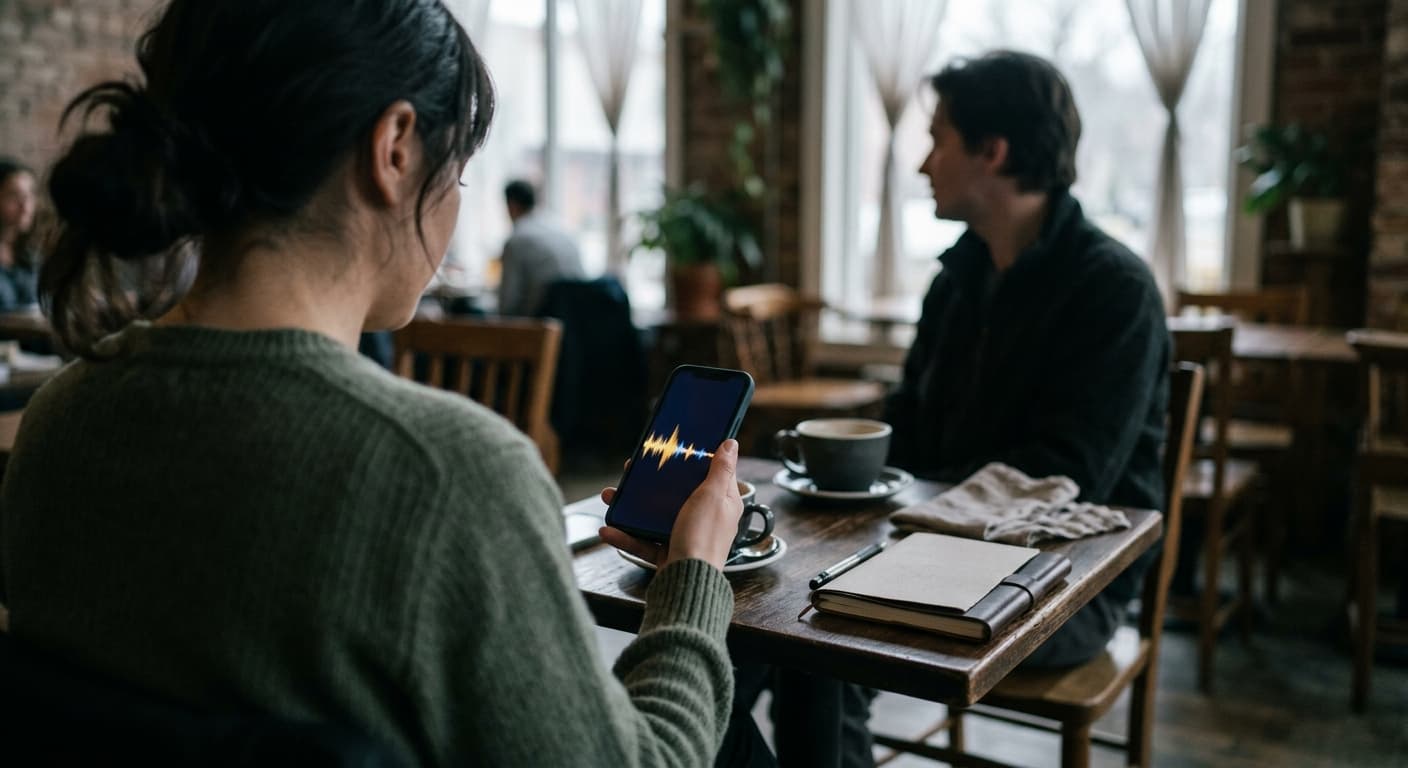
Mississippi is a one-party consent state under Miss. Code Ann. section 41-29-531(e). Any party to a wire, oral or other communication, the phrasing the statute uses, may record it without notifying the other participants. A non-party may record only if at least one party has given prior consent. Recording that is made for the purpose of committing any criminal, tortious, or "other injurious act" falls outside the protected zone. Illegal interception is a misdemeanor, misuse of the contents of an authorized intercept is a separate felony, and a civil suit can recover $1,000 minimum plus punitive damages and attorney fees.
Mississippi recording law at a glance
| Question | Answer |
|---|---|
| Consent rule (audio) | One-party: any participant may record (section 41-29-531(e)) |
| Main statute | Miss. Code Ann. sections 41-29-501 to 41-29-537 (Mississippi Wiretap Act) |
| When recording is illegal | Recording made to commit a criminal, tortious, or other injurious act; or by a non-party without any party's prior consent |
| Criminal penalty (interception) | Misdemeanor: up to 1 year county jail or fine up to $10,000, or both (section 41-29-533) |
| Criminal penalty (misuse of contents of an authorized intercept) | Felony: up to 5 years State Penitentiary and fine up to $10,000 (sections 41-29-511, 41-29-533(2)); reaches officers and authorized recipients, not a party sharing their own recording |
| Civil damages | $100/day or $1,000 minimum (whichever is greater), plus actual damages, punitive damages, attorney fees, costs (section 41-29-529) |
| Hidden cameras | Felony under section 97-29-63 where lewd intent and reasonable expectation of nudity or privacy |
| Recording police | First Amendment right clearly established post-February 16, 2017, under Turner v. Driver (5th Cir. 2017) |
For more context on how Mississippi compares nationally, see the one-party consent states hub and the United States recording laws federal guide.
Recording in-person conversations in Mississippi
The Mississippi Wiretap Act sits in Title 41 (Public Health), Chapter 29, Article 7. The unusual placement is historical: the Mississippi Bureau of Narcotics was the original principal agency authorized to operate intercept devices, and the Act was drafted around narcotics-investigation wiretaps.
Section 41-29-531(e) is the operative one-party consent rule. It exempts a person not acting under color of law who intercepts a wire, oral or other communication if that person is a party to the communication, or if one party has given prior consent, unless the communication is intercepted to commit a criminal act, a tortious act, or "any other injurious act." The definitions at section 41-29-501 determine scope: "oral communication" reaches only utterances made under circumstances where the speaker has a reasonable expectation of privacy. A conversation in an open public place with no privacy expectation may fall outside Article 7 entirely.
The "other injurious act" extension is a Mississippi-specific addition to the federal ECPA carve-out, which stops at "criminal or tortious act." The phrase is not defined in the Wiretap Act and has not been construed at the Mississippi Supreme Court level, so the practical safe zone is narrower than ECPA's federal floor. Intent at the time of recording controls; a recording made for legitimate self-protection does not become illegal simply because it later embarrasses the other party.

Recording phone calls in Mississippi
The one-party rule covers all common voice-call formats. The "wire communication" definition in section 41-29-501 covers landline calls and expressly includes cordless telephones, voice pagers, cellular telephones, and any mobile telephone, with no limitation to the wired segment of a cordless call. The separate "other communication" definition covers VoIP, video calls with audio (Zoom, Teams, FaceTime), and other electronic signals where the parties may reasonably expect the communication to be private.
A separate, older statute adds a narrower layer for cellular calls specifically: Miss. Code Ann. section 97-25-49 makes it a misdemeanor, punishable by up to $1,000 and up to six months in county jail, for someone who is not the intended recipient to wrongfully access a private cellular telephone message. The statute exempts law enforcement acting under a valid court order and business quality-assurance monitoring made with at least one party's consent, and it bars use of unlawfully obtained cellular-intercept information in a civil proceeding unless the device's lawful owner obtained it.
A Mississippi resident on a call with another Mississippi resident may record under section 41-29-531(e) without notice. Federal law agrees: 18 U.S.C. section 2511(2)(d) is also one-party, so there is no federal preemption conflict.
Cross-state calls require more care. Federal law does not preempt stricter state wiretap statutes. If you call someone in California, Florida, Illinois, Maryland, Massachusetts, Pennsylvania, Washington, or another all-party consent state, that state's law may apply depending on which court asserts jurisdiction. The safe practice is to either give notice at the start of the call or get express consent before recording.
Businesses recording customer calls for quality assurance satisfy section 41-29-531(e) because the company's own representative is a participant. Note that 47 C.F.R. section 64.501, which some older sources cite as requiring a beep tone, was deleted from the CFR effective November 20, 2017, by FCC 17-131 and is no longer operative.
For a deeper treatment, see Mississippi Phone Call Recording Laws.
Hidden cameras, doorbells, and nanny cams
Video surveillance is governed by a separate statute: Miss. Code Ann. section 97-29-63 in Title 97 (Crimes), Chapter 29. It makes it a felony to photograph, film, videotape, record, or otherwise reproduce the image of another person without permission, with lewd, licentious, or indecent intent, when that person is in a place with a reasonable expectation of nudity or privacy. Covered locations include private dwellings, restrooms, bathrooms, shower rooms, tanning booths, locker rooms, fitting rooms, dressing rooms, and bedrooms. A second provision reaches upskirt filming under circumstances where the subject has a reasonable expectation of privacy.
Penalties under section 97-29-63 are keyed to the age of the offender, not the age of the person filmed: both tiers apply to "a person who was over the age of twenty-one (21) at the time of the offense." Subsection (2)(a) sets a fine of $5,000 or up to 5 years in the custody of the Department of Corrections, or both. Subsection (2)(b) raises the prison ceiling to 10 years, with the same $5,000 fine, where the person filmed is a child under 16. The statute as written prescribes no penalty for an offender who was 21 or younger.
The statute requires lewd intent, so it does not criminalize ordinary surveillance. A doorbell camera facing the porch, a baby monitor in the nursery, a parking-lot security camera, or a dashcam are all outside section 97-29-63. The homeowner capturing audio from a porch camera is also generally clear under the Wiretap Act because the homeowner is a participant or present witness to front-porch conversations.
Cameras placed in a bathroom, guest bedroom, or a live-in worker's private quarters can violate section 97-29-63 where lewd intent is present. Workplace cameras in restrooms or locker rooms violate the statute outright. Section 97-29-63 governs only video; audio is governed separately by Article 7, so a nanny cam that also captures conversation the device owner is not part of raises Wiretap Act exposure.
The FTC's May 2023 settlement with Ring LLC ($5.8 million in consumer refunds; required deletion of unlawfully derived data and models) is a federal overlay: unrestricted internal employee access to bedroom and bathroom footage, without notice or consent, was treated as an unfair practice under Section 5 of the FTC Act.
For more detail, see Mississippi Video Recording Laws and Mississippi Voyeurism and Hidden Camera Laws.

Penalties for illegal recording in Mississippi
Mississippi's Wiretap Act splits the penalty structure across two offense tiers, with video voyeurism running on a third separate track.
Criminal penalties under section 41-29-533:
| Offense | Classification | Maximum penalty |
|---|---|---|
| Unlawful interception (possess, install, operate, or monitor a device) | Misdemeanor | 1 year county jail or $10,000 fine, or both |
| Violating section 41-29-511 (how an officer or an authorized recipient may disclose or use the contents of a lawful intercept) | Felony | 5 years State Penitentiary and $10,000 fine |
| Hidden-camera filming with lewd intent, offender over 21 (section 97-29-63(2)(a)) | Felony | 5 years DOC or $5,000 fine, or both |
| Hidden-camera filming with lewd intent, person filmed under 16, offender over 21 (section 97-29-63(2)(b)) | Felony | 10 years DOC or $5,000 fine, or both |
The felony tier is narrower than it first looks. Every subsection of section 41-29-511 is addressed either to "an investigative or law enforcement officer who, by any means authorized by this article, obtains knowledge of the contents" of a communication or to "a person who receives, by any means authorized by this article, information" about one, and the section sets out when each may disclose or use what they learned. A private person who forwards, posts, or files a recording of their own conversation is not within its terms, so the section 41-29-533(2) felony does not attach to that conduct. Sharing a recording can still carry civil exposure: section 41-29-529(1) creates a cause of action against anyone who discloses or uses a communication intercepted in violation of Article 7.
A First Amendment safe harbor limits publication exposure for a publisher who was not involved in the unlawful interception. In Bartnicki v. Vopper, 532 U.S. 514 (2001), the U.S. Supreme Court held that the First Amendment protects a media defendant who lawfully obtained a recording someone else had illegally intercepted and published its contents, where the subject matter was a matter of public concern and the publisher played no part in the illegal interception. The protection reaches truthful publication only; it does not immunize the original interception or a publisher who participated in it.
Civil damages under section 41-29-529: A victim may sue for actual damages or liquidated damages of $100 per day for each day of violation or $1,000, whichever is greater, plus punitive damages, attorney fees, and litigation costs. Section 41-29-529(2) provides that good-faith reliance on a court order is a complete defense to any civil or criminal action brought under Article 7; Mississippi has no separate legislative-authorization prong of the kind found in the federal statute. Mississippi's $1,000 statutory minimum is on the low end; a plaintiff with a one-time interception will typically rely on actual plus punitive damages rather than the per-day formula.
Recording the police in Mississippi
Mississippi is in the Fifth Circuit. Turner v. Driver, 848 F.3d 678 (5th Cir. 2017), is the controlling precedent. The court held that the First Amendment protects the right to record on-duty police officers performing official duties in public, subject to reasonable time, place, and manner restrictions. The right is clearly established in Mississippi for any officer conduct after February 16, 2017; an officer who interferes with a person lawfully recording police activity in public after that date cannot claim qualified immunity for the First Amendment violation.
In practice: you may film a traffic stop, record an arrest in a public place, document a police interaction on a sidewalk or in a parking lot, and livestream to a platform. You may not physically interfere with ongoing operations, may be required to step to a safe distance, and may not enter a lawfully cordoned crime scene. Mississippi has not enacted a statutory recording-distance buffer for law enforcement comparable to Arizona's 8-foot law or Indiana's 25-foot law.
The Mississippi Open Meetings Act, Miss. Code Ann. section 25-41-1 et seq., requires most government-body meetings to be open to the public. Recording of public portions of city council, county board, school board, and legislative committee proceedings is generally permitted. Executive sessions properly closed under section 25-41-7 are not subject to public recording.
For more on this topic, see Mississippi Laws on Recording Police.

Special topics in Mississippi
Workplace recording and NLRB Stericycle
Mississippi is a right-to-work state under Article 7B of the Mississippi Constitution, but that status does not affect NLRA coverage for private-sector non-supervisory employees. A Mississippi employee who participates in a workplace conversation may record it under section 41-29-531(e) without notice. Stericycle, Inc. and Teamsters Local 628, 372 NLRB No. 113 (2023), is the controlling federal standard: a blanket "no recording on company property" policy is presumptively unlawful under NLRA Section 8(a)(1) unless the employer proves a legitimate, substantial interest that cannot be served by a more narrowly tailored rule. NLRB GC 25-05 (February 2025) did not rescind Stericycle. NLRB GC 25-07 (June 25, 2025) separately argues that surreptitious recording of a collective-bargaining session is a per se duty-to-bargain violation, but it governs only the bargaining table. See Mississippi Workplace Recording Laws for more.
Subscriber and household exception (section 41-29-535)
Section 41-29-535 provides that Article 7 does not apply to a telephone subscriber or members of the subscriber's household who intercept a communication on a subscribed telephone. This is broader than the parallel federal ECPA telephone-extension exception at 18 U.S.C. section 2510(5)(a)(i), which covers only the subscriber and the common carrier. A household member who picks up a shared landline extension falls outside Article 7.
NCII and deepfake statutes
Mississippi has three statutory layers protecting against nonconsensual intimate imagery. Section 97-29-64.1 criminalizes disclosure of intimate visual material without consent: first offense is a misdemeanor (up to 6 months or $1,000 fine); second or subsequent offense, or any offense for financial profit, is a felony (up to 1 year or $2,000 fine). HB 1126 (Walker Montgomery Protecting Children Online Act), signed April 30, 2024, effective July 1, 2024, extends Mississippi child-exploitation statutes to AI-morphed images of minors and imposes platform duties of care; a First Amendment challenge remains pending at the Fifth Circuit (No. 25-60348) after SCOTUS denied emergency relief on August 14, 2025. SB 2577 (Wrongful Dissemination of Digitization), also signed April 30, 2024 and effective July 1, 2024, makes knowing dissemination of a political deepfake within 90 days of an election a crime. A proposed civil AI-NCII bill (SB 2437, 2025) died in Senate Judiciary Committee on February 4, 2025. The federal TAKE IT DOWN Act (signed May 19, 2025) layers a federal criminal prohibition on publishing nonconsensual intimate visual depictions; platform notice-and-takedown compliance deadline is May 19, 2026.
Body-worn cameras
Miss. Code Ann. section 45-1-20, enacted via 2023 HB 1020 Section 11, requires body-worn cameras for the Office of Capitol Police only. Mississippi has no statewide mandate for municipal or county police. Local policies vary, and body-camera footage is analyzed for public-records access under the Mississippi Public Records Act, Miss. Code Ann. section 25-61-1 et seq.; the investigative-report exemption at section 25-61-12(2) typically applies to footage from open investigations.
Federal overlays
ECPA at 18 U.S.C. sections 2510-2522 sets the one-party federal floor and does not preempt stricter state statutes. FCC 24-17 (February 2024) holds that AI-generated voices in robocalls are "artificial" under TCPA, requiring prior express consent. FCC 24-24's one-to-one TCPA consent rule was vacated by the Eleventh Circuit in Insurance Marketing Coalition Ltd. v. FCC, No. 24-10277 (Jan. 24, 2025), mandate issued April 30, 2025. 47 C.F.R. section 64.501 (the former beep-tone rule) was removed from the CFR in November 2017 and is not operative. HIPAA does not prohibit a patient from recording the patient's own provider visit, but providers may restrict recording as a condition of treatment. CFPB Regulation F, 12 C.F.R. Part 1006, requires debt collectors to retain call recordings three years.
Recent legal developments
- July 1, 2024: HB 1126 (Walker Montgomery Protecting Children Online Act) and SB 2577 (election deepfake statute) took effect.
- February 4, 2025: SB 2437 (proposed Prohibition of Exploitation by Deepfakes Act) died in Senate Judiciary Committee.
- April 30, 2025: FCC 24-24 one-to-one TCPA consent rule vacated (Eleventh Circuit mandate issued; rule removed from CFR).
- May 19, 2025: TAKE IT DOWN Act signed; criminal provisions immediately effective; platform compliance deadline May 19, 2026.
- July 17, 2025: Fifth Circuit lifted district-court injunction on HB 1126; enforcement permitted pending remand.
- August 14, 2025: SCOTUS denied emergency relief on HB 1126; Justice Kavanaugh noted the law is likely unconstitutional; First Amendment challenge continues (Fifth Circuit No. 25-60348).
Mississippi recording laws in depth
These pages cover specific Mississippi recording-law contexts in greater depth.
By type of recording:
- Mississippi Audio Recording Laws
- Mississippi Phone Call Recording Laws
- Mississippi Video Recording Laws
- Mississippi Voyeurism and Hidden Camera Laws
- Mississippi Dashcam Laws
By place or relationship:
- Mississippi Workplace Recording Laws
- Mississippi Laws on Recording Police
- Mississippi Laws on Recording in Public
- Mississippi Medical Recording Laws
- Mississippi School Recording Laws
- Mississippi Security Camera Laws
- Mississippi Landlord-Tenant Recording Laws
More Mississippi laws
- Mississippi Alimony Laws
- Mississippi At-Will Employment Laws
- Mississippi Child Custody Laws
- Mississippi Divorce Laws
- Mississippi Landlord-Tenant Laws
This article is general legal information, not legal advice. Recording laws change and apply differently to each situation. For advice about your situation, consult a licensed Mississippi attorney.
More Mississippi Laws
Frequently Asked Questions
Is Mississippi a one-party or two-party consent state?
Mississippi is a one-party consent state under Miss. Code Ann. section 41-29-531(e). Any party to a wire, oral or other communication (the statute does not use the federal term 'electronic communication') may record without notifying the others. A non-party may record only if at least one party gave prior consent. The one-party rule does not apply if the recording is made to commit a criminal act, a tortious act, or 'any other injurious act,' a Mississippi-specific extension beyond the federal ECPA carve-out.
Can I record a phone call in Mississippi without telling the other person?
Yes, if you are a party to the call. The Wiretap Act's wire-communication definition expressly covers landlines, cordless telephones, cellular and other mobile telephones, and its separate 'other communication' definition reaches VoIP and video calls. You must be a participant; a non-participant needs prior consent from at least one party. For calls to all-party consent states such as California, Florida, Illinois, or Washington, the stricter state's law may apply, so giving notice at the start of the call is the safe practice.
Is recording someone a felony in Mississippi?
Unlawful interception itself is a misdemeanor under section 41-29-533 (up to 1 year and $10,000). Section 41-29-533(2) adds a felony (up to 5 years and $10,000) for violating section 41-29-511, which regulates how officers and authorized recipients may disclose or use the contents of a lawful intercept; it does not cover a private party who shares a recording of their own conversation. Hidden-camera recording in a private space with lewd intent is a separate felony under section 97-29-63, punishable by a $5,000 fine or up to 5 years, rising to up to 10 years where the person filmed is under 16, in each case for an offender who was over 21 at the time of the offense.
What can I sue for if someone illegally recorded me in Mississippi?
Under Miss. Code Ann. section 41-29-529, you may recover actual damages or liquidated damages of $100 per day for each day of violation or $1,000, whichever is greater, plus punitive damages, reasonable attorney fees, and litigation costs. The per-day formula is most useful in repeat-recording cases (a hidden device running for weeks); a one-time interception typically warrants actual-plus-punitive arguments instead.
Are Ring doorbells and nanny cams legal in Mississippi?
Outward-facing doorbell cameras are generally lawful because the porch is not a space with a reasonable expectation of nudity, so section 97-29-63 does not apply, and the homeowner is usually a participant in porch conversations under section 41-29-531(e). Indoor cameras in shared living spaces are also outside section 97-29-63. Cameras placed in bathrooms, bedrooms, or a live-in worker's private quarters can violate section 97-29-63 where lewd intent exists. Audio recording of conversations the camera owner is not part of raises separate Wiretap Act exposure.
Can I record my boss or an HR meeting in Mississippi?
Yes, if you participate in the conversation. Section 41-29-531(e) applies in the workplace the same as anywhere else. A blanket employer policy banning all employee recording on company premises is presumptively unlawful under NLRB Stericycle, Inc., 372 NLRB No. 113 (2023), for private-sector employees covered by the NLRA. NLRB GC 25-05 (February 2025) did not overturn Stericycle. A policy narrowly targeting restrooms, locker rooms, or collective-bargaining sessions carries stronger legal footing.
Can I record the police in Mississippi?
Yes. Turner v. Driver, 848 F.3d 678 (5th Cir. 2017), clearly establishes that the First Amendment protects recording on-duty police officers performing official duties in public. The right has been clearly established in Mississippi for officer conduct after February 16, 2017. You must stay at a safe distance, avoid physically interfering with operations, and keep out of a lawfully cordoned crime scene.
Does Mississippi have a deepfake law?
Yes, two. HB 1126 (Walker Montgomery Protecting Children Online Act, effective July 1, 2024) extends Mississippi child-exploitation statutes to AI-morphed images of minors. SB 2577 (Wrongful Dissemination of Digitization, effective July 1, 2024) makes knowing dissemination of a political deepfake within 90 days of an election a crime where the purpose is to injure a candidate, influence the election, or deter voting. The federal TAKE IT DOWN Act (signed May 19, 2025) adds a federal criminal layer against publishing nonconsensual intimate visual depictions including AI-generated forgeries.
Updates
Corrected the Mississippi Wiretap Act analysis: section 41-29-511 governs how officers and authorized recipients handle the contents of a lawful intercept and does not make it a felony for a private party to share their own recording; restated the section 41-29-529(2) good-faith defense to match the statute (court order only, and it covers criminal as well as civil actions); corrected the section 97-29-63 penalty tiers, which turn on the offender being over 21 and carry a flat $5,000 fine; and aligned the statutory terminology with the code phrase "wire, oral or other communication."
Independently fact-checked against the cited primary sources; governing law re-checked for recent changes
Reviewed and approved by an editor
Restructured for readability: added AEO lede, at-a-glance table, and dedicated H2 sections for in-person conversations, phone calls, hidden cameras, penalties (with consolidated penalty table), recording police, and in-depth sub-page index. Condensed the detailed Article 7 section-by-section walkthrough, tortious-intent analysis, family-law section, and body-camera analysis into tighter prose or special-topics subsections. Re-verified load-bearing facts (consent rule, criminal penalties, civil damages, section 97-29-63 voyeurism, Turner v. Driver cite) against primary sources; no corrections required. Added Recent Legal Developments bullet list. Refreshed FAQ to 8 questions covering core reader intents. Hero and inline images updated from meta; SourcesList trimmed of duplicate entries.
Refreshed for 2026 with the corrected Mississippi Wiretap Act codification: section 41-29-501 supplies the definitions, section 41-29-511 governs disclosure and use of intercepted contents (the felony hook), section 41-29-529 sets the civil cause of action ($100 per day or $1,000 minimum, plus actual, punitive, attorney fees, and costs), section 41-29-531(e) is the one-party consent rule with a criminal, tortious, or other injurious-act carve-out broader than federal ECPA, section 41-29-533 sets the criminal penalties, and section 41-29-535 is the subscriber and common-carrier exception. Added the two 2024 deepfake statutes Mississippi enacted: HB 1126 Walker Montgomery Protecting Children Online Act, signed April 30, 2024, effective July 1, 2024, which survived NetChoice First Amendment challenge (federal panel allowed enforcement July 21, 2025; SCOTUS denied the emergency motion); and SB 2577 Wrongful Dissemination of Digitization, the 90-day-pre-election political-deepfake statute, signed April 30, 2024, effective July 1, 2024. Clarified that 2025 SB 2437 (the proposed Prohibition of Exploitation by Deepfakes Act) died in Senate Judiciary Committee on February 4, 2025, and is not law. Corrected body-camera framework to Miss. Code Ann. section 45-1-20, which was enacted via 2023 HB 1020 Section 11 and covers the Office of Capitol Police only. Mississippi has no statewide body-worn-camera mandate for municipal or county police. Used the canonical short cite Turner v. Driver, 848 F.3d 678 (5th Cir. 2017), for the Fifth Circuit record-the-police precedent (not Turner v. Lt. Driver). Updated FCC 24-24 (one-to-one consent rule) to vacated by Insurance Marketing Coalition Ltd. v. FCC, No. 24-10277 (11th Cir. Jan. 24, 2025), with mandate issued April 30, 2025; removed stale 47 C.F.R. section 64.501, which was deleted from the CFR November 20, 2017, by FCC 17-131. Added NLRB Stericycle, Inc., 372 NLRB No. 113 (2023), as the controlling work-rule standard for Mississippi private-sector employers; clarified that GC 25-05 (February 14, 2025) did not rescind Stericycle, and added GC 25-07 (June 26, 2025) as bargaining-table guidance. Added TAKE IT DOWN Act (S. 146, signed May 19, 2025) federal compliance layer, with the platform notice-and-takedown deadline running May 19, 2026. Replaced commercial-codifier URLs with legislature.ms.gov, billstatus.ls.state.ms.us, ca5.uscourts.gov, fcc.gov, nlrb.gov, ftc.gov, uscode.house.gov, and ecfr.gov. Populated Supabase keywords array (was empty).
Refreshed for 2026 with the corrected Mississippi Wiretap Act codification: section 41-29-501 supplies the definitions, section 41-29-511 governs disclosure and use of intercepted contents (the felony hook), section 41-29-529 sets the civil cause of action ($100 per day or $1,000 minimum, plus actual, punitive, attorney fees, and costs), section 41-29-531(e) is the one-party consent rule with a criminal, tortious, or other injurious-act carve-out broader than federal ECPA, section 41-29-533 sets the criminal penalties, and section 41-29-535 is the subscriber and common-carrier exception. Added the two 2024 deepfake statutes Mississippi enacted: HB 1126 Walker Montgomery Protecting Children Online Act, signed April 30, 2024, effective July 1, 2024, whose enforcement was permitted after the Fifth Circuit lifted the injunction July 17, 2025, and SCOTUS denied emergency relief Aug. 14, 2025 (Justice Kavanaugh noted the law is likely unconstitutional); First Amendment challenge ongoing on remand, No. 25-60348; and SB 2577 Wrongful Dissemination of Digitization, the 90-day-pre-election political-deepfake statute, signed April 30, 2024, effective July 1, 2024. Clarified that 2025 SB 2437 (the proposed Prohibition of Exploitation by Deepfakes Act) died in Senate Judiciary Committee on February 4, 2025, and is not law. Corrected body-camera framework to Miss. Code Ann. section 45-1-20, which was enacted via 2023 HB 1020 Section 11 and covers the Office of Capitol Police only. Mississippi has no statewide body-worn-camera mandate for municipal or county police. Used the canonical short cite Turner v. Driver, 848 F.3d 678 (5th Cir. 2017), for the Fifth Circuit record-the-police precedent (not Turner v. Lt. Driver). Updated FCC 24-24 (one-to-one consent rule) to vacated by Insurance Marketing Coalition Ltd. v. FCC, No. 24-10277 (11th Cir. Jan. 24, 2025), with mandate issued April 30, 2025; removed stale 47 C.F.R. section 64.501, which was deleted from the CFR November 20, 2017, by FCC 17-131. Added NLRB Stericycle, Inc., 372 NLRB No. 113 (2023), as the controlling work-rule standard for Mississippi private-sector employers; clarified that GC 25-05 (February 14, 2025) did not rescind Stericycle, and added GC 25-07 (June 25, 2025) as bargaining-table guidance. Added TAKE IT DOWN Act (S. 146, signed May 19, 2025) federal compliance layer, with the platform notice-and-takedown deadline running May 19, 2026. Replaced commercial-codifier URLs with legislature.ms.gov, billstatus.ls.state.ms.us, ca5.uscourts.gov, fcc.gov, nlrb.gov, ftc.gov, uscode.house.gov, and ecfr.gov. Populated Supabase keywords array (was empty).
Added wearable recording devices section and 2 FAQs
The Law Behind This Article
This article rests on the statutory provisions below, held in our own legal record and retrieved from the official source. Tap a section to read the operative text.
Mississippi Code of 1972 Annotated
§ 41-29-531Exceptions to civil liability for violation of this article.In forcecited in 18 of our articles
This article shall not apply to: An operator of a switchboard, or an officer, employee or agent of a communication common carrier whose facilities are used in the transmission of a wire communication, intercepts a communication, or who discloses or uses an intercepted communication in the normal…
Official text (excerpt) · last checked 2026-08-31 · Read the full text in our law library · Verify at billstatus.ls.state.ms.us
Cited in 4 court opinions in our collectionLatest citing opinion in our collection: 2026
Opinions citing this section in our collection:
- Campbell v. MESC (Court of Appeals of Mississippi 2000, 782 So. 2d 751)“…le involved in the conversation are aware of the recording. Miss.Code Ann. § 41-29-531(e) (the statute does not apply to a con…”
- Brian S. Pope v. Deborah Baird Martin a/k/a Deborah L. Martin a/k/a Deborah Martin Pope a/k/a Deborah L. Pope (Court of Appeals of Mississippi 2023)“…vides a list of those who are immune from civil liability. Miss. Code Ann. § 41-29-531 (Rev. 2018). Relevant to the present ca…”
- Rosenberg (District Court, S.D. Mississippi 2026)“…olation of the Mississippi Security of Communications Act, Miss. Code Ann. §§ 41-29-531 to -537 (Count IX). See id. at 40-47.…”
Identified automatically from the court opinions citing this section — not a ranking of which case controls.
Also relied on in: Mississippi AI Meeting Recording Laws (2026), Mississippi Ring Doorbell Laws: What You Need to Know in 2026, Mississippi Surveillance Camera Laws (2026 Guide)
Search our full record of US law — 2.1 million sections, every state + federal →
Sources and References
- billstatus.ls.state.ms.us.gov
- rcfp.org
- billstatus.ls.state.ms.us.gov
- billstatus.ls.state.ms.us.gov
- billstatus.ls.state.ms.us.gov
- billstatus.ls.state.ms.us.gov
- billstatus.ls.state.ms.us.gov
- billstatus.ls.state.ms.us.gov
- ethics.ms.gov.gov
- ethics.ms.gov.gov
- courtlistener.com
- uscode.house.gov.gov
- justice.gov.gov
- docs.fcc.gov.gov
- media.ca11.uscourts.gov.gov
- federalregister.gov.gov
- nlrb.gov.gov
- nlrb.gov.gov
- nlrb.gov.gov
- congress.gov.gov
- ftc.gov.gov
- hhs.gov.gov
- consumerfinance.gov.gov
- billstatus.ls.state.ms.us.gov
- courtlistener.com