
Massachusetts
Massachusetts Smart Glasses Recording Laws 2025
Independently fact-checked against primary sources (last audited August 24, 2026). · Reviewed by the RecordingLaw editorial team. · Law checked current as of August 24, 2026. · 1 primary source cited on this page. How we verify our legal content
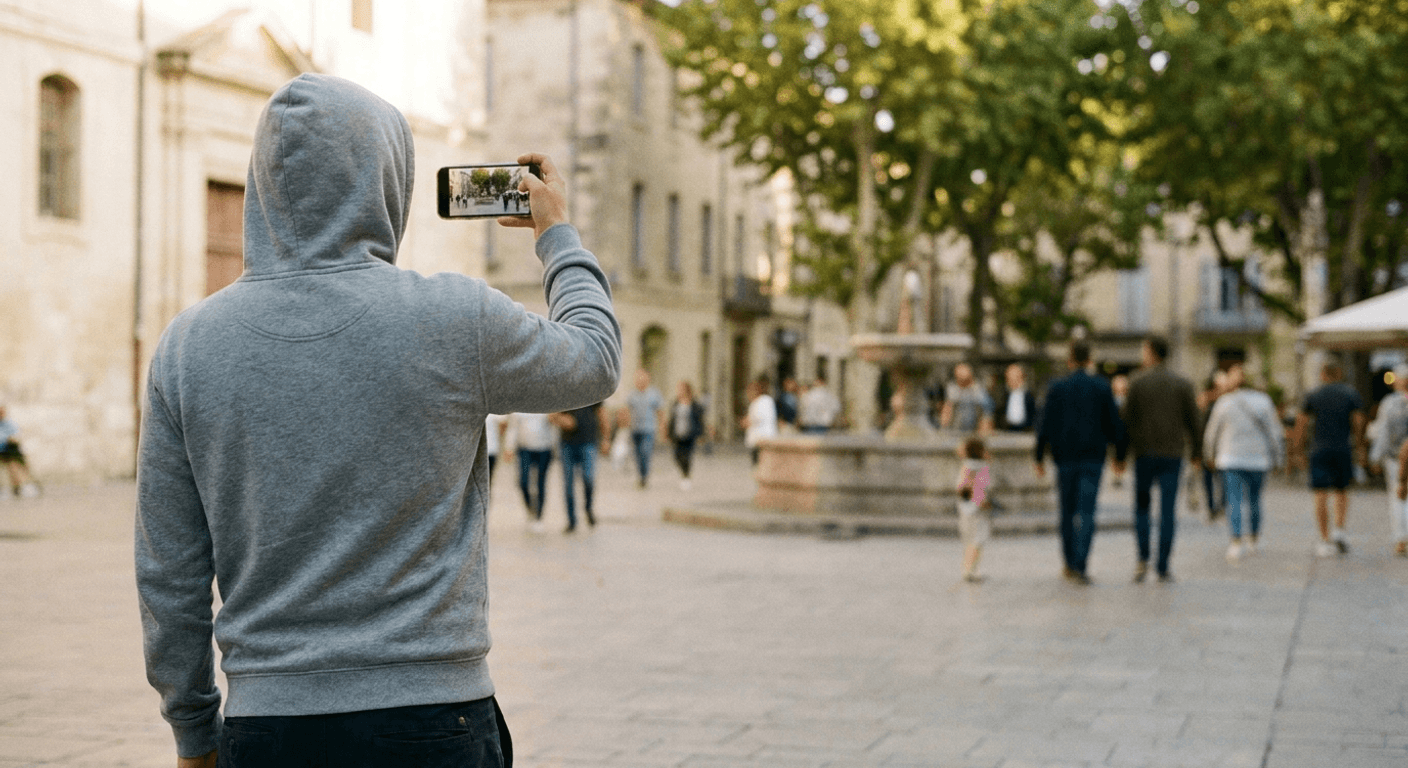
Smart glasses are legal to own and wear in Massachusetts. Recording video in a public space is generally lawful. But the moment those glasses capture audio, Massachusetts law enters the picture, and it is one of the strictest recording statutes in the country. Under Mass. Gen. Laws ch. 272, § 99, the key element is not consent in the traditional sense: it is secrecy. Recording someone without their knowledge, without disclosure that recording is occurring, is a felony. Smart glasses that look like ordinary eyewear, recording silently while a conversation is underway, present almost exactly the fact pattern the statute was designed to reach.
Are Smart Glasses Legal to Own and Wear in Massachusetts?
Yes. Massachusetts has no law that bans owning or wearing smart glasses such as the Meta Ray-Ban AI Glasses. The device itself is a legal consumer product. The legal questions arise from how you use it: specifically, what you record, where, and whether the people being recorded know it is happening.
This distinction matters practically. You can walk down Newbury Street in Boston wearing Meta Ray-Ban glasses without any legal concern. The moment you begin capturing a private conversation, or recording in a space where people have a reasonable expectation of privacy, you move into territory governed by state and federal wiretapping law.
Recording Video in Public vs. Private Spaces
Video-only recording in public is generally lawful in Massachusetts. Under the framework established in Katz v. United States, 389 U.S. 347 (1967), people in public spaces such as streets, parks, sidewalks, and public transit have no reasonable expectation of privacy from being observed or recorded. Massachusetts courts have not created a stronger rule in this area for video. Bystanders, strangers, and even private conversations in the open can generally be filmed from a public vantage point.
Private spaces are categorically different. A home, a private office, a medical facility, a hotel room: these locations carry a strong and recognized expectation of privacy. Recording video inside a private residence or other private space without authorization, regardless of the audio component, can constitute an intrusion upon seclusion under Restatement (Second) of Torts § 652B, exposing the wearer to civil liability.
Semi-public spaces are the gray zone. A restaurant booth, a workplace break room, a one-on-one conversation in a quiet coffee shop: in these hybrid settings the participants are physically visible, but they usually do not expect their spoken words to be captured. Because § 99 turns on secrecy rather than on whether a setting is public or private, this is where smart-glasses audio recording becomes legally dangerous.
Recording Audio: The Massachusetts "Secret Recording" Rule
The Statute: Mass. Gen. Laws ch. 272, § 99
Massachusetts does not frame its wiretap law the way most states do. Most wiretap statutes require "consent" of all parties. Massachusetts § 99 is structured differently: it prohibits secretly recording wire or oral communications. The statute defines interception as conduct to "secretly hear, secretly record, or aid another to secretly hear or secretly record the contents of any wire or oral communication" through an intercepting device.
This is not a technical formality. The operative word is secretly, and it does real legal work. If a recording is not secret, it is not an interception under the statute. Conversely, if it is secret, meaning the parties being recorded do not know that recording is occurring, it is a felony regardless of whether the recorder is a participant in the conversation.
Commonwealth v. Hyde: No Participant Exception
The Massachusetts Supreme Judicial Court addressed this directly in Commonwealth v. Hyde (2001). Hyde had secretly recorded a traffic stop involving himself and a police officer. He argued that the police officers had no privacy interest in their own words during the stop, so recording them was not an interception of an “oral communication” under the statute. The SJC rejected that argument. There is no participant exception under ch. 272, § 99. A person who secretly records a conversation they are part of commits the same felony as an outside eavesdropper. Good intentions such as wanting to document wrongdoing, protect oneself, or create evidence do not provide a defense.
For smart glasses wearers, Hyde's rule is directly on point. If you are wearing glasses that capture audio of a conversation you are having, and the other party does not know recording is occurring, you have committed a felony under Massachusetts law.
The "Secret" Element and the Capture LED
Here is where Massachusetts law diverges meaningfully from most other all-party consent states: the remedy is disclosure, not formal consent.
Massachusetts does not require a signed consent form, a written agreement, or a formal "I consent to be recorded" statement. What it requires is that recording not be secret. If the other party or parties in a conversation are aware that recording is happening, the secret element is absent and § 99 is not violated.
This creates a specific legal significance for the capture LED on Meta Ray-Ban AI Glasses. Meta's official guidance confirms that the capture LED, a white light near the right temple, illuminates whenever the camera is actively recording video or audio. Meta states: "If the capture LED is covered, you'll be notified to clear it before taking a photo or video or going live."
If the LED is visible and illuminated during a one-on-one conversation, a strong argument exists that the recording is not "secret" in the statutory sense. The other person has a visible signal that the device is active. This is not a guaranteed legal defense, and no Massachusetts court has ruled squarely on this question in the smart-glasses context. But under Hyde and the text of § 99, the secret element is the key threshold. Visible disclosure, even passive disclosure via an illuminated recording indicator, is more consistent with the statute's requirements than covert, undisclosed recording.
Covering the LED removes this argument entirely. A person who deliberately obscures the recording indicator while capturing audio provides strong evidence of consciousness that the recording is non-consensual. California's SB 1130 would have prohibited disabling the recording indicator on a wearable recording device, but the Governor vetoed it on September 30, 2026 (bill status); no state has enacted such a law, and covering the indicator strongly supports a finding of "secrecy" under § 99.
The safest approach in Massachusetts is a simple verbal disclosure: "I want to let you know that I'm recording this conversation with my glasses." That is all § 99 requires. No consent form. No signatures. Just disclosure.
Project Veritas v. Rollins: Secretly Recording Police Officers
The First Circuit addressed a related question in Project Veritas v. Rollins (2020). The court held that secretly and nonconsensually recording police officers discharging their official duties in public spaces is constitutionally protected under the First Amendment. Prior First Circuit precedent (Glik v. Cunniffe, 2011) had already established the right to openly record police. Rollins extended that protection specifically to covert, secret recording of officers in public. The holding is limited to police officers: the court expressly noted that First Amendment analysis might differ for other types of government employees.
For smart glasses wearers in Massachusetts, the practical takeaway is narrow: if you are secretly recording a police officer performing official duties in a public space, constitutional protection provides a layer of defense. But this carve-out does not help with the far more common scenario of recording co-workers, friends, strangers, or any government employee who is not a police officer acting in official capacity. For private individuals, and for non-police government employees, the Hyde rule controls.
What Counts as an "Oral Communication" Under § 99
Section 99 reaches "oral communication," which the statute defines as "speech, except such speech as is transmitted over the public air waves by radio or other similar device." Unlike the federal Wiretap Act definition in 18 U.S.C. § 2510(2), the Massachusetts definition contains no expectation-of-privacy element: the statute's text turns on whether the recording is secret, not on whether the conversation was private. Common smart-glasses scenarios include:
- A conversation between two people in a restaurant booth
- A business meeting between colleagues
- A one-on-one exchange in a workplace hallway where no one else is present
- Any conversation in a private home or office
These are settings where people are least likely to expect a recording device, but a conversation in a more public setting is not outside the statute's text either. Secretly recording the audio of a conversation without disclosure is a felony in Massachusetts.
Smart glasses are particularly dangerous in Massachusetts precisely because they look like ordinary eyewear. The person being recorded has no external reason to suspect recording is occurring unless the LED is visible. The covert, glasses-as-ordinary-product character of the recording is the definition of secrecy under § 99.
Voyeurism and Unlawful Surveillance: Mass. Gen. Laws ch. 272, § 105
Audio is not the only concern. Massachusetts separately criminalizes using any device, including a camera embedded in glasses, to record or surveil a person's intimate areas without consent.
Under ch. 272, § 105, it is a crime to:
- Photograph or electronically surveil a person who is nude or partially nude, with intent to secretly conduct or hide such activity, in a location where the person has a reasonable expectation of privacy, without consent
- Record or surveil a person's intimate areas (genitals, buttocks, pubic area, female breast below the areola) under or around clothing in a way that would not otherwise be visible
- Direct either of the above at a person under 18
The statute defines "electronically surveils" to include recording using "a camera, cellular or other wireless communication device, computer, television or other electronic device." Smart glasses with a built-in camera fall squarely within that definition.
Penalties under § 105:
- General violation: up to 2.5 years in a house of correction and/or up to $5,000 fine
- Child victim (under 18): up to 5 years in state prison and/or up to $10,000 fine
- Dissemination of unlawfully obtained images: up to 5 years in state prison (non-child); up to 10 years (child)
These rules apply regardless of the audio recording question. Simply wearing smart glasses is not the offense. But willfully and secretly using them to photograph, video, or surveil a person who is nude or partially nude in a locker room, fitting room, restroom, or similar place where the person reasonably expects privacy, without that person's knowledge and consent, is criminal under § 105 whether or not the audio recording rules under § 99 are triggered.
Facial Recognition and Biometric Privacy
Massachusetts does not have a dedicated biometric privacy statute equivalent to Illinois BIPA or Texas CUBI as of June 2026. There is no Massachusetts law imposing affirmative consent requirements specifically for collecting face geometry or biometric identifiers.
However, this does not mean biometric capture via smart glasses is legally unrestricted in Massachusetts.
Federal Video Voyeurism Prevention Act (18 U.S.C. § 1801) prohibits knowingly capturing an image of a private area of an individual without consent, under circumstances in which the individual has a reasonable expectation of privacy, within the special maritime and territorial jurisdiction of the United States.
Civil intrusion upon seclusion under Restatement (Second) of Torts § 652B can apply to biometric-style collection in Massachusetts state courts. If a person uses smart glasses with facial recognition software to identify strangers or collect identity information without their knowledge, the covert nature of the collection and the resulting intrusion on a reasonable expectation of anonymity may satisfy both elements of the intrusion tort.
The 2024 I-XRAY demonstration by Harvard students showed that Meta Ray-Ban glasses combined with third-party facial recognition software could identify strangers on the street in real time and retrieve home addresses. Massachusetts residents who are identified in this way without their knowledge or consent may have civil claims under state tort law even absent a biometric statute. If you use smart glasses with any facial-recognition-enabled app, you are operating in legally uncertain territory in Massachusetts that will likely sharpen as courts encounter these facts.
Criminal Penalties Under Ch. 272, § 99
| Offense | Prison | Fine |
|---|---|---|
| Secret interception of oral or wire communication | Up to 5 years (state prison) or 2.5 years (house of correction) | Up to $10,000 |
| Unauthorized disclosure or use of intercepted communication | Up to 2 years (house of correction) | Up to $5,000 |
| Unauthorized possession of interception device | Up to 2 years (house of correction) | Up to $5,000 |
Civil liability under § 99: An aggrieved person may recover actual damages with a statutory minimum of $100 per day of violation or $1,000 (whichever is greater), plus punitive damages and attorney fees.
Importantly, Massachusetts courts apply an exclusionary rule that is broader than the federal Fourth Amendment standard. Evidence obtained through a § 99 violation is inadmissible in Massachusetts criminal proceedings.
Practical Tips for Smart Glasses Wearers in Massachusetts
Do:
- Let the capture LED remain visible and unobstructed when recording
- Verbally announce when you begin recording a conversation: "I'm recording this with my glasses"
- Limit audio capture to situations where all parties are aware recording is occurring
- Restrict video recording inside homes, offices, and private facilities to situations with explicit permission
- When recording police officers performing their duties in a public space, be aware of the constitutional protection established in Rollins for secret recording of officers, but do not extend that reasoning to other government employees or private individuals
Do not:
- Record audio of a private conversation without disclosing that recording is occurring. This is a felony under § 99 regardless of whether you are a participant
- Cover or obstruct the capture LED when recording. This removes the passive disclosure argument and strengthens evidence of secrecy
- Record with your glasses in restrooms, locker rooms, gym changing areas, or other private spaces. Section 105 applies regardless of audio capture
- Use facial recognition software with your glasses to identify private individuals without their knowledge
- Assume that recording in a "public" restaurant, coffee shop, or workplace common area is automatically lawful. Section 99 can reach private conversations in semi-public spaces
One practical rule for Massachusetts: Before capturing audio in any context where another person might not expect to be recorded, say out loud that recording is occurring. That single step converts a potential felony into a lawful recording.
More Massachusetts Laws
- Massachusetts Data Privacy Laws
- Massachusetts Deepfake Laws
- Massachusetts Drone Laws
- Massachusetts Recording Laws
Frequently Asked Questions
Are smart glasses legal in Massachusetts?
Smart glasses are legal to own and wear in Massachusetts. Recording video in public spaces is generally lawful. The legal risk arises from audio capture: Mass. Gen. Laws ch. 272, § 99 makes it a [felony to secretly record](/how-long-does-a-felony-stay-on-your-record-a-state-by-state-overview) oral communications without disclosure to the parties being recorded.
Does Massachusetts require consent to record a conversation?
Massachusetts law is framed around secrecy, not formal consent. Section 99 prohibits secretly recording wire or oral communications. If all parties know that recording is occurring, even through verbal announcement or a visible recording indicator, the secret element is absent and no violation occurs. You do not need a signed form; you need disclosure.
What did Commonwealth v. Hyde decide about recording your own conversations?
The Massachusetts Supreme Judicial Court held in Commonwealth v. Hyde (2001) that there is no participant exception under § 99. A person who secretly records a conversation they are part of commits the same felony as an outside eavesdropper. Good intentions such as documenting wrongdoing do not provide a defense.
Does the LED light on Meta Ray-Ban glasses matter legally in Massachusetts?
Yes, it can. Under § 99, the criminal element is secrecy. If the capture LED is illuminated and visible during a conversation, a strong argument exists that the recording is not 'secret' in the statutory sense. No Massachusetts court has ruled on this specific question yet, but the visible LED is consistent with the disclosure that removes the secrecy element. Covering the LED strongly supports a finding of unlawful secrecy.
Can I record a police officer with smart glasses in Massachusetts?
Yes, for police officers specifically. The First Circuit held in Project Veritas v. Rollins (2020) that secretly recording police officers discharging their official duties in public spaces is protected by the First Amendment. The holding is limited to police officers: the court noted that the analysis might differ for other government employees. This protection does not extend to recording private individuals, and the Hyde rule applies to all non-police recording.
What is the penalty for illegally recording someone in Massachusetts?
Secretly recording an oral communication in violation of ch. 272, § 99 carries up to 5 years in state prison and a fine up to $10,000. On the civil side, victims can recover a minimum of $100 per day of violation or $1,000 (whichever is greater), plus punitive damages and attorney fees.
Can I record video in a locker room or restroom with smart glasses in Massachusetts?
You should not. Mass. Gen. Laws ch. 272, § 105 makes it a crime to willfully and secretly photograph, video, or electronically surveil a person who is nude or partially nude where they have a reasonable expectation of privacy, without their knowledge and consent, or to secretly record a person's intimate parts under or around clothing. Restrooms, locker rooms, and gym changing areas are exactly where that offense occurs, so recording there carries serious criminal risk. Penalties include up to 2.5 years in a house of correction and a $5,000 fine.
Does Massachusetts have a biometric privacy law affecting facial recognition on smart glasses?
Massachusetts has no dedicated biometric privacy statute as of June 2026. However, using smart glasses with facial-recognition software to identify private individuals without their knowledge may expose you to civil liability under the intrusion-upon-seclusion tort. The 2024 I-XRAY demonstration showed that real-time identification via smart glasses is technically feasible, heightening this concern.
What is the safest way to use smart glasses in Massachusetts?
Keep the capture LED visible and unobstructed. Before capturing audio of any private conversation, verbally announce that you are recording. Restrict recording to public spaces for video. Avoid all recording in restrooms, locker rooms, and other private spaces. These steps address the key elements of § 99 and § 105.
Updates
Updated the status of California SB 1130, which has passed the Legislature and was sent to the Governor on September 9, 2026, and corrected its description to match the bill text.
Corrected the description of the argument the defendant made in Commonwealth v. Hyde to match what the Supreme Judicial Court actually addressed.
Corrected our description of Massachusetts voyeurism law (ch. 272, § 105), which requires secret recording of a nude or partially nude person without knowledge and consent, clarified that the § 99 definition of oral communication has no expectation-of-privacy element, and corrected the scope of 18 U.S.C. § 1801.
Independently fact-checked against the cited primary sources; governing law re-checked for recent changes
Reviewed and approved by an editor
The Law Behind This Article
This article rests on the statutory provisions below, held in our own legal record and retrieved from the official source. Tap a section to read the operative text.
Massachusetts General Laws, Chapter 272
§ 99Interception of wire and oral communicationsIn forcecited in 25 of our articles
Section 99. Interception of wire and oral communications.— A. Preamble. The general court finds that organized crime exists within the commonwealth and that the increasing activities of organized crime constitute a grave danger to the public welfare and safety. Organized crime, as it exists in the commonwealth today, consists of a continuing conspiracy among highly organized and disciplined groups to engage in supplying illegal goods and services. In supplying these goods and services organized crime commits unlawful acts and employs brutal and violent tactics. Organized crime is infiltrating legitimate business activities and depriving honest businessmen of the right to make a living. The general court further finds that because organized crime carries on its activities through layers of insulation and behind a wall of secrecy, government has been unsuccessful in curtailing and eliminating it. Normal investigative procedures are not effective in the investigation of illegal acts committed by organized crime.
Official text (excerpt) · last checked 2026-09-23 · Read the full text in our law library · Verify at malegislature.gov
Cited in 271 court opinions in our collectionLatest citing opinion in our collection: 2026
In the courts (editorial summary, independently checked):Commonwealth v. Blood (1987) read Section 99 as generally proscribing secret recording of oral communications without all parties' consent, and suppressed under art. 14 a warrantless police recording made with one party's consent. Commonwealth v. Vitello (1975) held Section 99 substantially complies with federal Title III.
Opinions citing this section in our collection:
- Commonwealth v. Vitello (Massachusetts Supreme Judicial Court 1975, 367 Mass. 224)✓In a gaming prosecution built on wiretapped phone calls, the SJC gave chapter 272 section 99 its first full review and held the state wiretap statute substantially complies with federal Title III and that the warrants issued under it met both standards.
- Commonwealth v. Blood (Massachusetts Supreme Judicial Court 1987, 400 Mass. 61)✓Police wired an informant who recorded conversations in private homes about a planned break-in; the SJC held the recordings fell within section 99's one-party-consent exception but that article 14 nonetheless required a warrant, and reversed the convictions.
- Commonwealth v. D'Amour (Massachusetts Supreme Judicial Court 1999, 428 Mass. 725)✓The SJC upheld a section 99 wiretap of a widow suspected of arranging her husband's murder for insurance money, holding the district attorney's written designation of an assistant satisfied Vitello and that probable cause supported the organized crime connection.
Identified automatically from the court opinions citing this section — not a ranking of which case controls.
Also relied on in: Recordings as Evidence: US Court Rules by State, Massachusetts Employee Monitoring Laws (2026): What Employers Can Track
§ 105Photographing, videotaping or electronically surveilling partially nude or nude person or the sexual or other intimate parts of a person around the person's clothing; exceptions; punishmentIn forcecited in 11 of our articles
Section 105. (a) As used in this section, the following words shall have the following meanings unless the context clearly requires otherwise: ''Electronically surveils'' or ''electronically surveilled'', to view, obtain or record a person's visual image by the use or aid of a camera, cellular or other wireless communication device, computer, television or other electronic device. ''Partially nude'', the exposure of the human genitals, buttocks, pubic area or female breast below a point immediately above the top of the areola. ''Sexual or other intimate parts'', human genitals, buttocks, pubic area or female breast below a point immediately above the tip of the areola, whether naked or covered by clothing or undergarments.
Official text (excerpt) · last checked 2026-08-31 · Read the full text in our law library · Verify at malegislature.gov
Cited in 11 court opinions in our collectionLatest citing opinion in our collection: 2025
In the courts (editorial summary, independently checked):Massachusetts courts have applied section 105 to secret imaging. Commonwealth v. Robertson (2014) held section 105(b) as then written did not reach upskirt photography of fully clothed people, which prompted a 2014 amendment, and Commonwealth v. Wassilie (2019) held the unit of prosecution under paragraph one is each victim.
Opinions citing this section in our collection:
- Commonwealth v. Wassilie (Massachusetts Supreme Judicial Court 2019, 482 Mass. 562)✓A man hid a phone in paper towels facing a public unisex toilet and recorded adults and children; the court held the unit of prosecution under section 105(b), first paragraph, is each victim, and that the third paragraph child upskirting language is not unconstitutionally vague.
- Commonwealth v. Robertson (Massachusetts Supreme Judicial Court 2014, 467 Mass. 371)✓A man was charged with aiming his phone camera up the skirts of clothed women on an MBTA trolley; the court held section 105(b) reaches only a person nude or partially nude at the time, so the charged upskirting fell outside it, and reversed the denial of his motion to dismiss.
- COMMONWEALTH v. MARKUS COOPER. (Massachusetts Appeals Court 2021, 100 Mass. App. Ct. 345)✓A man pointed a phone camera into a bathroom stall where a woman was urinating, then fled; the court held section 105(b), first paragraph, does not require the Commonwealth to produce the photograph, so the camera sound plus his flight supported the conviction.
Identified automatically from the court opinions citing this section — not a ranking of which case controls.
United States Code Title 18
§ 1801Video voyeurismIn forcecited in 81 of our articles
Whoever, in the special maritime and territorial jurisdiction of the United States, has the intent to capture an image of a private area of an individual without their consent, and knowingly does so under circumstances in which the individual has a reasonable expectation of privacy, shall be fined under this title or imprisoned not more than one year, or both. In this section— the term “capture”, with respect to an image, means to videotape, photograph, film, record by any means, or broadcast; the term “broadcast” means to electronically transmit a visual image with the intent that it be viewed by a person or persons; the term “a private area of the individual” means the naked or undergarment clad genitals, pubic area, buttocks, or female breast of that individual; the term “female breast” means any portion of the female breast below the top of the areola; and the term “under circumstances in which that individual has a reasonable expectation of privacy” means— circumstances in which a reasonable person would believe that he or she could disrobe in privacy, without being concerned that an image of a private area of the individual was being captured; or circumstances in which a…
Official text (excerpt) · last checked 2026-07-28 · Read the full text in our law library · Verify at uscode.house.gov
Cited in 53 court opinions in our collectionLatest citing opinion in our collection: 2026
In the courts (editorial summary, independently checked):Courts have applied 18 U.S.C. 1801 mainly at its edges. United States v. Johnson (2010) read it as Congress's answer to secretly filming nudity on federal property, acquitting on a child exploitation charge instead. EPIC v. Department of Homeland Security (2011) applied the Section 1801(c) law enforcement exception to a TSA scanner claim.
Opinions citing this section in our collection:
- United States v. Anthony Helton (Court of Appeals for the Fourth Circuit 2019, 944 F.3d 198)“…from this list of federal offenses is video voyeurism under 18 U.S.C. § 1801. Rather than list this statute as an enu…”
- United States v. Johnson (District Court, W.D. Missouri 2010, 719 F. Supp. 2d 1059)✓A weightlifting coach hid a camera to film minors weighing in nude; acquitting him under the child exploitation statute, the court called that conduct plain video voyeurism under section 1801, but noted the section reaches only federal maritime and territorial jurisdiction.
- Electronic Privacy Information Center v. United States Department of Homeland Security (Court of Appeals for the D.C. Circuit 2011, 653 F.3d 1)✓Privacy groups challenged TSA body scanners under the Video Voyeurism Prevention Act; the D.C. Circuit held the statute's exception for lawful law enforcement, correctional, or intelligence activity applied to airport screening, so the section 1801 claim failed.
Identified automatically from the court opinions citing this section — not a ranking of which case controls.
Also relied on in: South Dakota Voyeurism Laws, Utah Voyeurism Laws, Is It Illegal to Video Record Someone Without Their Consent? (2026)
§ 2511Interception and disclosure of wire, oral, or electronic communications prohibitedIn forcecited in 441 of our articles
Except as otherwise specifically provided in this chapter any person who— intentionally intercepts, endeavors to intercept, or procures any other person to intercept or endeavor to intercept, any wire, oral, or electronic communication; intentionally uses, endeavors to use, or procures any other person to use or endeavor to use any electronic, mechanical, or other device to intercept any oral communication when— such device is affixed to, or otherwise transmits a signal through, a wire, cable, or other like connection used in wire communication; or such device transmits communications by radio, or interferes with the transmission of such communication; or such person knows, or has reason to know, that such device or any component thereof has been sent through the mail or transported in interstate or foreign commerce; or such use or endeavor to use (A) takes place on the premises of any business or other commercial establishment the operations of which affect interstate or foreign commerce; or (B) obtains or is for the purpose of obtaining information relating to the operations of any business or other commercial establishment the operations of which affect interstate or foreign…
Official text (excerpt) · last checked 2026-09-17 · Read the full text in our law library · Verify at uscode.house.gov
Cited in 2,045 court opinions in our collectionLatest citing opinion in our collection: 2026
In the courts (editorial summary, independently checked):Griggs-Ryan v. Smith (1990) applied the Section 2511(2)(d) prior-consent exception, treating a tenant repeatedly told that all incoming calls were taped as having impliedly consented. United States v. United States District Court (1972) read the then-current Section 2511(3) as conferring no presidential surveillance power.
Opinions citing this section in our collection:
- Mitchell v. Forsyth (Supreme Court of the United States 1985, 472 U.S. 511)✓The Attorney General authorized a warrantless 1970 national security wiretap that caught the plaintiff's calls; the Court held the since-repealed Section 2511(3) disclaimer left the tap lawful under Title III, and that Mitchell had qualified immunity.
- United States v. United States District Court for the Eastern District of Michigan (Supreme Court of the United States 1972, 407 U.S. 297)✓The Attorney General approved warrantless wiretaps on members of a domestic group accused of bombing a CIA office; the Court read Section 2511(3) as a congressional disclaimer conferring no surveillance power, then held the Fourth Amendment required prior judicial approval.
- Forsyth v. Barr (Court of Appeals for the Fifth Circuit 1994, 19 F.3d 1527)✓Dallas police used, in an internal affairs probe of an officer, calls private parties allegedly intercepted illegally; assuming that was unlawful, the Fifth Circuit held Section 2517(1) and (2) allowed the disclosure and use, defeating the Section 2511(1)(c) and (d) claims.
Identified automatically from the court opinions citing this section — not a ranking of which case controls.
Also relied on in: Connecticut Recording Laws (2026): Hybrid Consent Rules Explained, Oregon Recording Laws (2026): Hybrid One-Party and All-Party Rules, US Recording Laws by State (2026): All 50 States Explained
§ 2510DefinitionsIn forcecited in 137 of our articles
As used in this chapter— “wire communication” means any aural transfer made in whole or in part through the use of facilities for the transmission of communications by the aid of wire, cable, or other like connection between the point of origin and the point of reception (including the use of such connection in a switching station) furnished or operated by any person engaged in providing or operating such facilities for the transmission of interstate or foreign communications or communications affecting interstate or foreign commerce; “oral communication” means any oral communication uttered by a person exhibiting an expectation that such communication is not subject to interception under circumstances justifying such expectation, but such term does not include any electronic communication; “State” means any State of the United States, the District of Columbia, the Commonwealth of Puerto Rico, and any territory or possession of the United States; “intercept” means the aural or other acquisition of the contents of any wire, electronic, or oral communication through the use of any electronic, mechanical, or other device.1 So in original. The period probably should be a semicolon.
Official text (excerpt) · last checked 2026-07-28 · Read the full text in our law library · Verify at uscode.house.gov
Cited in 2,382 court opinions in our collectionLatest citing opinion in our collection: 2026
In the courts (editorial summary, independently checked):United States v. New York Telephone Co. (1977) held that pen registers fall outside Title III because they do not acquire the contents of a communication as Section 2510(4) and (8) define interception. Forsyth v. Barr (1994) applied the same definitions, treating the defendant officers as law enforcement officers under Section 2510(7).
Opinions citing this section in our collection:
- Forsyth v. Barr (Court of Appeals for the Fifth Circuit 1994, 19 F.3d 1527)✓Neighbors tapped an informant's home line and the overheard charges reached Dallas internal affairs; the Fifth Circuit saw no evidence the police defendants intercepted anything and held they were 2510(7) law enforcement officers, so 2517(1) and (2) allowed their use of it.
- Nixon v. Administrator of General Services (Supreme Court of the United States 1977, 433 U.S. 425)“…of the Omnibus Crime Control and Safe Streets Act of 1968, 18 U. S. C. §§ 2510 et seq. 408 F. Supp., at 363 . We…”
- Gannett Co. v. DePasquale (Supreme Court of the United States 1979, 443 U.S. 368)“…of the Omnibus Crime Control and Safe Streets Act of 1968, 18 U. S. C. § 2510 et seq., be preserved prior to the d…”
Identified automatically from the court opinions citing this section — not a ranking of which case controls.
Also relied on in: Surveillance Camera Laws by State (2026 Guide), Georgia Recording Laws (2026): One-Party Audio, All-Party Video, District of Columbia Recording Laws (2026): One-Party Consent Rules
Search our full record of US law — 2.1 million sections, every state + federal →
Sources and References
- Mass. Gen. Laws ch. 272, § 99 (Massachusetts Wiretap Act). Defines interception as secretly hearing or secretly recording wire or oral communications. Penalty: up to 5 years state prison and $10,000 fine for unauthorized interception.(malegislature.gov)
- Mass. Gen. Laws ch. 272, § 105 (Voyeurism and unlawful electronic surveillance). Prohibits photographing or surveilling nude or partially nude persons and recording intimate areas without consent. Penalty: up to 2.5 years house of correction and $5,000 fine; enhanced penalties for child victims.(malegislature.gov)
- Commonwealth v. Hyde, 434 Mass. 594, 750 N.E.2d 963 (2001). Massachusetts Supreme Judicial Court held there is no participant exception under ch. 272, § 99. A conversation participant who secretly records commits the same felony as an outside eavesdropper.(scholar.google.com)
- Project Veritas Action Fund v. Rollins, 982 F.3d 813 (1st Cir. 2020). First Circuit held that secretly recording police officers discharging their official duties in public spaces is protected by the First Amendment. The holding is limited to police officers and does not extend to other government employees or private individuals.(scholar.google.com)
- 18 U.S.C. § 2511 (Federal Wiretap Act). One-party consent exception at § 2511(2)(d). Penalty: up to 5 years imprisonment. Massachusetts law is more restrictive than the federal baseline.(law.cornell.edu)
- 18 U.S.C. § 2510 (Federal Wiretap Act definitions). Oral communication means communication uttered with a reasonable expectation of not being intercepted. The aural transfer requirement means video-only recording without audio is not a federal wiretap.(law.cornell.edu)
- 18 U.S.C. § 1801 (Federal Video Voyeurism Prevention Act). Prohibits recording private areas of individuals on federal property without consent.(law.cornell.edu)
- Meta Ray-Ban AI Glasses official privacy page. Documents the capture LED notification system: white LED illuminates whenever the camera is actively recording. Meta advises users to let the capture LED shine and to comply with local laws.(meta.com)
- California Legislative Information: SB 1130 bill status(leginfo.legislature.ca.gov).gov