
Louisiana
Louisiana Smart Glasses Recording Laws (2026)
Independently fact-checked against primary sources (last audited August 24, 2026). · Reviewed by the RecordingLaw editorial team. · Law checked current as of August 24, 2026. · 4 primary sources cited on this page. How we verify our legal content
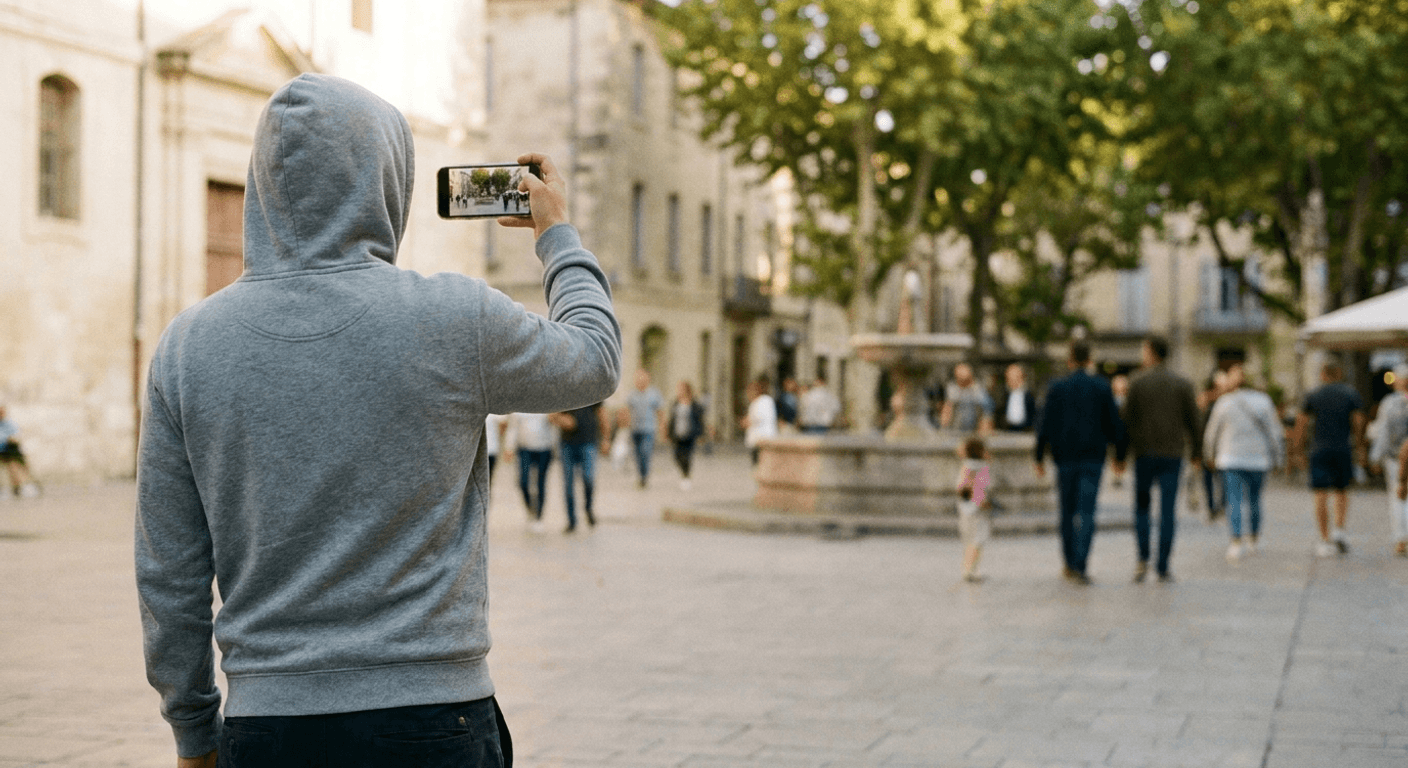
Smart glasses are legal to own and wear in Louisiana. Louisiana is a one-party consent state under La. R.S. 15:1303(C)(4), so a participant does not need the other parties' consent to record a conversation. Since August 1, 2026, however, Act 965 (La. R.S. 9:2790.1 through 9:2790.4) requires anyone who uses wearable eyeglass recording devices to video and record or transcribe an in-person conversation to specifically notify all other participants first, unless an exception applies. Video recording in public is generally lawful under both federal and state law. The critical limits are Louisiana's electronic surveillance law and its video voyeurism statute, which reaches non-consensual filming for a lewd or lascivious purpose and non-consensual filming of sexual activity or intimate body areas in places where people expect privacy.
Statements about Act 965 and La. R.S. 14:283 re-verified against the official Louisiana Legislature text on 2026-09-30; other information last verified on 2026-06-07. This article has not yet been reviewed by a licensed lawyer.
Jurisdiction scope: This article addresses Louisiana's electronic surveillance consent law under La. R.S. 15:1303, the smart glasses notice law under La. R.S. 9:2790.1 through 9:2790.4, and video voyeurism under La. R.S. 14:283. It does not address federal wiretap law in depth; for that background, see the Louisiana recording laws parent page. It does not address the laws of other states.
For a full explanation of Louisiana's one-party consent rule and how it applies to phone calls, in-person conversations, and the workplace, see the Louisiana recording laws guide. For the national framework governing smart glasses across all 50 states, see the smart glasses recording laws hub.
Are Smart Glasses Legal to Own and Wear in Louisiana?
Smart glasses are legal to own and wear in Louisiana. No Louisiana statute bans the sale or possession of wearable camera-equipped eyewear. Louisiana has, however, enacted a law aimed at how they are used: Act 965 of the 2026 Regular Session (HB 410) became law on June 25, 2026, took effect August 1, 2026, and adds La. R.S. 9:2790.1 through 9:2790.4, which require notice before a participant uses wearable eyeglass recording devices to video and record or transcribe an in-person conversation. The legality question turns on what you do with the device: the audio-recording capability triggers Louisiana's Electronic Surveillance Act, recording or transcribing a conversation you are part of with the glasses triggers the notice law, and the visual capability in certain spaces triggers the video voyeurism statute.
Meta Ray-Ban AI glasses include a built-in capture LED indicator, a white light positioned near the right frame, that illuminates whenever the camera is actively recording video, taking a photo, or streaming live. Meta upgraded this LED from 1mm to 2mm in size and increased its brightness in response to privacy concerns. Meta's official guidance states that users should let the capture LED light shine and stop recording if anyone expresses a preference not to be recorded. The LED is the most tangible external signal that recording is taking place, and its visibility is directly relevant to whether another person has a reasonable expectation that a conversation is not being captured.
Wearing smart glasses in public, at work, or in social settings is not independently unlawful. The legal analysis focuses on two questions: first, whether the audio component captures a private oral communication without any party's consent; and second, whether the device is used in a location where Louisiana's voyeurism law applies. Both questions are answered by the context of use, not the nature of the device.
Recording Video in Public Versus Private Spaces
Under both federal and Louisiana law, video-only recording in public is generally lawful. The federal Wiretap Act (18 U.S.C. sections 2510-2522) covers only "aural transfers" that contain the human voice. Silent video recording is not an interception under 18 U.S.C. section 2511 because it does not involve an oral communication as defined in section 2510(2). Louisiana's Electronic Surveillance Act follows the same framework: the statute governs the interception of private oral communications, not the act of observing or filming people in public places where they can be seen.
The constitutional baseline is Katz v. United States, 389 U.S. 347 (1967), where the Court held that the Fourth Amendment protects people, not places, and Justice Harlan's concurrence framed the test as whether a person has an actual expectation of privacy that society is prepared to recognize as reasonable. People on public streets, in parks, at festivals, in stores, or on sidewalks have a reduced expectation of privacy from being observed or filmed. Smart glasses used to record video of a crowd, a public event, or street scenes generally do not create legal exposure under Louisiana law.
Private spaces present a categorically different analysis. In any location where a person has a reasonable expectation of privacy in their physical person and intimate conduct, such as a home, hotel room, medical office, or other enclosed space where entry requires permission, recording without consent can constitute both a civil intrusion and a criminal violation. The practical dividing line sits between the reduced privacy expectation of being seen in public and the strong expectation people hold in spaces where they reasonably believe they will not be observed or recorded.
Semi-public spaces introduce a middle category that requires careful judgment. A private office, a workplace conference room, or a restaurant booth where two people are having a quiet conversation are spaces where a person may be physically accessible to others yet still maintain a reasonable expectation that their spoken words are not being captured. In those contexts, even video-only recording without audio can support a civil intrusion-upon-seclusion claim under Restatement (Second) of Torts section 652B if the recording would be highly offensive to a reasonable person. Smart glasses wearers should apply a conservative standard in these hybrid settings.
Recording Audio and Louisiana's One-Party Consent Rule
The central legal framework for smart glasses audio recording in Louisiana is La. R.S. 15:1303. Louisiana enacted its Electronic Surveillance Act in 1988, effective January 1, 1989, modeling it on the federal Wiretap Act's structure. Section 1303(C)(4) establishes the one-party consent exception: it is not unlawful for a person who is a party to a private oral communication, or who has obtained prior consent from one party, to record that communication, provided the interception is not undertaken for the purpose of committing a criminal, tortious, or other injurious act.
What this means in practice is direct: if you are wearing Meta Ray-Ban glasses and you are having a conversation with another person, your participation satisfies the one-party consent rule in La. R.S. 15:1303, so the other party need not consent. That is no longer the whole answer for smart glasses. Since August 1, 2026, the separate notice law described below requires you to specifically notify the other participants before you use the glasses to video and record or transcribe the conversation, unless an exception applies.
The one-party consent protection applies only to private oral communications: oral exchanges in which participants have a reasonable expectation that what they say is not being overheard or captured by others. A loud conversation on a crowded street where bystanders could hear every word does not qualify as a private oral communication. A quiet discussion in a private home, a one-on-one meeting in a closed office, or a personal exchange in a restaurant booth where the parties have a reasonable expectation of privacy likely does. Smart glasses wearers must evaluate whether the conversation they are capturing would reasonably be understood by participants as private in that context.
The prohibited conduct is non-participant interception. If a person who is not part of a conversation uses smart glasses to record the private oral communications of others, without any party to that conversation consenting, that person violates La. R.S. 15:1303. Louisiana imposes some of the harshest criminal penalties among all one-party consent states for this offense. Section 1303(B) provides that a willful violation carries imprisonment at hard labor for not less than two years and not more than ten years, plus a fine of up to $10,000. This is not a misdemeanor, and Louisiana does not treat unlawful eavesdropping as a minor offense.
Civil liability under La. R.S. 15:1312 runs parallel to the criminal exposure. A person aggrieved by an unlawful interception may recover actual damages with no statutory cap, liquidated damages of $100 per day of violation or $1,000 per violation, whichever is greater, punitive damages where appropriate, and reasonable attorney fees and litigation costs. A single unlawful recording session involving multiple intercepted communications can produce multiple separate civil claims.
The practical application for smart glasses users is straightforward: recording conversations you are actively participating in is lawful under Louisiana's one-party consent rule. Pointing your glasses at other people to capture their private conversations, or using the audio function to eavesdrop on others without being a party to the communication, is a serious felony in Louisiana carrying a sentence of two to ten years at hard labor.
Louisiana's Smart Glasses Notice Law (Act 965)
Act 965 of the 2026 Regular Session enacted La. R.S. 9:2790.1 through 9:2790.4, effective August 1, 2026. The legislative findings in section 2790.1(B) name the problem directly: the misuse of wearable recording devices such as smart glasses to film people covertly, with the recordings often posted to social media.
The core rule is La. R.S. 9:2790.3(A). No participant in a direct conversation may intentionally use a wearable eyeglass recording device to video and record or transcribe that conversation with any other participant unless all participants are specifically notified that the conversation is being videoed and recorded or transcribed. A "direct conversation" is an in-person oral communication directed to a specific person or people, under circumstances in which a reasonable person would not expect it to be videoed and recorded or transcribed (section 2790.2(1)).
This duty sits on top of the one-party consent rule rather than replacing it. Section 2790.3(C) states that it does not limit, modify, expand, or supersede the Electronic Surveillance Act. Being a participant still satisfies La. R.S. 15:1303, but it does not by itself satisfy the notice requirement when you use smart glasses.
Section 2790.3(B) lists exceptions. The ones most relevant to everyday users are:
- Videos and recordings or transcriptions made by a participant in his own residence.
- Recordings or transcriptions made by a participant in his own place of business or employment, or in his own vehicle or his employer's vehicle.
- Recordings made to preserve evidence related to an actual or anticipated civil or administrative proceeding, or to a criminal act or proceeding.
- Public or semi-public meetings, such as governmental hearings, press conferences, public speeches, and rallies.
- Recording a public official performing an official duty in a public place, and recording a law enforcement officer performing official duties in a public place or where you have a legal right to be (the latter does not protect anyone who physically interferes with or materially obstructs the officer).
- Law enforcement activity, emergencies, and first responder activity.
Section 2790.3(D) also excludes incidental, unintended, or background capture of people or conversations in public places where the recording is not specifically directed at them. The notice rule does not apply when the person recording is not a participant (section 2790.3(B)(11)), but that is no safe harbor: secretly recording a private conversation you are not part of is exactly what La. R.S. 15:1303 punishes as a felony.
In practice, a smart glasses wearer who records or transcribes a conversation with a friend at a restaurant, a stranger on the street, or a vendor at a market is outside the listed exceptions and should say clearly, before recording, that the glasses are recording. The Act requires that participants be "specifically notified"; it does not say whether a lit capture LED alone meets that standard, so a spoken notice is the safer course.
For the full detail of how Louisiana's one-party consent rule applies to phone calls, workplace recordings, and other contexts, see the Louisiana recording laws page.
Where You Cannot Record: Restrooms, Locker Rooms, and Private Spaces
Louisiana's video voyeurism statute, La. R.S. 14:283, draws a separate line that Louisiana's one-party consent rule does not cover. The statute criminalizes using an image recording device to observe, photograph, film, or videotape a person who has not consented to that specific instance when either (a) it is for a lewd or lascivious purpose, or (b) it captures sexual activity or intimate body areas described in section 14:283(B)(3) in a place where the person has a reasonable expectation of privacy. The statute covers images, not audio. This prohibition applies to smart glasses exactly as it applies to hidden cameras, miniature recording devices, or any other recording technology. The form factor of the device is irrelevant.
Places where a person typically has a reasonable expectation of privacy include bathrooms, restrooms, dressing rooms, locker rooms, changing areas, private residences, and any other space where a person would reasonably expect that their body or intimate conduct will not be observed or recorded. Section 14:283 also explicitly covers drones equipped with recording devices used to violate a person's reasonable expectation of privacy, illustrating the legislature's intent to address emerging recording technologies rather than just traditional cameras.
The criminal penalties under La. R.S. 14:283 are tiered. A first conviction carries a fine of up to $2,000 and imprisonment of up to two years. A second or subsequent conviction carries a fine of up to $2,000 and imprisonment of six months to three years at hard labor. When the recording captures sexual activity or intimate body areas listed in section 14:283(B)(3), the penalty rises to a fine of up to $10,000 and imprisonment of one to five years at hard labor. When the victim is under the age of seventeen and the recording is made with the intention of arousing or gratifying the sexual desires of the offender, the penalty reaches its maximum: a fine of up to $10,000 and imprisonment of two to ten years at hard labor. A conviction under section 14:283(A)(1), (2), or (3), the forms involving a living person, requires mandatory sex offender registration, which imposes lasting consequences beyond the criminal sentence itself.
The federal Video Voyeurism Prevention Act (18 U.S.C. section 1801) provides a parallel prohibition for recordings on federal property, covering anyone who intentionally captures images of another person's private areas without consent where that person has a reasonable expectation of privacy in their body. Federal law applies on federal land; La. R.S. 14:283 applies everywhere else in Louisiana.
Watch out: The wearable form factor of smart glasses is not a defense to voyeurism charges under La. R.S. 14:283. A court evaluating whether a person consented to being filmed may consider that smart glasses appear to be ordinary eyewear, which supports an inference of intentional concealment. The only safe rule is to remove or deactivate smart glasses before entering restrooms, locker rooms, changing areas, or any other private space, regardless of whether recording is actively occurring.
Facial Recognition and Biometric Privacy
Louisiana does not have a dedicated biometric privacy statute comparable to Illinois' Biometric Information Privacy Act (740 ILCS 14), Texas' Capture or Use of Biometric Identifier Act (Tex. Bus. and Com. Code sections 503.001 to 503.004), or Washington's biometric identifiers law (RCW Chapter 19.375) as of June 2026. A Louisiana resident who uses smart glasses equipped with facial-recognition software to identify strangers in the state does not face per-person statutory damages under a Louisiana biometric law.
The absence of a Louisiana-specific biometric statute does not eliminate legal risk. Civil liability under common-law privacy torts remains available to individuals whose biometric data is captured without consent. Under Restatement (Second) of Torts section 652B, a person who intentionally intrudes upon the seclusion of another is liable if the intrusion would be highly offensive to a reasonable person. The act of intrusion itself creates liability; there is no requirement that the captured information be published or shared with anyone. Using smart glasses with a facial-recognition application to identify strangers in real time, extracting names and other identifying information without their knowledge, satisfies both the intent element and the offensiveness element of this tort.
The October 2024 demonstration by Harvard students AnhPhu Nguyen and Caine Ardayfio illustrated the practical risk precisely. Using Meta Ray-Ban glasses combined with a third-party facial-recognition tool, they identified strangers in real time and retrieved home addresses and partial Social Security numbers within minutes. Meta's glasses provided the camera; the facial-recognition capability came from a separately installed application. The point for Louisiana users is that the glasses become the capture mechanism for a system that collects biometric data, even though the device itself does not perform facial recognition.
If a Louisiana-based person uses smart glasses with facial-recognition features in Illinois, Texas, or Washington, the biometric statutes of those states apply to the residents of those states whose biometric data is captured. Illinois BIPA provides a private right of action with statutory damages of $1,000 per negligent violation and $5,000 per intentional or reckless violation per affected person. An Louisiana resident traveling to or doing business in those states faces meaningful liability exposure under those statutes if facial recognition is used without prior written consent. Multi-state users should treat Illinois, Texas, and Washington as categorical prohibition zones for facial-recognition use without explicit prior consent and a written release.
Penalties for Violating Louisiana's Recording Laws
Louisiana's recording-related criminal penalties span two statutes, each carrying significant consequences for smart glasses misuse, and the 2026 smart glasses notice law adds civil exposure. Louisiana is notably more severe than most one-party consent states on the wiretap side.
Under La. R.S. 15:1303, willful non-participant interception of a private oral communication carries a sentence of two to ten years imprisonment at hard labor, plus a fine of up to $10,000. This offense is a felony, not a misdemeanor, and the hard-labor sentencing range reflects Louisiana's treatment of unlawful eavesdropping as a serious crime. Louisiana's penalty for this offense exceeds the criminal exposure in most other one-party consent states, where the same conduct is typically punishable as a misdemeanor or a lower-level felony.
Civil liability under La. R.S. 15:1312 accompanies the criminal penalty and is independent of it. An aggrieved person can recover the greater of actual damages or liquidated damages of $100 per day of violation or $1,000 per violation, punitive damages when appropriate, and attorney fees. A single unlawful recording session can generate multiple civil claims if multiple communications were intercepted.
The smart glasses notice law is civil, not criminal. Under La. R.S. 9:2790.4(A), a person found to have violated the notice requirement is liable to an individual for damages, including court costs and reasonable attorney fees as ordered by the court. Section 2790.4(B) limits that exposure: the claimant must demonstrate actual damages resulting from intentional unlawful videoing and recording and dissemination.
Under La. R.S. 14:283, voyeuristic recording in private spaces carries its own graduated penalty structure. A first conviction carries up to $2,000 and up to two years imprisonment. A second or subsequent conviction carries up to $2,000 and six months to three years at hard labor. Recordings capturing sexual activity or intimate body areas carry up to $10,000 and one to five years at hard labor. Recordings involving victims under seventeen with intent to arouse or gratify the offender's sexual desires carry up to $10,000 and two to ten years at hard labor. Convictions under section 14:283(A)(1), (2), or (3) require mandatory sex offender registration.
At the federal level, violations of the Wiretap Act under 18 U.S.C. section 2511 carry up to five years imprisonment and civil liability of at least $10,000 in statutory damages per violation, with attorney fees and costs. Federal law provides a floor; Louisiana's state statutes apply to conduct within Louisiana.
| Violation | Statute | Classification | Imprisonment | Fine |
|---|---|---|---|---|
| Non-participant interception of private oral communication | La. R.S. 15:1303 | Felony | 2 to 10 years at hard labor | Up to $10,000 |
| Smart glasses video recording or transcription of an in-person conversation without notifying all participants | La. R.S. 9:2790.3, 9:2790.4 | Civil liability only | None | Damages, court costs, and attorney fees (claimant must show actual damages) |
| Video voyeurism (first offense) | La. R.S. 14:283(B)(1) | Criminal | Up to 2 years | Up to $2,000 |
| Video voyeurism (subsequent offense) | La. R.S. 14:283(B)(2) | Criminal | 6 months to 3 years at hard labor | Up to $2,000 |
| Video voyeurism (sexual activity or intimate body areas) | La. R.S. 14:283(B)(3) | Criminal | 1 to 5 years at hard labor | Up to $10,000 |
| Video voyeurism (victim under 17, arousal intent) | La. R.S. 14:283(B)(4) | Criminal | 2 to 10 years at hard labor | Up to $10,000 |
| Federal wiretap violation | 18 U.S.C. section 2511 | Federal felony | Up to 5 years | $10,000+ statutory |
Practical Tips for Smart Glasses Users in Louisiana
Following a few clear practices significantly reduces legal exposure when using smart glasses in Louisiana.
Keep the capture LED visible. Meta Ray-Ban glasses include a built-in white LED that illuminates when the camera is recording, taking a photo, or streaming live. Meta's guidance is explicit: let the LED shine and never cover or obstruct it. Covering the LED removes the only external notice that recording is occurring and directly strengthens any inference of intentional covert recording, the exact intent that aggravates both eavesdropping and voyeurism charges. In Louisiana, where the eavesdropping penalty is two to ten years at hard labor, this caution is particularly important.
Understand the one-party consent protection and its limits. Louisiana's rule under La. R.S. 15:1303(C)(4) gives participants a clear legal foundation to record conversations they are part of. This protection is real but bounded: it applies only when you are an active participant in the conversation being recorded. It does not apply if you walk away and continue recording, or if you point your glasses at others to capture conversations you are not part of. It also does not satisfy the separate smart glasses notice requirement in La. R.S. 9:2790.3.
Do not record non-participants' private conversations. Using smart glasses to capture the private oral communications of others without being a party to the conversation is a serious felony in Louisiana. The hard-labor sentence under section 1303 is not a technical penalty that prosecutors routinely forgo. One-party consent protects participants; it does not protect eavesdroppers.
Never record in private spaces. Bathrooms, locker rooms, changing rooms, bedrooms, and any other space where a person would have a reasonable expectation of privacy in their body are places where filming a person without consent can be a crime under La. R.S. 14:283 if it captures sexual activity or intimate body areas or is for a lewd or lascivious purpose. Remove or deactivate smart glasses before entering these spaces. The voyeurism statute requires mandatory sex offender registration on conviction for these offenses, regardless of whether the recording was brief or the images were never shared.
Be cautious crossing state lines. Louisiana's one-party consent rule is permissive within Louisiana. If you travel to California, Florida, Maryland, Massachusetts, Washington, or another all-party consent state, that state's more restrictive law governs any audio recording you make there. Smart glasses users who travel regularly should research the consent law of every state they visit.
Avoid facial-recognition features without disclosure. Even without a Louisiana biometric statute, using facial recognition to identify individuals without their knowledge creates exposure under common-law privacy torts. In commercial contexts involving residents of Illinois, Texas, or Washington, the biometric statutes of those states apply. Treat facial-recognition features as requiring explicit, disclosed consent before use.
Announce that you are recording. Louisiana's one-party consent rule does not require consent from the other participants, but since August 1, 2026, La. R.S. 9:2790.3 requires you to specifically notify all participants before you use smart glasses to video and record or transcribe an in-person conversation, unless an exception applies. A clear spoken statement that the glasses are recording, together with a visible capture LED, is the safest way to meet that duty and removes ambiguity about the recording's open nature. Even where an exception such as your own workplace applies, announcing the recording is prudent in any context where it might later be used.
Disclaimer
This article provides general legal information about Louisiana recording consent law and voyeurism statutes as they apply to smart glasses. It does not constitute legal advice and does not create an attorney-client relationship. The statutes discussed reflect their in-force versions as of June 7, 2026, except that Act 965 and La. R.S. 14:283 were re-checked against the official text on September 30, 2026. Laws may change; always verify current statute text with the Louisiana State Legislature's official publication at legis.la.gov or consult a licensed Louisiana attorney. Readers who need advice about a specific situation, including whether a recording was lawful or whether civil or criminal liability may apply, should consult a licensed Louisiana lawyer.
Last updated: 2026-09-30. Act 965 and La. R.S. 14:283 re-checked 2026-09-30; other statutes cited reflect their in-force versions as of 2026-06-07.
- Louisiana AI Meeting Recording Laws
- Louisiana Alimony Laws
- Louisiana At-Will Employment Laws
- Louisiana Car Accident Laws
- Louisiana Car Seat Laws
- Louisiana Child Custody Laws
- Louisiana Child Support Laws
- Louisiana Common Law Marriage Laws
- Louisiana Dashcam Laws
- Louisiana Data Privacy Laws
- Louisiana Deepfake Laws
- Louisiana Divorce Laws
- Louisiana Dog Bite Laws
- Louisiana Drone Laws
- Louisiana Emancipation Laws
- Louisiana Employee Monitoring Laws
More Louisiana Laws
Frequently Asked Questions
Are smart glasses legal in Louisiana?
Yes. Smart glasses are legal to own and wear in Louisiana. No Louisiana statute bans the device itself. The legal analysis focuses on how the glasses are used: whether the audio recording captures private oral communications without any party's consent, whether you notified the other participants before using the glasses to video and record or transcribe an in-person conversation as La. R.S. 9:2790.3 has required since August 1, 2026, and whether the device is used in spaces where the voyeurism statute applies.
Do I need consent to record audio with smart glasses in Louisiana?
Not consent, if you are a participant in the conversation. Louisiana follows a one-party consent rule under La. R.S. 15:1303(C)(4), so a party to a private oral communication may record it without the other parties' consent. Notice is a separate question for smart glasses: since August 1, 2026, La. R.S. 9:2790.3 bars a participant from using wearable eyeglass recording devices to video and record or transcribe an in-person conversation unless all participants are specifically notified, subject to exceptions such as your own residence, workplace, or vehicle, evidence preservation, and public or semi-public meetings. Recording the private conversations of others when you are not part of them is a felony carrying a sentence of 2 to 10 years at hard labor.
Is Louisiana a one-party consent state for recording?
Yes. Under La. R.S. 15:1303(C)(4), Louisiana requires only one party to a private oral communication to consent to its recording. Because the person doing the recording is typically a party to the conversation, a participant does not need the others' consent. Smart glasses users have an added notice duty, though: since August 1, 2026, La. R.S. 9:2790.3 requires notifying all participants before using the glasses to video and record or transcribe an in-person conversation, unless an exception applies.
What are the penalties for illegal recording in Louisiana?
Penalties depend on the violation. Non-participant interception of a private oral communication under La. R.S. 15:1303 carries a sentence of 2 to 10 years at hard labor plus a fine up to $10,000, among the harshest penalties of any one-party consent state. Video voyeurism under La. R.S. 14:283 ranges from up to 2 years and a $2,000 fine on a first offense to 2 to 10 years at hard labor and a $10,000 fine when the victim is under seventeen and the recording is made with intent to arouse or gratify the offender's sexual desires. Voyeurism convictions involving a living person require mandatory sex offender registration. Using smart glasses to video and record or transcribe an in-person conversation without the notice required by La. R.S. 9:2790.3 is not a crime, but it can create civil liability under La. R.S. 9:2790.4.
Can I record a conversation at work with smart glasses in Louisiana?
Recording an in-person workplace conversation you are part of satisfies Louisiana's one-party consent rule, and the smart glasses notice law in La. R.S. 9:2790.3 exempts recordings or transcriptions made by a participant in his own place of business or employment. However, workplace recordings may implicate employer policies, and recording conversations you are not part of remains a serious felony under La. R.S. 15:1303. Always check your employer's recording policy before recording at work, and ensure that any recording captures only conversations in which you are an active participant.
What happens if I record someone in a bathroom or locker room with smart glasses in Louisiana?
Filming or photographing a person without consent in a bathroom, locker room, changing room, or other place where the person has a reasonable expectation of privacy is video voyeurism under La. R.S. 14:283 if it captures sexual activity or intimate body areas, or if it is done for a lewd or lascivious purpose. A first offense carries up to $2,000 and up to 2 years imprisonment. A subsequent offense carries up to $2,000 and 6 months to 3 years at hard labor. When the recording captures sexual activity or intimate body areas, the penalty reaches up to $10,000 and 1 to 5 years at hard labor. Convictions involving a living person require mandatory sex offender registration.
Can I be sued for recording someone with smart glasses in Louisiana?
Yes. Even if no criminal statute is violated, recording a person in a private or semi-private context without their knowledge can support a civil claim for intrusion upon seclusion under Restatement (Second) of Torts section 652B. The act of intrusion itself creates liability; the footage need not be published. Civil damages under La. R.S. 15:1312 are also available for unlawful audio interception: the greater of $100 per day or $1,000 per violation, plus actual damages, punitive damages, and attorney fees. Separately, using smart glasses to video and record or transcribe an in-person conversation without notifying all participants, where no exception applies, can make you liable under La. R.S. 9:2790.4 for damages, court costs, and attorney fees, although the claimant must show actual damages resulting from intentional unlawful videoing and recording and dissemination.
Is facial recognition with smart glasses legal in Louisiana?
Louisiana has no dedicated biometric privacy statute as of June 2026. However, using smart glasses with facial-recognition software to identify individuals without their consent can create civil liability under the intrusion-upon-seclusion tort. If the glasses are used to capture biometric data from residents of Illinois, Texas, or Washington, the biometric statutes of those states apply regardless of where you are based.
Does the capture LED on Meta Ray-Ban glasses matter legally in Louisiana?
Yes. The LED is the primary external notice that recording is occurring. Keeping it visible supports a position that recording was open rather than covert. Covering or disabling the LED removes this notice and strengthens evidence of intentional covert recording, directly relevant to both eavesdropping and voyeurism charges. Meta's official guidance requires users to keep the LED unobstructed. Since August 1, 2026, La. R.S. 9:2790.3 also requires that participants be specifically notified before you use the glasses to video and record or transcribe an in-person conversation; the statute does not say whether the LED alone is enough, so a spoken notice is the safer practice.
What if I travel from Louisiana to a two-party consent state and use my smart glasses there?
Louisiana's one-party consent rule applies to recordings made in Louisiana. If you travel to an all-party consent state such as California, Florida, Maryland, Massachusetts, or Washington, that state's law governs audio recordings made there. Recording private conversations without all parties' consent in those states can be a criminal offense regardless of Louisiana's permissive rule.
Updates
Corrected the description of Louisiana's video voyeurism law (La. R.S. 14:283), which requires non-consent plus a lewd purpose or capture of sexual activity or intimate areas in a private place and requires sex offender registration for the living-person offenses, and re-verified the Act 965 smart glasses notice law against the enrolled text.
Corrected the description of Katz v. United States to distinguish the Court's holding that the Fourth Amendment protects people, not places, from the reasonable-expectation test stated in Justice Harlan's concurrence.
Added Louisiana's 2026 smart glasses notice law (Act 965, La. R.S. 9:2790.1-2790.4, effective August 1, 2026) and corrected the description of the R.S. 15:1303 penalty, which does not bar suspension.
Fixed three broken citation links: the URLs for La. R.S. 15:1303, La. R.S. 15:1312, and La. R.S. 14:283 pointed to unrelated or repealed statutes and now link to the correct, current sections on legis.la.gov.
Independently fact-checked against the cited primary sources; governing law re-checked for recent changes
Reviewed and approved by an editor
The Law Behind This Article
This article rests on the statutory provisions below, held in our own legal record and retrieved from the official source. Tap a section to read the operative text.
Louisiana Revised Statutes, Title 9, Chapter 2-B: All Party Notification for In-Person Conversation (R.S. 9:2790.1-2790.4, enacted by 2026 Act 965)
§ 9:2790.3Notification of videoing and recording direct conversationIn forcecited in 2 of our articles
§2790.3. Notification of videoing and recording direct conversation A. No participant in a direct conversation shall intentionally use a wearable eyeglass recording device to video and record or transcribe a direct conversation with any other participant unless all participants are specifically notified that the conversation is being videoed and recorded or transcribed. B. The provisions of this Section do not apply to any of the following: (1) Public or semi-public meetings. (2) Law enforcement activity. (3) Emergencies or first responder activities. (4) Videos and recordings or transcriptions of a public official made in any of the following manners: (a) Of a public official performing an official duty in a public place where there is no reasonable expectation of privacy. (b) For the pur
Official text (excerpt) · last checked 2026-09-23 · Read the full text in our law library · Verify at legis.la.gov
§ 9:2790.1Legislative findings; declaration of purposeIn forcecited in 2 of our articles
§2790.1. Legislative findings; declaration of purpose A. The legislature finds that an individual who engages in a direct conversation has a reasonable expectation that the conversation is not videoed and recorded or transcribed unless notice is given, and that the undisclosed preservation and dissemination of the videos and recordings of these direct conversations undermines trust, autonomy, dignity, privacy, and fairness in human interactions. B. Recent incidents have highlighted the misuse of wearable recording devices such as smart glasses for covertly filming individuals without their knowledge. These recordings are often disseminated on social media platforms, leading to harassment and violations of personal privacy. C. The purpose of this Chapter is to protect individuals from the t
Official text (excerpt) · last checked 2026-09-24 · Read the full text in our law library · Verify at legis.la.gov
§ 9:2790.4PenaltiesIn forcecited in 2 of our articles
§2790.4. Penalties A. Any person who is found to have violated the provisions of this Chapter shall be liable to an individual for any damages including court costs and reasonable attorney fees as ordered by the court. B. A claimant shall demonstrate actual damages resulting from intentional unlawful videoing and recording and dissemination.
Official text (excerpt) · last checked 2026-09-24 · Read the full text in our law library · Verify at legis.la.gov
Louisiana Revised Statutes
§ 15:1303Interception and disclosure of wire, electronic, or oral communicationsIn forcecited in 36 of our articles
A. Except as otherwise specifically provided in this Chapter, it shall be unlawful for any person to: (1) Willfully intercept, endeavor to intercept, or procure any other person to intercept or endeavor to intercept, any wire, electronic or oral communication; (2) Willfully use, endeavor to use, or procure any other person to use or endeavor to use, any electronic, mechanical, or other device to intercept any oral communication when: (a) Such device is affixed to, or otherwise transmits a signal through, a wire, cable, or other like connection used in wire or electronic communication; or (b) Such device transmits communications by radio or interferes with the transmission of such communication; (3) Willfully disclose, or endeavor to disclose, to any other person the contents of any wire, electronic, or oral communication, knowing or having reason to know that the information was obtained through the interception of a wire, electronic, or oral communication in violation of this Subsection; or (4) Willfully use, or endeavor to use, the contents of any wire, electronic, or oral communication, knowing or having reason to know that the information was obtained through the…
Official text (excerpt) · last checked 2026-08-31 · Read the full text in our law library · Verify at legis.la.gov
Cited in 25 court opinions in our collectionLatest citing opinion in our collection: 2020
In the courts (editorial summary, independently checked):Louisiana courts apply the consent exception in La. R.S. 15:1303. Smith v. Smith (2005) held a parent may consent for a child where he has a good faith, reasonable basis that it serves the child’s best interest, placing the recording within 15:1303(C)(4). Keller v. Aymond (1998) held willfulness is not required for civil liability.
Opinions citing this section in our collection:
- Smith v. Smith (Louisiana Court of Appeal 2005, 923 So. 2d 732)✓A father secretly taped his daughter's calls with her mother in his own home during a custody fight; the court applied vicarious consent and held his good faith, objectively reasonable belief that taping served the child's best interest fell within La. R.S. 15:1303(C)(4).
- Johnson v. Aymond (Louisiana Court of Appeal 1998, 709 So. 2d 1072)✓A newspaper printed excerpts of a phone conversation a defendant had allegedly taped and handed out at a press conference; the court held those allegations, accepted as true, state a cause of action under the literal language of La. R.S. 15:1303(A)(4), and reversed the dismissal.
- Keller v. Aymond (Louisiana Court of Appeal 1998, 722 So. 2d 1224)✓A newspaper published excerpts of private calls taped by another and handed out at a press conference; the court held criminal willfulness under section 1303 is not needed for civil damages, and that fact issues over the paper's reason to know barred summary judgment under 1303.
Identified automatically from the court opinions citing this section — not a ranking of which case controls.
Also relied on in: Louisiana HB 410: Recording-Notice Bill Heads to the Governor (2026), Louisiana HB 475: Disclosure Required Before AI-Recorded Medical Visits, Louisiana Dashcam Laws: Mounting, Recording, and Evidence Rules
§ 15:1312Recovery of civil damages authorizedIn forcecited in 18 of our articles
A. Any person whose wire, electronic, or oral communication is intercepted, disclosed, or used in violation of this Chapter shall have a civil cause of action against any person who intercepts, discloses, or uses, or procures any other person to intercept, disclose, or use such communications, and be entitled to recover from any such person: (1) Actual damages, but not less than liquidated damages computed at the rate of one hundred dollars a day for each day of violation or one thousand dollars, whichever is greater. (2) A reasonable attorney's fee and other litigation costs reasonably incurred. (3) Punitive damages. B. A good faith reliance on a court order shall constitute a complete defense to any civil or criminal action brought under this Chapter.
Official text (excerpt) · last checked 2026-07-29 · Read the full text in our law library · Verify at legis.la.gov
Cited in 7 court opinions in our collectionLatest citing opinion in our collection: 2024
Opinions citing this section in our collection:
- Benoit v. Roche (Louisiana Court of Appeal 1995, 657 So. 2d 574)“…eets Act of 1968 authorize a civil damages cause of action. La.R.S. 15:1312; 18 U.S.C. § 2520 ; see also United S…”
- Keller v. Aymond (Louisiana Court of Appeal 1998, 722 So. 2d 1224)“…spaper before the plaintiffs can claim a civil remedy under La. R.S. 15:1312. Hence, the newspaper can be held civil…”
- Wingrave v. Hebert (Louisiana Court of Appeal 2007, 964 So. 2d 385)“…of this Chapter shall have a civil cause of action. . . ." La. R.S. 15:1312(A). The substance of LESA was first i…”
Identified automatically from the court opinions citing this section — not a ranking of which case controls.
Also relied on in: Louisiana Audio Recording Laws: One-Party Consent Rules and Penalties, Louisiana Recording Laws (2026): One-Party Consent Rules, Louisiana Landlord-Tenant Recording Laws: Rights and Restrictions
§ 14:283Video voyeurism; penaltiesIn forcecited in 30 of our articles
A. Video voyeurism is any of the following: (1) The use of any camera, videotape, photo-optical, photo-electric, or any other image recording device, or an unmanned aircraft system equipped with any camera, videotape, photo-optical, photo-electric, or any other image recording device, for the purpose of observing, viewing, photographing, filming, or videotaping a person where that person has not consented to the specific instance of observing, viewing, photographing, filming, or videotaping and either: (a) It is for a lewd or lascivious purpose. (b) The observing, viewing, photographing, filming, or videotaping is as described in Paragraph (B)(3) of this Section and occurs in a place where an identifiable person has a reasonable expectation of privacy. (2) The transfer of an image obtained by activity described in Paragraph (1) of this Subsection by live or recorded telephone message, electronic mail, the Internet, or a commercial online service.
Official text (excerpt) · last checked 2026-08-31 · Read the full text in our law library · Verify at legis.la.gov
Cited in 16 court opinions in our collectionLatest citing opinion in our collection: 2024
In the courts (editorial summary, independently checked):In State v. Schaller (2009) a Louisiana appeals court set out the elements of La. R.S. 14:283 and, since the statute does not define lewd or lascivious, applied a definition of an act tending to excite lust, rejecting a claimed babysitting reason for a hidden bedroom camera. State v. Boudreaux (2006) found 56 consecutive years excessive.
Opinions citing this section in our collection:
- State v. Batiste (Supreme Court of Louisiana 2006, 939 So. 2d 1245)“…Batiste, charging him with video voyeurism, a violation of La. R.S. 14:283. [1] At his arraignment on December *…”
- State v. Boudreaux (Louisiana Court of Appeal 2006, 945 So. 2d 898)✓A stepfather hid a wireless camera in his 18-year-old stepdaughter's bedroom and taped her for four months. He pleaded guilty to 14 counts of video voyeurism, and the court vacated the 56-year consecutive sentence as excessive because the acts formed a single scheme.
- State v. Perry (Louisiana Court of Appeal 2012, 12 La.App. 3 Cir. 298)✓A houseguest was secretly videotaped drying off in the family's guest bathroom. The court affirmed the video voyeurism conviction and three-year sentence, addressing only whether the untimely pretrial motions were properly denied, not the reach of the statute.
Identified automatically from the court opinions citing this section — not a ranking of which case controls.
Also relied on in: Louisiana Medical Recording Laws: Patient Rights and HIPAA Rules, Louisiana Laws on Recording in Public: Rights, Limits, and Exceptions, Louisiana School Recording Laws: Student and Parent Rights
United States Code Title 18
§ 2511Interception and disclosure of wire, oral, or electronic communications prohibitedIn forcecited in 441 of our articles
Except as otherwise specifically provided in this chapter any person who— intentionally intercepts, endeavors to intercept, or procures any other person to intercept or endeavor to intercept, any wire, oral, or electronic communication; intentionally uses, endeavors to use, or procures any other person to use or endeavor to use any electronic, mechanical, or other device to intercept any oral communication when— such device is affixed to, or otherwise transmits a signal through, a wire, cable, or other like connection used in wire communication; or such device transmits communications by radio, or interferes with the transmission of such communication; or such person knows, or has reason to know, that such device or any component thereof has been sent through the mail or transported in interstate or foreign commerce; or such use or endeavor to use (A) takes place on the premises of any business or other commercial establishment the operations of which affect interstate or foreign commerce; or (B) obtains or is for the purpose of obtaining information relating to the operations of any business or other commercial establishment the operations of which affect interstate or foreign…
Official text (excerpt) · last checked 2026-09-17 · Read the full text in our law library · Verify at uscode.house.gov
Cited in 2,045 court opinions in our collectionLatest citing opinion in our collection: 2026
In the courts (editorial summary, independently checked):Griggs-Ryan v. Smith (1990) applied the Section 2511(2)(d) prior-consent exception, treating a tenant repeatedly told that all incoming calls were taped as having impliedly consented. United States v. United States District Court (1972) read the then-current Section 2511(3) as conferring no presidential surveillance power.
Opinions citing this section in our collection:
- Mitchell v. Forsyth (Supreme Court of the United States 1985, 472 U.S. 511)✓The Attorney General authorized a warrantless 1970 national security wiretap that caught the plaintiff's calls; the Court held the since-repealed Section 2511(3) disclaimer left the tap lawful under Title III, and that Mitchell had qualified immunity.
- United States v. United States District Court for the Eastern District of Michigan (Supreme Court of the United States 1972, 407 U.S. 297)✓The Attorney General approved warrantless wiretaps on members of a domestic group accused of bombing a CIA office; the Court read Section 2511(3) as a congressional disclaimer conferring no surveillance power, then held the Fourth Amendment required prior judicial approval.
- Forsyth v. Barr (Court of Appeals for the Fifth Circuit 1994, 19 F.3d 1527)✓Dallas police used, in an internal affairs probe of an officer, calls private parties allegedly intercepted illegally; assuming that was unlawful, the Fifth Circuit held Section 2517(1) and (2) allowed the disclosure and use, defeating the Section 2511(1)(c) and (d) claims.
Identified automatically from the court opinions citing this section — not a ranking of which case controls.
Also relied on in: Connecticut Recording Laws (2026): Hybrid Consent Rules Explained, Oregon Recording Laws (2026): Hybrid One-Party and All-Party Rules, US Recording Laws by State (2026): All 50 States Explained
§ 2510DefinitionsIn forcecited in 137 of our articles
As used in this chapter— “wire communication” means any aural transfer made in whole or in part through the use of facilities for the transmission of communications by the aid of wire, cable, or other like connection between the point of origin and the point of reception (including the use of such connection in a switching station) furnished or operated by any person engaged in providing or operating such facilities for the transmission of interstate or foreign communications or communications affecting interstate or foreign commerce; “oral communication” means any oral communication uttered by a person exhibiting an expectation that such communication is not subject to interception under circumstances justifying such expectation, but such term does not include any electronic communication; “State” means any State of the United States, the District of Columbia, the Commonwealth of Puerto Rico, and any territory or possession of the United States; “intercept” means the aural or other acquisition of the contents of any wire, electronic, or oral communication through the use of any electronic, mechanical, or other device.1 So in original. The period probably should be a semicolon.
Official text (excerpt) · last checked 2026-07-28 · Read the full text in our law library · Verify at uscode.house.gov
Cited in 2,382 court opinions in our collectionLatest citing opinion in our collection: 2026
In the courts (editorial summary, independently checked):United States v. New York Telephone Co. (1977) held that pen registers fall outside Title III because they do not acquire the contents of a communication as Section 2510(4) and (8) define interception. Forsyth v. Barr (1994) applied the same definitions, treating the defendant officers as law enforcement officers under Section 2510(7).
Opinions citing this section in our collection:
- Forsyth v. Barr (Court of Appeals for the Fifth Circuit 1994, 19 F.3d 1527)✓Neighbors tapped an informant's home line and the overheard charges reached Dallas internal affairs; the Fifth Circuit saw no evidence the police defendants intercepted anything and held they were 2510(7) law enforcement officers, so 2517(1) and (2) allowed their use of it.
- Nixon v. Administrator of General Services (Supreme Court of the United States 1977, 433 U.S. 425)“…of the Omnibus Crime Control and Safe Streets Act of 1968, 18 U. S. C. §§ 2510 et seq. 408 F. Supp., at 363 . We…”
- Gannett Co. v. DePasquale (Supreme Court of the United States 1979, 443 U.S. 368)“…of the Omnibus Crime Control and Safe Streets Act of 1968, 18 U. S. C. § 2510 et seq., be preserved prior to the d…”
Identified automatically from the court opinions citing this section — not a ranking of which case controls.
Also relied on in: Surveillance Camera Laws by State (2026 Guide), Georgia Recording Laws (2026): One-Party Audio, All-Party Video, District of Columbia Recording Laws (2026): One-Party Consent Rules
§ 1801Video voyeurismIn forcecited in 81 of our articles
Whoever, in the special maritime and territorial jurisdiction of the United States, has the intent to capture an image of a private area of an individual without their consent, and knowingly does so under circumstances in which the individual has a reasonable expectation of privacy, shall be fined under this title or imprisoned not more than one year, or both. In this section— the term “capture”, with respect to an image, means to videotape, photograph, film, record by any means, or broadcast; the term “broadcast” means to electronically transmit a visual image with the intent that it be viewed by a person or persons; the term “a private area of the individual” means the naked or undergarment clad genitals, pubic area, buttocks, or female breast of that individual; the term “female breast” means any portion of the female breast below the top of the areola; and the term “under circumstances in which that individual has a reasonable expectation of privacy” means— circumstances in which a reasonable person would believe that he or she could disrobe in privacy, without being concerned that an image of a private area of the individual was being captured; or circumstances in which a…
Official text (excerpt) · last checked 2026-07-28 · Read the full text in our law library · Verify at uscode.house.gov
Cited in 53 court opinions in our collectionLatest citing opinion in our collection: 2026
In the courts (editorial summary, independently checked):Courts have applied 18 U.S.C. 1801 mainly at its edges. United States v. Johnson (2010) read it as Congress's answer to secretly filming nudity on federal property, acquitting on a child exploitation charge instead. EPIC v. Department of Homeland Security (2011) applied the Section 1801(c) law enforcement exception to a TSA scanner claim.
Opinions citing this section in our collection:
- United States v. Anthony Helton (Court of Appeals for the Fourth Circuit 2019, 944 F.3d 198)“…from this list of federal offenses is video voyeurism under 18 U.S.C. § 1801. Rather than list this statute as an enu…”
- United States v. Johnson (District Court, W.D. Missouri 2010, 719 F. Supp. 2d 1059)✓A weightlifting coach hid a camera to film minors weighing in nude; acquitting him under the child exploitation statute, the court called that conduct plain video voyeurism under section 1801, but noted the section reaches only federal maritime and territorial jurisdiction.
- Electronic Privacy Information Center v. United States Department of Homeland Security (Court of Appeals for the D.C. Circuit 2011, 653 F.3d 1)✓Privacy groups challenged TSA body scanners under the Video Voyeurism Prevention Act; the D.C. Circuit held the statute's exception for lawful law enforcement, correctional, or intelligence activity applied to airport screening, so the section 1801 claim failed.
Identified automatically from the court opinions citing this section — not a ranking of which case controls.
Also relied on in: South Dakota Voyeurism Laws, Utah Voyeurism Laws, Is It Illegal to Video Record Someone Without Their Consent? (2026)
Search our full record of US law — 2.1 million sections, every state + federal →
Sources and References
- La. R.S. 15:1303: Louisiana Electronic Surveillance Act (enacted 1988, eff. Jan. 1, 1989). One-party consent exception at subsection (C)(4): a participant may record without notifying other parties. Willful violation: 2 to 10 years at hard labor (mandatory) plus fine up to $10,000.(legis.la.gov).gov
- La. R.S. 15:1312: Civil remedies for unlawful interception. Actual damages, liquidated damages ($100/day or $1,000/violation, whichever is greater), punitive damages, and attorney fees available to aggrieved parties.(legis.la.gov).gov
- La. R.S. 14:283: Louisiana video voyeurism statute. Prohibits recording persons in private spaces with reasonable expectation of privacy. Penalties tiered from up to $2,000 and 2 years (first offense) to up to $10,000 and 2 to 10 years at hard labor when victim is under seventeen and recording is made with intent to arouse or gratify the offender's sexual desires. Mandatory sex offender registration on conviction.(legis.la.gov).gov
- 18 U.S.C. section 2511: Federal Wiretap Act. One-party consent exception at section 2511(2)(d). Criminal penalty: up to 5 years. Civil statutory damages: at least $10,000 per violation.(law.cornell.edu)
- 18 U.S.C. section 2510: Federal Wiretap Act definitions. 'Oral communication' (section 2510(2)) and 'aural transfer' (section 2510(18)) establish that video-only recording is not a wiretap interception.(law.cornell.edu)
- 18 U.S.C. section 1801: Federal Video Voyeurism Prevention Act. Prohibits capturing images of private areas of individuals on federal property without consent where there is a reasonable expectation of privacy.(law.cornell.edu)
- Meta Ray-Ban AI Glasses official privacy page. Documents the capture LED notification system, Meta's guidance to keep the LED unobstructed, and Meta's instruction to stop recording if anyone objects.(meta.com)
- Restatement (Second) of Torts section 652B: Intrusion upon seclusion. Intentional intrusion into another's private affairs is actionable if highly offensive to a reasonable person; publication of the intrusion is not required to establish liability.(cyber.harvard.edu)
- Louisiana Act 965 (2026 Regular Session, HB 410), enacting La. R.S. 9:2790.1 through 9:2790.4: participants must specifically notify all participants before using a wearable eyeglass recording device to video and record or transcribe a direct conversation, with exceptions; civil liability under 9:2790.4.(legis.la.gov)
- Louisiana Legislature, HB 410 (2026 Regular Session) bill history: Act 965, became law without the Governor's signature June 25, 2026, effective August 1, 2026.(legis.la.gov)
- Act No. 965 (HB 410), 2026 Regular Session, enrolled text (Louisiana State Legislature)(legis.la.gov).gov