
Louisiana
Louisiana Recording Laws (2026): One-Party Consent Rules
Independently fact-checked against primary sources (last audited August 15, 2026). · Reviewed by the RecordingLaw editorial team. · Law checked current as of August 9, 2026. · 24 primary sources cited on this page. How we verify our legal content
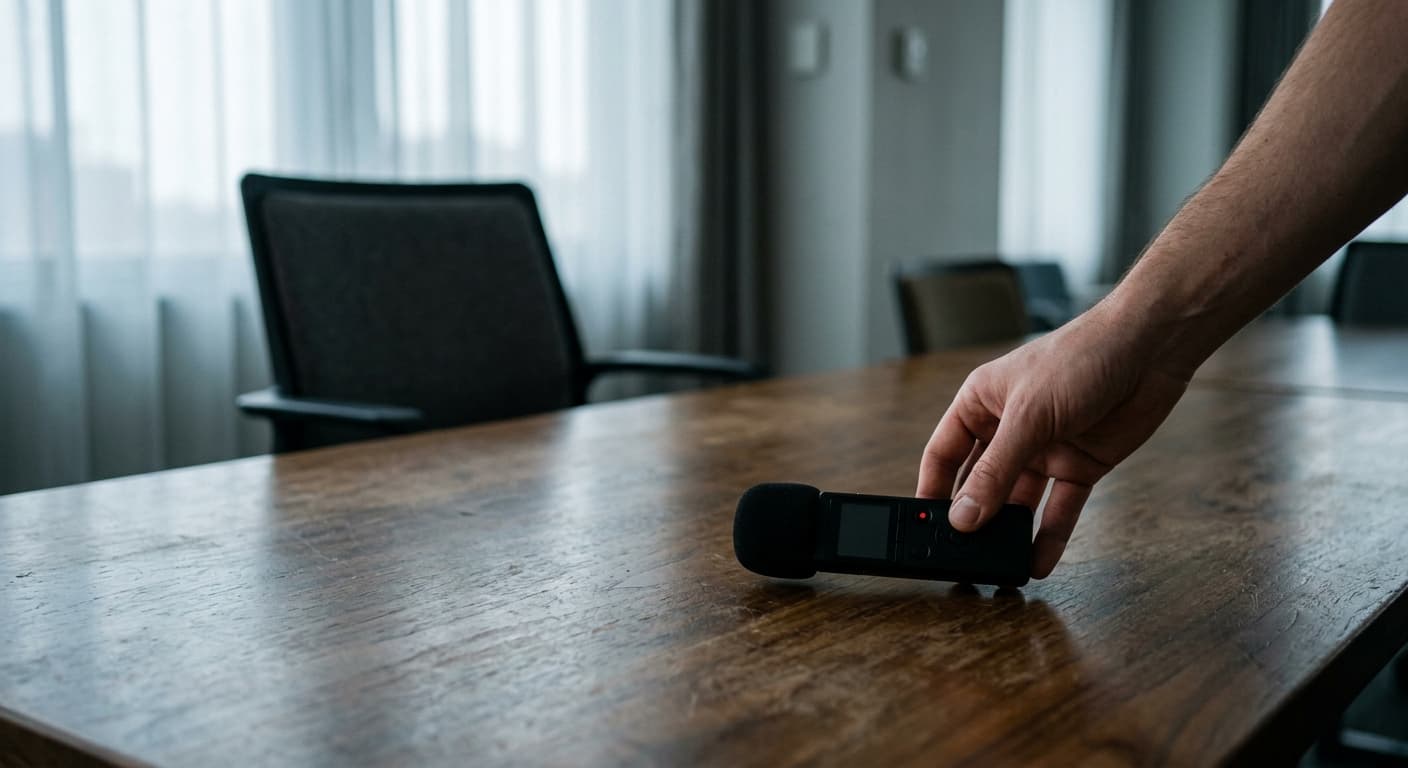
Louisiana is a one-party consent state under La. R.S. § 15:1303(C)(4). A party to a wire, electronic, or oral communication, or anyone with the prior consent of one party, may record without telling the other participants. Recording without that consent is a felony at hard labor carrying 2 to 10 years and a civil wrong with statutory damages plus punitive damages and attorney fees. Louisiana is also notable for the harshest baseline wiretap criminal penalty among one-party consent states, a broad "injurious act" carveout, and a new notice requirement for wearable eyeglass recording devices such as smart glasses, enacted as Act 965 of the 2026 Regular Session (formerly HB 410), effective August 1, 2026.
Louisiana recording law at a glance
| Question | Answer |
|---|---|
| Consent rule | One-party (La. R.S. § 15:1303(C)(4)) |
| Main statute | La. R.S. § 15:1303 (Louisiana Electronic Surveillance Act) |
| When recording is illegal | Intercepting wire, electronic, or oral communication without the consent of at least one party, or with consent but for an injurious purpose |
| Criminal penalty | 2 to 10 years at hard labor + fine up to $10,000 (La. R.S. § 15:1303(B)) |
| Civil remedy | Actual damages (minimum $100/day or $1,000) + punitive damages + attorney fees (La. R.S. § 15:1312) |
| Hidden cameras / video voyeurism | La. R.S. § 14:283, tiered penalties; lewd/lascivious purpose OR explicit sexual content in a private setting; drones explicitly covered |
| Recording police in public | Protected under Turner v. Driver, 848 F.3d 678 (5th Cir. 2017); 25-foot buffer zone (La. R.S. § 14:109) enjoined; Fifth Circuit oral argument June 1, 2026 |
For deeper analysis of each scenario, see Louisiana recording laws in depth.
Recording in-person conversations in Louisiana
Louisiana's one-party consent rule flows from La. R.S. § 15:1303(C)(4), part of the Louisiana Electronic Surveillance Act enacted by Acts 1985, No. 859, effective July 23, 1985, and amended through Acts 2012, No. 727. The statute covers wire communications, electronic communications, and oral communications. The oral communication category reaches any utterance by a person with a reasonable expectation of non-interception.
The one-party exception text is direct: a person "not acting under color of law" may intercept a communication where that person is a party or where one party has given prior consent, "unless such communication is intercepted for the purpose of committing any criminal or tortious act in violation of the constitution or laws of the United States or of the state, or for the purpose of committing any other injurious act." That final phrase, "any other injurious act," is broader than the federal floor at 18 U.S.C. § 2511(2)(d), which reaches only criminal or tortious conduct. A recording made to blackmail, harass, stalk, or damage someone's reputation can fall within Louisiana's injurious-act carveout even if it does not satisfy every element of a named tort or crime.
The Louisiana Supreme Court confirmed the constitutional soundness of one-party consent recording in State v. Reeves, 427 So.2d 403 (La. 1982), holding that consensual electronic surveillance with the consent of one party does not violate La. Const. art. I, § 5.

Recording phone calls in Louisiana
Phone call recording follows the same one-party rule. Under La. R.S. § 15:1303(C)(4), a Louisiana party to a call may record without notifying the other side. The statute's reach covers landline calls, cell calls, VoIP (Zoom, Teams, Google Meet, FaceTime), and video calls: all fall within "wire, electronic, or oral communication."
For interstate calls, the safer approach is to apply the stricter state's rule. Federal ECPA sets a one-party floor and does not preempt stricter state law. The states that require all-party or context-specific consent for at least some recording contexts include California, Connecticut, Delaware, Florida, Illinois, Maryland, Massachusetts, Montana, Nevada, New Hampshire, Oregon, Pennsylvania, and Washington. Several of these are nuanced rather than absolute: Connecticut is criminal one-party but imposes civil liability for phone-call recording without all-party consent (C.G.S. § 52-570d); Delaware's all-party rule is civil (11 Del. C. § 1335) while its criminal wiretap statute is one-party (11 Del. C. § 2402(c)(4)); Oregon requires all-party consent for electronic communications but only one-party consent for in-person conversations (ORS 165.540); and Nevada's one-party statute has been read by courts to functionally require all-party consent for phone calls (Lane v. Allstate). A Louisiana caller reaching someone in any of those states should obtain all-party consent before recording. New Orleans hospitality and tourism calls into Florida, and Baton Rouge oil-and-gas calls into California, are common situations where this matters.
Businesses recording Louisiana calls for quality assurance or training purposes can do so under La. R.S. § 15:1303(C)(4). A verbal announcement before the call or a recorded disclosure during hold is good practice and documents the one-party basis on the record. For interstate calls, disclose by default.
For more detail, see Louisiana Phone Call Recording Laws.

Hidden cameras, doorbells, and nanny cams
Louisiana's video voyeurism statute, La. R.S. § 14:283, prohibits using any camera, video device, photo-optical or photo-electric device, or a drone equipped with such a device, to observe, photograph, film, or videotape a person without consent, where the recording is either for a lewd or lascivious purpose or depicts explicit sexual content in a place where the person has a reasonable expectation of privacy. Reasonable expectation of privacy is a named element only on the sexual-content path; a lewd-or-lascivious-purpose recording can violate the statute regardless of location. A camera pointed at a driveway or front door generally does not satisfy either path, since it typically involves neither a lewd or lascivious purpose nor sexual content captured in a place of privacy.
The penalty is tiered across four levels:
| Tier | Trigger | Penalty |
|---|---|---|
| (B)(1) First conviction | No enhancing element | Up to $2,000 + up to 2 years, with or without hard labor |
| (B)(2) Second or subsequent | Prior conviction | Up to $2,000 + 6 months to 3 years at hard labor, no parole/probation/suspension |
| (B)(3) Sexual content depicted | Sexual intercourse, masturbation, breast, genital, or buttocks exposure | Up to $10,000 + 1 to 5 years at hard labor, no parole/probation/suspension |
| (B)(4) Victim under 17 with sexual intent | Minor victim + sexual intent | Up to $10,000 + 2 to 10 years at hard labor, no parole/probation/suspension |
Sex offender registration is required upon conviction at any tier. A separate statute, La. R.S. § 14:283.1, covers physical voyeurism (peeping without a device): first conviction is a misdemeanor up to $500 and 6 months; a subsequent conviction reaches up to $1,000 and up to 1 year (with or without hard labor).
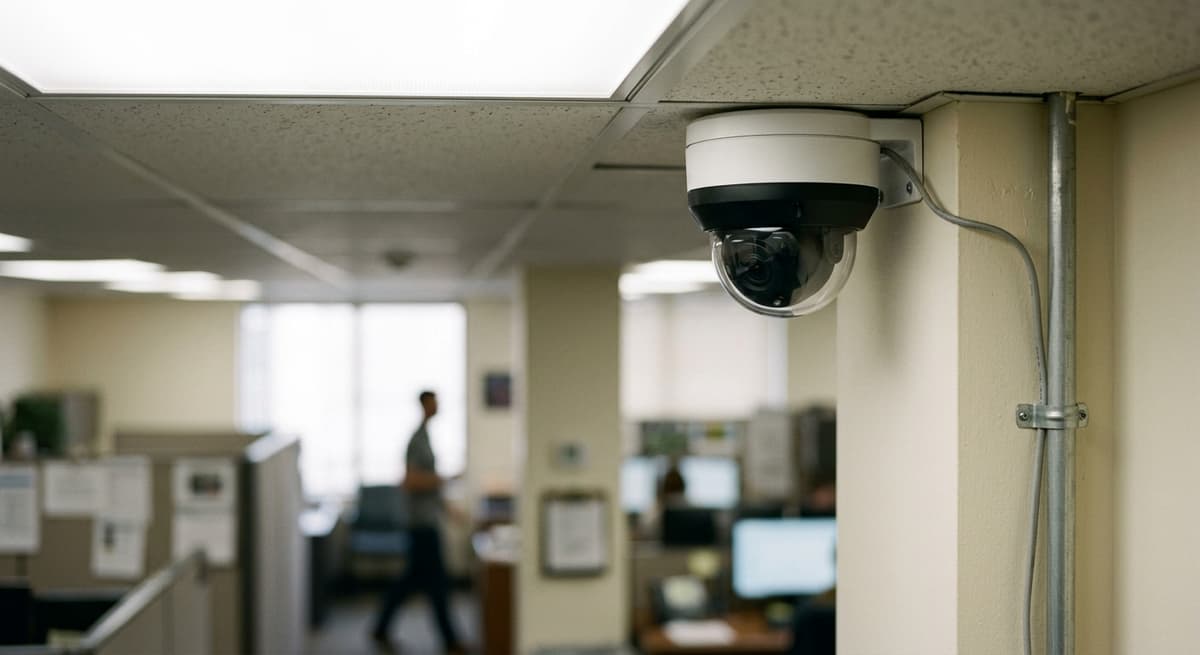
A Ring doorbell or similar camera covering a public-facing porch, sidewalk, or driveway is generally outside La. R.S. § 14:283 because it has neither a lewd or lascivious purpose nor, for the sexual-content path, a reasonable expectation of privacy. On the audio side, the homeowner is typically a party to conversations on their porch, satisfying one-party consent. Audio captured from a passing pedestrian's private conversation is more contestable; disabling audio on angles that cover public sidewalks is the safest default. For nanny cams, placement in common areas (kitchen, living room) of the owner's home is generally lawful. Placement in a guest bathroom, guest bedroom, or any area where a tenant or worker expects privacy can satisfy La. R.S. § 14:283's elements if lewd purpose is present, and can support an invasion-of-privacy tort claim regardless.
See Louisiana Voyeurism and Hidden Camera Laws and Louisiana Security Camera Laws for extended treatment.
Penalties for illegal recording in Louisiana
Louisiana's criminal penalty is the harshest baseline among one-party consent states. La. R.S. § 15:1303(B) imposes "not less than two years nor more than ten years at hard labor" and a fine up to $10,000 for any willful violation of the interception, disclosure, or use prohibitions. Hard labor is mandatory; there is no option to serve the sentence without it. By comparison, Missouri's wiretap offense is a Class E felony (up to 4 years), Oklahoma's reaches up to 5 years, and Arkansas's is only a Class A misdemeanor (1 year).
On the civil side, La. R.S. § 15:1312 provides four recovery layers:
- Actual damages: No cap; the plaintiff recovers all provable harm.
- Liquidated damages floor: Actual damages "but not less than" $100 per day of violation or $1,000, whichever is greater. A one-day violation has a $1,000 floor; a violation running more than 10 days accrues at $100 per day.
- Punitive damages: Available in appropriate cases.
- Attorney fees and litigation costs: A prevailing plaintiff recovers reasonable fees as a separate category from costs.
A good-faith reliance on a court order is a complete defense to civil or criminal action. The civil limitations period is not stated in La. R.S. § 15:1312, so Louisiana's general delictual prescription likely governs. That period is now two years under La. C.C. art. 3493.1 for claims arising after July 1, 2024. Art. 3492, the one-year article older guidance still cites, was repealed outright by Acts 2024, No. 423, which applies prospectively only, so a claim that arose before that date is still governed by the former one-year period. Consult a Louisiana attorney for the deadline in your situation.
An illegally intercepted recording also carries consequences beyond the interception itself. Under La. R.S. § 15:1307, the contents of an illegally intercepted wire or oral communication, and any evidence derived from it, cannot be admitted in a Louisiana trial, hearing, or other proceeding. Separately, no one may broadcast, publish, disseminate, or otherwise distribute any part of an illegally intercepted electronic communication, except to a law enforcement investigator. That publication ban has a First Amendment limit for innocent recipients: under Bartnicki v. Vopper, 532 U.S. 514 (2001), a person who did not take part in the illegal interception cannot be held liable for publishing lawfully obtained material on a matter of public concern.
Recording the police in Louisiana
The right to record police in Louisiana rests on Turner v. Driver, 848 F.3d 678 (5th Cir. 2017), which established that the First Amendment protects filming officers performing their duties in public, subject to reasonable time, place, and manner restrictions. The Fifth Circuit covers Louisiana, Mississippi, and Texas. The right is clearly established post-Turner; qualified immunity will not protect an officer who retaliates against a filmer engaged in lawful recording in public.
Louisiana's 25-foot police buffer zone (La. R.S. § 14:109, created by 2024 La. Act 259 / HB 173, signed by Governor Landry on May 24, 2024) was preliminarily enjoined on January 31, 2025, in Deep South Today, d/b/a Verite News, et al. v. Murrill, No. 3:24-cv-00623-JWD-SDJ (M.D. La.). Judge John W. deGravelles held the statute unconstitutionally vague under the Fourteenth Amendment: it provides no standard governing when an officer may order a person to retreat. The First Amendment newsgathering harm appeared in the irreparable-harm analysis, not as the substantive ground. The State appealed; the Fifth Circuit (No. 25-30128) heard oral arguments on June 1, 2026, with the panel appearing divided. As of June 5, 2026, no merits ruling has issued and the preliminary injunction remains in force. The statute is on the books but unenforceable.
Practical limits remain. Filmers should avoid physically interfering with operations, avoid trespassing onto closed scenes, and comply with orders to step back where compliance does not require abandoning the right to film. See Louisiana Laws on Recording Police for extended analysis.
Special topics in Louisiana
Act 965 (2026): smart-glasses notice requirement
HB 410 of the 2026 Regular Session (by Rep. Schlegel) passed both chambers on June 1, 2026 (House concurred 62-27 in Senate amendments) and was enrolled. It became Act 965 without Governor Landry's signature on June 25, 2026, and took effect August 1, 2026, codified at La. R.S. §§ 9:2790.1 through 9:2790.4. The Act creates a civil-only notice requirement that applies only to a person who intentionally uses a wearable eyeglass recording device, such as smart glasses, to video and record or transcribe a direct conversation: all participants must be specifically notified. It does NOT apply to phones, handheld recorders, or other portable devices, and it does NOT amend La. R.S. § 15:1303 or create a criminal offense. Broad exceptions cover law enforcement activity, public or semi-public meetings, first responder activity, public officials performing official duties in public, recording a law enforcement officer performing his duties, and evidence preserved for a civil, administrative, or criminal proceeding or for a public-corruption or malfeasance-in-office matter, as well as recordings made by a participant in his own residence, place of business, or vehicle. A violation is remediable only through a civil action for damages, court costs, and reasonable attorney fees; there is no criminal penalty. See legis.la.gov for the enrolled Act text.
Deepfakes and AI-generated images
Louisiana has one of the harshest deepfake regimes in the country. La. R.S. § 14:73.13 (created by 2023 La. Act 457, effective August 1, 2023) criminalizes deepfake sexual material in three tiers: creating or possessing deepfake sexual material of a minor reaches 5 to 20 years at hard labor; distributing adult deepfake sexual material without consent or distributing minor deepfake sexual material reaches 10 to 30 years at hard labor and up to $50,000 fine. The companion statute, La. R.S. § 14:73.14, covers AI-generated images of identifiable adults in sexually explicit conduct without consent.
The federal TAKE IT DOWN Act, Pub. L. No. 119-12 (signed May 19, 2025), criminalizes nonconsensual intimate imagery including AI-generated deepfakes of identifiable persons and requires covered platforms to remove flagged content within 48 hours. The platform compliance deadline was May 19, 2026. The federal Act runs in parallel with Louisiana's state regime; La. R.S. § 14:283.2 (traditional NCII), La. R.S. § 14:73.13, and La. R.S. § 14:73.14 all remain in force.
Workplace recording and NLRB
Louisiana is a one-party consent state, so employees recording their own conversations at work are generally acting lawfully under La. R.S. § 15:1303(C)(4). For private-sector employers covered by the NLRA, blanket no-recording handbook policies are presumptively unlawful under Stericycle, Inc., 372 NLRB No. 113 (Aug. 2, 2023): an employer must show a substantial, legitimate business interest that cannot be achieved with a narrower policy. NLRB GC 25-05 (Feb. 14, 2025) rescinded certain prior General Counsel memoranda but did not overturn the Stericycle Board decision. NLRB GC 25-07 (June 2025) treats surreptitious recording of collective-bargaining sessions as a per se Section 8(a)(5) or 8(b)(3) violation; it is narrowly scoped to the bargaining table and does not govern ordinary workplace recording. See Louisiana Workplace Recording Laws.
Body-worn cameras and open meetings
La. R.S. § 40:2551 authorizes law enforcement agencies to use body-worn cameras and requires a written policy on the officer's activation and deactivation of the camera; retention and disclosure of the resulting recordings are governed separately by the Louisiana Public Records Act, discussed below. Coverage is voluntary and agency-by-agency. Camera recordings are subject to the Louisiana Public Records Act, La. R.S. § 44:1 et seq., with law-enforcement investigative carve-outs at La. R.S. § 44:3. The Open Meetings Law at La. R.S. § 42:11 et seq. explicitly allows video or audio recording of any public body proceeding without seeking permission.
Federal overlay: ECPA, FCC, and HIPAA
Federal ECPA at 18 U.S.C. § 2511(2)(d) sets a one-party floor and does not preempt stricter state law. 18 U.S.C. § 2520 provides a parallel federal civil cause ($100/day or $10,000 minimum, punitive, fees, equitable relief). FCC Declaratory Ruling 24-17 (Feb. 8, 2024) confirms AI-generated voices are "artificial or prerecorded voice" under the TCPA; it remains in force. The FCC's one-to-one consent rule (FCC 23-107) was vacated by the Eleventh Circuit in Insurance Marketing Coalition Ltd. v. FCC, No. 24-10277 (11th Cir. Jan. 24, 2025). 47 C.F.R. § 64.501 was removed effective November 20, 2017 and is not a live carrier obligation. HIPAA does not prohibit a patient from audio-recording their own provider visit; La. R.S. § 15:1303(C)(4) governs the patient's recording legality.
Recent legal developments
- June 1, 2026: Louisiana HB 410 passed both chambers and was enrolled.
- June 25, 2026: HB 410 became Act 965 of the 2026 Regular Session without Governor Landry's signature. It creates a civil-only notice requirement for wearable eyeglass recording devices (smart glasses) only, with broad exceptions.
- August 1, 2026: Act 965 took effect, codified at La. R.S. §§ 9:2790.1-2790.4.
- May 19, 2026: TAKE IT DOWN Act platform compliance deadline took effect. Covered platforms must remove flagged nonconsensual intimate imagery within 48 hours.
- June 1, 2026: Fifth Circuit (No. 25-30128) heard oral argument in Verite News v. Murrill on the Louisiana police buffer zone; panel appeared divided. Merits ruling pending; preliminary injunction remains in force as of June 5, 2026.
- January 31, 2025: Preliminary injunction in Verite News v. Murrill, No. 3:24-cv-00623-JWD-SDJ (M.D. La.), blocks enforcement of La. R.S. § 14:109 (25-foot police buffer zone) on Fourteenth Amendment vagueness grounds.
- August 1, 2023: La. R.S. § 14:73.13 (deepfakes) and La. R.S. § 14:73.14 (AI-generated images) took effect under 2023 La. Act 457.
Louisiana recording laws in depth
Want to know more? The guides below cover specific Louisiana recording-law contexts in depth.
By type of recording
- Louisiana Audio Recording Laws: One-Party Consent Rules and Penalties
- Louisiana Phone Call Recording Laws: What You Need to Know
- Louisiana Video Recording Laws: Surveillance Rules and Privacy Limits
- Louisiana Dashcam Laws: Mounting, Recording, and Evidence Rules
By place or relationship
- Louisiana Laws on Recording Police: Your Rights and the Buffer Zone Law
- Louisiana Workplace Recording Laws: Employee and Employer Rights
- Louisiana Laws on Recording in Public: Rights, Limits, and Exceptions
- Louisiana Landlord-Tenant Recording Laws: Rights and Restrictions
- Louisiana Medical Recording Laws: Patient Rights and HIPAA Rules
- Louisiana School Recording Laws: Student and Parent Rights
- Louisiana Voyeurism and Hidden Camera Laws: Offenses, Penalties, and Protections
- Louisiana Security Camera Laws: Residential and Business Rules
More Louisiana laws
- Louisiana Alimony Laws
- Louisiana At-Will Employment Laws
- Louisiana Child Custody Laws
- Louisiana Landlord-Tenant Laws
- Louisiana Divorce Laws
This article is general legal information, not legal advice. Recording laws change and apply differently to each situation. For advice about your situation, consult a licensed Louisiana attorney.
Related news
More Louisiana Laws
Frequently Asked Questions
Is Louisiana a one-party or two-party consent state?
Louisiana is a one-party consent state under La. R.S. § 15:1303(C)(4). A party to a wire, electronic, or oral communication may record without notifying anyone else. The one-party defense is lost if the recording is made to commit a criminal, tortious, or any other injurious act (language broader than federal ECPA). Louisiana remains one-party. Act 965 of the 2026 Regular Session (formerly HB 410), effective August 1, 2026, adds a separate civil-only notice requirement, but only for wearable eyeglass recording devices such as smart glasses, and does not change the wiretap statute.
Is recording someone without consent in Louisiana a felony?
Yes, when unlawful. La. R.S. § 15:1303(B) makes illegal interception of wire, electronic, or oral communications a felony carrying 2 to 10 years at hard labor and a fine up to $10,000. Hard labor is mandatory upon conviction. This is the harshest baseline wiretap penalty among one-party consent states.
What can I sue for if someone illegally recorded me in Louisiana?
La. R.S. § 15:1312 provides actual damages, a liquidated damages floor of $100 per day or $1,000 (whichever is greater), punitive damages, and reasonable attorney fees and litigation costs. Good-faith reliance on a court order is a complete defense. The civil limitations period is not defined in the statute; Louisiana's general delictual prescription likely applies, which La. C.C. art. 3493.1 now sets at two years for claims arising after July 1, 2024. The one-year art. 3492 was repealed by Acts 2024, No. 423.
Is the Louisiana 25-foot police buffer zone currently in effect?
No. La. R.S. § 14:109 was preliminarily enjoined on January 31, 2025 by Judge deGravelles in Verite News v. Murrill (M.D. La.) on Fourteenth Amendment vagueness grounds. The State's Fifth Circuit appeal is pending; the statute is on the books but unenforceable statewide.
Can I legally film a police officer during a Louisiana traffic stop?
Yes, subject to reasonable time, place, and manner restrictions. The Fifth Circuit held in Turner v. Driver, 848 F.3d 678 (5th Cir. 2017), that the First Amendment protects filming officers performing their duties in public. The 25-foot buffer zone law is currently enjoined and unenforceable. Avoid physically interfering with police operations and obey lawful orders to step back where those orders do not require giving up the right to film.
Will Louisiana become a two-party or notice-required state because of HB 410?
No. HB 410 became Act 965 of the 2026 Regular Session, effective August 1, 2026. It creates a civil-only notice requirement, but only for a person who uses a wearable eyeglass recording device (smart glasses) to record a direct conversation, with broad exceptions; it does not amend La. R.S. § 15:1303 and does not create a criminal offense. Louisiana remains a one-party consent state for purposes of the wiretap statute, and ordinary phone or handheld-recorder use is not covered by Act 965.
Can I record my boss or an HR meeting in Louisiana without telling them?
Under Louisiana criminal law, yes, if you are a participant in the meeting. La. R.S. § 15:1303(C)(4) authorizes recording by a party to the conversation. Two cautions: your employer's internal no-recording policy may result in discipline even if the recording is lawful, and under NLRB Stericycle, Inc., 372 NLRB No. 113 (2023), blanket no-recording rules are presumptively unlawful for NLRA-covered employers but a narrowly tailored rule can be enforced.
Are Ring doorbells and nanny cams legal in Louisiana?
Generally yes. A Ring camera covering a public-facing porch or driveway does not satisfy La. R.S. § 14:283's reasonable-expectation-of-privacy and lewd-or-lascivious-purpose elements. A nanny cam in a common area of the owner's home is generally lawful. Cameras in bathrooms, guest bedrooms, or other private areas can violate La. R.S. § 14:283 if a lewd purpose is present and support an invasion-of-privacy tort claim regardless.
Updates
Corrected the enactment credit for the Louisiana Electronic Surveillance Act to Acts 1985, No. 859 (effective July 23, 1985), as amended through Acts 2012, No. 727, and fixed the docket number for Verite News v. Murrill in the changelog to No. 3:24-cv-00623-JWD-SDJ so it matches the court order and the rest of the page.
Updated Louisiana's smart-glasses recording-notice law (HB 410) from pending to enacted: it became Act 965, effective August 1, 2026, and applies only to wearable eyeglass recording devices such as smart glasses, not phones or other recorders as the page previously said. Also fixed two Public Records Act citation links that pointed to unrelated statutes and corrected a federal FCC docket citation.
Independently fact-checked against the cited primary sources
Governing law re-checked for recent changes
Corrected the La. R.S. 40:2551 body-worn-camera claim: the statute's own text requires only an activation/deactivation policy, not retention or disclosure (those are covered separately by the Public Records Act, already cited on the page); also fixed the citation's dead legis.la.gov document-ID link.
Governing law re-checked for recent changes
Reviewed and approved by an editor
Restructured page for readability: condensed 8,000-word dense text into core sections (in-person, phone, hidden cameras, penalties, police, special topics), retained every verified statute and case, added at-a-glance table and in-depth links index. KEY CORRECTION: Updated HB 410 status. The bill passed both chambers June 1, 2026 (enrolled, signed by Speaker, 62-27 House concurrence in Senate amendments) and is now awaiting the Governor's signature; the prior page described it as 'pending only / not yet enacted.' HB 410 creates a civil-only notice requirement for in-person recording separate from La. R.S. 15:1303 and does NOT make Louisiana a two-party consent state. All other load-bearing facts verified against primary sources: La. R.S. 15:1303(B) (2 to 10 years at hard labor + $10,000 confirmed), 15:1303(C)(4) injurious-act carveout confirmed, 15:1312 civil floor confirmed, 14:283 four-tier schedule confirmed (B)(1)-(B)(4), Verite News v. Murrill injunction still in force and Fifth Circuit appeal still pending.
Refreshed for 2026 with a Louisiana-first audit. Anchored La. R.S. 15:1303(G) at 2 to 10 years at hard labor plus a fine up to $10,000, the harshest baseline wiretap penalty among one-party consent states. Quoted La. R.S. 15:1303(C)(4) verbatim and explained that Louisiana's carveout reaches a 'criminal,' 'tortious,' OR 'any other injurious act,' broader than the federal floor at 18 U.S.C. § 2511(2)(d). Restated La. R.S. 15:1312 civil floor precisely: actual damages but not less than liquidated damages of $100 per day OR $1,000, whichever is greater, plus punitive damages, plus reasonable attorney fees and other litigation costs, with good-faith reliance on a court order as a complete defense. Presented La. R.S. 14:283 video voyeurism in all four (B)(1) through (B)(4) penalty tiers with element triggers; kept La. R.S. 14:283.1 voyeurism and La. R.S. 14:283.2 NCII as distinct offense families. Added a dedicated H2 for La. R.S. 14:108.4 (2024 La. Act 259 / HB 173, the 25-foot police buffer zone) and corrected the prior baseline 'Reynolds v. New Orleans Police' caption, which was fabricated. The verified case is Deep South Today, d/b/a Verite News, et al. v. Murrill, No. 3:24-cv-00591 (M.D. La. Jan. 31, 2025), Judge John W. deGravelles, with plaintiffs Deep South Today (Verite News), TEGNA Inc., Scripps Media Inc., Nexstar Media Inc., Gray Local Media, Inc., and Gannett Co., and defendants Louisiana Attorney General Liz Murrill, Louisiana State Police Superintendent Robert Hodges, and East Baton Rouge Parish District Attorney Hillar C. Moore III. The preliminary injunction rests on Fourteenth Amendment vagueness primarily; First Amendment newsgathering harm appears in the irreparable-harm analysis only. The State filed a notice of appeal to the U.S. Court of Appeals for the Fifth Circuit in early March 2025; as of May 10, 2026, the Fifth Circuit has not issued a published merits ruling, and the preliminary injunction remains in force. Documented 2023 La. Act 457 (SB 175 of 2023 Regular Session), signed by Governor John Bel Edwards on June 28, 2023, effective August 1, 2023, codifying La. R.S. 14:73.13 (deepfakes, three offense tiers culminating at 10 to 30 years at hard labor and a fine up to $50,000) and La. R.S. 14:73.14 (AI-generated images of identifiable adults). Flagged HB 410 (2026 Regular Session, by Rep. Schlegel) as pending only, not enacted; verified against legis.la.gov. Added Turner v. Driver, 848 F.3d 678 (5th Cir. 2017), as the controlling Fifth Circuit record-the-police precedent. Anchored State v. Reeves, 427 So.2d 403 (La. 1982), as the Louisiana Supreme Court constitutional anchor for one-party consent (reporter cite only). Reframed NLRB General Counsel Memorandum 25-05 (Feb. 14, 2025) as a housekeeping rescission of prior General Counsel memoranda, not a Boeing-era reinstatement at the Board level; Stericycle, Inc., 372 NLRB No. 113 (Aug. 2, 2023), remains binding Board precedent. Added TAKE IT DOWN Act, Pub. L. No. 119-12 (signed May 19, 2025), with platform 48-hour notice-and-takedown effective May 19, 2026 (9 days from this verification date). Confirmed FCC 24-17 in force, FCC 24-24 vacated by the Eleventh Circuit in Insurance Marketing Coalition Ltd. v. FCC, No. 24-10277 (11th Cir. Jan. 24, 2025), mandate issued April 30, 2025, and 47 C.F.R. § 64.501 removed effective November 20, 2017. Replaced commercial-codifier URLs with legis.la.gov, lasc.org, ca5.uscourts.gov, uscode.house.gov, fcc.gov, and nlrb.gov. Future refreshes should re-check ca5.uscourts.gov, legis.la.gov, and the RCFP litigation tracker for any post-May-2026 disposition of Verite News v. Murrill and any change to HB 410's status.
Refreshed for 2026 with a Louisiana-first audit. Anchored La. R.S. 15:1303(B) at 2 to 10 years at hard labor plus a fine up to $10,000. Quoted La. R.S. 15:1303(C)(4) verbatim including the injurious-act carveout. Restated La. R.S. 15:1312 civil floor. Presented La. R.S. 14:283 in all four (B)(1) through (B)(4) penalty tiers. Added a dedicated H2 for La. R.S. 14:109 (2024 La. Act 259 / HB 173, the 25-foot police buffer zone) and documented Verite News v. Murrill, No. 3:24-cv-00623-JWD-SDJ (M.D. La. Jan. 31, 2025). Documented 2023 La. Act 457 (La. R.S. 14:73.13 deepfakes and La. R.S. 14:73.14 AI-generated images). Flagged HB 410 as pending only at that date. Added Turner v. Driver, 848 F.3d 678 (5th Cir. 2017), State v. Reeves, 427 So.2d 403 (La. 1982), Stericycle NLRB precedent, and TAKE IT DOWN Act (Pub. L. No. 119-12, signed May 19, 2025).
Added wearable recording device guidance covering AI voice recorders (Plaud) and smart glasses (Meta Ray-Bans) under Louisiana one-party consent law.
The Law Behind This Article
This article rests on the statutory provisions below, held in our own legal record and retrieved from the official source. Tap a section to read the operative text.
Louisiana Revised Statutes
§ 15:1303Interception and disclosure of wire, electronic, or oral communicationsIn forcecited in 36 of our articles
A. Except as otherwise specifically provided in this Chapter, it shall be unlawful for any person to: (1) Willfully intercept, endeavor to intercept, or procure any other person to intercept or endeavor to intercept, any wire, electronic or oral communication; (2) Willfully use, endeavor to use, or procure any other person to use or endeavor to use, any electronic, mechanical, or other device to intercept any oral communication when: (a) Such device is affixed to, or otherwise transmits a signal through, a wire, cable, or other like connection used in wire or electronic communication; or (b) Such device transmits communications by radio or interferes with the transmission of such communication; (3) Willfully disclose, or endeavor to disclose, to any other person the contents of any wire, electronic, or oral communication, knowing or having reason to know that the information was obtained through the interception of a wire, electronic, or oral communication in violation of this Subsection; or (4) Willfully use, or endeavor to use, the contents of any wire, electronic, or oral communication, knowing or having reason to know that the information was obtained through the…
Official text (excerpt) · last checked 2026-08-31 · Read the full text in our law library · Verify at legis.la.gov
Cited in 25 court opinions in our collectionLatest citing opinion in our collection: 2020
In the courts (editorial summary, independently checked):Louisiana courts apply the consent exception in La. R.S. 15:1303. Smith v. Smith (2005) held a parent may consent for a child where he has a good faith, reasonable basis that it serves the child’s best interest, placing the recording within 15:1303(C)(4). Keller v. Aymond (1998) held willfulness is not required for civil liability.
Opinions citing this section in our collection:
- Smith v. Smith (Louisiana Court of Appeal 2005, 923 So. 2d 732)✓A father secretly taped his daughter's calls with her mother in his own home during a custody fight; the court applied vicarious consent and held his good faith, objectively reasonable belief that taping served the child's best interest fell within La. R.S. 15:1303(C)(4).
- Johnson v. Aymond (Louisiana Court of Appeal 1998, 709 So. 2d 1072)✓A newspaper printed excerpts of a phone conversation a defendant had allegedly taped and handed out at a press conference; the court held those allegations, accepted as true, state a cause of action under the literal language of La. R.S. 15:1303(A)(4), and reversed the dismissal.
- Keller v. Aymond (Louisiana Court of Appeal 1998, 722 So. 2d 1224)✓A newspaper published excerpts of private calls taped by another and handed out at a press conference; the court held criminal willfulness under section 1303 is not needed for civil damages, and that fact issues over the paper's reason to know barred summary judgment under 1303.
Identified automatically from the court opinions citing this section — not a ranking of which case controls.
Also relied on in: Louisiana HB 410: Recording-Notice Bill Heads to the Governor (2026), Louisiana HB 475: Disclosure Required Before AI-Recorded Medical Visits, Louisiana Smart Glasses Recording Laws (2026)
§ 15:1312Recovery of civil damages authorizedIn forcecited in 17 of our articles
A. Any person whose wire, electronic, or oral communication is intercepted, disclosed, or used in violation of this Chapter shall have a civil cause of action against any person who intercepts, discloses, or uses, or procures any other person to intercept, disclose, or use such communications, and be entitled to recover from any such person: (1) Actual damages, but not less than liquidated damages computed at the rate of one hundred dollars a day for each day of violation or one thousand dollars, whichever is greater. (2) A reasonable attorney's fee and other litigation costs reasonably incurred. (3) Punitive damages. B. A good faith reliance on a court order shall constitute a complete defense to any civil or criminal action brought under this Chapter.
Official text (excerpt) · last checked 2026-07-29 · Read the full text in our law library · Verify at legis.la.gov
Cited in 7 court opinions in our collectionLatest citing opinion in our collection: 2024
Opinions citing this section in our collection:
- Benoit v. Roche (Louisiana Court of Appeal 1995, 657 So. 2d 574)“…eets Act of 1968 authorize a civil damages cause of action. La.R.S. 15:1312; 18 U.S.C. § 2520 ; see also United S…”
- Keller v. Aymond (Louisiana Court of Appeal 1998, 722 So. 2d 1224)“…spaper before the plaintiffs can claim a civil remedy under La. R.S. 15:1312. Hence, the newspaper can be held civil…”
- Wingrave v. Hebert (Louisiana Court of Appeal 2007, 964 So. 2d 385)“…of this Chapter shall have a civil cause of action. . . ." La. R.S. 15:1312(A). The substance of LESA was first i…”
Identified automatically from the court opinions citing this section — not a ranking of which case controls.
Also relied on in: Louisiana Audio Recording Laws: One-Party Consent Rules and Penalties, Louisiana Landlord-Tenant Recording Laws: Rights and Restrictions, Louisiana Phone Call Recording Laws: What You Need to Know
§ 15:1307Prohibition of use as evidence of intercepted wire or oral communicationsIn force
A. Whenever any wire or oral communication has been intercepted, no part of the contents of such communication and no evidence derived therefrom may be received in evidence in any trial, hearing, or other proceeding in or before any court, grand jury, department, officer, agency, regulatory body, legislative committee, or other authority of the state, or a political subdivision thereof, if the disclosure of that information would be in violation of this Chapter. B. No person may broadcast, publish, disseminate, or otherwise distribute any part of the content of an electronic communication intercepted in violation of the provisions of this Chapter unless such dissemination or distribution is made to an investigator or law enforcement officer conducting an investigation into a violation of the provisions of this Section.
Official text (excerpt) · last checked 2026-07-29 · Read the full text in our law library · Verify at legis.la.gov
Cited in 7 court opinions in our collectionLatest citing opinion in our collection: 2017
Opinions citing this section in our collection:
- Smith v. Smith (Louisiana Court of Appeal 2005, 923 So. 2d 732)“…eof) as evidence at any trial or hearing in accordance with La. R.S. 15:1307; (3) disqualifying and removing Dr. Pel…”
- Johnson v. Aymond (Louisiana Court of Appeal 1998, 709 So. 2d 1072)“…lectronic Surveillance Act. See La.R.S. 15:1303(A)(4) and La.R.S. 15:1307(B). Accordingly, since we find the peti…”
- Keller v. Aymond (Louisiana Court of Appeal 1998, 722 So. 2d 1224)“…ications, which is specifically prohibited under the Act at La.R.S. 15:1307. The plaintiffs also allege the newspap…”
Identified automatically from the court opinions citing this section — not a ranking of which case controls.
§ 14:283Video voyeurism; penaltiesIn forcecited in 30 of our articles
A. Video voyeurism is any of the following: (1) The use of any camera, videotape, photo-optical, photo-electric, or any other image recording device, or an unmanned aircraft system equipped with any camera, videotape, photo-optical, photo-electric, or any other image recording device, for the purpose of observing, viewing, photographing, filming, or videotaping a person where that person has not consented to the specific instance of observing, viewing, photographing, filming, or videotaping and either: (a) It is for a lewd or lascivious purpose. (b) The observing, viewing, photographing, filming, or videotaping is as described in Paragraph (B)(3) of this Section and occurs in a place where an identifiable person has a reasonable expectation of privacy. (2) The transfer of an image obtained by activity described in Paragraph (1) of this Subsection by live or recorded telephone message, electronic mail, the Internet, or a commercial online service.
Official text (excerpt) · last checked 2026-08-31 · Read the full text in our law library · Verify at legis.la.gov
Cited in 16 court opinions in our collectionLatest citing opinion in our collection: 2024
In the courts (editorial summary, independently checked):In State v. Schaller (2009) a Louisiana appeals court set out the elements of La. R.S. 14:283 and, since the statute does not define lewd or lascivious, applied a definition of an act tending to excite lust, rejecting a claimed babysitting reason for a hidden bedroom camera. State v. Boudreaux (2006) found 56 consecutive years excessive.
Opinions citing this section in our collection:
- State v. Batiste (Supreme Court of Louisiana 2006, 939 So. 2d 1245)“…Batiste, charging him with video voyeurism, a violation of La. R.S. 14:283. [1] At his arraignment on December *…”
- State v. Boudreaux (Louisiana Court of Appeal 2006, 945 So. 2d 898)✓A stepfather hid a wireless camera in his 18-year-old stepdaughter's bedroom and taped her for four months. He pleaded guilty to 14 counts of video voyeurism, and the court vacated the 56-year consecutive sentence as excessive because the acts formed a single scheme.
- State v. Perry (Louisiana Court of Appeal 2012, 12 La.App. 3 Cir. 298)✓A houseguest was secretly videotaped drying off in the family's guest bathroom. The court affirmed the video voyeurism conviction and three-year sentence, addressing only whether the untimely pretrial motions were properly denied, not the reach of the statute.
Identified automatically from the court opinions citing this section — not a ranking of which case controls.
Also relied on in: Louisiana Medical Recording Laws: Patient Rights and HIPAA Rules, Louisiana Laws on Recording in Public: Rights, Limits, and Exceptions, Louisiana School Recording Laws: Student and Parent Rights
§ 14:283.1Voyeurism; penaltiesIn forcecited in 6 of our articles
A. Voyeurism is the viewing, observing, spying upon, or invading the privacy of a person by looking or using an unmanned aircraft system to look through the doors, windows, or other openings of a private residence without the consent of the victim who has a reasonable expectation of privacy for the purpose of arousing or gratifying the sexual desires of the offender. B.(1) Whoever commits the crime of voyeurism, upon a first conviction, shall be fined not more than five hundred dollars, imprisoned for not more than six months, or both. (2) Upon a second or subsequent conviction, the offender shall be fined not more than one thousand dollars, imprisoned with or without hard labor for not more than one year, or both. C. For purposes of this Section, "unmanned aircraft system" means an unmanned, powered aircraft that does not carry a human operator, can be autonomous or remotely piloted or operated, and can be expendable or recoverable.
Official text (excerpt) · last checked 2026-07-29 · Read the full text in our law library · Verify at legis.la.gov
Cited in 1 court opinions in our collectionLatest citing opinion in our collection: 2018
Opinions citing this section in our collection:
- Scott v. Hogan (Louisiana Court of Appeal 2018, 255 So. 3d 24)“…l battery ...." See La. R.S. 15:541(24)(a) and (b). Under La. R.S. 14:283.1, "[v]oyeurism is the viewing, observing…”
Identified automatically from the court opinions citing this section — not a ranking of which case controls.
Also relied on in: Louisiana Voyeurism and Hidden Camera Laws: Offenses, Penalties, and Protections, Louisiana Surveillance Camera Laws (2026 Guide)
§ 14:283.2Nonconsensual disclosure of a private imageIn forcecited in 9 of our articles
A. A person commits the offense of nonconsensual disclosure of a private image when all of the following occur: (1) The person intentionally discloses an image of another person who is identifiable from the image or information displayed in connection with the image and either whose intimate parts are exposed in whole or in part or who is engaged in sexual conduct. (2) The person who discloses the image obtained it through unauthorized access or under circumstances in which a reasonable person would know or understand that the image was to remain private. (3) The person who discloses the image knew or should have known that the person in the image did not consent to the disclosure of the image. (4) The person who discloses the image knew or should have known that the disclosure could harass or cause emotional distress to the person in the image. B. Disclosure of an image under any of the following circumstances does not constitute commission of the offense defined in Subsection A of this Section: (1) When the disclosure is made by any criminal justice agency for the purpose of a criminal investigation that is otherwise lawful.
Official text (excerpt) · last checked 2026-07-29 · Read the full text in our law library · Verify at legis.la.gov
Cited in 2 court opinions in our collectionLatest citing opinion in our collection: 2017
Opinions citing this section in our collection:
- State v. Goodie (Louisiana Court of Appeal 2017, 17 La.App. 3 Cir. 693)“…arges for nonconsensual disclosure of a private image under La.R.S. 14:283.2. The narrative portion of the police…”
- State of Louisiana v. Travis R. Goodie (Louisiana Court of Appeal 2017)“…rges for nonconsensual disclosure of a private image under La.R.S. 14:283.2. The narrative portion of the po…”
Identified automatically from the court opinions citing this section — not a ranking of which case controls.
Also relied on in: Louisiana Video Recording Laws: Surveillance Rules and Privacy Limits, Louisiana Sexting Laws: Legal Consequences and Penalties, Louisiana Pornography Laws (2026): Legal Status & Age Verification
§ 14:73.13Unlawful deepfakesIn forcecited in 10 of our articles
A. Any person who, with knowledge that the material is a deepfake depicting a minor, knowingly creates or possesses material that depicts a minor engaging in sexual conduct shall be punished by imprisonment at hard labor for not less than five nor more than twenty years, or a fine of not more than ten thousand dollars, or both. At least five years of the sentence of imprisonment imposed shall be served without benefit of parole, probation, or suspension of sentence. B.(1) Except as provided in Paragraph (2) of this Subsection, any person who, with knowledge that the material is a deepfake that depicts another person, without consent of the person depicted, engaging in sexual conduct, knowingly advertises, distributes, exhibits, exchanges with, promotes, or sells any sexual material shall be punished by imprisonment at hard labor for not less than ten nor more than thirty years, a fine of not more than fifty thousand dollars, or both.
Official text (excerpt) · last checked 2026-09-03 · Read the full text in our law library · Verify at legis.la.gov
§ 14:73.14Unlawful dissemination or sale of images of another created by artificial intelligenceIn forcecited in 10 of our articles
A. It shall be unlawful for any person, with the intent to coerce, harass, intimidate, or maliciously disseminate or sell any video or still image created by artificial intelligence that depicts another person who is totally nude or in a state of undress so as to expose the genitals, pubic area, buttocks, or female breast, when the person disseminating the video or still image knows or has reason to know that the person is not licensed or authorized to disseminate or sell such video or still image. B. The provisions of this Section shall not apply to an interactive computer service, electronic mail service provider, or a provider of a telecommunications service or any information service as defined in 47 U.S.C. 153, system, or access software provider that provides or enables computer access by multiple users to a computer server that was used by a person to commit any act prohibited by Subsection A of this Section. C.
Official text (excerpt) · last checked 2026-07-29 · Read the full text in our law library · Verify at legis.la.gov
§ 40:2551Use of body-worn camerasIn forcecited in 3 of our articles
No later than January 1, 2022, any law enforcement agency that utilizes body-worn cameras shall adopt a policy regarding the activation and deactivation of such cameras by the officer.
Official text (excerpt) · last checked 2026-08-31 · Read the full text in our law library · Verify at legis.la.gov
Also relied on in: Louisiana Police Bodycam Laws (2026): Retention & Records
§ 42:11Short titleIn forcecited in 8 of our articles
This Chapter shall be known and may be cited as the "Open Meetings Law". NOTE: Former R.S. 42:11 was redesignated as R.S. 42:26 by Acts 2010, No. 861, §23.
Official text (excerpt) · last checked 2026-07-29 · Read the full text in our law library · Verify at legis.la.gov
Cited in 31 court opinions in our collectionLatest citing opinion in our collection: 2024
Opinions citing this section in our collection:
- Louisiana High School Athletics Ass'n v. State (Supreme Court of Louisiana 2013, 107 So. 3d 583)“…(l)(b)(v), because it is subject to the Open Meetings Law, La. R.S. 42:11 et seq., 8 and is partially funded by…”
- Deep South Center for Environmental Justice, Vayla New Orleans, Justice and Beyond, 350 New Orleans, Sierra Club, Mr. Theodore Quant and Ms. Renate Heurich v. the Council of the City of New Orleans, the Utility, Cable, Telecommunications and Technology Committee of the New Orleans City Council, Jason R. Williams, Stacy Head, Susan G. Guidry, Latoya Cantrell, Nadine M. Ramsey, Jared C. Brossett, and James A. Gray, II (Louisiana Court of Appeal 2020)“…leans East due to the violations of the Open Meetings Law, La. R.S. 42:11, et seq. that occurred at the Council’s…”
- Midyett v. Midyett (Louisiana Court of Appeal 1999, 744 So. 2d 669)“…7:1287(C) and (F); La. R.S. 37:2666(B); La. R.S. 40:2010.9; La. R.S. 42:11(C); Joyner v. Wear, 27,631 (La.App.2d…”
Identified automatically from the court opinions citing this section — not a ranking of which case controls.
Also relied on in: Louisiana Laws on Recording Police: Your Rights and the Buffer Zone Law
§ 44:1General definitionsIn forcecited in 5 of our articles
A.(1) As used in this Chapter, the phrase "public body" means any branch, department, office, agency, board, commission, district, governing authority, political subdivision, or any committee, subcommittee, advisory board, or task force thereof, any other instrumentality of state, parish, or municipal government, including a public or quasi-public nonprofit corporation designated as an entity to perform a governmental or proprietary function, or an affiliate of a housing authority.
Official text (excerpt) · last checked 2026-07-29 · Read the full text in our law library · Verify at legis.la.gov
Cited in 222 court opinions in our collectionLatest citing opinion in our collection: 2026
Opinions citing this section in our collection:
- Landis v. Moreau (Supreme Court of Louisiana 2001, 779 So. 2d 691)“…and his co-defendants, pursuant to the Public Records Act, La. R.S. 44:1, et seq. In response to plaintiff's req…”
- Capital City Press v. Metro. Council (Supreme Court of Louisiana 1997, 696 So. 2d 562)“…ion or writ of mandamus pursuant to the Public Records Law, La. R.S. 44:1, et seq., seeking access to the names…”
- In Re Matter Under Investigation (Supreme Court of Louisiana 2009, 15 So. 3d 972)“…the return of copies would violate the Public Records Act, La. R.S. 44:1, et seq. The Orleans Parish Criminal…”
Identified automatically from the court opinions citing this section — not a ranking of which case controls.
§ 44:3Records of prosecutive, investigative, and law enforcement agencies and communications districtsIn forcecited in 10 of our articles
A. Nothing in this Chapter shall be construed to require disclosures of records, or the information contained therein, held by the offices of the attorney general, district attorneys, sheriffs, police departments, Department of Public Safety and Corrections, Department of Wildlife and Fisheries, marshals, investigators, public health investigators, correctional agencies, communications districts, intelligence agencies, Council on Peace Officer Standards and Training, Louisiana Commission on Law Enforcement and Administration of Criminal Justice, or publicly owned water districts of the state, which records are: (1) Records pertaining to pending criminal litigation or any criminal litigation which can be reasonably anticipated, until such litigation has been finally adjudicated or otherwise settled, except as otherwise provided in Subsection F of this Section; or (2) Records containing the identity of a confidential source of information or records which would tend to reveal the identity of a confidential source of information; or (3) Records containing security procedures, investigative training information or aids, investigative techniques, investigative technical equipment or…
Official text (excerpt) · last checked 2026-09-07 · Read the full text in our law library · Verify at legis.la.gov
Cited in 104 court opinions in our collectionLatest citing opinion in our collection: 2025
In the courts (editorial summary, independently checked):In Re Matter Under Investigation (2009) held La. R.S. 44:3(A)(1)'s criminal-litigation exception is temporary and that whether litigation is reasonably anticipated must be decided case by case at a contradictory hearing on objective factors; Cormier (1989) held initial officer reports under 44:3(A)(4)(a) are public records.
Opinions citing this section in our collection:
- In Re Matter Under Investigation (Supreme Court of Louisiana 2009, 15 So. 3d 972)✓News organizations sought the Attorney General's file on deaths at a New Orleans hospital after Hurricane Katrina; the court held section 44:3(A)(1) exempts records pertaining to reasonably anticipated criminal litigation and remanded for a hearing on objective factors.
- Cormier v. PUBLIC RECORDS REQUEST OF GIULIO (Supreme Court of Louisiana 1989, 553 So. 2d 806)✓A requester sought a sheriff's initial police reports in several cases; the court held section 44:3(A)(4)(a) makes the investigating officer's initial report a public record, ordered the reports produced, and required an evidentiary hearing on the withheld misconduct letters.
- Innocence Project New Orleans v. New Orleans Police Department (Louisiana Court of Appeal 2013, 2013 La.App. 4 Cir. 0921)✓A nonprofit sought NOPD files on an arrest whose conviction became final in 1993; the court treated the section 44:3(A)(4)(a) exemption as temporal, ending once no further litigation is forthcoming, and upheld fees and a penalty against the custodian who ignored the request.
Identified automatically from the court opinions citing this section — not a ranking of which case controls.
Also relied on in: How to Get a Police Report in Louisiana (2026 Guide), Louisiana Public Records Law: Deadlines, Fees, and How to File a Request, Louisiana Warrant Search: How to Check If You Have a Warrant (2026)
Louisiana Civil Code
§ 3493.1Delictual actionsIn forcecited in 13 of our articles
Delictual actions are subject to a liberative prescription of two years. This prescription commences to run from the day that injury or damage is sustained. It does not run against minors or interdicts in actions involving permanent disability and brought pursuant to the Louisiana Products Liability Act or state law governing product liability actions in effect at the time of the injury or damage.
Official text (excerpt) · last checked 2026-09-08 · Read the full text in our law library · Verify at legis.la.gov
Cited in 15 court opinions in our collectionLatest citing opinion in our collection: 2026
In the courts (editorial summary, independently checked):Federal courts in the Eastern District of Louisiana have applied art. 3493.1 prospectively only. Lin (2026) and Geary (2026) held its two-year prescription reaches delictual actions arising after July 1, 2024, so the former one-year period of art. 3492 still governs torts occurring before that date.
Opinions citing this section in our collection:
- Lin (District Court, E.D. Louisiana 2026)✓Property owners counterclaimed over post-Hurricane Ida mitigation work they say gutted their buildings; the court read article 3493.1's two-year prescription as prospective only, so the one-year period governed, and denied summary judgment on a waived, fact-disputed defense.
- Geary (District Court, E.D. Louisiana 2026)✓A grandmother sued over a principal's alleged January 22, 2024 body-slam of her grandson; the court held article 3493.1's two-year period reaches only torts arising after July 1, 2024, so the one-year period applied and the February 2025 suit was time barred.
- Stella Johnson, et al. v. Marathon Petroleum Corporation, et al. (District Court, E.D. Louisiana 2026)✓Residents suing over an August 2023 refinery fire moved in November 2024 to widen the class; the court noted article 3493.1's two-year period applies only prospectively, applied the former one-year period, and held the expanded class definition prescribed.
Identified automatically from the court opinions citing this section — not a ranking of which case controls.
Also relied on in: Louisiana Hit and Run Laws: Penalties and What to Do, Louisiana Slip and Fall Laws: Proving Premises Liability Under the Civil Code, Louisiana Defamation Laws: Libel, Slander & Suing (2026)
§ 3492Repealedcited in 11 of our articles
Official text (excerpt) · last checked 2026-07-29 · Read the full text in our law library · Verify at legis.la.gov
Cited in 411 court opinions in our collectionLatest citing opinion in our collection: 2026
In the courts (editorial summary, independently checked):Louisiana courts applied article 3492's one-year delictual period as running from the day damage is sustained. Harvey v. Dixie Graphics, Inc. (1992) held a claim prescribed once the plaintiff knowingly sustained appreciable damage. Bailey v. Khoury (2005) found no proof that earlier damage had manifested with sufficient certainty.
Opinions citing this section in our collection:
- Harvey v. Dixie Graphics, Inc. (Supreme Court of Louisiana 1992, 593 So. 2d 351)✓A businessman sued an accounting firm over a negligent tax return more than a year after the IRS told his advisers the return was wrong and he began paying accountant and lawyer fees; the Louisiana Supreme Court held appreciable harm started prescription under article 3492.
- Bailey v. Khoury (Supreme Court of Louisiana 2005, 891 So. 2d 1268)✓A mother sued doctors and pharmacies over birth defects tied to Depakote taken while pregnant; the Louisiana Supreme Court, applying article 3492's rule that prescription runs from the day damage is sustained, held the child's claim accrued only at live birth.
- David v. Our Lady of the Lake Hosp., Inc. (Supreme Court of Louisiana 2003, 849 So. 2d 38)✓A patient who contracted hepatitis C from a 1979 hospital transfusion sued in strict liability 20 years later; the Louisiana Supreme Court held the claim arose out of patient care and was prescribed under R.S. 9:5628, overruling cases that had routed such claims to article 3492.
Identified automatically from the court opinions citing this section — not a ranking of which case controls.
Also relied on in: Louisiana Car Accident Laws: Fault, Insurance, and Your Claim, Louisiana Statute of Limitations: Filing Deadlines by Case Type
United States Code Title 18
§ 2511Interception and disclosure of wire, oral, or electronic communications prohibitedIn forcecited in 422 of our articles
Except as otherwise specifically provided in this chapter any person who— intentionally intercepts, endeavors to intercept, or procures any other person to intercept or endeavor to intercept, any wire, oral, or electronic communication; intentionally uses, endeavors to use, or procures any other person to use or endeavor to use any electronic, mechanical, or other device to intercept any oral communication when— such device is affixed to, or otherwise transmits a signal through, a wire, cable, or other like connection used in wire communication; or such device transmits communications by radio, or interferes with the transmission of such communication; or such person knows, or has reason to know, that such device or any component thereof has been sent through the mail or transported in interstate or foreign commerce; or such use or endeavor to use (A) takes place on the premises of any business or other commercial establishment the operations of which affect interstate or foreign commerce; or (B) obtains or is for the purpose of obtaining information relating to the operations of any business or other commercial establishment the operations of which affect interstate or foreign…
Official text (excerpt) · last checked 2026-08-28 · Read the full text in our law library · Verify at uscode.house.gov
Cited in 2,045 court opinions in our collectionLatest citing opinion in our collection: 2026
In the courts (editorial summary, independently checked):Griggs-Ryan v. Smith (1990) applied the Section 2511(2)(d) prior-consent exception, treating a tenant repeatedly told that all incoming calls were taped as having impliedly consented. United States v. United States District Court (1972) read the then-current Section 2511(3) as conferring no presidential surveillance power.
Opinions citing this section in our collection:
- Mitchell v. Forsyth (Supreme Court of the United States 1985, 472 U.S. 511)✓The Attorney General authorized a warrantless 1970 national security wiretap that caught the plaintiff's calls; the Court held the since-repealed Section 2511(3) disclaimer left the tap lawful under Title III, and that Mitchell had qualified immunity.
- United States v. United States District Court for the Eastern District of Michigan (Supreme Court of the United States 1972, 407 U.S. 297)✓The Attorney General approved warrantless wiretaps on members of a domestic group accused of bombing a CIA office; the Court read Section 2511(3) as a congressional disclaimer conferring no surveillance power, then held the Fourth Amendment required prior judicial approval.
- Forsyth v. Barr (Court of Appeals for the Fifth Circuit 1994, 19 F.3d 1527)✓Dallas police used, in an internal affairs probe of an officer, calls private parties allegedly intercepted illegally; assuming that was unlawful, the Fifth Circuit held Section 2517(1) and (2) allowed the disclosure and use, defeating the Section 2511(1)(c) and (d) claims.
Identified automatically from the court opinions citing this section — not a ranking of which case controls.
Also relied on in: Connecticut Recording Laws (2026): Hybrid Consent Rules Explained, Oregon Recording Laws (2026): Hybrid One-Party and All-Party Rules, US Recording Laws by State (2026): All 50 States Explained
§ 2520Recovery of civil damages authorizedIn forcecited in 115 of our articles
Except as provided in section 2511(2)(a)(ii), any person whose wire, oral, or electronic communication is intercepted, disclosed, or intentionally used in violation of this chapter may in a civil action recover from the person or entity, other than the United States, which engaged in that violation such relief as may be appropriate. In an action under this section, appropriate relief includes— such preliminary and other equitable or declaratory relief as may be appropriate; damages under subsection (c) and punitive damages in appropriate cases; and a reasonable attorney’s fee and other litigation costs reasonably incurred.
Official text (excerpt) · last checked 2026-07-28 · Read the full text in our law library · Verify at uscode.house.gov
Cited in 860 court opinions in our collectionLatest citing opinion in our collection: 2026
In the courts (editorial summary, independently checked):Walker v. Darby (1990) held a 2520 plaintiff need not prove the contents of intercepted conversations, only interception and a justified expectation against it. Bartnicki v. Vopper (2001) barred 2520 damages against defendants who took no part in the interception, obtained the tape lawfully, and disclosed a matter of public concern.
Opinions citing this section in our collection:
- Jessie Walker v. Thomas E. Darby, Hugh L. Robinson, Jr., and Kenneth Day (Court of Appeals for the Eleventh Circuit 1990, 911 F.2d 1573)✓A postal letter carrier said three supervisors wired an intercom near his workstation to listen in. Reversing summary judgment, the Eleventh Circuit held a section 2520 plaintiff can show interception without proving the contents of specific conversations.
- Gelbard v. United States (Supreme Court of the United States 1972, 408 U.S. 41)“…disclosure, or use is entitled to recover civil damages, 18 U. S. C. § 2520 . Title III also bars the use as eviden…”
- DirecTV, Inc. v. Hoa Huynh (Court of Appeals for the Ninth Circuit 2007, 503 F.3d 847)“…7 U.S.C. § 605 (e)(4), or alternatively, for violations of 18 U.S.C. § 2520 (a), or alternatively, for violations o…”
Identified automatically from the court opinions citing this section — not a ranking of which case controls.
Also relied on in: Alabama Audio Recording Laws: Consent Rules and Penalties, Alabama Phone Call Recording Laws: What You Need to Know, Alaska Phone Call Recording Laws: Rules for Landline, Cell, and VoIP (2026)
Search our full record of US law — 2.1 million sections, every state + federal →
Sources and References
- legis.la.gov.gov
- legis.la.gov.gov
- legis.la.gov.gov
- legis.la.gov.gov
- legis.la.gov.gov
- legis.la.gov.gov
- legis.la.gov.gov
- legis.la.gov.gov
- legis.la.gov.gov
- legis.la.gov.gov
- La. R.S. 40:2551 - Use of Body-Worn Cameras (Louisiana State Legislature)(legis.la.gov).gov
- La. R.S. 44:1 - Public Records, General Definitions(legis.la.gov).gov
- legis.la.gov.gov
- rcfp.org
- ca5.uscourts.gov.gov
- uscode.house.gov.gov
- nlrb.gov.gov
- nlrb.gov.gov
- nlrb.gov.gov
- congress.gov.gov
- docs.fcc.gov.gov
- media.ca11.uscourts.gov.gov
- ecfr.gov.gov
- justice.gov.gov
- legis.la.gov.gov
- Deep South Today d/b/a Verite News v. Murrill, Civil Action No. 24-623-JWD-SDJ, Ruling and Order (M.D. La. Jan. 31, 2025) (preliminary injunction against La. R.S. 14:109)(rcfp.org)