
Louisiana
Louisiana Dashcam Laws: Mounting, Recording, and Evidence Rules
Independently fact-checked against primary sources (last audited August 15, 2026). · Reviewed by the RecordingLaw editorial team. · Law checked current as of August 7, 2026. · 7 primary sources cited on this page. How we verify our legal content
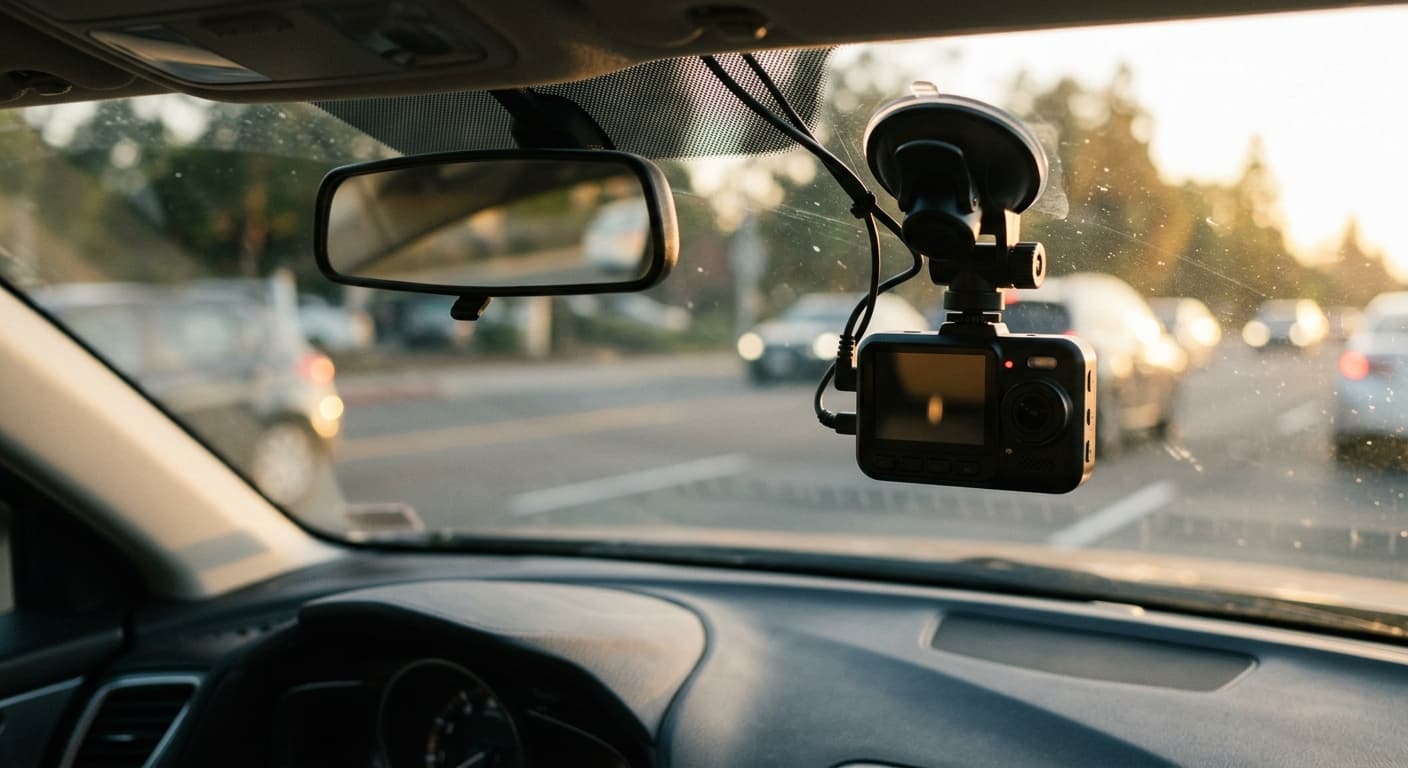
Dashcam use is legal in Louisiana. No state law prohibits dashboard cameras in private vehicles. Audio recording inside your vehicle is permitted under Louisiana's one-party consent rule, La. R.S. 15:1303. Mount your dashcam so it does not obstruct your forward view of the road.
Dashcams are legal and increasingly popular in Louisiana. There is no state law that prohibits installing or using a dashboard camera in your personal vehicle. Louisiana drivers use dashcams to protect themselves against fraudulent insurance claims, document traffic accidents, record interactions with law enforcement, and capture unexpected events on the road.
This guide covers everything you need to know about dashcam use in Louisiana, including mounting rules, audio recording requirements, how dashcam footage works as evidence, insurance considerations, and the rules for commercial vehicle dashcams.
Legality of Dashcams in Louisiana
No State Prohibition
Louisiana has no statute that restricts or prohibits the use of dashcams in private vehicles. You can legally:
- Install a front-facing dashcam on your windshield or dashboard
- Install a rear-facing dashcam
- Use a dual-camera system that records both front and rear views
- Use a cabin-facing camera (interior camera)
- Run your dashcam continuously while driving
- Use parking mode features that record when your vehicle is parked
Federal Windshield Obstruction Standards
While Louisiana does not have a specific dashcam-related windshield law, federal motor vehicle safety standards apply. FMVSS 205 (Federal Motor Vehicle Safety Standard for Glazing Materials) is a manufacturing standard that sets glazing and light-transmittance requirements for vehicle windshields; it does not itself authorize citations against drivers. Louisiana law enforcement can cite drivers for an obstructed windshield under general traffic safety authority if a dashcam is mounted in a way that impairs the driver's view.
Best practices for mounting:
- Mount behind the rearview mirror in the center-top area of the windshield
- Ensure the camera does not block any portion of the driver's forward view
- Keep the camera as compact as possible
- Avoid suction cup mounts that leave large marks or residue that could affect visibility
- Consider adhesive mounts that sit flush against the windshield
Louisiana Traffic Safety Law
Louisiana law enforcement can cite drivers for an obstructed windshield under general traffic safety authority, and the federal glazing standard discussed above (FMVSS 205) governs the windshield materials themselves. La. R.S. 32:361 sets the approved types of safety glass a vehicle must have to be licensed in Louisiana; it does not itself address windshield obstructions. A dashcam that does not obstruct the driver's view avoids any concern under either standard.
Audio Recording and Dashcams
One-Party Consent for In-Vehicle Conversations
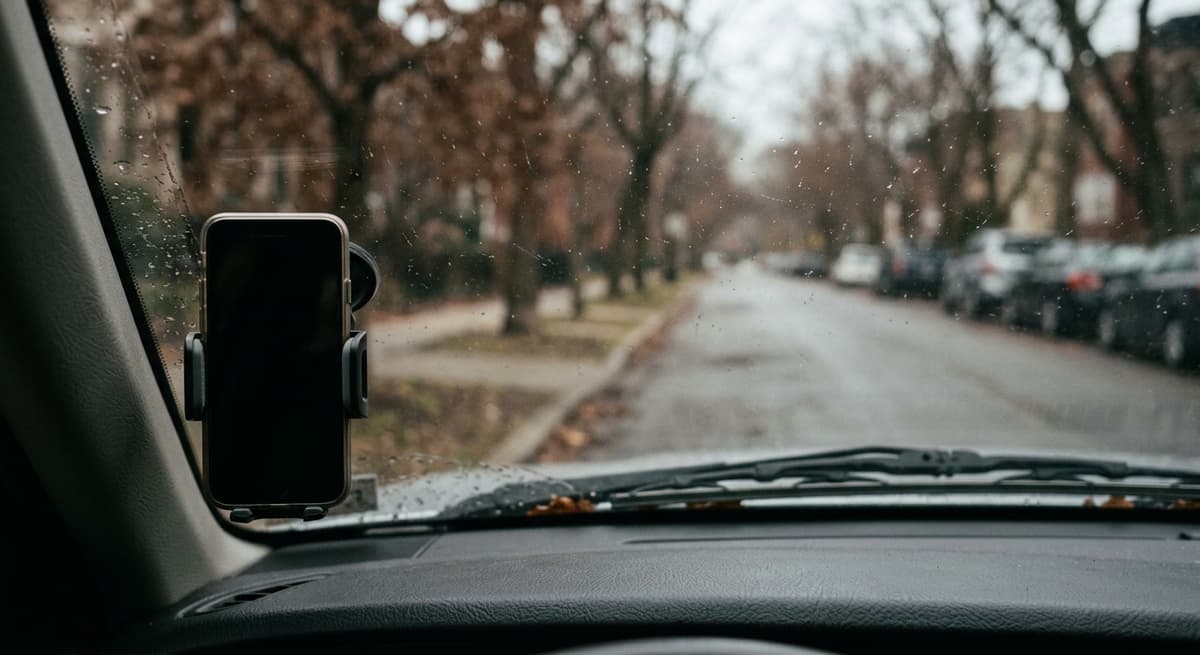
Many dashcams include audio recording capabilities. In Louisiana, audio recording is governed by the one-party consent rule under La. R.S. 15:1303. This means:
- You can record conversations inside your own vehicle that you participate in. As the driver and a party to any conversation happening in your car, your consent is sufficient.
- Passengers do not need to be informed. You can record conversations with passengers without telling them.
- Traffic stop conversations are recordable. When a police officer speaks to you during a traffic stop, you are a party to that conversation and can record it.
When Audio Recording May Be Problematic
- Parked vehicle recording others' conversations. If your dashcam records audio while parked and captures conversations between people outside your vehicle (when you are not present or participating), this could implicate La. R.S. 15:1303.
- Ride-share and taxi drivers. Drivers who record passengers should be aware that while they are a party to conversations, the audio from back-seat passenger conversations among themselves may raise consent questions.
Disabling Audio
If you want to avoid any audio recording complications, most dashcams allow you to disable the microphone. This creates a video-only record, which eliminates any concerns under the wiretapping statute.
Dashcam Footage as Evidence
Admissibility in Louisiana Courts
Dashcam footage is regularly admitted as evidence in Louisiana courts. For the footage to be admissible, you must satisfy the following requirements:
- Authentication. You or a qualified witness must testify that the footage accurately depicts what occurred. This includes confirming the date, time, location, and that the camera was functioning properly.
- Relevance. The footage must relate to a matter at issue in the case.
- Integrity. The footage must not have been altered or edited. Preserve the original file in its native format.
- Chain of custody. Document who has had access to the footage and how it has been stored.
Types of Cases Where Dashcam Footage Is Used
Traffic accidents:
- Proving fault in collisions
- Documenting the sequence of events leading to an accident
- Showing road conditions, weather, and visibility at the time of the incident
- Capturing traffic signals and signs
Insurance claims:
- Supporting your version of events in an insurance dispute
- Countering fraudulent claims (staged accidents, exaggerated injuries)
- Documenting hit-and-run vehicles (capturing license plates)
Criminal cases:
- DUI/DWI evidence (erratic driving patterns of other vehicles)
- Hit-and-run identification
- Road rage incidents
- Reckless driving documentation
- Criminal activity captured incidentally
Traffic stops:
- Recording your interaction with law enforcement
- Documenting the officer's conduct during the stop
- Preserving evidence of what was said and done
Preserving Dashcam Evidence
To ensure your dashcam footage remains usable as evidence:
- Lock important footage immediately. Most dashcams have a "lock" or "protect" feature that prevents a clip from being overwritten by the loop recording function.
- Download footage to a computer or cloud storage as soon as possible after an incident.
- Preserve the original SD card if the footage relates to a serious accident or crime. Use a new card and store the original safely.
- Note the date, time, and location of the recorded event.
- Do not edit the footage. Trimming, cropping, or altering the video in any way can undermine its evidentiary value.
Insurance Considerations
Dashcam Discounts
Some insurance companies offer discounts for vehicles equipped with dashcams. While this is not universal across all Louisiana insurers, the trend is growing. Contact your insurance provider to ask about dashcam-related discounts or premium reductions.
Using Dashcam Footage in Insurance Claims
When filing an insurance claim in Louisiana, dashcam footage can:
- Speed up claim processing. Clear footage of an accident reduces the need for lengthy investigations.
- Support your claim. Footage showing the other driver's fault strengthens your position.
- Counter fraudulent claims. If the other party misrepresents what happened, your footage provides an objective record.
Important consideration: Dashcam footage can also work against you. If the footage shows you were at fault or engaged in unsafe driving behavior, the insurance company (or opposing party) may use it as evidence. Before sharing dashcam footage with anyone, consider consulting with an attorney.
Louisiana's Comparative Fault System
Louisiana uses a modified comparative fault system under Louisiana Civil Code Article 2323: if you are found 51% or more at fault, you cannot recover damages at all, and if you are less than 51% at fault, your compensation is reduced in proportion to your percentage of fault. Dashcam footage that shows even partial fault on your part could reduce your recovery, and footage that pushes your fault to 51% or more could eliminate your recovery entirely. On the other hand, footage proving the other party was entirely at fault maximizes your recovery.
Commercial Vehicle Dashcams
Fleet and Trucking Operations
Commercial vehicle operators in Louisiana increasingly use dashcam systems for fleet management. The Federal Motor Carrier Safety Administration (FMCSA) does not mandate dashcams for commercial vehicles, but many trucking companies install them voluntarily for:
- Accident documentation and liability protection
- Driver training and coaching
- Compliance monitoring (hours of service, driving behavior)
- Insurance premium reductions
Employee Privacy Considerations
Commercial dashcams that include cabin-facing cameras raise employee privacy questions:
- Louisiana has no specific law prohibiting employer-installed cameras in commercial vehicles.
- Employer policies should clearly disclose the presence and purpose of all cameras, including cabin-facing cameras.
- Audio recording by a cabin-facing camera must comply with La. R.S. 15:1303. If the driver consents (which can be established through an employment agreement), the recording is lawful.
Ride-Share Drivers
Uber, Lyft, and other ride-share drivers operating in Louisiana can legally use dashcams. Both companies have policies that address driver dashcam use:
- Drivers are generally permitted to use dashcams
- Disclosure to passengers through signage is recommended as a best practice
- Louisiana's one-party consent law protects audio recording of conversations the driver participates in
- Interior cameras that record the passenger compartment are legal when disclosed
Parking Mode and Unattended Recording
How Parking Mode Works
Many modern dashcams include a "parking mode" feature that activates recording when the camera detects motion or impact while the vehicle is parked and the engine is off. This feature can capture:
- Hit-and-run incidents in parking lots
- Vandalism or break-in attempts
- Accidents involving parked vehicles
- Suspicious activity around your vehicle
Legal Considerations for Parking Mode
- Video recording in a parking lot or on a public street while parked is legal. There is no expectation of privacy in these public or semi-public spaces.
- Audio recording in parking mode raises concerns if the camera captures private conversations between people outside your vehicle when you are not present. The safest approach is to disable audio during parking mode.
- Private parking structures (apartment complexes, private garages) may have rules about camera use. While your dashcam recording from inside your vehicle is generally legal, be aware of any posted restrictions.
Dashcam Selection and Setup Tips
Features to Consider
- Resolution. 1080p is the minimum for capturing license plates. 4K provides greater detail.
- Night vision. Essential for low-light driving conditions common on rural Louisiana roads.
- GPS logging. Records speed and location data, useful for evidence purposes.
- Loop recording. Automatically overwrites old footage when the memory card is full.
- Impact detection (G-sensor). Automatically locks footage when it detects sudden acceleration, braking, or impact.
- Wide-angle lens. 140-degree or wider field of view captures more of the road.
- Heat resistance. Louisiana summers can reach extreme temperatures. Choose a dashcam rated for high heat operation.
Louisiana Climate Considerations
Louisiana's hot, humid climate presents specific challenges for dashcam operation:
- Interior vehicle temperatures can exceed 150 degrees Fahrenheit in summer. Choose a dashcam with a high operating temperature range.
- Avoid suction cup mounts that may fail in extreme heat. Adhesive mounts are more reliable.
- Use high-endurance microSD cards rated for continuous recording in high temperatures.
- Consider a capacitor-based dashcam instead of battery-based, as batteries can swell or fail in extreme heat.
More Louisiana Recording Laws
Audio Recording | Video Recording | Voyeurism & Hidden Cameras | Workplace Recording | Recording Police | Phone Call Recording | Security Cameras | Recording in Public | Landlord-Tenant | Dashcam Laws | Schools | Medical Recording
Back to Louisiana Recording Laws
More Louisiana Recording Topics
More Louisiana Laws
Frequently Asked Questions
Are dashcams legal in Louisiana?
Yes. Louisiana has no law prohibiting dashcams. You can install front-facing, rear-facing, and interior cameras in your vehicle. The camera must be mounted so it does not obstruct your view of the road.
Can my dashcam record audio in Louisiana?
Yes. Louisiana's one-party consent law under La. R.S. 15:1303 allows you to record conversations you participate in inside your vehicle without informing passengers. For parking mode recording when you are not present, consider disabling audio to avoid potential issues.
Can I use dashcam footage as evidence in Louisiana?
Yes. Dashcam footage is regularly admitted as evidence in Louisiana courts for accident claims, insurance disputes, and criminal cases. You must authenticate the footage, preserve the original unedited file, and demonstrate chain of custody.
Where should I mount my dashcam in Louisiana?
Mount your dashcam behind the rearview mirror in the center-top area of the windshield where it will not obstruct your forward view. Louisiana law enforcement can cite an obstructed windshield under general traffic safety authority, and federal FMVSS 205 governs windshield glazing materials; La. R.S. 32:361 addresses approved safety glass types for vehicle licensing, not obstructions. Adhesive mounts are more reliable than suction cups in Louisiana's hot climate.
Do any Louisiana insurance companies offer dashcam discounts?
Some insurance companies offer discounts for vehicles equipped with dashcams, though this varies by carrier. Contact your insurance provider to ask about available discounts. Dashcam footage can also help speed up claim processing and support your version of events in a dispute.
Updates
Fixed two broken citation links (safety-glass statute and comparative-fault Civil Code article) and clarified that FMVSS 205 is a manufacturing glazing standard, not the authority Louisiana officers cite drivers under for a windshield obstruction.
Independently fact-checked against the cited primary sources
Corrected a misattributed windshield-obstruction citation (La. R.S. 32:361 governs approved safety glass types for vehicle licensing, not obstructions) and corrected Louisiana's fault system from 'pure' to 'modified' comparative fault, which bars recovery entirely at 51% or more fault.
Governing law re-checked for recent changes
Reviewed and approved by an editor
The Law Behind This Article
This article rests on the statutory provisions below, held in our own legal record and retrieved from the official source. Tap a section to read the operative text.
Louisiana Revised Statutes
§ 15:1303Interception and disclosure of wire, electronic, or oral communicationsIn forcecited in 36 of our articles
A. Except as otherwise specifically provided in this Chapter, it shall be unlawful for any person to: (1) Willfully intercept, endeavor to intercept, or procure any other person to intercept or endeavor to intercept, any wire, electronic or oral communication; (2) Willfully use, endeavor to use, or procure any other person to use or endeavor to use, any electronic, mechanical, or other device to intercept any oral communication when: (a) Such device is affixed to, or otherwise transmits a signal through, a wire, cable, or other like connection used in wire or electronic communication; or (b) Such device transmits communications by radio or interferes with the transmission of such communication; (3) Willfully disclose, or endeavor to disclose, to any other person the contents of any wire, electronic, or oral communication, knowing or having reason to know that the information was obtained through the interception of a wire, electronic, or oral communication in violation of this Subsection; or (4) Willfully use, or endeavor to use, the contents of any wire, electronic, or oral communication, knowing or having reason to know that the information was obtained through the…
Official text (excerpt) · last checked 2026-08-31 · Read the full text in our law library · Verify at legis.la.gov
Cited in 25 court opinions in our collectionLatest citing opinion in our collection: 2020
In the courts (editorial summary, independently checked):Louisiana courts apply the consent exception in La. R.S. 15:1303. Smith v. Smith (2005) held a parent may consent for a child where he has a good faith, reasonable basis that it serves the child’s best interest, placing the recording within 15:1303(C)(4). Keller v. Aymond (1998) held willfulness is not required for civil liability.
Opinions citing this section in our collection:
- Smith v. Smith (Louisiana Court of Appeal 2005, 923 So. 2d 732)✓A father secretly taped his daughter's calls with her mother in his own home during a custody fight; the court applied vicarious consent and held his good faith, objectively reasonable belief that taping served the child's best interest fell within La. R.S. 15:1303(C)(4).
- Johnson v. Aymond (Louisiana Court of Appeal 1998, 709 So. 2d 1072)✓A newspaper printed excerpts of a phone conversation a defendant had allegedly taped and handed out at a press conference; the court held those allegations, accepted as true, state a cause of action under the literal language of La. R.S. 15:1303(A)(4), and reversed the dismissal.
- Keller v. Aymond (Louisiana Court of Appeal 1998, 722 So. 2d 1224)✓A newspaper published excerpts of private calls taped by another and handed out at a press conference; the court held criminal willfulness under section 1303 is not needed for civil damages, and that fact issues over the paper's reason to know barred summary judgment under 1303.
Identified automatically from the court opinions citing this section — not a ranking of which case controls.
Also relied on in: Louisiana HB 410: Recording-Notice Bill Heads to the Governor (2026), Louisiana HB 475: Disclosure Required Before AI-Recorded Medical Visits, Louisiana Smart Glasses Recording Laws (2026)
§ 32:361Approved types of safety glassIn forcecited in 3 of our articles
The commissioner shall approve and maintain a list of the approved types of safety glass, conforming to recognized specifications for safety glass, as defined in this Chapter, and the Department of Public Safety shall not issue a license for or relicense any motor vehicle subject to the provisions of this Chapter, unless such motor vehicle is equipped, as herein provided, with such approved type of glass.
Official text (excerpt) · last checked 2026-07-29 · Read the full text in our law library · Verify at legis.la.gov
Cited in 3 court opinions in our collectionLatest citing opinion in our collection: 2025
Opinions citing this section in our collection:
- State v. Warren (Louisiana Court of Appeal 2018, 239 So. 3d 960)“…S. 40:966 and 40:982 ; illegal window tint, in violation of La.R.S. 32:361 ; and driving while under suspension, i…”
- State of Louisiana v. Ethan M. Doyle (Louisiana Court of Appeal 2025)“…awman to pummel in suggesting that Dpty. Ruffin had in mind La. R.S. 32:361, which only prevents covering of the fr…”
- State of Louisiana v. Reginald Taral Warren (Louisiana Court of Appeal 2018)“…S. 40:966 and 40:982; illegal window tint, in violation of La.R.S. 32:361; and driving while under suspension, in…”
Identified automatically from the court opinions citing this section — not a ranking of which case controls.
Louisiana Civil Code
§ 2323Comparative faultIn forcecited in 18 of our articles
A.(1) In any action for damages where a person suffers injury, death, or loss, the degree or percentage of fault attributable to all persons causing or contributing to the injury, death, or loss shall be determined, regardless of whether the person is a party to the action or a nonparty, and regardless of the person's insolvency, ability to pay, immunity by statute, including but not limited to the provisions of R.S. 23:1032, or that the other person's identity is not known or reasonably ascertainable. (2) If a person suffers injury, death, or loss partly as the result of his own negligence and partly as a result of the fault of another person or persons, then the following shall apply: (a) If the degree or percentage of negligence attributable to the person suffering injury, death, or loss is equal to or greater than fifty-one percent, then the person suffering injury, death, or loss shall not be entitled to recover damages.
Official text (excerpt) · last checked 2026-09-08 · Read the full text in our law library · Verify at legis.la.gov
Cited in 187 court opinions in our collectionLatest citing opinion in our collection: 2026
In the courts (editorial summary, independently checked):Murray v. Ramada Inns, Inc. (1988) held assumption of risk no longer bars recovery and that such plaintiff conduct is judged under article 2323's comparative fault reduction. Keith v. US Fidelity & Guar. Co. (1997) held the 1996 amendment to article 2323 procedural and retroactive, so an immune employer's fault is quantified.
Opinions citing this section in our collection:
- Murray v. Ramada Inns, Inc. (Supreme Court of Louisiana 1988, 521 So. 2d 1123)✓Answering a question certified by the Fifth Circuit in a suit over a man paralyzed and killed by a dive into the shallow end of a motel pool, the court held assumption of risk no longer totally bars recovery; that conduct falls under Article 2323 and only reduces damages.
- Miller v. Lammico (Supreme Court of Louisiana 2008, 973 So. 2d 693)✓A jury divided fault among three doctors whose missed diagnosis let a pelvic infection destroy Mrs. Miller's uterus; the court held Article 2323's fault percentages apply to the full damages award before the medical malpractice cap, even where the plaintiff bears no fault.
- Keith v. US Fidelity & Guar. Co. (Supreme Court of Louisiana 1997, 694 So. 2d 180)✓An oilfield worker hurt by rented slips sued the equipment lessor, which pleaded the fault of his compensation-immune employer; the court held the 1996 amendment extending Article 2323 to persons with statutory immunity was procedural and applied retroactively to that case.
Identified automatically from the court opinions citing this section — not a ranking of which case controls.
Also relied on in: Louisiana Dog Bite Laws: Liability and Victim Rights, Louisiana Hit and Run Laws: Penalties and What to Do, Motorcycle Accident Laws in Louisiana (2026): Deadlines
Code of Federal Regulations Title 49
§ 571.205Standard No. 205, Glazing materials.In forcecited in 8 of our articles
S1. Scope. This standard specifies requirements for glazing materials for use in motor vehicles and motor vehicle equipment. S2. Purpose. The purpose of this standard is to reduce injuries resulting from impact to glazing surfaces, to ensure a necessary degree of transparency in motor vehicle windows for driver visibility, and to minimize the possibility of occupants being thrown through the vehicle windows in collisions. S3. Application. This standard applies to passenger cars, multipurpose passenger vehicles, trucks designed to carry at least one person, buses, motorcycles, slide-in campers, pickup covers designed to carry persons while in motion and low speed vehicles, and to glazing materials for use in those vehicles. S4. Definitions. Bullet resistant shield means a shield or barrier that is installed completely inside a motor vehicle behind and separate from glazing materials that independently comply with the requirements of this standard. Camper means a structure designed to be mounted in the cargo area of a truck, or attached to an incomplete vehicle with motive power, for the purpose of providing shelter for persons.
Official text (excerpt) · last checked 2026-07-28 · Read the full text in our law library · Verify at ecfr.gov
Cited in 34 court opinions in our collectionLatest citing opinion in our collection: 2024
In the courts (editorial summary, independently checked):O'Hara Ex Rel. H.O. v. General Motors Corp. (2007) held FMVSS 205, 49 CFR 571.205, does not preempt a state design claim seeking advanced side glazing. McCracken v. Ford Motor Co. (2008) read the same standard as mandatory rather than a floor, so a conflicting claim would be preempted, and denied dismissal only on that open question.
Opinions citing this section in our collection:
- O'Hara Ex Rel. H.O. v. General Motors Corp. (Court of Appeals for the Fifth Circuit 2007, 508 F.3d 753)✓A child was partially ejected through a Tahoe's tempered-glass side window in a rollover, and her parents claimed GM should have used advanced glazing; the court held FMVSS 205 is a minimum safety standard that does not preempt their common law claims.
- United States v. Ruel Antonio Wallace (Court of Appeals for the Ninth Circuit 2000, 213 F.3d 1216)“…uirements of Federal Motor Vehicle Safety Standard No. 205 (49 C.F.R. 571.205), including the specified minimum light…”
- McCracken v. Ford Motor Co. (District Court, E.D. Pennsylvania 2008, 588 F. Supp. 2d 635)✓A buyer blaming his thyroid cancer on radiation through his Fords' windshields said Lucite or leaded glass should have been used; treating FMVSS 205 as a mandatory standard, the court refused to dismiss on preemption because the pleadings did not show Lucite was unapproved.
Identified automatically from the court opinions citing this section — not a ranking of which case controls.
Also relied on in: Iowa Windshield Mounting Laws (2026 Guide), California Windshield Mounting Laws (2026 Guide), Rhode Island Windshield Mounting Laws (2026 Guide)
Search our full record of US law — 2.1 million sections, every state + federal →
Sources and References
- La. R.S. 15:1303(legis.la.gov).gov
- La. R.S. 32:361 - Approved Safety Glass Types(legis.la.gov).gov
- La. C.C. Art. 2323 - Comparative Fault(legis.la.gov).gov
- FMVSS 205(ecfr.gov).gov
- FMCSA(fmcsa.dot.gov).gov
- NHTSA Vehicle Equipment(nhtsa.gov).gov
- Louisiana Dept. of Insurance(ldi.la.gov).gov