
Missouri
Missouri Dashcam Laws: Mounting Rules, Audio Recording, and Evidence (2026)
Independently fact-checked against primary sources (last audited November 1, 2026). · Reviewed by the RecordingLaw editorial team. · Law checked current as of November 1, 2026. · 8 primary sources cited on this page. How we verify our legal content
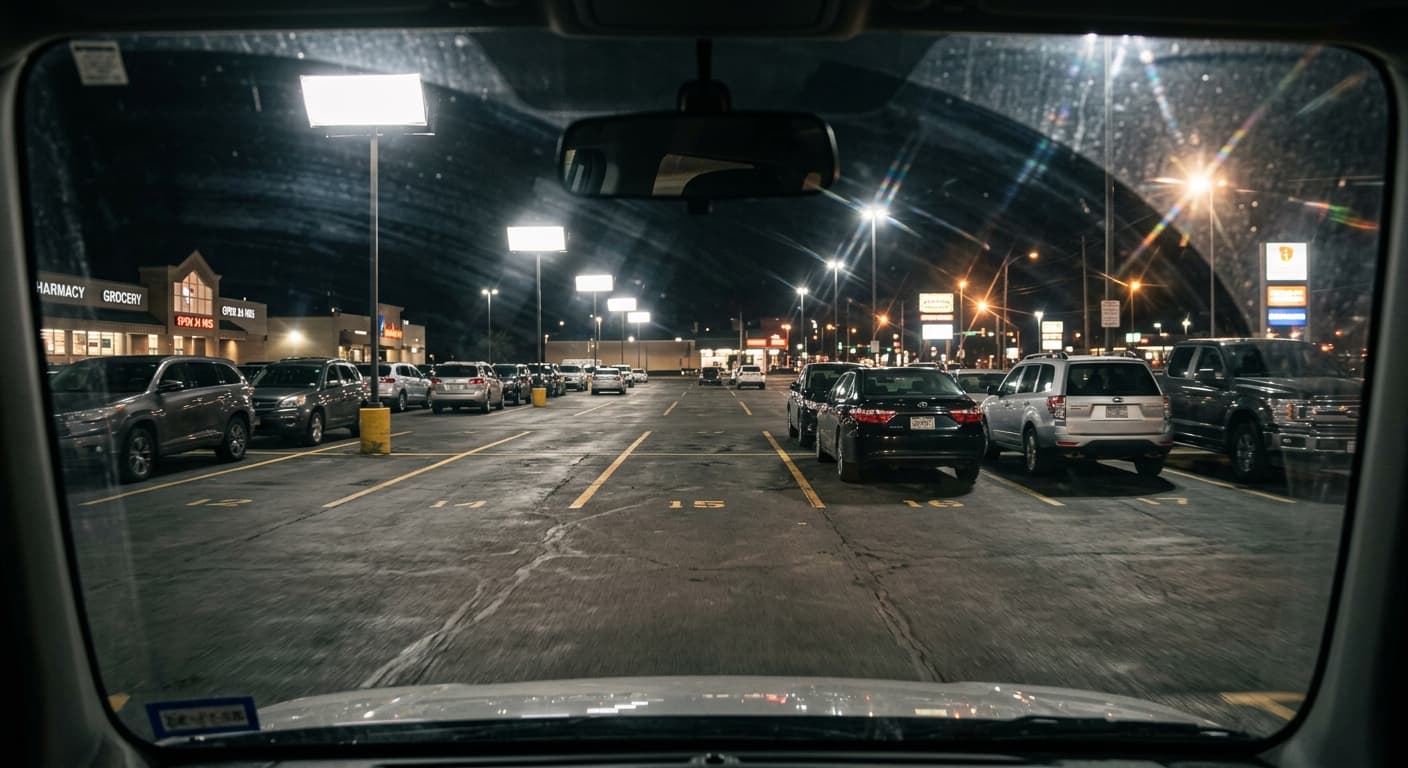
Dashcams are legal in Missouri, and mounting one does not require a specific permit. Missouri's wiretap statute, Mo. Rev. Stat. Section 542.402, covers wire communications, and it reaches in-person conversations only when they are captured with a device that transmits by radio; federal law separately allows a driver to record a conversation they are part of. Mount the camera where it does not obstruct your view. Missouri does not have a specific statute governing where a dashcam may be mounted on the windshield.
Dashcams are legal and widely used in Missouri. The state has no specific statute addressing dashboard cameras, so their use is governed by general traffic safety laws, the wiretapping statute (Mo. Rev. Stat. Section 542.402), and federal motor vehicle regulations.
Are Dashcams Legal in Missouri?
Yes. Missouri does not prohibit dashcam installation or use. You can use a dashcam in any vehicle on Missouri roads.
Windshield Mounting Rules
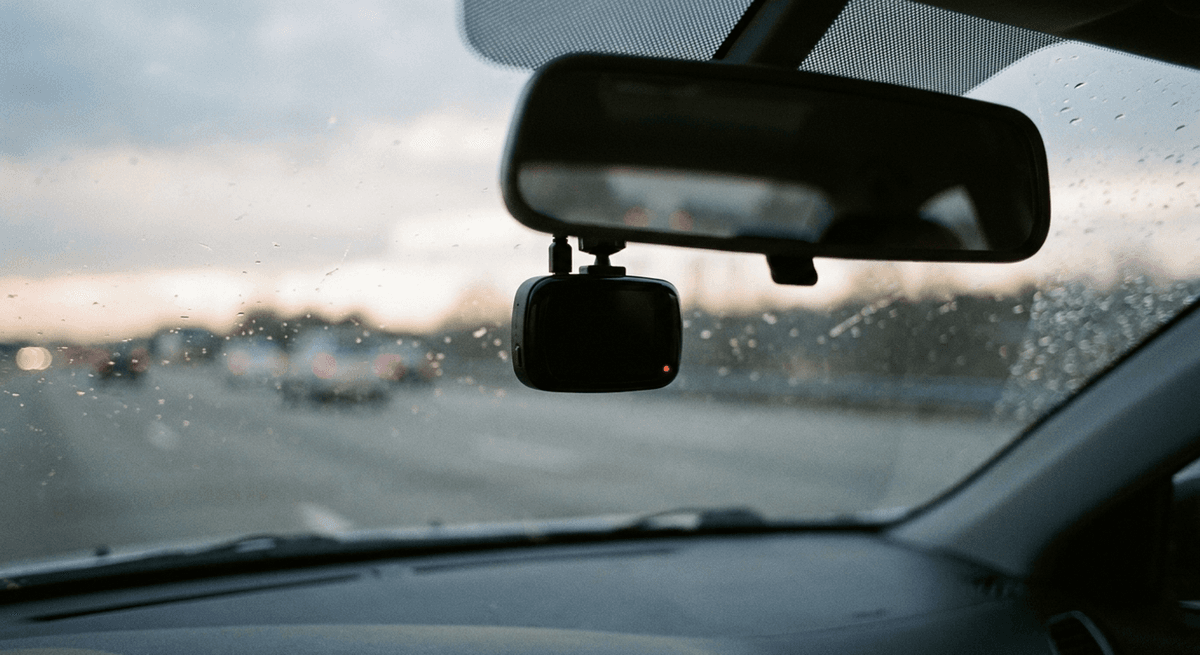
Missouri does not have a statute that specifically regulates where a dashcam or similar device may be mounted on the windshield. Devices should still be placed so they do not materially obstruct the driver's view, since Missouri's vehicle safety inspection standards can reject a windshield with any distortion that interferes with the driver's vision.
Best practices for mounting:
- Mount behind the rearview mirror
- Use a compact camera
- Ensure no obstruction of view or stickers
- Test visibility after installation
Dashcam Audio and Missouri Consent Laws

What Missouri's Wiretap Statute Covers
Missouri is a one-party consent state under Mo. Rev. Stat. Section 542.402, but the statute is narrow. It makes it a crime to intercept a wire communication (one carried by wire, cable, or a similar connection, as defined in Section 542.400), and it reaches in-person "oral" conversations only when the device used "transmits communications by radio or interferes with the transmission of such communication."

A dashcam that saves cabin audio to its own memory card does not fit that radio-transmission clause on its face. A camera that streams live cabin audio over a cellular or Wi-Fi connection to an app or cloud service is closer to a radio-transmitting device, and the statute does not say how it applies to that setup.
Federal Law
The federal Wiretap Act, 18 U.S.C. Section 2511, covers in-person oral communications more broadly, but it allows a recording made by a party to the conversation or with one party's prior consent. When you are in the car and part of the conversation, that exception applies to passenger conversations, traffic stop audio, and road incident exchanges.
Criminal or Tortious Intent Exception
The consent exception does not apply when recording is made for criminal or tortious purposes. Audio used for harassment or blackmail is illegal.
Unattended Vehicle Recording
If your dashcam runs while you are absent and captures others' conversations, you are no longer a party, so the party-consent exception does not cover that audio. Missouri's statute reaches it mainly if the camera transmits it by radio, but federal law covers oral communications more broadly. Consider disabling the microphone for parking mode.
Cabin Video of Passengers
Missouri's wiretap statute is limited to the aural acquisition of communications, so it does not address silent video. Missouri's invasion-of-privacy statute, Mo. Rev. Stat. Section 565.252, makes it a crime to knowingly create an image of another person without consent while that person is in a state of full or partial nudity in a place where one would have a reasonable expectation of privacy, or to create an image under or through a person's clothing, without consent, for the purpose of viewing the body or undergarments.
Dashcam Footage as Evidence
Missouri Comparative Fault
Missouri follows a pure comparative fault system, adopted by the Missouri Supreme Court in Gustafson v. Benda, 661 S.W.2d 11 (Mo. banc 1983). A plaintiff can recover damages reduced by their percentage of fault. (A separate statute, Mo. Rev. Stat. Section 537.765, codifies a similar comparative fault rule, but only for products liability claims, not for ordinary car-accident negligence claims.) Dashcam footage showing exactly how an accident occurred is critical for determining fault allocation.
Admissibility
Dashcam footage is admissible in Missouri courts when authenticated under the Missouri Rules of Evidence. The footage must be genuine, unaltered, and relevant.
Criminal Cases
Footage serves as evidence in DUI prosecutions, hit-and-run investigations, road rage cases, and traffic violations.
Commercial Use
Fleet operators in Missouri use dashcams for safety, liability protection, and FMCSA compliance. Rideshare drivers can legally use dashcams, and a driver who takes part in a cabin conversation is a party to it under the consent exceptions described above.
Dashcams and Law Enforcement
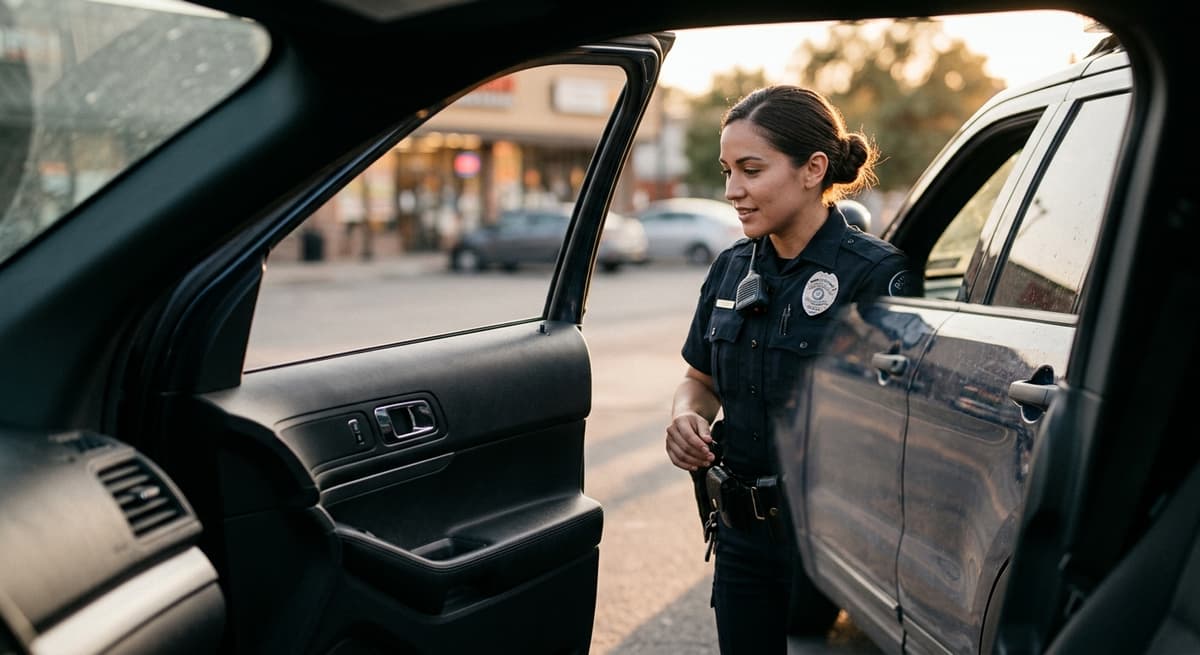
No Missouri statute bars a dashcam from recording a traffic stop, and Missouri's 2025 first-responder law (Mo. Rev. Stat. Section 574.207) says it does not restrict the ability to observe or record first responders. The Eighth Circuit, which covers Missouri, has not decided whether the First Amendment protects recording police. In Molina v. Book (2023) it held that any such right was not clearly established in 2015. It has held that recording in public to inform the public is protected speech, although recording unrelated to an expressive purpose may not be (Ness v. City of Bloomington, 2021).
Under Riley v. California (2014), police generally need a warrant to search the contents of your phone or camera, although they may hold the device while they seek one. No court in the Eighth Circuit has held that officers can never order you to stop recording. If you are ordered to stop, comply, say you do not consent to a search, and challenge the order later.
Penalties
| Violation | Statute | Penalty |
|---|---|---|
| Windshield obstruction | No specific Missouri statute | Not independently codified; may affect vehicle safety inspection |
| Intercepting a wire communication, or an oral communication with a radio-transmitting device, without consent (not a party) | Mo. Rev. Stat. 542.402 | Class E felony: up to 4 years, $10,000 fine |
Civil damages under Mo. Rev. Stat. Section 542.418, available to a person whose wire communication is unlawfully intercepted, disclosed, or used, include $100/day or $10,000 minimum, plus punitive damages.
More Missouri Recording Laws
Audio Recording | Video Recording | Voyeurism Laws | Workplace Recording | Recording Police | Phone Call Recording | Security Cameras | Recording in Public | Landlord-Tenant Recording | Dashcam Laws | School Recording | Medical Recording
Back to Missouri Recording Laws
More Missouri Recording Topics
More Missouri Laws
Frequently Asked Questions
Do I need to tell passengers my dashcam records audio in Missouri?
No statute clearly requires it, but telling passengers is the cautious course. Missouri's wiretap statute, Mo. Rev. Stat. Section 542.402, reaches in-person conversations only when captured with a device that transmits by radio, and federal law allows you to record a conversation you are part of. No Missouri appellate court has settled how the statute treats in-person recording, and a camera that streams cabin audio live to an app or cloud service is a less settled case still.
Can dashcam footage be used in Missouri courts?
Yes. Dashcam footage is admissible when authenticated as genuine, unaltered, and relevant under Missouri Rules of Evidence.
Where should I mount my dashcam in Missouri?
Mount behind the rearview mirror or in a corner. Missouri does not have a specific statute regulating dashcam placement, but avoiding any obstruction of your view is the safest practice.
Can my dashcam record while parked without me?
Video is fine. Audio recording when absent could capture others' conversations without any party's consent. Missouri's statute, Mo. Rev. Stat. Section 542.402, reaches that audio mainly if the camera transmits it by radio, but federal law covers in-person conversations more broadly. Disable the microphone for parking mode.
Can police order me to turn off my dashcam?
No Missouri statute requires you to, and a dashcam can generally keep recording during a traffic stop. But the Eighth Circuit, which covers Missouri, has not decided whether the First Amendment protects recording police, and no court there has held that officers can never order you to stop. If an officer orders you to turn it off, comply, say you do not consent to a search, and challenge the order later. Police generally need a warrant to search the device's contents, although they may hold it while they seek one.
Updates
We corrected the police section: the Eighth Circuit has not decided whether the First Amendment protects recording police, police may hold a device while they seek a warrant to search it, and no court there has held officers can never order you to stop recording; we also added that telling passengers about audio recording is the cautious course.
Independently fact-checked against the cited primary sources; governing law re-checked for recent changes
Corrected the explanation of Missouri's wiretap statute, which covers wire communications and reaches in-person conversations only through radio-transmitting devices, and added federal-law and cabin-video context.
Corrected a citation that attributed Missouri's general pure comparative fault rule for car-accident cases to a statute that actually governs only products liability claims; the general rule for ordinary negligence cases comes from the Missouri Supreme Court's decision in Gustafson v. Benda, not from Mo. Rev. Stat. Section 537.765.
Independently fact-checked against the cited primary sources
Corrected the windshield-mounting section: Mo. Rev. Stat. Section 307.180 is Missouri's bicycle-definitions statute, not a windshield-obstruction law, so the false citation was removed from the intro, KeyTakeaways, prose, penalties table, and FAQ (Missouri has no statute specifically addressing dashcam mounting).
Governing law re-checked for recent changes
Reviewed and approved by an editor
The Law Behind This Article
This article rests on the statutory provisions below, held in our own legal record and retrieved from the official source. Tap a section to read the operative text.
Revised Statutes of Missouri, Title XXXVII (CRIMINAL PROCEDURE), Chapter 542
§ 542.402Penalty for illegal wiretapping, permitted activities.In forcecited in 18 of our articles
1. Except as otherwise specifically provided in sections 542.400 to 542.422, a person is guilty of a class E felony and upon conviction shall be punished as provided by law, if such person: (1) Knowingly intercepts, endeavors to intercept, or procures any other person to intercept or endeavor to intercept, any wire communication; (2) Knowingly uses, endeavors to use, or procures any other person to use or endeavor to use any electronic, mechanical, or other device to intercept any oral communication when such device transmits communications by radio or interferes with the transmission of such communication; provided, however, that nothing in sections 542.400 to 542.422 shall be construed to prohibit the use by law enforcement officers of body microphones and transmitters in undercover investigations for the acquisition of evidence and the protection of law enforcement officers and others working under their direction in such investigations; (3) Knowingly discloses, or endeavors to disclose, to any other person the contents of any wire communication, when he knows or has reason to know that the information was obtained through the interception of a wire communication in…
Official text (excerpt) · last checked 2026-09-24 · Read the full text in our law library · Verify at revisor.mo.gov
Cited in 6 court opinions in our collectionLatest citing opinion in our collection: 2026
In the courts (editorial summary, independently checked):Federal courts in Missouri have applied section 542.402 to covert audio recording. Fotoohighiam v. The City of Columbia Missouri (2025) let a wiretap count over recorded attorney-client jail calls proceed, with no prior consent shown, and Ward (2026) found a claim over a secretly recorded workplace conversation would not be futile.
Opinions citing this section in our collection:
- Bartnicki v. Vopper (Supreme Court of the United States 2001, 532 U.S. 514)“…nn. § 750 .539e (West 1991); Minn. Stat. § 626A.02 (2000); Mo. Rev. Stat. § 542.402 (2000); Neb. Rev. Stat. § 86-702 (19…”
- Boehner, John A. v. McDermott, James A. (Court of Appeals for the D.C. Circuit 1999, 191 F.3d 463)“…p. 1995); Minn.Stat. Ann. §§ 626A.02, 626A.13 (West 1998); Mo. Rev. Stat. §§ 542.402 , 542.418 (1996); Mont.Code Ann. § 45-8…”
- John Doe v. SSM Health Care Corporation (Court of Appeals for the Eighth Circuit 2025, 126 F.4th 1329)✓Patients alleged a hospital's patient portal secretly sent health data to Facebook, pleading a Missouri wiretap claim under 542.402; the Eighth Circuit addressed only removal, held the wiretap count did not change that analysis, and affirmed remand without reaching its merits.
Identified automatically from the court opinions citing this section — not a ranking of which case controls.
Also relied on in: Missouri Smart Glasses Recording Laws, Missouri Recording Laws (2026): One-Party Consent Rules, Missouri Audio Recording Laws: One-Party Consent Rules and Penalties
§ 542.418Use of contents of wiretap in civil action, limitations on — illegal wiretap, cause of action, damages, attorney fees and costs — good faith reliance on court order a prima facie defense.In forcecited in 12 of our articles
1. The contents of any wire communication or evidence derived therefrom shall not be received in evidence or otherwise disclosed in any civil or administrative proceeding, except in civil actions brought pursuant to this section. 2. Any person whose wire communication is intercepted, disclosed, or used in violation of sections 542.400 to 542.422 shall: (1) Have a civil cause of action against any person who intercepts, discloses, or uses, or procures any other person to intercept, disclose, or use such communications; and (2) Be entitled to recover from any such person: (a) Actual damages, but not less than liquidated damages computed at the rate of one hundred dollars a day for each day of violation or ten thousand dollars whichever is greater; (b) Punitive damages on a showing of a willful or intentional violation of sections 542.400 to 542.422; and (c) A reasonable attorney's fee and other litigation costs reasonably incurred. 3. A good faith reliance on a court order or on the provisions of section 542.408 shall constitute a prima facie defense to any civil or criminal action brought under sections 542.400 to 542.422.
Official text (excerpt) · last checked 2026-07-31 · Read the full text in our law library · Verify at revisor.mo.gov
Cited in 3 court opinions in our collectionLatest citing opinion in our collection: 2026
Opinions citing this section in our collection:
- Phillips v. American Motorist Insurance Co. (Missouri Court of Appeals 1999, 996 S.W.2d 584)“…int on appeal is that the trial court erred in holding that § 542.418, RSMo 1994, 1 of the Missouri Wi…”
- Ward (District Court, W.D. Missouri 2026)“…e Mo. Rev. Stat. § 542.402 is stated as a criminal statute, Mo. Rev. Stat. § 542.418 creates a private right of action in a…”
- Fotoohighiam v. The City of Columbia Missouri (District Court, W.D. Missouri 2025)“…red. Mo. Rev. Stat. § 542.418.2. However, it is not unlawful under th…”
Identified automatically from the court opinions citing this section — not a ranking of which case controls.
Also relied on in: Missouri Landlord-Tenant Recording Laws: Surveillance, Privacy, and Consent, Missouri Medical Recording Laws: Patient Rights, HIPAA, and Consent (2026), Missouri Phone Call Recording Laws: Consent Rules for Landline, Cell, and VoIP
Sources and References
- Mo. Rev. Stat. Section 542.402 - Wiretapping Penalties and Exceptions(revisor.mo.gov).gov
- Mo. Rev. Stat. Section 542.418 - Civil Remedies(revisor.mo.gov).gov
- Federal Motor Carrier Safety Administration (FMCSA)(fmcsa.dot.gov).gov
- National Highway Traffic Safety Administration (NHTSA)(nhtsa.gov).gov
- Mo. Rev. Stat. Section 542.400 (wiretap definitions)(revisor.mo.gov).gov
- Mo. Rev. Stat. Section 565.252 (invasion of privacy)(revisor.mo.gov).gov
- 18 U.S.C. Section 2511 (federal Wiretap Act)(uscode.house.gov).gov
- Mo. Rev. Stat. section 574.207 (interference with a first responder; does not restrict observing or recording)(revisor.mo.gov).gov