
Missouri
Missouri Laws on Recording in Public: First Amendment Rights and Limits
Independently fact-checked against primary sources (last audited August 15, 2026). · Reviewed by the RecordingLaw editorial team. · Law checked current as of August 7, 2026. · 6 primary sources cited on this page. How we verify our legal content
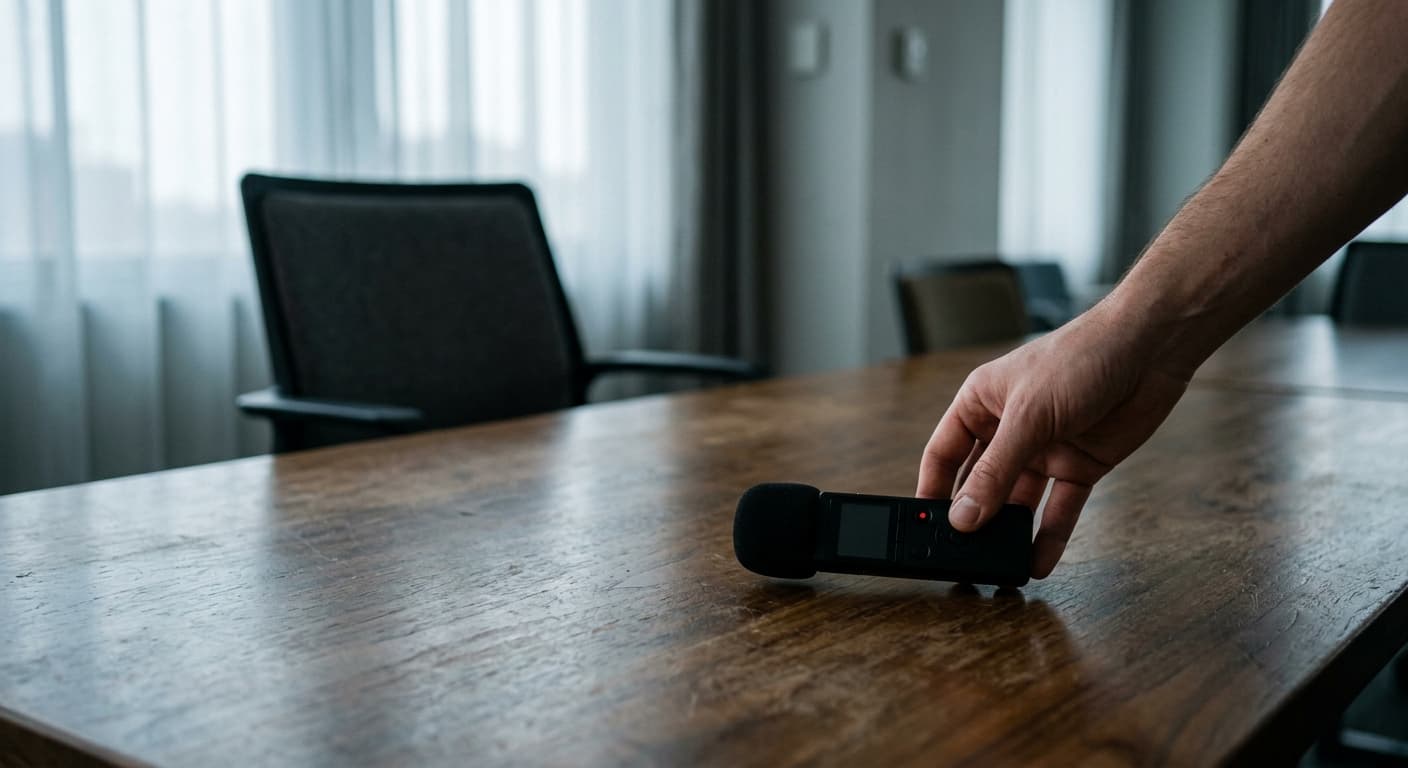
Missouri permits recording video in public spaces under First Amendment protections, and no state statute restricts it. Audio recording in public is governed by Mo. Rev. Stat. Section 542.402, which requires only one-party consent, meaning you satisfy the requirement by being present during the conversation.
Missouri provides strong protections for recording in public spaces. The First Amendment to the U.S. Constitution protects your right to gather information in areas open to the public, and Missouri law does not impose additional restrictions on video recording in public. Whether you are filming a street scene, documenting a protest, recording a public meeting, or capturing a newsworthy event, Missouri law generally permits it.
This guide covers your rights to record in public spaces, the difference between public and private property, audio consent requirements, government meeting recording rights, and common situations where public recording questions arise.
Your Right to Record in Public Spaces
Constitutional Foundation
The First Amendment protects freedom of speech, freedom of the press, and the right to petition the government. Federal courts have consistently held that these protections include the right to record events in public spaces. Recording is a form of information gathering that supports both free expression and government accountability.
The Eighth Circuit Court of Appeals, which covers Missouri, has recognized recording rights in the context of filming police officers and government activities. While there is no single Supreme Court ruling establishing a standalone "right to record," the weight of federal circuit court authority strongly supports this right.
What Qualifies as a "Public Space"
Public spaces in Missouri include:
- Streets, sidewalks, and highways maintained by state or local government
- Public parks and recreational areas
- Government building exteriors and publicly accessible lobbies
- Public transit stations, platforms, and vehicles (MetroLink, bus stops)
- Public plazas and squares (such as Kiener Plaza in St. Louis or the Country Club Plaza areas)
- Publicly accessible portions of courthouses (subject to court rules)
- State and national parks within Missouri
- Public universities and their grounds (subject to institutional policies)
What You Can Record in Public
When standing in a public space, you can record:
- Any person, vehicle, building, or object visible from your location
- Police officers and other government officials performing their duties
- Protests, demonstrations, and public gatherings
- Traffic incidents, accidents, and road conditions
- Commercial activities visible from public areas
- Street performers, public art, and outdoor events
Audio Recording Rules in Public

One-Party Consent Applies
While video-only recording in public requires no consent, capturing audio activates Missouri's wiretapping law under Mo. Rev. Stat. Section 542.402. The statute protects "oral communications" where the speaker has a reasonable expectation that the conversation is not being intercepted.
In most public settings, speakers have a reduced expectation of privacy. A conversation held at normal volume on a public sidewalk is less likely to qualify as a protected "oral communication" than a whispered conversation in a quiet corner. However, the line is not always clear.
Practical Audio Recording Guidance
| Situation | Audio Concern Level | Explanation |
|---|---|---|
| Recording ambient street noise | Low | No specific conversation is targeted |
| Recording a public speaker at a rally | Low | Speaker has no privacy expectation |
| Recording your own conversation with someone | None | You are a consenting party |
| Recording a private conversation between strangers | Higher | Speakers may have a privacy expectation |
| Recording in a quiet, uncrowded area | Higher | Privacy expectation increases |
Best practice: If you are recording in public and your device captures audio of conversations you are not part of, the risk is lower when the conversations occur in busy, open spaces where privacy expectations are minimal. If you want to eliminate audio consent concerns entirely, record video without audio.
Recording on Private Property Open to the Public
Businesses and Commercial Establishments
Stores, restaurants, theaters, malls, and other businesses that invite the public in can set their own recording policies. A business can:
- Post "no recording" signs and enforce them
- Ask you to stop recording
- Ask you to leave if you refuse to comply
- Have you charged with trespassing under Mo. Rev. Stat. Section 569.140 if you refuse to leave after being asked
Key points about recording in businesses:
- The business's right to restrict recording comes from its property rights, not from any recording-specific statute
- If no policy is posted and no employee asks you to stop, recording is generally permitted
- You can record from outside the business (on a public sidewalk) even if the business prohibits interior recording
- Your right to record does not override a business's right to control its own premises
Shopping Malls and Large Retail Centers
Shopping malls in Missouri are private property, even though they are open to the public. Mall management can restrict photography and video recording through posted policies. However, exterior areas of malls adjacent to public sidewalks may be considered public for recording purposes.
Restaurants and Bars
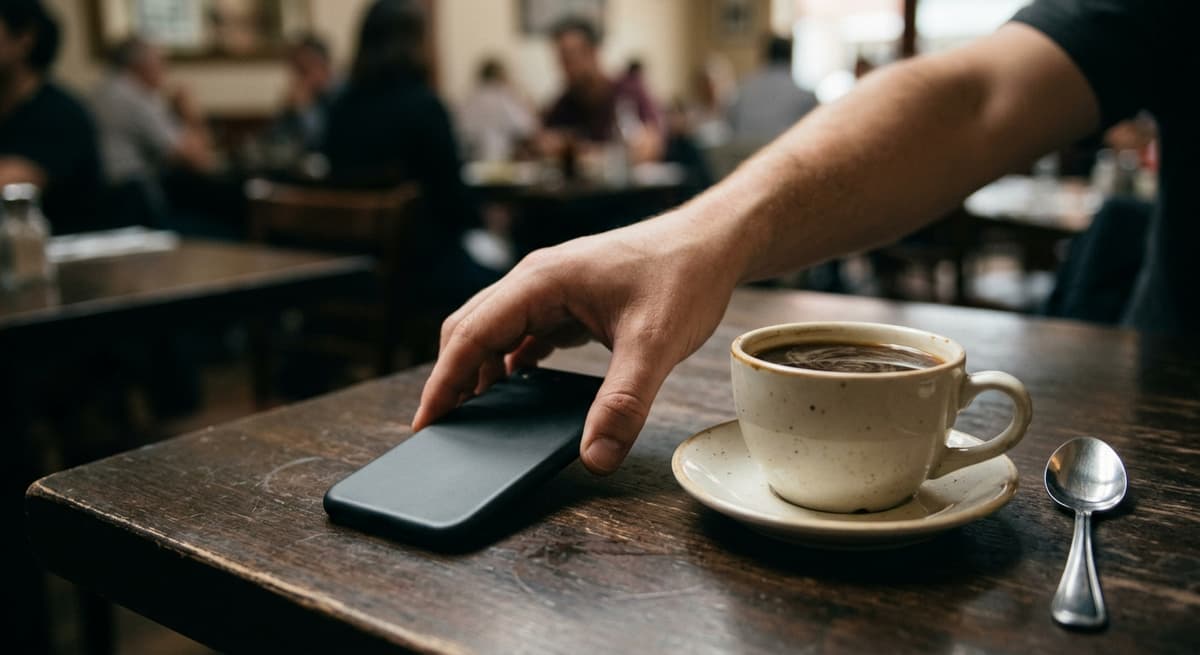
You can record your own conversations in restaurants and bars under one-party consent. Restaurants and bars can ask you to stop recording and can require you to leave. Recording in restrooms of any establishment is illegal under voyeurism statutes.
Recording Public Government Meetings
Missouri Sunshine Law
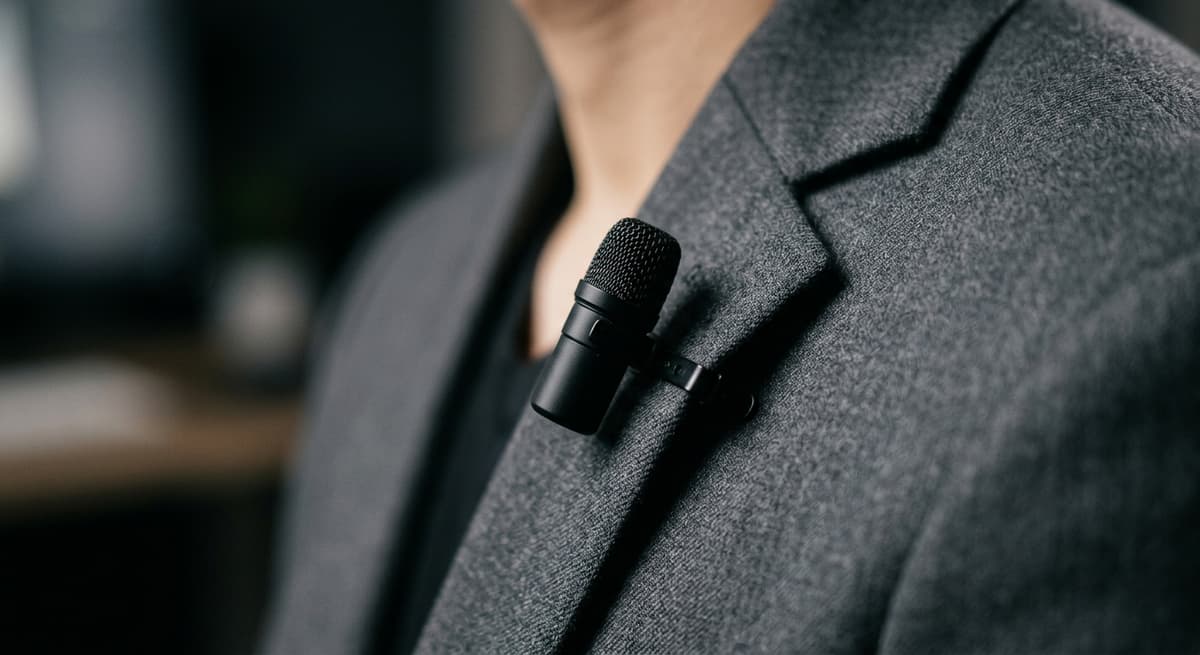
Missouri's Sunshine Law under Mo. Rev. Stat. Chapter 610 is one of the strongest open meetings laws in the country. Section 610.020 establishes that:
- All meetings of public governmental bodies must be open to the public
- Recording of public meetings must be allowed
- All votes and actions must be recorded
- At least 24 hours' notice must be given before meetings
What Meetings You Can Record
The Sunshine Law applies to every "public governmental body" in Missouri, including:
- Missouri General Assembly sessions and committee hearings
- Governor's office public events
- City council and alderman meetings
- County commission and county council meetings
- School board meetings
- Public university board of regents/curators meetings
- Special district boards (fire, water, sewer, library)
- Any board, commission, committee, or subcommittee created by law or executive order
Recording Rules for Public Meetings
Public bodies can impose reasonable time, place, and manner restrictions on recording, but they cannot prohibit recording entirely. Acceptable restrictions include:
- Requiring cameras and tripods to be placed in designated areas
- Limiting movement during proceedings to avoid disruption
- Restricting flash photography if it disrupts the meeting
- Requiring recording equipment to operate silently
Unacceptable restrictions include:
- Banning all recording devices
- Requiring advance permission to record
- Prohibiting recording during specific agenda items that are part of the open session
- Confiscating recording devices
Enforcement and Penalties
If a public body violates the Sunshine Law by preventing recording, Section 610.027 provides remedies including:
- Court orders requiring the body to comply with the law
- Voiding of actions taken during meetings that violated the Sunshine Law
- Civil penalties of up to $1,000 for knowing violations, rising to $5,000 for purposeful violations
- Attorney fees for successful plaintiffs
- Individual liability for members who purposely violate the law
Recording at Protests and Demonstrations
Your Rights During Protests
Missouri has a robust tradition of public protest, and your right to record during demonstrations is well-established. You can:
- Film protesters and counter-protesters in public spaces
- Record police officers managing the event
- Livestream the demonstration in real time
- Photograph signs, banners, and participants
Law Enforcement Interactions at Protests
Police cannot prevent you from recording at protests. Officers can:
- Order you to move back from a dangerous area
- Establish perimeters around active arrest scenes
- Direct pedestrian traffic for safety purposes
Officers cannot:
- Order you to stop recording
- Seize your phone or camera for recording
- Arrest you solely for filming (this violates the First and Fourth Amendments)
- Delete your recordings
Free Speech Zones
Some Missouri municipalities have designated "free speech zones" at certain events or locations. Courts have scrutinized these zones to ensure they do not unreasonably restrict First Amendment activity. A free speech zone that pushes protesters or recorders so far from the event that they cannot meaningfully observe or record may face constitutional challenge.
Recording in Transportation Settings
Public Transit
You can record on Missouri's public transit systems (MetroLink, MetroBus, and local transit authorities). Public transit vehicles and stations are public spaces where passengers have a reduced expectation of privacy. Metro Transit may have policies about commercial filming that require permits, but personal recording for documentation purposes is generally permitted.
Airports
Missouri's airports (Kansas City International, St. Louis Lambert International) are a mix of public and secure areas:
- Public areas (ticketing halls, baggage claim, curbside): Recording is generally permitted
- TSA screening areas: The TSA permits recording at security checkpoints as long as you do not interfere with screening operations
- Secure areas beyond screening: Airlines and airport authorities may restrict recording
- On aircraft: Airlines set their own recording policies; most restrict recording of crew and safety procedures
Ride-Share and Taxis
Drivers and passengers in ride-share vehicles (Uber, Lyft) and taxis can record under one-party consent. Many ride-share drivers use dashcams that record both the road and the interior. As a driver participating in conversations with passengers, you provide one-party consent for audio recording. Passengers who record their rides are also covered by one-party consent.
Recording at Public Events and Venues
Concerts, Sports, and Festivals
Recording policies at public events depend on the venue:
- Public venues (city parks hosting free concerts, street fairs): Recording is generally permitted
- Private venues (stadiums, arenas, concert halls): The venue sets recording rules. Most prohibit professional recording equipment but permit smartphone recording.
- Ticketed events: Tickets often include terms that restrict recording. Violating these terms could result in ejection.
Street Photography
Missouri does not have a specific statute restricting street photography. You can photograph anyone in a public space without their consent. Using photos commercially (for advertising, for example) may require a model release to avoid claims under the right of publicity, but editorial and artistic uses are protected by the First Amendment.
Drones and Public Recording
Missouri Drone Laws
Missouri addresses drone use in several statutes:
- Mo. Rev. Stat. Section 43.450 restricts law enforcement drone surveillance without a warrant (with exceptions for emergencies, crime scenes, and specific investigations)
- Local ordinances in some Missouri cities regulate drone operation in public spaces
FAA Regulations
The Federal Aviation Administration (FAA) regulates all drone operations in U.S. airspace. Recreational drone operators must:
- Register drones weighing over 0.55 pounds
- Follow FAA altitude limits (generally 400 feet)
- Maintain visual line of sight
- Avoid restricted airspace (near airports, military installations)
- Pass the TRUST (The Recreational UAS Safety Test) knowledge test
Privacy Concerns with Drones
Using a drone to record people in areas where they have a reasonable expectation of privacy (peering into windows, hovering over fenced backyards) can create legal liability under Missouri's privacy torts. Drone recording in public spaces visible from the air is generally treated the same as recording from ground level.
Explore More Missouri Recording Laws
Audio Recording | Video Recording | Voyeurism Laws | Workplace Recording | Recording Police | Phone Call Recording | Security Cameras | Recording in Public | Landlord-Tenant Recording | Dashcam Laws | School Recording | Medical Recording
Back to Missouri Recording Laws
More Missouri Recording Topics
More Missouri Laws
Frequently Asked Questions
Can I record video in public in Missouri?
Yes. Missouri has no statute prohibiting video recording in public spaces. The First Amendment protects your right to record in any area where you have a legal right to be. This includes streets, sidewalks, parks, and public buildings.
Do I need permission to record someone in public in Missouri?
For video-only recording in public, no permission is needed. People in public spaces have a reduced expectation of privacy. If your recording captures audio of a conversation, Missouri one-party consent law applies, meaning you need to be a party to the conversation or have consent from one participant.
Can a business stop me from recording inside their store?
Yes. Businesses are private property and can set their own recording policies. A store can post no-recording signs, ask you to stop filming, and ask you to leave. If you refuse to leave, you can be charged with trespassing. However, you can record from outside the business on a public sidewalk.
Can I record public government meetings in Missouri?
Yes. Missouri Sunshine Law under Mo. Rev. Stat. Chapter 610 requires that all public meetings be open and that recording be permitted. Public bodies can set reasonable rules about where you place equipment but cannot ban recording. Violations of the Sunshine Law can result in fines up to $5,000.
Can I fly a drone and record video in public in Missouri?
Yes, subject to FAA regulations and local ordinances. You must register your drone, follow altitude limits, and maintain line of sight. Using a drone to record people in private areas where they expect privacy (peering into windows, hovering over fenced yards) can create legal liability.
Updates
Independently fact-checked against the cited primary sources
Corrected the Sunshine Law civil-penalty description: knowing violations of Mo. Rev. Stat. Section 610.027 are capped at $1,000, not $5,000 (the $5,000 cap applies only to purposeful violations).
Governing law re-checked for recent changes
Reviewed and approved by an editor
The Law Behind This Article
This article rests on the statutory provisions below, held in our own legal record and retrieved from the official source. Tap a section to read the operative text.
Revised Statutes of Missouri, Title XXXVII (CRIMINAL PROCEDURE), Chapter 542
§ 542.402Penalty for illegal wiretapping, permitted activities.In forcecited in 17 of our articles
1. Except as otherwise specifically provided in sections 542.400 to 542.422, a person is guilty of a class E felony and upon conviction shall be punished as provided by law, if such person: (1) Knowingly intercepts, endeavors to intercept, or procures any other person to intercept or endeavor to intercept, any wire communication; (2) Knowingly uses, endeavors to use, or procures any other person to use or endeavor to use any electronic, mechanical, or other device to intercept any oral communication when such device transmits communications by radio or interferes with the transmission of such communication; provided, however, that nothing in sections 542.400 to 542.422 shall be construed to prohibit the use by law enforcement officers of body microphones and transmitters in undercover investigations for the acquisition of evidence and the protection of law enforcement officers and others working under their direction in such investigations; (3) Knowingly discloses, or endeavors to disclose, to any other person the contents of any wire communication, when he knows or has reason to know that the information was obtained through the interception of a wire communication in…
Official text (excerpt) · last checked 2026-08-31 · Read the full text in our law library · Verify at revisor.mo.gov
Cited in 6 court opinions in our collectionLatest citing opinion in our collection: 2026
In the courts (editorial summary, independently checked):Federal courts in Missouri have applied section 542.402 to covert audio recording. Fotoohighiam v. The City of Columbia Missouri (2025) let a wiretap count over recorded attorney-client jail calls proceed, with no prior consent shown, and Ward (2026) found a claim over a secretly recorded workplace conversation would not be futile.
Opinions citing this section in our collection:
- Bartnicki v. Vopper (Supreme Court of the United States 2001, 532 U.S. 514)“…nn. § 750 .539e (West 1991); Minn. Stat. § 626A.02 (2000); Mo. Rev. Stat. § 542.402 (2000); Neb. Rev. Stat. § 86-702 (19…”
- Boehner, John A. v. McDermott, James A. (Court of Appeals for the D.C. Circuit 1999, 191 F.3d 463)“…p. 1995); Minn.Stat. Ann. §§ 626A.02, 626A.13 (West 1998); Mo. Rev. Stat. §§ 542.402 , 542.418 (1996); Mont.Code Ann. § 45-8…”
- John Doe v. SSM Health Care Corporation (Court of Appeals for the Eighth Circuit 2025, 126 F.4th 1329)✓Patients alleged a hospital's patient portal secretly sent health data to Facebook, pleading a Missouri wiretap claim under 542.402; the Eighth Circuit addressed only removal, held the wiretap count did not change that analysis, and affirmed remand without reaching its merits.
Identified automatically from the court opinions citing this section — not a ranking of which case controls.
Also relied on in: Missouri Audio Recording Laws: One-Party Consent Rules and Penalties, Missouri Landlord-Tenant Recording Laws: Surveillance, Privacy, and Consent, Missouri Phone Call Recording Laws: Consent Rules for Landline, Cell, and VoIP
Revised Statutes of Missouri, Title XXXVIII (CRIMES AND PUNISHMENT; PEACE OFFICERS AND PUBLIC DEFENDERS), Chapter 569
§ 569.140Trespass in the first degree — penalty.In forcecited in 2 of our articles
1. A person commits the offense of trespass in the first degree if he or she knowingly enters unlawfully or knowingly remains unlawfully in a building or inhabitable structure or upon real property. 2. A person does not commit the offense of trespass in the first degree by entering or remaining upon real property unless the real property is fenced or otherwise enclosed in a manner designed to exclude intruders or as to which notice against trespass is given by: (1) Actual communication to the actor; or (2) Posting in a manner reasonably likely to come to the attention of intruders. 3. The offense of trespass in the first degree is a class B misdemeanor, unless the victim is intentionally targeted as a law enforcement officer, as defined in section 556.061, or the victim is targeted because he or she is a relative within the second degree of consanguinity or affinity to a law enforcement officer, in which case it is a class A misdemeanor. If the building or real property is part of a nuclear power plant, the offense of trespass in the first degree is a class E felony.
Official text (excerpt) · last checked 2026-07-31 · Read the full text in our law library · Verify at revisor.mo.gov
Cited in 69 court opinions in our collectionLatest citing opinion in our collection: 2025
Opinions citing this section in our collection:
- State v. Neighbors (Missouri Court of Appeals 1980, 613 S.W.2d 143)“…iling to instruct the jury on trespass in the first degree (Section 569.140, RSMo 1978) and trespass in the second degree…”
- State v. Callen (Supreme Court of Missouri 2001, 45 S.W.3d 888)“…th the class D felony of trespass in the first degree under section 569.140, RSMo 1994, and the enhanced punishment provi…”
- State v. Nolan (Supreme Court of Missouri 1994, 872 S.W.2d 99)“…trespass is entering or remaining in a property unlawfully. § 569.140, RSMo 1986. Nolan was not charged with enteri…”
Identified automatically from the court opinions citing this section — not a ranking of which case controls.
Also relied on in: Missouri Video Recording Laws: Public Spaces, Private Property, and Consent Rules
Revised Statutes of Missouri, Title XXXIX (CONDUCT OF PUBLIC BUSINESS), Chapter 610
§ 610.020Notice of meetings, when required — recording of meetings to be allowed, guidelines, penalty — accessibility of meetings — minutes of meetings to be kept, content — voting records to be included.In forcecited in 3 of our articles
1. All public governmental bodies shall give notice of the time, date, and place of each meeting, and its tentative agenda, in a manner reasonably calculated to advise the public of the matters to be considered, and if the meeting will be conducted by telephone or other electronic means, the notice of the meeting shall identify the mode by which the meeting will be conducted and the designated location where the public may observe and attend the meeting. If a public body plans to meet by internet chat, internet message board, or other computer link, it shall post a notice of the meeting on its website in addition to its principal office and shall notify the public how to access that meeting. Reasonable notice shall include making available copies of the notice to any representative of the news media who requests notice of meetings of a particular public governmental body concurrent with the notice being made available to the members of the particular governmental body and posting the notice on a bulletin board or other prominent place which is easily accessible to the public and clearly designated for that purpose at the principal office of the body holding the meeting, or if…
Official text (excerpt) · last checked 2026-07-31 · Read the full text in our law library · Verify at revisor.mo.gov
Cited in 10 court opinions in our collectionLatest citing opinion in our collection: 2016
Opinions citing this section in our collection:
- Opinion No. (1990) (Missouri Attorney General Reports 1990)“…eason to amend the notice provisions for closed meetings. Section 610.020 , RSMo Supp. 1989, establishes requirements fo…”
- Opinion No. 18-81 (1981) (Missouri Attorney General Reports 1981)“…nswering this question one must examine the requirements of § 610.020 , RSMo. That section provides that the governm…”
- Foster v. Village of Brownington (Missouri Court of Appeals 2004, 140 S.W.3d 603)“…g of the Town Board was void for its failure to comply with section 610.020 RSMo; they sought determination of their leg…”
Identified automatically from the court opinions citing this section — not a ranking of which case controls.
Also relied on in: Missouri Laws on Recording Police: Your Rights and Legal Limits, Missouri School Recording Laws: Student, Parent, and Teacher Rights (2026)
§ 610.027Violations — remedies, procedure, penalty, purposeful violations — validity of actions by governing bodies in violation — governmental bodies may seek interpretation of law, attorney general to provide.In forcecited in 2 of our articles
1. The remedies provided by this section against public governmental bodies shall be in addition to those provided by any other provision of law. Any aggrieved person, taxpayer to, or citizen of, this state, or the attorney general or prosecuting attorney, may seek judicial enforcement of the requirements of sections 610.010 to 610.026. Suits to enforce sections 610.010 to 610.026 shall be brought in the circuit court for the county in which the public governmental body has its principal place of business. Upon service of a summons, petition, complaint, counterclaim, or cross-claim in a civil action brought to enforce the provisions of sections 610.010 to 610.026, the custodian of the public record that is the subject matter of such civil action shall not transfer custody, alter, destroy, or otherwise dispose of the public record sought to be inspected and examined, notwithstanding the applicability of an exemption pursuant to section 610.021 or the assertion that the requested record is not a public record until the court directs otherwise.
Official text (excerpt) · last checked 2026-07-31 · Read the full text in our law library · Verify at revisor.mo.gov
Cited in 21 court opinions in our collectionLatest citing opinion in our collection: 2025
Opinions citing this section in our collection:
- Hertzog v. City of Greenwood (Missouri Court of Appeals 1997, 944 S.W.2d 588)“…It alleged: 4. Plaintiff brings this action pursuant to Section 610.027, RSMo., “Violations— Remedies, Procedures, Pe…”
- D.K.B. v. Toelke (Missouri Court of Appeals 1995, 903 S.W.2d 267)“…and held liable for her attorney fees and costs pursuant to RSMo § 610.027 (Supp.1992). 2 Appellant moved for s…”
- Champ v. Poelker (Missouri Court of Appeals 1988, 755 S.W.2d 383)“…fine the officers and directors of both corporations under section 610.027, RSMo 1986, for purposefully violating the Su…”
Identified automatically from the court opinions citing this section — not a ranking of which case controls.
United States Code Title 18
§ 2511Interception and disclosure of wire, oral, or electronic communications prohibitedIn forcecited in 422 of our articles
Except as otherwise specifically provided in this chapter any person who— intentionally intercepts, endeavors to intercept, or procures any other person to intercept or endeavor to intercept, any wire, oral, or electronic communication; intentionally uses, endeavors to use, or procures any other person to use or endeavor to use any electronic, mechanical, or other device to intercept any oral communication when— such device is affixed to, or otherwise transmits a signal through, a wire, cable, or other like connection used in wire communication; or such device transmits communications by radio, or interferes with the transmission of such communication; or such person knows, or has reason to know, that such device or any component thereof has been sent through the mail or transported in interstate or foreign commerce; or such use or endeavor to use (A) takes place on the premises of any business or other commercial establishment the operations of which affect interstate or foreign commerce; or (B) obtains or is for the purpose of obtaining information relating to the operations of any business or other commercial establishment the operations of which affect interstate or foreign…
Official text (excerpt) · last checked 2026-09-17 · Read the full text in our law library · Verify at uscode.house.gov
Cited in 2,045 court opinions in our collectionLatest citing opinion in our collection: 2026
In the courts (editorial summary, independently checked):Griggs-Ryan v. Smith (1990) applied the Section 2511(2)(d) prior-consent exception, treating a tenant repeatedly told that all incoming calls were taped as having impliedly consented. United States v. United States District Court (1972) read the then-current Section 2511(3) as conferring no presidential surveillance power.
Opinions citing this section in our collection:
- Mitchell v. Forsyth (Supreme Court of the United States 1985, 472 U.S. 511)✓The Attorney General authorized a warrantless 1970 national security wiretap that caught the plaintiff's calls; the Court held the since-repealed Section 2511(3) disclaimer left the tap lawful under Title III, and that Mitchell had qualified immunity.
- United States v. United States District Court for the Eastern District of Michigan (Supreme Court of the United States 1972, 407 U.S. 297)✓The Attorney General approved warrantless wiretaps on members of a domestic group accused of bombing a CIA office; the Court read Section 2511(3) as a congressional disclaimer conferring no surveillance power, then held the Fourth Amendment required prior judicial approval.
- Forsyth v. Barr (Court of Appeals for the Fifth Circuit 1994, 19 F.3d 1527)✓Dallas police used, in an internal affairs probe of an officer, calls private parties allegedly intercepted illegally; assuming that was unlawful, the Fifth Circuit held Section 2517(1) and (2) allowed the disclosure and use, defeating the Section 2511(1)(c) and (d) claims.
Identified automatically from the court opinions citing this section — not a ranking of which case controls.
Also relied on in: Connecticut Recording Laws (2026): Hybrid Consent Rules Explained, Oregon Recording Laws (2026): Hybrid One-Party and All-Party Rules, US Recording Laws by State (2026): All 50 States Explained
Explore the law
This article also draws on these acts and chapters (opening at their first section): Revised Statutes of Missouri, Title XXXIX (CONDUCT OF PUBLIC BUSINESS), Chapter 610 § 610.010 (Definitions.)
Related law for further reading — not part of this article’s citations.
Search our full record of US law — 2.1 million sections, every state + federal →
Sources and References
- Mo. Rev. Stat. Section 542.402 - Wiretapping(revisor.mo.gov).gov
- Mo. Rev. Stat. Chapter 610 - Sunshine Law(revisor.mo.gov).gov
- Mo. Rev. Stat. Section 610.020 - Open Meetings(revisor.mo.gov).gov
- Mo. Rev. Stat. Section 610.027 - Sunshine Law Enforcement(revisor.mo.gov).gov
- Mo. Rev. Stat. Section 569.140 - Trespass(revisor.mo.gov).gov
- Mo. Rev. Stat. Section 43.450 - Drone Restrictions(revisor.mo.gov).gov
- 18 U.S.C. Section 2511 - Federal Wiretap Act(law.cornell.edu)