
Missouri
Missouri School Recording Laws: Student, Parent, and Teacher Rights (2026)
Independently fact-checked against primary sources (last audited November 1, 2026). · Reviewed by the RecordingLaw editorial team. · Law checked current as of November 1, 2026. · 6 primary sources cited on this page. How we verify our legal content
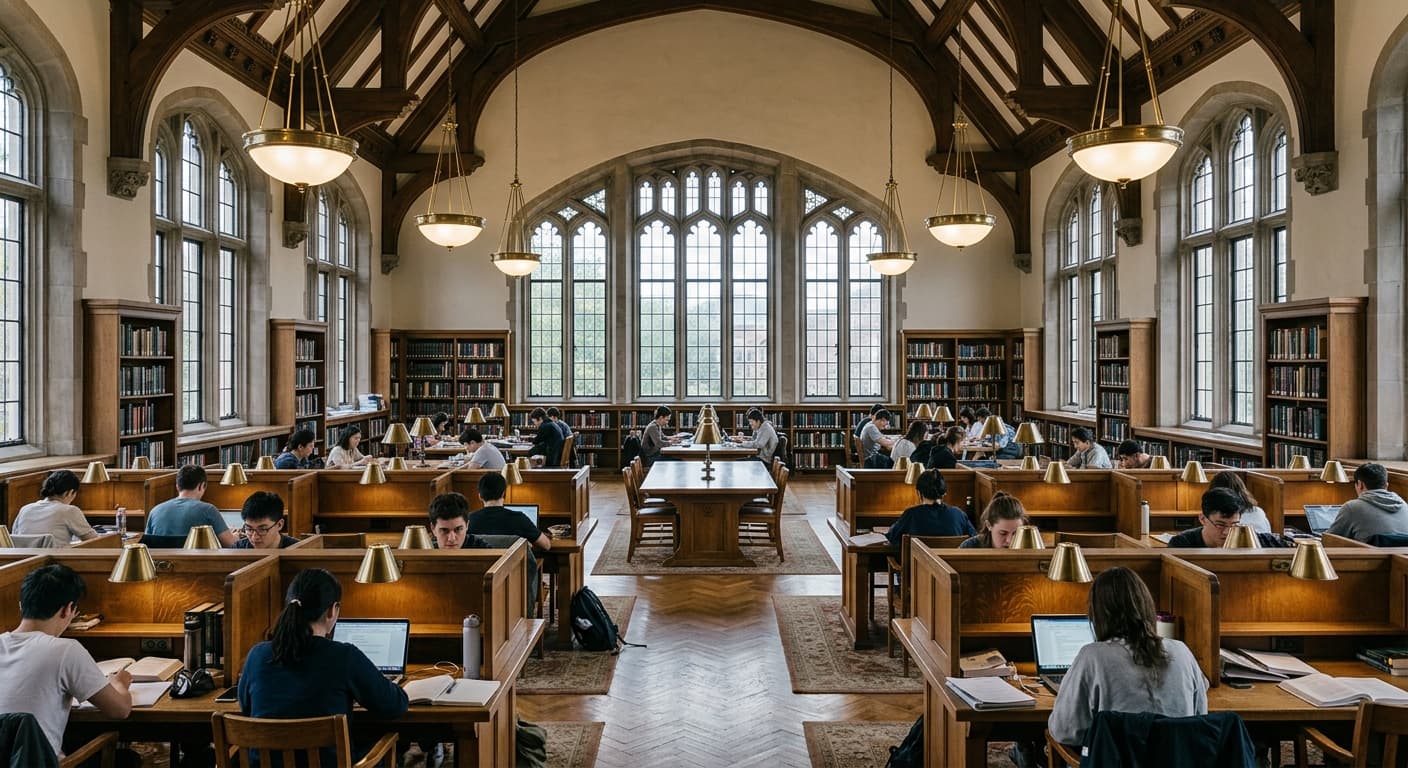
In Missouri, students and parents can generally record a conversation they take part in at school. Missouri's participant exception (Mo. Rev. Stat. Section 542.402.2(3)) covers phone calls; for face-to-face conversations Missouri law is unsettled, an ordinary recorder arguably falls outside its wiretap offense, and the federal Wiretap Act lets a participant record unless the purpose is criminal or tortious. Getting everyone's consent is the cautious course. State law also requires every public school district to bar student phone use during the school day, and recording other students may implicate FERPA, though FERPA does not prohibit personal recordings by parents or students.
Recording in Missouri schools involves a balance between the state's one-party consent wiretapping law, federal student privacy regulations, and school district policies. This guide covers Missouri recording law for K-12 schools, school board meetings, special education meetings, and campus security.
Missouri Recording Law in Schools
One-Party Consent Applies
Missouri is a one-party consent state under Mo. Rev. Stat. Section 542.402. The statute's party-consent exception is written for wire communications, such as phone calls: a participant can record without informing others, provided the recording is not for criminal or tortious purposes. For in-person conversations, the statute reaches oral communications only when the recording device transmits by radio or interferes with transmission, so a participant making an ordinary recording of a face-to-face school conversation arguably does not fall within that provision.

No Missouri appellate court has resolved that question, so the law on in-person recording is unsettled. Federal law (18 U.S.C. Section 2511(2)(d)) lets a participant record unless the purpose is criminal or tortious, and the cautious course is to get everyone's consent. In a school context, that means students can record conversations they take part in with teachers and administrators, parents can record conferences, and teachers can record conversations with students and parents. Parents also have a specific state-law right to audio record IEP and 504 meetings, covered below.
School Policies vs. State Law
Since the 2025-26 school year, Missouri law (Mo. Rev. Stat. Section 162.207) requires every public school district and charter school to adopt a written policy that bars students from displaying or using phones and other personal communication devices from the beginning to the end of the school day, including class time, meals, breaks, passing periods and study halls.
Policies must make exceptions for IEPs, 504 plans, individualized health plans and federal disability and civil rights laws, and may allow use in emergencies or when a teacher directs it. Violating school policy is disciplinary, not criminal. A student who records on a phone during the school day will usually be breaking that policy and may face school consequences, even when the recording itself is not a crime.
Recording at School Board Meetings
Missouri Sunshine Law
Missouri's Sunshine Law (Mo. Rev. Stat. Section 610.010 et seq.) requires public bodies, including school boards, to conduct business openly. The public has the right to attend open meetings, and Section 610.020 requires a school board to allow audio and video recording of them, under reasonable guidelines that limit disruption. School boards often meet in closed session on personnel, student and legal matters under Section 610.021, and audio recording a closed session without the board's permission is a class C misdemeanor.
Recording IEP Meetings

Missouri law protects a parent's right to audio record IEP and Section 504 meetings. Under Mo. Rev. Stat. Section 162.686, no school district or charter school may prohibit a parent or legal guardian from audio recording any meeting held under the federal IDEA or Section 504, and a district may not require more than 24 hours' advance notice. The recording belongs to the parent and is not a public record under the Sunshine Law.
The statute covers audio only; video recording is left to district policy. The IDEA itself gives parents no right to record. Federal guidance published with the 1999 IDEA regulations (Appendix A, Question 21, 64 FR 12477) lets a school prohibit or limit recording unless it is needed for the parent to understand the IEP or the process, but Missouri's statute gives parents the stronger audio right. The Missouri Department of Elementary and Secondary Education (DESE) oversees special education services in the state.
Student Recording Rights
Students can record conversations they participate in, but because of Missouri's school-day device law, most phone recording during the school day breaks school policy. Students needing recording as a Section 504 or IDEA accommodation have additional protections.
Security Cameras in Schools
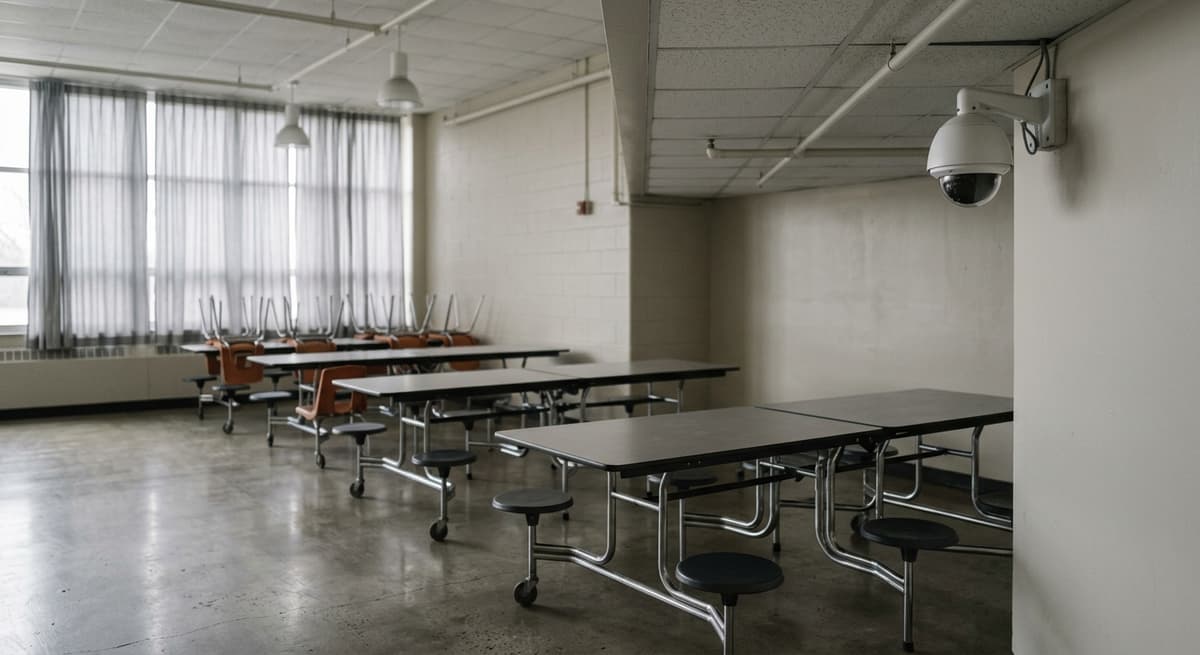
Missouri schools can install security cameras in hallways, entrances, parking lots, and common areas. No Missouri statute specifically governs where schools may place cameras, but a camera in a restroom, locker room or changing area that records a student undressed would be a crime under Mo. Rev. Stat. Section 565.252, so schools keep cameras out of those spaces. School security cameras in common areas are a routine part of district safety plans, adopted at the district level.
FERPA and Recording
FERPA governs school handling of education records. It does not restrict parents or students from making their own recordings.
More Missouri Recording Laws
Audio Recording | Video Recording | Voyeurism Laws | Workplace Recording | Recording Police | Phone Call Recording | Security Cameras | Recording in Public | Landlord-Tenant Recording | Dashcam Laws | School Recording | Medical Recording
Back to Missouri Recording Laws
More Missouri Recording Topics
More Missouri Laws
- Missouri AI Meeting Recording Laws
- Missouri Dashcam Laws
- Missouri Data Privacy Laws
- Missouri Deepfake Laws
- Missouri Employee Monitoring Laws
- Missouri GPS Tracking Laws
- Missouri Police Bodycam Laws
- Missouri Smart Glasses Recording Laws
Frequently Asked Questions
Can I record my child's IEP meeting in Missouri?
Yes, by audio. Mo. Rev. Stat. Section 162.686 bars Missouri school districts and charter schools from prohibiting a parent or legal guardian from audio recording an IEP or Section 504 meeting, and a district may require no more than 24 hours' advance notice. The recording belongs to you and is not a public record. The statute does not cover video, which is left to district policy.
Can a student record a teacher in Missouri?
A student who takes part in a conversation can generally record it without breaking the law. But Missouri law (Mo. Rev. Stat. Section 162.207) requires every public school district to bar student phone use for the whole school day, so recording on a phone at school usually violates school policy. Violating policy is disciplinary, not criminal.
Can I record a school board meeting in Missouri?
Yes, for the open portion. Missouri's Sunshine Law (Section 610.020) requires school boards to allow audio and video recording of open meetings. Audio recording a closed session without the board's permission is a class C misdemeanor.
Can schools put security cameras in classrooms?
No Missouri statute specifically governs school camera placement, so districts set camera policies for hallways, entrances, common areas and, in some districts, classrooms. A camera in a restroom, locker room or changing area that records a student undressed would be a crime under Mo. Rev. Stat. Section 565.252, and footage a school keeps of identifiable students can be an education record under FERPA.
Does FERPA prevent recording at school?
No. FERPA governs how schools handle education records, not recordings that parents or students make themselves.
Updates
We corrected this page to explain that Missouri law (section 162.686) guarantees parents the right to audio record IEP and 504 meetings with no more than 24 hours' notice, that section 162.207 requires districts to bar student phone use all school day, that in-person recording rests on the federal Wiretap Act rather than Missouri's statute, and that audio recording a closed school board session is a misdemeanor.
Independently fact-checked against the cited primary sources; governing law re-checked for recent changes
Clarified that Missouri's party-consent exception in Section 542.402 is written for wire communications and how the statute treats in-person recordings at school.
Removed a fabricated Attorney General attribution, corrected the Sunshine Law pinpoint to 610.020, and repointed a dead Section 504 link.
Independently fact-checked against the cited primary sources; governing law re-checked for recent changes
Governing law re-checked for recent changes
Reviewed and approved by an editor
The Law Behind This Article
This article rests on the statutory provisions below, held in our own legal record and retrieved from the official source. Tap a section to read the operative text.
Revised Statutes of Missouri, Title XXXVII (CRIMINAL PROCEDURE), Chapter 542
§ 542.402Penalty for illegal wiretapping, permitted activities.In forcecited in 18 of our articles
1. Except as otherwise specifically provided in sections 542.400 to 542.422, a person is guilty of a class E felony and upon conviction shall be punished as provided by law, if such person: (1) Knowingly intercepts, endeavors to intercept, or procures any other person to intercept or endeavor to intercept, any wire communication; (2) Knowingly uses, endeavors to use, or procures any other person to use or endeavor to use any electronic, mechanical, or other device to intercept any oral communication when such device transmits communications by radio or interferes with the transmission of such communication; provided, however, that nothing in sections 542.400 to 542.422 shall be construed to prohibit the use by law enforcement officers of body microphones and transmitters in undercover investigations for the acquisition of evidence and the protection of law enforcement officers and others working under their direction in such investigations; (3) Knowingly discloses, or endeavors to disclose, to any other person the contents of any wire communication, when he knows or has reason to know that the information was obtained through the interception of a wire communication in…
Official text (excerpt) · last checked 2026-09-24 · Read the full text in our law library · Verify at revisor.mo.gov
Cited in 6 court opinions in our collectionLatest citing opinion in our collection: 2026
In the courts (editorial summary, independently checked):Federal courts in Missouri have applied section 542.402 to covert audio recording. Fotoohighiam v. The City of Columbia Missouri (2025) let a wiretap count over recorded attorney-client jail calls proceed, with no prior consent shown, and Ward (2026) found a claim over a secretly recorded workplace conversation would not be futile.
Opinions citing this section in our collection:
- Bartnicki v. Vopper (Supreme Court of the United States 2001, 532 U.S. 514)“…nn. § 750 .539e (West 1991); Minn. Stat. § 626A.02 (2000); Mo. Rev. Stat. § 542.402 (2000); Neb. Rev. Stat. § 86-702 (19…”
- Boehner, John A. v. McDermott, James A. (Court of Appeals for the D.C. Circuit 1999, 191 F.3d 463)“…p. 1995); Minn.Stat. Ann. §§ 626A.02, 626A.13 (West 1998); Mo. Rev. Stat. §§ 542.402 , 542.418 (1996); Mont.Code Ann. § 45-8…”
- John Doe v. SSM Health Care Corporation (Court of Appeals for the Eighth Circuit 2025, 126 F.4th 1329)✓Patients alleged a hospital's patient portal secretly sent health data to Facebook, pleading a Missouri wiretap claim under 542.402; the Eighth Circuit addressed only removal, held the wiretap count did not change that analysis, and affirmed remand without reaching its merits.
Identified automatically from the court opinions citing this section — not a ranking of which case controls.
Also relied on in: Missouri Smart Glasses Recording Laws, Missouri Recording Laws (2026): One-Party Consent Rules, Missouri Audio Recording Laws: One-Party Consent Rules and Penalties
Revised Statutes of Missouri, Title XXXIX (CONDUCT OF PUBLIC BUSINESS), Chapter 610
§ 610.010Definitions.In forcecited in 7 of our articles
As used in this chapter, unless the context otherwise indicates, the following terms mean: (1) "Closed meeting", "closed record", or "closed vote", any meeting, record or vote closed to the public; (2) "Copying", if requested by a member of the public, copies provided as detailed in section 610.026, if duplication equipment is available; (3) "Public business", all matters which relate in any way to the performance of the public governmental body's functions or the conduct of its business; (4) "Public governmental body", any legislative, administrative or governmental entity created by the Constitution or statutes of this state, by order or ordinance of any political subdivision or district, judicial entities when operating in an administrative capacity, or by executive order, including: (a) Any body, agency, board, bureau, council, commission, committee, board of regents or board of curators or any other governing body of any institution of higher education, including a community college, which is supported in whole or in part from state funds, including but not limited to the administrative entity known as "The Curators of the University of Missouri" as established by…
Official text (excerpt) · last checked 2026-07-31 · Read the full text in our law library · Verify at revisor.mo.gov
Cited in 52 court opinions in our collectionLatest citing opinion in our collection: 2026
Opinions citing this section in our collection:
- Rachal Laut, f/k/a Rachal Govro, and John M. Soellner v. City of Arnold (Supreme Court of Missouri 2016, 491 S.W.3d 191)“…either knowingly or purposefully violated the provisions of RSMo §§ 610.010-610.035.” Plaintiffs appealed. The cour…”
- Opinion No. (1997) (Missouri Attorney General Reports 1997)“…chapter 610, RSMo, and are not public records as defined in section 610.010 , RSMo, and shall be available [only] to court…”
- State v. Bachman (Missouri Court of Appeals 1984, 675 S.W.2d 41)“…sure results in the records being closed to the public, see § 610.010, RSMo Supp.1984. If records are closed or exp…”
Identified automatically from the court opinions citing this section — not a ranking of which case controls.
Also relied on in: Missouri Laws on Recording Police: Your Rights and Legal Limits, Missouri Laws on Recording in Public: First Amendment Rights and Limits, Missouri Security Camera Laws: Home, Business, and Neighbor Rules
§ 610.020Notice of meetings, when required — recording of meetings to be allowed, guidelines, penalty — accessibility of meetings — minutes of meetings to be kept, content — voting records to be included.In forcecited in 3 of our articles
1. All public governmental bodies shall give notice of the time, date, and place of each meeting, and its tentative agenda, in a manner reasonably calculated to advise the public of the matters to be considered, and if the meeting will be conducted by telephone or other electronic means, the notice of the meeting shall identify the mode by which the meeting will be conducted and the designated location where the public may observe and attend the meeting. If a public body plans to meet by internet chat, internet message board, or other computer link, it shall post a notice of the meeting on its website in addition to its principal office and shall notify the public how to access that meeting. Reasonable notice shall include making available copies of the notice to any representative of the news media who requests notice of meetings of a particular public governmental body concurrent with the notice being made available to the members of the particular governmental body and posting the notice on a bulletin board or other prominent place which is easily accessible to the public and clearly designated for that purpose at the principal office of the body holding the meeting, or if…
Official text (excerpt) · last checked 2026-07-31 · Read the full text in our law library · Verify at revisor.mo.gov
Cited in 10 court opinions in our collectionLatest citing opinion in our collection: 2016
Opinions citing this section in our collection:
- Opinion No. (1990) (Missouri Attorney General Reports 1990)“…eason to amend the notice provisions for closed meetings. Section 610.020 , RSMo Supp. 1989, establishes requirements fo…”
- Opinion No. 18-81 (1981) (Missouri Attorney General Reports 1981)“…nswering this question one must examine the requirements of § 610.020 , RSMo. That section provides that the governm…”
- Foster v. Village of Brownington (Missouri Court of Appeals 2004, 140 S.W.3d 603)“…g of the Town Board was void for its failure to comply with section 610.020 RSMo; they sought determination of their leg…”
Identified automatically from the court opinions citing this section — not a ranking of which case controls.
Sources and References
- Mo. Rev. Stat. Section 542.402 - Wiretapping Penalties and Exceptions(revisor.mo.gov).gov
- Mo. Rev. Stat. Section 610.020 - Sunshine Law: Open Meetings and Recording(revisor.mo.gov).gov
- FERPA - U.S. Department of Education(studentprivacy.ed.gov).gov
- IDEA - Individuals with Disabilities Education Act(sites.ed.gov).gov
- Missouri Department of Elementary and Secondary Education (DESE)(dese.mo.gov).gov
- Mo. Rev. Stat. Section 542.400 (definitions: wire and oral communication)(revisor.mo.gov).gov