
Missouri
Missouri Medical Recording Laws: Patient Rights, HIPAA, and Consent (2026)
Independently fact-checked against primary sources (last audited August 15, 2026). · Reviewed by the RecordingLaw editorial team. · Law checked current as of August 15, 2026. · 9 primary sources cited on this page. How we verify our legal content
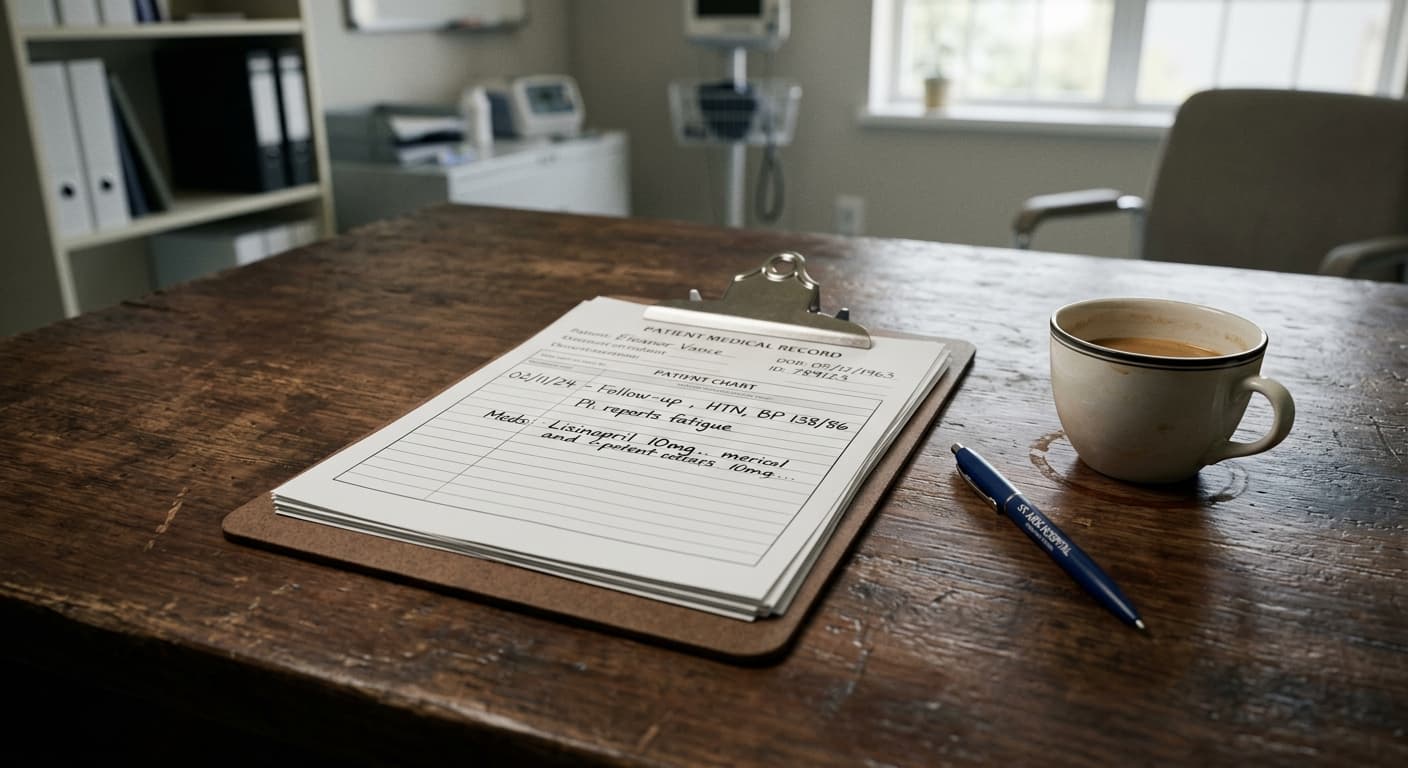
In Missouri, a patient may record their own medical appointment without informing the provider. Under Mo. Rev. Stat. Section 542.402, any party to a conversation may record it. HIPAA restricts how providers handle patient information but does not prohibit patients from recording their own visits.
Missouri patients have the legal right to record their own medical appointments. Under Mo. Rev. Stat. Section 542.402, the state's one-party consent law, any person who is a party to a conversation can record it without the other party's knowledge or permission. This applies to conversations with doctors, nurses, specialists, therapists, and other healthcare providers. The recording cannot be made for criminal or tortious purposes.
This guide covers patient recording rights in Missouri, the interaction between state law and HIPAA, healthcare facility policies, telehealth recording, mental health considerations, and how medical recordings function as evidence in legal proceedings. For advice specific to your situation, consult a licensed Missouri attorney.
Patient Recording Rights in Missouri
Can You Record Your Doctor in Missouri?
Yes. Missouri is a one-party consent state for wire and oral communications. Under Mo. Rev. Stat. Section 542.402, a person who is a party to a communication may intercept (record) that communication without the other party's consent. As a patient participating in a medical conversation, your own knowledge of the recording satisfies the consent requirement.
The statute contains one key limitation: the recording must not be made for the purpose of committing a criminal or tortious act. Recording your own medical appointment for personal reference, memory aid, or evidence preservation does not fall into that category.
Why Patients Record Medical Visits
Research published in medical journals has found that patients retain only 40 to 80 percent of medical information provided during appointments, and nearly half of what they do retain is inaccurate. Recording addresses this problem directly.
Patients record medical visits to review complex treatment plans and medication instructions later, share accurate information with family members and caregivers, document informed consent discussions before procedures, preserve evidence if a medical error or miscommunication occurs, and reduce disagreements about what a provider said during an appointment.
Several medical organizations have acknowledged the benefits of patient recording. Studies show patients who record appointments demonstrate better understanding of their conditions and higher adherence to treatment plans.
Types of Medical Encounters You Can Record
Under one-party consent, Missouri patients can record a wide range of medical interactions:
- Doctor visits. Discussions about diagnoses, treatment options, and prognosis with your physician.
- Specialist consultations. Complex medical information from cardiologists, oncologists, neurologists, and other specialists.
- Informed consent conversations. Discussions about risks, benefits, and alternatives before procedures or surgeries.
- Pharmacy consultations. Instructions about medication dosages, interactions, and side effects.
- Nursing interactions. Post-operative instructions, wound care directions, and medication schedules.
- Physical therapy and rehabilitation. Exercise instructions and recovery benchmarks.
- Insurance-related conversations. Discussions about coverage, pre-authorization, and billing with facility staff.
You do not need to inform any healthcare provider that you are recording. Your participation in the conversation satisfies Missouri's one-party consent requirement.
HIPAA and Patient Recording
What HIPAA Does and Does Not Do
The Health Insurance Portability and Accountability Act (HIPAA) is frequently misunderstood in the context of patient recording. Here is what HIPAA actually covers:
HIPAA restricts healthcare providers and health plans. The HIPAA Privacy Rule regulates how covered entities (hospitals, doctors, insurers) collect, store, use, and disclose protected health information (PHI).
HIPAA does not restrict patients. Patients are not "covered entities" under HIPAA. The law does not prevent you from recording your own medical appointment, sharing that recording with family, or using it in legal proceedings.
| Misconception | Reality |
|---|---|
| "HIPAA says you cannot record your doctor" | False. HIPAA does not address patient recording at all. |
| "Having a recording of a medical visit violates HIPAA" | False. HIPAA applies only to covered entities, not patients. |
| "Your doctor can cite HIPAA to stop you from recording" | Incorrect as a legal matter, though facilities may have separate policies. |
| "Sharing a recording of your visit violates HIPAA" | False for the patient. A provider sharing your information without consent would be a violation. |
HIPAA and Provider Recording
While HIPAA does not restrict patients, it creates obligations for providers. If a provider records a visit, that recording becomes part of the medical record and is subject to HIPAA protections. Under Mo. Rev. Stat. Section 191.227, Missouri patients have the right to access their own medical records, including any recordings a provider has made. Providers must furnish copies of health records within a reasonable time upon written request.
Healthcare Facility Recording Policies

Can a Hospital or Clinic Prohibit Recording?
Healthcare facilities are private property and can adopt internal policies that restrict or prohibit recording on their premises. These policies function as conditions of receiving services, similar to dress codes or visitor hour rules.
A facility recording policy is not the same as a law. Violating a hospital's recording policy is not a crime under Missouri law. However, the facility could ask you to stop recording, decline to continue a non-emergency appointment, or in extreme cases ask you to leave the premises. The facility cannot call the police and have you arrested for recording your own appointment, because one-party consent under Mo. Rev. Stat. Section 542.402 makes the recording legal.
Emergency departments must provide stabilizing care regardless of recording policies under the federal Emergency Medical Treatment and Labor Act (EMTALA).
Common Facility Recording Policies
Healthcare facilities in Missouri may prohibit recording in waiting rooms to protect other patients' privacy, require patients to ask permission before recording a visit, ban recording in operating rooms and procedure areas, or restrict photography anywhere in the facility. These policies vary widely from one institution to another.
Best Practices for Patients
While Missouri law permits recording without notification, informing your provider can maintain a good clinical relationship. A simple statement such as "I would like to record this so I can review the instructions later" is often well received. Many providers view patient recording as a tool for better health outcomes. If a facility has a recording policy, ask about it at check-in.
Recording Other Patients in Healthcare Settings
Privacy in Waiting Rooms and Common Areas
One-party consent applies to conversations you participate in. It does not authorize you to record conversations between other patients and staff that you are not part of. Recording other patients in waiting rooms, hallways, or common areas without their consent could violate Missouri's voyeurism statute (Mo. Rev. Stat. Section 565.252) if it captures individuals in states of undress, or could give rise to civil privacy claims.
Hospitals typically have security cameras in lobbies, hallways, parking areas, and emergency department common areas. Cameras are not permitted in patient examination rooms, restrooms, or changing areas.
Recording Staff and Other Employees
You can record conversations you have directly with nurses, technicians, administrative staff, and other facility employees under one-party consent. You cannot record private conversations between staff members that you are not a party to.
Telehealth Recording in Missouri
Patient Recording of Telehealth Visits
Missouri has expanded telehealth access through Mo. Rev. Stat. Section 191.1145 and related provisions. Under one-party consent, you can record telehealth appointments you participate in, whether conducted by video, audio-only, or asynchronous platforms.
Many telehealth platforms (Zoom, Doxy.me, MyChart Video) have built-in recording features that typically notify all participants. You may also use a separate device or screen recording software to capture the session.
Provider Recording of Telehealth Visits
Providers participating in a telehealth call can also record under one-party consent. Any provider recording becomes part of the medical record and is subject to HIPAA protections. Missouri's telehealth statute requires providers to comply with HIPAA when delivering telehealth services.
Cross-State Telehealth Recording
If your healthcare provider is located in a two-party consent state but delivering telehealth services to you in Missouri, the question of which state's law applies is unsettled. Courts have not established a uniform rule. The more cautious approach is to inform the provider if you plan to record a telehealth visit with an out-of-state provider.
Mental Health Recording Considerations
Therapy and Counseling Sessions
One-party consent applies to therapy and counseling sessions. As a participant, you can record sessions with therapists, counselors, psychologists, and psychiatrists without informing them.
However, Missouri law provides enhanced confidentiality protections for mental health records. Under Mo. Rev. Stat. Section 630.140, records compiled or maintained by mental health facilities and programs funded or licensed by the Missouri Department of Mental Health are confidential. This protects provider records, not patient recordings, but sharing your own recording of a therapy session could inadvertently disclose another person's protected information if group therapy is involved.
Recording therapy sessions can also damage the therapeutic relationship. Many therapists view secret recording as undermining the trust necessary for effective treatment.
Psychiatric Facilities
Psychiatric facilities in Missouri are subject to strict confidentiality requirements under Mo. Rev. Stat. Section 630.140 and federal regulations including 42 CFR Part 2 for substance abuse treatment records. Patients retain their one-party consent rights, but facilities may have more restrictive recording policies due to the sensitive nature of treatment and the presence of other vulnerable patients.
Using Medical Recordings as Evidence
Medical Malpractice Cases
Recordings of medical appointments can serve as powerful evidence in malpractice litigation. A recording can establish what a provider communicated about risks and benefits before a procedure, whether adequate informed consent was obtained, what diagnosis was given and when, whether instructions were clear and complete, and statements that contradict later claims about what was discussed.
Missouri's medical malpractice statute of limitations under Mo. Rev. Stat. Section 516.105 generally requires a claim to be filed within two years of the act of neglect, with narrow exceptions for delayed discovery of a retained foreign object or a failure to inform the patient of test results, and an extended deadline for minors, who have until their 20th birthday to sue. A 10-year absolute repose cap limits the discovery-based exceptions. The general statute of limitations for negligence actions is five years under Mo. Rev. Stat. Section 516.120. Preserve recordings if you suspect malpractice occurred.
Personal Injury Cases
Medical recordings can also support personal injury claims by documenting a provider's assessment of injuries, treatment recommendations and prognosis, discussions about medical necessity for insurance purposes, and billing or pre-authorization conversations.
Admissibility
Medical recordings made under one-party consent are generally admissible in Missouri courts. Standard authentication requirements apply: the recording must be genuine, unaltered, and relevant. The court will weigh whether the recording's probative value outweighs any potential prejudicial effect. Missouri provides a civil cause of action under Mo. Rev. Stat. Section 542.418 for illegal wiretapping, with damages of at least $100 per day of violation or $10,000 (whichever is greater), plus punitive damages for willful violations.
Missouri Recording Laws by Topic
Audio Recording | Video Recording | Voyeurism Laws | Workplace Recording | Recording Police | Phone Call Recording | Security Cameras | Recording in Public | Landlord-Tenant Recording | Dashcam Laws | School Recording | Medical Recording
Back to Missouri Recording Laws
More Missouri Recording Topics
More Missouri Laws
Frequently Asked Questions
Can I record my doctor in Missouri without telling them?
Yes. Missouri is a one-party consent state under Mo. Rev. Stat. Section 542.402. As a participant in the conversation, you can record without informing your doctor. The recording cannot be made for criminal or tortious purposes. The healthcare facility may have its own internal recording policy.
Does HIPAA prevent me from recording my medical appointment in Missouri?
No. HIPAA restricts how healthcare providers and insurers handle your protected health information. It does not restrict patients from recording their own medical conversations. You are not a covered entity under HIPAA, so the law does not apply to your recordings.
Can a Missouri hospital ban me from recording?
A hospital can have an internal policy that restricts recording, and staff can ask you to comply. Violating a hospital recording policy is not a crime under Missouri law. The hospital cannot have you arrested for recording your own appointment, but it could ask you to leave for non-emergency care.
Can I record a telehealth appointment in Missouri?
Yes. One-party consent applies to telehealth visits just as it applies to in-person visits. If your provider is located in a two-party consent state, the stricter law may apply. Many telehealth platforms have built-in recording features that notify all participants.
Can I use a recording of my doctor as evidence in a malpractice lawsuit in Missouri?
Yes. Recordings made lawfully under one-party consent are generally admissible in Missouri courts when properly authenticated. A recording can document what your doctor told you about risks, diagnosis, and treatment options, which is often central to malpractice and informed consent claims.
Updates
Independently fact-checked against the cited primary sources; governing law re-checked for recent changes
Corrected the Missouri medical malpractice statute of limitations, which is two years from the act of neglect under Section 516.105 (not ten years), with narrow discovery-based exceptions and an extended deadline for minors.
Governing law re-checked for recent changes
Reviewed and approved by an editor
The Law Behind This Article
This article rests on the statutory provisions below, held in our own legal record and retrieved from the official source. Tap a section to read the operative text.
Revised Statutes of Missouri, Title XXXVII (CRIMINAL PROCEDURE), Chapter 542
§ 542.402Penalty for illegal wiretapping, permitted activities.In forcecited in 17 of our articles
1. Except as otherwise specifically provided in sections 542.400 to 542.422, a person is guilty of a class E felony and upon conviction shall be punished as provided by law, if such person: (1) Knowingly intercepts, endeavors to intercept, or procures any other person to intercept or endeavor to intercept, any wire communication; (2) Knowingly uses, endeavors to use, or procures any other person to use or endeavor to use any electronic, mechanical, or other device to intercept any oral communication when such device transmits communications by radio or interferes with the transmission of such communication; provided, however, that nothing in sections 542.400 to 542.422 shall be construed to prohibit the use by law enforcement officers of body microphones and transmitters in undercover investigations for the acquisition of evidence and the protection of law enforcement officers and others working under their direction in such investigations; (3) Knowingly discloses, or endeavors to disclose, to any other person the contents of any wire communication, when he knows or has reason to know that the information was obtained through the interception of a wire communication in…
Official text (excerpt) · last checked 2026-08-31 · Read the full text in our law library · Verify at revisor.mo.gov
Cited in 6 court opinions in our collectionLatest citing opinion in our collection: 2026
In the courts (editorial summary, independently checked):Federal courts in Missouri have applied section 542.402 to covert audio recording. Fotoohighiam v. The City of Columbia Missouri (2025) let a wiretap count over recorded attorney-client jail calls proceed, with no prior consent shown, and Ward (2026) found a claim over a secretly recorded workplace conversation would not be futile.
Opinions citing this section in our collection:
- Bartnicki v. Vopper (Supreme Court of the United States 2001, 532 U.S. 514)“…nn. § 750 .539e (West 1991); Minn. Stat. § 626A.02 (2000); Mo. Rev. Stat. § 542.402 (2000); Neb. Rev. Stat. § 86-702 (19…”
- Boehner, John A. v. McDermott, James A. (Court of Appeals for the D.C. Circuit 1999, 191 F.3d 463)“…p. 1995); Minn.Stat. Ann. §§ 626A.02, 626A.13 (West 1998); Mo. Rev. Stat. §§ 542.402 , 542.418 (1996); Mont.Code Ann. § 45-8…”
- John Doe v. SSM Health Care Corporation (Court of Appeals for the Eighth Circuit 2025, 126 F.4th 1329)✓Patients alleged a hospital's patient portal secretly sent health data to Facebook, pleading a Missouri wiretap claim under 542.402; the Eighth Circuit addressed only removal, held the wiretap count did not change that analysis, and affirmed remand without reaching its merits.
Identified automatically from the court opinions citing this section — not a ranking of which case controls.
Also relied on in: Missouri Recording Laws (2026): One-Party Consent Rules, Missouri Audio Recording Laws: One-Party Consent Rules and Penalties, Missouri Dashcam Laws: Mounting Rules, Audio Recording, and Evidence (2026)
§ 542.418Use of contents of wiretap in civil action, limitations on — illegal wiretap, cause of action, damages, attorney fees and costs — good faith reliance on court order a prima facie defense.In forcecited in 12 of our articles
1. The contents of any wire communication or evidence derived therefrom shall not be received in evidence or otherwise disclosed in any civil or administrative proceeding, except in civil actions brought pursuant to this section. 2. Any person whose wire communication is intercepted, disclosed, or used in violation of sections 542.400 to 542.422 shall: (1) Have a civil cause of action against any person who intercepts, discloses, or uses, or procures any other person to intercept, disclose, or use such communications; and (2) Be entitled to recover from any such person: (a) Actual damages, but not less than liquidated damages computed at the rate of one hundred dollars a day for each day of violation or ten thousand dollars whichever is greater; (b) Punitive damages on a showing of a willful or intentional violation of sections 542.400 to 542.422; and (c) A reasonable attorney's fee and other litigation costs reasonably incurred. 3. A good faith reliance on a court order or on the provisions of section 542.408 shall constitute a prima facie defense to any civil or criminal action brought under sections 542.400 to 542.422.
Official text (excerpt) · last checked 2026-07-31 · Read the full text in our law library · Verify at revisor.mo.gov
Cited in 3 court opinions in our collectionLatest citing opinion in our collection: 2026
Opinions citing this section in our collection:
- Phillips v. American Motorist Insurance Co. (Missouri Court of Appeals 1999, 996 S.W.2d 584)“…int on appeal is that the trial court erred in holding that § 542.418, RSMo 1994, 1 of the Missouri Wi…”
- Ward (District Court, W.D. Missouri 2026)“…e Mo. Rev. Stat. § 542.402 is stated as a criminal statute, Mo. Rev. Stat. § 542.418 creates a private right of action in a…”
- Fotoohighiam v. The City of Columbia Missouri (District Court, W.D. Missouri 2025)“…red. Mo. Rev. Stat. § 542.418.2. However, it is not unlawful under th…”
Identified automatically from the court opinions citing this section — not a ranking of which case controls.
Also relied on in: Missouri Landlord-Tenant Recording Laws: Surveillance, Privacy, and Consent, Missouri Phone Call Recording Laws: Consent Rules for Landline, Cell, and VoIP, Missouri Smart Glasses Recording Laws
Revised Statutes of Missouri, Title XII (PUBLIC HEALTH AND WELFARE), Chapter 191
§ 191.1145Definitions — telehealth services authorized, when.In force
1. As used in sections 191.1145 and 191.1146, the following terms shall mean: (1) "Asynchronous store-and-forward transfer", the collection of a patient's relevant health information and the subsequent transmission of that information from an originating site to a health care provider at a distant site without the patient being present; (2) "Clinical staff", any health care provider licensed in this state; (3) "Distant site", a site at which a health care provider is located while providing health care services by means of telemedicine; (4) "Health care provider", as that term is defined in section 376.1350; (5) "Originating site", a site at which a patient is located at the time health care services are provided to him or her by means of telemedicine. For the purposes of asynchronous store-and-forward transfer, originating site shall also mean the location at which the health care provider transfers information to the distant site; (6) "Telehealth" or "telemedicine", the delivery of health care services by means of information and communication technologies, including audiovisual and audio-only technologies, which facilitate the assessment, diagnosis, consultation,…
Official text (excerpt) · last checked 2026-07-31 · Read the full text in our law library · Verify at revisor.mo.gov
§ 191.227Medical records to be released to patient, when, exception — fee permitted, amount — liability of provider limited — annual handling fee adjustment — disclosure of deceased patient records, when — emergency care records.In forcecited in 2 of our articles
1. All physicians, chiropractors, hospitals, dentists, and other duly licensed practitioners in this state, herein called "providers", shall, upon written request of a patient, or guardian or legally authorized representative of a patient, furnish a copy of his or her record of that patient's health history and treatment rendered to the person submitting a written request, except that such right shall be limited to access consistent with the patient's condition and sound therapeutic treatment as determined by the provider. Beginning August 28, 1994, such record shall be furnished within a reasonable time of the receipt of the request therefor and upon payment of a fee as provided in this section.
Official text (excerpt) · last checked 2026-07-31 · Read the full text in our law library · Verify at revisor.mo.gov
Cited in 12 court opinions in our collectionLatest citing opinion in our collection: 2025
Opinions citing this section in our collection:
- Brown v. Hamid (Supreme Court of Missouri 1993, 856 S.W.2d 51)“…logic of a Florida case, 3 Ellis alleges that § 191.227 RSMo Supp. 1992 and a case interpreting it…”
- Carter v. St. John's Regional Medical Center (Missouri Court of Appeals 2002, 88 S.W.3d 1)“…s complains that admission of Exhibit 16 (a reproduction of § 191.227 RSMo 2000); admission of St. John’s tax retu…”
- St. Anthony's Medical Center v. H.S.H. (Missouri Court of Appeals 1998, 974 S.W.2d 606)“…IV. Conclusion On appeal, St. Anthony’s argues that Section 191.227 RSMo Supp.1990 protected the hospital from l…”
Identified automatically from the court opinions citing this section — not a ranking of which case controls.
Also relied on in: Missouri Medical Records Retention Laws (2026 Guide)
Revised Statutes of Missouri, Title XXXV (CIVIL PROCEDURE AND LIMITATIONS), Chapter 516
§ 516.105Actions against health care and mental health providers (medical malpractice).In forcecited in 4 of our articles
1. All actions against physicians, hospitals, dentists, registered or licensed practical nurses, optometrists, podiatrists, pharmacists, chiropractors, professional physical therapists, mental health professionals licensed under chapter 337, and any other entity providing health care services and all employees of any of the foregoing acting in the course and scope of their employment, for damages for malpractice, negligence, error or mistake related to health care shall be brought within two years from the date of occurrence of the act of neglect complained of, except that: (1) In cases in which the act of neglect complained of is introducing and negligently permitting any foreign object to remain within the body of a living person, the action shall be brought within two years from the date of the discovery of such alleged negligence, or from the date on which the patient in the exercise of ordinary care should have discovered such alleged negligence, whichever date first occurs; and (2) In cases in which the act of neglect complained of is the negligent failure to inform the patient of the results of medical tests, the action for failure to inform shall be brought within two…
Official text (excerpt) · last checked 2026-07-31 · Read the full text in our law library · Verify at revisor.mo.gov
Cited in 106 court opinions in our collectionLatest citing opinion in our collection: 2026
Opinions citing this section in our collection:
- Strahler v. St. Luke's Hospital (Supreme Court of Missouri 1986, 706 S.W.2d 7)“…y of Missouri's medical malpractice statute of limitations, § 516.105, RSMo 1978, as it applies to minors. We order…”
- State Ex Rel. Linthicum v. Calvin (Supreme Court of Missouri 2001, 57 S.W.3d 855)“…less commenced within the time prescribed...."). See also sec. 516.105, RSMo 2000 (all actions for medical malpracti…”
- Rowland v. Skaggs Companies, Inc. (Supreme Court of Missouri 1984, 666 S.W.2d 770)“…cable to actions for damages against health care providers, § 516.105, RSMo 1978 [1] , barred Skaggs' suit for cont…”
Identified automatically from the court opinions citing this section — not a ranking of which case controls.
Also relied on in: Medical Malpractice Laws in Missouri (2026): Deadlines & Caps, Missouri Statute of Limitations: Filing Deadlines by Case Type, Motorcycle Accident Laws in Missouri (2026): Helmets
Revised Statutes of Missouri, Title XXXVIII (CRIMES AND PUNISHMENT; PEACE OFFICERS AND PUBLIC DEFENDERS), Chapter 565
§ 565.252Invasion of privacy, penalty.In forcecited in 13 of our articles
1. A person commits the offense of invasion of privacy if he or she knowingly: (1) Photographs, films, videotapes, produces, or otherwise creates an image of another person, without the person's consent, while the person is in a state of full or partial nudity and is in a place where one would have a reasonable expectation of privacy; or (2) Photographs, films, videotapes, produces, or otherwise creates an image of another person under or through the clothing worn by that other person for the purpose of viewing the body of or the undergarments worn by that other person without that person's consent.
Official text (excerpt) · last checked 2026-08-31 · Read the full text in our law library · Verify at revisor.mo.gov
Cited in 3 court opinions in our collectionLatest citing opinion in our collection: 2021
Opinions citing this section in our collection:
- United States v. Alexander (Court of Appeals for the Eighth Circuit 2009, 574 F.3d 484)“…contends, because the Missouri invasioh-of-privacy statute, Mo.Rev.Stat. § 565.252, only prohibits the filming of a nude p…”
- T.S.H. v. Green (Court of Appeals for the Eighth Circuit 2021, 996 F.3d 915)“…e where one would have a reasonable expectation of privacy. Mo. Rev. Stat. § 565.252.1(1). Reasonable officers could have be…”
- United States v. Michael Alexander (Court of Appeals for the Eighth Circuit 2009)“…contends, because the Missouri invasion-of-privacy statute, Mo. Rev. Stat. § 565.252, only prohibits the filming of a nude p…”
Identified automatically from the court opinions citing this section — not a ranking of which case controls.
Also relied on in: Missouri Security Camera Laws: Home, Business, and Neighbor Rules, Missouri Workplace Recording Laws: Employee and Employer Rights, Missouri Video Recording Laws: Public Spaces, Private Property, and Consent Rules
Revised Statutes of Missouri, Title XL (ADDITIONAL EXECUTIVE DEPARTMENTS), Chapter 630
§ 630.140Records confidential, when — may be disclosed, to whom, how, when — release to be documented — court records confidential, exceptions.In force
1. Information and records compiled, obtained, prepared or maintained by the residential facility, mental health program operated, funded or licensed by the department or otherwise, specialized service, or by any mental health facility or mental health program in which people may be civilly detained pursuant to chapter 632 in the course of providing services to either voluntary or involuntary patients, residents or clients shall be confidential. 2. The facilities or programs shall disclose information and records including medication given, dosage levels, and individual ordering such medication to the following upon their request: (1) The parent of a minor patient, resident or client; (2) The guardian or other person having legal custody of the patient, resident or client; (3) The attorney of a patient, resident or client who is a ward of the juvenile court, an alleged incompetent, an incompetent ward or a person detained under chapter 632, as evidenced by court orders of the attorney's appointment; (4) An attorney or personal physician as authorized by the patient, resident or client; (5) Law enforcement officers and agencies, information about patients, residents or…
Official text (excerpt) · last checked 2026-07-31 · Read the full text in our law library · Verify at revisor.mo.gov
Cited in 4 court opinions in our collectionLatest citing opinion in our collection: 2000
Opinions citing this section in our collection:
- Opinion No. (1988) (Missouri Attorney General Reports 1988)“…Do the confidentiality provisions contained in Section 630.140 , RSMo 1986, preclude the Department of Mental…”
- Fierstein v. DePaul Health Center (Missouri Court of Appeals 2000, 24 S.W.3d 220)“…statute governing release of confidential medical records. Section 630.140, RSMo (Cum Supp.1999). In Fierstein…”
- Opinion No. (1987) (Missouri Attorney General Reports 1987)“…is interpretation is also consistent with the provisions of Section 630.140 , RSMo 1986, relating to the confidentiality o…”
Identified automatically from the court opinions citing this section — not a ranking of which case controls.
Search our full record of US law — 2.1 million sections, every state + federal →
Sources and References
- Mo. Rev. Stat. Section 542.402 - Wiretapping and One-Party Consent(revisor.mo.gov).gov
- Mo. Rev. Stat. Section 565.252 - Invasion of Privacy (Voyeurism)(revisor.mo.gov).gov
- Mo. Rev. Stat. Section 630.140 - Mental Health Records Confidentiality(revisor.mo.gov).gov
- Mo. Rev. Stat. Section 191.227 - Patient Access to Medical Records(revisor.mo.gov).gov
- Mo. Rev. Stat. Section 516.105 - Malpractice Statute of Limitations(revisor.mo.gov).gov
- Mo. Rev. Stat. Section 191.1145 - Telehealth Services(revisor.mo.gov).gov
- HIPAA Privacy Rule - U.S. Department of Health and Human Services(hhs.gov).gov
- 42 CFR Part 2 - Substance Abuse Treatment Records(ecfr.gov).gov
- Mo. Rev. Stat. Section 542.418 - Civil Damages for Illegal Wiretapping(revisor.mo.gov).gov