Louisiana HB 410: Recording-Notice Bill Heads to the Governor (2026)
Independently fact-checked against primary sources (last audited June 6, 2026). · 3 primary sources cited on this page. How we verify our legal content

Louisiana's Legislature passed House Bill 410 on June 1, 2026. The bill would make it unlawful to record or transcribe an in-person "direct conversation" unless every party is told it is happening. Aimed at smart glasses and AI transcription, it now awaits Governor Jeff Landry's signature.
Information last verified on June 6, 2026. This is a developing story; we update it as the record changes.
Jurisdiction scope: This article addresses Louisiana House Bill 410 from the 2026 Regular Session and how it would interact with Louisiana's existing Electronic Surveillance Act. It does not address recording laws in other states or federal wiretap law. For the current rules, see Louisiana recording laws.
What Happened
On June 1, 2026, the Louisiana House concurred in the Senate's amendments to House Bill 410 by a vote of 62 to 27, completing legislative passage on the final day of the regular session. The House had first passed the bill on April 9, 2026 by a vote of 54 to 34; the Senate then adopted amendments and returned it for concurrence. The enrolled bill was transmitted to Governor Jeff Landry, who had neither signed nor vetoed it as of June 6, 2026.
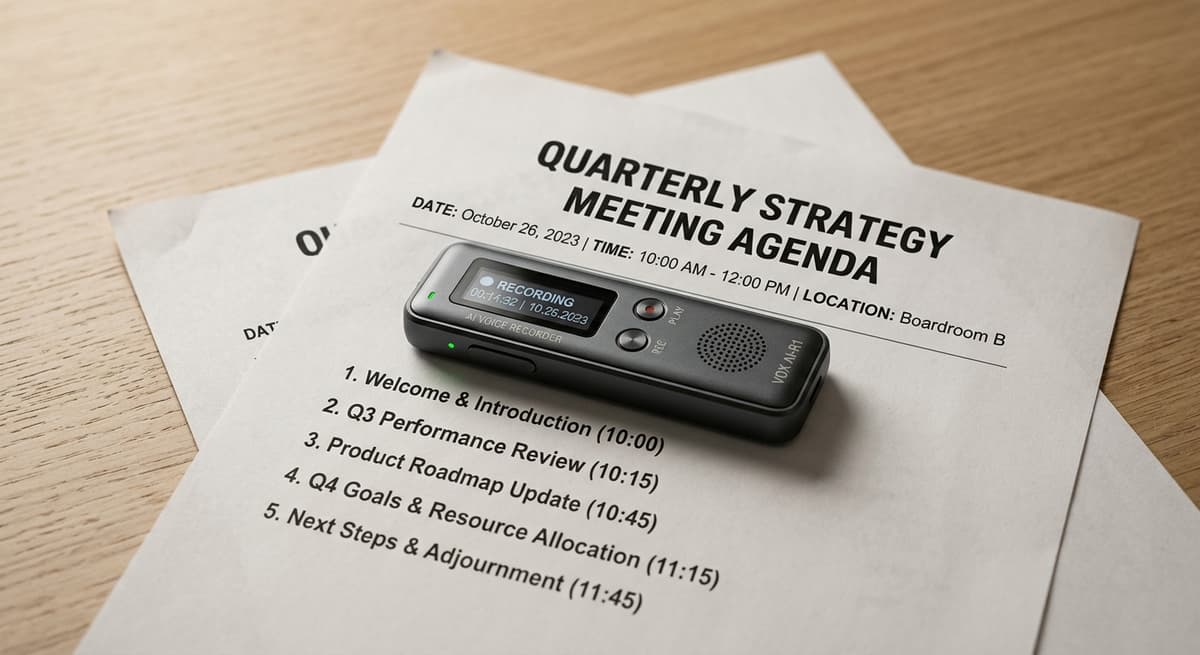
State Representative Laurie Schlegel, the bill's author, framed HB 410 as a response to wearable cameras and artificial-intelligence transcription tools that can capture conversations without anyone noticing. The bill creates a new category called a "direct conversation," meaning an in-person oral communication directed to a specific person in circumstances where a reasonable person would not expect to be recorded. Under the bill, using any device to record or transcribe such a conversation is unlawful unless every party is specifically informed that recording is taking place.
Because the regular session adjourned on June 1, the bill is now in the governor's post-session signing window. It becomes law only if the governor signs it or allows it to become law without signature; a veto would stop it.

What the Law Actually Says
Louisiana today follows a one-party-consent rule for intercepting communications. Under the Louisiana Electronic Surveillance Act, La. R.S. 15:1303(C)(4), a person who is not acting under color of law may lawfully record a wire, electronic, or oral communication when that person is a party to it, or when one party has given prior consent, unless the recording is made to commit a criminal or tortious act. In plain terms, a participant in a conversation can generally record it without telling the others.
HB 410 would not repeal that rule. Instead, it would layer a separate requirement on top of it for in-person "direct conversations." Where the Electronic Surveillance Act regulates interception and carries criminal exposure, HB 410 would create a distinct civil duty to give notice before recording face-to-face exchanges. The bill provides a private right of action, allowing a person who is recorded without the required notice to sue and to recover court costs and reasonable attorney fees. It does not add a new criminal penalty.
The bill carves out several situations. Recordings of public or semi-public meetings, law enforcement activity, and emergencies are excepted, as are recordings that capture public corruption or public officials carrying out their duties in a public place. Those exceptions track existing protections for recording the police and for documenting government conduct. For how those rules work now, see Louisiana workplace recording laws and recording the police in Louisiana.
Analysis: Why This Matters
The following is analysis from the Recording Law Editorial Team.
HB 410 is notable less for its penalties than for its model. Most state recording statutes are framed around consent: a one-party state asks whether at least one participant agreed, and an all-party state asks whether everyone agreed. HB 410 instead uses a notice standard for in-person conversations, asking whether everyone was told. Notice and consent overlap in practice, but they are not identical, and a notice rule can be easier to satisfy and to prove than affirmative consent.
The bill also reflects a broader legislative response to wearable and AI-driven recording. Devices such as camera-equipped smart glasses and automatic transcription apps can capture and store speech passively, which strains statutes written for tape recorders and telephone taps. Louisiana is not alone in revisiting older rules for this reason; the same concerns animate recent enforcement and litigation over always-listening features and meeting-recorder tools. For context on that trend, see our coverage of the Meta smart glasses privacy dispute.
Because HB 410 has not been signed, it changes nothing yet. Its scope could still shift if the governor acts, and questions about how courts apply the term "direct conversation" would likely be worked out later. We are not predicting how the governor will act or how any future dispute would be resolved.
How This Affects You
If HB 410 becomes law, the practical takeaway for Louisiana would be straightforward: telling people you are recording an in-person conversation is the safe course. The bill does not change the ability to record your own phone calls under the existing one-party rule, and it preserves the ability to document police and public officials in public. Until the governor signs it, however, the current Electronic Surveillance Act continues to govern, and Louisiana remains a one-party-consent state. Anyone weighing whether a specific recording is lawful should treat this bill as pending and rely on the current statute for now.
This is general legal information, not legal advice. It covers Louisiana House Bill 410 and the Louisiana Electronic Surveillance Act, verified on June 6, 2026. HB 410 is pending and not yet law, and this story is developing; consult a lawyer licensed in Louisiana about your specific situation.
Related articles
- Louisiana recording laws: one-party consent rules
- Louisiana workplace recording laws
- Meta smart glasses privacy scandal
Last updated: 2026-06-06. This is a developing story; details verified as of June 6, 2026.
More Louisiana Laws
- Louisiana AI Meeting Recording Laws
- Louisiana Dashcam Laws
- Louisiana Data Privacy Laws
- Louisiana Deepfake Laws
- Louisiana Employee Monitoring Laws
- Louisiana GPS Tracking Laws
- Louisiana Police Bodycam Laws
- Louisiana Smart Glasses Recording Laws
Frequently Asked Questions
Did Louisiana pass a two-party consent recording law?
Not yet. The Legislature passed HB 410 on June 1, 2026, but as of June 6, 2026 it awaits Governor Landry and is not law. Louisiana remains a one-party-consent state under La. R.S. 15:1303 until any change takes effect.
What is a "direct conversation" under HB 410?
The bill defines it as an in-person oral communication directed to a specific person in circumstances where a reasonable person would not expect to be recorded. Recording or transcribing such a conversation would require informing all parties.
Would HB 410 make secret recording a crime?
No. The bill creates civil liability, not a new crime. A person recorded without the required notice could sue and recover court costs and reasonable attorney fees. Criminal exposure for unlawful interception remains under the Electronic Surveillance Act.
Does HB 410 stop me from recording the police?
No. The bill excepts law enforcement activity, public officials performing duties in public, and recordings that capture public corruption, consistent with existing protections for recording police in public.
Does the bill apply to smart glasses and AI transcription apps?
Yes. Its author framed HB 410 around devices that record or transcribe conversations passively, including smart glasses and AI notetaking tools, which is why it reaches transcription as well as audio recording.
When would HB 410 take effect?
That depends on the governor. The bill becomes law only if signed or allowed to become law without signature. We will update this article with the effective date and act number once the governor acts.
Updates
Independently fact-checked against the cited primary sources
The Law Behind This Article
This article rests on the statutory provisions below, held in our own legal record and retrieved from the official source. Tap a section to read the operative text.
Louisiana Revised Statutes
§ 15:1303Interception and disclosure of wire, electronic, or oral communicationsIn forcecited in 36 of our articles
A. Except as otherwise specifically provided in this Chapter, it shall be unlawful for any person to: (1) Willfully intercept, endeavor to intercept, or procure any other person to intercept or endeavor to intercept, any wire, electronic or oral communication; (2) Willfully use, endeavor to use, or procure any other person to use or endeavor to use, any electronic, mechanical, or other device to intercept any oral communication when: (a) Such device is affixed to, or otherwise transmits a signal through, a wire, cable, or other like connection used in wire or electronic communication; or (b) Such device transmits communications by radio or interferes with the transmission of such communication; (3) Willfully disclose, or endeavor to disclose, to any other person the contents of any wire, electronic, or oral communication, knowing or having reason to know that the information was obtained through the interception of a wire, electronic, or oral communication in violation of this Subsection; or (4) Willfully use, or endeavor to use, the contents of any wire, electronic, or oral communication, knowing or having reason to know that the information was obtained through the…
Official text (excerpt) · last checked 2026-08-31 · Read the full text in our law library · Verify at legis.la.gov
Cited in 25 court opinions in our collectionLatest citing opinion in our collection: 2020
In the courts (editorial summary, independently checked):Louisiana courts apply the consent exception in La. R.S. 15:1303. Smith v. Smith (2005) held a parent may consent for a child where he has a good faith, reasonable basis that it serves the child’s best interest, placing the recording within 15:1303(C)(4). Keller v. Aymond (1998) held willfulness is not required for civil liability.
Opinions citing this section in our collection:
- Smith v. Smith (Louisiana Court of Appeal 2005, 923 So. 2d 732)✓A father secretly taped his daughter's calls with her mother in his own home during a custody fight; the court applied vicarious consent and held his good faith, objectively reasonable belief that taping served the child's best interest fell within La. R.S. 15:1303(C)(4).
- Johnson v. Aymond (Louisiana Court of Appeal 1998, 709 So. 2d 1072)✓A newspaper printed excerpts of a phone conversation a defendant had allegedly taped and handed out at a press conference; the court held those allegations, accepted as true, state a cause of action under the literal language of La. R.S. 15:1303(A)(4), and reversed the dismissal.
- Keller v. Aymond (Louisiana Court of Appeal 1998, 722 So. 2d 1224)✓A newspaper published excerpts of private calls taped by another and handed out at a press conference; the court held criminal willfulness under section 1303 is not needed for civil damages, and that fact issues over the paper's reason to know barred summary judgment under 1303.
Identified automatically from the court opinions citing this section — not a ranking of which case controls.
Also relied on in: Louisiana HB 475: Disclosure Required Before AI-Recorded Medical Visits, Louisiana Dashcam Laws: Mounting, Recording, and Evidence Rules, Louisiana Landlord-Tenant Recording Laws: Rights and Restrictions
Search our full record of US law — 2.1 million sections, every state + federal →
Sources and References
- Louisiana House Bill 410, 2026 Regular Session (Rep. Schlegel), bill information and status (House passed Apr. 9, 2026, 54-34; House concurred in Senate amendments 62-27 on June 1, 2026)(legis.la.gov).gov
- Louisiana House Bill 410 (HLS 26RS-912), bill text defining 'direct conversation' and the all-party notice requirement(legis.la.gov).gov
- Louisiana Electronic Surveillance Act, La. R.S. 15:1303 (interception and disclosure of wire, electronic, or oral communications; one-party consent in subsection (C)(4))(legis.la.gov).gov
- WAFB, Louisiana bill would require notice before recording in-person conversations (Mar. 30, 2026), corroborating coverage(wafb.com)