
Louisiana
Louisiana Landlord-Tenant Recording Laws: Rights and Restrictions
Independently fact-checked against primary sources (last audited August 15, 2026). · Reviewed by the RecordingLaw editorial team. · Law checked current as of August 7, 2026. · 6 primary sources cited on this page. How we verify our legal content

Under Louisiana's one-party consent law, La. R.S. 15:1303, either party to a conversation may record it without notifying the other, so tenants can record conversations with their landlord and landlords can record conversations with tenants. Landlords who install cameras inside a rental unit without consent risk violating La. R.S. 14:283, particularly in private areas like bedrooms and bathrooms.
The landlord-tenant relationship in Louisiana frequently generates disputes about lease terms, property conditions, security deposits, and tenant rights. Louisiana's one-party consent recording law gives tenants a powerful tool for documenting these interactions. Under La. R.S. 15:1303, you can record any conversation you participate in without informing the other party.
This guide covers how recording laws apply to the landlord-tenant relationship in Louisiana, including tenant recording rights, landlord surveillance rules, evidence preservation strategies, and what to do if you discover hidden cameras in your rental unit.
Tenant Recording Rights
Recording Conversations With Your Landlord
As a tenant in Louisiana, you can record any conversation you have with your landlord, property manager, maintenance workers, or anyone acting on the landlord's behalf. Louisiana's one-party consent law requires only that you (one party to the conversation) consent to the recording.
You can record:
- In-person conversations about lease terms, rent payments, repairs, and other property matters
- Phone calls with your landlord or property management company
- Maintenance request discussions with repair workers sent by the landlord
- Move-in and move-out walk-throughs where property condition is assessed
- Conversations about lease renewal or termination
- Discussions about security deposit deductions
- Interactions during property inspections or showings
You do not need to inform your landlord that you are recording. The law does not require disclosure, a beep tone, or any other notification.
Why Tenants Should Consider Recording
Recording conversations with your landlord can protect you in several common dispute scenarios:
- Verbal repair promises. A landlord who verbally agrees to fix a plumbing issue but later denies it has a harder time arguing against a recording.
- Lease term disputes. Verbal agreements about rent amounts, move-in dates, pet policies, or other lease terms are often disputed later. A recording preserves the exact terms discussed.
- Harassment documentation. If your landlord is making threats, entering your unit without proper notice, or engaging in other harassing behavior, recordings create a clear record.
- Discrimination evidence. If a landlord makes discriminatory statements based on race, religion, national origin, family status, or disability, a recording captures the exact language used.
- Security deposit disputes. Recording a move-out walk-through documents the actual condition of the property, making it harder for a landlord to fabricate damage claims.
What Tenants Cannot Record
The one-party consent rule only applies when you are a participant in the conversation. You cannot:
- Place a recording device to capture conversations between your landlord and other tenants when you are not present
- Record your landlord's private phone calls without being a party to the call
- Install surveillance cameras in common areas that record other tenants' private conversations
- Use recording equipment to monitor your landlord's activities when they are not interacting with you
Landlord Surveillance Rules
Where Landlords Can Install Cameras
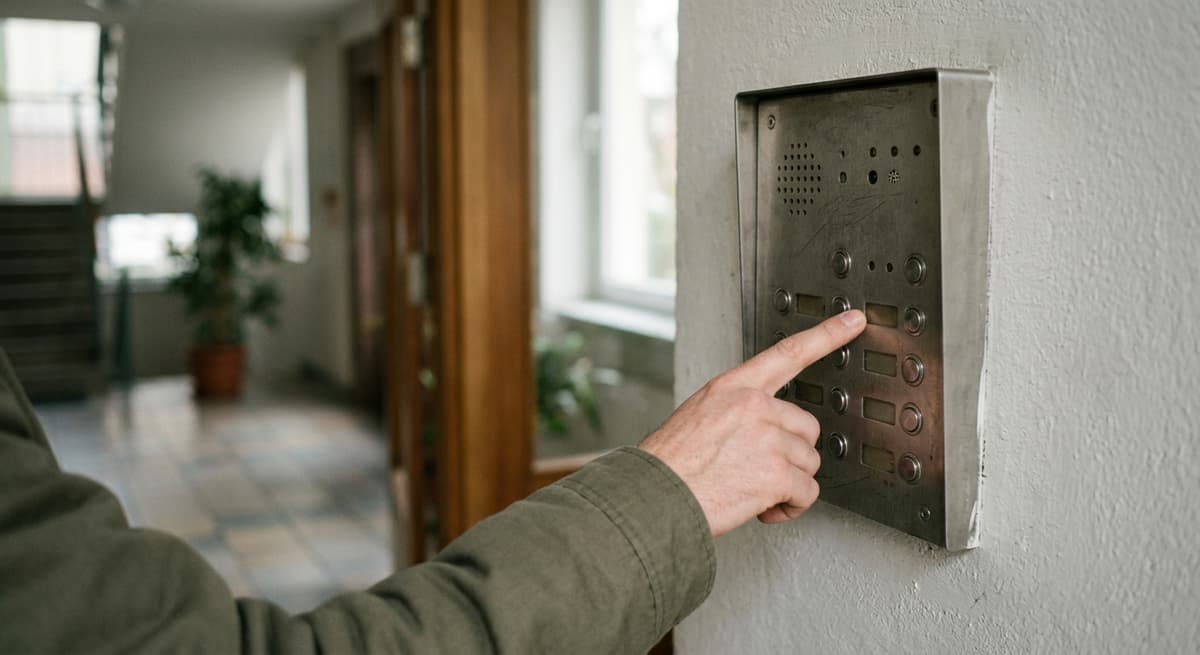
Louisiana landlords have the right to install security cameras in certain areas of rental properties:
Permitted locations:
- Building exteriors and entrances
- Parking lots and garages
- Lobbies and common hallways
- Laundry rooms and utility areas
- Community spaces (pools, gyms, courtyards)
- Storage areas
- Trash enclosures and service areas
Prohibited locations:
- Inside any tenant's rental unit (apartment, house, or room), absent consent and subject to Louisiana's video voyeurism statute (see below)
- Bathrooms in common areas
- Areas where tenants have a reasonable expectation of privacy
Cameras Inside Rental Units
A landlord who installs a camera inside a tenant's rental unit without consent risks criminal liability under La. R.S. 14:283 (video voyeurism), which applies when the recording is for a lewd or lascivious purpose, or when it captures a person's sexual conduct, nudity, or similar intimate content described in the statute in a place where the occupant has a reasonable expectation of privacy, without consent. This applies to:
- Before move-in. A landlord cannot leave active cameras in a unit that will be rented to a new tenant.
- During tenancy. Installing a camera in an occupied unit, particularly in a bedroom, bathroom, or other private area, without the tenant's consent can violate La. R.S. 14:283 when the statute's lewd-purpose or intimate-content elements are met, and is a serious criminal offense when it does.
- During maintenance visits. A maintenance worker or landlord cannot place a camera during a repair visit without the tenant's knowledge and consent.
- Smart home devices. If a landlord provides smart home devices (like a smart speaker or thermostat) with cameras, the tenant must be informed and can decline or cover the camera.
A violation of La. R.S. 14:283 carries up to $2,000 in fines and 2 years imprisonment for a first offense, with enhanced penalties for subsequent offenses.
Audio Surveillance by Landlords
Landlords must comply with the one-party consent rule for audio recording. A landlord can record conversations they participate in with tenants. However, a landlord cannot:
- Install hidden microphones in rental units
- Record tenant conversations through thin walls or shared ventilation systems
- Use audio-enabled security cameras to capture private conversations in tenant units or private common areas
Any of these actions would constitute illegal interception under La. R.S. 15:1303, a felony carrying 2 to 10 years at hard labor.
Recording During Key Landlord-Tenant Events

Move-In Walk-Throughs
Recording the move-in walk-through is one of the most valuable things a Louisiana tenant can do. This recording documents:
- Pre-existing damage to the property
- The condition of appliances, fixtures, and surfaces
- Any issues the landlord acknowledges
- Verbal agreements about repairs the landlord promises to make before or shortly after move-in
Combine the audio recording with video showing the property's condition for comprehensive documentation.
Move-Out Walk-Throughs
Equally important is recording the move-out walk-through. This creates evidence of:
- The condition you left the property in
- Any wear and tear vs. actual damage
- The landlord's statements about what deductions they plan to make from your security deposit
- Whether the landlord acknowledges the property is in acceptable condition
Under Louisiana law, landlords must return security deposits within one month after the lease terminates and the tenant delivers possession, per La. R.S. 9:3251. Having a recording of the move-out condition strengthens your position if the landlord withholds your deposit improperly.
Repair Requests and Maintenance Issues
Louisiana tenants have the right to habitable premises. Recording conversations about repair requests creates evidence that:
- You notified the landlord about the problem
- The landlord acknowledged (or denied) the issue
- A timeline was discussed for repairs
- The landlord promised (or refused) specific actions
This evidence is valuable in constructive eviction claims, rent withholding disputes, and habitability proceedings.
Eviction Proceedings
If you face eviction, recordings of conversations with your landlord can provide critical evidence:
- Retaliatory eviction. If you complained about habitability issues and were subsequently evicted, recordings showing the timeline of complaints and the landlord's reaction can support a retaliation defense.
- Discriminatory eviction. Recordings of discriminatory statements by the landlord are powerful evidence in fair housing complaints.
- Lease violations. If the landlord claims you violated the lease, recordings of conversations where the landlord approved or knew about the alleged violation can be a defense.
Security Deposits and Recording
Louisiana Security Deposit Law
Under La. R.S. 9:3251 and R.S. 9:3252, Louisiana landlords must:
- Return the security deposit within one month after lease termination and delivery of possession
- Provide an itemized statement of any deductions
- Deduct only for actual damages beyond normal wear and tear and for unpaid rent
If a landlord willfully fails to comply, the tenant can recover the wrongfully withheld portion of the deposit plus $300 or twice the wrongfully withheld amount, whichever is greater, under R.S. 9:3252.
How Recordings Help With Security Deposit Disputes
Recordings can be decisive in security deposit cases:
- Move-in condition. A recording showing the property's condition at move-in proves that certain damage was pre-existing.
- Move-out condition. A recording of the walk-through shows what the property looked like when you left.
- Landlord admissions. If the landlord acknowledged on a recorded call that the property was in good condition, this contradicts later claims of damage.
- Repair promises. If the landlord promised to fix something and never did, the recording shows they cannot deduct for that issue.
Discovering Hidden Cameras in a Rental
Warning Signs
Tenants should be alert to potential hidden cameras in rental properties, particularly short-term vacation rentals. Warning signs include:
- Unusual objects that seem out of place (smoke detectors in odd locations, extra alarm clocks, decorative items facing the bed or bathroom)
- Small holes in walls, ceilings, or furniture
- Blinking lights visible in the dark
- Unfamiliar devices connected to the Wi-Fi network
- Wires that do not connect to any visible device
What to Do If You Find a Hidden Camera
- Do not touch the camera. It is evidence of a crime.
- Take photographs of the camera, its location, and its surroundings.
- Contact law enforcement immediately. File a police report. This is a criminal offense under La. R.S. 14:283.
- Document everything. Write down when you found the camera, what drew your attention to it, and any other relevant details.
- Contact an attorney. You may have civil claims for invasion of privacy, emotional distress, and other damages under Louisiana Civil Code Article 2315.
- Report to the platform. If the rental was booked through Airbnb, VRBO, or another platform, report the violation.
Criminal and Civil Remedies
A landlord who places hidden cameras in a tenant's rental unit faces:
Criminal penalties under La. R.S. 14:283:
- First offense: Up to $2,000 fine and 2 years imprisonment
- Second offense: Up to $2,000 fine and 6 months to 3 years at hard labor
- Sex offender registration
Civil remedies:
- Compensatory damages for emotional distress and invasion of privacy
- Punitive damages for egregious conduct
- Injunctive relief
- Attorney fees and costs
Fair Housing and Recording
Documenting Housing Discrimination
Recordings can be powerful evidence in fair housing complaints. The federal Fair Housing Act and the Louisiana Equal Housing Opportunity Act prohibit discrimination based on race, color, national origin, religion, sex, familial status, and disability.
If a landlord makes discriminatory statements during a recorded conversation, that recording can be submitted to:
- The U.S. Department of Housing and Urban Development (HUD)
- The Louisiana Attorney General's Office
- A federal or state court in a fair housing lawsuit
Using Recordings in Housing Complaints
When filing a fair housing complaint with HUD or a state agency, your recording should:
- Be the original, unedited file
- Include documentation of the date, time, and location
- Be accompanied by a written transcript or summary
- Be preserved in its original format with backup copies
More Louisiana Recording Laws
Audio Recording | Video Recording | Voyeurism & Hidden Cameras | Workplace Recording | Recording Police | Phone Call Recording | Security Cameras | Recording in Public | Landlord-Tenant | Dashcam Laws | Schools | Medical Recording
Back to Louisiana Recording Laws
More Louisiana Recording Topics
More Louisiana Laws
Frequently Asked Questions
Can I record my landlord in Louisiana?
Yes. Louisiana's one-party consent law under La. R.S. 15:1303 allows you to record any conversation you participate in with your landlord, property manager, or maintenance workers without informing them. This includes in-person conversations and phone calls.
Can my landlord put cameras inside my apartment in Louisiana?
Generally no. A landlord who installs a camera inside a tenant's rental unit without consent, particularly in a bedroom, bathroom, or other private area, risks criminal liability under Louisiana's video voyeurism statute La. R.S. 14:283 when the recording is for a lewd or lascivious purpose or captures intimate content covered by the statute. A violation carries criminal penalties including up to 2 years imprisonment for a first offense.
Can I record my move-out walk-through in Louisiana?
Yes. Recording the move-out walk-through is legal and highly recommended. It documents the property's condition and your landlord's statements about potential security deposit deductions, providing valuable evidence in any dispute.
Can my landlord record in building common areas in Louisiana?
Landlords can install video cameras in common areas like lobbies, hallways, and parking lots. Audio recording in these areas requires caution because capturing tenant conversations without a participant's consent may violate La. R.S. 15:1303.
What should I do if I find a hidden camera in my rental in Louisiana?
Do not touch the camera. Photograph it and its location. Contact law enforcement immediately to file a police report under La. R.S. 14:283. Consult an attorney about civil remedies including damages for invasion of privacy and emotional distress.
Updates
Fixed two broken citation links (security-deposit statute and general-tort Civil Code article) and corrected the security-deposit damages figure to match the actual statute: the wrongfully withheld amount plus $300 or twice that amount, whichever is greater, rather than a flat 'twice the deposit' plus attorney fees, which the statute does not provide.
Independently fact-checked against the cited primary sources
Corrected an overstated claim that a landlord camera inside a rental unit violates Louisiana's video voyeurism statute 'under any circumstances' -- the statute requires a lewd or lascivious purpose, or capture of specific intimate content, in a place with a reasonable expectation of privacy.
Softened a bullet that flatly banned any camera inside a rental unit so it matches the article's correct, conditional standard: liability under La. R.S. 14:283 requires a lewd/lascivious purpose or capture of specific intimate content in a place with a reasonable expectation of privacy.
Governing law re-checked for recent changes
Reviewed and approved by an editor
The Law Behind This Article
This article rests on the statutory provisions below, held in our own legal record and retrieved from the official source. Tap a section to read the operative text.
Louisiana Revised Statutes
§ 15:1303Interception and disclosure of wire, electronic, or oral communicationsIn forcecited in 36 of our articles
A. Except as otherwise specifically provided in this Chapter, it shall be unlawful for any person to: (1) Willfully intercept, endeavor to intercept, or procure any other person to intercept or endeavor to intercept, any wire, electronic or oral communication; (2) Willfully use, endeavor to use, or procure any other person to use or endeavor to use, any electronic, mechanical, or other device to intercept any oral communication when: (a) Such device is affixed to, or otherwise transmits a signal through, a wire, cable, or other like connection used in wire or electronic communication; or (b) Such device transmits communications by radio or interferes with the transmission of such communication; (3) Willfully disclose, or endeavor to disclose, to any other person the contents of any wire, electronic, or oral communication, knowing or having reason to know that the information was obtained through the interception of a wire, electronic, or oral communication in violation of this Subsection; or (4) Willfully use, or endeavor to use, the contents of any wire, electronic, or oral communication, knowing or having reason to know that the information was obtained through the…
Official text (excerpt) · last checked 2026-08-31 · Read the full text in our law library · Verify at legis.la.gov
Cited in 25 court opinions in our collectionLatest citing opinion in our collection: 2020
In the courts (editorial summary, independently checked):Louisiana courts apply the consent exception in La. R.S. 15:1303. Smith v. Smith (2005) held a parent may consent for a child where he has a good faith, reasonable basis that it serves the child’s best interest, placing the recording within 15:1303(C)(4). Keller v. Aymond (1998) held willfulness is not required for civil liability.
Opinions citing this section in our collection:
- Smith v. Smith (Louisiana Court of Appeal 2005, 923 So. 2d 732)✓A father secretly taped his daughter's calls with her mother in his own home during a custody fight; the court applied vicarious consent and held his good faith, objectively reasonable belief that taping served the child's best interest fell within La. R.S. 15:1303(C)(4).
- Johnson v. Aymond (Louisiana Court of Appeal 1998, 709 So. 2d 1072)✓A newspaper printed excerpts of a phone conversation a defendant had allegedly taped and handed out at a press conference; the court held those allegations, accepted as true, state a cause of action under the literal language of La. R.S. 15:1303(A)(4), and reversed the dismissal.
- Keller v. Aymond (Louisiana Court of Appeal 1998, 722 So. 2d 1224)✓A newspaper published excerpts of private calls taped by another and handed out at a press conference; the court held criminal willfulness under section 1303 is not needed for civil damages, and that fact issues over the paper's reason to know barred summary judgment under 1303.
Identified automatically from the court opinions citing this section — not a ranking of which case controls.
Also relied on in: Louisiana HB 410: Recording-Notice Bill Heads to the Governor (2026), Louisiana HB 475: Disclosure Required Before AI-Recorded Medical Visits, Louisiana Smart Glasses Recording Laws (2026)
§ 14:283Video voyeurism; penaltiesIn forcecited in 30 of our articles
A. Video voyeurism is any of the following: (1) The use of any camera, videotape, photo-optical, photo-electric, or any other image recording device, or an unmanned aircraft system equipped with any camera, videotape, photo-optical, photo-electric, or any other image recording device, for the purpose of observing, viewing, photographing, filming, or videotaping a person where that person has not consented to the specific instance of observing, viewing, photographing, filming, or videotaping and either: (a) It is for a lewd or lascivious purpose. (b) The observing, viewing, photographing, filming, or videotaping is as described in Paragraph (B)(3) of this Section and occurs in a place where an identifiable person has a reasonable expectation of privacy. (2) The transfer of an image obtained by activity described in Paragraph (1) of this Subsection by live or recorded telephone message, electronic mail, the Internet, or a commercial online service.
Official text (excerpt) · last checked 2026-08-31 · Read the full text in our law library · Verify at legis.la.gov
Cited in 16 court opinions in our collectionLatest citing opinion in our collection: 2024
In the courts (editorial summary, independently checked):In State v. Schaller (2009) a Louisiana appeals court set out the elements of La. R.S. 14:283 and, since the statute does not define lewd or lascivious, applied a definition of an act tending to excite lust, rejecting a claimed babysitting reason for a hidden bedroom camera. State v. Boudreaux (2006) found 56 consecutive years excessive.
Opinions citing this section in our collection:
- State v. Batiste (Supreme Court of Louisiana 2006, 939 So. 2d 1245)“…Batiste, charging him with video voyeurism, a violation of La. R.S. 14:283. [1] At his arraignment on December *…”
- State v. Boudreaux (Louisiana Court of Appeal 2006, 945 So. 2d 898)✓A stepfather hid a wireless camera in his 18-year-old stepdaughter's bedroom and taped her for four months. He pleaded guilty to 14 counts of video voyeurism, and the court vacated the 56-year consecutive sentence as excessive because the acts formed a single scheme.
- State v. Perry (Louisiana Court of Appeal 2012, 12 La.App. 3 Cir. 298)✓A houseguest was secretly videotaped drying off in the family's guest bathroom. The court affirmed the video voyeurism conviction and three-year sentence, addressing only whether the untimely pretrial motions were properly denied, not the reach of the statute.
Identified automatically from the court opinions citing this section — not a ranking of which case controls.
Also relied on in: Louisiana Audio Recording Laws: One-Party Consent Rules and Penalties, Louisiana Recording Laws (2026): One-Party Consent Rules, Louisiana Medical Recording Laws: Patient Rights and HIPAA Rules
§ 15:1312Recovery of civil damages authorizedIn forcecited in 17 of our articles
A. Any person whose wire, electronic, or oral communication is intercepted, disclosed, or used in violation of this Chapter shall have a civil cause of action against any person who intercepts, discloses, or uses, or procures any other person to intercept, disclose, or use such communications, and be entitled to recover from any such person: (1) Actual damages, but not less than liquidated damages computed at the rate of one hundred dollars a day for each day of violation or one thousand dollars, whichever is greater. (2) A reasonable attorney's fee and other litigation costs reasonably incurred. (3) Punitive damages. B. A good faith reliance on a court order shall constitute a complete defense to any civil or criminal action brought under this Chapter.
Official text (excerpt) · last checked 2026-07-29 · Read the full text in our law library · Verify at legis.la.gov
Cited in 7 court opinions in our collectionLatest citing opinion in our collection: 2024
Opinions citing this section in our collection:
- Benoit v. Roche (Louisiana Court of Appeal 1995, 657 So. 2d 574)“…eets Act of 1968 authorize a civil damages cause of action. La.R.S. 15:1312; 18 U.S.C. § 2520 ; see also United S…”
- Keller v. Aymond (Louisiana Court of Appeal 1998, 722 So. 2d 1224)“…spaper before the plaintiffs can claim a civil remedy under La. R.S. 15:1312. Hence, the newspaper can be held civil…”
- Wingrave v. Hebert (Louisiana Court of Appeal 2007, 964 So. 2d 385)“…of this Chapter shall have a civil cause of action. . . ." La. R.S. 15:1312(A). The substance of LESA was first i…”
Identified automatically from the court opinions citing this section — not a ranking of which case controls.
Also relied on in: Louisiana Phone Call Recording Laws: What You Need to Know, Louisiana Security Camera Laws: Residential and Business Rules, Louisiana Ring Doorbell Laws: What You Need to Know in 2026
§ 9:3251Lessee's deposit to secure lease; retention by lessor; conveyance of leased premises; itemized statement by lessorIn forcecited in 4 of our articles
A. Any advance or deposit of money furnished by a tenant or lessee to a landlord or lessor to secure the performance of any part of a written or oral lease or rental agreement shall be returned to the tenant or lessee of residential or dwelling premises within one month after the lease shall terminate, except that the landlord or lessor may retain all or any portion of the advance or deposit which is reasonably necessary to remedy a default of the tenant or to remedy unreasonable wear to the premises. If any portion of an advance or deposit is retained by a landlord or lessor, he shall forward to the tenant or lessee, within one month after the date the tenancy terminates, an itemized statement accounting for the proceeds which are retained and giving the reasons therefor. The tenant shall furnish the lessor a forwarding address at the termination of the lease, to which such statements may be sent. B.
Official text (excerpt) · last checked 2026-07-29 · Read the full text in our law library · Verify at legis.la.gov
Cited in 9 court opinions in our collectionLatest citing opinion in our collection: 2025
Opinions citing this section in our collection:
- Hood v. Ashby Partnership (Louisiana Court of Appeal 1984, 446 So. 2d 1347)“…automatic renewal provision of the lease and its effect on La.R.S. 9:3251 C. The Lessee's Deposit Act in Louisi…”
- Borne v. Wilander (Louisiana Court of Appeal 1987, 509 So. 2d 572)“…nying all of the lessee's demands. The lessee relied upon La.R.S. 9:3251, et seq. as authority in seeking the re…”
- Mayeaux v. Christakis (Louisiana Court of Appeal 1993, 619 So. 2d 93)“…ion for continuance; 2. The trial judge erred in applying La. R.S. 9:3251-54 where the lease had been abandoned a…”
Identified automatically from the court opinions citing this section — not a ranking of which case controls.
Also relied on in: Louisiana Landlord-Tenant Laws (2026): Deposits, Notice, and Tenant Rights
Louisiana Civil Code
§ 2315Liability for acts causing damagesIn forcecited in 10 of our articles
A. Every act whatever of man that causes damage to another obliges him by whose fault it happened to repair it. B. Damages may include loss of consortium, service, and society, and shall be recoverable by the same respective categories of persons who would have had a cause of action for wrongful death of an injured person. Damages do not include costs for future medical treatment, services, surveillance, or procedures of any kind unless such treatment, services, surveillance, or procedures are directly related to a manifest physical or mental injury or disease. Damages shall include any sales taxes paid by the owner on the repair or replacement of the property damaged.
Official text (excerpt) · last checked 2026-08-27 · Read the full text in our law library · Verify at legis.la.gov
Cited in 567 court opinions in our collectionLatest citing opinion in our collection: 2026
In the courts (editorial summary, independently checked):Louisiana courts apply Art. 2315 case by case: Hornsby v. Bayou Jack Logging (2005) held restoration costs above the land's value require reasons personal to the owner, which a vague intent to develop did not supply, and Naylor v. La. Dept. of Public Highways (1982) required every duty-risk element before recovery.
Opinions citing this section in our collection:
- MJ Farms, Ltd. v. Exxon Mobil Corp. (Supreme Court of Louisiana 2008, 998 So. 2d 16)“…had suffered "damages," and were therefore entitled under La. Civ.Code art. 2315 to recover medical monitoring costs. B…”
- Naylor v. La. Dept. of Public Highways (Louisiana Court of Appeal 1982, 423 So. 2d 674)✓A motorcyclist hit an oil and sand mixture left in a highway curve and suffered permanent brain damage; the court found both the highway department and the state police liable under article 2315 for breaching duties to maintain a safe road and to warn of the hazard.
- Johnson v. St. Paul Mercury Insurance Company (Supreme Court of Louisiana 1970, 256 La. 289)✓A Shreveport guest passenger was injured when her host rear-ended a car in Arkansas; the court kept the place-of-the-wrong rule and applied the Arkansas guest statute, so article 2315's ordinary negligence standard did not govern the out-of-state accident.
Identified automatically from the court opinions citing this section — not a ranking of which case controls.
Also relied on in: Louisiana Voyeurism and Hidden Camera Laws: Offenses, Penalties, and Protections, Louisiana Car Accident Laws: Fault, Insurance, and Your Claim, Louisiana GPS Tracking Laws: Is It Legal to Put a Tracker on a Car? (2026)
Search our full record of US law — 2.1 million sections, every state + federal →
Sources and References
- La. R.S. 15:1303(legis.la.gov).gov
- La. R.S. 14:283 - Video Voyeurism(legis.la.gov).gov
- La. R.S. 9:3251 - Security Deposits(legis.la.gov).gov
- La. C.C. Art. 2315(legis.la.gov).gov
- Fair Housing Act(justice.gov).gov
- HUD Complaint Portal(hud.gov).gov
- La. R.S. 15:1312 - Recovery of Civil Damages Authorized(law.justia.com)