Louisiana HB 475: Disclosure Required Before AI-Recorded Medical Visits
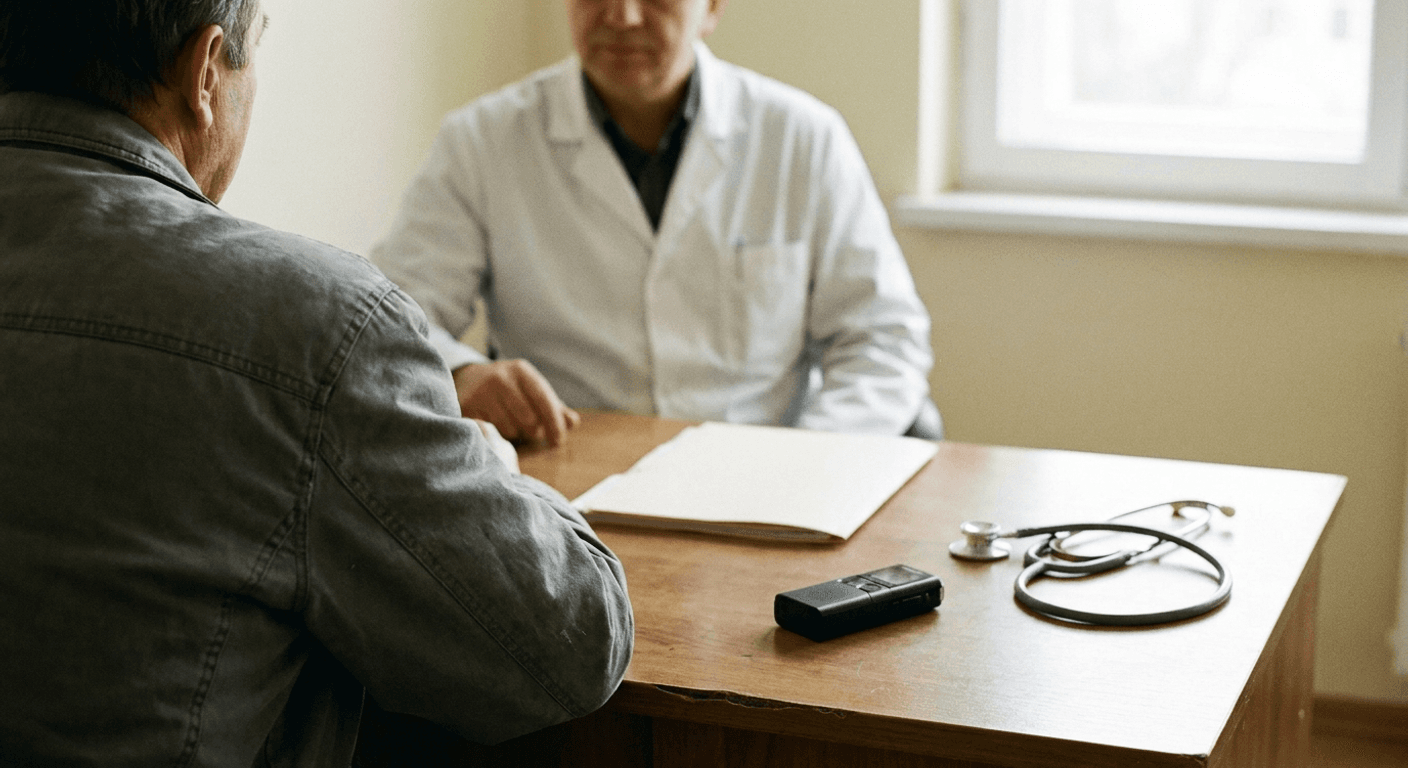
Louisiana HB 475 (2026 Regular Session) cleared both chambers unanimously and reached Governor Jeff Landry on May 28, 2026. As of June 3, 2026 it awaits his signature and is not yet law. It would enact La. R.S. 37:22.1, requiring providers to disclose when an appointment is recorded for AI transcription.
Information last verified on June 3, 2026. This is a developing story; we update it as the record changes.
Jurisdiction scope: This article addresses Louisiana HB 475 (2026 Regular Session) and its proposed La. R.S. 37:22.1 disclosure duty for AI-transcribed medical-visit recordings, read against Louisiana's existing one-party-consent rule in La. R.S. 15:1303. It does not address other states or federal HIPAA recording rules. For related coverage, see recording medical visits in Louisiana.
What Happened
Louisiana HB 475, by Representative Stephanie Berault, moved through the 2026 Regular Session without a single dissenting vote. The House passed it 97-0 on April 14, 2026. The Senate adopted floor amendments and passed it 35-0 on May 18, 2026. The House concurred in the Senate amendments 99-0 on May 26, 2026. The Speaker of the House and the President of the Senate signed the enrolled bill on May 27, 2026, and the Legislature sent it to Governor Jeff Landry on May 28, 2026. As of June 3, 2026, the bill's most recent recorded action on the Louisiana Legislature's official BillInfo page is that transmittal to the Governor. No Act number appears, and no signing action is recorded, so HB 475 has passed the Legislature and awaits the Governor's signature. It is not yet law.
"A healthcare professional licensed by this Title shall verbally disclose the use of any recording device, software, or service to a patient before recording any part of an appointment or treatment to be transcribed by artificial intelligence." Source: La. R.S. 37:22.1(A), as enacted by HB 475, 2026 Reg. Sess. (La.), Enrolled
What the Law Actually Says
Louisiana is a one-party-consent state for recording. Under La. R.S. 15:1303, it is lawful for a person not acting under color of law to intercept a wire, electronic, or oral communication "where such person is a party to the communication or where one of the parties to the communication has given prior consent to such interception," unless the interception is made for a criminal, tortious, or other injurious purpose. In a clinical setting, that baseline already lets a provider who is a participant record the encounter without separately asking the patient. For the standing rule, see our explainer on Louisiana recording laws and La. R.S. 15:1303 one-party consent.
HB 475 does not change that baseline. It adds a separate professional-conduct duty. The enrolled text enacts La. R.S. 37:22.1, which sits in Title 37 (professions and occupations), not in the criminal surveillance statute. Subsection A requires a healthcare professional licensed under that Title to "verbally disclose the use of any recording device, software, or service" before recording any part of an appointment or treatment "to be transcribed by artificial intelligence." The trigger is the AI-transcription purpose, the function performed by ambient AI scribe tools that listen to an exam-room conversation and draft clinical notes. Subsection B sets the enforcement frame: a professional who violates the section "may be subject to disciplinary action by his professional licensing board" and "shall be immune from civil liability in the absence of gross negligence or willful misconduct." The remedy is therefore licensing discipline, not a private damages action, except where gross negligence or willful misconduct is shown.
Note the gap between the popular description and the text. Headlines and the bill's own subject line describe a consent requirement. The operative provision requires disclosure: the provider must tell the patient that an AI-transcribed recording is being made. A duty to disclose before recording is narrower than a duty to obtain advance consent. For how AI transcription interacts with Louisiana's recording rule generally, see our coverage of Louisiana AI meeting recording rules.
Analysis: Why This Matters
The following is analysis from the Recording Law Editorial Team.
The notable feature of HB 475 is where it lands and how it is framed. It does not amend La. R.S. 15:1303, the Electronic Surveillance Act, so Louisiana's one-party-consent rule for recording is unchanged. Instead it creates a standalone licensing duty in Title 37 that attaches specifically to AI-transcribed recordings. That placement matters because the consequence for a violation is professional discipline by a licensing board, paired with civil immunity unless gross negligence or willful misconduct is shown, rather than the criminal and civil penalties that La. R.S. 15:1303 carries for unlawful interception.
The second point is the disclosure-versus-consent distinction. The enrolled text obligates the provider to verbally disclose the use of a recording device, software, or service before an AI-transcribed recording begins. It does not, on its face, require the provider to obtain the patient's agreement or to stop if the patient objects. Reporting that describes the measure as a consent mandate compresses that nuance. The bill is best understood as a transparency rule aimed at ambient AI scribe technology, requiring patients be told when software will listen to and transcribe their visit, layered on top of an existing recording regime that already permitted a participating provider to record.
How This Affects You
This section is general information, not advice about any specific situation. As of June 3, 2026, HB 475 is not yet law, so nothing in it currently binds anyone; it would take effect only if the Governor signs it, and the enrolled text states no effective date. Under La. Const. art. III, Section 19, a 2026 Regular Session act without a stated effective date generally becomes effective August 1, 2026.
If the bill is signed, Louisiana-licensed healthcare professionals using an AI scribe or other AI-transcription tool would have a duty under La. R.S. 37:22.1 to verbally disclose that recording to the patient before it starts, with licensing-board discipline as the enforcement mechanism. For patients, the measure would put the disclosure obligation on the provider; it does not alter a patient's own ability to record their visit, which is governed by La. R.S. 15:1303. Because the operative text requires disclosure rather than advance consent, anyone relying on a stronger consent reading should track the bill's final status and any implementing licensing-board rules.
This is general legal information, not legal advice. It covers Louisiana and reflects sources verified on June 3, 2026. Laws change and this story is developing; consult a lawyer licensed in your jurisdiction about your specific situation.
Related articles
- Louisiana recording laws and La. R.S. 15:1303 one-party consent
- Recording medical visits in Louisiana
- Louisiana AI meeting recording rules
Last updated: 2026-06-03. This is a developing story; details verified as of June 3, 2026.
More Louisiana Laws
- Louisiana AI Meeting Recording Laws
- Louisiana Dashcam Laws
- Louisiana Data Privacy Laws
- Louisiana Deepfake Laws
- Louisiana Employee Monitoring Laws
- Louisiana GPS Tracking Laws
- Louisiana Police Bodycam Laws
- Louisiana Smart Glasses Recording Laws
Frequently Asked Questions
Is Louisiana HB 475 law yet?
Not as of June 3, 2026. HB 475 passed both chambers and was sent to Governor Jeff Landry on May 28, 2026. The official Louisiana Legislature BillInfo page records no signing action and no Act number, so it has passed the Legislature and awaits the Governor's signature.
Does HB 475 require patient consent to record a medical visit?
The enrolled text requires verbal disclosure, not advance consent. La. R.S. 37:22.1(A), as enacted by HB 475, says a licensed healthcare professional must verbally disclose the use of any recording device, software, or service before recording any part of an appointment to be transcribed by artificial intelligence.
Does HB 475 target AI scribe tools?
Yes, by its terms. The duty in La. R.S. 37:22.1 applies when a recording is made of an appointment or treatment to be transcribed by artificial intelligence, which is the function performed by ambient AI scribe and transcription tools used in exam rooms.
What happens to a provider who violates HB 475?
Under La. R.S. 37:22.1(B), a healthcare professional who violates the section may be subject to disciplinary action by his professional licensing board and is immune from civil liability in the absence of gross negligence or willful misconduct.
Is Louisiana a one-party or two-party consent state for recording?
Louisiana is a one-party-consent state under La. R.S. 15:1303. One party to a wire, electronic, or oral communication, or a person with the prior consent of one party, may lawfully intercept it, unless it is done for a criminal, tortious, or other injurious purpose.
When would HB 475 take effect if signed?
The enrolled bill states no effective date. Under La. Const. art. III, Section 19, a 2026 Regular Session act without a stated effective date generally becomes effective August 1, 2026, conditioned on timely signature by the Governor.
Does HB 475 change a patient's right to record their own visit?
No. HB 475 enacts a provider disclosure duty in Title 37. A patient's own ability to record a visit they participate in is governed by Louisiana's one-party-consent rule in La. R.S. 15:1303, which HB 475 does not amend.
The Law Behind This Article
This article rests on the statutory provisions below, held in our own legal record and retrieved from the official source. Tap a section to read the operative text.
Louisiana Revised Statutes
§ 15:1303Interception and disclosure of wire, electronic, or oral communicationsIn forcecited in 36 of our articles
A. Except as otherwise specifically provided in this Chapter, it shall be unlawful for any person to: (1) Willfully intercept, endeavor to intercept, or procure any other person to intercept or endeavor to intercept, any wire, electronic or oral communication; (2) Willfully use, endeavor to use, or procure any other person to use or endeavor to use, any electronic, mechanical, or other device to intercept any oral communication when: (a) Such device is affixed to, or otherwise transmits a signal through, a wire, cable, or other like connection used in wire or electronic communication; or (b) Such device transmits communications by radio or interferes with the transmission of such communication; (3) Willfully disclose, or endeavor to disclose, to any other person the contents of any wire, electronic, or oral communication, knowing or having reason to know that the information was obtained through the interception of a wire, electronic, or oral communication in violation of this Subsection; or (4) Willfully use, or endeavor to use, the contents of any wire, electronic, or oral communication, knowing or having reason to know that the information was obtained through the…
Official text (excerpt) · last checked 2026-08-31 · Read the full text in our law library · Verify at legis.la.gov
Cited in 25 court opinions in our collectionLatest citing opinion in our collection: 2020
In the courts (editorial summary, independently checked):Louisiana courts apply the consent exception in La. R.S. 15:1303. Smith v. Smith (2005) held a parent may consent for a child where he has a good faith, reasonable basis that it serves the child’s best interest, placing the recording within 15:1303(C)(4). Keller v. Aymond (1998) held willfulness is not required for civil liability.
Opinions citing this section in our collection:
- Smith v. Smith (Louisiana Court of Appeal 2005, 923 So. 2d 732)✓A father secretly taped his daughter's calls with her mother in his own home during a custody fight; the court applied vicarious consent and held his good faith, objectively reasonable belief that taping served the child's best interest fell within La. R.S. 15:1303(C)(4).
- Johnson v. Aymond (Louisiana Court of Appeal 1998, 709 So. 2d 1072)✓A newspaper printed excerpts of a phone conversation a defendant had allegedly taped and handed out at a press conference; the court held those allegations, accepted as true, state a cause of action under the literal language of La. R.S. 15:1303(A)(4), and reversed the dismissal.
- Keller v. Aymond (Louisiana Court of Appeal 1998, 722 So. 2d 1224)✓A newspaper published excerpts of private calls taped by another and handed out at a press conference; the court held criminal willfulness under section 1303 is not needed for civil damages, and that fact issues over the paper's reason to know barred summary judgment under 1303.
Identified automatically from the court opinions citing this section — not a ranking of which case controls.
Also relied on in: Louisiana HB 410: Recording-Notice Bill Heads to the Governor (2026), Louisiana Dashcam Laws: Mounting, Recording, and Evidence Rules, Louisiana Landlord-Tenant Recording Laws: Rights and Restrictions
Search our full record of US law — 2.1 million sections, every state + federal →
Sources and References
- Louisiana HB 475 (2026 Regular Session), official bill history and status(legis.la.gov).gov
- La. R.S. 37:22.1 (Recordings; artificial intelligence; disclosure), as proposed in HB 475 (Enrolled)(legis.la.gov).gov
- La. R.S. 15:1303 (Louisiana Electronic Surveillance Act; one-party consent)(legis.la.gov).gov