
Louisiana
Louisiana Security Camera Laws: Residential and Business Rules
Independently fact-checked against primary sources (last audited August 15, 2026). · Reviewed by the RecordingLaw editorial team. · Law checked current as of August 7, 2026. · 5 primary sources cited on this page. How we verify our legal content
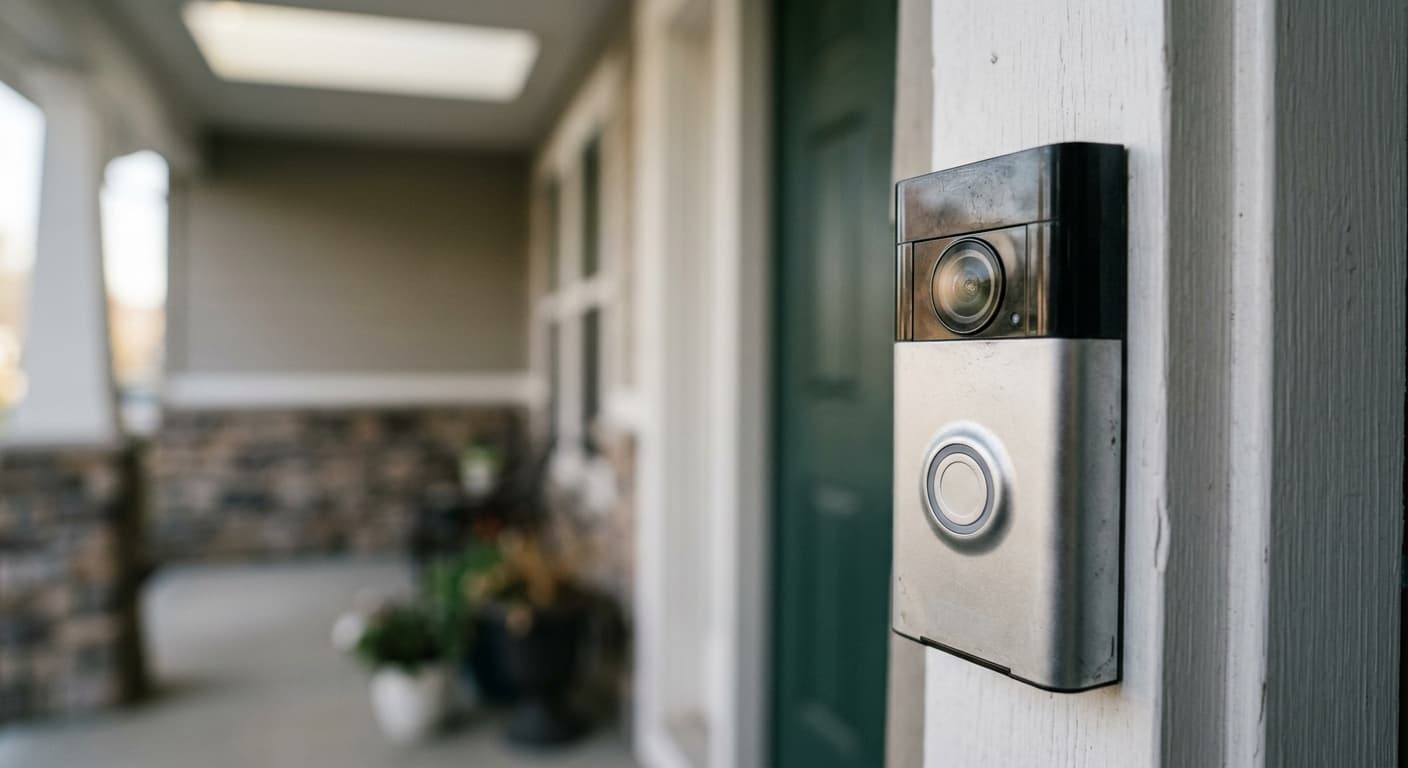
Louisiana homeowners may install security cameras on their own property without a permit. Video-only recording is lawful in areas where no reasonable expectation of privacy exists. Audio recording must meet the one-party consent rule under La. R.S. 15:1303, and cameras placed in bathrooms or changing areas violate the video voyeurism statute at La. R.S. 14:283.
Security cameras are widely used across Louisiana for home protection, business surveillance, and property monitoring. Louisiana does not have a single comprehensive security camera statute. Instead, camera use is governed by a combination of privacy laws, voyeurism statutes, wiretapping rules, and local ordinances that together define what is legal and what crosses the line.
This guide covers the legal framework for security cameras in Louisiana, including residential installation rules, business surveillance requirements, audio recording restrictions, neighbor privacy concerns, and the penalties for improper camera placement.
Residential Security Camera Laws
Your Right to Install Home Security Cameras
Louisiana homeowners have broad rights to install security cameras on their own property. There is no state law requiring a permit, registration, or notification before installing residential security cameras. You can legally install:
- Doorbell cameras (Ring, Nest, Arlo, and similar devices)
- Exterior cameras covering your driveway, front yard, back yard, garage, and property boundaries
- Interior cameras in common areas of your own home (living room, kitchen, hallways)
- Driveway and parking area cameras
- Garage cameras
- Pool and patio area cameras
Where You CANNOT Place Cameras
Even on your own property, Louisiana's video voyeurism statute La. R.S. 14:283 restricts camera placement in areas where people have a reasonable expectation of privacy:
- Bathrooms. You cannot place a camera in any bathroom, even in your own home, if guests or family members use it.
- Guest bedrooms. Placing a hidden camera in a room where guests sleep violates the statute.
- Changing areas. Any area where people change clothes must be camera-free.
- Nanny cameras with audio. While video-only nanny cameras in common areas are generally legal, adding audio recording creates wiretapping issues under La. R.S. 15:1303 if you are not present for the conversations being recorded.
Rental Properties and Camera Placement
If you own a rental property in Louisiana:
- Exterior cameras. You can install exterior security cameras on rental property common areas and building exteriors.
- Interior common areas in multi-unit buildings. Cameras in hallways, lobbies, laundry rooms, and parking structures are generally permissible.
- Inside tenant units. You cannot install cameras inside a tenant's rental unit. This would violate both the video voyeurism statute and the tenant's right to quiet enjoyment.
- Disclosure. While Louisiana does not mandate disclosure of exterior cameras on rental properties, providing notice in the lease agreement is a best practice that can prevent disputes.
Business Security Camera Laws
Where Businesses Can Install Cameras
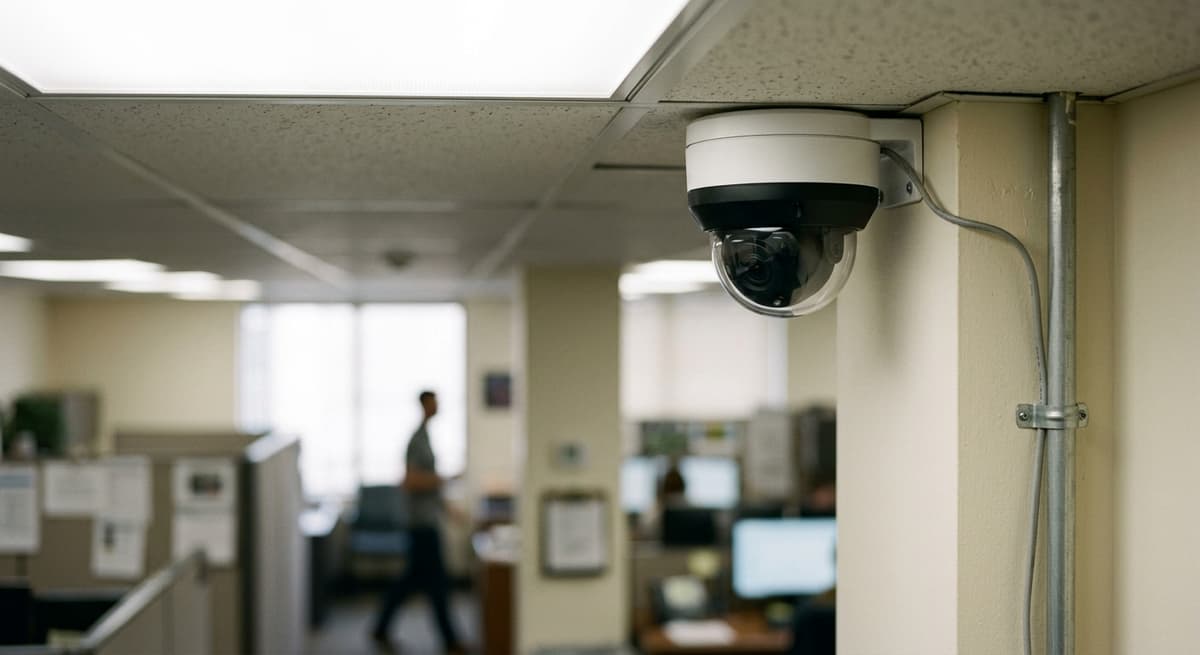
Louisiana businesses have broad authority to install video surveillance systems in areas accessible to the public and in common employee areas:
Permitted locations:
- Retail sales floors and customer service areas
- Entrances, exits, and lobbies
- Hallways and corridors
- Warehouses and storage areas
- Loading docks and shipping areas
- Cash register and point-of-sale areas
- Parking lots and exterior areas
- Conference rooms (video only, with notice recommended)
Prohibited locations:
- Bathrooms and restrooms
- Locker rooms and changing areas
- Nursing or lactation rooms
- Private employee break rooms designated as privacy spaces
- Medical examination areas
Placing cameras in prohibited locations exposes the business owner to criminal liability under La. R.S. 14:283, including potential felony charges for video voyeurism.
Employee Notification
Louisiana does not have a specific statute requiring employers to notify employees about security cameras in common work areas. However, best practices include:
- Posting visible signs indicating that video surveillance is in operation
- Including surveillance policies in the employee handbook
- Having employees acknowledge the surveillance policy in writing
- Clearly marking which areas are monitored
Customer Notification
There is no Louisiana state law requiring businesses to post signs about security cameras in customer-facing areas. However, posting signs serves multiple purposes:
- Deterrent effect. Visible camera signage discourages theft and other crimes.
- Legal protection. Signs can reduce privacy claims by demonstrating that customers were on notice of surveillance.
- Best practice. Industry standards recommend visible camera notifications in retail and service environments.
Audio Recording on Security Cameras
The One-Party Consent Limitation
This is where many security camera users run into legal trouble. Louisiana's one-party consent law under La. R.S. 15:1303 governs audio recording. The critical rule is that at least one party to a conversation must consent to the recording.
For security cameras, this creates a specific problem:
- Video-only cameras do not implicate the wiretapping statute. You can capture video of anyone in areas without a privacy expectation.
- Cameras with audio that record conversations between other people (where you are not a participant) may violate La. R.S. 15:1303. This is because no party to those conversations has consented to the recording.
Practical Guidelines for Audio on Security Cameras
| Scenario | Legal? | Reasoning |
|---|---|---|
| Video-only exterior camera | Yes | No audio interception |
| Camera with audio in your office (you present) | Yes | You are a party to conversations |
| Camera with audio in empty rental property | Risky | You are not a party to tenant conversations |
| Camera with audio in retail store (no notice) | Risky | Customer conversations recorded without consent |
| Camera with audio and posted notice | Safer | Notice may create implied consent |
| Camera with audio in a bathroom | Illegal | Violates La. R.S. 14:283 and 15:1303 |
Best Practice: Disable Audio or Post Clear Notice
The safest approach for security cameras in Louisiana is to either:
- Disable audio recording entirely. This eliminates any wiretapping concerns.
- Post clear, visible signage stating that audio and video recording is in progress. This can create an argument for implied consent, though it is not guaranteed to satisfy the statute in all circumstances.
Neighbor Privacy Concerns
Cameras Facing Neighboring Properties
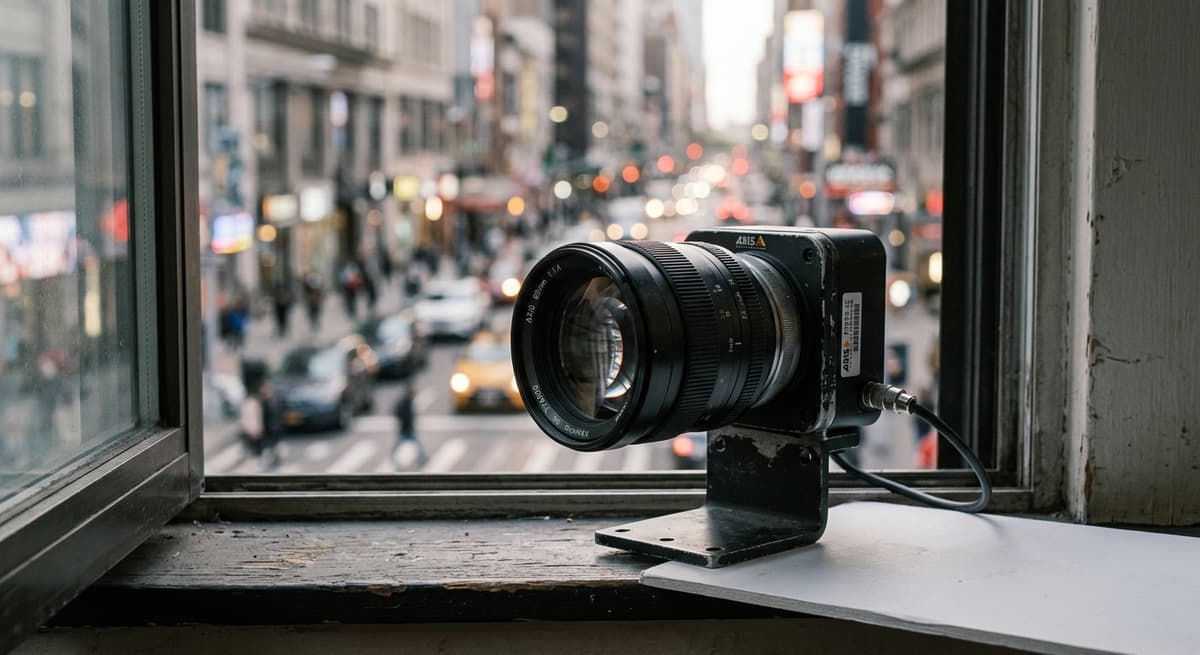
One of the most common security camera disputes involves cameras that capture views of neighboring properties. Louisiana law addresses this through the video voyeurism statute and general privacy principles:
- Cameras that capture the general exterior of a neighbor's property as incidental to monitoring your own property are generally acceptable. Your camera may unavoidably capture parts of a neighbor's yard, driveway, or the front of their home.
- Cameras aimed directly at a neighbor's windows, backyard, or other private areas with the apparent purpose of surveillance may violate La. R.S. 14:283 if the neighbor has a reasonable expectation of privacy.
- Cameras that use zoom or enhancement features to observe activities not visible to the naked eye are more likely to constitute an invasion of privacy.
Resolving Neighbor Camera Disputes
If you have a dispute with a neighbor about their security cameras:
- Talk to your neighbor first. Many camera angle issues can be resolved by simply asking the neighbor to adjust the camera direction.
- Document the camera's field of view. Take photos or notes showing what the camera can see.
- Check local ordinances. Some Louisiana municipalities may have local rules about camera placement that provide additional protections.
- Consult an attorney. If the camera is clearly aimed at your private spaces and the neighbor refuses to adjust it, legal action may be warranted.
- File a police report. If the camera placement constitutes video voyeurism under La. R.S. 14:283, law enforcement can investigate.
HOA and Condominium Rules
HOA Camera Restrictions
Many Louisiana homeowners associations (HOAs) have rules governing security camera installation. Common HOA restrictions include:
- Limits on the type and appearance of exterior cameras
- Requirements for camera color or design to match the home's exterior
- Restrictions on camera placement that may affect shared spaces
- Rules about visible wiring or mounting hardware
- Limits on the size and number of cameras
HOA rules cannot override Louisiana state law. An HOA cannot authorize camera placement that would violate the video voyeurism statute, nor can it prohibit cameras that a homeowner has a legal right to install for security purposes.
Condominium Common Areas
Condominium associations in Louisiana can install security cameras in common areas such as:
- Lobbies and entryways
- Hallways and stairwells
- Parking garages and lots
- Pool areas and fitness centers
- Mailroom and package areas
Cameras in common areas should not be positioned to view inside individual units through windows or doors.
Drone-Based Surveillance
Louisiana's drone surveillance statute La. R.S. 14:337 addresses the use of unmanned aircraft systems, but it only prohibits drone surveillance of specifically defined "targeted facilities" (such as refineries, chemical and rubber manufacturing plants, nuclear power facilities, schools, critical infrastructure, and grain elevators) without the facility owner's prior written consent. It does not create a general prohibition on using a drone to surveil ordinary residential property, so it would not by itself make it illegal to fly a drone over a neighbor's yard, though other privacy or trespass principles may still apply.
Security Camera Footage as Evidence
Admissibility in Court
Security camera footage is regularly used as evidence in Louisiana courts. For footage to be admissible:
- The camera must have been lawfully placed. Footage from illegally placed cameras may be suppressed.
- The footage must be authenticated. A witness must testify about the camera's location, operation, and the accuracy of the footage.
- The footage must be relevant. It must relate to a matter at issue in the case.
- Chain of custody must be documented. Showing who had access to the footage and that it was not altered.
Law Enforcement Access to Private Security Footage
Louisiana law enforcement can access your security camera footage through:
- Voluntary cooperation. You can choose to share footage with police investigating a crime.
- Subpoena. A court-issued subpoena can compel production of footage.
- Search warrant. Police can obtain a warrant to seize camera systems or footage.
- Exigent circumstances. In emergencies involving imminent danger, officers may be able to access footage without a warrant.
You are generally not required to share your security camera footage with police unless served with a valid legal process.
Smart Home Camera Considerations
Cloud Storage and Privacy
Modern smart security cameras store footage in the cloud. Privacy considerations include:
- Terms of service. Review your camera manufacturer's terms regarding data sharing with law enforcement.
- Data breach risk. Cloud-stored footage could be exposed in a security breach.
- Warrant compliance. Some camera companies may comply with law enforcement warrants to access your cloud-stored footage directly.
Ring and Neighbors App Considerations
Amazon's Ring camera platform and similar neighborhood surveillance networks raise unique privacy questions in Louisiana. While sharing footage on these platforms is voluntary, be aware that:
- Law enforcement may request footage through the platform
- Footage shared on neighborhood apps becomes accessible to a wider audience
- Privacy settings should be reviewed regularly
More Louisiana Recording Laws
Audio Recording | Video Recording | Voyeurism & Hidden Cameras | Workplace Recording | Recording Police | Phone Call Recording | Security Cameras | Recording in Public | Landlord-Tenant | Dashcam Laws | Schools | Medical Recording
Back to Louisiana Recording Laws
More Louisiana Recording Topics
See Also
- Louisiana Surveillance Camera Laws covers home, HOA, neighbor, workplace, and landlord camera rules in Louisiana.
More Louisiana Laws
Frequently Asked Questions
Do I need a permit to install security cameras in Louisiana?
No. Louisiana does not require a permit, registration, or notification to install security cameras on your own property. You can install doorbell cameras, exterior cameras, and interior cameras in common areas without government approval.
Can I point a security camera at my neighbor's property in Louisiana?
Your camera may incidentally capture portions of a neighbor's property while monitoring your own, which is generally acceptable. However, aiming a camera directly at a neighbor's windows, bedroom, or fenced backyard may violate Louisiana's video voyeurism statute La. R.S. 14:283.
Can security cameras in Louisiana record audio?
Video-only recording does not require consent. Audio recording on security cameras must comply with Louisiana's one-party consent law under La. R.S. 15:1303. If the camera records conversations between people you are not part of, the audio component may be illegal. The safest approach is to disable audio or post clear notice.
Can a landlord install cameras inside a tenant's apartment in Louisiana?
No. A landlord cannot install cameras inside a tenant's rental unit. This violates both Louisiana's video voyeurism statute La. R.S. 14:283 and the tenant's right to quiet enjoyment. Landlords can install cameras in common areas of multi-unit buildings.
Can police access my home security camera footage in Louisiana?
Police can ask for voluntary cooperation, but you are not required to share footage without legal process. Law enforcement can obtain your footage through a subpoena, search warrant, or in exigent circumstances involving imminent danger.
Updates
Fixed two broken citation links: the drone-surveillance statute and the Civil Code property-use article.
Independently fact-checked against the cited primary sources
Corrected a claim that Louisiana's drone statute (La. R.S. 14:337) bans droning a neighbor's property; the statute only restricts drone surveillance of defined "targeted facilities" like refineries, chemical plants, and schools, not ordinary residential property.
Governing law re-checked for recent changes
Reviewed and approved by an editor
The Law Behind This Article
This article rests on the statutory provisions below, held in our own legal record and retrieved from the official source. Tap a section to read the operative text.
Louisiana Revised Statutes
§ 14:283Video voyeurism; penaltiesIn forcecited in 30 of our articles
A. Video voyeurism is any of the following: (1) The use of any camera, videotape, photo-optical, photo-electric, or any other image recording device, or an unmanned aircraft system equipped with any camera, videotape, photo-optical, photo-electric, or any other image recording device, for the purpose of observing, viewing, photographing, filming, or videotaping a person where that person has not consented to the specific instance of observing, viewing, photographing, filming, or videotaping and either: (a) It is for a lewd or lascivious purpose. (b) The observing, viewing, photographing, filming, or videotaping is as described in Paragraph (B)(3) of this Section and occurs in a place where an identifiable person has a reasonable expectation of privacy. (2) The transfer of an image obtained by activity described in Paragraph (1) of this Subsection by live or recorded telephone message, electronic mail, the Internet, or a commercial online service.
Official text (excerpt) · last checked 2026-08-31 · Read the full text in our law library · Verify at legis.la.gov
Cited in 16 court opinions in our collectionLatest citing opinion in our collection: 2024
In the courts (editorial summary, independently checked):In State v. Schaller (2009) a Louisiana appeals court set out the elements of La. R.S. 14:283 and, since the statute does not define lewd or lascivious, applied a definition of an act tending to excite lust, rejecting a claimed babysitting reason for a hidden bedroom camera. State v. Boudreaux (2006) found 56 consecutive years excessive.
Opinions citing this section in our collection:
- State v. Batiste (Supreme Court of Louisiana 2006, 939 So. 2d 1245)“…Batiste, charging him with video voyeurism, a violation of La. R.S. 14:283. [1] At his arraignment on December *…”
- State v. Boudreaux (Louisiana Court of Appeal 2006, 945 So. 2d 898)✓A stepfather hid a wireless camera in his 18-year-old stepdaughter's bedroom and taped her for four months. He pleaded guilty to 14 counts of video voyeurism, and the court vacated the 56-year consecutive sentence as excessive because the acts formed a single scheme.
- State v. Perry (Louisiana Court of Appeal 2012, 12 La.App. 3 Cir. 298)✓A houseguest was secretly videotaped drying off in the family's guest bathroom. The court affirmed the video voyeurism conviction and three-year sentence, addressing only whether the untimely pretrial motions were properly denied, not the reach of the statute.
Identified automatically from the court opinions citing this section — not a ranking of which case controls.
§ 14:337Unlawful use of an unmanned aircraft systemIn forcecited in 7 of our articles
A.(1) Unlawful use of an unmanned aircraft system is any of the following: (a) The intentional use of an unmanned aircraft system to conduct surveillance of, gather evidence or collect information about, or photographically or electronically record a targeted facility without the prior written consent of the owner of the targeted facility. (b) The intentional use of an unmanned aircraft system over the grounds of the governor's mansion, state or local jail, prison, or other correctional facility that incarcerates or detains juveniles or adults accused of, convicted of, sentenced for, or adjudicated delinquent for violations of criminal law without the express written consent of the person in charge of that state building, state or local jail, prison, or other correctional facility.
Official text (excerpt) · last checked 2026-08-31 · Read the full text in our law library · Verify at legis.la.gov
§ 15:1303Interception and disclosure of wire, electronic, or oral communicationsIn forcecited in 36 of our articles
A. Except as otherwise specifically provided in this Chapter, it shall be unlawful for any person to: (1) Willfully intercept, endeavor to intercept, or procure any other person to intercept or endeavor to intercept, any wire, electronic or oral communication; (2) Willfully use, endeavor to use, or procure any other person to use or endeavor to use, any electronic, mechanical, or other device to intercept any oral communication when: (a) Such device is affixed to, or otherwise transmits a signal through, a wire, cable, or other like connection used in wire or electronic communication; or (b) Such device transmits communications by radio or interferes with the transmission of such communication; (3) Willfully disclose, or endeavor to disclose, to any other person the contents of any wire, electronic, or oral communication, knowing or having reason to know that the information was obtained through the interception of a wire, electronic, or oral communication in violation of this Subsection; or (4) Willfully use, or endeavor to use, the contents of any wire, electronic, or oral communication, knowing or having reason to know that the information was obtained through the…
Official text (excerpt) · last checked 2026-08-31 · Read the full text in our law library · Verify at legis.la.gov
Cited in 25 court opinions in our collectionLatest citing opinion in our collection: 2020
In the courts (editorial summary, independently checked):Louisiana courts apply the consent exception in La. R.S. 15:1303. Smith v. Smith (2005) held a parent may consent for a child where he has a good faith, reasonable basis that it serves the child’s best interest, placing the recording within 15:1303(C)(4). Keller v. Aymond (1998) held willfulness is not required for civil liability.
Opinions citing this section in our collection:
- Smith v. Smith (Louisiana Court of Appeal 2005, 923 So. 2d 732)✓A father secretly taped his daughter's calls with her mother in his own home during a custody fight; the court applied vicarious consent and held his good faith, objectively reasonable belief that taping served the child's best interest fell within La. R.S. 15:1303(C)(4).
- Johnson v. Aymond (Louisiana Court of Appeal 1998, 709 So. 2d 1072)✓A newspaper printed excerpts of a phone conversation a defendant had allegedly taped and handed out at a press conference; the court held those allegations, accepted as true, state a cause of action under the literal language of La. R.S. 15:1303(A)(4), and reversed the dismissal.
- Keller v. Aymond (Louisiana Court of Appeal 1998, 722 So. 2d 1224)✓A newspaper published excerpts of private calls taped by another and handed out at a press conference; the court held criminal willfulness under section 1303 is not needed for civil damages, and that fact issues over the paper's reason to know barred summary judgment under 1303.
Identified automatically from the court opinions citing this section — not a ranking of which case controls.
§ 15:1312Recovery of civil damages authorizedIn forcecited in 17 of our articles
A. Any person whose wire, electronic, or oral communication is intercepted, disclosed, or used in violation of this Chapter shall have a civil cause of action against any person who intercepts, discloses, or uses, or procures any other person to intercept, disclose, or use such communications, and be entitled to recover from any such person: (1) Actual damages, but not less than liquidated damages computed at the rate of one hundred dollars a day for each day of violation or one thousand dollars, whichever is greater. (2) A reasonable attorney's fee and other litigation costs reasonably incurred. (3) Punitive damages. B. A good faith reliance on a court order shall constitute a complete defense to any civil or criminal action brought under this Chapter.
Official text (excerpt) · last checked 2026-07-29 · Read the full text in our law library · Verify at legis.la.gov
Cited in 7 court opinions in our collectionLatest citing opinion in our collection: 2024
Opinions citing this section in our collection:
- Benoit v. Roche (Louisiana Court of Appeal 1995, 657 So. 2d 574)“…eets Act of 1968 authorize a civil damages cause of action. La.R.S. 15:1312; 18 U.S.C. § 2520 ; see also United S…”
- Keller v. Aymond (Louisiana Court of Appeal 1998, 722 So. 2d 1224)“…spaper before the plaintiffs can claim a civil remedy under La. R.S. 15:1312. Hence, the newspaper can be held civil…”
- Wingrave v. Hebert (Louisiana Court of Appeal 2007, 964 So. 2d 385)“…of this Chapter shall have a civil cause of action. . . ." La. R.S. 15:1312(A). The substance of LESA was first i…”
Identified automatically from the court opinions citing this section — not a ranking of which case controls.
Louisiana Civil Code
§ 667Limitations on use of propertyIn forcecited in 4 of our articles
Although a proprietor may do with his estate whatever he pleases, still he cannot make any work on it, which may deprive his neighbor of the liberty of enjoying his own, or which may be the cause of any damage to him. However, if the work he makes on his estate deprives his neighbor of enjoyment or causes damage to him, he is answerable for damages only upon a showing that he knew or, in the exercise of reasonable care, should have known that his works would cause damage, that the damage could have been prevented by the exercise of reasonable care, and that he failed to exercise such reasonable care. Nothing in this Article shall preclude the court from the application of the doctrine of res ipsa loquitur in an appropriate case. Nonetheless, the proprietor is answerable for damages without regard to his knowledge or his exercise of reasonable care, if the damage is caused by an ultrahazardous activity. An ultrahazardous activity as used in this Article is strictly limited to pile driving or blasting with explosives.
Official text (excerpt) · last checked 2026-07-29 · Read the full text in our law library · Verify at legis.la.gov
Cited in 72 court opinions in our collectionLatest citing opinion in our collection: 2026
Opinions citing this section in our collection:
- Suire v. Lafayette City-Parish Government (Supreme Court of Louisiana 2005, 907 So. 2d 37)“…allation of metal sheeting constitutes "pile driving" under La. Civ. Code art. 667, such that the plaintiff's claim is sub…”
- LEJEUNE BROS. v. Goodrich Petroleum Co. (Louisiana Court of Appeal 2007, 6 La.App. 3 Cir. 1557)“…ourt committed error in dismissing plaintiff's claims under La. Civ.Code art. 667 and claims for unjust enrichment.…”
- Grace Ranch, LLC v. BP Am. Prod. Co. (Louisiana Court of Appeal 2018, 252 So. 3d 546)“…es La.R.S. 31:11(A) to its analogous provision contained in La.Civ.Code art. 667, which governs the limitations placed o…”
Identified automatically from the court opinions citing this section — not a ranking of which case controls.
United States Code Title 18
§ 2511Interception and disclosure of wire, oral, or electronic communications prohibitedIn forcecited in 422 of our articles
Except as otherwise specifically provided in this chapter any person who— intentionally intercepts, endeavors to intercept, or procures any other person to intercept or endeavor to intercept, any wire, oral, or electronic communication; intentionally uses, endeavors to use, or procures any other person to use or endeavor to use any electronic, mechanical, or other device to intercept any oral communication when— such device is affixed to, or otherwise transmits a signal through, a wire, cable, or other like connection used in wire communication; or such device transmits communications by radio, or interferes with the transmission of such communication; or such person knows, or has reason to know, that such device or any component thereof has been sent through the mail or transported in interstate or foreign commerce; or such use or endeavor to use (A) takes place on the premises of any business or other commercial establishment the operations of which affect interstate or foreign commerce; or (B) obtains or is for the purpose of obtaining information relating to the operations of any business or other commercial establishment the operations of which affect interstate or foreign…
Official text (excerpt) · last checked 2026-09-17 · Read the full text in our law library · Verify at uscode.house.gov
Cited in 2,045 court opinions in our collectionLatest citing opinion in our collection: 2026
In the courts (editorial summary, independently checked):Griggs-Ryan v. Smith (1990) applied the Section 2511(2)(d) prior-consent exception, treating a tenant repeatedly told that all incoming calls were taped as having impliedly consented. United States v. United States District Court (1972) read the then-current Section 2511(3) as conferring no presidential surveillance power.
Opinions citing this section in our collection:
- Mitchell v. Forsyth (Supreme Court of the United States 1985, 472 U.S. 511)✓The Attorney General authorized a warrantless 1970 national security wiretap that caught the plaintiff's calls; the Court held the since-repealed Section 2511(3) disclaimer left the tap lawful under Title III, and that Mitchell had qualified immunity.
- United States v. United States District Court for the Eastern District of Michigan (Supreme Court of the United States 1972, 407 U.S. 297)✓The Attorney General approved warrantless wiretaps on members of a domestic group accused of bombing a CIA office; the Court read Section 2511(3) as a congressional disclaimer conferring no surveillance power, then held the Fourth Amendment required prior judicial approval.
- Forsyth v. Barr (Court of Appeals for the Fifth Circuit 1994, 19 F.3d 1527)✓Dallas police used, in an internal affairs probe of an officer, calls private parties allegedly intercepted illegally; assuming that was unlawful, the Fifth Circuit held Section 2517(1) and (2) allowed the disclosure and use, defeating the Section 2511(1)(c) and (d) claims.
Identified automatically from the court opinions citing this section — not a ranking of which case controls.
Explore the law
The laws cited above reference these related sections in their own text:
- Louisiana Revised Statutes § 14:61 — Unauthorized entry of a critical infrastructure view in our statute record · read at the official source
Related law for further reading — not part of this article’s citations.
Search our full record of US law — 2.1 million sections, every state + federal →
Sources and References
- La. R.S. 14:283 - Video Voyeurism(legis.la.gov).gov
- La. R.S. 15:1303 - Interception of Communications(legis.la.gov).gov
- La. R.S. 14:337 - Drone Surveillance(legis.la.gov).gov
- La. C.C. Art. 667 - Property Use Limits(legis.la.gov).gov
- 18 U.S.C. 2511 - Federal Wiretap Act(law.cornell.edu)
- FTC Security Cameras Guide(consumer.ftc.gov).gov
- La. R.S. 15:1312 - Recovery of Civil Damages Authorized(law.justia.com)