Louisiana's Jody's Law Takes Effect August 1, Changing Bail and Adding Hit-and-Run Alerts
Independently fact-checked against primary sources (last audited August 3, 2026). · 3 primary sources cited on this page. How we verify our legal content
Louisiana's Jody's Law Takes Effect August 1, Changing Bail and Adding Hit-and-Run Alerts
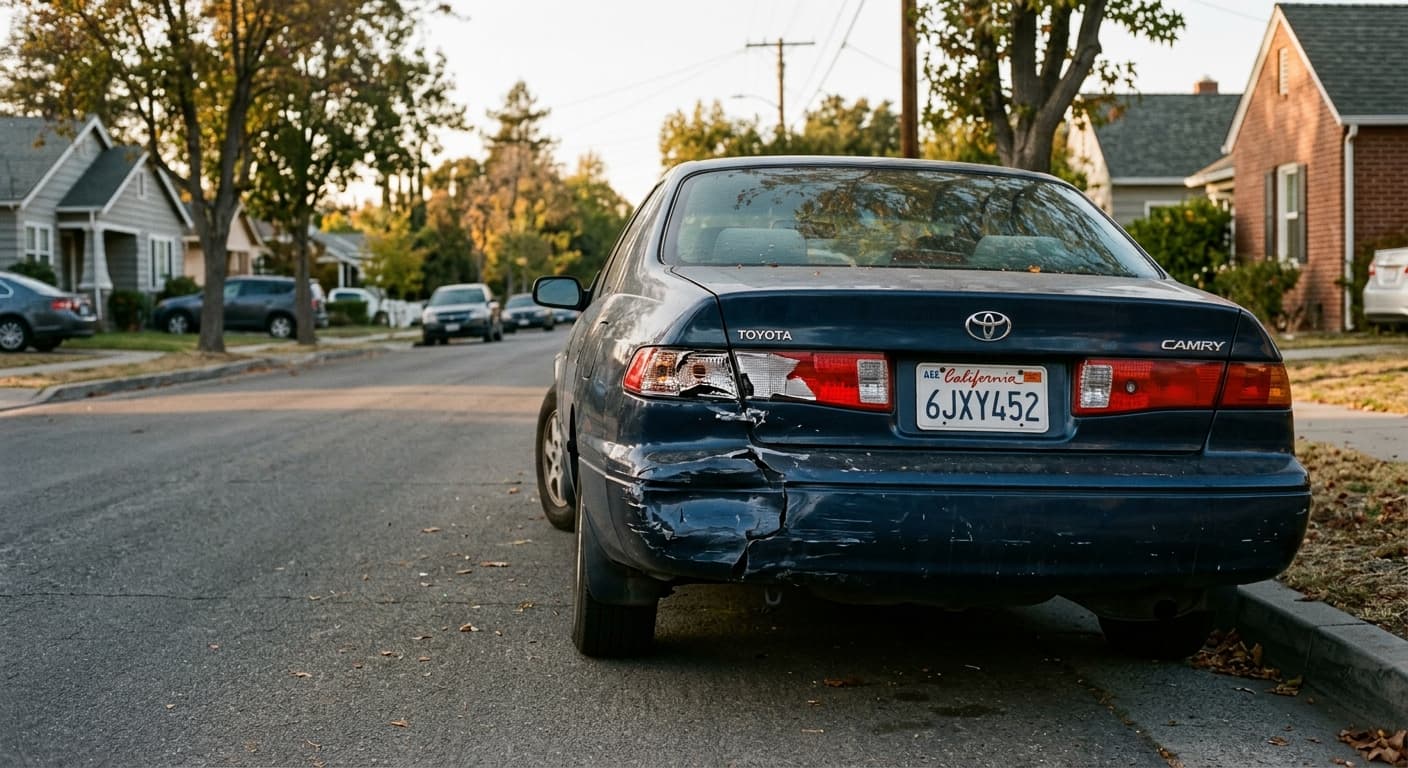
Louisiana's Act No. 86, known as Jody's Law, took effect August 1, 2026, ending fixed-schedule bail for hit-and-run suspects, ordering a rapid alert protocol for fleeing vehicles, and raising hit-and-run penalties. It was signed May 11, 2026, after the 2025 death of 20-year-old Jody Mann in a Denham Springs hit-and-run.
Information last verified on August 3, 2026. This is a developing story; we update it as the record changes.
Jurisdiction scope: This article covers Louisiana state law only, specifically Act No. 86 of the 2026 Regular Session (House Bill 806) and its amendments to La. R.S. 14:100, Louisiana's hit-and-run driving statute. It does not describe hit-and-run law in any other state.
What Happened
Act No. 86 of Louisiana's 2026 Regular Session, House Bill 806, took effect August 1, 2026, roughly three months after Gov. Jeff Landry signed it into law on May 11, 2026. State Rep. Vanessa LaFleur authored the bill, which passed both chambers of the Legislature without opposition. The Louisiana Legislature's website lists the enrolled act at legis.la.gov, document ID 1473915.
The law is known informally as Jody's Law, for Jody Mann, a 20-year-old Greenwell Springs woman struck by a vehicle while walking along Reinninger Road in Denham Springs on March 29, 2025. According to local reporting, Mann underwent weeks of surgeries before suffering a stroke and being declared brain dead, and she died April 16, 2025. A Livingston Parish man was later arrested and charged in connection with the crash following anonymous tips. Mann's mother, Holly Crow, worked with LaFleur on the legislation. Reporting from KTAL and other outlets quoted Crow saying that while nothing will bring her daughter back, knowing her daughter's name will now protect others brings her a measure of comfort.
Jody's Law makes three changes to how Louisiana handles hit-and-run cases. First, it requires courts to set bail for hit-and-run suspects using the individualized factors in Code of Criminal Procedure Article 316, rather than a preset, fixed bail schedule. Second, it directs law enforcement agencies investigating hit-and-run offenses to adopt protocols for rapidly notifying other agencies about a hit-and-run, including known injury information and the fleeing vehicle, coordinated through the Louisiana Department of Public Safety and Corrections and Louisiana State Police. Third, it increases penalties tied to hit-and-run offenses under the state's existing hit-and-run statute, La. R.S. 14:100.
What the Law Actually Says
Louisiana's underlying hit-and-run statute, La. R.S. 14:100, already required drivers involved in a crash to stop, identify themselves, and render reasonable aid. Before Act 86, penalties scaled with the crash's outcome: a base offense with no death or serious injury carried a fine of not more than five hundred dollars, imprisonment of not more than six months, or both; a hit-and-run causing death or serious bodily injury was already a felony, carrying a fine of not more than five thousand dollars and two to ten years imprisonment, with at least two years served without benefit of parole, probation, or suspension of sentence; and a repeat offender causing death or serious injury faced five to twenty years. Act 86 amends this framework to increase punishment for hit-and-run offenses. The enrolled act's specific revised figures were not independently confirmed against the bill's full text for this article, so they are described here in general terms rather than as a confirmed new number.
Act 86's bail provision adds a subsection to the hit-and-run statute directing that in any case alleging a hit-and-run, the court must set bail using the factors in Code of Criminal Procedure Article 316, which weighs the seriousness of the offense and danger to public safety, and that no fixed bail schedule may be used. Louisiana parishes commonly use fixed bail schedules that assign a preset dollar amount to a given charge without a judge weighing case facts; Jody's Law removes that shortcut for hit-and-run charges and requires a judicial determination instead.
The alert provision directs law enforcement agencies investigating hit-and-run offenses to adopt protocols for rapidly notifying other agencies statewide that a hit-and-run occurred, along with, if known, injury status and vehicle details, coordinated by the Department of Public Safety and Corrections and State Police. For background on Louisiana's hit-and-run duties generally, see Louisiana's hit-and-run laws. Hit-and-run crashes also intersect with the state's broader crash-liability rules, covered in Louisiana car accident laws, and readers comparing states can see the US hit-and-run law hub.
Analysis: Why This Matters
The following is analysis from the Recording Law Editorial Team. Jody's Law addresses two points of friction in hit-and-run cases: the gap between arrest and when law enforcement statewide learns key details about the vehicle involved, and the use of fixed bail schedules that ignore the seriousness of a specific allegation. Removing the fixed-schedule option for hit-and-run bail brings that charge in line with how Louisiana courts already handle many other serious offenses, weighing case-specific factors rather than applying a flat amount tied only to the charge.
The practical effect of the alert-protocol requirement depends on implementation details left to the Department of Public Safety and Corrections and State Police, including how quickly information moves between agencies and whether any of it reaches the public directly. The statute directs agencies to build the protocol; it does not specify a technology platform or a public notification system, so how rapid the notification becomes in practice is an operational question separate from the text of Act 86.
How This Affects You
Jody's Law changes how Louisiana courts and law enforcement handle hit-and-run cases going forward; it does not change the underlying duty every Louisiana driver already has under La. R.S. 14:100 to stop after a crash, identify themselves, and render reasonable aid. Anyone involved in or affected by a hit-and-run in Louisiana, whether as a suspect facing a bail hearing or a victim seeking information about a fleeing driver, should consult a Louisiana-licensed attorney about how the new bail and penalty provisions apply to a specific case, since case outcomes depend on facts this general explainer does not cover.
This is general legal information, not legal advice. It covers Louisiana law and reflects sources verified on August 3, 2026. This is a developing story and details may change; consult a lawyer licensed in Louisiana about your specific situation.
Related articles
Last updated: 2026-08-03. This is a developing story; details verified as of 2026-08-03.
More Louisiana Laws
Frequently Asked Questions
What is Jody's Law in Louisiana?
Jody's Law is the informal name for Act No. 86 of Louisiana's 2026 Regular Session, originally House Bill 806. It took effect August 1, 2026, and changes how Louisiana courts set bail in hit-and-run cases, directs law enforcement to adopt a rapid interagency alert protocol for hit-and-run crashes, and increases penalties under La. R.S. 14:100.
When did Jody's Law take effect?
Jody's Law took effect August 1, 2026. Gov. Jeff Landry signed the underlying bill, House Bill 806, into law on May 11, 2026.
Who was Jody Mann?
Jody Mann was a 20-year-old Greenwell Springs, Louisiana woman struck by a vehicle in a hit-and-run crash in Denham Springs on March 29, 2025. She died of her injuries on April 16, 2025. The law is named for her.
How does Jody's Law change bail for hit-and-run suspects in Louisiana?
It requires Louisiana courts to set bail in hit-and-run cases using the individualized factors in Code of Criminal Procedure Article 316, rather than a fixed bail schedule that assigns a preset dollar amount to the charge.
What is the rapid alert protocol created by Jody's Law?
The law directs Louisiana law enforcement agencies investigating hit-and-run offenses to adopt protocols to rapidly notify other agencies statewide that a hit-and-run occurred, along with known injury information and vehicle details, coordinated by the Department of Public Safety and Corrections and Louisiana State Police.
Did Jody's Law increase penalties for hit-and-run driving in Louisiana?
Yes, Act 86 increases penalties tied to hit-and-run offenses under La. R.S. 14:100. This article describes that change in general terms because the enrolled act's specific revised penalty figures were not independently confirmed against the full bill text.
What did Louisiana's hit-and-run law require before Jody's Law?
Under La. R.S. 14:100, drivers involved in a crash were already required to stop, identify themselves, and render reasonable aid. A hit-and-run causing death or serious bodily injury was already a felony, carrying a fine and a prison term with a minimum served without parole, probation, or suspension of sentence.
Who authored Jody's Law?
State Rep. Vanessa LaFleur authored House Bill 806 after advocacy from Jody Mann's mother, Holly Crow, following Mann's death in a March 2025 hit-and-run.
Updates
Independently fact-checked against the cited primary sources
The Law Behind This Article
This article rests on the statutory provisions below, held in our own legal record and retrieved from the official source. Tap a section to read the operative text.
Louisiana Revised Statutes
§ 14:100Hit-and-run drivingIn forcecited in 3 of our articles
A. Hit-and-run driving is the intentional failure of the driver of a vehicle involved in or causing any accident, to stop such vehicle at the scene of the accident, to give his identity, and to render reasonable aid. B. For the purpose of this Section: (1) "To give his identity", means that the driver of any vehicle involved in any accident shall give his name, address, and the license number of his vehicle, or shall report the accident to the police. (2) Repealed by Acts 2019, No. 2, §3. (3) "Vehicle" includes a watercraft. (4) "Accident" means an incident or event resulting in damage to property or injury to person. C.(1)(a) Whoever commits the crime of hit-and-run driving where there is no death or serious bodily injury shall be fined not more than five hundred dollars or imprisoned for not more than six months, or both.
Official text (excerpt) · last checked 2026-07-29 · Read the full text in our law library · Verify at legis.la.gov
Cited in 56 court opinions in our collectionLatest citing opinion in our collection: 2025
Opinions citing this section in our collection:
- State v. Davenport (Louisiana Court of Appeal 2006, 941 So. 2d 629)“…bert Davenport, Jr., of hit and run driving, a violation of La.R.S. 14:100. Thereafter, the trial court sentenced…”
- Bell v. Department of Police (Louisiana Court of Appeal 2017, 2016 La.App. 4 Cir. 0677)“…f La. R.S. 14:98, and for hit and run driving, in violation La. R.S. 14:100. At the time of the incident, Bell was…”
- State ex rel. of Korkosz (Louisiana Court of Appeal 1980, 393 So. 2d 332)“…Korkosz adjudicated a juvenile delinquent for violation of La.R.S. 14:100 1 in that “he did while operating a pi…”
Identified automatically from the court opinions citing this section — not a ranking of which case controls.
Also relied on in: Louisiana Hit and Run Laws: Penalties and What to Do
Explore the law
The laws cited above reference these related sections in their own text:
- Louisiana Revised Statutes § 14:32.1 — Vehicular homicide view in our statute record · read at the official source
- Louisiana Revised Statutes § 14:39.2 — First degree vehicular negligent injuring view in our statute record · read at the official source
- Louisiana Revised Statutes § 14:98 — Operating a vehicle while impaired view in our statute record · read at the official source
Related law for further reading — not part of this article’s citations.
Search our full record of US law — 2.1 million sections, every state + federal →
Sources and References
- Enrolled Act No. 86, 2026 Regular Session (House Bill 806) - Louisiana State Legislature(legis.la.gov).gov
- House Bill 806, 2026 Regular Session - bill history and status(legis.la.gov).gov
- Louisiana Revised Statutes 14:100 - Hit-and-run driving(legis.la.gov).gov
- Jody's Law goes into effect Aug. 1, strengthening Louisiana's hit-and-run law - WBRZ(wbrz.com)
- 'Her name will now protect others': Mother reacts after Gov. Landry signs Jody's Law - KTAL(ktalnews.com)
- Jody's Law, bill inspired by victim of deadly hit-and-run, headed to Gov. Landry's desk - WAFB(wafb.com)
- New Louisiana laws set to take effect Aug. 1: Here's what to know - KLFY(klfy.com)