Florida's 'Isaiah's Law' Adds Unlicensed Driving to Habitual Traffic Offender Rules
Independently fact-checked against primary sources (last audited August 9, 2026). · Law checked current as of August 9, 2026. · 6 primary sources cited on this page. How we verify our legal content
Florida's 'Isaiah's Law' Adds Unlicensed Driving to Habitual Traffic Offender Rules
Florida's CS/HB 35, "Isaiah's Law," took effect July 1, 2026. It adds driving without a valid license to the offenses that can trigger "habitual traffic offender" status under Fla. Stat. 322.264, exposing repeat unlicensed drivers to a third-degree felony.
Information last verified on July 5, 2026. This is a developing story; we update it as the record changes.
Jurisdiction scope: This article covers Florida's habitual-traffic-offender and driver-licensing statutes (Fla. Stat. 322.264 and 322.34) as amended by CS/HB 35. It does not describe habitual-offender or license-revocation law in any other state.
What Happened
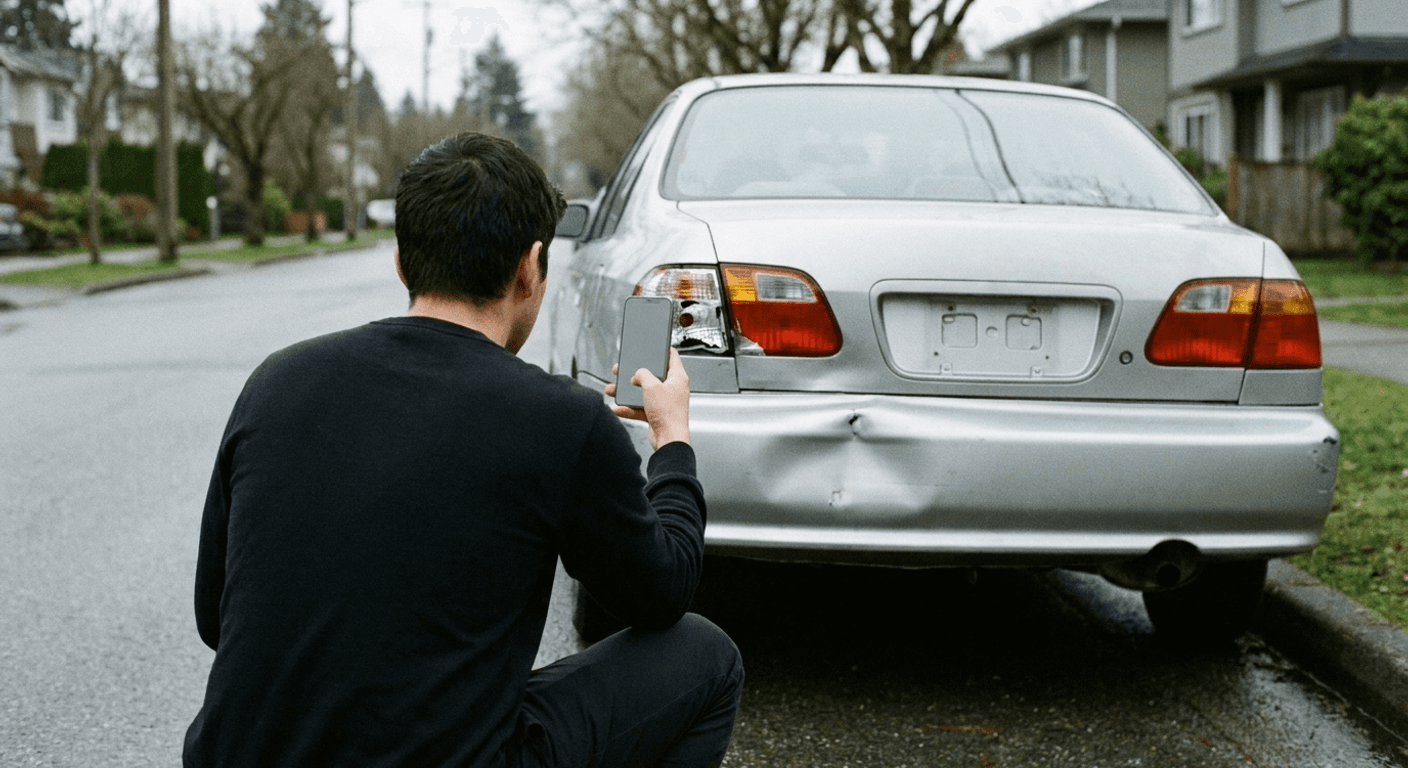
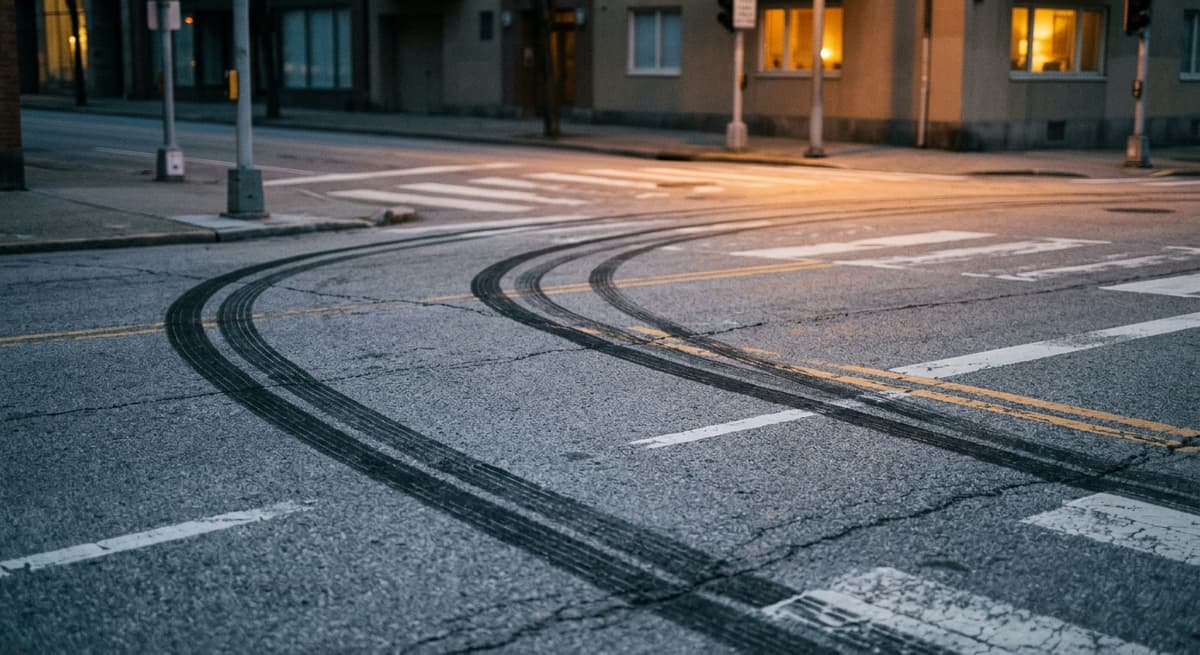
On December 11, 2024, at around 7:30 p.m., an 18-year-old motorcyclist named Isaiah Raposa was struck and killed at the intersection of Symmes Road and Southwind Lake Drive in Gibsonton, an unincorporated community in Hillsborough County. The driver of the car that hit him fled the scene. The Hillsborough County Sheriff's Office later identified and located the driver, who was wanted on charges that included leaving the scene of a crash involving death and driving without a valid license.
The case became the namesake for CS/HB 35, filed in the 2026 Florida legislative session. The bill, titled "Isaiah's Law" by lawmakers and advocates, was sponsored in the House by Rep. Webster Barnaby, with a Senate companion carried by Sen. Jonathan Martin. It moved through the Florida House and Senate during the 2026 regular session and was approved by Gov. Ron DeSantis on April 23, 2026. It was codified as Chapter 2026-53, Laws of Florida, and became effective July 1, 2026.
The bill's core change is narrow but specific: it amends the definition of "habitual traffic offender" in Fla. Stat. 322.264 to add driving a motor vehicle without a valid license, a violation of Fla. Stat. 322.03, to the list of offenses that count toward that designation. That list already included offenses such as manslaughter resulting from operating a motor vehicle, certain DUI convictions, felonies committed with a motor vehicle, and driving while a license is suspended or revoked, but not driving without ever having held a valid license. Legislative analyses prepared for the bill describe an indeterminate positive fiscal impact on state prison beds, since more drivers may now be designated habitual traffic offenders and face longer incarceration if they continue driving after that designation.
What the Law Actually Says
Florida's habitual-traffic-offender scheme is built around two connected statutes. Fla. Stat. 322.264 defines who qualifies: a person whose DHSMV record shows an accumulation of a specified number of qualifying convictions within a five-year period. Reporting on the bill's effect has described the threshold for the newly added offense as three convictions for driving without a valid license within five years, consistent with the three-conviction structure the statute already applies to its other listed offenses. Once DHSMV's records show that threshold has been met, the agency must designate the person a habitual traffic offender.
Fla. Stat. 322.34 sets the consequence. A person designated a habitual traffic offender who then drives any motor vehicle on Florida's highways commits a felony of the third degree, punishable under Fla. Stat. 775.082, 775.083, or 775.084. DHSMV must also revoke that person's driver's license for five years. A person who does not hold a valid license and is designated a habitual traffic offender is not eligible to apply for a restricted license during that five-year revocation period.
Before CS/HB 35, a driver who had never held a valid license did not build toward habitual-traffic-offender status the way a driver with a suspended or revoked license did. The new law closes that specific gap without changing the DUI, suspended-license, or felony-driving categories already in Fla. Stat. 322.264. It does not create a new criminal offense on its own; the felony exposure comes from Fla. Stat. 322.34 once the habitual-traffic-offender designation attaches.
The change intersects with topics this site covers elsewhere. Hit-and-run cases like the one that led to Isaiah's Law often involve a driver who lacks a valid license in the first place; our overview of Florida Hit and Run Laws explains the separate reporting and leaving-the-scene duties that apply regardless of licensing status. A habitual-traffic-offender designation and the felony conviction that can follow it are also the kind of record entries that surface in employment and tenant screening; see Florida Background Check Laws for how criminal and driving records are treated in that context. And because hit-and-run investigations increasingly rely on doorbell, dashcam, and bystander footage, our guide to Florida Recording Laws covers the state's one-party consent rule for capturing that kind of evidence.
Analysis: Why This Matters
The following is analysis from the Recording Law Editorial Team. CS/HB 35 is a narrow amendment, but it reflects a recurring legislative pattern: a fatal crash exposes a gap in an existing offender-classification statute, and lawmakers close that gap by adding one offense to an existing list rather than rewriting the underlying framework. Fla. Stat. 322.264 already treated repeated suspended-license driving as habitual-offender conduct; it did not treat repeated never-licensed driving the same way, even though both describe a driver the state has determined should not be on the road unsupervised. The fiscal analysis anticipating an indeterminate rise in prison-bed usage reflects that the law is expected to move some repeat unlicensed drivers into felony exposure who previously faced only repeated misdemeanor charges under Fla. Stat. 322.03.
How This Affects You
This section describes how the law generally works; it is not a substitute for individualized legal advice. If DHSMV records show three convictions for driving without a valid license within a five-year period, the agency can designate that person a habitual traffic offender. Once designated, driving any motor vehicle is a third-degree felony under Fla. Stat. 322.34, separate from and in addition to whatever charge applies to the underlying unlicensed-driving stop itself, and a person without a valid license at the time of designation cannot apply for a restricted license during the five-year revocation period. Anyone with unresolved unlicensed-driving citations in Florida, or anyone unsure whether their DHSMV record already meets the threshold, should check their driving record directly with DHSMV or consult a Florida-licensed attorney.
This is general legal information, not legal advice. It covers Florida and reflects sources verified on July 5, 2026. Laws change and this story is developing; consult a lawyer licensed in your jurisdiction about your specific situation.
Sources
- Florida Senate, House Bill 35 (2026) bill history and text: https://www.flsenate.gov/Session/Bill/2026/35
- Florida House of Representatives, Final Bill Analysis, h0035z1.CRM (April 28, 2026): https://www.flsenate.gov/Session/Bill/2026/35/Analyses/h0035z1.CRM.PDF
- Florida House of Representatives, Bill Analysis, h0035.CRM (November 18, 2025): https://www.flsenate.gov/Session/Bill/2026/35/Analyses/h0035.CRM.PDF
- Laws of Florida, Chapter 2026-53 (Committee Substitute for House Bill No. 35): https://laws.flrules.org/2026/53
- Florida Statutes, Section 322.264, Habitual traffic offender: https://www.leg.state.fl.us/Statutes/index.cfm?App_mode=Display_Statute&URL=0300-0399%2F0322%2FSections%2F0322.264.html
- Florida Statutes, Section 322.34, Habitual offender; revocation of license: https://www.leg.state.fl.us/Statutes/index.cfm?App_mode=Display_Statute&URL=0300-0399%2F0322%2FSections%2F0322.34.html
Related articles
Last updated: 2026-07-05. This is a developing story; details verified as of 2026-07-05.
Frequently Asked Questions
What does Florida's Isaiah's Law (CS/HB 35) do?
It amends Fla. Stat. 322.264 to add driving a motor vehicle without a valid license to the list of offenses that count toward a 'habitual traffic offender' designation in Florida. The law took effect July 1, 2026, as Chapter 2026-53, Laws of Florida.
What is a habitual traffic offender in Florida?
Under Fla. Stat. 322.264, it is a person whose DHSMV record shows an accumulated number of convictions for specified offenses, such as certain DUI convictions, felonies involving a motor vehicle, or driving on a suspended or revoked license, within a five-year period.
Does driving without a license now count toward habitual traffic offender status in Florida?
Yes. As of July 1, 2026, driving without a valid license, a violation of Fla. Stat. 322.03, is included among the offenses that can lead to a habitual traffic offender designation under Fla. Stat. 322.264.
How many convictions trigger the designation?
Reporting on the new law describes three convictions for driving without a valid license within a five-year period as the threshold for that offense category, matching the three-conviction structure the statute already uses for its other listed offenses.
What happens if someone designated a habitual traffic offender keeps driving?
Under Fla. Stat. 322.34, driving any motor vehicle on Florida's highways after being designated a habitual traffic offender is a felony of the third degree. DHSMV must also revoke the person's driver's license for five years.
When did Isaiah's Law take effect?
Gov. Ron DeSantis signed CS/HB 35 on April 23, 2026, as Chapter 2026-53, Laws of Florida. The law took effect July 1, 2026.
Who was Isaiah's Law named for?
Isaiah Raposa, an 18-year-old motorcyclist killed in a hit-and-run crash in Gibsonton, Florida, in December 2024. The driver was later located and faced charges that included driving without a valid license and leaving the scene of a crash involving death.
Can a habitual traffic offender get a restricted driver's license during the revocation period?
A person who does not hold a valid license and is designated a habitual traffic offender is not eligible to apply for a restricted license during the five-year revocation period under Fla. Stat. 322.34.
Updates
Independently fact-checked against the cited primary sources; governing law re-checked for recent changes
Independently fact-checked against the cited primary sources
The Law Behind This Article
This article rests on the statutory provisions below, held in our own legal record and retrieved from the official source. Tap a section to read the operative text.
Florida Statutes
§ 322.03Drivers must be licensed; penalties.In force
(1)(a) Except as otherwise authorized in this chapter, a person may not drive any motor vehicle upon a highway in this state unless such person has a valid driver license issued under this chapter. (b) A person who violates paragraph (a) commits:1. Upon a first conviction, a misdemeanor of the second degree, punishable as provided in s. 775.082 or s. 775.083. 2. Upon a second conviction, a misdemeanor of the first degree, punishable as provided in s. 775.082 or s. 775.083. 3. Upon a third or subsequent conviction, a misdemeanor of the first degree, punishable as provided in s. 775.082 or s. 775.083, and the court must order the person to serve a minimum mandatory period of 10 days in jail. The penalties provided in this paragraph do not apply to violations of s. 316.212. (2)(a) A person who drives a commercial motor vehicle may not receive a driver license unless and until he or she surrenders to the department all driver licenses in his or her possession issued to him or her by any other jurisdiction or makes an affidavit that he or she does not possess a driver license.
Official text (excerpt) · last checked 2026-07-28 · Read the full text in our law library · Verify at leg.state.fl.us
Cited in 13 court opinions in our collectionLatest citing opinion in our collection: 2025
Opinions citing this section in our collection:
- City of Miami v. Aronovitz (Supreme Court of Florida 1959, 114 So. 2d 784)“…ays of this State is required to obtain a license to drive. Section 322.03, Florida Statutes, F.S.A., prohibits a person from drivin…”
- Hill v. State (Supreme Court of Florida 1970, 238 So. 2d 608)“…v. Gardner, 82 Fla. 355 , 91 So. 376 (1921). [9] Fla. Stat. §§ 322.03 and 322.15 (1967), F.S.A. [10] 11…”
- Marshall v. State (District Court of Appeal of Florida 1978, 354 So. 2d 107)“…onvictions of John Harvin Marshall need not be disturbed. Section 322.03, Florida Statutes (1975) specifies that no person shall…”
Identified automatically from the court opinions citing this section — not a ranking of which case controls.
§ 322.264“Habitual traffic offender” defined.In force
A “habitual traffic offender” is any person whose record, as maintained by the Department of Highway Safety and Motor Vehicles, shows that such person has accumulated the specified number of convictions for offenses described in subsection (1) or subsection (2) within a 5-year period:(1) Three or more convictions of any one or more of the following offenses arising out of separate acts:(a) Voluntary or involuntary manslaughter resulting from the operation of a motor vehicle; (b) Any violation of s. 316.193, former s. 316.1931, or former s. 860.01; (c) Any felony in the commission of which a motor vehicle is used; (d) Driving a motor vehicle while his or her license is suspended or revoked; (e) Failing to stop and render aid as required under the laws of this state in the event of a motor vehicle crash resulting in the death or personal injury of another; or (f) Driving a commercial motor vehicle while his or her privilege is disqualified. (2) Fifteen convictions for moving traffic offenses for which points may be assessed as set forth in s. 322.27, including those offenses in subsection (1).
Official text (excerpt) · last checked 2026-07-28 · Read the full text in our law library · Verify at leg.state.fl.us
Cited in 35 court opinions in our collectionLatest citing opinion in our collection: 2021
Opinions citing this section in our collection:
- State of Florida v. Daryl Miller (Supreme Court of Florida 2017, 227 So. 3d 562)“…ho drive with a driver license that has been revoked under section 322.264, Florida Statutes (2017). Miller filed a sworn motion to…”
- Crain v. State (District Court of Appeal of Florida 2012, 79 So. 3d 118)“…o drive while his driver's license is revoked pursuant to section 322.264, Florida Statutes (2009). The Legislature clearly defined…”
- Zarsky v. State (District Court of Appeal of Florida 1973, 281 So. 2d 553)“…petition is presented is the petitioner's contention that Fla. Stat. § 322.264 and Fla. Stat. § 322.27 (5), F.S.A.,…”
Identified automatically from the court opinions citing this section — not a ranking of which case controls.
§ 322.34Driving while license suspended, revoked, canceled, or disqualified.In forcecited in 2 of our articles
(1) Except as provided in subsection (2), any person whose driver license or driving privilege has been canceled, suspended, or revoked, except a “habitual traffic offender” as defined in s. 322.264, who drives a vehicle upon the highways of this state while such license or privilege is canceled, suspended, or revoked is guilty of a moving violation, punishable as provided in chapter 318. (2) Any person whose driver license or driving privilege has been canceled, suspended, or revoked as provided by law, or who does not have a driver license or driving privilege but is under suspension or revocation equivalent status as defined in s. 322.01(43), except persons defined in s. 322.264, who, knowing of such cancellation, suspension, revocation, or suspension or revocation equivalent status, drives any motor vehicle upon the highways of this state while such license or privilege is canceled, suspended, or revoked, or while under suspension or revocation equivalent status, commits:(a) A misdemeanor of the second degree, punishable as provided in s. 775.082 or s. 775.083. (b)1. A misdemeanor of the first degree, punishable as provided in s. 775.082 or s.
Official text (excerpt) · last checked 2026-07-28 · Read the full text in our law library · Verify at leg.state.fl.us
Cited in 71 court opinions in our collectionLatest citing opinion in our collection: 2025
Opinions citing this section in our collection:
- Santiago v. State (District Court of Appeal of Florida 1999, 731 So. 2d 787)“…issue merits discussion: Mr. Santiago contends that, under section 322.34, Florida Statutes, he should have been convicted of a fir…”
- Bozeman v. State (District Court of Appeal of Florida 1998, 714 So. 2d 570)“…le license suspended, revoked, or cancelled in violation of section 322.34, Florida Statutes (DWLS). We find that we need only addre…”
- Huss v. State (District Court of Appeal of Florida 2000, 771 So. 2d 591)“…le as provided in s. 775.082, s. 775.083, or s. 775.084. Fla. Stat. § 322.34 (1), Fla. Stat. (1995). The predicate c…”
Identified automatically from the court opinions citing this section — not a ranking of which case controls.
Also relied on in: Do You Have to Pay a Camera Ticket? What Happens If You Don't
§ 775.082Penalties; applicability of sentencing structures; mandatory minimum sentences for certain reoffenders previously released from prison.In forcecited in 11 of our articles
(1)(a) Except as provided in paragraph (b), a person who has been convicted of a capital felony shall be punished by death if the proceeding held to determine sentence according to the procedure set forth in s. 921.141 results in a determination that such person shall be punished by death, otherwise such person shall be punished by life imprisonment and shall be ineligible for parole. (b)1. A person who actually killed, intended to kill, or attempted to kill the victim and who is convicted under s. 782.04 of a capital felony, or an offense that was reclassified as a capital felony, which was committed before the person attained 18 years of age shall be punished by a term of imprisonment for life if, after a sentencing hearing conducted by the court in accordance with s. 921.1401, the court finds that life imprisonment is an appropriate sentence. If the court finds that life imprisonment is not an appropriate sentence, such person shall be punished by a term of imprisonment of at least 40 years. A person sentenced pursuant to this subparagraph is entitled to a review of his or her sentence in accordance with s. 921.1402(2)(a). 2.
Official text (excerpt) · last checked 2026-09-23 · Read the full text in our law library · Verify at leg.state.fl.us
Cited in 291 court opinions in our collectionLatest citing opinion in our collection: 2026
In the courts (editorial summary, independently checked):State v. Dixon (1973) held Section 775.082, with sections 782.04 and 921.141, constitutional under the test of Furman v. Georgia. Kenneth R. Jackson v. State of Florida (2017) held that Section 775.082(2)'s automatic life-sentence remedy did not apply after Hurst v. Florida, which invalidated only certain sentencing procedures.
Opinions citing this section in our collection:
- State v. Dixon (Supreme Court of Florida 1973, 283 So. 2d 1)✓Four consolidated murder cases challenged Florida's post-Furman capital scheme; the Florida Supreme Court held sections 775.082, 782.04 and 921.141 constitutional, reading the listed aggravating and mitigating circumstances as definite enough to channel sentencing discretion.
- Woods v. State (District Court of Appeal of Florida 1999, 740 So. 2d 20)✓Woods committed an unarmed robbery about a month after release from prison and was sentenced to 15 years as a prison releasee reoffender under section 775.082(8); the court affirmed, rejecting separation of powers, vagueness and equal protection challenges.
- Kenneth R. Jackson v. State of Florida (Supreme Court of Florida 2017, 42 Fla. L. Weekly Supp. 361)✓Jackson was sentenced to death for a murder during a sexual battery on an 11-1 jury recommendation; the court found Hurst error but held section 775.082(2)'s life-sentence remedy inapplicable, since Hurst voided only part of section 921.141, and ordered a new penalty phase.
Identified automatically from the court opinions citing this section — not a ranking of which case controls.
Also relied on in: Hit and Run Laws in the United States (2026 Guide), How Long Is a Life Sentence in Florida? (2026 Guide), Florida's New Hit-and-Run Law Lets Courts Order Restitution for Property Damage
Search our full record of US law — 2.1 million sections, every state + federal →
Sources and References
- Florida Senate, House Bill 35 (2026) bill history and text(flsenate.gov).gov
- Florida House of Representatives, Final Bill Analysis, h0035z1.CRM (April 28, 2026)(flsenate.gov).gov
- Florida House of Representatives, Bill Analysis, h0035.CRM (November 18, 2025)(flsenate.gov).gov
- Laws of Florida, Chapter 2026-53 (Committee Substitute for House Bill No. 35)(flrules.org).gov
- Florida Statutes, Section 322.264, Habitual traffic offender(leg.state.fl.us).gov
- Florida Statutes, Section 322.34, Habitual offender; revocation of license(leg.state.fl.us).gov