
New Hampshire
New Hampshire Window Tint Laws (2026): Legal VLT Limits
Independently fact-checked against primary sources (last audited August 18, 2026). · Reviewed by the RecordingLaw editorial team. · Law checked current as of August 18, 2026. · 2 primary sources cited on this page. How we verify our legal content

In New Hampshire, front side windows must allow at least 70% of visible light through (VLT). Back side and rear windows may be tinted to 35% VLT or more. Aftermarket windshield tinting is prohibited except for a strip no wider than 6 inches at the very top, which must itself allow at least 35% VLT.
What is the legal tint limit in New Hampshire?
New Hampshire sets one of the strictest front side window limits in the country. Your front side windows must let through at least 70% of visible light. In practical terms, that means almost no aftermarket darkening is permitted on the driver and front passenger windows. A higher VLT percentage means lighter (less dark) tint; a lower VLT percentage means darker tint. At 70%, only a barely perceptible film is allowed.
The back side windows and rear window are treated more generously. Both must meet a minimum of 35% VLT, which is a moderately dark tint that still allows a reasonable amount of light through. When the rear window is tinted, the law requires dual outside mirrors so the driver retains an adequate rear view.
| Window | Minimum VLT | Notes |
|---|---|---|
| Front side windows | 70% | Nearly clear; very light film only |
| Back side windows | 35% (sedans); no state VLT floor for multipurpose vehicles/pickups* | Dual outside mirrors required if after market tint is applied |
| Rear window | 35% (sedans); no state VLT floor for multipurpose vehicles/pickups* | Dual outside mirrors required if after market tint is applied |
| Windshield | See below | Top 6-inch strip only, 35%+ |
*RSA 266:58-a uses only two window categories: the windows to the left and right of the driver, and the rear windows (which covers both the back side windows and the rear window). On multipurpose passenger vehicles (as defined in 49 C.F.R. section 571.3, which covers most SUVs, minivans, and similar vehicles) and pickup trucks, the rear windows are governed by the federal glazing standard in 49 C.F.R. section 571.205 instead of the state's 35% VLT floor, and that federal standard imposes no light-transmittance minimum on glazing in those rear positions. Its 70% floor attaches to AS2 glazing, which is required where glazing is requisite for driving visibility; rear privacy glazing may instead be AS3, which carries no light-transmittance requirement. The front side windows are not part of this exception; that rule applies the same way to every vehicle type.
Windshield tint rules in New Hampshire
Aftermarket tinting on the main windshield is entirely prohibited in New Hampshire. You may not apply a film below the top 6-inch strip. The top 6-inch strip at the very top of the windshield may carry an aftermarket film, but that strip must still allow at least 35% VLT through. This means even the permissible top strip cannot be heavily darkened.
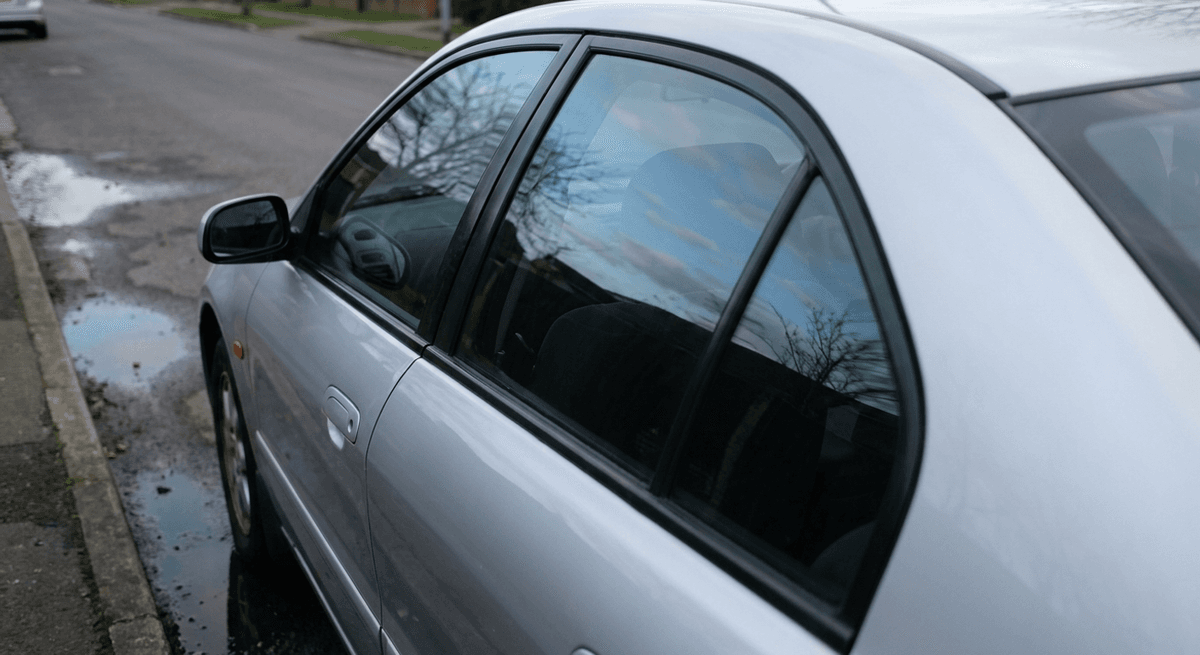
RSA 266:58-a sets no reflectivity limit and no tint-color restriction. It regulates the windshield by location and by light transmittance only. Driving with aftermarket windshield tinting is separately unlawful under RSA 265:95, III(a).
The purpose of the windshield restrictions is to preserve the driver's full field of vision while moving. A film that scatters or blocks light would impair the driver's ability to react to other vehicles, pedestrians, and road hazards.
Medical exemptions
New Hampshire provides a medical waiver under RSA 266:61-a, IX. The commissioner may waive the requirements of RSA 266:58-a and issue a special permit to a person who for bona fide medical reasons requires after market tinting on the windshield or on the windows to the left and right of the driver. The windshield is the larger allowance of the two, because after market film there is otherwise prohibited outright.
The waiver is capped. RSA 266:61-a, IX authorizes the use of after market tinted windows with a light transmittance of not less than 35 percent, so the permit does not allow unlimited darkness on either surface. In reviewing an application the commissioner may seek the advice and recommendation of a medical review board.
Certification is not limited to physicians. Under the statute as amended in 2025, any medical certification or documentation required for the waiver may be provided by a medical provider licensed in New Hampshire, or by a licensed medical provider affiliated with the United States Department of Veterans Affairs, regardless of the state of licensure.
If the waiver is granted, the department issues an equipment permit that must be kept in the vehicle while the equipment is in use. Without it, a vehicle with darker-than-legal tint can be cited regardless of a driver's personal medical situation, so obtain the permit from the New Hampshire Division of Motor Vehicles before having the film installed.
How tint is measured and certified
Tint darkness in New Hampshire is measured using a light-transmission meter (sometimes called a tintmeter or VLT meter) that passes a beam of light through the window film combined with the glass to calculate the percentage of light transmitted. The device reads the combined VLT of film plus glass, not film alone, which matters because factory glass itself absorbs some light before any film is added.
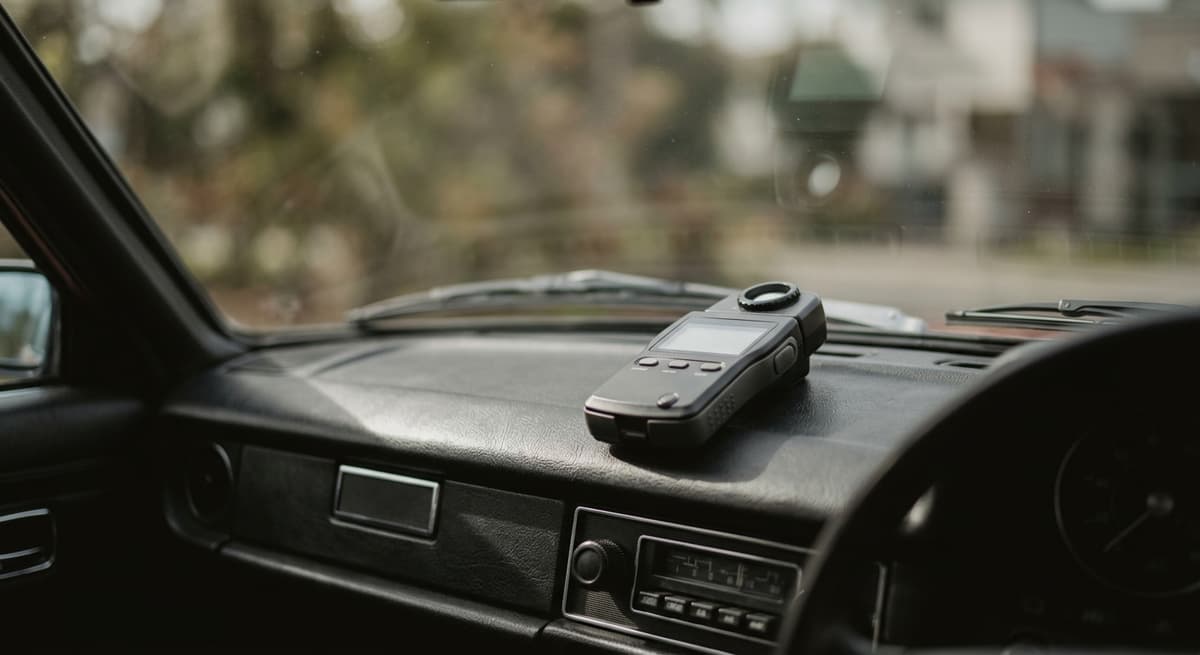
No measurement tolerance is specified in RSA 266:58-a, which means a reading that falls below 70% on the front side windows or below 35% on the back and rear windows may result in a citation.
The statute does not require a compliance sticker or an installer certification label, though some reputable shops include them as a best practice. Keeping the installer's documentation noting the film's VLT rating is strongly recommended.
Penalties for illegal tint in New Hampshire
Violating New Hampshire's window tint law is a violation-level offense under RSA 266:58-a, VI, which carries a fine rather than a criminal penalty. Fines can accumulate if corrections are not made and a follow-up stop occurs.
For windshield tint there is a specific figure. RSA 265:95, III(a) separately makes it unlawful to drive any vehicle with after market tinting on the windshield as prohibited under RSA 266:58-a, and RSA 265:95, IV sets the fine for that offense at $75.
Officers may measure tint during any traffic stop or roadside inspection. If your windows are found to be out of compliance, you will typically receive a citation and be expected to have the non-compliant film removed. A second violation after failing to correct the tint can lead to an additional fine.
The relatively strict 70% front-window rule means that even a tint marketed as "light" may not comply. Factory-installed privacy glass is a separate matter. RSA 266:58-a, III reaches only after market tinting, so glass darkened at the factory is not measured against the state's 35% rear floor at all.
If you want to tint your windows in New Hampshire
If you want to tint your vehicle's windows in New Hampshire, the safest approach is to start with the factory glass VLT and plan accordingly.
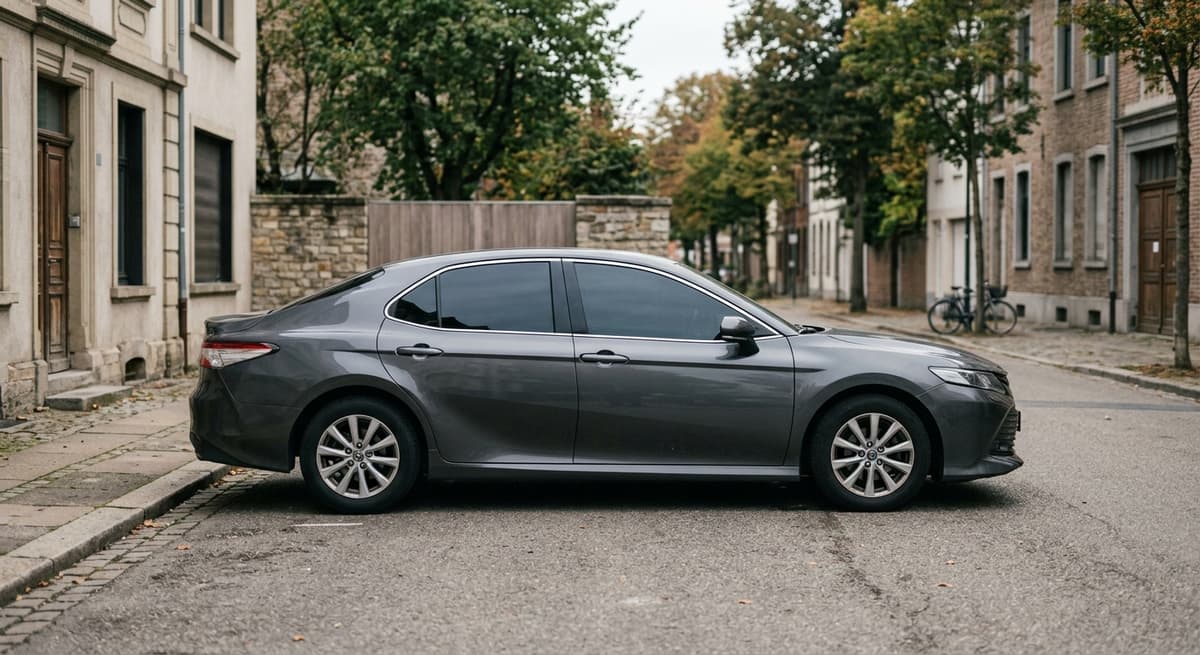
First, confirm the VLT of your existing glass. Most factory front windshields and door glass transmits 70% to 75% VLT on its own, leaving little or no room for additional darkening on the front side windows under New Hampshire law. Second, focus any darkening on the back side windows and rear window, where 35% film is permissible and provides meaningful sun and UV reduction. Third, choose a licensed installer who uses a tintmeter to measure the combined VLT of film plus glass before finalizing the installation.
If you have a medical need, obtain the RSA 266:61-a permit before installation so law enforcement can verify your exemption on the spot. Keep the permit and any installer documentation in the vehicle at all times.
For the windshield, no aftermarket film below the top 6-inch strip is permitted. A UV-blocking clear windshield film (with 70%+ VLT) is not covered by tint law but may raise questions, so verify legality with your installer or the DMV before applying it.
This article is general legal information, not legal advice. Window tint limits vary by state and change, and enforcement depends on local practice and your specific vehicle. For a definitive answer, check your state DMV or consult a local attorney.
For the full picture of window tint rules in every state, see the Window Tint Laws hub. New Hampshire also regulates what you can mount on or affix to your windshield; see New Hampshire Windshield Mounting Restrictions for those rules.
More New Hampshire Laws
Frequently Asked Questions
What is the legal tint in New Hampshire?
New Hampshire requires front side windows to allow at least 70% VLT (very light or no tint). Back side and rear windows must allow at least 35% VLT. The windshield may only have a tint strip no wider than 6 inches at the very top, and that strip must be at least 35% VLT.
How dark can my front windows be in New Hampshire?
Front side windows must transmit at least 70% of visible light. That is one of the strictest limits in the country. Only a barely perceptible, nearly clear film is legal on the driver and front passenger windows.
Is 35% tint legal in New Hampshire?
On the back side windows and rear window, yes. A 35% VLT film meets the minimum for those windows. On the front side windows, however, 35% is not legal. Front windows must be at least 70% VLT.
Can I get a medical exemption for window tint in New Hampshire?
Yes. RSA 266:61-a, IX allows a special permit for after market tinting a driver medically requires on the windshield or on the windows to the left and right of the driver. The waiver authorizes a light transmittance of not less than 35 percent, so it is not unlimited. Certification may be provided by a medical provider licensed in New Hampshire, or by a licensed medical provider affiliated with the U.S. Department of Veterans Affairs regardless of the state of licensure. Obtain the permit from the Division of Motor Vehicles before installation and keep it in the vehicle.
What is the penalty for illegal tint in New Hampshire?
Violating RSA 266:58-a is a violation-level offense carrying a fine. For driving with after market windshield tinting specifically, RSA 265:95, III(a) and IV set the fine at $75. Fines can accumulate if you are cited more than once without correcting the non-compliant film.
Is windshield tint legal in New Hampshire?
Aftermarket tinting on the main windshield is prohibited. Only a strip no wider than 6 inches at the very top may have a film applied, and that strip must allow at least 35% VLT.
Do SUVs have different tint rules in New Hampshire?
Partly. RSA 266:58-a carves out the rear windows, meaning the back side windows and the rear window together: on multipurpose passenger vehicles (most SUVs, minivans, and similar vehicles as defined in 49 C.F.R. 571.3) and pickup trucks, those windows follow the federal glazing standard (49 C.F.R. 571.205) instead of the state's 35% VLT floor, so they can legally run darker than 35%. The front side window rule still applies the same way to every vehicle type.
Updates
Corrected the New Hampshire tint rules against the statutes: removed an unsupported reflective and mirrored tint ban, limited the dual-mirror requirement and the 35% rear floor to aftermarket film rather than factory privacy glass, added the medical waiver's windshield coverage, its 35% minimum and the broader set of providers who may certify it, and added the $75 fine for aftermarket windshield tint under RSA 265:95.
Corrected a statement that New Hampshire's tint law makes no distinction by vehicle type: RSA 266:58-a exempts the rear window of multipurpose passenger vehicles (most SUVs, minivans) and pickup trucks from the state's 35% VLT floor, deferring instead to the federal glazing standard.
Independently fact-checked against the cited primary sources; governing law re-checked for recent changes
Reviewed and approved by an editor
The Law Behind This Article
This article rests on the statutory provisions below, held in our own legal record and retrieved from the official source. Tap a section to read the operative text.
New Hampshire Revised Statutes Annotated, TITLE XXI MOTOR VEHICLES, CHAPTER 266 EQUIPMENT OF VEHICLES
§ 266:58-aTinted Glass.In forcecited in 3 of our articles
I. It shall be unlawful to sell or inspect any motor vehicle in this state which has after market tinting on the windshield. II. It shall be unlawful to install after market tinting on the windshield on any motor vehicle which is registered in this state. III. It shall be unlawful to drive on any way any motor vehicle registered in this state which has after market tinting on the windshield. Where after market tinting is applied to windows to the rear of the driver, outside rear view mirrors shall be required on both the left and right side of the vehicle for the use of the driver and a front seat passenger. The light transmittance of after-market tinted windows to the left and right of the driver where they are allowed shall not be less than 70 percent, and the light transmittance of after-market tinted rear windows where they are allowed shall not be less than 35 percent, except that the light transmittance of after market tinted rear windows of multipurpose passenger vehicles, as defined in 49 C.F.R. section 571.3 and pickup trucks may be such percentage as is allowed by 49 C.F.R. section 571.205 with respect to pre-market tinted rear windows. III-a.
Official text (excerpt) · last checked 2026-09-01 · Read the full text in our law library · Verify at gc.nh.gov
Also relied on in: New Hampshire Dashcam Laws, New Hampshire Windshield Mounting Laws (2026 Guide)
§ 266:61-aEquipment Waiver for Disabled.In force
I. Any person with a disability who is inconvenienced by any provision of this title requiring or prohibiting the use of certain equipment on a motor vehicle may apply to the department for a waiver of said provision. II. Within 20 days of receiving such application, the commissioner or his designee shall respond to the applicant either granting the waiver or denying it. III. In deciding whether or not to grant the waiver, the commissioner or his designee shall balance the inconvenience to the applicant against the importance of the provision sought to be waived and the safety of the general public. The commissioner or his designee may require an inspection or demonstration or both of the modified or new equipment which the applicant seeks to use. For the purposes of such investigation or demonstration the commissioner or his designee may grant a temporary waiver. IV. If the application is denied, the commissioner or his designee shall state in writing the reasons for the denial. Any person whose application has been denied shall have the right to appeal pursuant to RSA 541. V. If the waiver is granted, the department shall issue an equipment permit to the applicant.
Official text (excerpt) · last checked 2026-07-29 · Read the full text in our law library · Verify at gc.nh.gov
Code of Federal Regulations Title 49
§ 571.3Definitions.In forcecited in 3 of our articles
(a) Statutory definitions. All terms defined in section 102 of the Act are used in their statutory meaning. (b) Other definitions. As used in this chapter— Act means the National Traffic and Motor Vehicle Safety Act of 1966 (80 Stat. 718). Approved, unless used with reference to another person, means approved by the Secretary. Boat trailer means a trailer designed with cradle-type mountings to transport a boat and configured to permit launching of the boat from the rear of the trailer. Bus means a motor vehicle with motive power, except a trailer, designed for carrying more than 10 persons. Curb weight means the weight of a motor vehicle with standard equipment; maximum capacity of engine fuel, oil, and coolant; and, if so equipped, air conditioning and additional weight optional engine. Designated seating capacity means the number of designated seating positions provided.
Official text (excerpt) · last checked 2026-07-28 · Read the full text in our law library · Verify at ecfr.gov
Cited in 25 court opinions in our collectionLatest citing opinion in our collection: 2023
Opinions citing this section in our collection:
- Lacurtis v. Express Medical Transporters, Inc. (District Court, E.D. Missouri 2016, 189 F. Supp. 3d 903)“…and Motor Vehicle Safety Act of 1966. The DOT regulation, 49 C.F.R. § 571.3 (b)(1), provides that “[f|or the sole p…”
- Suiter v. Mitchell Motor Coach Sales, Inc. (Court of Appeals for the Tenth Circuit 1998, 151 F.3d 1275)“…4 manufacturer as the loaded weight of a single vehicle.” 49 C.F.R. § 571.3(b).…”
- Center for Auto Safety v. National Highway Traffic Safety Administration (District Court, District of Columbia 2000, 93 F. Supp. 2d 1)“…deployed, and the “seating reference point,” as defined in 49 C.F.R. § 571.3 . The following manufacturers st…”
Identified automatically from the court opinions citing this section — not a ranking of which case controls.
Also relied on in: Connecticut Window Tint Laws (2026): Legal VLT Limits, Kentucky Window Tint Laws (2026): Legal VLT Limits
§ 571.205Standard No. 205, Glazing materials.In forcecited in 11 of our articles
S1. Scope. This standard specifies requirements for glazing materials for use in motor vehicles and motor vehicle equipment. S2. Purpose. The purpose of this standard is to reduce injuries resulting from impact to glazing surfaces, to ensure a necessary degree of transparency in motor vehicle windows for driver visibility, and to minimize the possibility of occupants being thrown through the vehicle windows in collisions. S3. Application. This standard applies to passenger cars, multipurpose passenger vehicles, trucks designed to carry at least one person, buses, motorcycles, slide-in campers, pickup covers designed to carry persons while in motion and low speed vehicles, and to glazing materials for use in those vehicles. S4. Definitions. Bullet resistant shield means a shield or barrier that is installed completely inside a motor vehicle behind and separate from glazing materials that independently comply with the requirements of this standard. Camper means a structure designed to be mounted in the cargo area of a truck, or attached to an incomplete vehicle with motive power, for the purpose of providing shelter for persons.
Official text (excerpt) · last checked 2026-07-28 · Read the full text in our law library · Verify at ecfr.gov
Cited in 34 court opinions in our collectionLatest citing opinion in our collection: 2024
In the courts (editorial summary, independently checked):O'Hara Ex Rel. H.O. v. General Motors Corp. (2007) held FMVSS 205, 49 CFR 571.205, does not preempt a state design claim seeking advanced side glazing. McCracken v. Ford Motor Co. (2008) read the same standard as mandatory rather than a floor, so a conflicting claim would be preempted, and denied dismissal only on that open question.
Opinions citing this section in our collection:
- O'Hara Ex Rel. H.O. v. General Motors Corp. (Court of Appeals for the Fifth Circuit 2007, 508 F.3d 753)✓A child was partially ejected through a Tahoe's tempered-glass side window in a rollover, and her parents claimed GM should have used advanced glazing; the court held FMVSS 205 is a minimum safety standard that does not preempt their common law claims.
- United States v. Ruel Antonio Wallace (Court of Appeals for the Ninth Circuit 2000, 213 F.3d 1216)“…uirements of Federal Motor Vehicle Safety Standard No. 205 (49 C.F.R. 571.205), including the specified minimum light…”
- McCracken v. Ford Motor Co. (District Court, E.D. Pennsylvania 2008, 588 F. Supp. 2d 635)✓A buyer blaming his thyroid cancer on radiation through his Fords' windshields said Lucite or leaded glass should have been used; treating FMVSS 205 as a mandatory standard, the court refused to dismiss on preemption because the pleadings did not show Lucite was unapproved.
Identified automatically from the court opinions citing this section — not a ranking of which case controls.
Also relied on in: Alaska Window Tint Laws (2026): Legal VLT Limits, Iowa Windshield Mounting Laws (2026 Guide), Virginia Window Tint Laws (2026): Legal VLT Limits
New Hampshire Revised Statutes Annotated, TITLE XXI MOTOR VEHICLES, CHAPTER 265 RULES OF THE ROAD
§ 265:95Obstruction to Driver's View or Riding Mechanism.In forcecited in 3 of our articles
I. No person shall drive a vehicle when it is so loaded, or when there are in the front seat such a number of persons, exceeding 3, as to obstruct the view of the driver, to the front or side of the vehicle or as to interfere with the driver's control over the driving mechanism of the vehicle. II. No passenger in a vehicle shall ride in such position as to interfere with the driver's view ahead or to the sides, or to interfere with his control over the driving mechanism of the vehicle. (a) Except as permitted by subparagraph (b), no person shall drive upon any way any vehicle with any sign, poster, sticker, or other nontransparent material upon or adjacent to the front windshield, side wings, or side or rear windows of such vehicle which shall obstruct the driver's clear view of the way or any intersecting way, unless authorized by the director so to do. No person shall drive upon any way any vehicle with after market tinting on the windshield, as prohibited under RSA 266:58-a.
Official text (excerpt) · last checked 2026-09-08 · Read the full text in our law library · Verify at gc.nh.gov
Cited in 2 court opinions in our collectionLatest citing opinion in our collection: 2018
Opinions citing this section in our collection:
- State v. Mercier (Supreme Court of New Hampshire 2013, 165 N.H. 83)“…that the police had reasonable suspicion of a violation of RSA 265:95, III (Supp. 2012), which prohibits “non…”
- State v. Alyssa A. Turcotte (Supreme Court of New Hampshire 2018)“…4 (2014), and a rear window completely covered by snow, see RSA 265:95 (2014). When she approached the…”
Identified automatically from the court opinions citing this section — not a ranking of which case controls.
Search our full record of US law — 2.1 million sections, every state + federal →
Sources and References
- RSA 266:58-a - Windshields and Windows (New Hampshire General Court)(gencourt.state.nh.us).gov
- RSA 266:61-a - Medical Exemption for Window Tinting (New Hampshire General Court)(gencourt.state.nh.us).gov
- RSA 265:95 - Obstruction to Driver's View or Riding Mechanism ($75 fine for after market windshield tinting) (New Hampshire General Court)(gc.nh.gov)
- RSA 266:58-a - Tinted Glass (New Hampshire General Court)(gc.nh.gov)
- RSA 266:61-a - Equipment Waiver for Disabled (medical tint waiver, para. IX) (New Hampshire General Court)(gc.nh.gov)
- 49 C.F.R. 571.205 - FMVSS No. 205, Glazing Materials (U.S. Government Publishing Office)(govinfo.gov)
- NHTSA, Grant of Petitions for Decision of Inconsequential Noncompliance, 85 Fed. Reg. 39673 (July 1, 2020) - AS2 glazing requires at least 70% luminous transmittance; AS3 has none(federalregister.gov)