
Alaska
Alaska Window Tint Laws (2026): Legal VLT Limits
Independently fact-checked against primary sources (last audited August 18, 2026). · Reviewed by the RecordingLaw editorial team. How we verify our legal content

Alaska regulates aftermarket window film under 13 AAC 04.223. Front side windows must still allow at least 70% of visible light through, making it one of the strictest front-window rules in the country. Rear door windows, quarter glass, and the back window may take aftermarket film down to 40% VLT, and a separate federal-standard route applies to multipurpose vehicles, motor homes, limousines, and buses used for hire.
What is the legal tint limit in Alaska?
Alaska's window tint regulations are found at 13 AAC 04.223. The regulation is written around aftermarket material: subsection (a) bars driving with aftermarket tinting material or aftermarket striping material on any window except as the rest of the section allows, and subsection (b) then sets the levels aftermarket film may meet. That distinction matters, because factory privacy glass on many SUVs, vans, and pickups reads well below 40% VLT and is not aftermarket material.
Before going further, here is the key concept: a higher VLT percentage means lighter (less tinted) film, while a lower VLT percentage means darker film. So 70% is very light, close to factory glass on most vehicles, and aftermarket film that drops a front side window below that threshold is not allowed.
For windows behind the driver, including rear door windows, quarter glass, and the back glass, Alaska allows aftermarket film down to 40% VLT.
Alaska does treat one vehicle class differently. Under 13 AAC 04.223(b)(4), limousines and passenger buses used to transport persons for hire, motor homes, and vehicles identified by the vehicle manufacturer as multipurpose may instead have tinting material that complies with Standard No. 205, Glazing Materials, in 49 C.F.R. 571.205 (1992). Many SUVs, vans, and minivans are manufacturer-designated multipurpose passenger vehicles, so this alternative route to compliance covers a large share of the vehicles on Alaska roads.
There is also a narrow grandfather clause. Subsection (h) exempts a tinted rear window from these limits if the owner has proof that the rear window tinting was installed before July 1, 1994 and the vehicle is equipped with driver-side and passenger-side rearview mirrors.
| Window | Aftermarket film limit |
|---|---|
| Front side windows | 70% VLT minimum |
| Back side windows (rear doors/quarter glass) | 40% VLT minimum |
| Rear window (back glass) | 40% VLT minimum |
| Windshield | Top-edge strip only, max 5 inches down |
| Limousines and buses for hire, motor homes, manufacturer-designated multipurpose vehicles | May instead comply with federal Standard No. 205 |
Windshield tint rules in Alaska
Alaska permits a tint strip along the top edge of the windshield, but it cannot extend more than 5 inches down from the top. This strip is intended as a sun visor aid and must comply with the material restrictions. No tint is permitted on the main driving area of the windshield below that 5-inch strip.
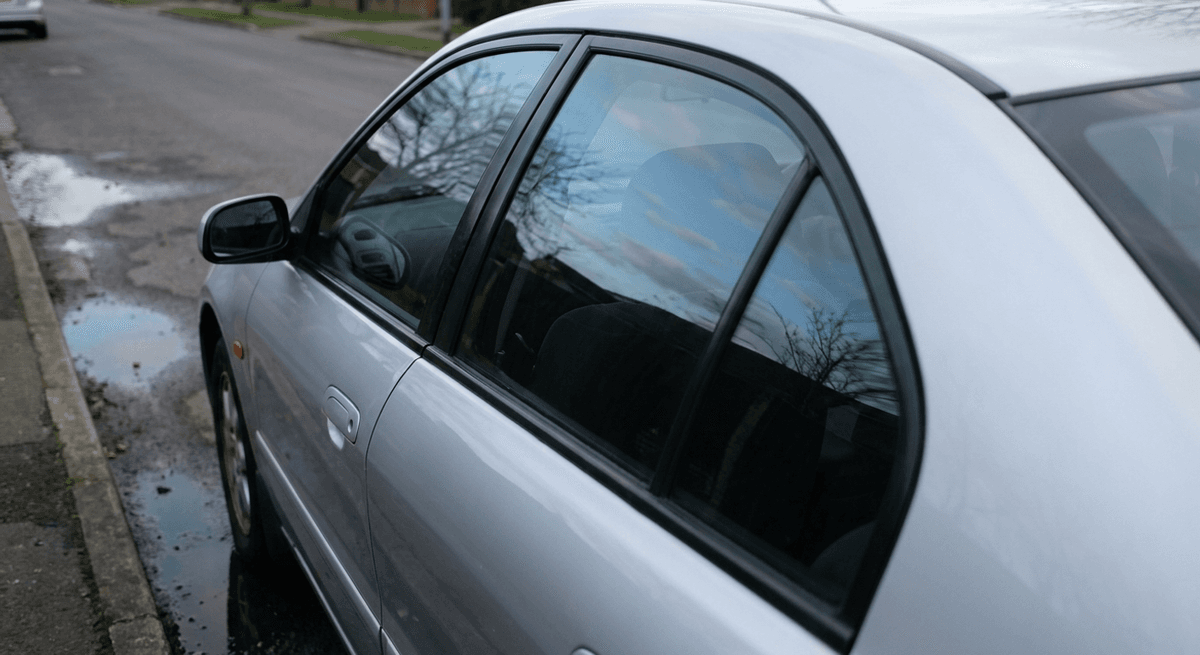
Alaska prohibits mirrored tinting material on any vehicle window, including the windshield strip. Beyond the mirror ban, 13 AAC 04.223(d) sets out which materials are permitted: tinting material must be green, gray, bronze, or neutral smoke in color, or a sun reflective auto film. The regulation does not define which specific products fall into that last category, and the mirrored-material ban in subsection (a) applies regardless of which category a film is sold under.
This material rule is more specific than most states, so you cannot simply choose any dark film product. Confirm with your installer that the specific film they plan to use fits one of the categories named in 13 AAC 04.223(d) before installation.
Medical exemptions
Alaska offers a medical exemption for drivers who need additional protection from sunlight due to a qualifying medical condition. Common qualifying conditions include photosensitivity disorders, lupus, skin conditions requiring UV protection, and certain eye conditions.
13 AAC 04.223(c) allows windows to have tinting that permits less light transmittance than the standard limits if three conditions are met: a driver or a passenger who frequently travels in the vehicle is required for medical reasons to be shielded from the direct rays of the sun, the medical reasons are certified annually by a physician licensed to practice in Alaska, and the certification is carried in the vehicle.
The in-state licensing requirement is easy to miss. The regulation calls for a physician "licensed to practice in this state," so a certification signed by an out-of-state physician does not meet its terms. If you move to Alaska with a medical tint exemption from another state, obtain a new certification from an Alaska-licensed physician.
"Annual" matters too: unlike some states where a one-time certificate suffices, Alaska requires you to renew the documentation each year. You must carry the current physician certification in your vehicle at all times so you can present it to law enforcement during a traffic stop.
If your certification has lapsed, an officer is entitled to cite you even if you have a genuine medical need. Mark your calendar to renew the physician certification before it expires each year.
How tint is measured and certified
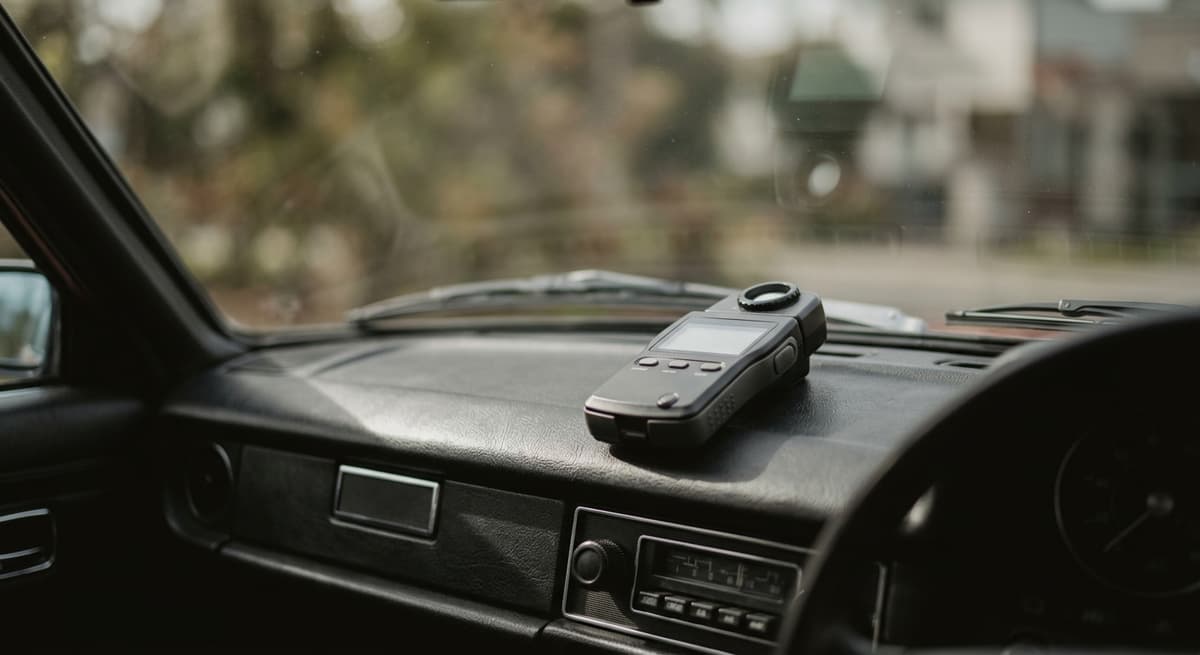
Alaska uses a VLT meter to measure the percentage of visible light passing through a window during enforcement. The plus-or-minus 3% figure is not an informal enforcement courtesy or a matter of interpretation. 13 AAC 04.223(e) builds it into the measurement itself: light transmittance must be measured using a light transmittance measuring device, with an allowance for manufacturing variances of plus or minus three percent, and the device's accuracy must be certified by its manufacturer. In practice, that allowance is part of the standard rather than an exception to it.
Alaska does not require a compliance sticker or installer label on the vehicle. That said, keeping a receipt or installer certificate in your glove box is a good practice if you are ever questioned about whether your tint complies with the material and VLT rules.
Because Alaska limits tinting material to the categories in 13 AAC 04.223(d), make sure any receipt or product documentation identifies the specific film product and its listed category so you can demonstrate compliance if needed.
Penalties for illegal tint in Alaska
A window tint violation in Alaska is an infraction, not a crime. AS 28.90.010(c) provides that a person convicted of violating a regulation adopted under Title 28 is guilty of an infraction punishable by a fine not to exceed $300. AS 28.90.010(d) adds that an infraction is not a criminal offense, cannot result in imprisonment, does not by itself cost you your driver's license, and does not carry a right to a jury trial or court-appointed counsel.
The amount is set statewide, not by each jurisdiction. Administrative Rule 43.1, the Traffic Bail Forfeiture Schedule adopted by the Alaska Supreme Court under AS 28.05.151, lists "13 AAC 04.223 Tinted windows" as "Corr/150": a $150 bail forfeiture that can be paid without a court appearance. If you do appear in court and are convicted, the penalty imposed may not exceed that scheduled amount.
The "Corr" designation is the part most drivers need to know. Under Rule 43.1, a citation for an offense listed as "Corr" must be dismissed or voided if proof of correction is presented to an inspection official within the time allowed. Remove or replace the non-compliant film, have the correction verified, and the citation goes away. If the required repair is not made, the offense can be disposed of without a court appearance by forfeiting the $150.
One caveat on where you are stopped: Rule 43.1 doubles the listed bail amounts for Title 28 violations committed within a designated highway work zone or traffic safety corridor.
If you want to tint your windows in Alaska
Alaska's 70% minimum on front side windows is strict, and many standard aftermarket tint films are far darker than that. The practical result is that very little visible aftermarket tinting is legal on Alaska front side windows. Most factory-installed glass already transmits around 70-75% VLT, so any film applied will reduce that figure and push it close to or below the legal limit.
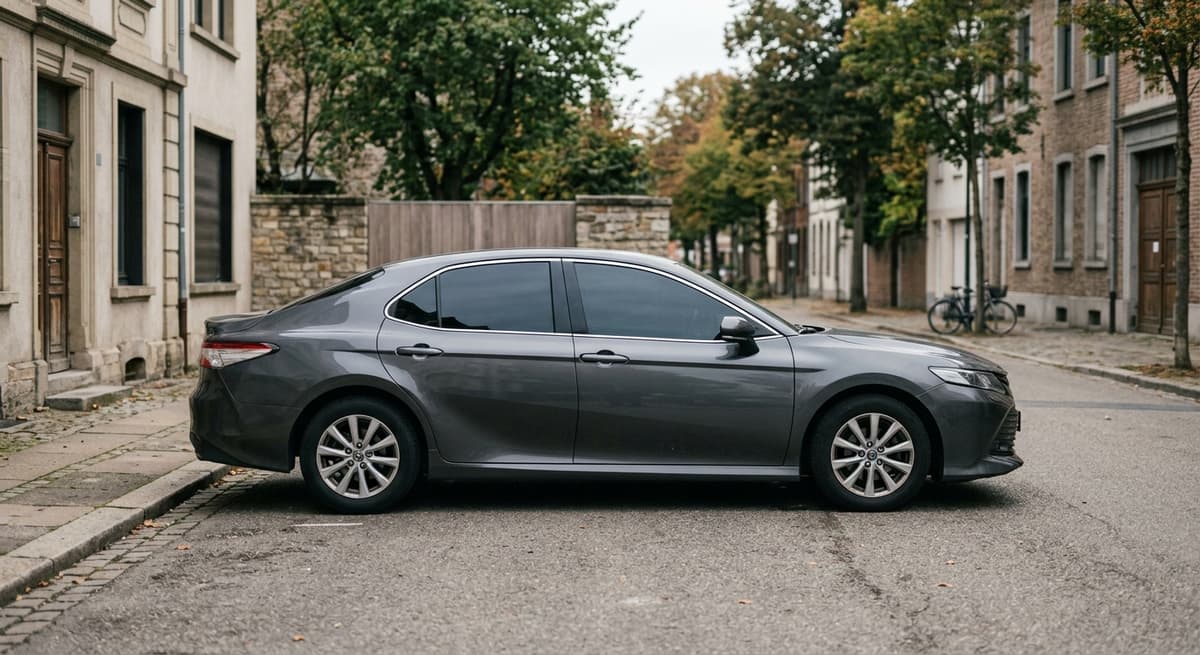
For the back side windows and rear glass, you have more flexibility: aftermarket film down to 40% VLT is allowed and provides meaningful heat and glare reduction. Choose a film that fits one of the material categories in 13 AAC 04.223(d): green, gray, bronze, neutral smoke, or a sun reflective auto film. If your vehicle is a motor home, or one the manufacturer identifies as a multipurpose vehicle, ask whether the federal Standard No. 205 route in subsection (b)(4) applies to it instead.
Use a licensed installer familiar with Alaska regulations. Ask for the specific product name and confirm its material classification. If you have a medical need for darker front-window tint, obtain the certification from an Alaska-licensed physician before installation and plan to renew it annually. Keep all documentation, including the product receipt and any medical certification, in the vehicle.
This article is general legal information, not legal advice. Window tint limits vary by state and change, and enforcement depends on local practice and your specific vehicle. For a definitive answer, check your state DMV or consult a local attorney.
For the full national picture, see our Window Tint Laws by State hub. Alaska drivers may also want to review Alaska Windshield Mounting Restrictions for related vehicle equipment rules.
More Alaska Laws
Frequently Asked Questions
What is the legal tint in Alaska?
Alaska requires aftermarket film on front side windows to allow at least 70% visible light transmission (VLT), making front windows nearly clear. Back side windows and the rear window may be tinted to a minimum of 40% VLT. Tinting material must be green, gray, bronze, or neutral smoke in color, or a sun reflective auto film, and mirrored material is banned on every window.
How dark can my front windows be in Alaska?
Aftermarket film on your front side windows must still transmit at least 70% of visible light. This is a strict standard that leaves very little room for darkening film. Most standard tint products are too dark for Alaska front side windows and would make the vehicle non-compliant.
Is 35% tint legal in Alaska?
No. Alaska requires at least 70% VLT on front side windows, so 35% film is far too dark there. It is also below the 40% VLT minimum that applies to the rear door windows, quarter glass, and back glass, so 35% film does not meet the standard in any window position on an ordinary passenger vehicle. Limousines and buses used for hire, motor homes, and manufacturer-designated multipurpose vehicles may instead comply with federal Standard No. 205.
Can I get a medical exemption for window tint in Alaska?
Yes. Alaska allows darker tint when the medical need is certified annually by a physician licensed to practice in Alaska and the certification is carried in the vehicle. A certification from an out-of-state physician does not meet the regulation's terms, and the documentation must be renewed each year. Without current certification in the car, you may still receive a citation during a traffic stop.
What is the penalty for illegal tint in Alaska?
A tint violation is an infraction, a civil matter with no jail time and no jury trial. The statewide bail forfeiture set by Alaska Administrative Rule 43.1 is $150, and AS 28.90.010(c) caps the fine on conviction at $300. The offense is listed as correctable, which means the citation must be dismissed or voided if you present proof of correction to an inspection official within the time allowed.
Is windshield tint legal in Alaska?
Only a tint strip along the top edge of the windshield, no more than 5 inches down from the top, is permitted in Alaska. Tint is not allowed on the main viewing area of the windshield. Mirrored material is prohibited on any window including the windshield strip.
What tint colors are legal in Alaska?
13 AAC 04.223(d) requires tinting material to be green, gray, bronze, or neutral smoke in color, or a sun reflective auto film. A film that does not fit one of those categories, such as a blue, red, amber, or purple product, is outside what the regulation describes, and mirrored tinting material is separately banned on every window. Verify your film's classification with your installer before purchase.
Updates
Corrected the Alaska tint page to match 13 AAC 04.223: added the multipurpose-vehicle and pre-1994 rear-window exceptions, the in-state physician requirement for medical exemptions, the full list of permitted tinting materials, and the statewide $150 correctable bail forfeiture under Administrative Rule 43.1.
Repointed the Alaska tint-regulation citation to the specific section instead of the state's generic regulation search page.
Independently fact-checked against the cited primary sources
Reviewed and approved by an editor
The Law Behind This Article
This article rests on the statutory provisions below, held in our own legal record and retrieved from the official source. Tap a section to read the operative text.
Alaska Statutes, Title 28. Motor Vehicles, Chapter 05. Administration
§ 28.05.151Citations for scheduled vehicle and traffic offensesIn force
(a) The supreme court shall determine by rule or order those motor vehicle and traffic offenses, except for offenses subject to a scheduled municipal fine, that are amenable to disposition without court appearance and shall establish a scheduled amount of bail, not to exceed fines prescribed by law, for each offense. A municipality shall determine by ordinance the municipal motor vehicle and traffic offenses that may be disposed of without court appearance and shall establish a fine schedule for each offense. (b) The supreme court shall establish a scheduled amount of bail allowing disposition of a citation for a violation of AS 28.05.095 and AS 28.35.161 that is punishable as a violation without court appearance. (c) The supreme court shall require as a condition of the disposition of an offense without appearance that a person charged with any offense for which a bail forfeiture amount has been adopted shall pay the surcharge prescribed in AS 12.55.039 in addition to the bail forfeiture amount established by the supreme court. The surcharge required to be paid under this subsection shall be deposited into the general fund and accounted for under AS 37.05.142.
Official text (excerpt) · last checked 2026-07-31 · Read the full text in our law library · Verify at akleg.gov
Cited in 3 court opinions in our collectionLatest citing opinion in our collection: 2016
Opinions citing this section in our collection:
- State v. Fyfe (Alaska Supreme Court 2016, 370 P.3d 1092)“…o considered the 1998 legislature’s concurrent amendment to AS 28.05.151 — another part of Senate Bill 304 — dir…”
- Fyfe v. State (Court of Appeals of Alaska 2014, 334 P.3d 183)“…he same time, and in the same bill, the legislature amended AS 28.05.151, the statute that directs the supreme c…”
- Miller v. State (Court of Appeals of Alaska 2016, 382 P.3d 1192)“…ollected under AS 12.55.039 plus the income collected under AS 28.05.151 (fines and forfeited bail from state tr…”
Identified automatically from the court opinions citing this section — not a ranking of which case controls.
Alaska Statutes, Title 28. Motor Vehicles, Chapter 90. General and Miscellaneous Provisions
§ 28.90.010Penalties for violations of law, regulations, and municipal ordinancesIn forcecited in 5 of our articles
(a) It is a misdemeanor for a person to violate a provision of this title unless the violation is by this title or other law declared to be a felony or an infraction. (b) A person convicted of a misdemeanor for a violation of a provision of this title for which another penalty is not specifically provided is punishable by a fine of not more than $500, or by imprisonment for not more than 90 days, or by both. In addition, the privilege to drive or the registration of vehicles may be suspended or revoked. (c) Unless otherwise specified by law a person convicted of a violation of a regulation adopted under this title, or a municipal ordinance regulating vehicles or traffic when the municipal ordinance does not correspond to a provision of this title, is guilty of an infraction and is punishable by a fine not to exceed $300.
Official text (excerpt) · last checked 2026-07-31 · Read the full text in our law library · Verify at akleg.gov
Cited in 9 court opinions in our collectionLatest citing opinion in our collection: 2025
Opinions citing this section in our collection:
- State of Alaska v. Kai Davidson Meyers (Court of Appeals of Alaska 2020, 479 P.3d 840)“…no right to jury trial or court- appointed counsel.4 Under AS 28.90.010(d), an “infraction” is: 2 P…”
- State v. Fyfe (Alaska Supreme Court 2016, 370 P.3d 1092)“…ffic as an infraction). 12 See, e.g., AS 28.90.010(a) (imposing misdemeanor liability for…”
- Municipality of Anchorage v. Beezley (Court of Appeals of Alaska 2018)“…ed penalty — because Title 28 contains a general provision, AS 28.90.010, which establishes the penalty for all…”
Identified automatically from the court opinions citing this section — not a ranking of which case controls.
Also relied on in: Alaska Hit and Run Laws: Penalties and What to Do, Alaska Windshield Mounting Laws (2026 Guide), Is Lane Splitting Legal in Alaska? 13 AAC 02.427 Rules (2026)
Code of Federal Regulations Title 49
§ 571.205Standard No. 205, Glazing materials.In forcecited in 11 of our articles
S1. Scope. This standard specifies requirements for glazing materials for use in motor vehicles and motor vehicle equipment. S2. Purpose. The purpose of this standard is to reduce injuries resulting from impact to glazing surfaces, to ensure a necessary degree of transparency in motor vehicle windows for driver visibility, and to minimize the possibility of occupants being thrown through the vehicle windows in collisions. S3. Application. This standard applies to passenger cars, multipurpose passenger vehicles, trucks designed to carry at least one person, buses, motorcycles, slide-in campers, pickup covers designed to carry persons while in motion and low speed vehicles, and to glazing materials for use in those vehicles. S4. Definitions. Bullet resistant shield means a shield or barrier that is installed completely inside a motor vehicle behind and separate from glazing materials that independently comply with the requirements of this standard. Camper means a structure designed to be mounted in the cargo area of a truck, or attached to an incomplete vehicle with motive power, for the purpose of providing shelter for persons.
Official text (excerpt) · last checked 2026-07-28 · Read the full text in our law library · Verify at ecfr.gov
Cited in 34 court opinions in our collectionLatest citing opinion in our collection: 2024
In the courts (editorial summary, independently checked):O'Hara Ex Rel. H.O. v. General Motors Corp. (2007) held FMVSS 205, 49 CFR 571.205, does not preempt a state design claim seeking advanced side glazing. McCracken v. Ford Motor Co. (2008) read the same standard as mandatory rather than a floor, so a conflicting claim would be preempted, and denied dismissal only on that open question.
Opinions citing this section in our collection:
- O'Hara Ex Rel. H.O. v. General Motors Corp. (Court of Appeals for the Fifth Circuit 2007, 508 F.3d 753)✓A child was partially ejected through a Tahoe's tempered-glass side window in a rollover, and her parents claimed GM should have used advanced glazing; the court held FMVSS 205 is a minimum safety standard that does not preempt their common law claims.
- United States v. Ruel Antonio Wallace (Court of Appeals for the Ninth Circuit 2000, 213 F.3d 1216)“…uirements of Federal Motor Vehicle Safety Standard No. 205 (49 C.F.R. 571.205), including the specified minimum light…”
- McCracken v. Ford Motor Co. (District Court, E.D. Pennsylvania 2008, 588 F. Supp. 2d 635)✓A buyer blaming his thyroid cancer on radiation through his Fords' windshields said Lucite or leaded glass should have been used; treating FMVSS 205 as a mandatory standard, the court refused to dismiss on preemption because the pleadings did not show Lucite was unapproved.
Identified automatically from the court opinions citing this section — not a ranking of which case controls.
Also relied on in: Iowa Windshield Mounting Laws (2026 Guide), Virginia Window Tint Laws (2026): Legal VLT Limits, California Windshield Mounting Laws (2026 Guide)
Search our full record of US law — 2.1 million sections, every state + federal →
Sources and References
- Alaska Administrative Code 13 AAC 04.223, Vehicle Window Tinting(law.cornell.edu)
- Alaska Rules of Court, Administrative Rule 43.1, Traffic Bail Forfeiture Schedule (13 AAC 04.223 Tinted windows, Corr/150)(courts.alaska.gov)
- Alaska Statutes AS 28.90.010, Penalties for violations of law, regulations, and municipal ordinances(akleg.gov)