
British Columbia
British Columbia Recording Laws: One-Party Consent & Privacy Act
Independently fact-checked against primary sources (last audited June 18, 2026). How we verify our legal content
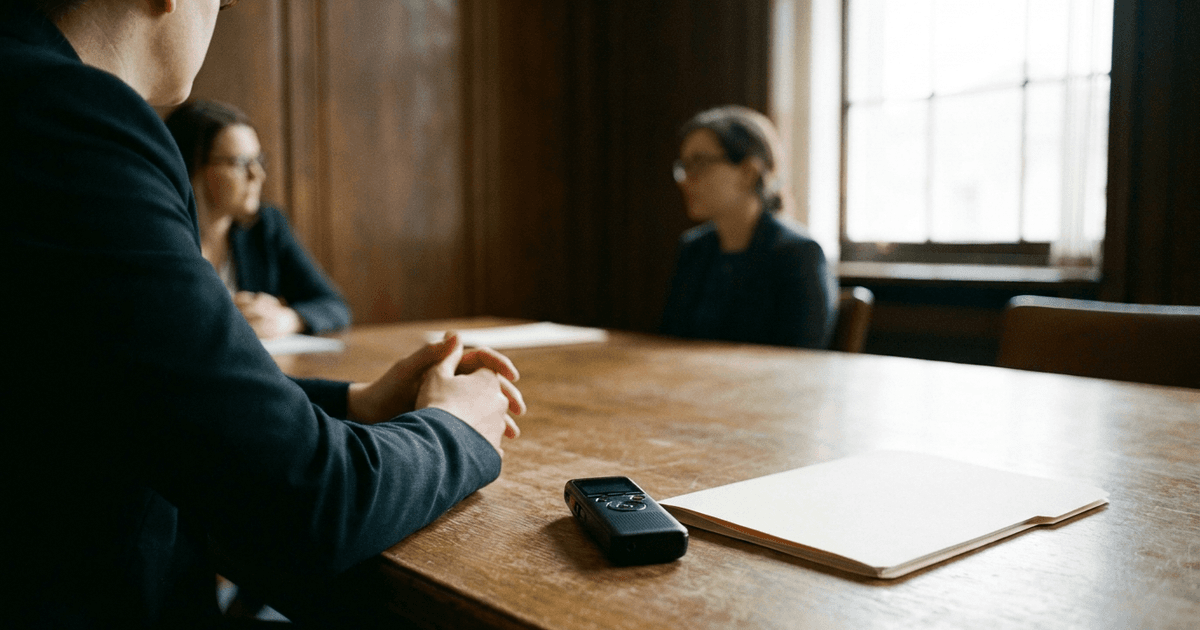
Yes, you can record a conversation you are part of in British Columbia. Canada is a one-party consent country under Criminal Code s. 184(2)(a): any party to a private communication may record it without notifying the other participants. Recording a conversation you are not part of, without the consent of any party, is a federal criminal offence punishable by up to five years in prison. British Columbia adds a second, independent layer of legal risk: the BC Privacy Act creates a statutory tort of violation of privacy that is actionable without proof of damage, and surreptitious recording can trigger that civil cause of action even when the Criminal Code permits the recording itself.
Is it legal to record conversations in British Columbia?
British Columbia does not have its own consent statute for audio recording. The governing law is federal: Part VI of the Criminal Code of Canada (RSC 1985, c C-46) applies identically in every province and territory. Under s. 184(1), intercepting a private communication by any electronic, acoustic, or mechanical device is an indictable offence punishable by up to five years imprisonment, or a summary conviction offence. Section 184(2)(a) carves out the critical one-party consent exception: the offence does not apply to a person who has the consent, express or implied, of the originator of the private communication or of the person intended by the originator to receive it.
Because you are a party to your own conversations, you always have your own consent. A resident of British Columbia may therefore record any telephone call, in-person discussion, or video call they participate in, without informing or obtaining permission from the other participants. This rule is uniform across Canada. No province, including British Columbia, has enacted a stricter two-party or all-party consent rule for audio recording of conversations, unlike some US states.
The one-party rule applies to private communications. Section 183 of the Criminal Code defines a private communication as any oral communication or telecommunication made under circumstances in which it is reasonable for the originator to expect that it will not be intercepted by any person other than the intended recipient. Whether a communication is private depends on context, not location alone.
Recording conversations you are part of
When you are a participant in the conversation, the Criminal Code analysis is straightforward: s. 184(2)(a) protects you. It does not matter whether the recording is audio-only or audio-video, whether it is a live phone call or an in-person meeting, or whether the other participants know they are being recorded. One party's consent is legally sufficient.
Section 183.1 extends this logic to multi-party conversations: where a private communication is originated by more than one person or intended to be received by more than one person, consent by any one of those persons is sufficient consent for the purposes of all of Part VI of the Criminal Code. A group call with five participants may be lawfully recorded by any one of them.
The practical consequence is that most everyday recording scenarios in British Columbia are criminal-law permissible: recording your own phone calls, recording a meeting you attend, capturing a conversation between yourself and a contractor, landlord, or employer. The recording does not have to be disclosed contemporaneously, and there is no obligation to announce it.
That said, criminal-law permissibility is not the end of the analysis in British Columbia. The province's statutory Privacy Act creates an independent civil cause of action that can apply even where the Criminal Code permits the recording. That civil layer is addressed in detail below.
Recording others without their knowledge
Recording a private communication you are not part of, without the consent of any party to that communication, is a serious federal criminal offence. Section 184(1) of the Criminal Code makes it an indictable offence punishable by up to five years imprisonment, or a summary conviction offence. There is no one-party exception to invoke when you are not yourself a party.
Practically, this means placing a listening device in a room to capture conversations between other people, intercepting someone else's phone calls, or using any electronic means to eavesdrop on a private exchange you are not part of, are all criminal acts under federal law in British Columbia.
Section 193(1) of the Criminal Code adds a further disclosure offence: knowingly using, disclosing, or revealing the substance, meaning, or purport of an intercepted private communication, or even the mere existence of such a communication, is itself an indictable offence punishable by up to two years, or a summary conviction offence. Even if someone else intercepts a communication and hands you the recording, sharing it may expose you to criminal liability.
Phone calls and telecommunications
Recording telephone calls in British Columbia follows the same federal framework. A call is a telecommunication and therefore a private communication under s. 183 of the Criminal Code. Any party to the call may record it under s. 184(2)(a). Recording a call you are not part of, or wiretapping a line, requires the consent of at least one party or a judicial wiretap authorisation under Part VI.
There is no obligation in British Columbia, or anywhere in Canada, to give advance notice to the other party before recording a call you are participating in. The recording need not be disclosed during or after the call. However, if you intend to use the recording in legal proceedings, you should document how and when it was made to establish its authenticity and reliability.
For organisations operating call centres or conducting telemarketing in British Columbia, the recording obligation is different. BC's Personal Information Protection Act (PIPA) requires that personal information collected through call recording be handled in accordance with PIPA's consent, use, and disclosure provisions. Organisations typically comply by announcing at the start of a call that it may be recorded.
Video recording and voyeurism
Audio consent rules under the Criminal Code do not automatically extend to video recording. Section 162(1) of the Criminal Code creates the voyeurism offence, which applies in three circumstances: (a) a person is observed or recorded in a place where they have a reasonable expectation of privacy and their nude or partially nude body or their genitals, anal region, or breasts are exposed or visible; (b) the person is nude or exposing themselves and the observation or recording is for that purpose; or (c) the observation or recording is for a sexual purpose. The offence is an indictable offence punishable by up to five years imprisonment, or a summary conviction offence.
Section 162 uses broader language than Part VI. It is not limited to private communications. Surreptitiously filming someone in a workplace washroom, changing room, or private residence violates s. 162 regardless of consent to audio recording. Recording a person in a private dwelling without their knowledge can engage s. 162 where nudity or a sexual purpose is present.
Video recording in public spaces where there is no reasonable expectation of privacy does not engage s. 162. Filming a crowded street, a public demonstration, or a business's parking lot generally falls outside the voyeurism provision.
Section 162.1(1) creates a further offence of non-consensual distribution of intimate images: publishing, distributing, transmitting, selling, making available, or advertising an intimate image of a person, knowing they did not consent or being reckless as to consent, is an indictable offence punishable by up to five years, or a summary conviction offence. An intimate image is a visual recording in which the person depicted is nude or engaged in explicit sexual activity and had a reasonable expectation of privacy at the time of recording and at the time of distribution. This offence applies whether the image was originally recorded with or without consent.
Workplace and surreptitious recording
Recording conversations in the workplace is lawful under the Criminal Code in British Columbia when you are a participant in the conversation. An employee may record a meeting with their manager, a disciplinary hearing, or a conversation with a co-worker, without telling anyone. This is the federal criminal-law position.
However, criminal-law permissibility does not exhaust the legal risk in the workplace context. Courts and labour arbitrators in Canada have repeatedly held that covert recording by an employee can constitute just cause for dismissal, even when the recording was technically legal. The reasoning is that surreptitious recording may be incompatible with the duty of good faith implied in the employment relationship, may undermine trust and workplace culture, and may in certain circumstances constitute insubordination or dishonest conduct. Employers in British Columbia may also address recording in workplace policies, and violating a clear policy can provide grounds for discipline independent of the Criminal Code analysis.
Employers who deploy recording systems, such as call-monitoring or CCTV, must comply with BC's PIPA for intra-provincial activity, and must be able to justify collection of employee personal information on a reasonableness standard under PIPA s. 13.
BC Privacy Act: the statutory tort
British Columbia is one of only four Canadian provinces with a statutory Privacy Act creating a civil tort of violation of privacy. The BC Privacy Act (RSBC 1996, c 373) provides in s. 1 that it is a tort, actionable without proof of damage, for a person, wilfully and without a claim of right, to violate the privacy of another.
Three elements must be established: (1) the conduct was wilful (intentional); (2) it was without a claim of right (no lawful justification); and (3) it violated the privacy of the plaintiff. The Act expressly identifies eavesdropping or surveillance as conduct capable of amounting to a privacy violation. The standard is objective: what is a reasonable expectation of privacy in the circumstances, giving due regard to the lawful interests of others.
The critical practical point is that the BC Privacy Act operates independently of the Criminal Code. A recording may be lawful under s. 184(2)(a) of the Criminal Code (because the recorder is a party to the conversation) yet still constitute a wilful violation of privacy under the BC Privacy Act. Where a party covertly records a conversation in circumstances where the other participant had a reasonable expectation of privacy from that very type of surveillance, a civil claim under the Privacy Act may succeed notwithstanding criminal-law compliance.
Section 2 of the Privacy Act sets out defences. No action lies if the defendant had consent, was acting in defence of person or property, was authorised by law, court order, or legal process, was a peace officer or public officer acting within the scope of duty without disproportionate conduct, or the act involved publication of matter of public interest or fair comment on a matter of public interest. These defences are not identical to the Criminal Code's one-party consent exception. Consent under the Privacy Act means the consent of the person whose privacy was violated, not merely the recorder's own consent as a party to the communication.
Actions under the BC Privacy Act must be brought in the Supreme Court of British Columbia under s. 4. There is no statutory damages cap, and the cause of action is extinguished by the death of the person whose privacy was violated. Damages are assessed on the nature of the violation and its consequences, without requiring proof of actual financial loss.
BC PIPA: private-sector privacy for organisations
British Columbia's Personal Information Protection Act (PIPA, SBC 2003, c 63) is a provincial private-sector privacy statute. It is one of three provincial statutes deemed substantially similar to PIPEDA by the federal Governor in Council, with the result that PIPA displaces PIPEDA for intra-BC commercial activity. PIPEDA continues to apply to federally regulated businesses (banks, telecoms, airlines) in BC, and to interprovincial and international transfers of personal information.
PIPA applies to organisations, defined broadly to include corporations, unincorporated associations, trade unions, and individuals acting in a commercial context. It does not apply to individuals recording their own conversations for purely personal or domestic purposes. A resident of British Columbia recording a personal phone call is outside PIPA's scope entirely.
Where PIPA is relevant to recording is in the business and employer context. An organisation that records customer calls, deploys workplace monitoring, or uses CCTV in commercial premises must: (1) identify the purposes for collection in advance; (2) obtain consent appropriate to the sensitivity of the information; (3) limit collection to what is necessary for the identified purpose; and (4) protect the information with appropriate security safeguards. PIPA s. 13 contains specific rules for employee personal information, allowing collection without consent where it is reasonable for the purposes of establishing, managing, or terminating an employment relationship, subject to notification.
The Office of the Information and Privacy Commissioner for British Columbia (OIPC BC, oipc.bc.ca) enforces PIPA. The Commissioner may investigate complaints, conduct audits, and issue binding orders requiring organisations to comply. Fines under PIPA s. 56 reach $10,000 for individuals or $100,000 for organisations that obstruct investigations, make false statements, or fail to comply with Commissioner orders.
Recording police in British Columbia
Recording police officers and other public officials performing their duties in a publicly accessible space is lawful in British Columbia. No provision of the Criminal Code prohibits filming police. The legal basis is s. 2(b) of the Canadian Charter of Rights and Freedoms, which protects freedom of expression including the gathering of information. The British Columbia Supreme Court and courts across Canada have consistently recognised that citizens have the right to observe and record police activity in public.
The sole criminal limit is s. 129 of the Criminal Code, which prohibits wilfully obstructing or resisting a peace officer in the execution of their duty. Recording from a distance that does not physically interfere with police operations does not constitute obstruction. Officers cannot lawfully order bystanders to stop recording as a matter of routine, and they cannot seize a recording device without a warrant or a recognised warrant exception. Refusing to hand over a device to an officer who has no legal basis to demand it is not obstruction.
Practically: stand back to a safe distance, do not interfere with any lawful police action, and you are within your legal rights to record in a public space in British Columbia.
Penalties summary
The penalties for recording-related offences under federal law apply uniformly in British Columbia:
Criminal Code s. 184(1): intercepting a private communication without any party's consent is an indictable offence punishable by up to five years imprisonment, or summary conviction.
Criminal Code s. 193(1): disclosing or using a communication intercepted without consent is an indictable offence punishable by up to two years imprisonment, or summary conviction.
Criminal Code s. 162(1): voyeurism (surreptitious visual recording in a private or sexual context) is an indictable offence punishable by up to five years imprisonment, or summary conviction.
Criminal Code s. 162.1(1): non-consensual distribution of intimate images is an indictable offence punishable by up to five years imprisonment, or summary conviction.
Criminal Code s. 129: obstructing a peace officer in the execution of their duty is a summary conviction offence.
BC Privacy Act, s. 1 civil tort: damages assessed by the BC Supreme Court, actionable without proof of financial loss; no statutory cap.
BC PIPA, s. 56 organisational penalty: up to $100,000 fine for organisations; up to $10,000 for individuals acting in a commercial capacity.
Practical tips for British Columbians
Keep these principles in mind when recording in British Columbia.
Record only conversations you are part of if you want to stay squarely within the Criminal Code safe harbour. Recording a private conversation you are not part of without any party's consent is a criminal offence with a five-year maximum.
Understand the BC Privacy Act layer. Even when the Criminal Code permits a recording, a covert recording of someone who had a reasonable expectation of privacy from that surveillance can give rise to a civil claim under the BC Privacy Act, actionable without proof of financial damage. The more surreptitious and targeted the recording, the greater the civil exposure.
Do not share recordings carelessly. Disclosing a recording that was intercepted without consent is a separate criminal offence under s. 193. Even a lawfully made recording can attract civil liability (defamation, Privacy Act) if shared in a manner that violates the subject's reasonable privacy expectations.
In the workplace, think beyond the Criminal Code. Covert recording of colleagues or managers has repeatedly led to dismissal for cause in Canadian employment law. If you record for evidentiary purposes, keep it targeted, proportionate, and consult legal advice before using it in any proceeding.
If you operate a business that records customers or employees, comply with PIPA. Obtain or document consent, identify collection purposes, limit retention, and secure the recordings. The OIPC BC actively investigates complaints and can issue binding orders.
Film police from a distance and do not interfere. Your Charter right to record is real but not absolute. Physical obstruction is a criminal offence. Officers who attempt to confiscate your device without lawful authority are acting outside the law, but arguing the point on-scene creates unnecessary risk.
Related Canadian Guides
- Canadian law by province and topic
- Recording laws in Canada
- British Columbia Hit and Run laws
- British Columbia Child Support laws
- British Columbia Slip and Fall laws
Frequently Asked Questions
Is British Columbia a one-party or two-party consent province for recording?
British Columbia follows the federal one-party consent rule under Criminal Code s. 184(2)(a). Any party to a private communication may record it without the knowledge or consent of the other participants. No BC provincial law imposes a stricter two-party or all-party consent requirement for audio recording.
Can I record a phone call in BC without telling the other person?
Yes, if you are a party to the call. Section 184(2)(a) of the Criminal Code permits any party to record a private communication. You do not need to announce the recording or obtain advance consent from other participants. Recording a call you are not part of, without a party's consent, is a criminal offence punishable by up to five years.
What is the BC Privacy Act tort and how does it affect recording?
The BC Privacy Act (RSBC 1996, c 373, s 1) creates a statutory tort of violation of privacy that is actionable without proof of financial damage. It requires wilful conduct without a claim of right. A surreptitious recording may be lawful under the Criminal Code yet still constitute a Privacy Act violation if the recorded person had a reasonable expectation of privacy from that surveillance. The tort is enforced in BC Supreme Court.
Does BC PIPA restrict individuals from recording conversations?
No. BC's Personal Information Protection Act (PIPA) applies to organisations collecting personal information in commercial activity. It does not apply to an individual recording their own conversations for personal purposes. PIPA is relevant when a business records customer calls, deploys workplace monitoring, or uses CCTV in commercial premises.
Can I secretly record my employer or manager in BC?
Criminally, yes: if you are present in the conversation, s. 184(2)(a) permits the recording. However, Canadian courts and labour arbitrators have upheld dismissal for cause where covert workplace recording was found to be a breach of trust or incompatible with the employment relationship, even when technically legal. Employer recording policies may also independently prohibit it.
Is it legal to record police in British Columbia?
Yes, in public spaces. No Criminal Code provision prohibits filming police. The right flows from Charter s. 2(b) (freedom of expression). You must not physically obstruct officers, as that is an offence under s. 129. Officers cannot lawfully order bystanders to stop recording as a routine matter, and cannot seize your device without a warrant.
What is the penalty for illegally recording someone in BC?
Intercepting a private communication without any party's consent is an indictable offence under Criminal Code s. 184(1), punishable by up to five years imprisonment or summary conviction. Disclosing such a recording carries up to two years under s. 193. Civil liability under the BC Privacy Act is also possible, with damages assessed without needing proof of financial loss.
Can I record video of someone in their home or a private space in BC?
No. Criminal Code s. 162(1) prohibits surreptitious visual recording anywhere a person has a reasonable expectation of privacy, particularly where nudity is involved or the recording is for a sexual purpose. A private residence is the clearest example. Violating s. 162 is an indictable offence punishable by up to five years.
What happens if I share a recording I made in BC?
If the recording was made with your consent as a party (lawfully), there is no specific Criminal Code prohibition on sharing it. However, sharing may attract civil liability under the BC Privacy Act if it constitutes a wilful violation of the subject's reasonable privacy expectations. Sharing a recording that was intercepted without any party's consent is a criminal offence under s. 193 (up to two years). Sharing intimate images without consent violates s. 162.1 (up to five years).
How does BC compare to other Canadian provinces on recording laws?
The Criminal Code one-party consent rule is identical across all provinces. BC is distinctive because it has both a statutory Privacy Act tort (like Saskatchewan, Manitoba, and Newfoundland and Labrador) and a substantially similar provincial PIPA that displaces PIPEDA for intra-BC commercial activity. Ontario has only a common-law intrusion-upon-seclusion tort. Alberta has PIPA but no Privacy Act tort. Quebec has the broadest civil privacy protection via the Civil Code.
Updates
Independently fact-checked against the cited primary sources
The Law Behind This Article
This article rests on the statutory provisions below, held in our own legal record and retrieved from the official source. Tap a section to read the operative text.
Criminal Code
s. 129Offences relating to public or peace officerIn forcecited in 22 of our articles
Every one who (a) resists or wilfully obstructs a public officer or peace officer in the execution of his duty or any person lawfully acting in aid of such an officer, (b) omits, without reasonable excuse, to assist a public officer or peace officer in the execution of his duty in arresting a person or in preserving the peace, after having reasonable notice that he is required to do so, or (c) resists or wilfully obstructs any person in the lawful execution of a process against lands or goods or in making a lawful distress or seizure, is guilty of (d) an indictable offence and is liable to imprisonment for a term not exceeding two years, or (e) an offence punishable on summary conviction.
Official text (excerpt) · last checked 2026-08-12 · Read the full text in our law library · Verify at laws-lois.justice.gc.ca
Cited in 15 court opinions in our collectionLatest citing opinion in our collection: 2025
Opinions citing this section in our collection:
- Kosoian v. Société de transport de Montréal (Supreme Court of Canada 2019, 2019 SCC 59)
- R. v. Greenbaum (Supreme Court of Canada 1993, [1993] 1 SCR 674)
- R. v. Sharma (Supreme Court of Canada 1993, [1993] 1 SCR 650)
Identified automatically from the court opinions citing this section — not a ranking of which case controls.
Also relied on in: Alberta Recording Laws: One-Party Consent Rules (2026), Manitoba Recording Laws: One-Party Consent & Privacy Act, Newfoundland and Labrador Recording Laws
s. 162VoyeurismIn forcecited in 33 of our articles
(1) Every one commits an offence who, surreptitiously, observes — including by mechanical or electronic means — or makes a visual recording of a person who is in circumstances that give rise to a reasonable expectation of privacy, if (a) the person is in a place in which a person can reasonably be expected to be nude, to expose his or her genital organs or anal region or her breasts, or to be engaged in explicit sexual activity; (b) the person is nude, is exposing his or her genital organs or anal region or her breasts, or is engaged in explicit sexual activity, and the observation or recording is done for the purpose of observing or recording a person in such a state or engaged in such an activity; or (c) the observation or recording is done for a sexual purpose. (2) In this section, visual recording includes a photographic, film or video recording made by any means. (3) Paragraphs (1)(a) and (b) do not apply to a peace officer who, under the authority of a warrant issued under section 487.01, is carrying out any activity referred to in those paragraphs.
Official text (excerpt) · last checked 2026-08-12 · Read the full text in our law library · Verify at laws-lois.justice.gc.ca
Cited in 6 court opinions in our collectionLatest citing opinion in our collection: 2023
Opinions citing this section in our collection:
- R. v. Tim (Supreme Court of Canada 2022, 2022 SCC 12)
- R. v. Jarvis (Supreme Court of Canada 2019, 2019 SCC 10)
- Reference re Genetic Non‑Discrimination Act (Supreme Court of Canada 2020, 2020 SCC 17)
Identified automatically from the court opinions citing this section — not a ranking of which case controls.
Also relied on in: Canada Privacy Law: PIPEDA, Provincial Acts, and Recording Rules, Recording Phone Calls in Canada: One-Party Consent Rule, Security Camera & Doorbell Camera Laws in Canada
s. 162.1Publication, etc., of an intimate image without consentIn forcecited in 29 of our articles
(1) Everyone who knowingly publishes, distributes, transmits, sells, makes available or advertises an intimate image of a person knowing that the person depicted in the image did not give their consent to that conduct, or being reckless as to whether or not that person gave their consent to that conduct, is guilty (a) of an indictable offence and liable to imprisonment for a term of not more than five years; or (b) of an offence punishable on summary conviction. (2) In this section, intimate image means a visual recording of a person made by any means including a photographic, film or video recording, (a) in which the person is nude, is exposing his or her genital organs or anal region or her breasts or is engaged in explicit sexual activity; (b) in respect of which, at the time of the recording, there were circumstances that gave rise to a reasonable expectation of privacy; and (c) in respect of which the person depicted retains a reasonable expectation of privacy at the time the offence is committed.
Official text (excerpt) · last checked 2026-08-12 · Read the full text in our law library · Verify at laws-lois.justice.gc.ca
Also relied on in: Canada Bill C-16: Deepfake Intimate Images Are Now a Crime, Canada Recording Laws: One-Party Consent Rules and Penalties (2026), New Brunswick Recording Laws: One-Party Consent Guide
s. 183DefinitionsIn forcecited in 28 of our articles
In this Part, authorization means an authorization to intercept a private communication given under subsection 184.2(3), section 186 or subsection 188(2); ( autorisation ) electro-magnetic, acoustic, mechanical or other device means any device or apparatus that is used or is capable of being used to intercept a private communication, but does not include a hearing aid used to correct subnormal hearing of the user to not better than normal hearing; ( dispositif électromagnétique, acoustique, mécanique ou autre ) intercept includes listen to, record or acquire a communication or acquire the substance, meaning or purport thereof;
Official text (excerpt) · last checked 2026-08-12 · Read the full text in our law library · Verify at laws-lois.justice.gc.ca
Cited in 8 court opinions in our collectionLatest citing opinion in our collection: 2024
Opinions citing this section in our collection:
- R. v. Marakah (Supreme Court of Canada 2017, 2017 SCC 59)
- R. v. Mills (Supreme Court of Canada 2019, 2019 SCC 22)
- R. v. Campbell (Supreme Court of Canada 2024, 2024 SCC 42)
Identified automatically from the court opinions citing this section — not a ranking of which case controls.
Also relied on in: Northwest Territories Recording Laws: One-Party Consent, Nova Scotia Recording Laws: One-Party Consent Rules, Nunavut Recording Laws: One-Party Consent Rules
s. 183.1Consent to interceptionIn forcecited in 26 of our articles
Where a private communication is originated by more than one person or is intended by the originator thereof to be received by more than one person, a consent to the interception thereof by any one of those persons is sufficient consent for the purposes of any provision of this Part.
Official text (excerpt) · last checked 2026-08-12 · Read the full text in our law library · Verify at laws-lois.justice.gc.ca
Also relied on in: Ontario Recording Laws: Is It Legal to Record? (2026), PEI Recording Laws: One-Party Consent & Privacy Rights, Quebec Recording Laws: One-Party Consent & Civil Code
s. 184InterceptionIn forcecited in 55 of our articles
(1) Every person who, by means of any electro-magnetic, acoustic, mechanical or other device, knowingly intercepts a private communication is guilty of (a) an indictable offence and liable to imprisonment for a term of not more than five years; or (b) an offence punishable on summary conviction. (2) Subsection (1) does not apply to (a) a person who has the consent to intercept, express or implied, of the originator of the private communication or of the person intended by the originator thereof to receive it; (b) a person who intercepts a private communication in accordance with an authorization or pursuant to section 184.4 or any person who in good faith aids in any way another person who the aiding person believes on reasonable grounds is acting with an authorization or pursuant to section 184.4;
Official text (excerpt) · last checked 2026-08-12 · Read the full text in our law library · Verify at laws-lois.justice.gc.ca
Cited in 5 court opinions in our collectionLatest citing opinion in our collection: 2023
Opinions citing this section in our collection:
- X (Re) (Federal Court 2017, 2017 FC 1047)
- Canada (Information Commissioner) v. Canada (Transportation Accident Investigation and Safety Board) (Federal Court 2005, 2005 FC 384)
- Morgan v. Alta Flights (Charters)Inc. (Federal Court 2005, 2005 FC 421)
Identified automatically from the court opinions citing this section — not a ranking of which case controls.
Also relied on in: Canadian Law by Province: Federal and Provincial Guide, Dash Cam Laws in Canada: Rules, Audio Consent, Evidence, Workplace Privacy and Employee Monitoring in Canada
s. 193Disclosure of informationIn forcecited in 28 of our articles
(1) If a private communication has been intercepted by means of an electro-magnetic, acoustic, mechanical or other device without the consent, express or implied, of the originator of that communication or of the person intended by the originator to receive it, every person commits an offence who, without the express consent of the originator of that communication or of the person intended to receive it, knowingly (a) uses or discloses the private communication or any part of it or the substance, meaning or purpose of it or of any part of it, or (b) discloses the existence of the private communication. (1.1) Every person who commits an offence under subsection (1) is guilty of (a) an indictable offence and liable to imprisonment for a term of not more than two years; or (b) an offence punishable on summary conviction.
Official text (excerpt) · last checked 2026-08-12 · Read the full text in our law library · Verify at laws-lois.justice.gc.ca
Cited in 79 court opinions in our collectionLatest citing opinion in our collection: 2026
Opinions citing this section in our collection:
- Blencoe v. British Columbia (Human Rights Commission) (Supreme Court of Canada 2000, 2000 SCC 44)
- Canada (Attorney General) v. Bedford (Supreme Court of Canada 2013, 2013 SCC 72)
- R. v. Sharpe (Supreme Court of Canada 2001, 2001 SCC 2)
Identified automatically from the court opinions citing this section — not a ranking of which case controls.
Also relied on in: Saskatchewan Recording Laws: One-Party Consent Guide, Yukon Recording Laws: One-Party Consent Rules
Search our full record of Canadian federal law — every consolidated Act, in English and French →
Sources and References
- Criminal Code, RSC 1985, c C-46, s 184: Interception of private communications (offence and one-party consent exception)(laws-lois.justice.gc.ca)
- Criminal Code, RSC 1985, c C-46, s 183: Definition of private communication(laws-lois.justice.gc.ca)
- Criminal Code, RSC 1985, c C-46, s 183.1: One-party consent sufficient for multi-party communications(laws-lois.justice.gc.ca)
- Criminal Code, RSC 1985, c C-46, s 193: Offence - disclosing an intercepted private communication(laws-lois.justice.gc.ca)
- Criminal Code, RSC 1985, c C-46, s 162: Voyeurism offence(laws-lois.justice.gc.ca)
- Criminal Code, RSC 1985, c C-46, s 162.1: Non-consensual distribution of intimate images(laws-lois.justice.gc.ca)
- Criminal Code, RSC 1985, c C-46, s 129: Offence - obstructing a peace officer(laws-lois.justice.gc.ca)
- Canadian Charter of Rights and Freedoms, s 2(b): Freedom of expression (basis for right to film police)(laws-lois.justice.gc.ca)
- Privacy Act, RSBC 1996, c 373: BC statutory tort of violation of privacy, actionable without proof of damage(bclaws.gov.bc.ca)
- Privacy Act, RSBC 1996, c 373 (CanLII)(canlii.org)
- Personal Information Protection Act, SBC 2003, c 63 (BC PIPA)(bclaws.gov.bc.ca)
- Office of the Privacy Commissioner of Canada: Provincial laws that may apply instead of PIPEDA(priv.gc.ca)
- Office of the Privacy Commissioner of Canada: PIPEDA requirements in brief(priv.gc.ca)
- Office of the Information and Privacy Commissioner for BC (OIPC BC)(oipc.bc.ca)