
Australia
Dash Cam Laws in Australia: What's Legal to Record
Dash cam video of the road is lawful across Australia, because footage of ordinary public road activity is not a private conversation or a private activity under any state's surveillance law. The real legal risk sits with in-cabin audio, which is treated differently by each state and territory, even for the driver's own conversation with a passenger.
This article covers dash cam recording under each state and territory's surveillance-device and listening-device Act, plus the separate publication offences, defamation exposure and the Commonwealth statutory tort that apply once dash cam footage is shared. It does not cover the specific evidence-upload processes individual police forces provide, which vary between jurisdictions and change over time, or a full jurisdiction-by-jurisdiction reading of the road rules on device mounting.
Dash Cam Video Is Lawful on Australian Roads
The optical surveillance provisions in New South Wales, Victoria, Western Australia, South Australia and the Northern Territory are built around a "private activity" test, or, in New South Wales, a trespass test, not a blanket prohibition on filming. Ordinary traffic, other vehicles, pedestrians and streetscapes captured by a windscreen-mounted camera do not meet that test in the states that use it. New South Wales is structurally different: Surveillance Devices Act 2007 (NSW) s 8 only prohibits an optical device installed through trespass on, or interference with, premises or a vehicle. A dash cam mounted inside your own car, pointed at the road you are lawfully driving on, typically never triggers that test at all. Queensland, Tasmania and the ACT have no general optical surveillance provision in their listening-device Acts, so dash cam video is not regulated by those Acts in the first place.
In-Cabin Audio Splits by the Same Three Groups That Govern Any Recorded Conversation
A dash cam's microphone is judged under a completely different test from its camera, and this is where dash cam recording genuinely varies by state. In Victoria, Queensland and the Northern Territory, the listening device offence only catches a conversation the recorder is not a party to, so a driver recording a passenger is outside the offence entirely. In New South Wales, Tasmania and the ACT, recording a conversation you are part of is prohibited by default, but each Act excuses a recording that is "not made for the purpose of communicating or publishing the conversation... to persons who are not parties to the conversation". Ordinary dash cam audio, kept for personal reference rather than made to be shared, usually falls within that limb. Western Australia and South Australia have no equivalent personal-use limb, so a driver there who wants to record in-cabin conversations needs either the passengers' consent or a genuine justification tied to protecting a lawful interest, such as documenting a dispute.
Dash Cam Audio, State by State
| Jurisdiction | Governing Act | Driver recording own in-cabin conversation with a passenger | Note |
|---|---|---|---|
| Victoria | Surveillance Devices Act 1999 (Vic) s 6 | Outside the offence | Publishing audio is separately regulated under s 11. |
| Queensland | Invasion of Privacy Act 1971 (Qld) s 43 | Outside the offence | A party is exempted outright; publishing is a separate offence under s 45. |
| Northern Territory | Surveillance Devices Act 2007 (NT) s 11 | Outside the offence | Same structure as Victoria and Queensland. |
| New South Wales | Surveillance Devices Act 2007 (NSW) s 7 | Usually excused | Personal-use limb at s 7(3)(b)(ii) covers recording not made to publish to non-parties. |
| Tasmania | Listening Devices Act 1991 (Tas) s 5 | Usually excused | Same personal-use limb as NSW. |
| Australian Capital Territory | Listening Devices Act 1992 (ACT) s 4 | Usually excused | Same limb, though s 4(4) blocks the Territory itself from using it. |
| Western Australia | Surveillance Devices Act 1998 (WA) s 5 | Needs consent or lawful-interests justification | No personal-use limb; fixed dollar penalties, not penalty units. |
| South Australia | Surveillance Devices Act 2016 (SA) s 4 | Needs consent or lawful-interests justification | No personal-use limb, though s 6 adds a public-interest exception WA lacks. |
This table addresses in-cabin audio between a driver and a passenger only. A conversation between passengers the driver is not part of is a different question, covered next.
A Conversation the Driver Is Not Part Of Is a Harder Case Everywhere
If a dash cam's microphone happens to pick up a conversation between two passengers that the driver is not part of, the driver's ownership of the vehicle does not make them a party to that conversation. In every one of the three groups, the participant-friendly reasoning above depends on the recorder being one of the conversation's own parties. Group 1's carve-out only reaches a conversation the recorder is part of; Group 2's personal-use limb and Group 3's lawful-interests test both apply to "a principal party" recording their own conversation, not a third party's. A driver who records a back-seat conversation they are not part of, without the consent of those who are, is a non-party recording someone else's private conversation, the fact pattern each of these Acts was written to catch. It does not benefit from the relative safety that applies in most states to ordinary dash cam audio.
Publishing Dash Cam Footage Carries Its Own Separate Risk
Recording lawfully and sharing what you recorded are two separate legal questions. Posting dash cam footage to social media, a forum, or a "dash cam Australia" compilation channel, particularly where it includes in-cabin audio or identifies another driver, engages the publication offence in whichever state governs the recording. The Surveillance Devices Act 1999 (Vic) s 11 prohibits knowingly publishing a record of a private conversation, subject to exceptions including consent, and the Invasion of Privacy Act 1971 (Qld) s 45 separately restrains a party who lawfully recorded a conversation from later publishing it. If footage imputes reckless or criminal driving to an identifiable person before that is established, publishing it also risks a defamation claim. Since 10 June 2025, the Commonwealth statutory tort under the Privacy Act 1988 (Cth) Schedule 2 sits alongside these rules and, unlike the Australian Privacy Principles, applies to individuals, so footage that seriously and intentionally invades someone's privacy can be actionable even where the recording itself was lawful.
Submitting Dash Cam Footage to Police
Several Australian police forces accept dash cam footage from the public as evidence of a crash, a hit and run, or dangerous driving, generally through some form of online submission process. The exact channel, accepted formats and retention practice differ between jurisdictions and change over time, so check directly with your state or territory police force rather than assuming a fixed procedure. Handing footage to police does not itself change whether recording it was lawful; if the underlying recording breached a state Act, that is analysed separately from whether police accept the footage as a report. Where footage later becomes evidence, its admissibility is a further question, weighed under the Evidence Act 1995 (Cth) s 138 discretion, or the equivalent common law test in Queensland, Western Australia and South Australia, not decided in advance by the fact police accepted it.
Mounting a Dash Cam Legally
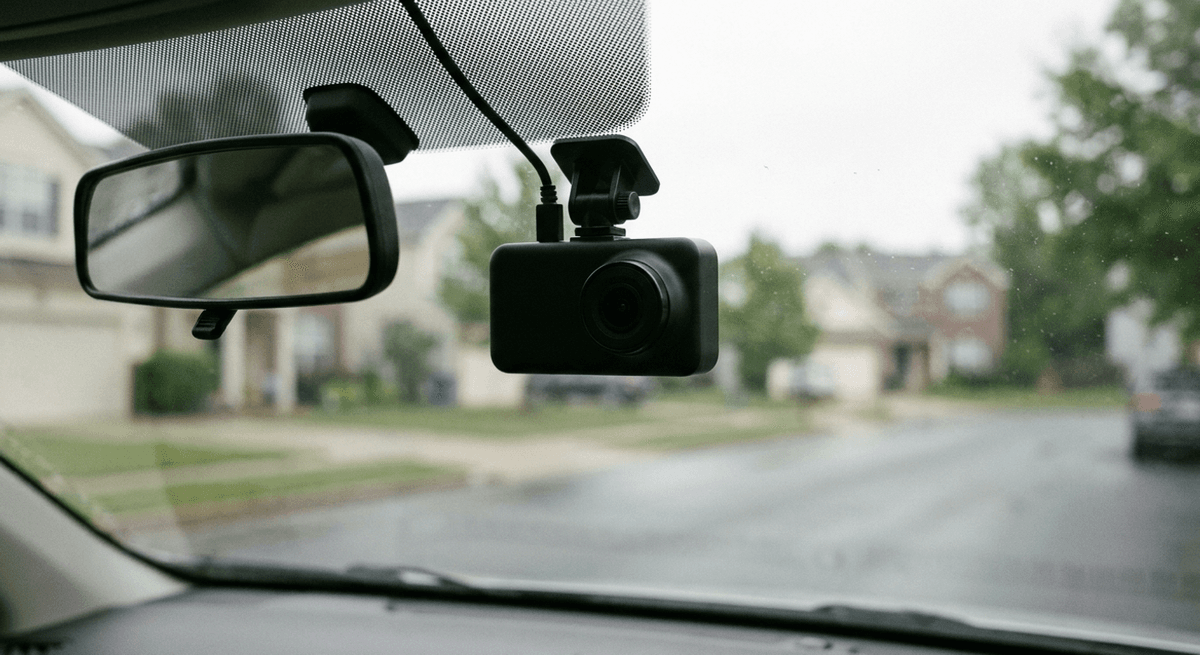
Road rules in every Australian jurisdiction require a driver to keep a clear view of the road, and a windscreen or dashboard-mounted device that obstructs that view, or interferes with seeing other road users, can itself be a road rule contravention, separate from the recording law questions above. The specific wording and positioning requirements differ between jurisdictions and are set by road rules and road authority guidance updated periodically, so check the current rules published by your state or territory road authority before mounting a device rather than relying on a fixed position. As a general practice, dash cams are commonly mounted low on the windscreen behind the rear-view mirror, in a spot that keeps the driver's forward sightline clear.
This article provides general legal information about dash cam recording and surveillance law in Australia. It does not constitute legal advice and does not account for your individual circumstances. Statutes referenced were verified against primary sources as at 19 July 2026 and are subject to amendment. For advice on a specific recording, or before enabling audio recording on a dash cam, consult a legal practitioner admitted in the relevant Australian state or territory.
Related reading: the Australia recording laws hub links to a dedicated page for each state and territory, and the flagship guide to recording a conversation in Australia sets out the three-group framework used throughout this article. The CCTV and home security camera laws guide and doorbell camera and neighbour privacy guide cover the same audio trap for other fixed cameras, the drone privacy laws in Australia guide covers airborne footage, and the Australia data privacy laws overview covers organisations rather than individual drivers.
Frequently Asked Questions
Is it legal to have a dash cam in Australia?
Yes, dash cam video of the road is lawful throughout Australia. In-cabin audio needs closer attention: whether recording a passenger is excused depends on the state, ranging from outside the offence entirely in Victoria, Queensland and the Northern Territory to a narrower lawful-interests test in Western Australia and South Australia.
Can I post dash cam footage online?
Posting is separate from recording. Every state has its own publication offence, for example the Surveillance Devices Act 1999 (Vic) s 11, and footage that identifies a driver and implies wrongdoing can also raise defamation risk and, since 10 June 2025, exposure under the federal privacy tort.
Do I need to tell my passengers my dash cam records audio?
The law does not impose a universal notice requirement, but in Western Australia and South Australia recording a passenger's conversation without consent needs a lawful-interests justification, so telling passengers is the safer approach there.
Is dash cam footage admissible in court?
Courts weigh admissibility under the Evidence Act 1995 (Cth) s 138 discretion, or the equivalent common law test in Queensland, Western Australia and South Australia, balancing the footage's value against how it was obtained. No jurisdiction guarantees admission or exclusion in advance.
Can I record the police with my dash cam?
No state or territory makes filming police performing public duties a standalone offence, and audio of a public exchange generally falls outside the definition of a private conversation. Tasmania is a partial exception, since its definition lacks the overheard-in-public exclusion other states carry.
Can my employer require a dash cam with audio in a company vehicle?
Generally yes, subject to any state workplace surveillance law, such as the Workplace Surveillance Act 2005 (NSW), which adds its own notice requirements on top of the listening device rules above.
What happens if my dash cam records a conversation I'm not part of?
That is treated as a non-party recording a private conversation without consent, the scenario every state's listening device Act was written to catch, without the participant-based exceptions that make a driver's own dash cam audio comparatively low risk.
The Law Behind This Article
This article rests on the statutory provisions below, held in our own legal record and retrieved from the official source. Tap a section to read the operative text.
Listening Devices Act 1992 (ACT)
s 4Use of listening devicesIn forcecited in 10 of our articles
(1) A person must not use a listening device with the intention of— (a) listening to or recording a private conversation to which the person is not a party; or (b) recording a private conversation to which the person is a party. Maximum penalty: 50 penalty units. (2) Subsection (1) does not apply to— (a) the use of a listening device under an authority granted by or under a law in force in the ACT; or (b) the unintentional hearing of a private conversation by means of a listening device. (3) Subsection (1) (b) does not apply to the use of a listening device by, or on behalf of, a party to a private conversation if— (a) each principal party to the conversation consents to that use of the listening device; or (b) a principal party to the conversation consents to the listening device being so used, and— (i) the recording of the conversation is considered by that principal party, on reasonable grounds, to be necessary for the protection of that principal party’s lawful interests; or (ii) the recording is not made for the purpose of communicating or publishing the conversation, or a report of the conversation, to any person who is not a party to the conversation.
Official text (excerpt) · last checked 2026-09-28 · Read the full text in our law library · Verify at legislation.act.gov.au
Also relied on in: Is It Illegal to Record Someone Without Consent in Australia?, Recording Phone Calls in the ACT: What the Law Requires, Home Security Cameras and CCTV Law in the ACT
Surveillance Devices Act 2007 (NSW)
s 7Prohibition on installation, use and maintenance of listening devicesIn forcecited in 12 of our articles
(1) A person must not knowingly install, use or cause to be used or maintain a listening device—(a) to overhear, record, monitor or listen to a private conversation to which the person is not a party, or (b) to record a private conversation to which the person is a party. Maximum penalty—500 penalty units (in the case of a corporation) or 100 penalty units or 5 years imprisonment, or both (in any other case). (2) Subsection (1) does not apply to the following—(a) the installation, use or maintenance of a listening device in accordance with a warrant, emergency authorisation, corresponding warrant or corresponding emergency authorisation, (b) the installation, use or maintenance of a listening device in accordance with the Telecommunications (Interception and Access) Act 1979, or any other law, of the Commonwealth, (c) the unintentional hearing of a private conversation by means of a listening device, (d) the use of a listening device to record a refusal to consent to the recording of an interview by a member of the NSW Police Force in connection with the commission of an offence by a person suspected of having committed the offence, (e) the use of a listening device and any
Official text (excerpt) · last checked 2026-09-28 · Read the full text in our law library · Verify at legislation.nsw.gov.au
Cited in 53 court opinions in our collectionLatest citing opinion in our collection: 2024
Opinions citing this section in our collection:
- [2024] NSWCA 51 (NSW Court of Appeal 2024, [2024] NSWCA 51)
- [2022] NSWCCA 222 (NSW Court of Criminal Appeal 2022, [2022] NSWCCA 222)
- [2022] NSWCCA 206 (NSW Court of Criminal Appeal 2022, [2022] NSWCCA 206)
Identified automatically from the court opinions citing this section — not a ranking of which case controls.
Also relied on in: CCTV and Home Security Camera Laws in Australia (2026), Workplace Recording and Surveillance in New South Wales, Can You Record a Phone Call in Australia? State-by-State Rules
s 8Installation, use and maintenance of optical surveillance devices without consentIn forcecited in 7 of our articles
(1) A person must not knowingly install, use or maintain an optical surveillance device on or within premises or a vehicle or on any other object, to record visually or observe the carrying on of an activity if the installation, use or maintenance of the device involves—(a) entry onto or into the premises or vehicle without the express or implied consent of the owner or occupier of the premises or vehicle, or (b) interference with the vehicle or other object without the express or implied consent of the person having lawful possession or lawful control of the vehicle or object. Maximum penalty—500 penalty units (in the case of a corporation) or 100 penalty units or 5 years imprisonment, or both (in any other case).
Official text (excerpt) · last checked 2026-09-28 · Read the full text in our law library · Verify at legislation.nsw.gov.au
Cited in 10 court opinions in our collectionLatest citing opinion in our collection: 2023
Opinions citing this section in our collection:
- Farm Transparency International Ltd v New South Wales (High Court of Australia 2022, [2022] HCA 23)
- Kadir v The Queen (High Court of Australia 2020, [2020] HCA 1)
- [2017] NSWCCA 288 (NSW Court of Criminal Appeal 2017, [2017] NSWCCA 288)
Identified automatically from the court opinions citing this section — not a ranking of which case controls.
Also relied on in: Doorbell Camera and Neighbour Privacy Laws in Australia, Drone Privacy Laws in Australia: What CASA Doesn't Cover, Is It Legal to Record a Conversation in Australia?
Surveillance Devices Act 2007 (NT)
s 11Installation, use and maintenance of listening devicesIn forcecited in 10 of our articles
(1) A person is guilty of an offence if the person: (a) installs, uses or maintains a listening device to listen to, monitor or record a private conversation to which the person is not a party; and (b) knows the device is installed, used or maintained without the express or implied consent of each party to the conversation. Maximum penalty: 250 penalty units or imprisonment for 2 years. (2) Subsection (1) does not apply to: (a) the installation, use or maintenance of a listening device under: (i) a warrant, emergency authorisation, corresponding warrant or corresponding emergency authorisation; or (ii) under a law of the Commonwealth; or (b) the use of a listening device by a law enforcement officer or an ICAC officer to monitor or record a private conversation to which the officer is not a party if: (i) at least 1 party to the conversation expressly or impliedly consents to the monitoring or recording; and (ii) the officer is acting in the performance of the officer's duty; and (iii) the officer reasonably believes it is necessary to monitor or record the conversation for the protection of someone's safety; or (ba) the use, in accordance with section 14A, of body-worn video by a
Official text (excerpt) · last checked 2026-09-28 · Read the full text in our law library · Verify at legislation.nt.gov.au
Cited in 1 court opinions in our collectionLatest citing opinion in our collection: 2022
Opinions citing this section in our collection:
- Farm Transparency International Ltd v New South Wales (High Court of Australia 2022, [2022] HCA 23)
Identified automatically from the court opinions citing this section — not a ranking of which case controls.
Also relied on in: Home Security Cameras and CCTV Law in the Northern Territory, Northern Territory Recording Laws: When You Can Record a Private Conversation (2026), Recording Colleagues and Managers at Work in the Northern Territory
Invasion of Privacy Act 1971 (Qld)
s 43Prohibition on use of listening devicesIn forcecited in 10 of our articles
(1) A person is guilty of an offence against this Act if the person uses a listening device to overhear, record, monitor or listen to a private conversation and is liable on conviction on indictment to a maximum penalty of 40 penalty units or imprisonment for 2 years. Note— If a corporation commits an offence against this provision, an executive officer of the corporation may be taken, under section 49A , to have also committed the offence. (2) Subsection (1) does not apply— (a) where the person using the listening device is a party to the private conversation; or (b) to the unintentional hearing of a private conversation by means of a telephone; or (c) to or in relation to the use of any listening device by— (i) an officer employed in the service of the Commonwealth in relation to customs authorised by a warrant under the hand of the Comptroller-General of Customs under the Customs Act 1901 (Cwlth) to use a listening device in the performance of the officer’s duty; or (ii) a person employed in connection with the security of the Commonwealth when acting in the performance of the person’s duty under an Act passed by the Parliament of the Commonwealth relating to the security of the
Official text (excerpt) · last checked 2026-09-28 · Read the full text in our law library · Verify at legislation.qld.gov.au
Also relied on in: Recording Phone Calls in Queensland, Workplace Recording and Surveillance in Queensland, Security Camera and CCTV Laws in Queensland
s 45Prohibition on communication or publication of private conversations by parties theretoIn force
(1) A person who, having been a party to a private conversation and having used a listening device to overhear, record, monitor or listen to that conversation, subsequently communicates or publishes to any other person any record of the conversation made, directly or indirectly, by the use of the listening device or any statement prepared from such a record is guilty of an offence against this Act and is liable on conviction on indictment to a maximum penalty of 40 penalty units or imprisonment for 2 years. Note— If a corporation commits an offence against this provision, an executive officer of the corporation may be taken, under section 49A , to have also committed the offence.
Official text (excerpt) · last checked 2026-09-28 · Read the full text in our law library · Verify at legislation.qld.gov.au
Surveillance Devices Act 2016 (SA)
s 4Listening devicesIn forcecited in 11 of our articles
(1) Subject to this section and section 6, a person must not knowingly install, use or cause to be used, or maintain, a listening device— (a) to overhear, record, monitor or listen to a private conversation to which the person is not a party; or (b) to record a private conversation to which the person is a party. Maximum penalty: (a) in the case of a body corporate—$75 000; (b) in the case of a natural person—$15 000 or imprisonment for 3 years. (2) Subsection (1) does not apply— (a) to the use of a listening device by a party to a private conversation to record the conversation if— (i) all principal parties to the conversation consent, expressly or impliedly, to the device being so used; or (ii) the use of the device is reasonably necessary for the protection of the lawful interests of that person; or (b) to the installation, use or maintenance of a listening device if— (i) the installation, use or maintenance is authorised under this Act or any other Act or a corresponding law; or (ii) the installation, use or maintenance is authorised under the Telecommunications (Interception and Access) Act 1979, or another law, of the Commonwealth, or (iii) the device is installed
Official text (excerpt) · last checked 2026-09-28 · Read the full text in our law library · Verify at legislation.sa.gov.au
Cited in 2 court opinions in our collectionLatest citing opinion in our collection: 2022
Opinions citing this section in our collection:
- Farm Transparency International Ltd v New South Wales (High Court of Australia 2022, [2022] HCA 23)
- RRG Nominees Pty Ltd v Visible Temporary Fencing Australia Pty Ltd (No 3) (Federal Court of Australia 2018, [2018] FCA 404)
Identified automatically from the court opinions citing this section — not a ranking of which case controls.
Also relied on in: Home Security Cameras and CCTV Law in South Australia, Recording Colleagues and Managers at Work in South Australia, South Australia Recording Laws: Consent, Lawful Interests and the Public-Interest Exception
s 6Listening devices and optical surveillance devices—public interest exceptionIn forcecited in 4 of our articles
(1) Section 4 does not apply— (a) to the use of a listening device to overhear, record, monitor or listen to a private conversation if the use of the device is in the public interest; or (b) to the installation, use or maintenance of a listening device under subsection (2)(b)(iv) or (v) of that section if the use of the device is in the public interest. (2) Section 5 does not apply— (a) to the use of an optical surveillance device to record visually or observe the carrying on of a private activity if the use of the device is in the public interest; or (b) to the installation, use or maintenance of an optical surveillance device under subsection (4)(a)(iv) or (v), or subsection (4)(b), of that section if the use of the device is in the public interest.
Official text (excerpt) · last checked 2026-09-28 · Read the full text in our law library · Verify at legislation.sa.gov.au
Cited in 1 court opinions in our collectionLatest citing opinion in our collection: 2022
Opinions citing this section in our collection:
- Farm Transparency International Ltd v New South Wales (High Court of Australia 2022, [2022] HCA 23)
Identified automatically from the court opinions citing this section — not a ranking of which case controls.
Also relied on in: Recording Phone Calls in South Australia: What the Law Requires
Listening Devices Act 1991 (Tas)
s 5Prohibition on use of listening devicesIn forcecited in 6 of our articles
(1) A person shall not use, or cause or permit to be used, a listening device – (a) to record or listen to a private conversation to which the person is not a party; or (b) to record a private conversation to which the person is a party. (2) Subsection (1) does not apply to – (a) the use of a listening device pursuant to a warrant granted under Part 4 ; or (b) the use of a listening device pursuant to an authority granted by or under the Telecommunications (Interception) Act 1979 of the Commonwealth or any other law of the Commonwealth; or (ba) [Section 5 Subsection (2) amended by No. 22 of 2006, Sched. 1, Applied:01 Jan 2009] the use of a surveillance device pursuant to an authority granted by or under the Police Powers (Surveillance Devices) Act 2006 or by or under a corresponding law as defined in section 3 of that Act; or (bb) [Section 5 Subsection (2) amended by No. 18 of 2018, s.
Official text (excerpt) · last checked 2026-09-28 · Read the full text in our law library · Verify at legislation.tas.gov.au
Also relied on in: Recording the Police in Australia: What the Law Actually Says
Surveillance Devices Act 1999 (Vic)
s 11Prohibition on communication or publication of private conversations or activitiesIn forcecited in 7 of our articles
(1) Subject to subsection (2), a person must not knowingly communicate or publish a record or report of a private conversation or private activity that has been made as a direct or indirect result of the use of a listening device, an optical surveillance device or a tracking device. In the case of a natural person, level 7 imprisonment (2 years maximum) or a level 7 fine (240 penalty units maximum) or both; In the case of a body corporate, 1200 penalty units. (2) Subsection (1) does not apply— (a) to a communication or publication made with the express or implied consent of each party to the private conversation or private activity; or (b) to a communication or publication that is no more than is reasonably necessary— (i) in the public interest; or (ii) for the protection of the lawful interests of the person making it; or (c) to a communication or publication in the course of legal proceedings or disciplinary proceedings; or (ca) to a communication or publication of protected information; or (d) to a communication or publication made by a law enforcement officer— (i) to a person authorised by the chief officer of the law enforcement agency and for the purpose of investiga
Official text (excerpt) · last checked 2026-09-28 · Read the full text in our law library · Verify at legislation.vic.gov.au
Also relied on in: Recording Phone Calls in Victoria, Security Camera and CCTV Laws in Victoria, Workplace Recording and Surveillance in Victoria
s 6Regulation of installation, use and maintenance of listening devicesIn forcecited in 11 of our articles
(1) Subject to subsection (2), a person must not knowingly install, use or maintain a listening device to overhear, record, monitor or listen to a private conversation to which the person is not a party, without the express or implied consent of each party to the conversation. In the case of a natural person, level 7 imprisonment (2 years maximum) or a level 7 fine (240 penalty units maximum) or both; In the case of a body corporate, 1200 penalty units. (2) Subsection (1) does not apply to— (a) the installation, use or maintenance of a listening device in accordance with a warrant, emergency authorisation, corresponding warrant or corresponding emergency authorisation; or (b) the installation, use or maintenance of a listening device in accordance with a law of the Commonwealth; or (c) the use of a listening device by a law enforcement officer to monitor or record a private conversation to which he or she is not a party if— (i) at least one party to the conversation consents to the monitoring or recording; and (ii) the law enforcement officer is acting in the course of his or her duty; and (iii) the law enforcement officer reasonably believes that it is necessary to monitor
Official text (excerpt) · last checked 2026-09-28 · Read the full text in our law library · Verify at legislation.vic.gov.au
Also relied on in: Workplace Surveillance and Monitoring in Australia, Victoria Recording Laws: When You Can Record a Private Conversation (2026), Australia Recording Laws: State-by-State Rules and Penalties (2026)
Surveillance Devices Act 1998 (WA)
s 5Regulation of use, installation and maintenance of listening devicesIn forcecited in 10 of our articles
(1)Subject to subsections (2) and (3), a person shall not install, use, or maintain, or cause to be installed, used, or maintained, a listening device — (a)to record, monitor, or listen to a private conversation to which that person is not a party; or (b)to record a private conversation to which that person is a party. Penalty: (a)for an individual: $5 000 or imprisonment for 12 months, or both; (b)for a body corporate: $50 000. (2)Subsection (1) does not apply to — (a)the installation, use, or maintenance of a listening device in accordance with a listening device warrant issued under Part 4; (b)the installation, use, or maintenance of a listening device in accordance with an emergency authorisation issued under Part 4; (c)the installation, use, or maintenance of a listening device in accordance with a law of the Commonwealth; (d)the use of a listening device in accordance with Part 5; or (e)the use of a listening device resulting in the unintentional hearing of a private conversation.
Official text (excerpt) · last checked 2026-09-28 · Read the full text in our law library · Verify at legislation.wa.gov.au
Cited in 5 court opinions in our collectionLatest citing opinion in our collection: 2023
Opinions citing this section in our collection:
- Farm Transparency International Ltd v New South Wales (High Court of Australia 2022, [2022] HCA 23)
- Jones v Chief of Navy (Full Court of the Federal Court of Australia 2012, [2012] FCAFC 125)
- Metz Holdings Pty Ltd v Simmac Pty Ltd (No 1) (Federal Court of Australia 2011, [2011] FCA 263)
Identified automatically from the court opinions citing this section — not a ranking of which case controls.
Also relied on in: Home Security Cameras and CCTV Law in Western Australia, Recording Phone Calls in Western Australia: What the Law Requires, Recording Colleagues and Managers at Work in Western Australia
Evidence Act 1995
s 138Discretion to exclude improperly or illegally obtained evidenceIn forcecited in 9 of our articles
(1) Evidence that was obtained: (a) improperly or in contravention of an Australian law; or (b) in consequence of an impropriety or of a contravention of an Australian law; is not to be admitted unless the desirability of admitting the evidence outweighs the undesirability of admitting evidence that has been obtained in the way in which the evidence was obtained. (2) Without limiting subsection (1), evidence of an admission that was made during or in consequence of questioning, and evidence obtained in consequence of the admission, is taken to have been obtained improperly if the person conducting the questioning: (a) did, or omitted to do, an act in the course of the questioning even though he or she knew or ought reasonably to have known that the act or omission was likely to impair substantially the ability of the person being questioned to respond rationally to the questioning; or (b) made a false statement in the course of the questioning even though he or she knew or ought reasonably to have known that the statement was false and that making the false statement was likely to cause the person who was being questioned to make an admission.
Official text (excerpt) · last checked 2026-09-28 · Read the full text in our law library · Verify at legislation.gov.au
Cited in 82 court opinions in our collectionLatest citing opinion in our collection: 2025
Opinions citing this section in our collection:
- Nicholas v The Queen (High Court of Australia, [1998] HCA 9)
- Smethurst v Commissioner of Police (High Court of Australia 2020, [2020] HCA 14)
- MZAPC v Minister for Immigration and Border Protection (High Court of Australia 2021, [2021] HCA 17)
Identified automatically from the court opinions citing this section — not a ranking of which case controls.
Also relied on in: Can You Use a Secret Recording as Evidence in an Australian Court?, New South Wales Recording Laws: Consent Rules, Exceptions and Penalties (2026), Recording Phone Calls in New South Wales
Search our full record of US law — 2.1 million sections, every state + federal →
Sources and References
- Surveillance Devices Act 2007 (NSW) s 7, prohibition on installation, use and maintenance of listening devices, including the personal-use limb at s 7(3)(b)(ii)(austlii.edu.au)
- Surveillance Devices Act 2007 (NSW) s 8, installation, use and maintenance of optical surveillance devices without consent (trespass test)(austlii.edu.au)
- Surveillance Devices Act 1999 (Vic) s 6, listening devices, offence limited to a conversation the recorder is not a party to(austlii.edu.au)
- Surveillance Devices Act 1999 (Vic) s 11, prohibition on communication or publication of private conversations or activities(austlii.edu.au)
- Invasion of Privacy Act 1971 (Qld) s 43, prohibition on use of listening devices and exemption for a party to the conversation(austlii.edu.au)
- Invasion of Privacy Act 1971 (Qld) s 45, communication or publication of a conversation by a party who recorded it(austlii.edu.au)
- Surveillance Devices Act 2007 (NT) s 11, installation, use and maintenance of listening devices(austlii.edu.au)
- Listening Devices Act 1991 (Tas) s 5, prohibition on use of listening devices(austlii.edu.au)
- Listening Devices Act 1992 (ACT) s 4, use of listening devices(austlii.edu.au)
- Surveillance Devices Act 1998 (WA) s 5, listening devices, no personal-use exception(austlii.edu.au)
- Surveillance Devices Act 2016 (SA) s 4, listening devices, no personal-use exception(austlii.edu.au)
- Surveillance Devices Act 2016 (SA) s 6, public interest exception to the listening device prohibition(austlii.edu.au)
- Privacy Act 1988 (Cth), including Schedule 2 statutory tort of serious invasion of privacy, compilation as at 10 June 2025(legislation.gov.au).gov
- Evidence Act 1995 (Cth) s 138, discretion to exclude improperly or illegally obtained evidence(austlii.edu.au)