
Australia
Doorbell Camera and Neighbour Privacy Laws in Australia
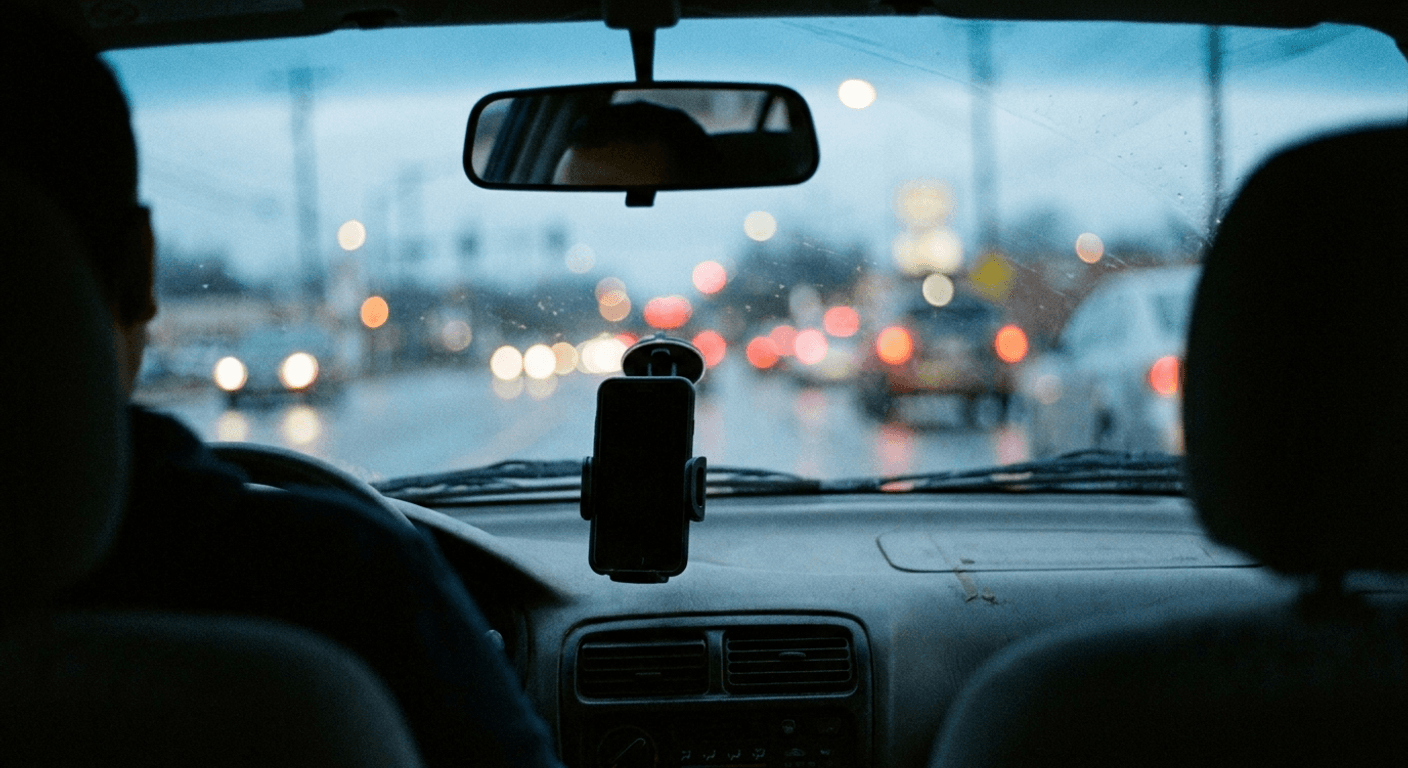
A doorbell camera aimed at a neighbour or a public footpath raises two separate legal questions in Australia: whether the video is regulated at all, and whether the microphone is quietly picking up a private conversation the video rules never touch.
Jurisdiction scope: This article covers doorbell and neighbour-facing camera law under the surveillance-device statutes of all eight Australian states and territories, plus the federal Privacy Act 1988 (Cth) and its Schedule 2 statutory tort. See also CCTV and home security camera laws in Australia.
Doorbell cameras face the same audio and video split as any other camera
A video doorbell is a security camera with a very specific field of view: the front step, the path to it, and often a slice of the street, a shared driveway or a neighbour's fence line. That field of view is assessed the same way any camera's video is assessed under the relevant state optical-surveillance provision, or the absence of one. The doorbell's microphone is assessed completely separately, under the listening-device provision and its "private conversation" test. A doorbell camera that is entirely lawful on video, because it only shows a public footpath, can still capture an unlawful recording through its microphone. Read the full mechanics of that split on our CCTV and home security camera laws guide; this article focuses on the neighbour-facing and public-footpath scenario.
Filming a public street or footpath from your own property
In the five jurisdictions with a general optical-surveillance provision, NSW, Victoria, WA, SA and the NT, video of a public street or footpath taken from your own property is generally not treated as capturing a "private activity" or falling within the trespass-gated NSW rule, because a person walking on a public footpath does not have the same expectation of privacy as someone in their own backyard or home. This is why a doorbell camera's video is rarely the source of legal exposure on its own. The picture changes where the field of view extends well beyond the footpath into a neighbour's private space, such as through a window, or continuously over a fenced yard.
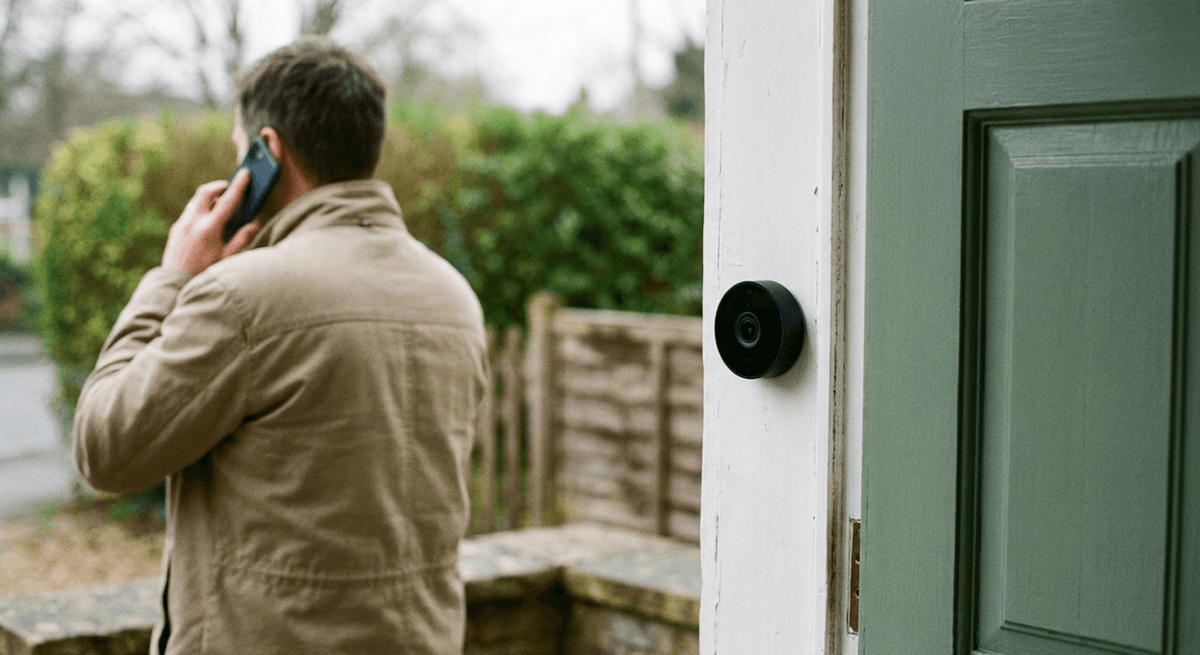
What changes when your doorbell camera picks up audio
Audio is judged by an entirely different test, and this is where a doorbell camera's real legal exposure usually sits. The "private conversation" test asks about the nature and circumstances of what was said, not whether the speakers were standing on public land. Two people having a hushed, personal exchange on an otherwise empty footpath, within range of a doorbell's microphone, can still be having a private conversation, even though the same footage is unremarkable on video. The doorbell owner's own position differs by group. In Victoria, Queensland and the NT, the offence only reaches a conversation the recorder is not a party to, so audio of your own doorstep exchange is outside it regardless. In NSW, Tasmania and the ACT, a broad personal-use exception usually covers audio never intended for anyone beyond the parties. In WA and SA that exception does not exist, so audio of a conversation you were not part of needs a genuine lawful-interest justification or consent.
How a neighbour-facing camera is judged, state by state
| Jurisdiction | Does the Act regulate video? | How a neighbour-facing camera is judged |
|---|---|---|
| New South Wales | Yes, Surveillance Devices Act 2007 (NSW) s 8 | Trespass test: catches a device only if installing it required trespass onto, or interference with, the neighbour's premises or a vehicle |
| Victoria | Yes, Surveillance Devices Act 1999 (Vic) s 7 | Private-activity test: catches footage of a private activity the operator is not a party to |
| Queensland | No optical provision (Invasion of Privacy Act 1971 covers listening devices only) | Falls to nuisance law, council rules and the federal statutory tort |
| Western Australia | Yes, Surveillance Devices Act 1998 (WA) s 6 | Private-activity test, structurally identical to the audio rule, no trespass gating |
| South Australia | Yes, Surveillance Devices Act 2016 (SA) s 5 | Private-activity test; owner or occupier consent also needed where installation involves entering the neighbour's premises |
| Tasmania | No optical provision (Listening Devices Act 1991 covers audio only) | Falls to Police Offences Act 1935 (Tas) ss 13A to 13C, council rules and the federal tort |
| Australian Capital Territory | No optical provision (Listening Devices Act 1992 covers audio only) | Falls to nuisance law, council rules and the federal statutory tort |
| Northern Territory | Yes, Surveillance Devices Act 2007 (NT) s 12 | Private-activity test, same structural family as Victoria, WA and SA |
New South Wales: the trespass test in a neighbour dispute
NSW is the one jurisdiction where the answer to "can my neighbour's camera see into my yard" does not turn on what the footage shows. Section 8 of the Surveillance Devices Act 2007 (NSW) only catches an optical device installed, used or maintained by trespass onto, or interference with, premises or a vehicle. A doorbell camera mounted on the owner's own door or wall, requiring no entry onto the neighbour's land, generally sits outside s 8 even if its field of view sweeps across part of the neighbour's yard. This surprises many NSW readers, since the same camera in Victoria, WA, SA or the NT would be tested by what it actually captures. Audio from the same doorbell camera is not covered by this trespass gate; it is judged separately under s 7's private-conversation test. For the audio rule in each state, see New South Wales, Victoria, Queensland, Western Australia, South Australia, Tasmania, the ACT and the Northern Territory.
Practical steps if you are installing or living near a doorbell camera
Angle a new doorbell camera toward your own door and path, narrowing the field of view away from a neighbour's windows or private yard where the hardware allows it. If the audio range is adjustable or can be disabled, consider limiting it, since audio is judged more strictly than video in most states. Visible signage that the property uses recording doorbell technology is inexpensive and can support a reasonable-expectation argument later. Before assuming a dispute needs a legal answer, talk to the neighbour directly, the OAIC's own first recommended step, and often faster and less costly than the avenues below.
What a neighbour can actually do about your camera
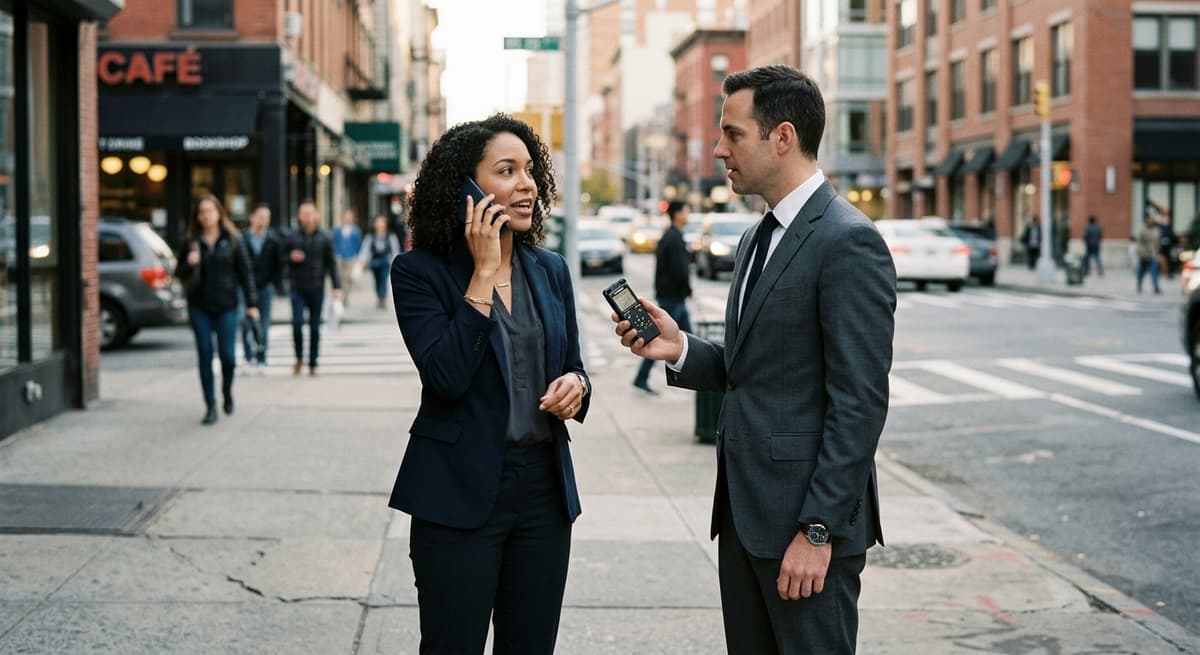
A neighbour concerned about a doorbell camera has several avenues, layered rather than exclusive. Raising it directly with the owner resolves many disputes without invoking any Act. Where a state regulates optical devices and the field of view captures more than a public footpath, for example a private yard or window in Victoria, WA, SA or the NT, or trespass-based installation in NSW, a complaint to police can be made under that Act. A council may also have planning or fencing rules bearing on placement, which the OAIC flags. Finally, the federal statutory tort in Schedule 2 of the Privacy Act 1988 (Cth), in force since 10 June 2025, gives an individual a civil action for a sufficiently serious, intentional or reckless intrusion, regardless of state optical coverage.
The federal overlay for individuals
The Privacy Act 1988 (Cth) generally does not apply to a neighbour's doorbell camera. The OAIC states plainly that "the Privacy Act doesn't cover a security camera operated by an individual acting in a private capacity but state or territory laws may apply." The Schedule 2 statutory tort is the exception: it applies to individuals, requiring an intrusion upon seclusion or misuse of information, a reasonable expectation of privacy, conduct that was intentional or reckless, seriousness, and that the public interest in privacy outweighed any countervailing interest. It is actionable without proof of damage, and combined damages are capped at the greater of $478,550 or the equivalent defamation cap. It has already been applied once, in Kurraba Group Pty Ltd & Anor v Williams [2025] NSWDC 396, an interlocutory ruling, not a final decision on damages.

For the fuller picture of the audio and video split, see CCTV and home security camera laws in Australia. For the general rule on recording conversations, see is it legal to record a conversation in Australia, and for the wider privacy framework, see Australia data privacy laws. The Australia recording laws hub lists every state guide.
This article provides general legal information about doorbell camera and neighbour privacy law in Australia, current as of 19 July 2026. It is not legal advice and does not account for every local council rule. Surveillance-device law differs between states and territories. For advice about a specific dispute, consult a legal practitioner admitted in the relevant Australian state or territory.
Frequently Asked Questions
Can my neighbour point a security camera at my house?
Often yes for video alone. In NSW the question is whether installing the camera required trespassing onto your land, not what it shows. In Victoria, WA, SA and the NT, ordinary footage of your yard or driveway usually falls outside the private-activity offence unless it captures something like a window into your home.
Is it legal to record audio on a security camera in Australia?
It depends on the state. In Victoria, Queensland and the NT, recording your own doorstep conversation is outside the offence entirely. In NSW, Tasmania and the ACT, a broad personal-use exception usually covers it. In WA and SA, only all-party consent or a genuine lawful-interest justification excuses it.
Do I need to tell people my doorbell camera is recording?
There is no single national signage requirement for a private individual's camera. Visible signage is good practice and supports a reasonable-expectation argument, though a private-capacity camera is not itself subject to a Privacy Act notice duty.
Can I film a public footpath from my front door?
Generally yes on video, since a person on a public footpath does not have the same expectation of privacy as someone on private property. Audio is the separate risk: a hushed footpath conversation can still count as a private conversation.
What can I do if a neighbour's camera bothers me?
Start by talking to the neighbour, the OAIC's own recommended first step. If the footage genuinely captures a private activity or the camera was installed by trespass, a complaint under the relevant state Act may be available.
Does my council need to approve my doorbell camera?
Not universally, but the OAIC notes some councils require planning permission for a security camera, worth checking before installing one near a shared boundary or fence.
Can I be sued over my doorbell camera if no state law covers video where I live?
Potentially. Queensland, Tasmania and the ACT have no general optical-surveillance law, but the federal statutory tort in Schedule 2 of the Privacy Act 1988 (Cth) applies to individuals regardless, subject to its own seriousness and public-interest tests.
The Law Behind This Article
This article rests on the statutory provisions below, held in our own legal record and retrieved from the official source. Tap a section to read the operative text.
Surveillance Devices Act 2007 (NSW)
s 7Prohibition on installation, use and maintenance of listening devicesIn forcecited in 12 of our articles
(1) A person must not knowingly install, use or cause to be used or maintain a listening device—(a) to overhear, record, monitor or listen to a private conversation to which the person is not a party, or (b) to record a private conversation to which the person is a party. Maximum penalty—500 penalty units (in the case of a corporation) or 100 penalty units or 5 years imprisonment, or both (in any other case). (2) Subsection (1) does not apply to the following—(a) the installation, use or maintenance of a listening device in accordance with a warrant, emergency authorisation, corresponding warrant or corresponding emergency authorisation, (b) the installation, use or maintenance of a listening device in accordance with the Telecommunications (Interception and Access) Act 1979, or any other law, of the Commonwealth, (c) the unintentional hearing of a private conversation by means of a listening device, (d) the use of a listening device to record a refusal to consent to the recording of an interview by a member of the NSW Police Force in connection with the commission of an offence by a person suspected of having committed the offence, (e) the use of a listening device and any
Official text (excerpt) · last checked 2026-09-28 · Read the full text in our law library · Verify at legislation.nsw.gov.au
Cited in 53 court opinions in our collectionLatest citing opinion in our collection: 2024
Opinions citing this section in our collection:
- [2024] NSWCA 51 (NSW Court of Appeal 2024, [2024] NSWCA 51)
- [2022] NSWCCA 222 (NSW Court of Criminal Appeal 2022, [2022] NSWCCA 222)
- [2022] NSWCCA 206 (NSW Court of Criminal Appeal 2022, [2022] NSWCCA 206)
Identified automatically from the court opinions citing this section — not a ranking of which case controls.
Also relied on in: CCTV and Home Security Camera Laws in Australia (2026), Dash Cam Laws in Australia: What's Legal to Record, Is It Illegal to Record Someone Without Consent in Australia?
s 8Installation, use and maintenance of optical surveillance devices without consentIn forcecited in 7 of our articles
(1) A person must not knowingly install, use or maintain an optical surveillance device on or within premises or a vehicle or on any other object, to record visually or observe the carrying on of an activity if the installation, use or maintenance of the device involves—(a) entry onto or into the premises or vehicle without the express or implied consent of the owner or occupier of the premises or vehicle, or (b) interference with the vehicle or other object without the express or implied consent of the person having lawful possession or lawful control of the vehicle or object. Maximum penalty—500 penalty units (in the case of a corporation) or 100 penalty units or 5 years imprisonment, or both (in any other case).
Official text (excerpt) · last checked 2026-09-28 · Read the full text in our law library · Verify at legislation.nsw.gov.au
Cited in 10 court opinions in our collectionLatest citing opinion in our collection: 2023
Opinions citing this section in our collection:
- Farm Transparency International Ltd v New South Wales (High Court of Australia 2022, [2022] HCA 23)
- Kadir v The Queen (High Court of Australia 2020, [2020] HCA 1)
- [2017] NSWCCA 288 (NSW Court of Criminal Appeal 2017, [2017] NSWCCA 288)
Identified automatically from the court opinions citing this section — not a ranking of which case controls.
Also relied on in: Drone Privacy Laws in Australia: What CASA Doesn't Cover, Is It Legal to Record a Conversation in Australia?, Security Camera and CCTV Laws in New South Wales
Invasion of Privacy Act 1971 (Qld)
s 43Prohibition on use of listening devicesIn forcecited in 10 of our articles
(1) A person is guilty of an offence against this Act if the person uses a listening device to overhear, record, monitor or listen to a private conversation and is liable on conviction on indictment to a maximum penalty of 40 penalty units or imprisonment for 2 years. Note— If a corporation commits an offence against this provision, an executive officer of the corporation may be taken, under section 49A , to have also committed the offence. (2) Subsection (1) does not apply— (a) where the person using the listening device is a party to the private conversation; or (b) to the unintentional hearing of a private conversation by means of a telephone; or (c) to or in relation to the use of any listening device by— (i) an officer employed in the service of the Commonwealth in relation to customs authorised by a warrant under the hand of the Comptroller-General of Customs under the Customs Act 1901 (Cwlth) to use a listening device in the performance of the officer’s duty; or (ii) a person employed in connection with the security of the Commonwealth when acting in the performance of the person’s duty under an Act passed by the Parliament of the Commonwealth relating to the security of the
Official text (excerpt) · last checked 2026-09-28 · Read the full text in our law library · Verify at legislation.qld.gov.au
Also relied on in: Recording Phone Calls in Queensland, Workplace Recording and Surveillance in Queensland, Can You Record a Phone Call in Australia? State-by-State Rules
Surveillance Devices Act 2016 (SA)
s 4Listening devicesIn forcecited in 11 of our articles
(1) Subject to this section and section 6, a person must not knowingly install, use or cause to be used, or maintain, a listening device— (a) to overhear, record, monitor or listen to a private conversation to which the person is not a party; or (b) to record a private conversation to which the person is a party. Maximum penalty: (a) in the case of a body corporate—$75 000; (b) in the case of a natural person—$15 000 or imprisonment for 3 years. (2) Subsection (1) does not apply— (a) to the use of a listening device by a party to a private conversation to record the conversation if— (i) all principal parties to the conversation consent, expressly or impliedly, to the device being so used; or (ii) the use of the device is reasonably necessary for the protection of the lawful interests of that person; or (b) to the installation, use or maintenance of a listening device if— (i) the installation, use or maintenance is authorised under this Act or any other Act or a corresponding law; or (ii) the installation, use or maintenance is authorised under the Telecommunications (Interception and Access) Act 1979, or another law, of the Commonwealth, or (iii) the device is installed
Official text (excerpt) · last checked 2026-09-28 · Read the full text in our law library · Verify at legislation.sa.gov.au
Cited in 2 court opinions in our collectionLatest citing opinion in our collection: 2022
Opinions citing this section in our collection:
- Farm Transparency International Ltd v New South Wales (High Court of Australia 2022, [2022] HCA 23)
- RRG Nominees Pty Ltd v Visible Temporary Fencing Australia Pty Ltd (No 3) (Federal Court of Australia 2018, [2018] FCA 404)
Identified automatically from the court opinions citing this section — not a ranking of which case controls.
Also relied on in: Home Security Cameras and CCTV Law in South Australia, Recording Colleagues and Managers at Work in South Australia, South Australia Recording Laws: Consent, Lawful Interests and the Public-Interest Exception
Surveillance Devices Act 1999 (Vic)
s 7Regulation of installation, use and maintenance of optical surveillance devicesIn forcecited in 6 of our articles
(1) Subject to subsection (2), a person must not knowingly install, use or maintain an optical surveillance device to record visually or observe a private activity to which the person is not a party, without the express or implied consent of each party to the activity. In the case of a natural person, level 7 imprisonment (2 years maximum) or a level 7 fine (240 penalty units maximum) or both; In the case of a body corporate, 1200 penalty units. (2) Subsection (1) does not apply to— (a) the installation, use or maintenance of an optical surveillance device in accordance with a warrant, emergency authorisation, corresponding warrant or corresponding emergency authorisation; or (b) the installation, use or maintenance of an optical surveillance device in accordance with a law of the Commonwealth; or (c) the installation, use or maintenance of an optical surveillance device by a law enforcement officer in the performance of his or her duty on premises if— (i) an occupier of the premises authorises that installation, use or maintenance; and (ii) the installation, use or maintenance is reasonably necessary for the protection of any person's lawful interests; or (d) the overt use
Official text (excerpt) · last checked 2026-09-28 · Read the full text in our law library · Verify at legislation.vic.gov.au
Also relied on in: Security Camera and CCTV Laws in Victoria, Workplace Recording and Surveillance in Victoria, Victoria Recording Laws: When You Can Record a Private Conversation (2026)
Surveillance Devices Act 1998 (WA)
s 6Regulation of use, installation and maintenance of optical surveillance devicesIn forcecited in 6 of our articles
(1)Subject to subsections (2) and (3), a person shall not install, use, or maintain, or cause to be installed, used, or maintained, an optical surveillance device — (a)to record visually or observe a private activity to which that person is not a party; or (b)to record visually a private activity to which that person is a party. Penalty: (a)for an individual: $5 000 or imprisonment for 12 months, or both; (b)for a body corporate: $50 000. (2)Subsection (1) does not apply to — (a)the installation, use, or maintenance of an optical surveillance device in accordance with a warrant issued under Part 4; (b)the installation, use, or maintenance of an optical surveillance device in accordance with an emergency authorisation issued under Part 4; (c)the installation, use, or maintenance of an optical surveillance device in accordance with a law of the Commonwealth; (d)the use of an optical surveillance device in accordance with Part 5; or (e)the use of an optical surveillance device resulting in the unintentional recording or observation of a private activity.
Official text (excerpt) · last checked 2026-09-28 · Read the full text in our law library · Verify at legislation.wa.gov.au
Cited in 1 court opinions in our collectionLatest citing opinion in our collection: 2022
Opinions citing this section in our collection:
- Farm Transparency International Ltd v New South Wales (High Court of Australia 2022, [2022] HCA 23)
Identified automatically from the court opinions citing this section — not a ranking of which case controls.
Also relied on in: Home Security Cameras and CCTV Law in Western Australia, Recording Colleagues and Managers at Work in Western Australia, Western Australia Recording Laws: Consent and the Lawful-Interests Exception
Search our full record of US law — 2.1 million sections, every state + federal →
Sources and References
- Surveillance Devices Act 2007 (NSW) s 8: optical surveillance devices, the trespass-gated test(austlii.edu.au).gov
- Surveillance Devices Act 2007 (NSW) s 7: listening devices and the private conversation test(austlii.edu.au).gov
- Surveillance Devices Act 1999 (Vic) s 7: optical surveillance devices(austlii.edu.au).gov
- Surveillance Devices Act 1998 (WA) s 6: optical surveillance devices(austlii.edu.au).gov
- Surveillance Devices Act 2016 (SA): listening and optical surveillance devices, ss 4 to 6(legislation.sa.gov.au).gov
- Invasion of Privacy Act 1971 (Qld): listening devices only, s 43, no optical provision(legislation.qld.gov.au).gov
- Listening Devices Act 1991 (Tas): audio-only surveillance statute(legislation.tas.gov.au).gov
- Listening Devices Act 1992 (ACT): audio-only surveillance statute(legislation.act.gov.au).gov
- Surveillance Devices Act 2007 (NT): listening and optical surveillance devices(legislation.nt.gov.au).gov
- OAIC: Security cameras, private-capacity exemption and neighbour-dispute guidance(oaic.gov.au).gov
- OAIC: Statutory tort for serious invasions of privacy, Privacy Act 1988 (Cth) sch 2(oaic.gov.au).gov