Nanny Cam Laws: Are Hidden Cameras Legal at Home?
Independently fact-checked against primary sources (last audited August 31, 2026). · Reviewed by the RecordingLaw editorial team. · Law checked current as of August 9, 2026. · 9 primary sources cited on this page. How we verify our legal content
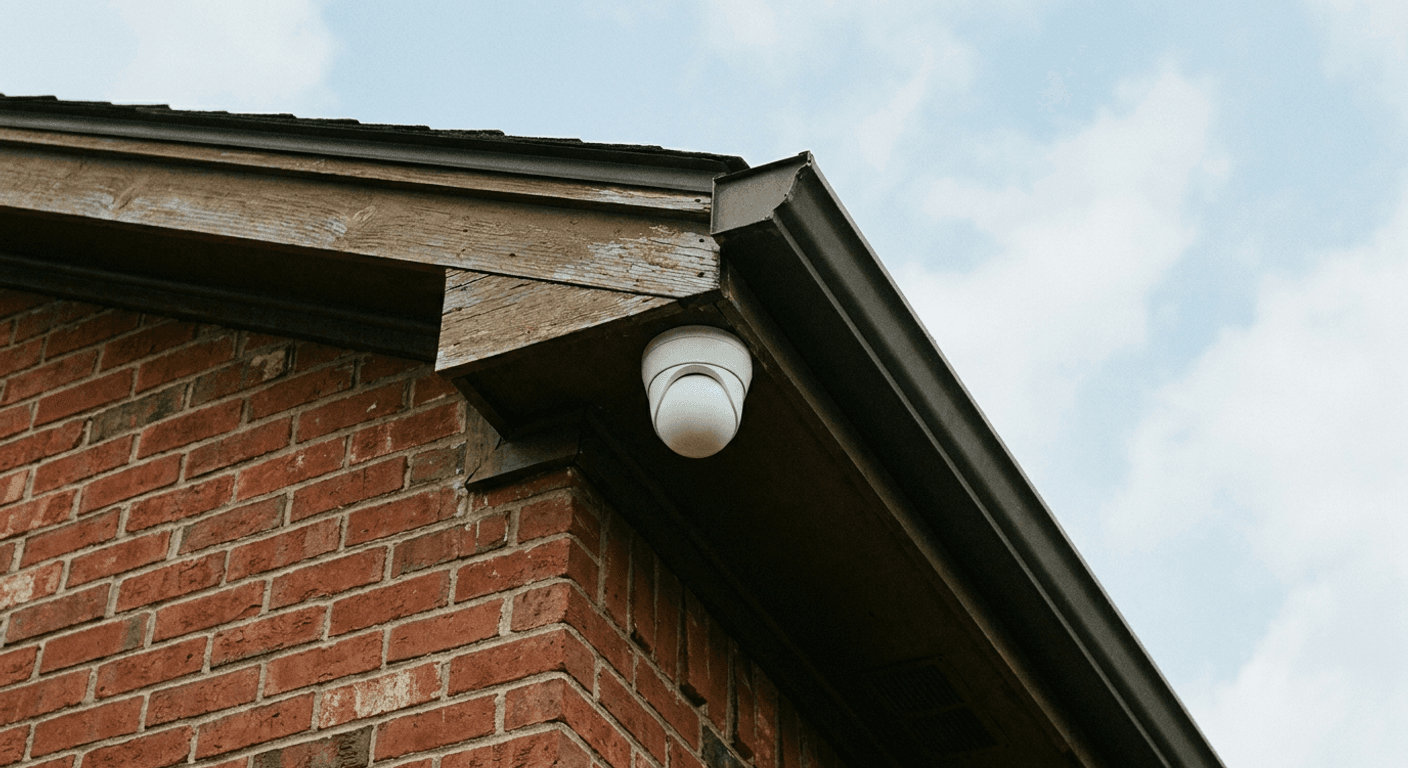
In all 50 states it is generally legal to place a video-only camera in your own home to monitor a nanny or babysitter. Two hard limits apply. Recording audio can violate state wiretap and all-party-consent law, and a hidden camera in a bathroom or a live-in caregiver's bedroom can be criminal voyeurism.
Jurisdiction scope: This page explains the national framework for in-home cameras used to monitor a caregiver, centered on the video-versus-audio distinction and the private-area limit. It is general legal information, not legal advice. For your state's full consent rule, see that state's recording laws page.
Are Nanny Cams Legal?
Yes, with two important limits. No state bars a homeowner from using a camera, hidden or visible, to record the common areas of their own home. Voyeurism statutes are triggered by the place recorded and the purpose, not by who owns the house. So a camera watching the living room, kitchen, playroom, or a child's bedroom is the standard, lawful nanny-cam use across the country.
The two limits are where families get into legal trouble. The first is audio. The second is placing a camera in a space where the caregiver has a reasonable expectation of privacy. Get those two right and the rest of the setup is straightforward.
Audio Is Where the Criminal Risk Lives
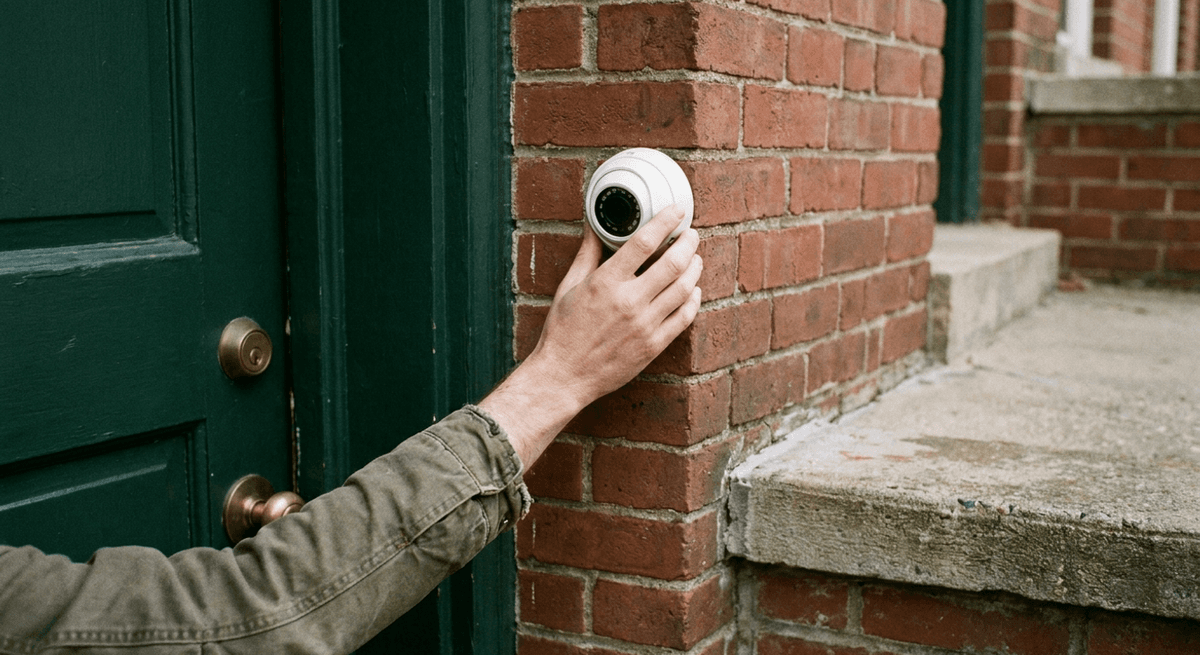
Video and audio follow different rules, and audio creates the real exposure. The federal Wiretap Act allows recording with one-party consent, but roughly a dozen states require that all parties consent to record a private conversation. In those states, an audio-enabled nanny cam can be a crime because the parent is typically not part of the nanny's conversations and cannot supply consent for them.
The all-party-consent states include California, Illinois, Massachusetts, Washington, Florida, and Pennsylvania, among others. Massachusetts is the strictest. Its statute bars secret recording of any oral communication and does not even require a reasonable expectation of privacy, so a hidden audio nanny cam is squarely within the law's reach. Because many inexpensive cameras record sound by default, the safest path is to disable audio or to obtain the caregiver's written consent before recording any.
| State | Audio rule | Authority |
|---|---|---|
| California | All-party consent for confidential communications | Penal Code 632 |
| Illinois | All-party consent for private conversations | 720 ILCS 5/14-2 |
| Massachusetts | Bars secret recording, no privacy-expectation needed | Gen. Laws ch. 272, 99 |
| Washington | All-party consent; unlawful audio is inadmissible | RCW 9.73.030 |
| Florida | All-party consent to intercept oral communication | Fla. Stat. 934.03 |
| Pennsylvania | All-party consent; location can affect outcome | 18 Pa. Cons. Stat. 5703 |
The Private-Area Limit Applies Everywhere
The second limit is locational and exists in every state. A hidden camera in a bathroom, a guest bath, or a live-in nanny's own bedroom can be criminal voyeurism or unlawful surveillance, no matter who owns the home. These are the spaces a person reasonably treats as private. California criminalizes secretly viewing the interior of a bedroom or bathroom with intent to invade privacy. New York makes it unlawful surveillance to record a person in a bedroom or bathroom and presumes there is no legitimate purpose for a camera in those rooms. Florida and Texas reach the same result through their voyeurism and invasive-recording statutes.
The distinction between a child's bedroom and the caregiver's own private bedroom matters. Courts have treated a child's bedroom, where the parent has a clear monitoring interest, very differently from a live-in nanny's assigned bedroom, which is the caregiver's private space. Keep cameras out of any area where the nanny might reasonably disrobe.
Disclosure and Using Footage as Evidence
There is no blanket federal law requiring you to tell a household employee about a video camera. Even so, disclosure is wise. In all-party-consent states you effectively must disclose and obtain consent before capturing audio, and telling the caregiver about the camera reduces the risk of an invasion-of-privacy claim. Many families simply state the camera policy in the work agreement.
When it comes to evidence, video of misconduct in a common area is generally admissible. Illegally captured audio is frequently suppressed in all-party-consent states. Location can change the result. Courts generally give less privacy protection to a common or supervised space, such as a child's bedroom, than to a caregiver's own private room, so location can affect whether audio holds up as evidence. That is fact-specific and should not be read as a green light for audio everywhere.
Watch out: The cheapest cameras record audio by default. In an all-party-consent state, flipping that microphone on can turn a lawful video setup into a crime. Disable audio or get written consent before recording sound.
Frequently Asked Questions
Are nanny cams legal?
Yes. Video-only cameras in the common areas of your own home are legal in all 50 states. The two limits are audio recording, which is governed by wiretap and all-party-consent law, and cameras in private areas such as bathrooms or a live-in nanny's bedroom, which can be voyeurism.
Can a nanny cam record audio?
Federal law allows it with one-party consent, but about a dozen all-party-consent states such as California, Illinois, Massachusetts, and Washington can make recording the nanny's private conversations a crime because the parent is not a party. Disable audio or get written consent.
Do I have to tell my nanny about the camera?
There is no general video-disclosure law, but disclosure is strongly advised. In all-party-consent states you effectively must disclose and get consent before recording audio, and disclosure also limits invasion-of-privacy claims.
Can I put a camera in a live-in nanny's bedroom or the bathroom?
No. Those are spaces with a reasonable expectation of privacy. A hidden camera there can be criminal voyeurism or unlawful surveillance in every state, even in your own home.
Can nanny cam footage be used in court?
Video of misconduct in common areas is generally admissible. Illegally recorded audio is often suppressed in all-party-consent states, though admissibility can depend on the location, since courts generally give less privacy protection to a supervised space like a child's bedroom than to a caregiver's own private room.
What states make audio nanny cams illegal without consent?
The all-party-consent states for a private in-person conversation like a nanny cam captures include California, Delaware, Illinois, Maryland, Massachusetts, Montana, New Hampshire, Oregon, and Pennsylvania, with rules that vary. Oregon's in-person rule is a notice rule: every participant must be specifically informed that the conversation is being recorded. Nevada and Connecticut are not flat all-party states for this scenario: Nevada requires all-party consent only for phone and wire communications, and its in-person conversation rule is one-party consent. Connecticut is criminal one-party consent generally, with all-party consent required only for telephone recordings under its civil wiretapping statute. See our two-party consent states hub for the full list.
Updates
Clarified that Oregon requires every participant in an in-person conversation to be informed of recording, a notice rule rather than a consent rule.
Independently fact-checked against the cited primary sources
Corrected the FAQ's all-party-consent state list so it reflects the in-person, in-home scenario a nanny cam actually captures, since Nevada and Connecticut are not flat all-party states for that scenario, and removed an unsourced claim about a specific Pennsylvania court case.
Independently fact-checked against the cited primary sources
Governing law re-checked for recent changes
Governing law re-checked for recent changes
Reviewed and approved by an editor
The Law Behind This Article
This article rests on the statutory provisions below, held in our own legal record and retrieved from the official source. Tap a section to read the operative text.
California Penal Code
§ 632In forcecited in 55 of our articles
(a) A person who, intentionally and without the consent of all parties to a confidential communication, uses an electronic amplifying or recording device to eavesdrop upon or record the confidential communication, whether the communication is carried on among the parties in the presence of one another or by means of a telegraph, telephone, or other device, except a radio, shall be punished by a fine not exceeding two thousand five hundred dollars ($2,500) per violation, or imprisonment in a county jail not exceeding one year, or in the state prison, or by both that fine and imprisonment. If the person has previously been convicted of a violation of this section or Section 631, 632.5, 632.6, 632.7, or 636, the person shall be punished by a fine not exceeding ten thousand dollars ($10,000) per violation, by imprisonment in a county jail not exceeding one year, or in the state prison, or by both that fine and imprisonment.
Official text (excerpt) · last checked 2026-09-23 · Read the full text in our law library · Verify at leginfo.legislature.ca.gov
Cited in 267 court opinions in our collectionLatest citing opinion in our collection: 2026
In the courts (editorial summary, independently checked):Kimmel v. Goland (1990) held the section 47(2) litigation privilege does not bar a damages claim under Section 632 for recording confidential conversations without consent. Lieberman v. KCOP Television, Inc. (2003) held a Section 632 violation is complete the moment the recording is made, whether or not it is disclosed.
Opinions citing this section in our collection:
- Rubin v. Green (California Supreme Court 1993, 4 Cal. 4th 1187)“…f telephone conversations with defendants, an offense under Penal Code section 632. We noted that defendants alleged that…”
- Kimmel v. Goland (California Supreme Court 1990, 51 Cal. 3d 202)✓Mobilehome owners secretly taped phone calls with park management in anticipation of suing; the court held the section 47(2) litigation privilege did not bar the cross-complaint for damages under Penal Code section 632, since the injury came from recording, not publication.
- Shulman v. Group W Productions, Inc. (California Supreme Court 1998, 74 Cal. Rptr. 2d 843)✓A TV producer put a wireless microphone on the flight nurse treating a crash victim. No section 632 claim was before the court, but it called section 632 and the intrusion tort laws of general applicability and said the press may not eavesdrop in violation of section 632.
Identified automatically from the court opinions citing this section — not a ranking of which case controls.
Also relied on in: California Recording Laws (2026): All-Party Consent Rules, US Recording Laws by State (2026): All 50 States Explained, Can an Employer Record Conversations Without Consent? (2026)
§ 647In forcecited in 21 of our articles
Except as provided in paragraph (5) of subdivision (b) and in subdivisions (k) and (l), a person who commits any of the following acts is guilty of disorderly conduct, a misdemeanor: (a) An individual who solicits anyone to engage in or who engages in lewd or dissolute conduct in a public place or in a place open to the public or exposed to public view. (b) (1) An individual who solicits, or who agrees to engage in, or who engages in, an act of prostitution with the intent to receive compensation, money, or anything of value from another person. An individual agrees to engage in an act of prostitution when, with specific intent to so engage, the individual manifests an acceptance of an offer or solicitation by another person to so engage, regardless of whether the offer or solicitation was made by a person who also possessed the specific intent to engage in an act of prostitution. (2) An individual who solicits, or who agrees to engage in, or who engages in, an act of prostitution with another person who is 18 years of age or older in exchange for the individual providing compensation, money, or anything of value to the other person.
Official text (excerpt) · last checked 2026-08-31 · Read the full text in our law library · Verify at leginfo.legislature.ca.gov
Cited in 593 court opinions in our collectionLatest citing opinion in our collection: 2026
In the courts (editorial summary, independently checked):In re Giannini (1968) set aside convictions under Penal Code 647(a) because the prosecution introduced no evidence of community standards, and equated "lewd or dissolute" with obscenity only for the purpose of judging an allegedly obscene dance performed for an audience.
Opinions citing this section in our collection:
- Morrison v. State Board of Education (California Supreme Court 1969, 1 Cal. 3d 214)“…public beach and the teacher was arrested for violation of Penal Code section 647, subdivision (a), and convicted, on his…”
- People v. Laiwa (California Supreme Court 1983, 34 Cal. 3d 711)“…to arrest him for being under the influence of a narcotic. (Pen. Code, § 647, subd. (f).) [1] He moved, however, to…”
- In Re Cregler (California Supreme Court 1961, 56 Cal. 2d 308)✓A man previously convicted of theft was arrested for standing in a San Francisco bus station under the pre-1961 vagrancy version of section 647. The court rejected his vagueness challenge, reading loiter to require lingering to commit a crime, and denied habeas relief.
Identified automatically from the court opinions citing this section — not a ranking of which case controls.
Also relied on in: Is It Illegal to Video Record Someone Without Their Consent? (2026), California Landlord-Tenant Recording and Surveillance Laws (2026), California Laws on Recording in Public: What Is Legal (2026)
New York Penal Law
§ 250.45Unlawful surveillance in the second degreeIn forcecited in 19 of our articles
Unlawful surveillance in the second degree. A person is guilty of unlawful surveillance in the second degree when: 1. For his or her own, or another person's amusement, entertainment, or profit, or for the purpose of degrading or abusing a person, he or she intentionally uses or installs, or permits the utilization or installation of an imaging device to surreptitiously view, broadcast or record a person dressing or undressing or the sexual or other intimate parts of such person at a place and time when such person has a reasonable expectation of privacy, without such person's knowledge or consent; or 2. For his or her own, or another person's sexual arousal or sexual gratification, he or she intentionally uses or installs, or permits the utilization or installation of an imaging device to surreptitiously view, broadcast or record a person dressing or undressing or the sexual or other intimate parts of such person at a place and time when such person has a reasonable expectation of privacy, without such person's knowledge or consent; or 3.
Official text (excerpt) · last checked 2026-08-31 · Read the full text in our law library · Verify at legislation.nysenate.gov
Cited in 51 court opinions in our collectionLatest citing opinion in our collection: 2025
In the courts (editorial summary, independently checked):People v. Piznarski (2013) held Penal Law 250.45 reaches a participant who secretly records consensual sex, that the victim kept a reasonable expectation of privacy, and that the one-party consent rule for eavesdropping does not apply. People v. Evans (2006) applied section 250.45(3) to a camera hidden in a bedroom.
Opinions citing this section in our collection:
- People v. Evans (Appellate Division of the Supreme Court of the State of New York 2006, 27 A.D.3d 905)✓A man placed a video camera in his girlfriend's 12-year-old daughter's bedroom and recorded her undressing, then pleaded guilty under Section 250.45(3); the court affirmed, holding the plea needed no express admission of no legitimate purpose given the statutory presumption.
- People v. Lema (Appellate Division of the Supreme Court of the State of New York 2017, 152 A.D.3d 440)✓A man used a phone camera to record under women's skirts on a subway train, but dark lighting produced no image of intimate parts; the court affirmed, holding Section 250.45(4) is satisfied when a device is used for the purpose of making such a recording.
- People v. Piznarski (Appellate Division of the Supreme Court of the State of New York 2013, 113 A.D.3d 166)✓A student secretly recorded sex with two women using a camera left in view on his bedroom desk; the court affirmed under Section 250.45, holding the statute reaches a participant who records a consensual encounter and that a visible camera can still be used surreptitiously.
Identified automatically from the court opinions citing this section — not a ranking of which case controls.
Also relied on in: New York Dashcam Laws: Legality, Mounting Rules, and Evidence Use, New York Landlord-Tenant Recording Laws: Rights for Renters and Property Owners, New York Medical Recording Laws: Patient Rights and Healthcare Privacy
Revised Code of Washington
§ 9.73.030Intercepting, recording, or divulging private communication—Consent required—Exceptions.In forcecited in 46 of our articles
(1) Except as otherwise provided in this chapter, it shall be unlawful for any individual, partnership, corporation, association, or the state of Washington, its agencies, and political subdivisions to intercept, or record any: (a) Private communication transmitted by telephone, telegraph, radio, or other device between two or more individuals between points within or without the state by any device electronic or otherwise designed to record and/or transmit said communication regardless how such device is powered or actuated, without first obtaining the consent of all the participants in the communication; (b) Private conversation, by any device electronic or otherwise designed to record or transmit such conversation regardless how the device is powered or actuated without first obtaining the consent of all the persons engaged in the conversation.
Official text (excerpt) · last checked 2026-09-24 · Read the full text in our law library · Verify at app.leg.wa.gov
Cited in 221 court opinions in our collectionLatest citing opinion in our collection: 2026
In the courts (editorial summary, independently checked):Washington courts have policed what counts as a private communication under Sec. 9.73.030: State v. Gunwall (1986) concluded a pen register intercept comes within a private communication transmitted by telephone, while State v. Riley (1993) held a line trap that reveals only the calling number does not record one.
Opinions citing this section in our collection:
- State v. Salinas (Washington Supreme Court 1992, 119 Wash. 2d 192)“…alties for divulging a telegram or opening a sealed letter. RCW 9.73.030-.070, making it unlawful to intercept,…”
- State v. Gunwall (Washington Supreme Court 1986, 106 Wash. 2d 54)✓Everett police pulled a suspected cocaine dealer's toll records and put a pen register on her line without valid legal process; the court held a pen register intercept is a private communication transmitted by telephone, installable only under the eavesdropping statutes.
- State v. Brown (Washington Supreme Court 1997, 132 Wash. 2d 529)✓Palm Springs officers secretly recorded a Washington murder suspect's statements after his arrest; the court treated RCW 9.73.090, not 9.73.030, as the provision reaching recordings of arrested persons, and held the Privacy Act did not require suppressing that recording.
Identified automatically from the court opinions citing this section — not a ranking of which case controls.
Also relied on in: Washington Recording Laws (2026): All-Party Consent Rules, Federal Wiretap Act and ECPA: The Complete Guide (2026), Is Plaud HIPAA Compliant? Kind Of. Here's What to Know (2026)
Florida Statutes
§ 934.03Interception and disclosure of wire, oral, or electronic communications prohibited.In forcecited in 53 of our articles
(1) Except as otherwise specifically provided in this chapter, any person who:(a) Intentionally intercepts, endeavors to intercept, or procures any other person to intercept or endeavor to intercept any wire, oral, or electronic communication; (b) Intentionally uses, endeavors to use, or procures any other person to use or endeavor to use any electronic, mechanical, or other device to intercept any oral communication when:1. Such device is affixed to, or otherwise transmits a signal through, a wire, cable, or other like connection used in wire communication; or 2.
Official text (excerpt) · last checked 2026-09-23 · Read the full text in our law library · Verify at leg.state.fl.us
Cited in 74 court opinions in our collectionLatest citing opinion in our collection: 2026
In the courts (editorial summary, independently checked):State v. Walls (1978) held that recording an in-home oral communication without the consent of all parties violated section 934.03 and required suppression, and State v. Inciarrano (1985) held the statute protects only communications uttered with a reasonable expectation of privacy.
Opinions citing this section in our collection:
- State v. Walls (Supreme Court of Florida 1978, 356 So. 2d 294)✓An extortion victim secretly recorded threats made to him in his own home; the court held that was a protected oral communication, that recording it without every party's consent violated Section 934.03, and that Section 934.06 barred using the tape as evidence.
- SHARRON TASHA FORD v. CITY OF BOYNTON BEACH (District Court of Appeal of Florida 2021)“…ng oral communications in violation of the wiretap statute, section 934.03, Florida Statutes (2009), and for obstructing without vio…”
- State v. Calhoun (Circuit Court for the Judicial Circuits of Florida 1984, 7 Fla. Supp. 2d 3)“…hall not be violated” . . . (emphasis mine) Furthermore, section 934.03, Florida Statutes, makes it unlawful for *6 any person (…”
Identified automatically from the court opinions citing this section — not a ranking of which case controls.
Also relied on in: Florida Audio Recording Laws: All-Party Consent Rules and Penalties (2026), Florida Phone Call Recording Laws: Consent Rules for Calls (2026), Massachusetts Phone Call Recording Laws
United States Code Title 18
§ 2511Interception and disclosure of wire, oral, or electronic communications prohibitedIn forcecited in 441 of our articles
Except as otherwise specifically provided in this chapter any person who— intentionally intercepts, endeavors to intercept, or procures any other person to intercept or endeavor to intercept, any wire, oral, or electronic communication; intentionally uses, endeavors to use, or procures any other person to use or endeavor to use any electronic, mechanical, or other device to intercept any oral communication when— such device is affixed to, or otherwise transmits a signal through, a wire, cable, or other like connection used in wire communication; or such device transmits communications by radio, or interferes with the transmission of such communication; or such person knows, or has reason to know, that such device or any component thereof has been sent through the mail or transported in interstate or foreign commerce; or such use or endeavor to use (A) takes place on the premises of any business or other commercial establishment the operations of which affect interstate or foreign commerce; or (B) obtains or is for the purpose of obtaining information relating to the operations of any business or other commercial establishment the operations of which affect interstate or foreign…
Official text (excerpt) · last checked 2026-09-17 · Read the full text in our law library · Verify at uscode.house.gov
Cited in 2,045 court opinions in our collectionLatest citing opinion in our collection: 2026
In the courts (editorial summary, independently checked):Griggs-Ryan v. Smith (1990) applied the Section 2511(2)(d) prior-consent exception, treating a tenant repeatedly told that all incoming calls were taped as having impliedly consented. United States v. United States District Court (1972) read the then-current Section 2511(3) as conferring no presidential surveillance power.
Opinions citing this section in our collection:
- Mitchell v. Forsyth (Supreme Court of the United States 1985, 472 U.S. 511)✓The Attorney General authorized a warrantless 1970 national security wiretap that caught the plaintiff's calls; the Court held the since-repealed Section 2511(3) disclaimer left the tap lawful under Title III, and that Mitchell had qualified immunity.
- United States v. United States District Court for the Eastern District of Michigan (Supreme Court of the United States 1972, 407 U.S. 297)✓The Attorney General approved warrantless wiretaps on members of a domestic group accused of bombing a CIA office; the Court read Section 2511(3) as a congressional disclaimer conferring no surveillance power, then held the Fourth Amendment required prior judicial approval.
- Forsyth v. Barr (Court of Appeals for the Fifth Circuit 1994, 19 F.3d 1527)✓Dallas police used, in an internal affairs probe of an officer, calls private parties allegedly intercepted illegally; assuming that was unlawful, the Fifth Circuit held Section 2517(1) and (2) allowed the disclosure and use, defeating the Section 2511(1)(c) and (d) claims.
Identified automatically from the court opinions citing this section — not a ranking of which case controls.
Also relied on in: Connecticut Recording Laws (2026): Hybrid Consent Rules Explained, Oregon Recording Laws (2026): Hybrid One-Party and All-Party Rules, Hawaii Recording Laws (2026): Hybrid Consent State Rules
§ 1801Video voyeurismIn forcecited in 81 of our articles
Whoever, in the special maritime and territorial jurisdiction of the United States, has the intent to capture an image of a private area of an individual without their consent, and knowingly does so under circumstances in which the individual has a reasonable expectation of privacy, shall be fined under this title or imprisoned not more than one year, or both. In this section— the term “capture”, with respect to an image, means to videotape, photograph, film, record by any means, or broadcast; the term “broadcast” means to electronically transmit a visual image with the intent that it be viewed by a person or persons; the term “a private area of the individual” means the naked or undergarment clad genitals, pubic area, buttocks, or female breast of that individual; the term “female breast” means any portion of the female breast below the top of the areola; and the term “under circumstances in which that individual has a reasonable expectation of privacy” means— circumstances in which a reasonable person would believe that he or she could disrobe in privacy, without being concerned that an image of a private area of the individual was being captured; or circumstances in which a…
Official text (excerpt) · last checked 2026-07-28 · Read the full text in our law library · Verify at uscode.house.gov
Cited in 53 court opinions in our collectionLatest citing opinion in our collection: 2026
In the courts (editorial summary, independently checked):Courts have applied 18 U.S.C. 1801 mainly at its edges. United States v. Johnson (2010) read it as Congress's answer to secretly filming nudity on federal property, acquitting on a child exploitation charge instead. EPIC v. Department of Homeland Security (2011) applied the Section 1801(c) law enforcement exception to a TSA scanner claim.
Opinions citing this section in our collection:
- United States v. Anthony Helton (Court of Appeals for the Fourth Circuit 2019, 944 F.3d 198)“…from this list of federal offenses is video voyeurism under 18 U.S.C. § 1801. Rather than list this statute as an enu…”
- United States v. Johnson (District Court, W.D. Missouri 2010, 719 F. Supp. 2d 1059)✓A weightlifting coach hid a camera to film minors weighing in nude; acquitting him under the child exploitation statute, the court called that conduct plain video voyeurism under section 1801, but noted the section reaches only federal maritime and territorial jurisdiction.
- Electronic Privacy Information Center v. United States Department of Homeland Security (Court of Appeals for the D.C. Circuit 2011, 653 F.3d 1)✓Privacy groups challenged TSA body scanners under the Video Voyeurism Prevention Act; the D.C. Circuit held the statute's exception for lawful law enforcement, correctional, or intelligence activity applied to airport screening, so the section 1801 claim failed.
Identified automatically from the court opinions citing this section — not a ranking of which case controls.
Also relied on in: New York Video Recording Laws: Surveillance Rules and Privacy Limits, New York Voyeurism and Hidden Camera Laws: Penalties and Protections, South Dakota Voyeurism Laws
Illinois Compiled Statutes Chapter 720, Act 5 (Criminal Code of 2012)
§ 14-2Elements of the offense; affirmative defenseIn forcecited in 63 of our articles
(a) A person commits eavesdropping when he or she knowingly and intentionally: (1) Uses an eavesdropping device, in a surreptitious manner, for the purpose of overhearing, transmitting, or recording all or any part of any private conversation to which he or she is not a party unless he or she does so with the consent of all of the parties to the private conversation; (2) Uses an eavesdropping device, in a surreptitious manner, for the purpose of transmitting or recording all or any part of any private conversation to which he or she is a party unless he or she does so with the consent of all other parties to the private conversation; (3) Intercepts, records, or transcribes, in a surreptitious manner, any private electronic communication to which he or she is not a party unless he or she does so with the consent of all parties to the private electronic communication; (4) Manufactures, assembles, distributes, or possesses any electronic, mechanical, eavesdropping, or other device knowing that or having reason to know that the design of the device renders it primarily useful for the purpose of the surreptitious overhearing, transmitting, or recording of private conversations or the…
Official text (excerpt) · last checked 2026-09-23 · Read the full text in our law library · Verify at ilga.gov
Cited in 92 court opinions in our collectionLatest citing opinion in our collection: 2026
Opinions citing this section in our collection:
- People v. Melongo (Illinois Supreme Court 2014, 2014 IL 114852)“…ations of section 14-2 of the Criminal Code of 1961 (720 ILCS 5/14-2 (West 2008)), which defines the offense…”
- People v. Smith (Appellate Court of Illinois 2025, 2025 IL App (1st) 220116)“…ropping violated section 14-2 of the Criminal Code of 2012 (720 ILCS 5/14-2 (West 2014)) and that then State’s Att…”
- Cook Au Vin, LLC v. Mid-Century Insurance Co. (Appellate Court of Illinois 2023, 226 N.E.3d 694)“…onversation by one who is not a party to the conversation. 720 ILCS 5/14-2(a)(1) (West 2020). In enacting the stat…”
Identified automatically from the court opinions citing this section — not a ranking of which case controls.
Also relied on in: Illinois Recording Laws (2026): All-Party Consent Rules, Illinois Audio Recording Laws: All-Party Consent Rules and Penalties (2026), Illinois Security Camera Laws: BIPA, Audio Rules, and Placement (2026)
Search our full record of US law — 2.1 million sections, every state + federal →
Sources and References
- 18 U.S.C. 2511 - Federal Wiretap Act (one-party consent)(law.cornell.edu)
- 18 U.S.C. 1801 - Video Voyeurism Prevention Act(law.cornell.edu)
- California Penal Code 632 - Eavesdropping(leginfo.legislature.ca.gov).gov
- California Penal Code 647(j) - Invasion of Privacy(leginfo.legislature.ca.gov).gov
- 720 ILCS 5/14-2 - Illinois Eavesdropping(ilga.gov).gov
- Massachusetts General Laws ch. 272, 99 - Interception of Communications(malegislature.gov).gov
- Washington RCW 9.73.030 - Consent to Record(app.leg.wa.gov).gov
- Florida Statutes 934.03 - Interception of Oral Communications(flsenate.gov).gov
- Florida Statutes 810.145 - Video Voyeurism(flsenate.gov).gov
- New York Penal Law 250.45 - Unlawful Surveillance(nysenate.gov).gov
- Oregon Revised Statutes Chapter 165, including ORS 165.540 (Obtaining contents of communications)(oregonlegislature.gov).gov