
Nebraska
Nebraska School Recording Laws: Student, Parent, and Teacher Rights (2026)
Independently fact-checked against primary sources (last audited November 1, 2026). · Reviewed by the RecordingLaw editorial team. · Law checked current as of November 1, 2026. · 8 primary sources cited on this page. How we verify our legal content

Under Neb. Rev. Stat. section 86-290, Nebraska is a one-party consent state, so a student or parent who records a school conversation they take part in, without notifying others, does not commit a state wiretap crime unless the purpose is criminal or tortious. School rules can still limit recording. Since the 2025-26 school year, Nebraska law has required every public school board to bar student use of phones and similar devices at school, with limited exceptions. Breaking that policy is a disciplinary matter rather than a crime. FERPA governs how schools handle student records, not whether participants may record.
Recording in Nebraska schools involves a balance between the state's one-party consent wiretapping law, federal student privacy regulations, and school district policies. This guide covers Nebraska recording law for K-12 schools, school board meetings, special education meetings, and campus security.
Nebraska Recording Law in Schools
One-Party Consent Applies
Nebraska is a one-party consent state under Neb. Rev. Stat. section 86-290. A participant who records a conversation without informing others does not commit a wiretap crime unless the purpose is criminal or tortious. In schools, this means a student, parent, teacher, or administrator who records a conversation they take part in is not committing a wiretap crime. It does not override school rules on devices or recording.
School Policies vs. State Law
Since the 2025-26 school year, Neb. Rev. Stat. 79-2,162 has required every public school board to adopt a policy that prohibits students from using phones and other electronic communication devices on school property and at school instructional functions.
The policy cannot bar device use when a student's IEP or Section 504 plan requires it, when the district authorizes it for educational purposes, in an emergency or perceived threat of danger, when needed to manage a student's health care, or when the board or a school employee allows it. Breaking the policy can lead to school discipline, but it is not a crime.
Recording at School Board Meetings
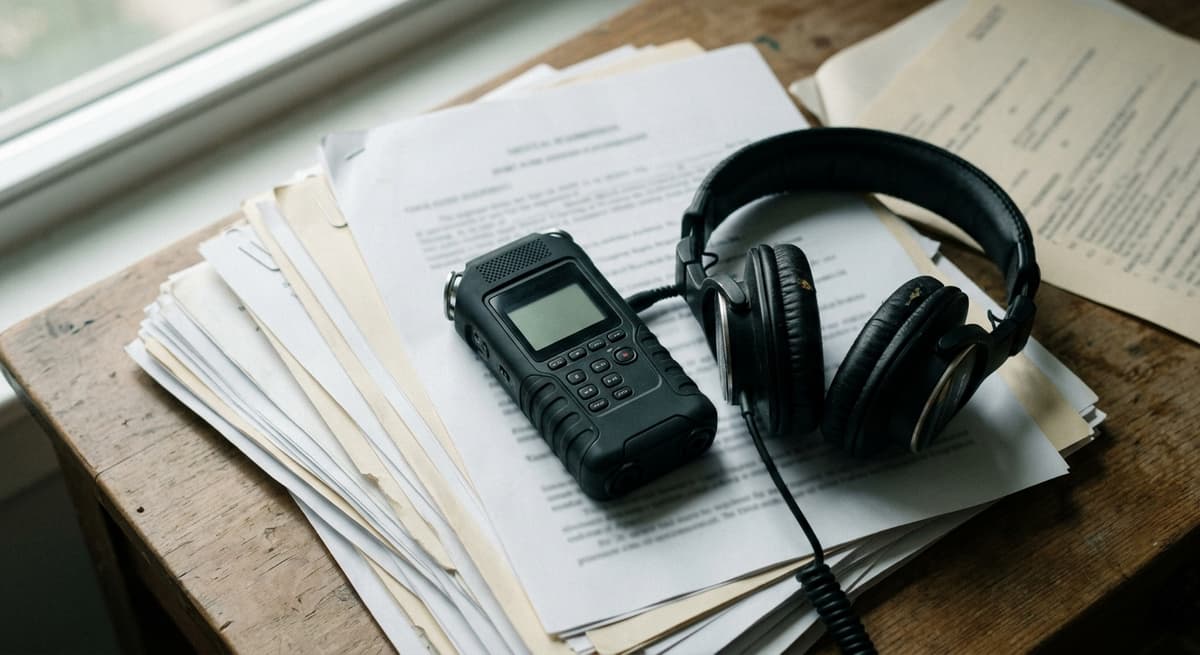
Nebraska Open Meetings Act
Nebraska's Open Meetings Act (Neb. Rev. Stat. section 84-1407 et seq.) requires public bodies including school boards to conduct business in open meetings. Anyone attending can record the open portions of these meetings. School boards may set reasonable rules on how recording is done, but they cannot bar recording of open sessions.
Recording IEP Meetings

Recording an IEP meeting you take part in is not a crime under Nebraska's one-party consent law, but that does not give you a right to record over the school's objection. The IDEA itself has no right to record. Federal guidance (64 FR 12477, Appendix A, Question 21) lets a school district limit or prohibit recording of IEP meetings, but it must allow a recording when one is needed for you to understand the IEP or the IEP process. A recording the school keeps is part of your child's education record.

Nebraska's special education rule (92 NAC 51) does not add a recording right. It requires the district to take whatever action is necessary so the parent understands the IEP proceedings. In a 2026 complaint decision, the Nebraska Department of Education found that a district policy barring IEP recording did not violate federal or state law, because the district agreed to consider requests case by case. The Department added that even when a parent has a need, a district may deny a recording request if it provides another reasonable accommodation that lets the parent participate meaningfully. Ask the district for its policy before the meeting and, if you need a recording, explain why and ask for it as an accommodation.
Student Recording Rights

A student who records a conversation they take part in is not breaking Nebraska's wiretap law. But under the device policy every district must have, using a phone to record at school will usually break school rules and can lead to discipline. Students who need recording as a Section 504 or IEP accommodation can have device use written into their plan, and the state policy must allow it.
Security Cameras in Schools
Nebraska schools can install cameras in hallways, entrances, parking lots, and common areas. No Nebraska law sets where schools may mount cameras, but viewing or recording anyone in a state of undress in a restroom, locker room, or changing area without consent is a crime under Neb. Rev. Stat. 28-311.08, so cameras must not be placed where they could capture those spaces.
FERPA and Recording
FERPA governs school handling of education records. It does not restrict parents or students from making their own recordings.
More Nebraska Recording Laws
Audio Recording | Video Recording | Voyeurism Laws | Workplace Recording | Recording Police | Phone Call Recording | Security Cameras | Recording in Public | Landlord-Tenant Recording | Dashcam Laws | School Recording | Medical Recording
Back to Nebraska Recording Laws
More Nebraska Recording Topics
More Nebraska Laws
- Nebraska AI Meeting Recording Laws
- Nebraska Dashcam Laws
- Nebraska Data Privacy Laws
- Nebraska Deepfake Laws
- Nebraska Employee Monitoring Laws
- Nebraska GPS Tracking Laws
- Nebraska Police Bodycam Laws
- Nebraska Smart Glasses Recording Laws
Frequently Asked Questions
Can I record my child's IEP meeting in Nebraska?
Only if the school allows it, or possibly if you need a recording to understand the meeting. Recording a meeting you attend is not a crime under Nebraska's one-party consent law, but there is no federal right to record IEP meetings. Federal guidance lets a district limit or prohibit recording unless a recording is needed for you to understand the IEP or the process, and Nebraska's special education rule adds no recording right. Nebraska's Department of Education has said a district may offer another reasonable accommodation instead of a recording. Ask the district for its policy, and request a recording as an accommodation if you need one.
Can a student record a teacher in Nebraska?
It is not a crime for a student to record a conversation they are part of. But Neb. Rev. Stat. 79-2,162 requires every public school board to bar student use of phones and other electronic devices at school, except for IEP or 504 needs, emergencies, health care, and uses the school authorizes. Recording a teacher on a phone will usually break that policy and can lead to discipline.
Can I record a school board meeting?
Yes. Nebraska's Open Meetings Act (section 84-1412) protects public access and recording.
Can schools put cameras in classrooms?
Yes. No Nebraska law bars classroom cameras, but viewing or recording anyone in a state of undress in a restroom, locker room, or changing area without consent is a crime under Neb. Rev. Stat. 28-311.08.
Does FERPA prevent recording at school?
No. FERPA governs school handling of records, not parent or student recording.
Updates
Added the criminal-or-tortious-purpose limit to the description of Nebraska's participant-recording exception.
Reworded the opening so Nebraska's one-party rule is described as an exception from the wiretap crime, not a right to record at school.
Clarified that one-party consent means recording a school conversation you join is not a crime rather than a right to record over school rules, and added the Nebraska Department of Education's view that a district may offer another reasonable accommodation instead of an IEP recording.
Corrected the IEP section to say there is no federal right to record and a district may limit recording unless a parent needs it, added Nebraska's 2025 law requiring schools to bar student phone use, reframed the camera rule as the state's intrusion crime, and removed an unsupported statement attributed to the Attorney General.
Independently fact-checked against the cited primary sources; governing law re-checked for recent changes
Independently fact-checked against the cited primary sources; governing law re-checked for recent changes
Governing law re-checked for recent changes
Reviewed and approved by an editor
The Law Behind This Article
This article rests on the statutory provisions below, held in our own legal record and retrieved from the official source. Tap a section to read the operative text.
Nebraska Revised Statutes, Chapter 86: TELECOMMUNICATIONS AND TECHNOLOGY
§ 86-290Unlawful acts; penaltyIn forcecited in 18 of our articles
(1) Except as otherwise specifically provided in sections 86-271 to 86-295, it is unlawful to: (a) Intentionally intercept, endeavor to intercept, or procure any other person to intercept or endeavor to intercept any wire, electronic, or oral communication; (b) Intentionally use, endeavor to use, or procure any other person to use or endeavor to use any electronic, mechanical, or other device to intercept any oral communication when (i) such device is affixed to, or otherwise transmits a signal through, a wire, cable, or other like connection used in wire communication or (ii) such device transmits communications by radio or interferes with the transmission of such communication; (c) Intentionally disclose or endeavor to disclose to any other person the contents of any wire, electronic, or oral communication, knowing or having reason to know that the information was obtained through the interception of a wire, electronic, or oral communication in violation of this subsection; (d) Intentionally use or endeavor to use the contents of any wire, electronic, or oral communication, knowing or having reason to know that the information was obtained through the interception of a wire,…
Official text (excerpt) · last checked 2026-09-24 · Read the full text in our law library · Verify at nebraskalegislature.gov
Cited in 3 court opinions in our collectionLatest citing opinion in our collection: 2022
Opinions citing this section in our collection:
- Hays v. Hays (Nebraska Court of Appeals 2022)“…to her. We address these arguments, in turn. Under Neb. Rev. Stat. § 86-290(2)(c) (Reissue 2016), “it is not unlawf…”
- Ades v. Omni Hotels Management Corp. (District Court, C.D. California 2014, 46 F. Supp. 3d 999)“…f the carrier or provider of such communication services.”' Neb.Rev.Stat. § 86-290(2)(a). Based on this provision, Omni co…”
- Lewton Ex Rel. Lewton v. Divingnzzo (District Court, D. Nebraska 2011, 772 F. Supp. 2d 1046)“…7) to exclude the recordings as illegally intercepted under Neb.Rev.Stat. § 86-290(a) (see Doc. 137-16 at p.…”
Identified automatically from the court opinions citing this section — not a ranking of which case controls.
Also relied on in: Nebraska Smart Glasses Recording Laws 2026, Nebraska Recording Laws (2026): One-Party Consent Rules, Nebraska Audio Recording Laws: One-Party Consent Rules and Penalties (2026)
Nebraska Revised Statutes, Chapter 84: STATE OFFICERS
§ 84-1407Act, how citedIn forcecited in 4 of our articles
Sections 84-1407 to 84-1414 shall be known and may be cited as the Open Meetings Act.
Official text (excerpt) · last checked 2026-07-29 · Read the full text in our law library · Verify at nebraskalegislature.gov
Cited in 12 court opinions in our collectionLatest citing opinion in our collection: 2024
Opinions citing this section in our collection:
- Salem Grain Co. v. City of Falls City (Nebraska Supreme Court 2019, 302 Neb. 548)“…ued thereto, are null and void”; and (3) a permanent 4 Neb. Rev. Stat. §§ 84-1407 to 84-1414 (Reissue 2008 & Supp. 2011).…”
- Kocontes v. McQuaid (Nebraska Supreme Court 2010, 279 Neb. 335)“…130(1) (Reissue 2008). [49] § 83-1,127(4). [50] See, Neb.Rev.Stat. §§ 84-1407 through 84-1414 (Reissue 2008 & Supp. 2…”
- City of Elkhorn v. City of Omaha (Nebraska Supreme Court 2007, 272 Neb. 867)“…ped the gun” by violating the Open Meetings Act (the Act), Neb. Rev. Stat. §§ 84-1407 to 84-1414 (Reissue 1999 & Cum. Supp.…”
Identified automatically from the court opinions citing this section — not a ranking of which case controls.
Also relied on in: Nebraska Laws on Recording Police: Your Rights and Limits (2026), Nebraska Public Recording Laws: Filming in Public Spaces and Government Meetings (2026), Nebraska Video Recording Laws: What You Can and Cannot Film (2026)
§ 84-1412Meetings of public body; rights of public; public body; powers and dutiesIn forcecited in 4 of our articles
(1) Subject to the Open Meetings Act, the public has the right to attend and the right to speak at meetings of public bodies, and all or any part of a meeting of a public body, except for closed sessions called pursuant to section 84-1410, may be videotaped, televised, photographed, broadcast, or recorded by any person in attendance by means of a tape recorder, a camera, video equipment, or any other means of pictorial or sonic reproduction or in writing. Except for closed sessions called pursuant to section 84-1410, a public body shall allow members of the public an opportunity to speak at each meeting. (2) It shall not be a violation of subsection (1) of this section for any public body to make and enforce reasonable rules and regulations regarding the conduct of persons attending, speaking at, videotaping, televising, photographing, broadcasting, or recording its meetings, including meetings held by virtual conferencing.
Official text (excerpt) · last checked 2026-07-29 · Read the full text in our law library · Verify at nebraskalegislature.gov
Cited in 3 court opinions in our collectionLatest citing opinion in our collection: 2017
Opinions citing this section in our collection:
- Stoetzel & Sons, Inc. v. City of Hastings (Nebraska Supreme Court 2003, 265 Neb. 637)“…e submitted bids available at the November 13 meeting. See Neb. Rev. Stat. § 84-1412 (8) (Cum. Supp. 2002). *639…”
- Aldridge v. School Dist. of North Platte (Nebraska Supreme Court 1987, 225 Neb. 580)“…be limited or prohibited by the board at its meetings. See Neb. Rev. Stat. § 84-1412 (2) (Cum. Supp. 1984). Since the issue…”
- Koch v. City of Sargent (Nebraska Court of Appeals 2017)“…s table to Koch’s own table is not a violation of the act. Neb. Rev. Stat. § 84-1412 states that “It shall not be a violatio…”
Identified automatically from the court opinions citing this section — not a ranking of which case controls.
Sources and References
- Neb. Rev. Stat. section 86-290 - Interception of Communications(nebraskalegislature.gov).gov
- Neb. Rev. Stat. section 84-1412 - Open Meetings Act: Right to Record (84-1412)(nebraskalegislature.gov).gov
- FERPA - U.S. Department of Education(studentprivacy.ed.gov).gov
- IDEA - Individuals with Disabilities Education Act(sites.ed.gov).gov
- Nebraska Department of Education(education.ne.gov).gov
- Neb. Rev. Stat. 79-2,162 -- Student electronic communication device policy (LB140, 2025)(nebraskalegislature.gov).gov
- Neb. Rev. Stat. 28-311.08 -- Unlawful intrusion and intimate image recording(nebraskalegislature.gov).gov
- Nebraska Department of Education -- Complaint 25.26.18 investigation report (IEP meeting recording)(education.ne.gov).gov