Nebraska
Nebraska Drone Laws: Trespass, Privacy & Wildlife Rules
Independently fact-checked against primary sources (last audited August 17, 2026). · Reviewed by the RecordingLaw editorial team. · Law checked current as of August 17, 2026. · 6 primary sources cited on this page. How we verify our legal content

Nebraska now has a dedicated drone-operation statute, Neb. Rev. Stat. section 28-1358, operative July 18, 2026, which requires every operator to produce FAA registration to a peace officer on request and to clear restricted airspace in advance. Alongside it, two general criminal laws, on trespass and unlawful intrusion, were amended to name drones explicitly, and a 2025 law restricts which drones state agencies can buy.
This guide is part of our Drone Laws by State series; for the broader rules on recording people and property in Nebraska, see our surveillance camera laws guide.
Jurisdiction scope: This article addresses Nebraska law governing drone operation under Neb. Rev. Stat. section 28-1358, private drone surveillance under sections 28-521 and 28-311.08, government drone procurement under the Secure Drone Purchasing Act, and wildlife-interference rules under sections 37-509 and 37-516. It does not explain the federal rules themselves, such as how to register a drone, how Remote ID broadcast works, or how to obtain a Part 107 certificate, which operate the same way nationwide. Note, though, that Nebraska now attaches its own state-law consequences to two of them: section 28-1358(2) makes failing to produce FAA registration to a Nebraska peace officer a state crime, and section 28-1358(4) makes a Part 107 certificate one condition of the only exemption from the state's restricted-airspace notice rule.
How Federal and Nebraska Law Divide Drone Authority
The FAA regulates where a drone may fly. Under 49 U.S.C. section 40102, it treats any unmanned aircraft as an "aircraft," pulling it into the national airspace system regardless of size. A commercial or government flight generally needs a Remote Pilot Certificate under 14 C.F.R. Part 107, and a hobbyist flight falls under the separate statutory exception at 49 U.S.C. section 44809. Most registrable drones must also broadcast Remote ID.
None of that answers what a Nebraska drone operator may record, or whether Nebraska police need a warrant. Those questions sit in state criminal, trespass, and wildlife law. Nebraska spreads its answers across several statutes rather than one comprehensive drone-privacy act: a dedicated operating statute added in 2026, section 28-1358, now sits alongside drone-specific amendments to the trespass and unlawful intrusion laws and older aircraft provisions in the wildlife code.
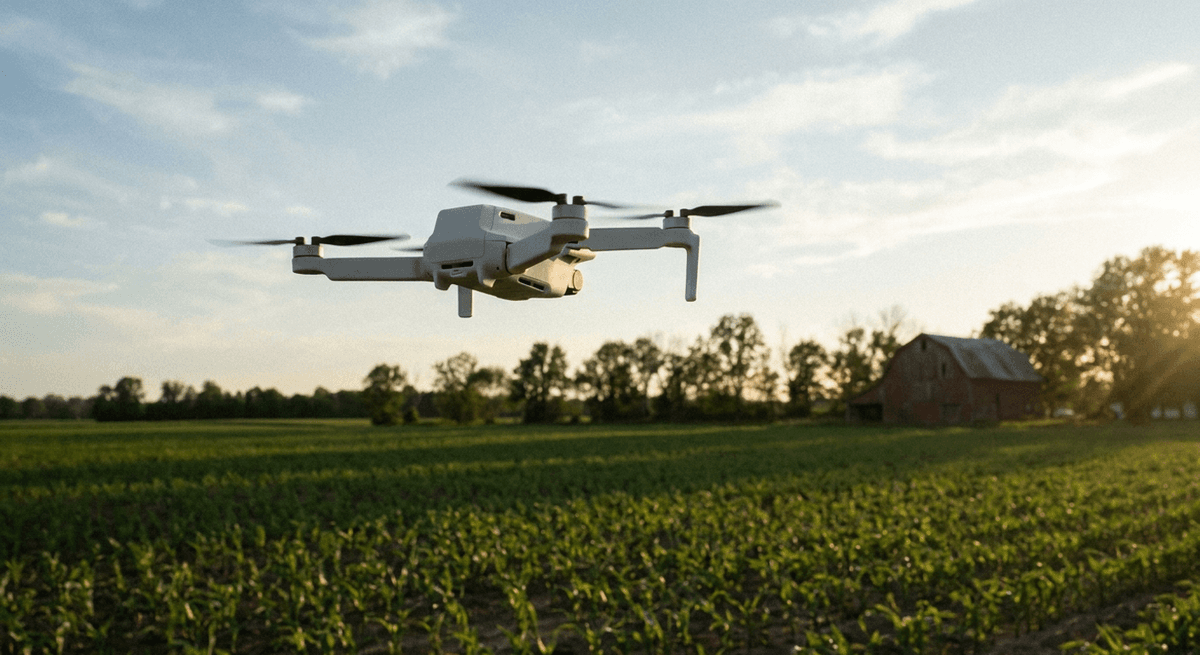
Nebraska's Drone Operation Statute: Registration on Request and Restricted Airspace
Neb. Rev. Stat. section 28-1358, enacted as Laws 2026, LB935, section 23, and operative July 18, 2026, is Nebraska's first statute written specifically to govern how a drone is flown rather than what it records. It reaches anyone, hobbyist or commercial, who launches or operates a drone anywhere in the state, and it imposes two separate duties.
The first is a documentation duty. Under subsection (2), anyone who launches or operates a drone in Nebraska must present, immediately upon request by any peace officer, either a current certificate of aircraft registration issued by the FAA or a registered identification number for the aircraft. Nothing in the section exempts anyone from that duty.
The second is an airspace duty. Subsection (3) bars launching or operating a drone in a restricted area unless the operator has received FAA approval, is complying with all its terms and conditions, and, before flying, has notified all state, county, and municipal law enforcement agencies with jurisdiction in the area. Subsection (1)(a) defines "restricted area" broadly: airspace the FAA has restricted by Notice to Airmen, Temporary Flight Restriction, No Drone Zone, or other means, and separately any airspace classified Class B, C, or D by the FAA as those classifications existed on January 1, 2026. The second branch is the one most likely to catch an ordinary flyer, because it takes in the controlled airspace around Nebraska's busier airports, including the areas over much of Omaha and Lincoln.
Subsection (4) carves out an exemption, and only from the airspace rule in subsection (3). It applies to commercial operation, and only where the operator holds an FAA remote pilot certificate under 14 C.F.R. Part 107, has received FAA approval for the operation, and does not enter a restricted area of the Notice to Airmen type described in subdivision (1)(a)(i). A recreational flight qualifies for no exemption at all, so a hobbyist inside Class B, C, or D airspace still owes the advance notice to local law enforcement even holding FAA authorization.
A violation of section 28-1358 is a Class III misdemeanor.
Can a Private Citizen Legally Fly a Drone Over My Property in Nebraska?
Merely flying a drone across the airspace above someone else's land is not, by itself, an offense against that neighbor in Nebraska. Where the flight happens is a separate question: if the property sits inside Class B, C, or D airspace or another restricted area, section 28-1358(3) puts its own advance-notice duty on the operator, enforceable by the state regardless of what the neighbor thinks. What Nebraska's privacy statutes criminalize is using a drone to watch or record someone without consent in a place they have kept private. Neb. Rev. Stat. section 28-521, Nebraska's second degree criminal trespass statute, covers physical intrusions generally, and subsection (2) extends it to a person who, knowing they are not licensed or privileged to do so, intentionally causes an electronic device, including an unmanned aircraft, to enter into, upon, or above another person's property with intent to observe them without consent in a place of solitude or seclusion. A first violation is a Class III misdemeanor; if the operator then defies a personal order to leave, or to stop, the offense rises to a Class II misdemeanor.
A second, separate statute reaches a narrower but more serious scenario. Neb. Rev. Stat. section 28-311.08, the unlawful intrusion law, makes it unlawful to knowingly intrude on another person, without consent, in a place of solitude or seclusion. Its definition of "intrude" expressly covers viewing a person in a state of undress as it is occurring, or recording them by video, photographic, digital, or other electronic means, and specifically lists "unmanned aircraft" (defined to include a drone) as a covered method. A first offense is a Class I misdemeanor; a second is a Class IV felony. The same chapter separately criminalizes photographing someone's intimate areas without consent and distributing such images, with penalties that escalate to a felony.
Outside those two statutes, a Nebraska property owner bothered by a drone that does not rise to unlawful observation or intrusion is generally left to ordinary trespass, nuisance, or harassment law.
Does Police Need a Warrant to Fly a Drone Over My Property in Nebraska?
No dedicated statute answers this. Nebraska has not enacted a law requiring a warrant before a law enforcement agency uses a drone to gather evidence or conduct surveillance, and it has not adopted an exclusionary rule specific to drone-gathered evidence. That leaves ordinary Fourth Amendment doctrine, as interpreted by federal and Nebraska courts, to govern when a warrantless drone flight crosses into an unreasonable search, along with each department's own internal policy.
The Nebraska drone law that does touch government use, the Secure Drone Purchasing Act (LB 660, signed May 20, 2025, and codified at Neb. Rev. Stat. sections 73-1001 to 73-1005), does not regulate flight conduct. It responds to concerns about foreign-made drones by directing the Department of Transportation's Division of Aeronautics, working with the Nebraska State Patrol, to build and maintain a list of drones cleared under the U.S. Department of Defense's Blue UAS program or otherwise meeting the state's cybersecurity standard. Starting January 1, 2027, state agencies spending state funds may generally only buy drones on that list. It says nothing about when or how a Nebraska agency, once it owns a compliant drone, may fly it over private property.
Nebraska's Ban on Using Drones to Hunt or Harass Wildlife
Nebraska's Game and Parks Commission applies two older aircraft statutes to drones. Neb. Rev. Stat. section 37-509 makes it unlawful to shoot or attempt to kill a bird, fish, or other animal while airborne, to use an aircraft to harass wildlife, or to knowingly help someone do either, without a permit issued under section 37-458; a violation is a Class II misdemeanor. Section 37-516 separately bars using an aircraft, vessel, vehicle, or similar conveyance to molest, chase, drive, or harass a game animal or game bird, or to cause it to leave its habitat.
Game and Parks has publicly confirmed it treats a drone as an aircraft for purposes of both statutes: a hunter may not use a drone to spot, locate, or drive game, and no one may use a drone to flush or harass wildlife, including protected species such as whooping cranes, piping plovers, and bald eagles, the last of which also carries separate federal protection under the Bald and Golden Eagle Protection Act. Drones are also barred from Nebraska state parks, state historical parks, state recreation areas, and wildlife management areas without a special-use permit.
| Question | Nebraska rule |
|---|---|
| Producing drone registration to police | Neb. Rev. Stat. 28-1358(2): FAA registration or registered ID number, immediately on request by any peace officer; Class III misdemeanor |
| Flying in Class B, C, or D or other restricted airspace | Neb. Rev. Stat. 28-1358(3): FAA approval plus advance notice to every state, county, and municipal law enforcement agency with jurisdiction; Class III misdemeanor |
| Drone-based observation without consent | Neb. Rev. Stat. 28-521(2): Class III misdemeanor (Class II if operator defies order to leave) |
| Drone recording of someone undressing | Neb. Rev. Stat. 28-311.08: Class I misdemeanor, Class IV felony on repeat |
| Law enforcement warrant requirement | None; governed by ordinary Fourth Amendment doctrine |
| Government drone procurement | Secure Drone Purchasing Act, sections 73-1001 to 73-1005, effective Jan. 1, 2027 |
| Drone hunting or wildlife harassment | Banned, sections 37-509 and 37-516 |
| Shooting down a drone | Federal felony regardless of location, 18 U.S.C. section 32 |
Watch out: Nebraska's two drone-privacy statutes are narrower than a general privacy law. Section 28-521(2) requires intent to observe someone without consent in a place of solitude or seclusion, and section 28-311.08 is aimed at viewing or recording a person undressing. A drone that merely photographs a fenced backyard or a parked car, without capturing a person in either scenario, may not fit either statute, and a property owner in that situation is generally limited to a civil trespass or nuisance claim rather than a criminal complaint. Section 28-1358 does not fill that gap either: it is an operating rule enforced by the state, not a privacy right the neighbor can invoke.
Can I Shoot Down a Drone Over My Nebraska Property?
No. Federal law makes it a serious crime to damage, destroy, or disable any drone, including one hovering low over your own yard. 18 U.S.C. section 32, the Aircraft Sabotage Act, criminalizes willfully damaging an "aircraft," a category the FAA has applied to drones since 2012. A conviction carries up to 20 years in federal prison, a fine up to $250,000, and the permanent loss of Second Amendment rights that follows any federal felony. The FAA's position is that it controls the national airspace, not the landowner below, so owning the ground does not create a right to fire on what is above it. No Nebraska statute authorizes a landowner to shoot down or disable a drone as a matter of right, regardless of what the drone was doing.
More Nebraska Laws
- Nebraska Data Privacy Laws
- Nebraska GPS Tracking Laws
- Nebraska Police Bodycam Laws
- Nebraska Recording Laws
- Nebraska Smart Glasses Recording Laws
Frequently Asked Questions
Does Nebraska have a drone law?
Yes. Neb. Rev. Stat. section 28-1358, operative July 18, 2026, is a dedicated drone-operation statute covering registration checks and restricted airspace. Nebraska has no single omnibus drone-privacy act, but sections 28-521(2) and 28-311.08 name unmanned aircraft in the trespass and unlawful intrusion laws, criminalizing drone use to observe or record someone without consent in a private setting.
Do I have to show my drone registration to police in Nebraska?
Yes. Neb. Rev. Stat. section 28-1358(2) requires anyone who launches or operates a drone in Nebraska to present a current FAA certificate of aircraft registration, or the drone's registered identification number, immediately upon request by any peace officer. Failing to do so is a Class III misdemeanor.
Can I fly a drone in Class B, C, or D airspace in Nebraska?
Only with FAA approval and advance notice. Neb. Rev. Stat. section 28-1358(3) treats Class B, C, and D airspace, as classified on January 1, 2026, as a restricted area, so the operator must have FAA approval and must first notify every state, county, and municipal law enforcement agency with jurisdiction there. A narrow exemption in subsection (4) covers only commercial operators holding a Part 107 certificate; recreational flyers get no exemption.
Can my neighbor legally fly a drone over my yard in Nebraska?
A brief overflight alone is not an offense against you. But if the operator intends to observe you without consent in a place of solitude or seclusion, that can violate Neb. Rev. Stat. 28-521(2), a Class III misdemeanor. Separately, if your property is inside restricted airspace, section 28-1358(3) requires the operator to have FAA approval and to have notified local law enforcement in advance.
Do Nebraska police need a warrant to fly a drone over my property?
Nebraska has no statute specifically requiring one. Law enforcement drone use is governed by ordinary Fourth Amendment case law and each agency's internal policy, not a state-specific warrant statute.
What is Nebraska's Secure Drone Purchasing Act?
A 2025 law, Neb. Rev. Stat. sections 73-1001 to 73-1005, that limits which drones Nebraska state agencies may buy starting January 1, 2027, for cybersecurity reasons. It does not regulate private drone flight or set any privacy rule.
Is it legal to use a drone for hunting in Nebraska?
No. Neb. Rev. Stat. section 37-509 bars using an aircraft, including a drone, to hunt or harass wildlife without a permit, and section 37-516 separately bars using an aircraft to drive or harass game animals or birds.
Is it legal to shoot down a drone over my property in Nebraska?
No. Federal law, 18 U.S.C. section 32, makes destroying any aircraft, including a drone, a felony regardless of where it is flying. No Nebraska statute creates an exception for a landowner.
Can I sue someone who filmed me with a drone in Nebraska?
Depending on the facts, you may have a civil claim, and conduct that meets Nebraska's criminal trespass or unlawful intrusion statutes can also support a criminal complaint to law enforcement; consult a Nebraska-licensed attorney about your specific situation.
Updates
Added Nebraska’s dedicated drone-operation statute, Neb. Rev. Stat. section 28-1358 (operative July 18, 2026), covering the duty to show FAA registration to a peace officer on request and the advance-notice requirement for flying in restricted or Class B, C, and D airspace.
Independently fact-checked against the cited primary sources; governing law re-checked for recent changes
Governing law re-checked for recent changes
Reviewed and approved by an editor
The Law Behind This Article
This article rests on the statutory provisions below, held in our own legal record and retrieved from the official source. Tap a section to read the operative text.
Nebraska Revised Statutes, Chapter 28: CRIMES AND PUNISHMENTS
§ 28-1358Unmanned aircraft; operation; requirements; penaltiesIn force
(1) For purposes of this section: (a) Restricted area means an area of airspace within the state that: (i) The Federal Aviation Administration has determined to be a restricted area, either by way of a Notice to Airmen, Temporary Flight Restriction, No Drone Zone, or other means; or (ii) Is classified as a Class B, C, or D airspace by the Federal Aviation Administration, as such classifications existed on January 1, 2026; and (b) Unmanned aircraft means an aircraft, including an aircraft commonly known as a drone, which is operated without the possibility of direct human intervention from within or on the aircraft. (2) Anyone who launches, operates, or causes to be launched or operated, any unmanned aircraft system within the state shall present, immediately upon request by any peace officer, a current certificate of aircraft registration issued by the Federal Aviation Administration or a registered identification number for the unmanned aircraft system.
Official text (excerpt) · last checked 2026-07-29 · Read the full text in our law library · Verify at nebraskalegislature.gov
§ 28-311.08Unlawful intrusion; photograph, film, or record image or video of intimate area; distribute or make public; penalty; court; duties; registration under Sex Offender Registration Act; statute of limitationsIn forcecited in 17 of our articles
(1) It shall be unlawful for any person to knowingly intrude upon any other person without his or her consent in a place of solitude or seclusion. Violation of this subsection is a Class I misdemeanor. A second or subsequent violation of this subsection is a Class IV felony. (2) It shall be unlawful for any person to knowingly and intentionally photograph, film, or otherwise record an image or video of the intimate area of any other person without his or her knowledge and consent when his or her intimate area would not be generally visible to the public regardless of whether such other person is located in a public or private place. Violation of this subsection is a Class IV felony. (3) It shall be unlawful for any person to knowingly and intentionally distribute or otherwise make public an image or video of another person recorded in violation of subsection (2) of this section without that person's consent. A first or second violation of this subsection is a Class IIA felony. A third or subsequent violation of this subsection is a Class II felony.
Official text (excerpt) · last checked 2026-08-31 · Read the full text in our law library · Verify at nebraskalegislature.gov
Cited in 4 court opinions in our collectionLatest citing opinion in our collection: 2024
Opinions citing this section in our collection:
- State v. McGovern (Nebraska Supreme Court 2022, 311 Neb. 705)“…62 See Riley v. California, supra note 5. 63 See Neb. Rev. Stat. § 28-311.08 (Reissue 2016 & Cum. Supp. 2020).…”
- State v. Zitterkopf (Nebraska Supreme Court 2024, 317 Neb. 312)“…unlawful distribution of an intimate image in violation of Neb. Rev. Stat. § 28-311.08(3) (Cum. Supp. 2022). Zitterkopf claims…”
- In Re Interest of Dustin S. (Nebraska Supreme Court 2008, 276 Neb. 635)“…le undressing would constitute a Class II misdemeanor under Neb. Rev.Stat. § 28-311.08 (Cum.Supp.2006). Therefore, Dustin is a…”
Identified automatically from the court opinions citing this section — not a ranking of which case controls.
Also relied on in: Nebraska Recording Laws (2026): One-Party Consent Rules, Nebraska Medical Recording Laws: Patient Rights, HIPAA, and Consent (2026), Nebraska Public Recording Laws: Filming in Public Spaces and Government Meetings (2026)
§ 28-521Criminal trespass, second degree; penaltyIn forcecited in 2 of our articles
(1) A person commits second degree criminal trespass if, knowing that he or she is not licensed or privileged to do so, he or she enters or remains in any place as to which notice against trespass is given by: (a) Actual communication to the actor; or (b) Posting in a manner prescribed by law or reasonably likely to come to the attention of intruders; or (c) Fencing or other enclosure manifestly designed to exclude intruders except as otherwise provided in section 28-520. (2) A person commits second degree criminal trespass if, knowing that he or she is not licensed or privileged to do so, he or she intentionally causes an electronic device, such as an unmanned aircraft, to enter into, upon, or above the property of another, including such property owned by such person and leased or rented to another, with the intent to observe another person without his or her consent in a place of solitude or seclusion. (3) For purposes of this section, unmanned aircraft means an aircraft, including an aircraft commonly known as a drone, which is operated without the possibility of direct human intervention from within or on the aircraft.
Official text (excerpt) · last checked 2026-07-29 · Read the full text in our law library · Verify at nebraskalegislature.gov
Cited in 8 court opinions in our collectionLatest citing opinion in our collection: 2024
Opinions citing this section in our collection:
- State v. Campbell (Nebraska Supreme Court 2001, 260 Neb. 1021)“…28-931 (Cum. Supp. 2000); second degree trespass under Neb. Rev. Stat. § 28-521 (Reissue 1995); possession of marijuan…”
- State v. Havlat (Nebraska Supreme Court 1986, 222 Neb. 554)“…ther enclosure manifestly designed to exclude intruders. Neb. Rev. Stat. § 28-521 (1) (Reissue 1979). Conviction for vi…”
- State v. W.D. (Nebraska Supreme Court 1989, 232 Neb. 581)“…crime of second degree criminal trespass, in violation of Neb. Rev. Stat. § 28-521 (l)(c) (Reissue 1985), and, as a resul…”
Identified automatically from the court opinions citing this section — not a ranking of which case controls.
Nebraska Revised Statutes, Chapter 37: GAME AND PARKS
§ 37-509Hunting from aircraft; unlawful; exception; violation; penaltyIn force
(1) It shall be unlawful for any person (a) while airborne in any aircraft to shoot or attempt to shoot for the purpose of killing any bird, fish, or other animal, (b) to use any aircraft to harass any bird, fish, or other animal, (c) to knowingly participate in using any aircraft for such purposes unless he or she is the holder of a currently valid permit issued under section 37-458 and engages only in activities permitted by such permit, or (d) to shoot or attempt to shoot any coyote from an aircraft under the authority of a permit issued under section 37-458 unless permission has first been obtained from the landowners or tenants over whose land the aircraft is to be used to shoot or attempt to shoot coyotes. (2) Any person violating this section shall be guilty of a Class II misdemeanor.
Official text (excerpt) · last checked 2026-07-29 · Read the full text in our law library · Verify at nebraskalegislature.gov
§ 37-516Harassment of game animals and game birds; use of aircraft, vessel, or vehicle; prohibitedIn force
It shall be unlawful for any person to use any aircraft, vessel, vehicle, snowmobile, or conveyance of any type to molest, chase, drive, or harass any game animal or game bird or to cause any such animal or bird to depart from its habitat areas, fields, waters, woodlands, or grasslands.
Official text (excerpt) · last checked 2026-07-29 · Read the full text in our law library · Verify at nebraskalegislature.gov
Nebraska Revised Statutes, Chapter 73: PUBLIC LETTINGS AND CONTRACTS
§ 73-1002Legislative findings and intentIn force
The Legislature finds that it is in the interest of Nebraska to ensure its security against espionage, surveillance, and theft of intellectual property by the People's Republic of China and other hostile actors. It is the intent of the Legislature to limit the purchase of unmanned aircraft systems known to present a security threat to the state, its businesses, and its residents and to encourage the purchase of unmanned aircraft systems that are deemed secure.
Official text (excerpt) · last checked 2026-07-29 · Read the full text in our law library · Verify at nebraskalegislature.gov
United States Code Title 18
§ 32Destruction of aircraft or aircraft facilitiesIn forcecited in 51 of our articles
Whoever willfully— sets fire to, damages, destroys, disables, or wrecks any aircraft in the special aircraft jurisdiction of the United States or any civil aircraft used, operated, or employed in interstate, overseas, or foreign air commerce; places or causes to be placed a destructive device or substance in, upon, or in proximity to, or otherwise makes or causes to be made unworkable or unusable or hazardous to work or use, any such aircraft, or any part or other materials used or intended to be used in connection with the operation of such aircraft, if such placing or causing to be placed or such making or causing to be made is likely to endanger the safety of any such aircraft; sets fire to, damages, destroys, or disables any air navigation facility, or interferes by force or violence with the operation of such facility, if such fire, damaging, destroying, disabling, or interfering is likely to endanger the safety of any such aircraft in flight; with the intent to damage, destroy, or disable any such aircraft, sets fire to, damages, destroys, or disables or places a destructive device or substance in, upon, or in proximity to, any appliance or structure, ramp, landing area,…
Official text (excerpt) · last checked 2026-07-28 · Read the full text in our law library · Verify at uscode.house.gov
Cited in 168 court opinions in our collectionLatest citing opinion in our collection: 2026
In the courts (editorial summary, independently checked):United States v. Yousef (2003) applied 18 U.S.C. 32 to an overseas airline bombing plot, holding Section 32(a) reaches conduct abroad because US-flag aircraft in flight are within the special aircraft jurisdiction, and that a defendant brought here involuntarily is still found in the United States under Section 32(b).
Opinions citing this section in our collection:
- Perez v. United States (Supreme Court of the United States 1971, 402 U.S. 146)“…commerce, as, for example, the destruction of an aircraft ( 18 U. S. C. § 32 ), or persons or things in commerce, as…”
- Stanford v. Kentucky (Supreme Court of the United States 1989, 492 U.S. 361)“…r by persons subject to Uniform Code of Military Justice); 18 U. S. C. §§ 32 , 33, and 34 (1982 ed. and Supp. V) (de…”
- United States v. Yousef (Court of Appeals for the Second Circuit 2003, 327 F.3d 56)✓Yousef bombed a Philippine airliner and plotted to bomb twelve US flag airliners on Asian routes; the court held Section 32(a) reaches attacks on US flag aircraft worldwide, and that Yousef, brought here involuntarily, was found in the United States under Section 32(b).
Identified automatically from the court opinions citing this section — not a ranking of which case controls.
Also relied on in: Indiana Drone Laws (2026): Police Warrants, Voyeurism, Hunting, Iowa Drone Laws: Homestead, Farmstead & Warrant Rules, Kansas Drone Laws: Stalking Act & Privacy Rules Explained
Search our full record of US law — 2.1 million sections, every state + federal →
Sources and References
- Neb. Rev. Stat. section 28-521, criminal trespass, second degree(nebraskalegislature.gov).gov
- Neb. Rev. Stat. section 28-311.08, unlawful intrusion(nebraskalegislature.gov).gov
- Neb. Rev. Stat. sections 73-1001 to 73-1005, Secure Drone Purchasing Act (LB 660, 2025)(nebraskalegislature.gov).gov
- Neb. Rev. Stat. section 37-509, hunting from aircraft prohibited(nebraskalegislature.gov).gov
- Neb. Rev. Stat. section 37-516, harassment of game animals and game birds by aircraft, vessel, or vehicle(nebraskalegislature.gov).gov
- Nebraska Game and Parks Commission, Drone operators advised to know and abide by wildlife rules(outdoornebraska.gov).gov
- 18 U.S.C. section 32, destruction of aircraft or aircraft facilities(law.cornell.edu)
- Neb. Rev. Stat. section 28-1358, unmanned aircraft; operation; requirements; penalties (Laws 2026, LB935, section 23, operative July 18, 2026)(nebraskalegislature.gov)