
Nebraska
Nebraska Police Body Camera Laws: Retention & Records
Independently fact-checked against primary sources (last audited August 20, 2026). · Reviewed by the RecordingLaw editorial team. · Law checked current as of August 20, 2026. · 4 primary sources cited on this page. How we verify our legal content
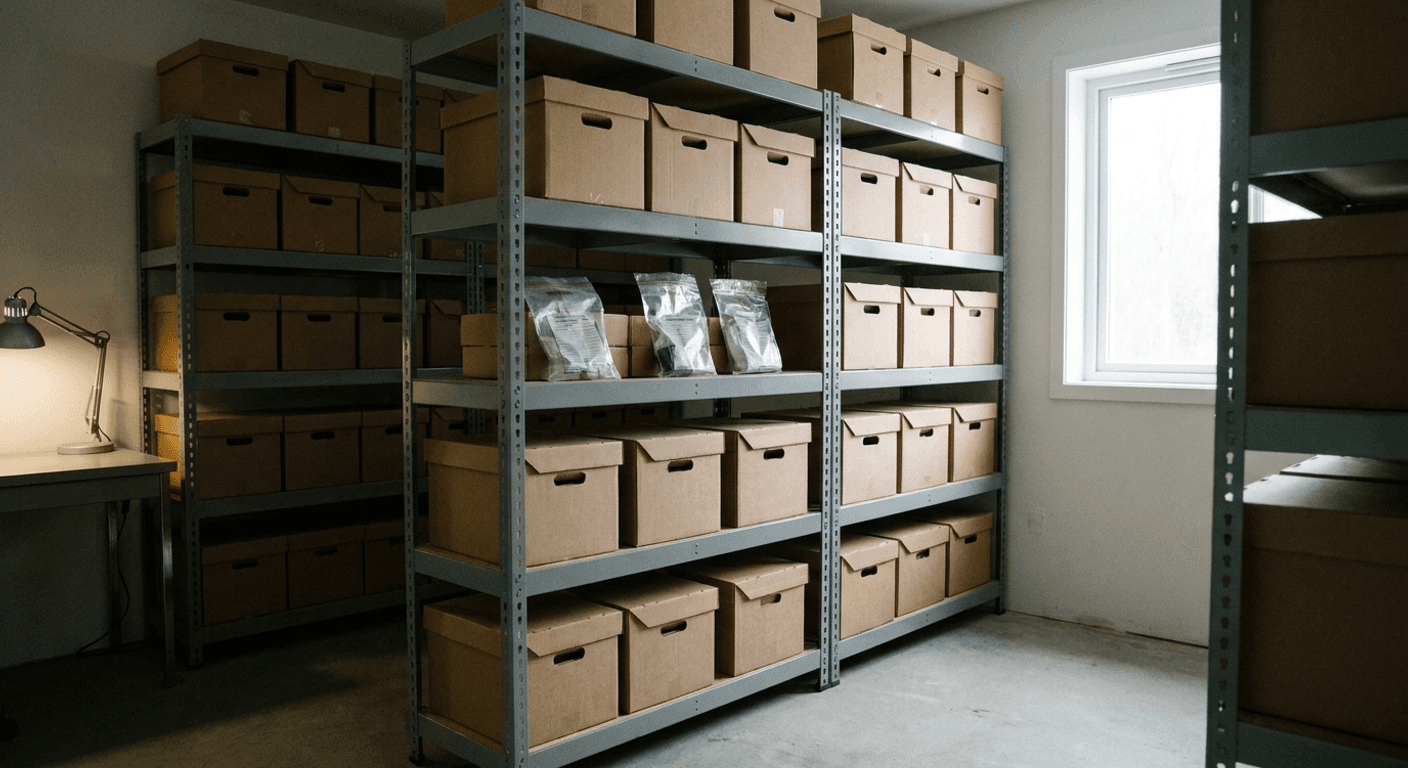
Nebraska has no statewide mandate requiring police to wear body cameras, but Neb. Rev. Stat. §§ 81-1452 to 81-1454 sets minimum policy and retention standards for any agency that chooses to use them. Footage access runs through the state's general public records law, not a bodycam-specific rule.
This guide is part of our Police Bodycam Laws by State series.
Jurisdiction scope: This article addresses Nebraska law governing police body-worn cameras: the policy and retention requirements of Neb. Rev. Stat. §§ 81-1452 to 81-1454, and public access to footage under the general Nebraska Public Records Act, Neb. Rev. Stat. §§ 84-712 to 84-712.09, as verified in July 2026. It does not address a civilian's right to record law enforcement, a separate and well-established question addressed elsewhere on this site.
Does Nebraska require police to wear body cameras?
No. Nebraska has never enacted a statewide mandate requiring the Nebraska State Patrol, a county sheriff's office, or any city police department to equip officers with body cameras. The state's only body-worn camera statute, Neb. Rev. Stat. §§ 81-1452 to 81-1454, was enacted in 2016 as LB1000, and it regulates agencies that choose to use cameras rather than compelling any agency to adopt them. Section 81-1452(4) defines a "peace officer" functionally, as any officer or employee of a law enforcement agency authorized by law to make arrests, and § 81-1452(3) defines "law enforcement agency" to include a police department, an office of a town marshal, an office of a county sheriff, the Nebraska State Patrol, and any department to which a deputy state sheriff is assigned. The same section defines a "body-worn camera" as a device worn by a peace officer in uniform capable of recording both audio and video of an interaction with a member of the public, and excludes any device used by a plain clothes officer. Because the statute is conditional, whether officers in a given Nebraska community wear cameras at all still depends entirely on that department's own budget and policy choices, not on state law. Omaha and Lincoln, the state's two largest departments, both run bodycam programs, but coverage and consistency across Nebraska's roughly 200 smaller municipal and county agencies varies widely.

What must a Nebraska bodycam policy include, and how long is footage kept?
Once an agency decides to use body-worn cameras, Nebraska law stops treating the decision as optional. Neb. Rev. Stat. § 81-1453 requires that agency to adopt a written body-worn camera policy consistent with the minimum standards in the model policy developed by the Nebraska Commission on Law Enforcement and Criminal Justice, covering training for officers and for staff who handle the recorded data. Section 81-1454 sets the retention floor: recordings must be kept for a minimum of 90 days from the date of recording. That baseline extends automatically in three situations, and the agency cannot destroy the recording early in any of them.
| Trigger | Retention rule under § 81-1454 |
|---|---|
| Standard recording, no flag | Minimum 90 days from the date of recording |
| Notice of a criminal or civil court proceeding where the recording may have evidentiary value | Retained until final judgment |
| Notice of an employee disciplinary proceeding where the recording may have evidentiary value | Retained until final determination |
| Recording is part of an open criminal investigation that has not led to arrest or prosecution | Retained until the investigation is officially closed or suspended |
The policy must also include a destruction procedure to be followed once the applicable retention period expires, according to Nebraska's official statutes portal.
Is bodycam footage a public record in Nebraska?
Sometimes, and it depends on the same case-by-case analysis Nebraska applies to any other government record. Neb. Rev. Stat. § 84-712 gives residents and other interested persons a broad, free right to examine and copy Nebraska public records, and § 84-712.03 lets a custodian's denial be challenged. But § 84-712.05 lists categories of records an agency may withhold, and subsection (5) is an investigatory-records exemption covering material compiled as part of a law enforcement examination or investigation. In practice, that means bodycam footage tied to an active or recently closed investigation is frequently withheld, while footage with no ongoing investigative interest is more likely to be released, though nothing in Nebraska law sets a deadline forcing that outcome the way a dedicated bodycam statute does in other states.
How has this played out in practice?
Lincoln and Omaha illustrate both sides of the gap. In one recent case, the Lincoln Police Department declined to release bodycam footage from a crash investigation involving a Lancaster County Sheriff's deputy, citing the investigatory exemption, even after the department's chief said internally that the review had wrapped up within about two weeks, according to Omaha World-Herald reporting. Because Nebraska's public records law does not define when an investigation becomes "closed" for exemption purposes, an agency's own timeline for saying so can outlast the actual investigative work. Omaha police, by contrast, released body camera still images, though not the full video, within days of officers shooting a woman accused of kidnapping and injuring a child in 2026. Both examples show the same underlying reality: without a bodycam-specific access statute, Nebraska agencies retain wide discretion over whether, when, and in what format footage becomes public.
Does an officer face discipline for not turning on the camera?
Nebraska's statute does not set a specific penalty for an officer who fails to activate a body camera or who tampers with footage, unlike states such as Colorado or Illinois that write activation failures directly into their bodycam laws. Any consequence for non-activation in Nebraska comes from the individual agency's own policy adopted under § 81-1453, not from a statewide rule. Advocacy groups, including the ACLU of Nebraska, have pushed for clearer, more uniform statewide standards on activation and accountability, arguing that leaving those details entirely to each department produces inconsistent practices across the state.
Is it legal to record the police in Nebraska?
That is a separate question from what this page addresses. Nebraska is a one-party consent state for recording conversations, and a bystander generally has a well-established right to record an on-duty officer performing public duties in a public place. For a full explanation of that right, and how it differs from the bodycam rules discussed here, see Is It Illegal to Record Someone? and our Nebraska recording laws guide.
Disclaimer
This article provides general legal information about Nebraska law governing police body cameras and public access to footage, as verified in July 2026. It does not constitute legal advice and does not create an attorney-client relationship. Readers should consult a lawyer licensed in Nebraska for advice about a specific records request or incident.
Related articles
- Police Bodycam Laws by State: the complete hub
- Is It Illegal to Record Someone in Public?
- Nebraska Recording Laws: One-Party Consent Rules
Last updated: 2026-07-08. Statutes cited reflect their in-force version as of 2026-07-08.
More Nebraska Laws
Frequently Asked Questions
Does Nebraska require police departments to use body cameras?
No. Nebraska has no statewide mandate. Neb. Rev. Stat. §§ 81-1452 to 81-1454 only regulates agencies that choose to use body-worn cameras; whether to adopt them at all is a local decision.
How long does a Nebraska police department have to keep bodycam footage?
At least 90 days from the date of recording under Neb. Rev. Stat. § 81-1454. Retention extends until final judgment, final discipline determination, or case closure if the footage is tied to a court proceeding, a disciplinary matter, or an open investigation.
Can I get a copy of Nebraska police bodycam footage?
You can request it under the Nebraska Public Records Act, Neb. Rev. Stat. § 84-712, but the agency may withhold it using the investigatory-records exemption in § 84-712.05(5) while a related investigation is open, and there is no bodycam-specific deadline forcing release.
What is Nebraska's investigatory records exemption?
Neb. Rev. Stat. § 84-712.05(5) allows a public body to withhold records compiled as part of an investigation or examination it is charged with conducting, including law enforcement investigations.
Which Nebraska statute governs body-worn cameras?
Neb. Rev. Stat. §§ 81-1452 to 81-1454, enacted as LB1000 in 2016. It defines key terms, requires a written policy for agencies that use cameras, and sets the 90-day minimum retention period.
Do Nebraska police officers need my consent to record me on a body camera?
No. Consent rules under Nebraska's one-party consent recording statute are not implicated by an on-duty, uniformed officer's open use of a body camera.
What happens if a Nebraska agency refuses to release bodycam footage?
A requester can challenge the denial under Neb. Rev. Stat. § 84-712.03, which lets a court review whether the agency's claimed exemption, such as the investigatory-records exemption, actually justifies withholding the record.
Updates
Corrected the description of Neb. Rev. Stat. § 81-1452: the statute defines "peace officer" functionally as any officer or employee of a law enforcement agency authorized by law to make arrests, and it is § 81-1452(3), not the peace-officer definition, that lists police departments, town marshals, county sheriffs, and the Nebraska State Patrol.
Independently fact-checked against the cited primary sources; governing law re-checked for recent changes
Corrected the public-records challenge process: the burden-of-proof standard was wrongly attributed to Neb. Rev. Stat. section 84-712.05 (which only lists withholdable-record categories); the page now points to the actual challenge statute, section 84-712.03, without asserting unverified burden-of-proof specifics.
Governing law re-checked for recent changes
Reviewed and approved by an editor
The Law Behind This Article
This article rests on the statutory provisions below, held in our own legal record and retrieved from the official source. Tap a section to read the operative text.
Nebraska Revised Statutes, Chapter 81: STATE ADMINISTRATIVE DEPARTMENTS
§ 81-1454Body-worn camera policy; contentsIn forcecited in 3 of our articles
A body-worn camera policy required by section 81-1453 shall include provisions which govern the use of body-worn cameras by peace officers and the retention and disposition of recordings created with such cameras by law enforcement agencies. Such body-worn camera policy shall include, but not be limited to: (1) A requirement that training be provided to any peace officer who will use a body-worn camera and to any other employee who will come into contact with video or audio data recorded by a body-worn camera; (2) A requirement that recordings created by body-worn cameras shall be retained for a minimum period of ninety days from the date of recording.
Official text (excerpt) · last checked 2026-08-31 · Read the full text in our law library · Verify at nebraskalegislature.gov
Also relied on in: Nebraska Recording Laws (2026): One-Party Consent Rules, Nebraska Police Reports: How to Get a Crash Report, Incident Report, or Bodycam Video
§ 81-1453Body-worn cameras; model policy; development and distribution; contents; law enforcement agency; dutiesIn forcecited in 2 of our articles
(1) On or before December 1, 2016, the commission shall develop and distribute a model body-worn camera policy that includes the procedures and provisions required by section 81-1454. Any law enforcement agency required to adopt a policy under this section that does not develop and adopt its own policy shall adopt the model body-worn camera policy developed by the commission. (2)(a) Any law enforcement agency which uses body-worn cameras as of July 21, 2016, shall, on or before January 1, 2017, adopt a written body-worn camera policy. Such policy shall include procedures and provisions in conformance with the minimum standards set forth in the model body-worn camera policy developed by the commission and may include any other procedures and provisions the law enforcement agency deems appropriate. (b) Beginning January 1, 2017, any law enforcement agency which uses body-worn cameras shall, prior to commencing such use, adopt a written body-worn camera policy.
Official text (excerpt) · last checked 2026-07-29 · Read the full text in our law library · Verify at nebraskalegislature.gov
§ 81-1452Body-worn cameras; terms, definedIn force
For purposes of sections 81-1452 to 81-1454, unless the context otherwise requires: (1) Body-worn camera means a device worn by a peace officer in uniform which has the capability to record both audio and video of an interaction between a peace officer and a member of the public but does not include any device used by a plain clothes officer; (2) Commission means the Nebraska Commission on Law Enforcement and Criminal Justice; (3) Law enforcement agency means an agency or department of this state or of any political subdivision of this state which is responsible for the prevention and detection of crime, the enforcement of the penal, traffic, or highway laws of this state or any political subdivision of this state, and the enforcement of arrest warrants. Law enforcement agency includes a police department, an office of a town marshal, an office of a county sheriff, the Nebraska State Patrol, and any department to which a deputy state sheriff is assigned as provided in section 84-106; and (4) Peace officer means any officer or employee of a law enforcement agency authorized by law to make arrests.
Official text (excerpt) · last checked 2026-07-29 · Read the full text in our law library · Verify at nebraskalegislature.gov
Nebraska Revised Statutes, Chapter 84: STATE OFFICERS
§ 84-712.05Records which may be withheld from the public; enumeratedIn forcecited in 5 of our articles
The following records, unless publicly disclosed in an open court, open administrative proceeding, or open meeting or disclosed by a public entity pursuant to its duties, may be withheld from the public by the lawful custodian of the records: (1) Personal information in records regarding a student, prospective student, or former student of any educational institution or exempt school that has effectuated an election not to meet state approval or accreditation requirements pursuant to section 79-1601 when such records are maintained by and in the possession of a public entity, other than routine directory information specified and made public consistent with 20 U.S.C.
Official text (excerpt) · last checked 2026-09-03 · Read the full text in our law library · Verify at nebraskalegislature.gov
Cited in 24 court opinions in our collectionLatest citing opinion in our collection: 2025
In the courts (editorial summary, independently checked):Nebraska courts treat R.S. 84-712.05 as a permissive list the custodian must justify. Jacob v. Nebraska Bd. of Parole (2022) held records of a first-step parole interview fall in the subsection (5) investigatory exception. State ex rel. Unger v. State (2016) held the section reaches only material that is a public record at all.
Opinions citing this section in our collection:
- Jacob v. Nebraska Bd. of Parole (Nebraska Supreme Court 2022, 313 Neb. 109)✓An inmate sought the record of the interview from his first-step parole review. The court held that record falls within the investigation or examination exception in section 84-712.05(5) and may be withheld, and that his individual parole file is not a public record.
- Opinion No. (2000) (Nebraska Attorney General Reports 2000)✓Asked about teacher certification files, the Nebraska attorney general concluded records the Department of Education develops while examining applicants fit section 84-712.05(5), so the agency may withhold them but is not required to and may keep disclosing them.
- Opinion No. (1996) (Nebraska Attorney General Reports 1996)“…xception to the general rule of disclosure, as set forth in Neb. Rev. Stat. § 84-712.05 (Supp. 1995), is satisfied. That statu…”
Identified automatically from the court opinions citing this section — not a ranking of which case controls.
Also relied on in: Nebraska Public Records Law: How to Request Government Records (2026), Are Autopsy Reports Public in Nebraska? (2026)
§ 84-712Public records; free examination; memorandum and abstracts; copies; feesIn forcecited in 8 of our articles
(1) Except as otherwise expressly provided by statute, all residents of this state and all other persons interested in the examination of the public records as defined in section 84-712.01 are hereby fully empowered and authorized to (a) examine such records, and make memoranda, copies using their own copying or photocopying equipment in accordance with subsection (2) of this section, and abstracts therefrom, all free of charge, during the hours the respective offices may be kept open for the ordinary transaction of business and (b) except if federal copyright law otherwise provides, obtain copies of public records in accordance with subsection (3) of this section during the hours the respective offices may be kept open for the ordinary transaction of business. (2) Copies made by residents or other persons using their own copying or photocopying equipment pursuant to subdivision (1)(a) of this section shall be made on the premises of the custodian of the public record or at a location mutually agreed to by the requester and the custodian. (3)(a) Copies may be obtained pursuant to subdivision (1)(b) of this section only if the custodian has copying equipment reasonably available.
Official text (excerpt) · last checked 2026-09-02 · Read the full text in our law library · Verify at nebraskalegislature.gov
Cited in 43 court opinions in our collectionLatest citing opinion in our collection: 2024
In the courts (editorial summary, independently checked):State ex rel. BH Media Group v. Frakes (2020) held the execution team confidentiality statute is an "other statute" under section 84-712(1) but only a narrow exemption, with the burden on the agency. Nebraska Journalism Trust v. Dept. of Envt. & Energy (2024) read section 84-712(3) to allow fees for nonattorney review past four hours.
Opinions citing this section in our collection:
- State ex rel. BH Media Group v. Frakes (Nebraska Supreme Court 2020, 943 N.W.2d 231)✓News organizations sought corrections records on lethal injection drug purchases. The court held the execution team confidentiality statute is an exemption, not a complete exception to section 84-712, and that the director failed to prove it justified withholding the records.
- Nebraska Journalism Trust v. Dept. of Envt. & Energy (Nebraska Supreme Court 2024, 316 Neb. 174)✓A nonprofit newsroom challenged a $44,000 fee estimate for keyword email searches. The court held section 84-712 lets an agency charge for nonattorney staff time beyond four cumulative hours spent reviewing records for a statutory basis to withhold, and vacated the writ.
- Jacob v. Nebraska Bd. of Parole (Nebraska Supreme Court 2022, 313 Neb. 109)✓An inmate sought the record of his first-step parole review. The court held the interview record could be withheld as an examination record, and that the statute making parole files confidential is an "other statute" under section 84-712(1), so those files are not public records.
Identified automatically from the court opinions citing this section — not a ranking of which case controls.
Also relied on in: Nebraska Laws on Recording Police: Your Rights and Limits (2026), Public Records Laws by State: FOIA Guide for All 50 States (2026), Nebraska Court Records: How to Search JUSTICE, the $17 Search Fee, and How Sealing Works
§ 84-712.03Public records; denial of rights; remediesIn forcecited in 2 of our articles
(1) Any person denied any rights granted by sections 84-712 to 84-712.03 may elect to: (a) File for speedy relief by a writ of mandamus in the district court within whose jurisdiction the state, county, or political subdivision officer who has custody of the public record can be served; or (b) Petition the Attorney General to review the matter to determine whether a record may be withheld from public inspection or whether the public body that is custodian of such record has otherwise failed to comply with such sections, including whether the fees estimated or charged by the custodian are actual added costs or special service charges as provided under section 84-712. This determination shall be made within fifteen calendar days after the submission of the petition. If the Attorney General determines that the record may not be withheld or that the public body is otherwise not in compliance, the public body shall be ordered to disclose the record immediately or otherwise comply.
Official text (excerpt) · last checked 2026-07-29 · Read the full text in our law library · Verify at nebraskalegislature.gov
Cited in 13 court opinions in our collectionLatest citing opinion in our collection: 2025
Opinions citing this section in our collection:
- State ex rel. Unger v. State (Nebraska Supreme Court 2016, 293 Neb. 549)“…will not disturb those findings unless they 4 See Neb. Rev. Stat. § 84-712.03(1)(a) (Reissue 2014). 5 § 29-22…”
- State Ex Rel. Adams County Historical Society v. Kinyoun (Nebraska Supreme Court 2009, 277 Neb. 749)“…ska Attorney General's office review the matter pursuant to Neb.Rev.Stat. § 84-712.03 (Reissue 2008) and recommend that Kinyo…”
- Steckelberg v. Nebraska State Patrol (Nebraska Supreme Court 2016, 294 Neb. 842)“…its review of the public records request was de novo under Neb. Rev. Stat. § 84-712.03 (Reissue 2014). Steckelberg appealed…”
Identified automatically from the court opinions citing this section — not a ranking of which case controls.
Search our full record of US law — 2.1 million sections, every state + federal →
Sources and References
- Neb. Rev. Stat. §§ 81-1452 to 81-1454, body-worn camera definitions, required agency policy content, and minimum 90-day retention period(nebraskalegislature.gov).gov
- Neb. Rev. Stat. § 81-1453, agencies that use body-worn cameras must adopt a written policy meeting Nebraska Commission on Law Enforcement and Criminal Justice standards(nebraskalegislature.gov).gov
- Neb. Rev. Stat. § 84-712, general right to examine and copy Nebraska public records(nebraskalegislature.gov).gov
- Neb. Rev. Stat. § 84-712.05, records that may be withheld from the public, including the investigatory-records exemption(nebraskalegislature.gov).gov
- Omaha World-Herald, Lincoln police refuse to release bodycam footage from crash involving sheriff's deputy(omaha.com)
- ACLU of Nebraska, Making Body Worn Cameras a Win-Win(aclunebraska.org)
- Neb. Rev. Stat. § 81-1452, definitions: "body-worn camera" (subsection 1), "law enforcement agency" (subsection 3), and "peace officer" (subsection 4)(nebraskalegislature.gov)