
Maine
Maine Video Recording Laws: Public Filming, Private Property, and Consent (2026)
Independently fact-checked against primary sources (last audited August 15, 2026). · Reviewed by the RecordingLaw editorial team. · Law checked current as of August 15, 2026. · 4 primary sources cited on this page. How we verify our legal content
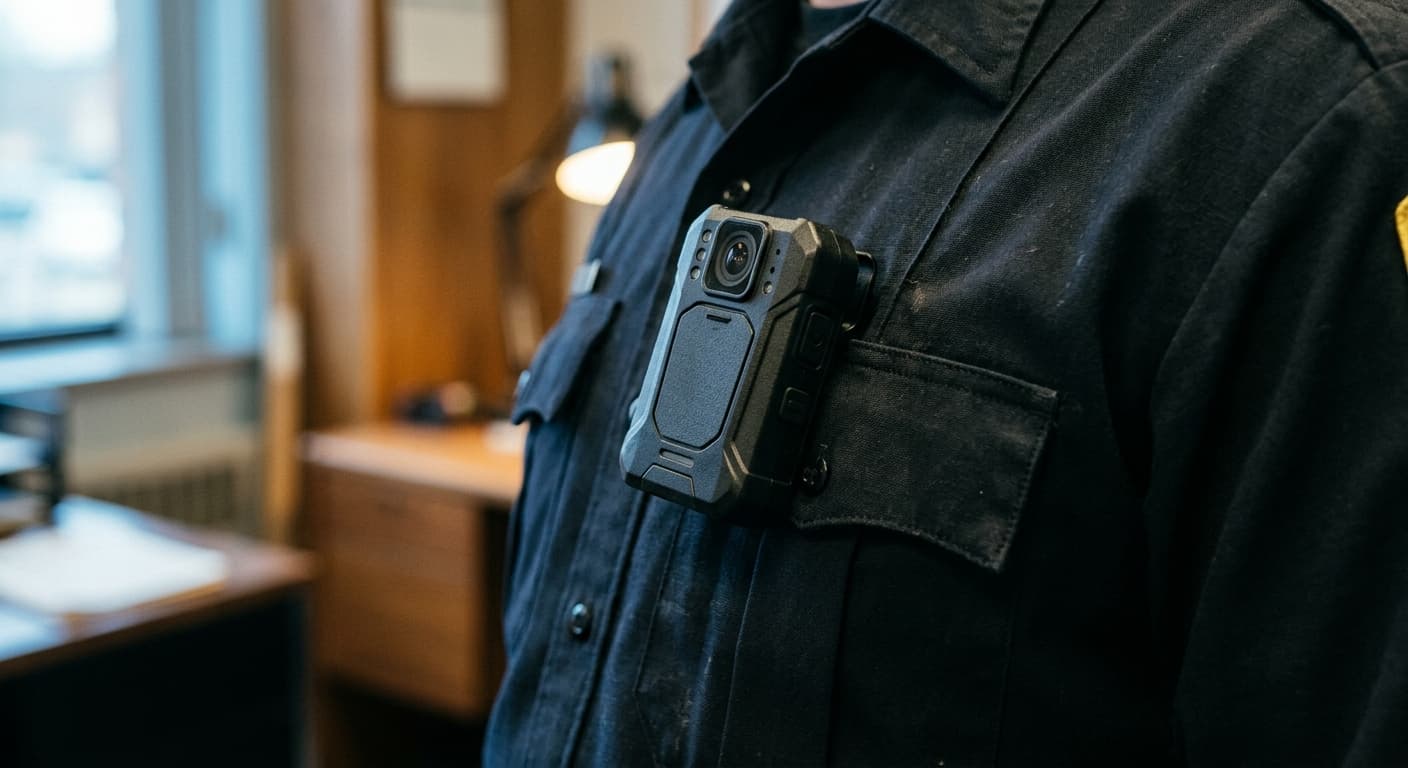
In Maine, video-only recording in public spaces is legal and requires no consent. Adding audio triggers one-party consent rules under 15 M.R.S.A. section 710. Recording in private spaces where people have a reasonable expectation of privacy, such as bathrooms or bedrooms, is prohibited under Maine's voyeurism statute.
Video recording in Maine is governed by a combination of constitutional protections, the state's wiretapping statute, and voyeurism law. Understanding how these laws interact helps you know when video recording is legal and when it crosses into prohibited territory.
Video Recording in Public Spaces
First Amendment Protection
The First Amendment protects the right to video record in public places. The First Circuit Court of Appeals, which covers Maine, confirmed in Glik v. Cunniffe (2011) that recording in public is a clearly established constitutional right.
You can legally video record:
- On public streets, sidewalks, and parks
- At public events, parades, and demonstrations
- Government buildings and activities visible from public spaces
- Police officers performing their duties in public
- Any person or activity visible from a public vantage point
Video vs. Audio Recording
An important legal distinction exists:
- Video-only recording in public spaces requires no consent from anyone
- Audio recording is governed by one-party consent under 15 M.R.S.A. section 709 and section 710
If your video captures audio of conversations, one-party consent rules apply. You must be a participant in any conversation your recording captures.
Video Recording on Private Property
Your Own Property
You have broad rights to install video cameras on your own property in Maine. This includes interior and exterior cameras for home security, monitoring children or pets, and documenting property conditions.
Other People's Property
On private property you do not own, the property owner's rules govern. Businesses, employers, and landlords can set their own video recording policies. Recording on private property against the owner's wishes could result in trespass charges under 17-A M.R.S.A. section 402.
Maine Voyeurism Law
17-A M.R.S.A. Section 511
Maine's voyeurism statute (17-A M.R.S.A. section 511) sets strict limits on video recording in private settings. It is a crime to:
- Place a camera in a location where a person may reasonably expect privacy for the purpose of observing or recording them
- Record someone in a state of undress or engaged in sexual activity without consent
- Disseminate images obtained through voyeuristic recording
Where Privacy Is Expected
Areas where video recording is prohibited include:
- Bathrooms and restrooms (public or private)
- Bedrooms and hotel rooms
- Changing rooms and fitting rooms
- Locker rooms
- Medical examination rooms
- Any location where a person is in a state of undress
Penalties
| Offense | Classification | Maximum Penalty |
|---|---|---|
| Voyeuristic video recording (including a minor victim) | Class D crime | Up to 1 year jail, $2,000 fine |
Federal TAKE IT DOWN Act

The TAKE IT DOWN Act (Pub. L. 119-12, signed May 19, 2025; effective May 19, 2026) imposes a federal obligation on covered online platforms to remove non-consensual intimate imagery -- including AI-generated deepfakes -- within 48 hours of a victim's takedown notice. The Act applies alongside Maine state law on non-consensual intimate images (17-A M.R.S.A. section 511-A, as amended by LD 1944 / PL 2025, c. 400 to cover synthetic imagery). Victims can pursue both Maine criminal charges and federal takedown mechanisms.
Video Recording in the Workplace
Employer Video Surveillance
Employers in Maine can use video surveillance in the workplace for security and safety purposes. Cameras are generally permitted in:
- Common work areas and production floors
- Entrances, exits, and hallways
- Parking lots and loading docks
- Cash registers and point-of-sale areas
Cameras are prohibited in:
- Employee restrooms and changing areas
- Break rooms (limited privacy expectation)
- Private offices (without notification)
Employee Video Recording
Employees can video record in the workplace under one-party consent, as long as they are a party to any conversations captured. Employer policies may restrict recording, and violating these policies could result in disciplinary action.
For more on workplace recording, see our guide on Maine workplace recording laws.
Video Recording in Rental Properties
Landlords can install exterior video cameras but cannot place cameras inside rental units. Tenants can use cameras inside their own units. For details, see our guide on Maine landlord-tenant recording laws.
Video Recording and Social Media
Posting Public Recordings
Video captured in public spaces can generally be shared on social media. People in public have reduced privacy expectations regarding their appearance and actions.
Privacy Considerations
- Videos of children raise heightened concerns even when legally captured
- Sharing video with intent to harass could support a harassment claim
- Commercial use of someone's likeness may require consent
- Videos showing sensitive locations (military installations, courtrooms) may have restrictions
Video Evidence in Maine Courts
Admissibility
Video recordings are admissible in Maine courts when authenticated. The offering party must show:
- The recording device was functioning properly
- The footage has not been altered or edited deceptively
- The content is relevant to the case
- The footage accurately depicts the events captured
Common Uses
Video evidence is used in:
- Criminal prosecutions (assaults, thefts, DUI)
- Personal injury cases
- Domestic violence proceedings
- Insurance claims
- Employment disputes
- Property and boundary disputes
Drone Video Recording
Maine does not have a statute specifically restricting private, civilian drone video surveillance of people. The state's dedicated drone statute, 25 M.R.S. § 4501, governs law-enforcement use of unmanned aerial vehicles: it bars warrantless drone surveillance for criminal investigations absent a recognized exception, bans weaponized drones, and prohibits using a drone to surveil people exercising free speech or assembly rights. A private drone operator who films someone in a place where they have a reasonable expectation of privacy, such as inside their home, is still subject to Maine's general voyeurism statute, 17-A M.R.S.A. section 511. Recreational and commercial drone video must also comply with FAA regulations.
More Maine Recording Laws
Audio Recording | Video Recording | Voyeurism Laws | Workplace Recording | Recording Police | Phone Call Recording | Security Cameras | Recording in Public | Landlord-Tenant Recording | Dashcam Laws | School Recording | Medical Recording
More Maine Recording Topics
More Maine Laws
Frequently Asked Questions
Can I video record someone in public in Maine without their consent?
Yes. Video-only recording in public spaces requires no consent. People in public have a reduced expectation of privacy. However, if your video captures audio of conversations, Maine one-party consent law applies and you must be a participant in any conversation recorded.
Is it illegal to video record someone in their home in Maine?
Recording someone in their home without their knowledge or consent violates Maine's voyeurism law (17-A M.R.S.A. section 511) if the person has a reasonable expectation of privacy. This is a criminal offense under 17-A M.R.S.A. section 511 that can result in up to 1 year in jail, including when the recording involves a minor.
Can I post videos of people on social media in Maine?
Videos captured in public spaces can generally be shared on social media. However, videos of people in private settings require consent. Sharing video with intent to harass could support a criminal harassment charge under 17-A M.R.S.A. section 506-A.
Can my employer video record me at work in Maine?
Yes, employers can use video cameras in common work areas for security purposes. Cameras are prohibited in restrooms, changing areas, and other locations where employees have a reasonable expectation of privacy. Maine does not have a specific workplace video surveillance statute.
Can video recordings be used as evidence in Maine courts?
Yes. Video recordings are admissible when properly authenticated. The offering party must show the footage is genuine, unaltered, relevant, and accurately depicts the events captured. Both legally and illegally obtained videos may be challenged on admissibility grounds.
Updates
Replaced a fabricated drone-law citation (14 M.R.S. § 8001, actually an unrelated foreign-judgments statute) with Maine's real UAV statute, 25 M.R.S. § 4501, and clarified that it governs law-enforcement drone use, not private civilian drone surveillance, which falls under the general voyeurism statute instead.
Independently fact-checked against the cited primary sources; governing law re-checked for recent changes
Corrected two errors: the one-party consent citation now points to 15 M.R.S.A. sections 709 and 710 (not the narrow-exceptions section 712), and the voyeurism penalty table now reflects section 511's single Class D classification instead of a fabricated minor-victim enhancement and dissemination offense.
Governing law re-checked for recent changes
Added TAKE IT DOWN Act (Pub. L. 119-12, signed May 19, 2025; effective May 19, 2026): federal 48-hour takedown obligation for non-consensual intimate video including AI deepfakes on covered platforms. Cross-references Maine LD 1944 / PL 2025, c. 400 (section 511-A [deepfake](/us-laws/deepfake-laws) NCII amendment).
Reviewed and approved by an editor
The Law Behind This Article
This article rests on the statutory provisions below, held in our own legal record and retrieved from the official source. Tap a section to read the operative text.
Maine Revised Statutes, Title 17-A: MAINE CRIMINAL CODE, Part 2: SUBSTANTIVE OFFENSES, Chapter 21: OFFENSES AGAINST PUBLIC ORDER
§ 511Violation of privacyIn forcecited in 15 of our articles
1. A person is guilty of violation of privacy if, except in the execution of a public duty or as authorized by law, that person intentionally: A. Commits a civil trespass on property with the intent to overhear or observe any person in a private place; [PL 1997, c. 467, §1 (AMD).] B. Installs or uses in a private place without the consent of the person or persons entitled to privacy in that place, any device for observing, photographing, recording, amplifying or broadcasting sounds or events in that place; [PL 1997, c. 467, §1 (AMD).] C. Installs or uses outside a private place without the consent of the person or persons entitled to privacy therein any device for observing, photographing, hearing, recording, amplifying or broadcasting images or sounds originating in that place that would not ordinarily be visible, audible or comprehensible outside that place; [PL 2023, c. 227, §1 (AMD).] D.
Official text (excerpt) · last checked 2026-08-31 · Read the full text in our law library · Verify at legislature.maine.gov
Cited in 6 court opinions in our collectionLatest citing opinion in our collection: 2026
In the courts (editorial summary, independently checked):In State of Maine v. Mark W. Strong Sr. (2013) the Maine Supreme Judicial Court read section 511(1)(B) to require an objectively reasonable expectation of being safe from surveillance, and held that people who entered a place solely to engage a prostitute were not persons entitled to privacy there.
Opinions citing this section in our collection:
- State of Maine v. Mark W. Strong Sr. (Supreme Judicial Court of Maine 2013, 60 A.3d 1286)✓A man faced 45 counts of violation of privacy for recording the clients of a Kennebunk prostitute; the Law Court held that people present solely to engage a prostitute were not 'persons entitled to privacy' there, so the indictment failed to charge the offense.
- Friedman v. Public Utilities Commission (Supreme Judicial Court of Maine 2012, 48 A.3d 794)“…statutes: 17-A M.R.S. § 402(1) (2011) (criminal trespass), 17-A M.R.S. § 511 (2011) (criminal violation of privacy),…”
- Cuso Mortgage Corp. v. Gauthier (Superior Court of Maine 2012)“…e counts of criminal invasion of privacy, presumably under 17-A M.R.S. § 511(1)(B), for allegedly filming sexual act…”
Identified automatically from the court opinions citing this section — not a ranking of which case controls.
Also relied on in: Maine Recording Laws (2026): One-Party Consent, § 710 and § 511, Maine Audio Recording Laws: One-Party Consent Rules and Penalties (2026), Maine Laws on Recording in Public: Your Complete Guide (2026)
Maine Revised Statutes, Title 14: COURT PROCEDURE -- CIVIL, Part 7: PARTICULAR PROCEEDINGS, Chapter 740: UNIFORM ENFORCEMENT OF FOREIGN JUDGMENTS ACT
§ 8001Short titleIn forcecited in 2 of our articles
This Act may be cited as the Uniform Enforcement of Foreign Judgments Act. [PL 1975, c. 335 (NEW).]
Official text (excerpt) · last checked 2026-07-30 · Read the full text in our law library · Verify at legislature.maine.gov
Cited in 15 court opinions in our collectionLatest citing opinion in our collection: 2025
Opinions citing this section in our collection:
- GENUJO LOK Beteiligungs GmbH v. Zorn (Supreme Judicial Court of Maine 2008, 2008 Me. 50)“…Act), and the Uniform Enforcement of Foreign Judgments Act, 14 M.R.S. §§ 8001-8008 (2007) (Enforcement Act). We affir…”
- Penkul v. Matarazzo (Supreme Judicial Court of Maine 2009, 983 A.2d 375)“…o the Uniform Enforcement of Foreign Judgments Act (UEFJA), 14 M.R.S. §§ 8001-8008 (2008), the Uniform Child Custody…”
- Faith Temple v. Steven DiPietro (Supreme Judicial Court of Maine 2015, 130 A.3d 368)“…ch. 335 (effective Oct. 1, 1975) (codified as amended at 14 M.R.S. §§ 8001-8008 (2015)), providing for the first t…”
Identified automatically from the court opinions citing this section — not a ranking of which case controls.
Maine Revised Statutes, Title 15: COURT PROCEDURE -- CRIMINAL, Part 2: PROCEEDINGS BEFORE TRIAL, Chapter 102: INTERCEPTION OF WIRE AND ORAL COMMUNICATIONS
§ 710OffensesIn forcecited in 17 of our articles
1. Interception, oral communications prohibited. Any person, other than an employee of a communication common carrier, a law enforcement officer, an investigative officer, another employee of the Department of Corrections authorized to exercise law enforcement powers as described in Title 34‑A, section 3011 or a jail investigative officer or a jail employee acting at the direction of a jail investigative officer, carrying out practices otherwise permitted by this chapter, who intentionally or knowingly intercepts, attempts to intercept or procures any other person to intercept or attempt to intercept any wire or oral communication is guilty of a Class C crime. 2. Editing of tape recordings in judicial proceedings prohibited. Any person who knowingly or intentionally edits, alters or tampers with any tape, transcription or other sound recording, or knows of such editing, altering or tampering, and presents that recording in any judicial proceeding or proceeding under oath, without fully indicating the nature of the changes made and the original state of the recording, is guilty of a Class C crime. 3. Disclosure or use of wire or oral communications prohibited.
Official text (excerpt) · last checked 2026-08-28 · Read the full text in our law library · Verify at legislature.maine.gov
Cited in 5 court opinions in our collectionLatest citing opinion in our collection: 2022
In the courts (editorial summary, independently checked):Williams v. Poulos (1993) affirmed section 710(1) liability for intercepting employee calls and held section 710(3)(A) and (B) require only knowledge the information came through interception. Glenn A. Griffin v. Cristie J. Griffin (2014) allowed a parent's vicarious consent for a young child only on a good faith best-interest belief.
Opinions citing this section in our collection:
- Glenn A. Griffin v. Cristie J. Griffin (Supreme Judicial Court of Maine 2014, 92 A.3d 1144)✓A father recorded his six-year-old daughter's nightly calls with her mother after overhearing abusive remarks; the court held a parent with a good faith, objectively reasonable best-interest belief may vicariously consent under section 709(4)(C), so section 710 was not violated.
- Archer v. Androscoggin County (Superior Court of Maine 2022)✓An attorney sought recordings of another inmate's jail calls under Maine's public records law; the court applied the wiretap chapter that makes interception a crime under section 710 and held a court-appointed defense lawyer is not within the section 712(4) disclosure exception.
- Williams v. Poulos (Court of Appeals for the First Circuit 1993)✓Company owners secretly recorded employee phone calls using alligator clips wired to a VCR, and their lawyers then used the tapes; the First Circuit affirmed liability under section 710, holding subsection 3 requires only knowledge that the material came from an interception.
Identified automatically from the court opinions citing this section — not a ranking of which case controls.
Also relied on in: Maine Dashcam Laws: Mounting Rules, Audio Recording, and Evidence (2026), Maine Landlord-Tenant Recording Laws: Cameras, Audio, and Privacy Rights (2026), Maine Phone Call Recording Laws: Consent Rules for Cell, Landline, and VoIP (2026)
Maine Revised Statutes, Title 25: INTERNAL SECURITY AND PUBLIC SAFETY, Part 12: UNMANNED AERIAL VEHICLES, Chapter 551: REGULATION OF UNMANNED AERIAL VEHICLES
§ 4501Regulation of unmanned aerial vehiclesIn forcecited in 3 of our articles
1. Findings. The Legislature finds that evolving technology regarding unmanned aerial vehicles presents a potential economic driver for the State, an opportunity for research and development and a very real benefit for security, for search and rescue efforts and for disaster prevention and relief, as well as a tool for the investigation of serious crimes, but the technology also presents a potential threat to the privacy of citizens of this State if used by law enforcement in the conduct of criminal investigations without appropriate guidelines and supervision. 2. Definitions. As used in this section, unless the context otherwise indicates, the following terms have the following meanings. A. "Law enforcement agency" has the same meaning as in section 3701, subsection 1. [PL 2015, c. 307, §1 (NEW).] B. "Unmanned aerial vehicle" means an aircraft operated without a physical human presence within or on the aircraft that, in the manner in which the aircraft is used or the manner in which it is equipped, is capable of performing audio or visual surveillance. [PL 2015, c. 307, §1 (NEW).] 3. Acquisition of unmanned aerial vehicles.
Official text (excerpt) · last checked 2026-08-31 · Read the full text in our law library · Verify at legislature.maine.gov
Also relied on in: Maine Drone Laws: Police Warrant Rules & Privacy Explained
Search our full record of US law — 2.1 million sections, every state + federal →
Sources and References
- 15 M.R.S.A. section 710 - Interception of Communications (Maine Legislature)(legislature.maine.gov).gov
- 17-A M.R.S.A. section 511 - Voyeurism (Maine Legislature)(legislature.maine.gov).gov
- 25 M.R.S. section 4501 - Regulation of Unmanned Aerial Vehicles (law-enforcement UAV use; Maine Legislature)(legislature.maine.gov).gov
- FAA Unmanned Aircraft Systems(faa.gov).gov